Retail Cooling Is Moving Beyond Bigger HVAC Systems
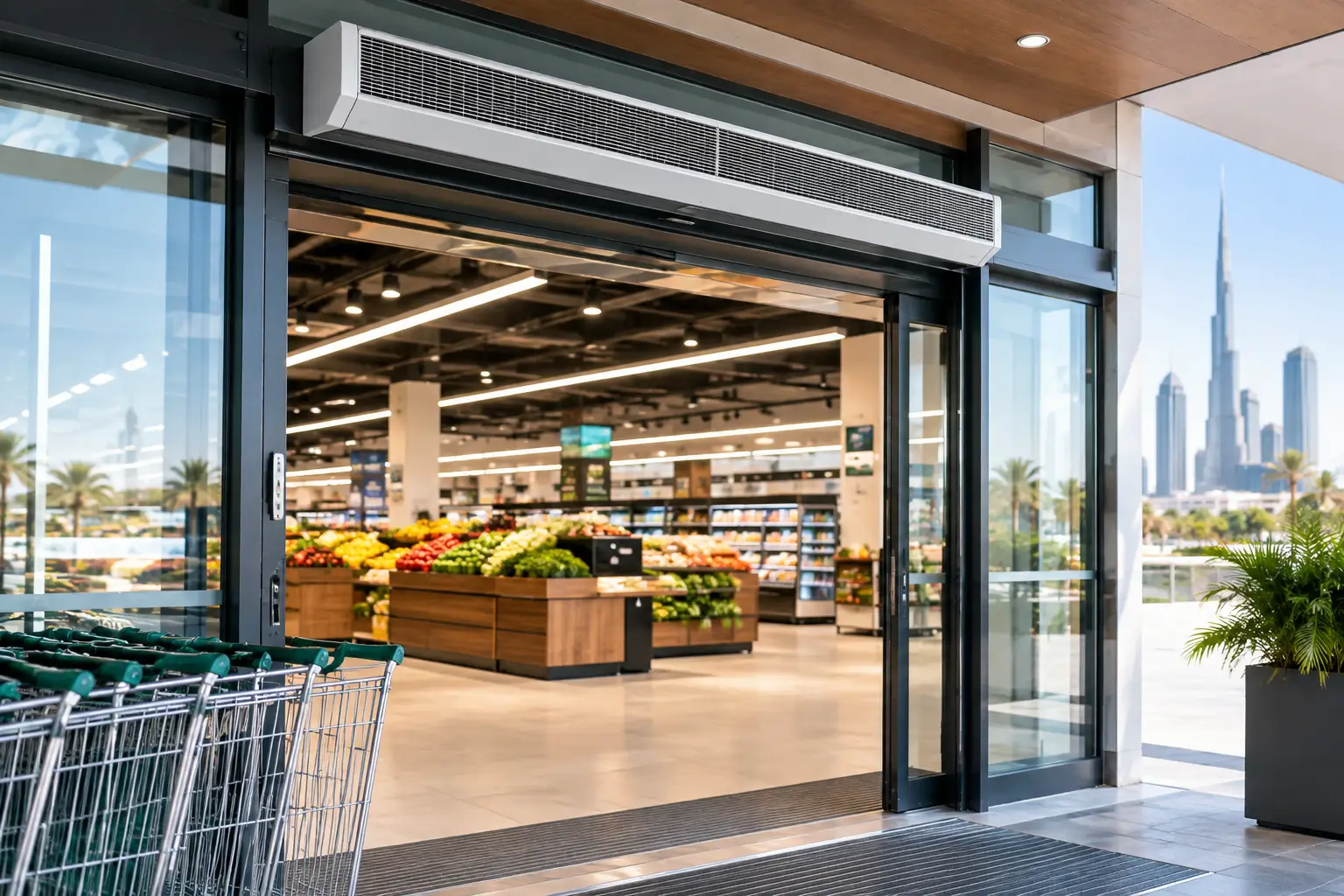
A supermarket entrance in Dubai, Riyadh, or Doha can open hundreds of times a day. Each opening gives hot, humid, dusty outdoor air a direct route into a conditioned sales floor. Sustainable retail cooling trends are responding to that operational reality: the objective is no longer simply to add cooling capacity, but to protect the conditioned air a business already pays to produce.
For retail operators, developers, and MEP teams, this changes how cooling performance is evaluated. Energy use, shopper comfort, merchandise conditions, door traffic, and indoor air quality are connected. A practical sustainability strategy must address the building envelope at its weakest point – the entrance.
Why Are Sustainable Retail Cooling Trends Changing?
Retailers in hot and tropical markets face a tougher operating environment than facilities with limited door traffic or mild outdoor temperatures. Heat gain at frequently opened entrances can increase the burden on the HVAC system, while humidity, dust, insects, and airborne contaminants create further operational concerns.
The most useful sustainability measures focus on reducing avoidable loads before they reach the cooling plant. This is particularly relevant for supermarkets, hypermarkets, malls, convenience stores, food outlets, pharmacies, and retail units connected to busy exterior walkways or loading areas.
Three pressures are driving the shift:
- Higher energy accountability: Operating teams need to reduce waste without compromising the customer experience or creating uncomfortable entry zones.
- More demanding store layouts: Open-front retail, high-traffic entrances, delivery access, and larger doorways make conventional closed-door assumptions unrealistic.
- Climate-specific performance needs: Desert heat, humidity, dust, and seasonal sand conditions require entrance protection that supports HVAC performance under real site conditions.
Sustainability, in this context, is not a single product decision. It is the combined result of entrance design, equipment selection, controls, maintenance planning, and how the building is actually used.
Trend 1: Protecting the Entrance as Part of HVAC Efficiency
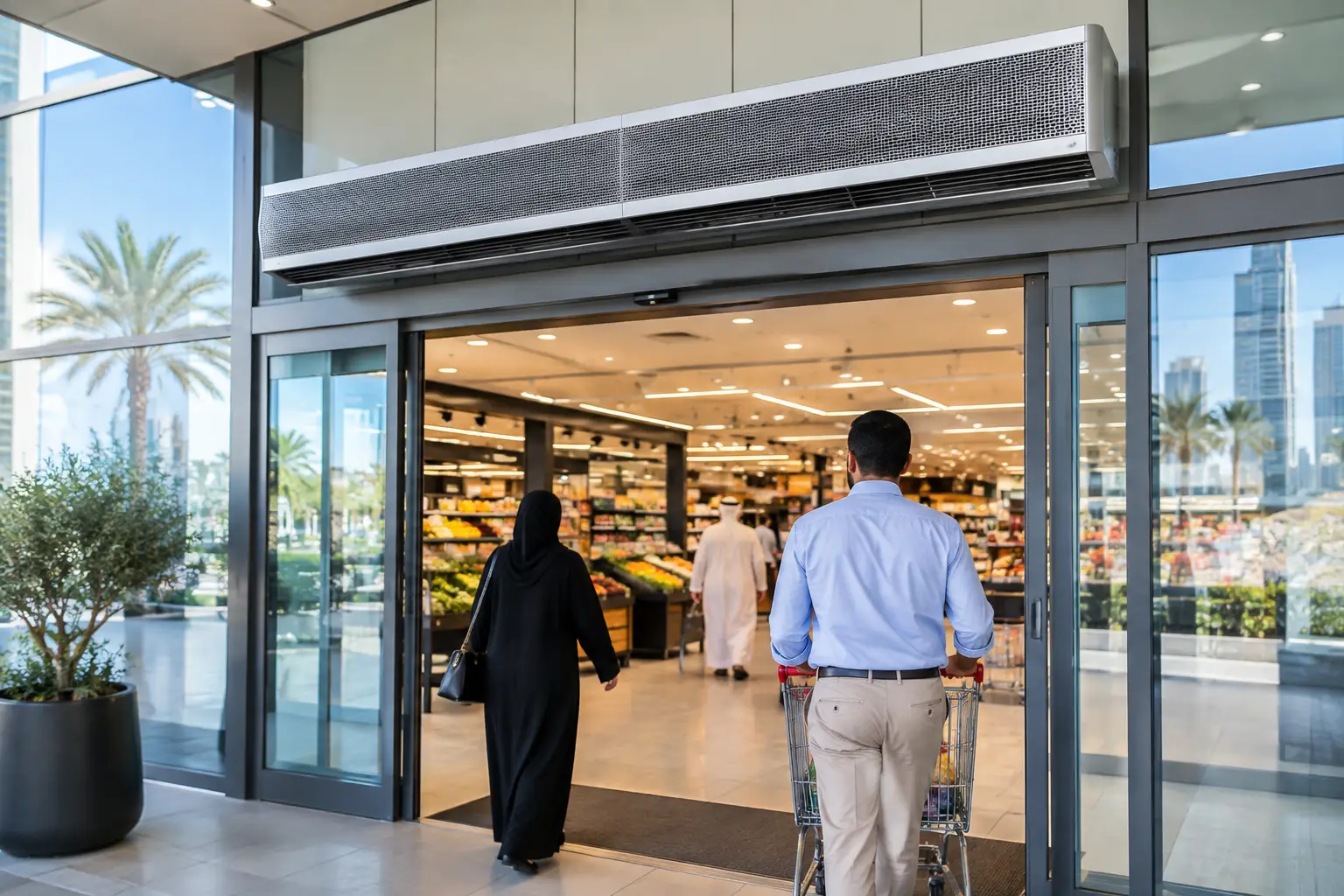
The entrance is increasingly treated as an HVAC control point rather than an unavoidable source of loss. When doors remain open during trading hours, cooling loss is continuous, not occasional. The result can be uneven temperatures near the entrance and unnecessary demand on the central cooling system.
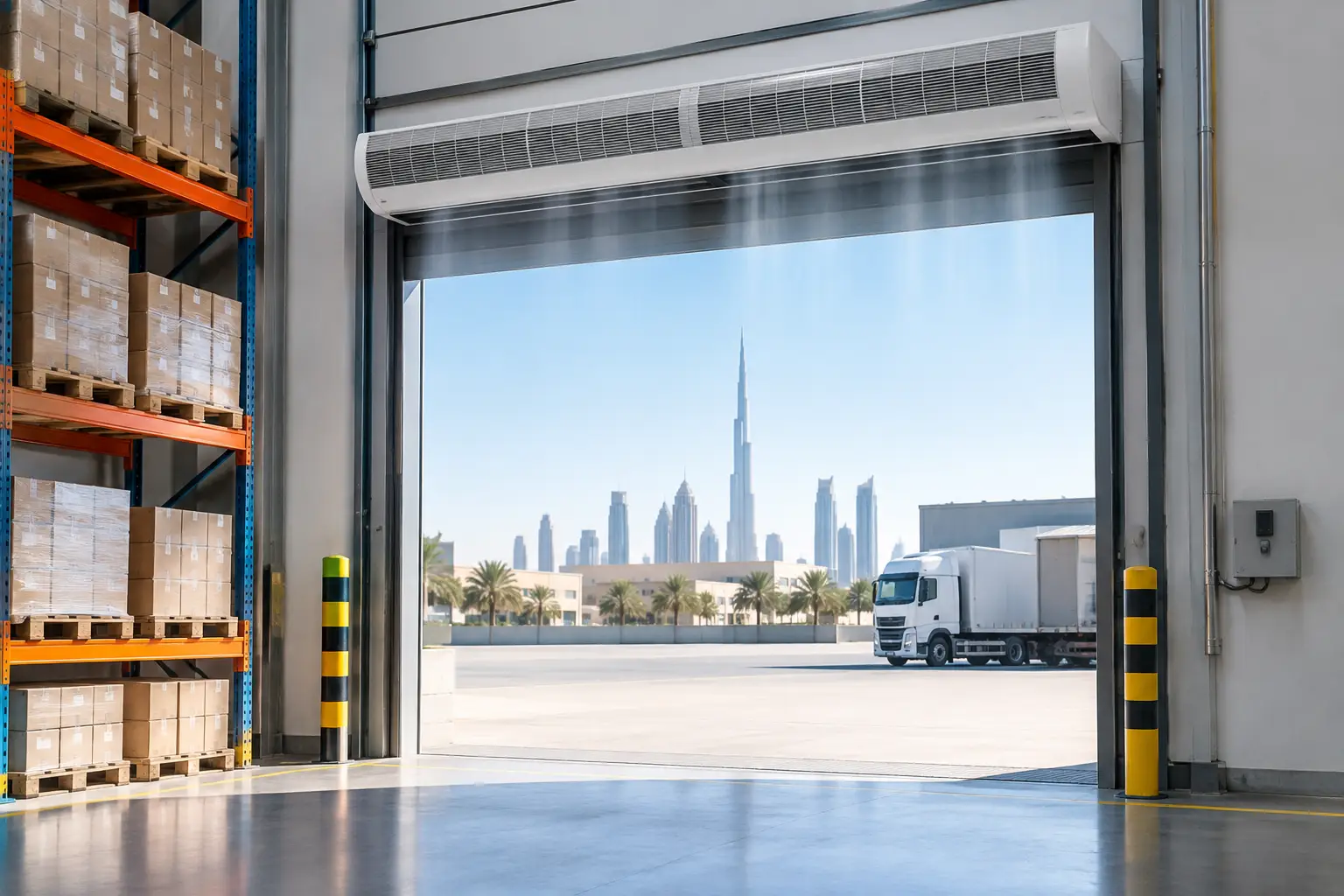
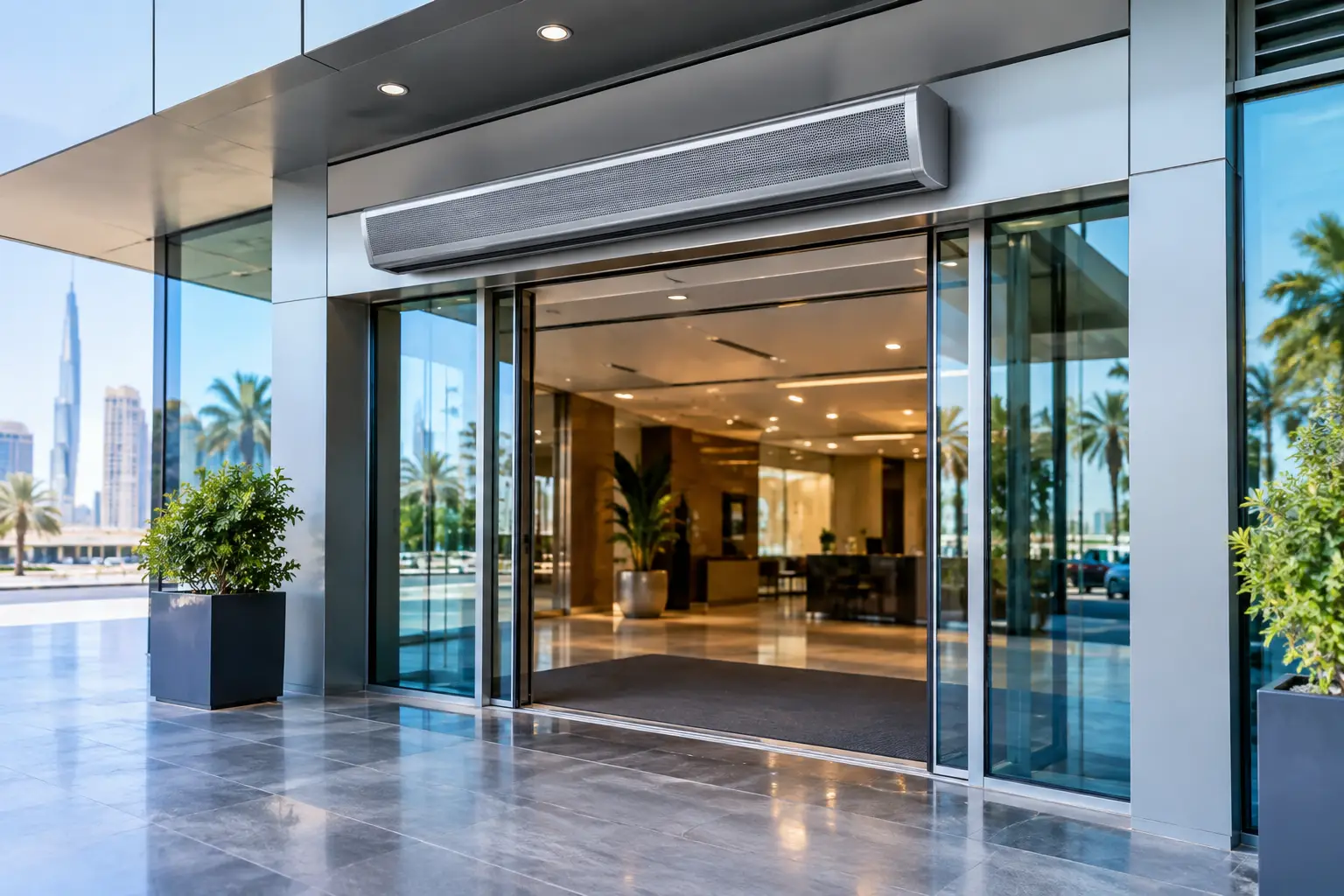
Commercial air curtains create a controlled air barrier across an opening. Properly selected and installed, they help separate indoor conditioned air from outdoor heat and humidity while allowing people, carts, and deliveries to pass without a physical door barrier.
This makes air curtains relevant to sustainable cooling because they address cooling loss at the source. They are not a replacement for correctly designed HVAC capacity, glazing, insulation, or door strategy. They are an additional layer of entrance climate control that can help the HVAC system operate under less pressure.
Airflow Selection Matters More Than a Generic Product Choice
An air curtain only supports efficiency when its airflow is matched to the opening and operating conditions. A unit selected solely by door width may underperform if the mounting height, crosswinds, traffic volume, pressure differences, or exterior exposure are not considered.
For specification teams, the practical inputs should include:
- Clear door width and mounting height
- Whether the door opens directly to the outdoors, a mall corridor, or a loading area
- Expected pedestrian, trolley, or goods movement
- Local heat, humidity, dust, and wind exposure
- Existing HVAC supply and return-air arrangement
- Any requirement to reduce insect, smoke, fume, or airborne contaminant entry
A consultation-led selection process is particularly valuable for high-traffic entrances, where a weak air barrier can become a visible comfort problem rather than an energy-saving measure.
Trend 2: Zoned Cooling Instead of One-Size-Fits-All Setpoints
Retail facilities are moving toward a more localized view of comfort. The entrance, checkout area, fresh-food zone, stockroom, and receiving door do not experience the same heat loads. Treating them as though they do can lead to overcooling in some locations and discomfort in others.
Entrance air curtains support this zoning approach by helping stabilize the transition between outdoor and indoor conditions. The cooling system can then focus more effectively on maintaining sales-floor conditions instead of constantly recovering from outside air infiltration.
This does not mean every site needs a complex control strategy. Smaller retail units may benefit from a straightforward, appropriately sized commercial unit, while a large hypermarket or mall entrance may warrant more detailed coordination among the architect, MEP consultant, HVAC contractor, and facilities team.
Trend 3: Better Air Quality at High-Traffic Retail Entrances
Energy efficiency is only one reason retailers are revisiting entrance protection. Dust, humidity, insects, fumes, and outdoor pollutants can affect the customer environment and increase cleaning demands. In food retail and pharmaceutical settings, controlling what enters through an open doorway can be especially important.
An air curtain can help establish an active separation zone at the doorway. Its value depends on the application: a street-facing convenience store in a humid coastal city faces different issues from a warehouse-connected supermarket in a dry, dusty location.
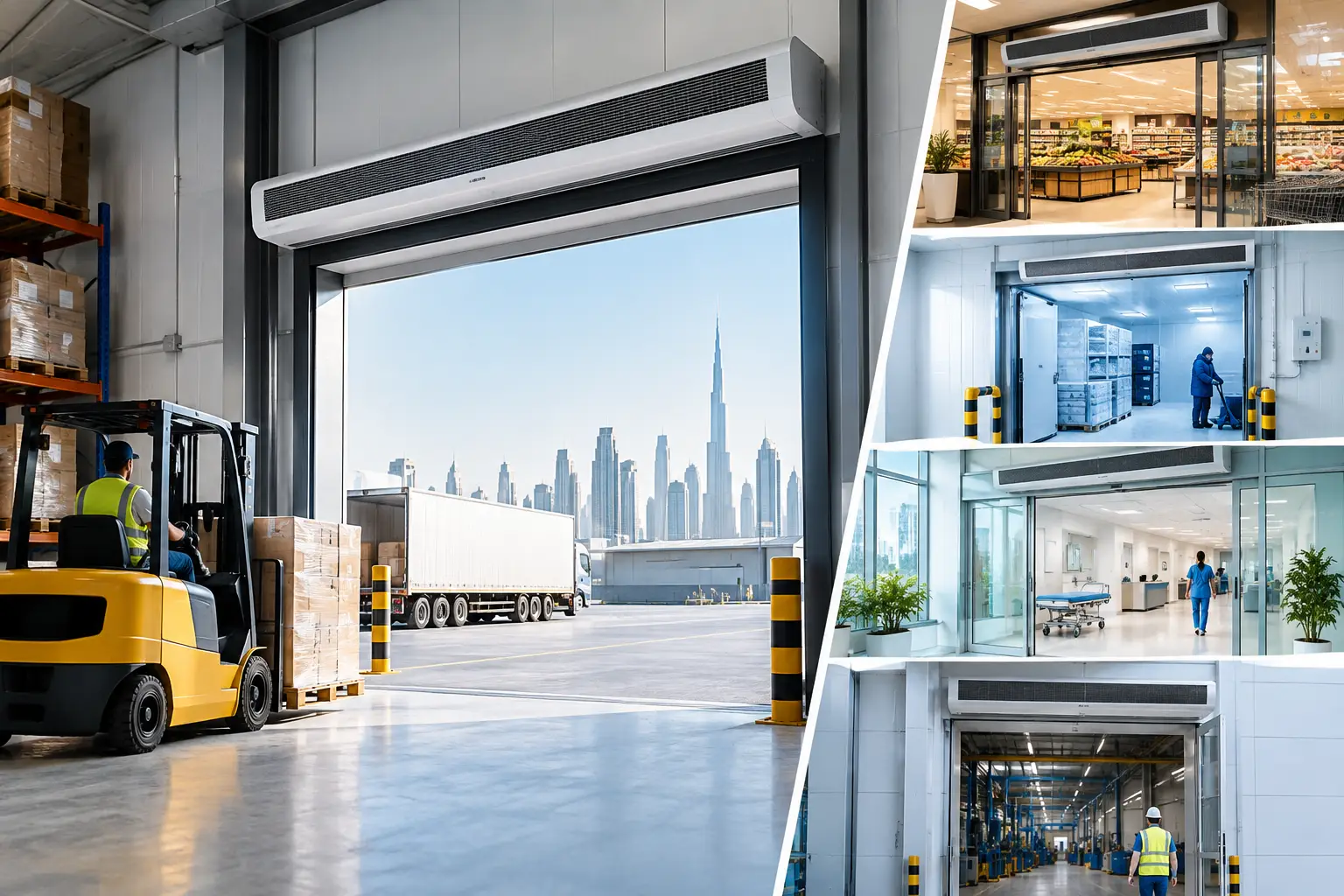
| Retail condition | Primary concern | Sustainable cooling response | |—|—|—| | Street-facing store entrance | Heat, humidity, and frequent customer traffic | Use an air barrier to help retain conditioned indoor air | | Supermarket receiving door | Heat, dust, and goods movement | Specify for opening size, traffic pattern, and industrial operating conditions | | Mall retail frontage | Continuous pedestrian flow and comfort | Coordinate air curtain operation with the interior HVAC strategy | | Food or pharmacy entry | Outdoor contaminants and environmental consistency | Consider entrance separation alongside hygiene and facility requirements |
The key is to define the problem before selecting the solution. A retail entrance exposed to afternoon sun and outdoor winds may need a different approach than one inside a conditioned shopping center.
Trend 4: Specification by Operating Condition, Not Just Appearance
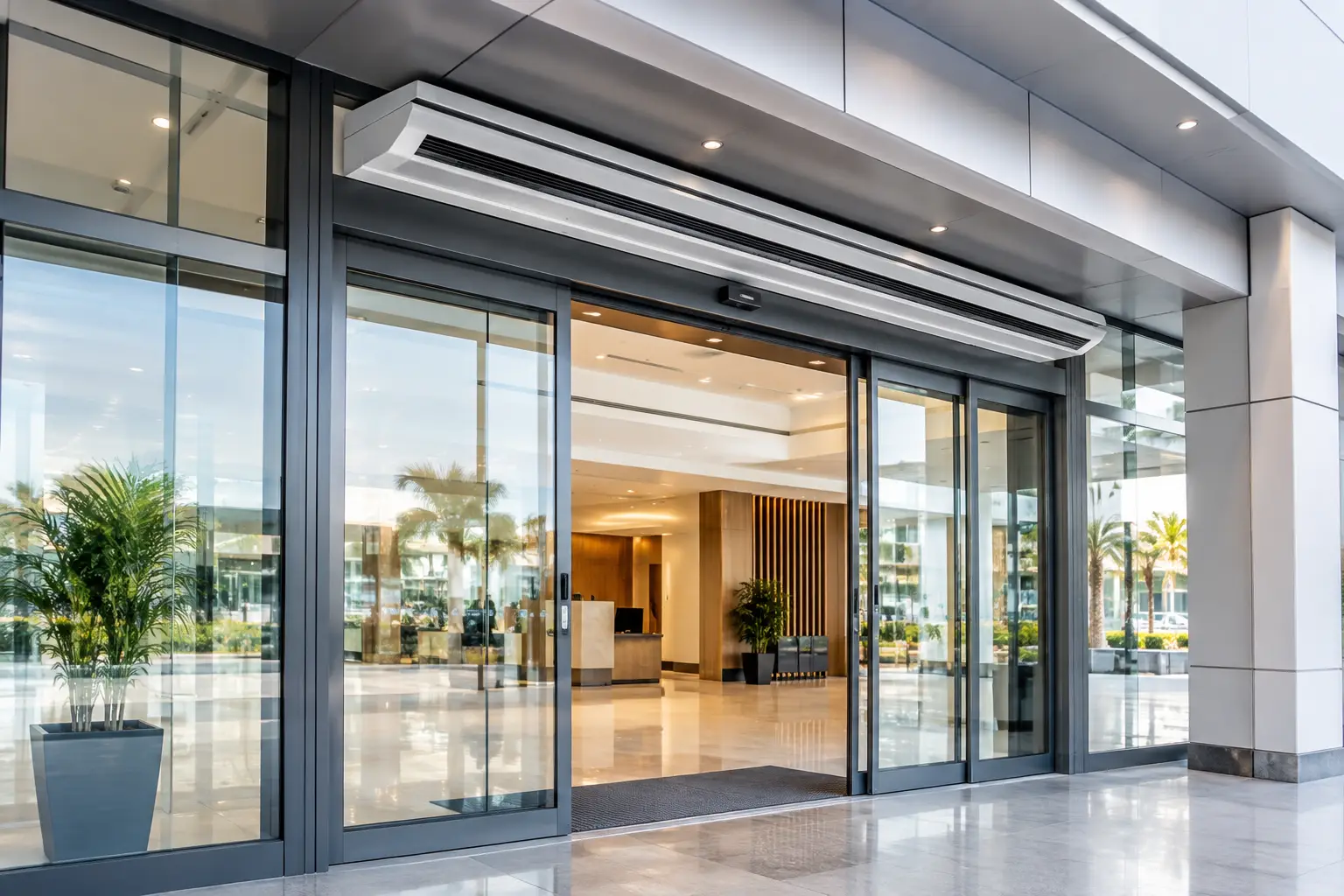
Architectural integration remains important, particularly in premium retail and mall projects. However, sustainable performance should not be reduced to a visual decision. Recessed or visible installations, commercial or industrial duty, and the required airflow pattern should follow the site’s functional needs.
For example, a recessed ceiling air curtain may suit a retail entrance where clean integration with the ceiling design is a priority. A more demanding doorway with heavy traffic or greater exposure may require a solution designed for stronger commercial or industrial operating conditions. Product selection should be based on performance at the opening, not on a preference for a single series across every door.
FreezeeX provides consultation-based air curtain recommendations across commercial and industrial applications, considering the entrance dimensions, mounting position, climate, traffic volume, and HVAC requirements. That evaluation is essential in markets where extreme heat and dust can expose poor assumptions quickly.
Trend 5: Measuring Operational Performance, Not Just Equipment Installation
A sustainable cooling project should be reviewed after handover. Equipment can be correctly installed yet deliver weaker results if operating schedules, door usage, or HVAC settings change over time.
Facilities teams can use a simple review process:
- Identify entrances with persistent warm air, dust ingress, humidity, or customer comfort complaints.
- Compare door traffic patterns with the original operational assumptions.
- Review whether the air curtain and HVAC system operate when the entrance is active.
- Check that maintenance teams can access equipment and keep intake areas clear in dusty environments.
- Reassess the installation when tenant use, store layouts, or delivery practices change.
This is not a repair checklist. It is a performance-management approach that helps retailers protect the intent of the original specification over the life of the facility.
What Should Retail Project Teams Prioritize?
The most durable trend is a move away from isolated equipment decisions. Retail cooling efficiency improves when the entrance, HVAC system, operations team, and customer flow are considered together.
For an architect, that may mean allowing for the correct mounting position early in the design. For an MEP consultant, it means accounting for door infiltration instead of assuming doors stay closed. For a facility manager, it means monitoring entrances that create recurring discomfort or cooling loss. For a procurement team, it means comparing proposed solutions against application conditions, not simply initial cost.
In hot, humid, and desert-climate markets, this level of coordination is not an extra. It is what separates an air curtain that looks appropriate from one that contributes meaningfully to indoor comfort and cooling efficiency.
Plan Entrance Cooling Around Real Retail Conditions
Retail sustainability is increasingly practical: reduce avoidable cooling loss, maintain a more stable indoor environment, and specify equipment that matches the way a doorway operates. Air curtains can play a valuable role when they are selected for the actual opening, climate exposure, and traffic demand.
For a retail, supermarket, mall, or high-traffic commercial project, request a FreezeeX consultation or quotation with the doorway dimensions, mounting details, operating hours, and site climate conditions. A climate-specific recommendation can help align powerful air isolation with smarter energy savings.