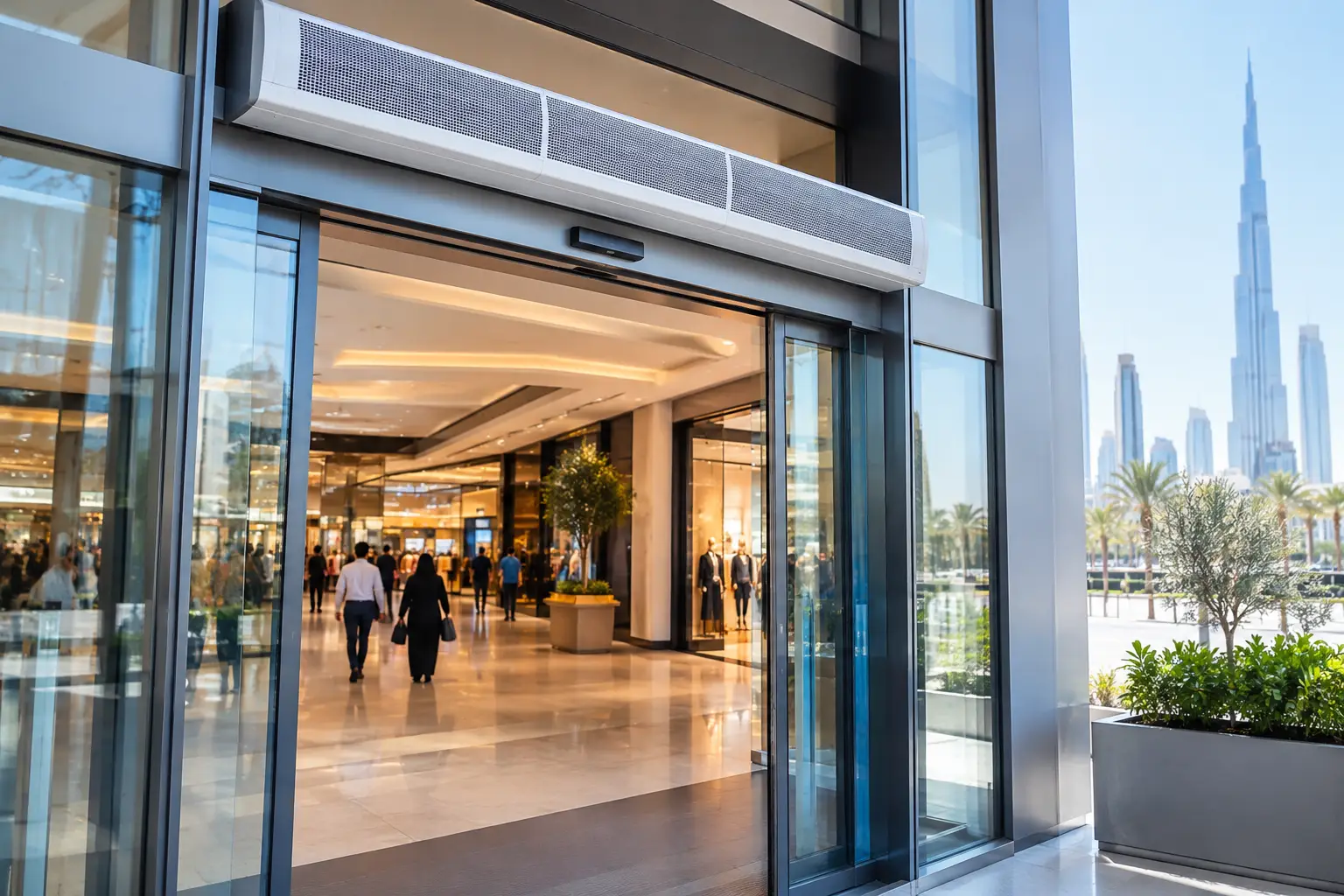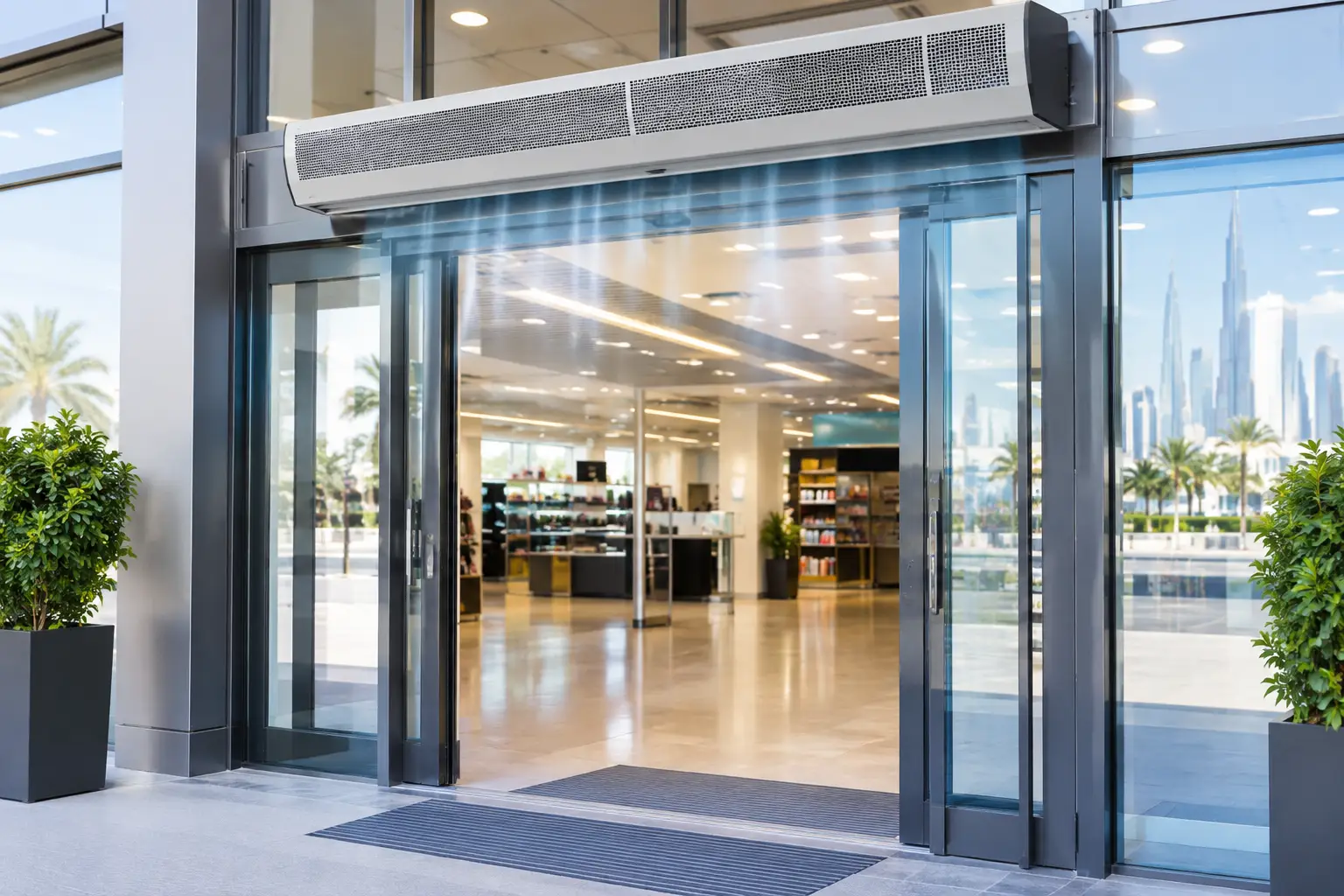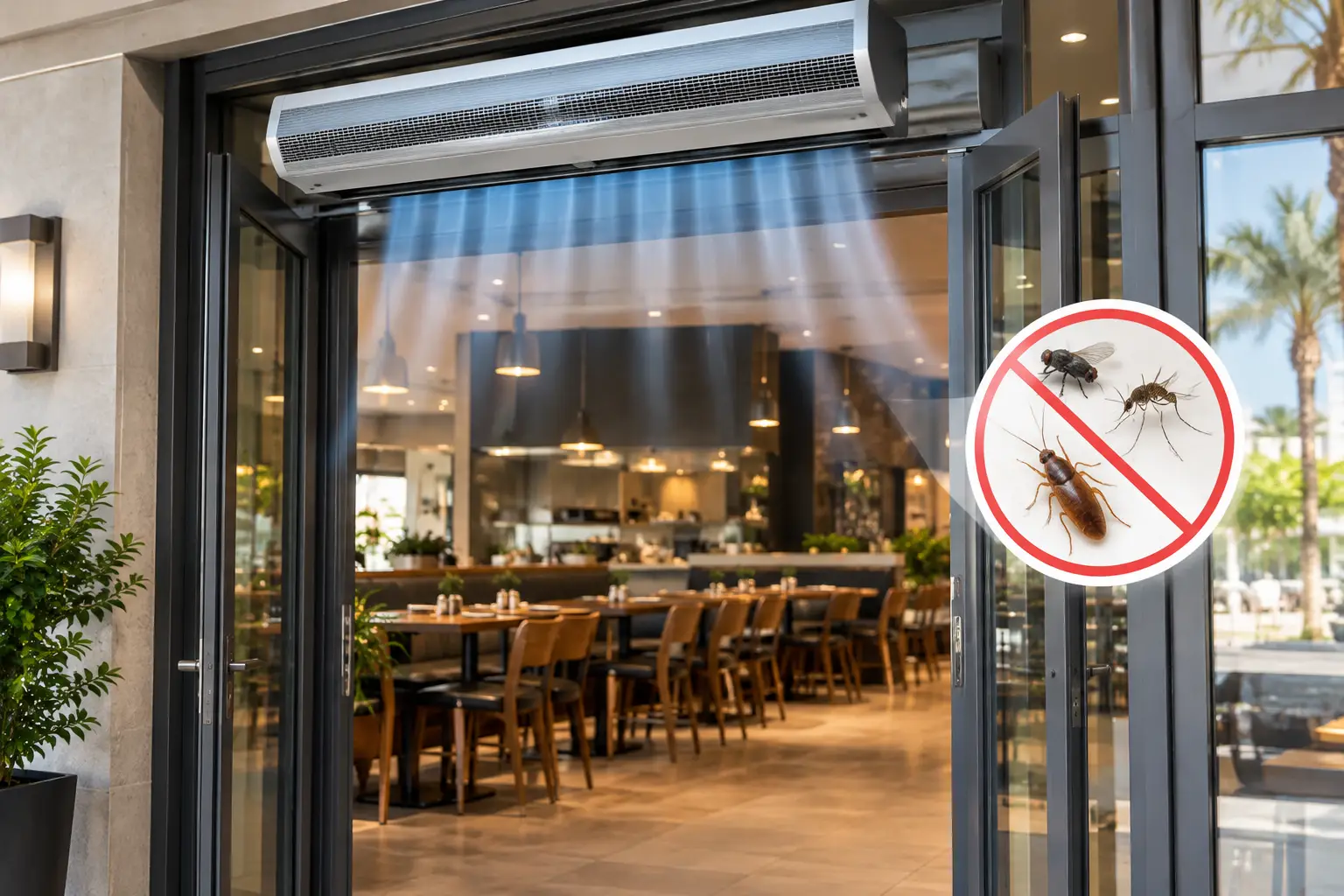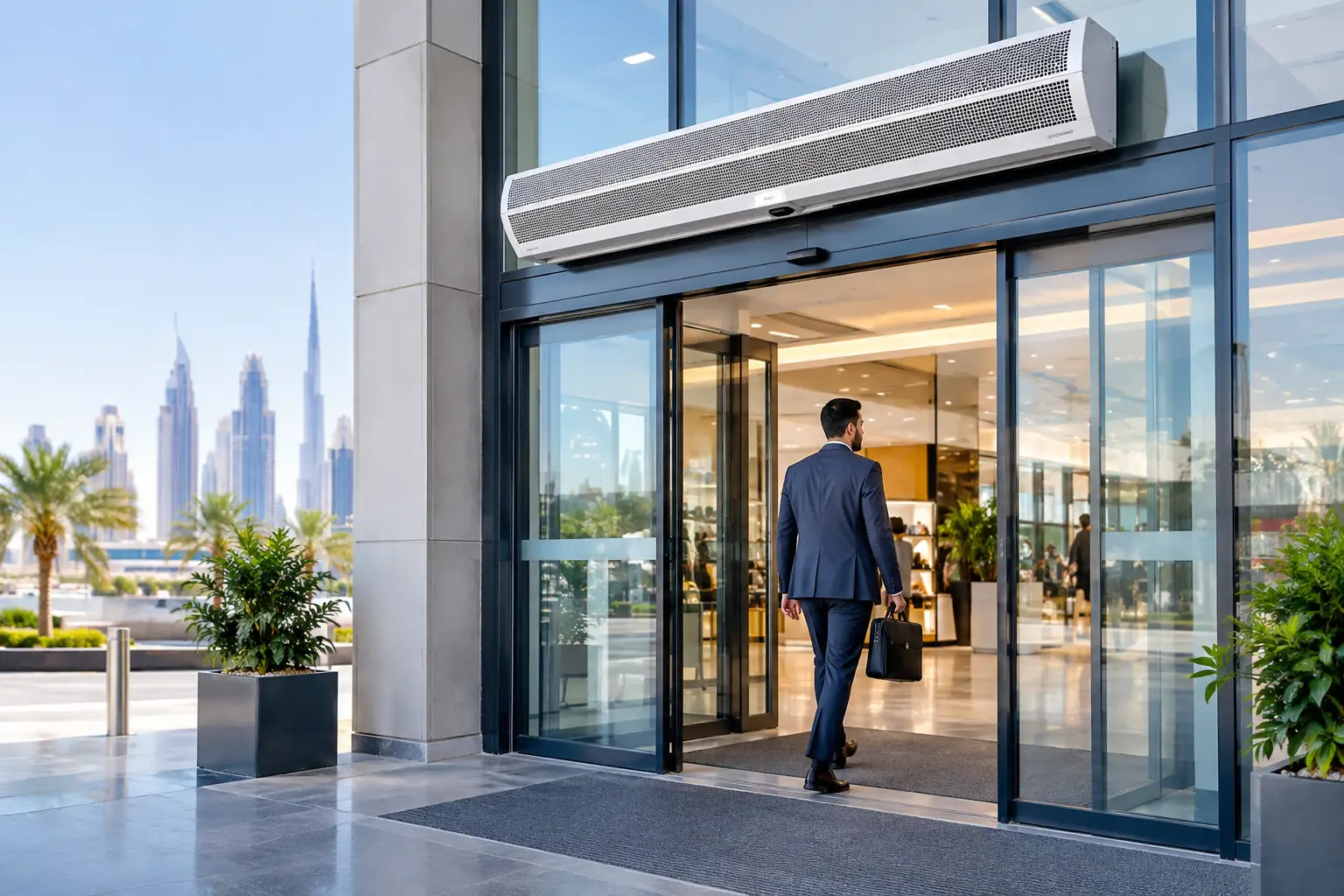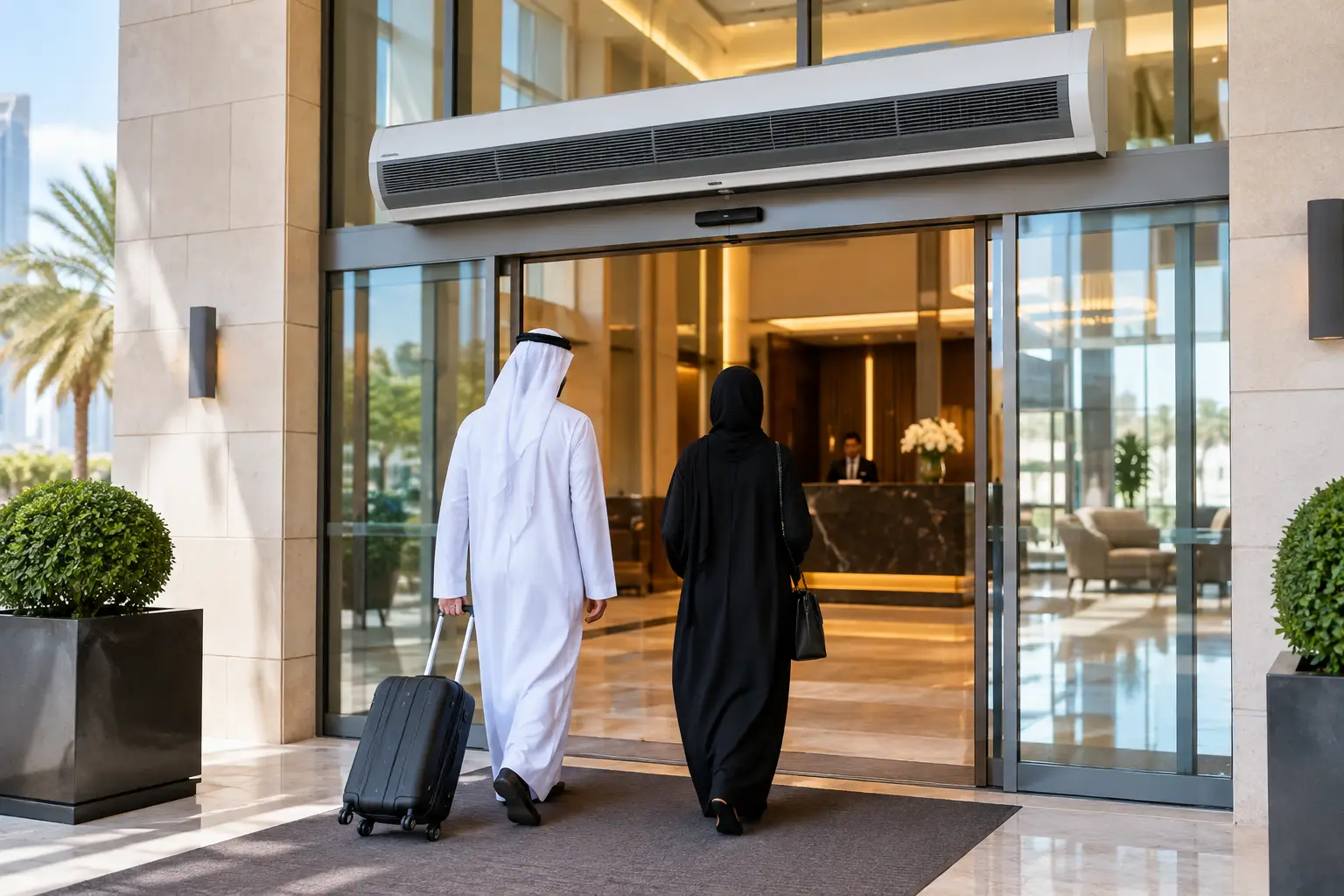
GCC air curtain trends are being shaped by a practical operating reality: every frequently opened doorway can become a direct path for extreme heat, humidity, dust, insects, and airborne contaminants. For supermarkets in Dubai, logistics facilities in Riyadh, hospitals in Doha, and food operations in Muscat, entrance climate control is no longer a minor add-on to the HVAC design. It is part of protecting indoor conditions where they are most exposed.
Why GCC Air Curtain Trends Matter to Building Performance
An air curtain creates a controlled air barrier across an open doorway. When correctly selected and positioned, it helps separate conditioned indoor air from the demanding outdoor environment without slowing the flow of people, goods, or equipment.
That role has become more valuable across the GCC. Commercial buildings are managing higher expectations for occupant comfort, stricter hygiene practices in sensitive facilities, and closer scrutiny of operating costs. At the same time, entrances are becoming wider, busier, and more integrated with loading, retail, and hospitality operations.
The current market direction is not simply toward more air curtains. It is toward systems specified for the actual entrance, traffic pattern, mounting condition, and climate exposure. A unit that performs well at a lightly used retail entrance may not provide the required air separation at a high-traffic warehouse door or a humid food-service entrance.
Trend 1: Air Curtains Are Being Treated as HVAC Efficiency Equipment
In desert and tropical climates, cooling loss at open entrances puts continuous pressure on the air-conditioning system. This is especially visible in facilities with frequent door cycles, such as hypermarkets, shopping malls, airports, distribution centers, and quick-service restaurants.
The stronger specification approach is to assess the entrance as part of the wider HVAC strategy. Rather than asking only whether a doorway needs an air curtain, project teams are asking how the unit can reduce the load created by repeated outdoor air infiltration.
This shift changes the procurement conversation. Decision-makers increasingly consider the following operational factors:
- How often the door opens and how long it remains open
- Whether the opening faces direct sun, prevailing wind, dust, or vehicle movement
- The temperature and humidity difference between indoor and outdoor areas
- The capacity of the nearby HVAC system to recover from infiltration
- Whether customer comfort, product protection, or controlled hygiene is the priority
For a retail entrance, the main goal may be preserving comfort near the doorway. For cold storage or food processing, limiting the transfer of warm, humid air can be more critical. The required solution depends on the risk at that opening, not on the building type alone.
Trend 2: Application-Specific Selection Is Replacing One-Size-Fits-All Choices
The GCC market is moving away from selecting an air curtain solely by door width. Door width matters, but it is only one part of the specification. Mounting height, entrance depth, traffic intensity, crosswinds, door operation, and the indoor environment all affect whether the air stream can form an effective barrier.
Retail, hospitality, and public-facing entrances
Retail stores, hotels, malls, clinics, and restaurants generally need a balance of performance, appearance, and acceptable sound levels. Units may be visible to guests or integrated into the ceiling line, making installation layout a design consideration as well as an engineering one.
Recessed ceiling air curtains are increasingly relevant where architects want the entrance treatment to remain visually discreet. For exposed installations, commercial ranges can suit busy public doors when selected for the opening and surrounding conditions.
Warehouses, factories, and logistics doors
Industrial applications face a different set of conditions. Forklift traffic, loading activity, high mounting heights, dust exposure, and wider openings can demand a more forceful and durable approach. Here, centrifugal air curtain designs are often considered where stronger air delivery is needed for heavy-duty operating environments.
The key trade-off is clear: a stronger industrial solution may be necessary for barrier performance, while a public-facing entrance may require closer attention to visual integration and acoustic comfort. Specifiers should not use aesthetics to override the operating requirement.
Food, pharmaceutical, and healthcare facilities
In hospitals, pharmaceutical plants, food processing areas, and commercial kitchens, the trend is toward using entrance air control as part of a broader contamination-management strategy. An air curtain does not replace required hygiene protocols, physical doors, or facility ventilation design. It can, however, help limit the entry of dust, insects, humidity, smoke, fumes, and airborne contaminants through high-use openings.
For these sites, the selection discussion should include cleanability, access for planned maintenance, door usage, and the pressure relationship between adjacent spaces.
Trend 3: Ceiling Integration and Architectural Coordination
Air curtains are now more likely to be discussed early in commercial projects, particularly at premium retail, hotel, healthcare, and office entrances. That is a positive change. Late-stage installation can leave limited space above the door, conflicts with ceiling details, or an impractical mounting position.
Early coordination allows the MEP consultant, architect, and contractor to decide whether the unit should be recessed, surface mounted, or configured around the entrance geometry. It also allows electrical provision, control strategy, and service access to be planned before the area is finished.
A concealed unit is not automatically the right answer. Where a ceiling void is limited or the entrance is highly exposed to outdoor conditions, the priority should remain effective air delivery. Architectural integration should support performance, not compromise it.
Trend 4: Control Logic Is Becoming More Relevant
Operators want air curtains to run when the entrance needs protection, not simply at a fixed setting throughout the day. This is driving greater attention to control options and coordination with door activity and building operations.
A practical control strategy can help align air-curtain operation with the actual use of the opening. For example, a door that experiences peak traffic during delivery windows may need a different operating approach from a customer entrance with steady all-day footfall.
Before defining the control method, project teams should clarify whether the priority is reducing cooling loss, managing dust, supporting hygiene, maintaining comfort, or a combination of these outcomes. The answer affects how the system should be configured and operated.
How Should GCC Projects Evaluate an Air Curtain?
The most reliable selection process begins at the doorway, not in a catalog. A consultation-based review helps prevent underpowered units, unsuitable mounting arrangements, and unnecessary overspecification.
- Measure the complete opening. Record width, height, door type, mounting clearance, and any structural features that affect airflow.
- Assess traffic and exposure. Consider pedestrian volume, carts, forklifts, delivery schedules, wind, sunlight, dust, and nearby vehicle activity.
- Define the indoor protection objective. Identify whether cooling retention, insect control, humidity reduction, dust control, or contaminant separation is the primary concern.
- Match the unit category to the duty. Commercial, recessed, HiFi, dynamic, and industrial centrifugal options should be evaluated against the actual application.
- Coordinate installation and controls. Confirm electrical requirements, mounting position, access for service, and how the unit will operate alongside the door and HVAC system.
Matching FreezeeX Series to Typical Project Needs
FreezeeX offers several air curtain ranges for commercial and industrial entrances. The appropriate choice should follow a project assessment rather than a generic product preference.
| Project condition | Suitable range to evaluate | Selection focus | |—|—|—| | Architecturally sensitive commercial entrances | Recessed Ceiling Air Curtains | Ceiling integration, entrance appearance, mounting space | | Retail, restaurants, and general commercial doors | Commercial Centrifugal Flow Series or Commercial HiFi Plus Series | Traffic level, comfort expectations, doorway exposure | | Warehouses, factories, and demanding logistics access | Industrial Centrifugal Series | Heavy-duty operating conditions, mounting height, air delivery needs | | Projects seeking a newer commercial option | New Dynamic Series | Application requirements, controls, and site-specific configuration |
The table is a starting point, not a final specification. A commercial entrance exposed to desert wind may need a different recommendation from an identical-width entrance located inside a protected mall. Likewise, a warehouse opening may require a different approach depending on whether it serves pedestrians, pallet movement, or constant vehicle traffic.
Trend 5: Maintenance Access Is Becoming a Design Requirement
Long-term performance depends on more than initial selection. In dusty and high-traffic GCC environments, facility teams need practical access for inspection and scheduled upkeep. If the unit is difficult to reach, maintenance can be delayed, and the entrance may not receive the level of attention its operating conditions require.
This is why maintenance access should be reviewed during design coordination, particularly for recessed installations and industrial doors. The goal is not to turn facility teams into repair crews. It is to ensure the installed solution can be professionally inspected and maintained without disrupting operations or damaging finished surfaces.
The Practical Direction of the Market
The most meaningful GCC air curtain trend is better specification discipline. Buyers are placing less emphasis on a simple equipment label and more emphasis on what happens at the threshold: heat entering, cooled air escaping, dust moving inward, and occupants feeling discomfort near the door.
For projects across the UAE, Saudi Arabia, Qatar, Kuwait, Bahrain, and Oman, climate-fit entrance protection should be evaluated early, especially where extreme heat, humidity, or desert dust affect daily operations. FreezeeX can review your entrance dimensions, usage pattern, mounting conditions, and HVAC objectives to recommend a commercial or industrial air curtain suited to the site. Request a consultation and quotation before finalizing the specification, so the selected system supports real operating conditions rather than assumptions.