A lobby door in Riyadh or Dubai can open a few hundred times a day. Every opening lets hot air, fine dust, and flying insects push straight into conditioned space. For a hypermarket, hotel, cold room loading area, or industrial workshop, that is not a minor nuisance. It is a direct operating cost. The right air barrier for desert entrances turns that weak point into a controlled threshold.
In desert and hot-weather markets, entrance protection is less about convenience and more about performance. Cooling systems work harder when untreated outside air keeps entering the building envelope. Housekeeping costs rise when dust crosses the entrance all day. Customer comfort drops fast when a doorway feels like a heat leak. This is why air curtains are now specified not just for comfort, but for energy control, hygiene, and operational stability.
What an air barrier for desert entrances actually does
An air barrier at an entrance creates a high-velocity stream of air across the opening. That stream is engineered to separate two environments without a physical door being closed all the time. In practical terms, it reduces the transfer of hot outside air into the cooled interior, while also limiting dust, insects, and humidity infiltration.
For desert applications, the challenge is more aggressive than in moderate climates. Outdoor temperatures are extreme, doors stay open longer, and dust loading is far higher. In some locations, the problem is not only dry heat but also seasonal humidity. That means the unit must do more than blow air downward. It must maintain a stable and properly directed air stream across the full height and width of the opening.
A poorly selected unit may look adequate on paper but fail on-site. If air velocity is too low, the barrier collapses before reaching the floor. If the mounting height is wrong, gaps appear at the entrance edges. If the fan design is not suited to commercial duty, performance falls off under continuous operation.
Why desert entrances need a different specification
Not every air curtain is a true fit for desert conditions. Buyers in Cairo, Doha, Muscat, Lagos, or Nairobi are usually dealing with one or more of the same pressure points – intense heat, dust ingress, frequent door cycles, and the cost of conditioned air escaping all day.
That changes the specification process. The question is not simply whether an air curtain can be installed above the door. The real question is whether it can hold an effective air seal under local site conditions.
Heat load is constant, not occasional
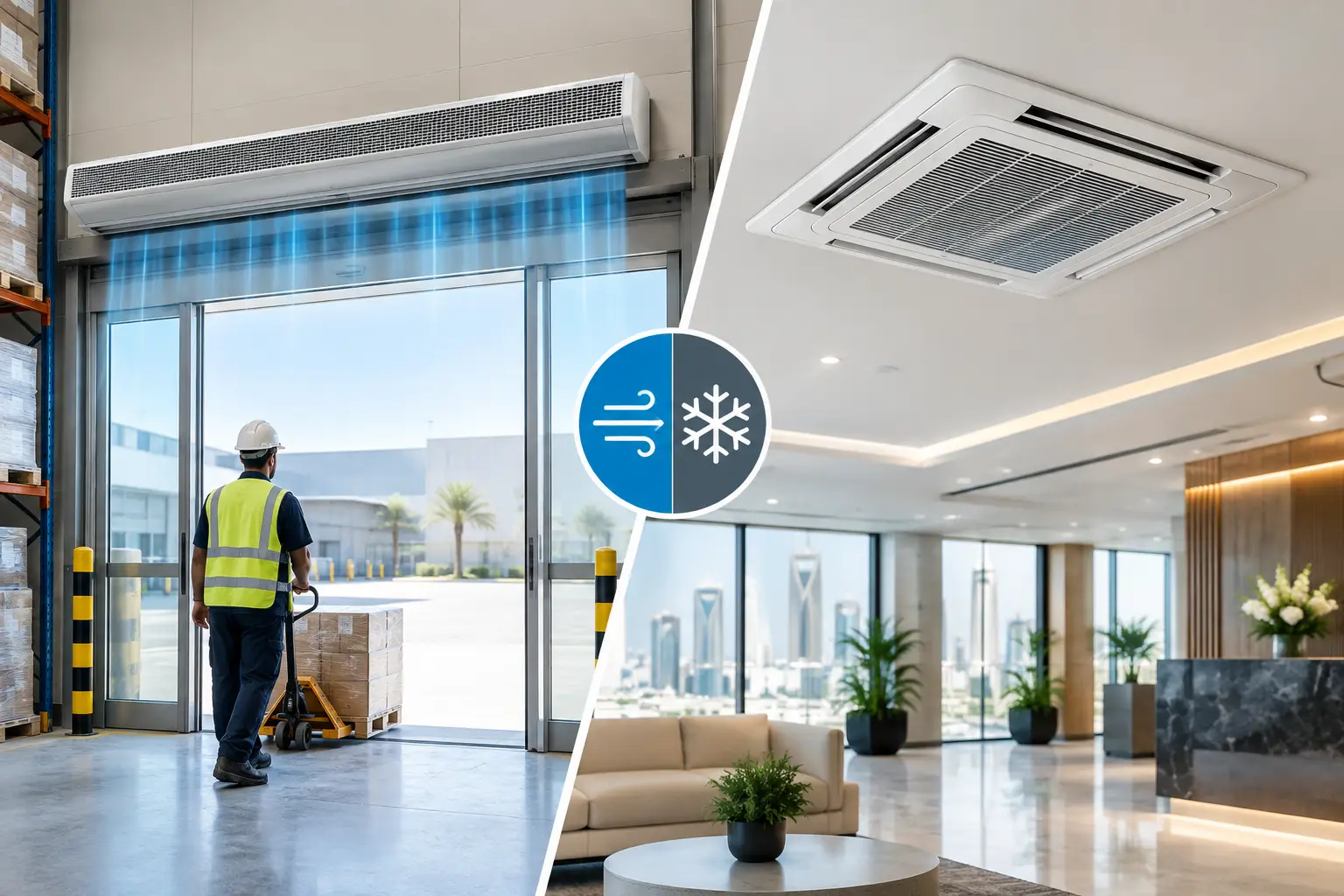
In desert-facing commercial buildings, entrance heat gain is persistent. This is especially true for retail frontages, hospitality entries, logistics sites, and industrial facilities with daytime traffic peaks. A strong air barrier helps reduce the load on the cooling system by limiting direct hot air infiltration. That does not replace the HVAC system, but it helps protect its output where buildings are most exposed.
Dust control matters as much as temperature
Fine airborne dust is one of the biggest reasons facility teams invest in entrance air control. Once dust enters, it affects cleaning schedules, product presentation, indoor air quality, and in some cases sensitive equipment. An effective air curtain reduces the amount of dust crossing the threshold, particularly where doors stay open for long periods.
Insect pressure increases at open entrances
For food retail, hospitality, processing areas, and service corridors, insect control is not optional. An air stream at the entrance helps disrupt insect entry without slowing traffic flow. This is one reason air curtains are often preferred where operational access must remain open and fast.
Choosing the right air barrier for desert entrances
The best system depends on the entrance, the building use, and the operating hours. There is no single unit that fits every application, and this is where many projects go wrong. An office entrance, a hypermarket opening, and a cold storage service door may all require different fan types, mounting methods, and performance levels.
Entrance height and width come first
Air curtain performance starts with geometry. A wider opening requires consistent throw across the full span. A higher opening needs enough discharge strength to maintain separation at floor level. If the opening is oversized or exposed to strong pressure differences, a heavier-duty unit may be needed, sometimes in modular combination.
This is why specification should always begin with actual dimensions, not assumptions. Standard commercial units can perform very well at moderate heights, but industrial entrances often need stronger centrifugal designs and more precise air delivery.
Traffic pattern changes the duty level
A low-traffic office entrance and a busy supermarket front door may have similar dimensions but very different operating demands. High-traffic sites need equipment designed for long runtime, stable airflow, and consistent performance during repeated opening cycles. In desert markets, this duty profile is common rather than exceptional.
Mounting style affects both performance and design
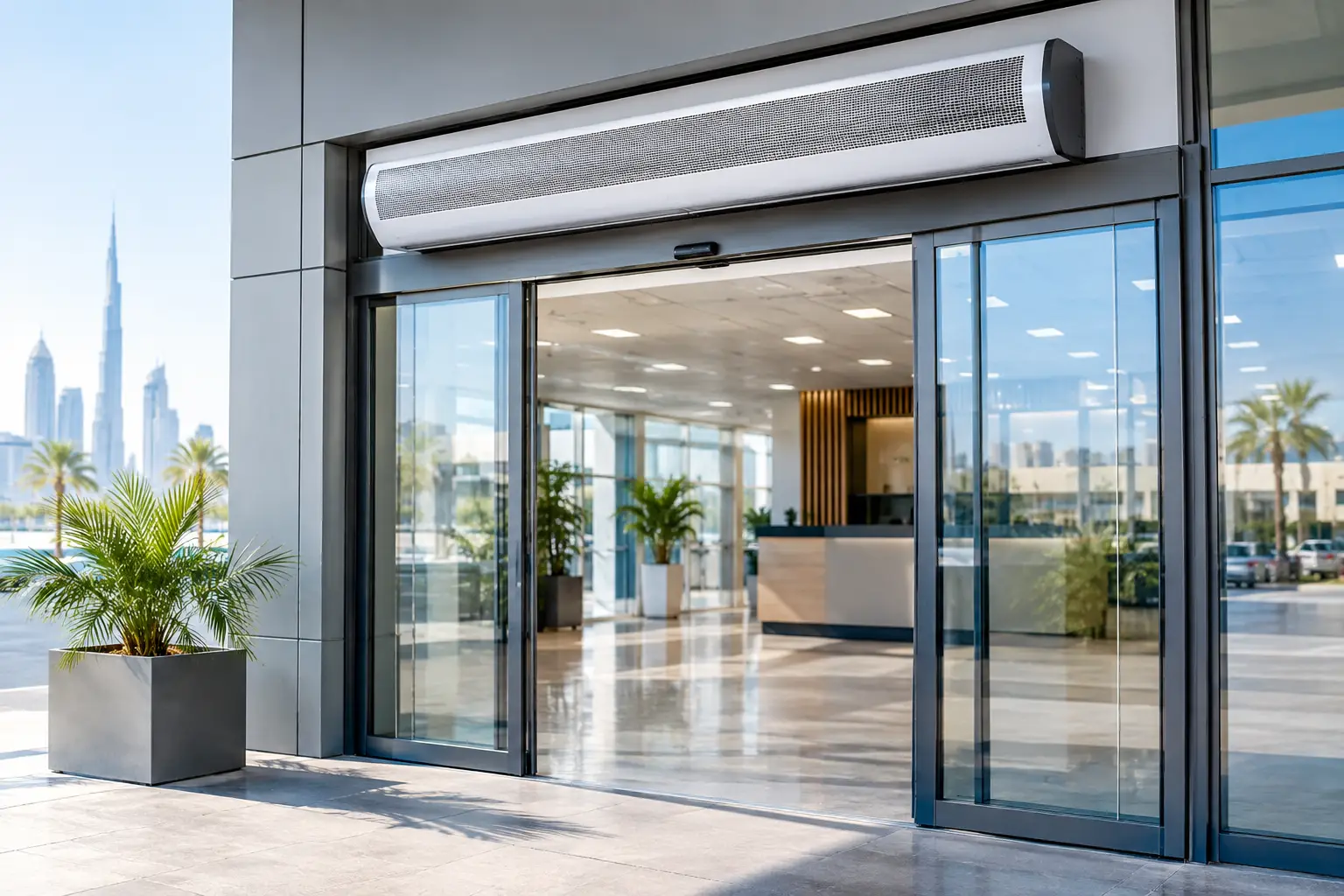
Surface-mounted air curtains are common for visible commercial entrances and industrial applications. Recessed ceiling models are often selected where aesthetics matter, such as hospitality, premium retail, and finished lobby environments. The choice is not only visual. Installation conditions, ceiling void depth, maintenance access, and airflow direction all influence what will work best.
Fan technology matters
For serious commercial and industrial use, blower design is a major factor. Centrifugal systems are often preferred for stronger and more stable air delivery, especially where openings are larger or environmental conditions are harsher. The wrong fan configuration can reduce effective air separation and increase noise without delivering the needed result.
Where air curtains deliver the strongest return
The strongest return usually comes from sites where conditioned air is valuable and the entrance is under constant stress. Hypermarkets, hotel entries, cold storage access points, industrial plants, workshops, logistics doors, and large commercial buildings all fit this profile.
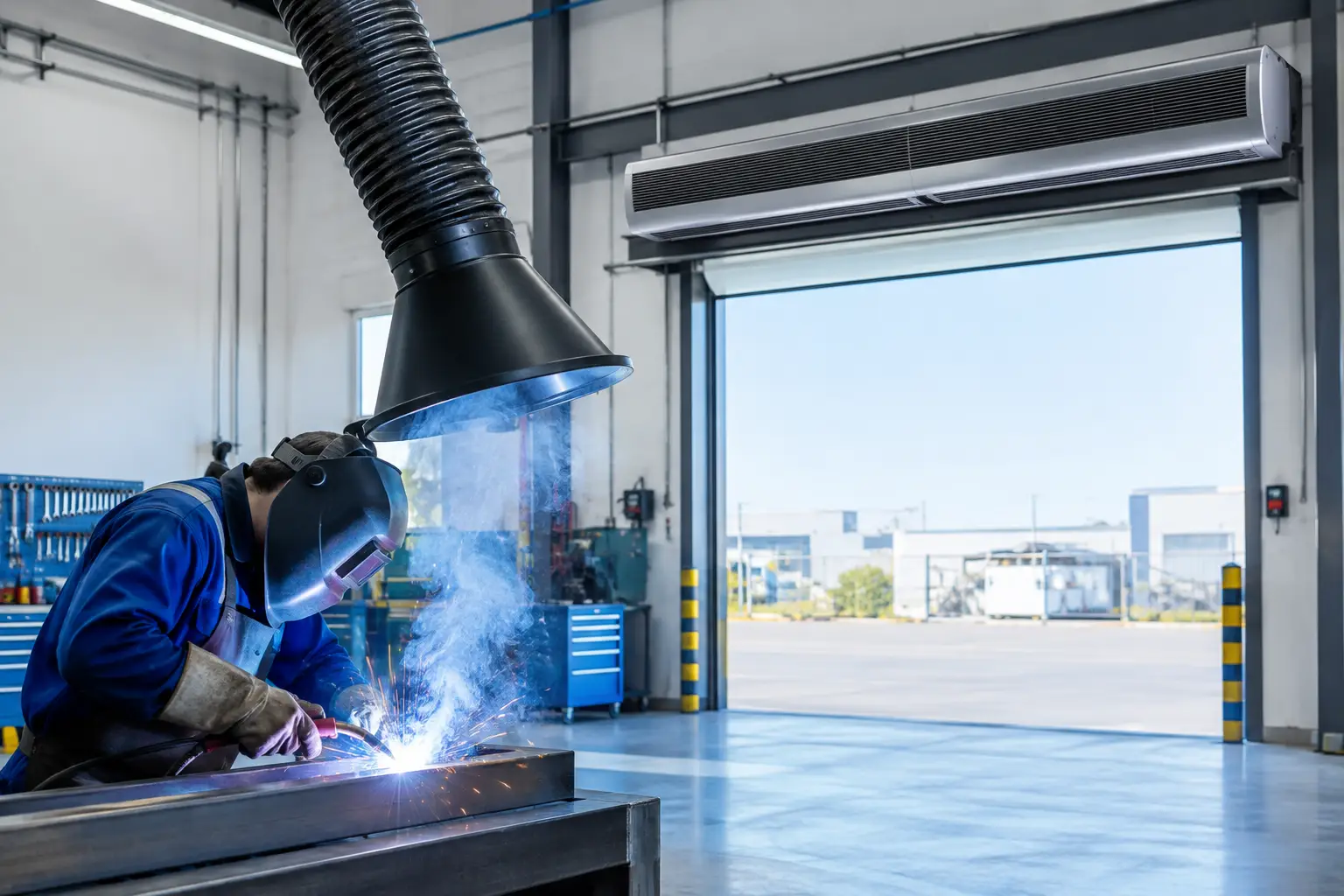
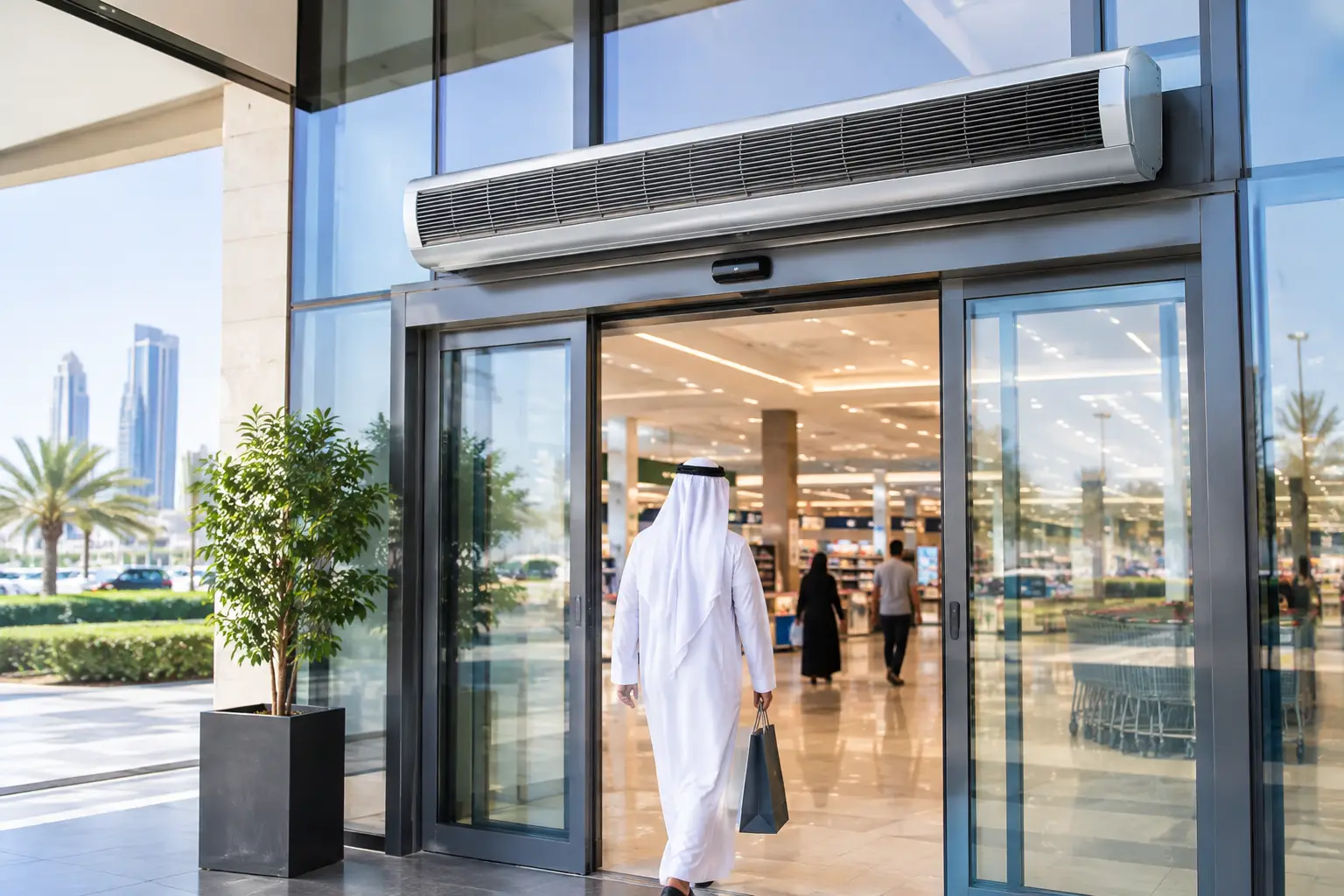
At a retail entrance, the payoff is usually tied to customer comfort, cleaner interiors, and reduced HVAC waste. In a hotel or office tower, the focus may be on lobby comfort and presentation. In a cold storage environment, the concern shifts toward protecting the temperature difference between spaces and reducing warm-air intrusion. In a workshop or plant, the same system may be justified mainly by dust control and environmental separation.
The common thread is operational efficiency. An entrance without air protection becomes a constant leakage point. Over time, that cost is visible in energy use, cleaning effort, comfort complaints, and preventable environmental contamination.
Common mistakes buyers should avoid
One of the most common mistakes is selecting by price first and performance later. In desert applications, underpowered units often fail to create a meaningful barrier. The result is equipment that runs continuously but delivers little actual protection.
Another mistake is ignoring site pressure conditions. If a building has strong air movement caused by exhaust, mechanical imbalance, or wind exposure, the air curtain must be specified to handle that disruption. Otherwise, the air stream can deflect and lose effectiveness.
Maintenance planning also matters. Dust-heavy environments place more demand on filters, internal cleanliness, and routine inspection. A quality unit should be selected not only for airflow strength but also for serviceability and long-term reliability.
Finally, some projects treat the entrance as a generic opening instead of a critical part of the cooling strategy. That usually leads to light-duty equipment being placed in heavy-duty conditions.
A better specification approach for hot-climate projects
For consultants, contractors, and facility teams, the best results come from a specification process built around the actual site. That means reviewing opening size, mounting height, traffic intensity, environmental exposure, and the operational objective. The objective may be cooling retention, dust exclusion, insect control, or all three.
This is especially relevant in tropical and desert-climate markets, where the entrance condition can have an outsized effect on indoor performance. A technically matched air curtain can help support lower cooling waste and a cleaner, more stable interior environment. But matching is the key word. The correct solution is not chosen by category alone. It is chosen by application.
FreezeeX supplies air curtain systems built for these conditions, including recessed, commercial, and industrial configurations suited to demanding hot-weather entrances across the GCC, MENA, and African markets. For project teams, that matters because product availability is only one part of the decision. Specification support matters just as much.
If you are planning an entrance solution for a retail site, hospitality property, plant, workshop, or cold storage facility, request a consultation and quote based on your actual opening size, traffic level, and climate exposure. The right air barrier does more than blow air at a doorway. It protects the performance of the entire space.