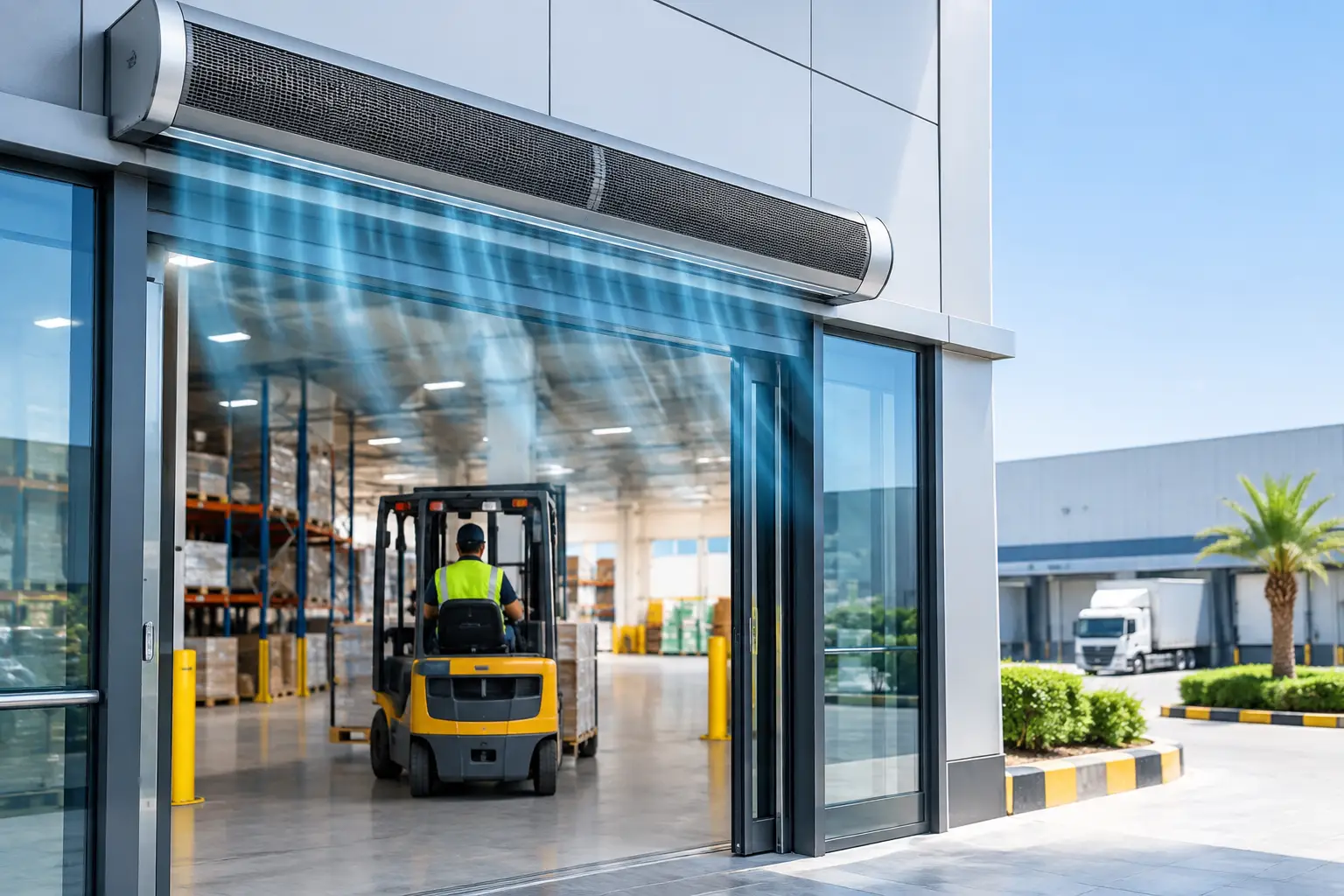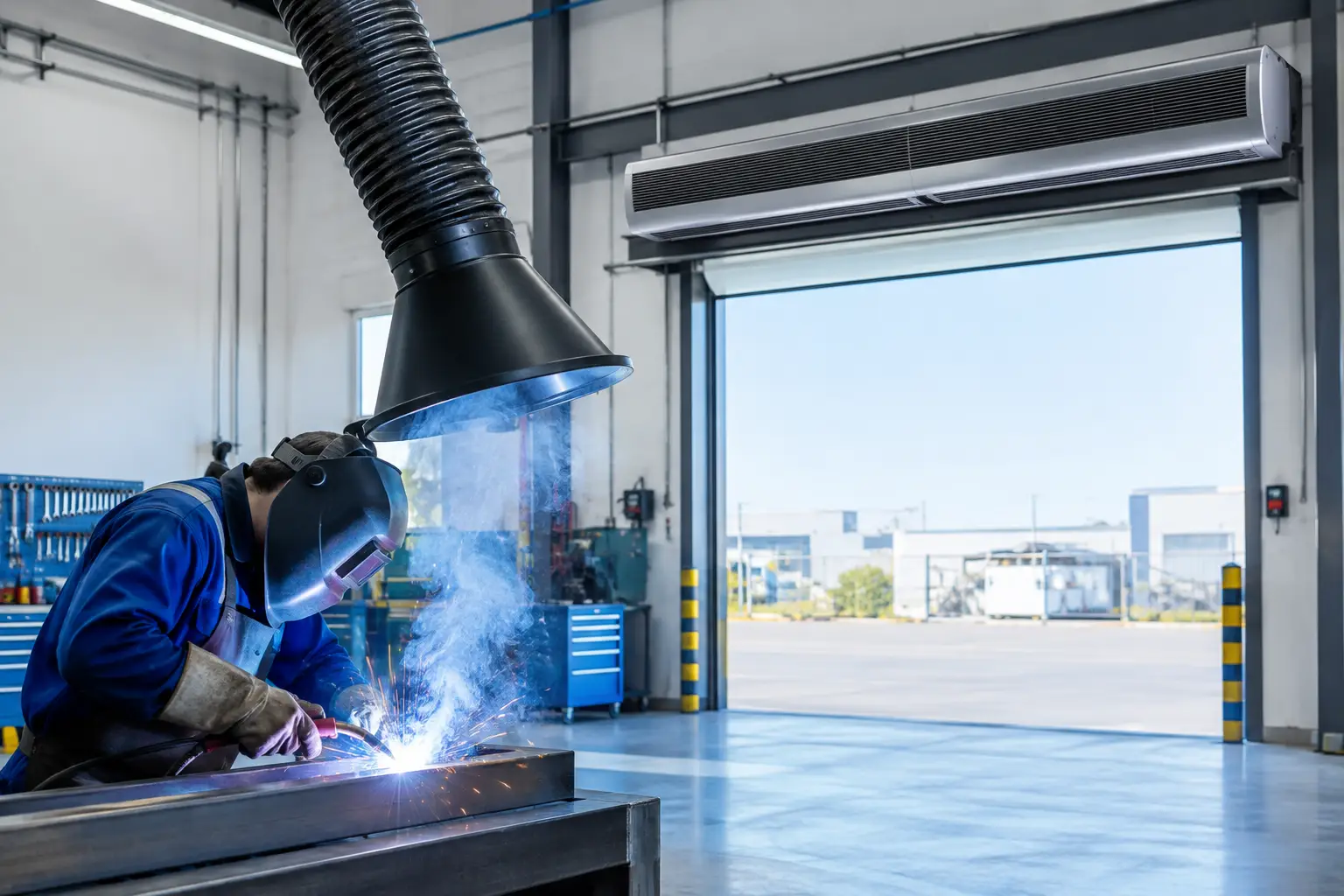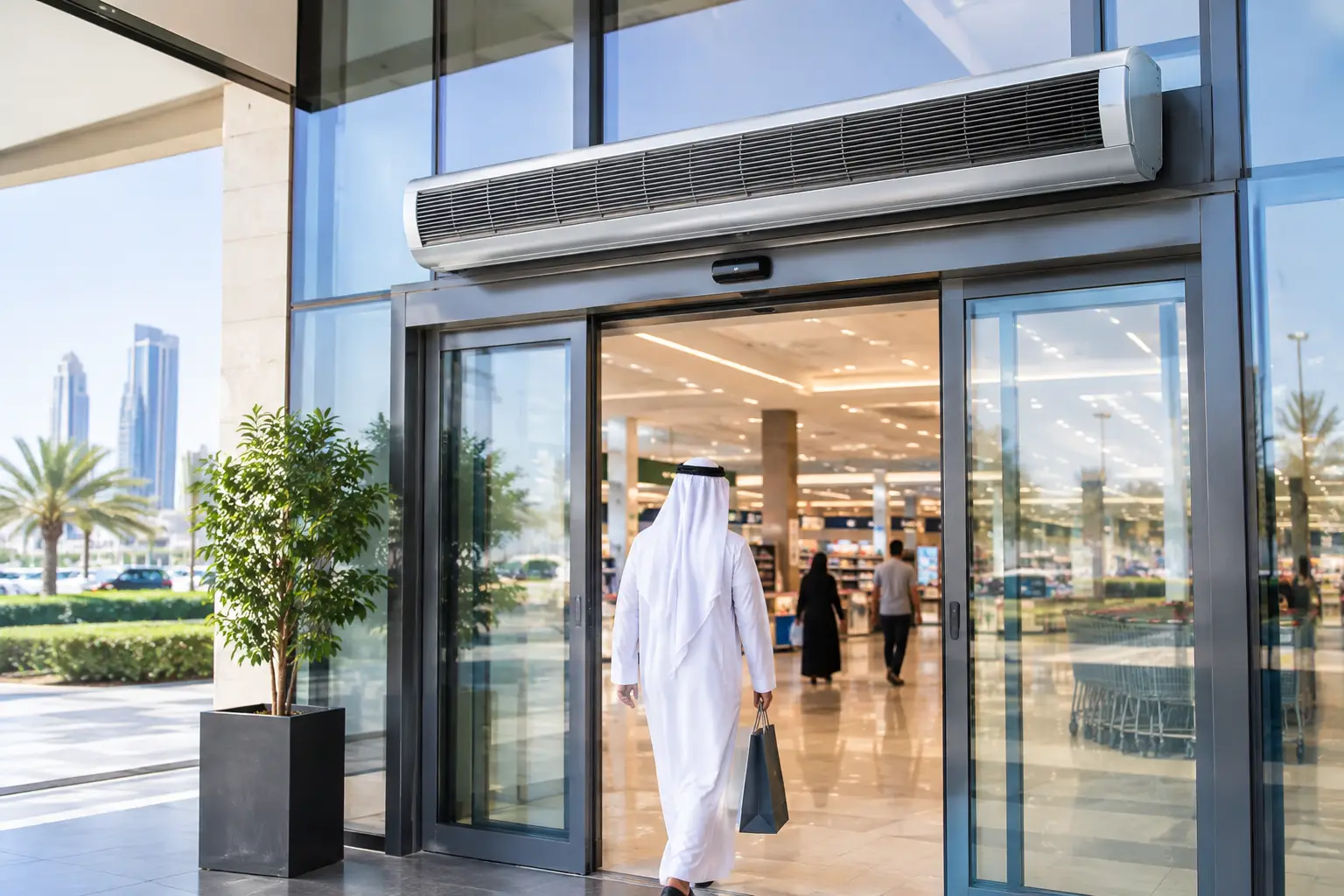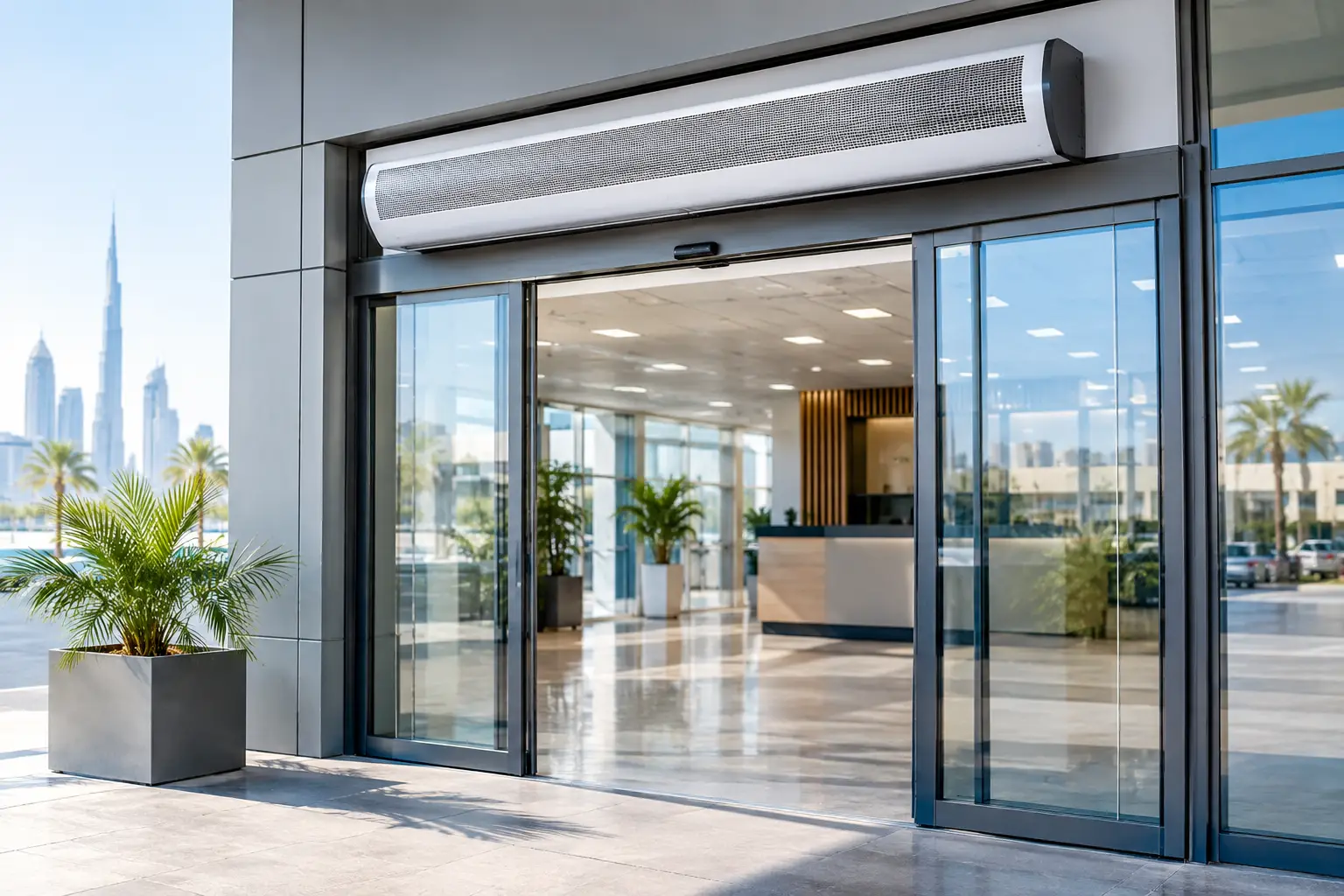
A loading bay door opens repeatedly during the hottest part of the day. A hotel lobby receives a constant flow of guests. A hypermarket entrance never truly closes. In these conditions, knowing how to lower HVAC overuse is not simply a matter of adjusting a thermostat. It is a building-envelope and operations issue – especially in desert and tropical markets, where outdoor heat, humidity, dust, and insects enter every time an access point opens.
When conditioned air escapes faster than the HVAC system can recover, cooling equipment runs longer, interior comfort becomes uneven, and energy costs rise. The answer is not to demand more output from an already burdened system. It is to reduce the heat load entering the facility and control how cooling is delivered.
Start With the Real Cause of HVAC Overuse
Commercial HVAC systems are often blamed for excessive run time when the root cause sits at the entrance. A unit may be correctly sized for the floor area, occupancy, lighting, and equipment load, yet still struggle because large openings continuously expose the interior to outside conditions.
This is most visible at high-traffic facilities in Dubai, Riyadh, Doha, Lagos, Nairobi, and similar hot-weather markets. At a busy entrance, cooled air spills outward while hot ambient air, humidity, airborne dust, and insects move inward. The HVAC system then has to remove the incoming sensible heat and, in humid locations, the additional moisture. That recovery cycle repeats all day.
Before changing setpoints or adding capacity, facility teams should identify where conditioned air is being lost. Examine main customer entrances, warehouse dispatch doors, service corridors, cold-room access points, workshop doors, and delivery receiving areas. A door that remains open for even a few minutes per hour can create a disproportionate cooling load when outside temperatures are extreme.
How to Lower HVAC Overuse at Building Entrances
The most effective approach is to reduce infiltration while preserving traffic flow. Keeping doors closed is useful, but it is not a complete operational strategy for facilities that rely on open, frequent, or long-duration access. Retail, hospitality, industrial, and logistics sites cannot ask customers, staff, forklifts, or deliveries to stop moving simply to protect indoor cooling.
An air curtain creates a directed, high-velocity air barrier across an opening. Properly selected and installed, it helps separate indoor and outdoor air masses without placing a physical obstacle in the path of people or goods. This reduces the loss of conditioned air and limits the entry of hot air, dust, humidity, and flying insects.
The distinction matters: an air curtain is not intended to replace the HVAC system. It protects the HVAC system from avoidable entrance loads. That means cooling equipment can spend less time compensating for conditions created at the doorway and more time maintaining the intended indoor environment.
For a large commercial entrance, the correct solution depends on opening width, mounting height, traffic frequency, exposure to wind, and the indoor-outdoor temperature difference. A compact decorative unit may suit a controlled retail doorway, while an industrial centrifugal air curtain is more appropriate for a tall warehouse or plant entrance with heavy vehicle movement. Selecting by door width alone is a common specification mistake.
Match Airflow to the Opening, Not the Catalog
Airflow must reach the floor or threshold area with enough force to establish a stable barrier. If the discharge stream loses momentum before reaching the bottom of the opening, hot outside air can pass underneath it. If the unit is oversized or poorly aimed, it may create unnecessary noise, turbulence, or discomfort near the entrance.
The best selection considers the full operating environment. A recessed ceiling model can support a clean finish in hospitality and premium retail locations. Commercial centrifugal flow systems provide stronger performance for demanding public entrances. Heavy-duty industrial units are designed for workshops, plants, loading areas, and other applications where entrance conditions are less controlled.
In desert locations, wind exposure and airborne sand should be part of the specification discussion. In tropical climates, humidity control becomes equally important. The goal is not generic airflow. It is dependable air isolation under the conditions the site actually faces.
Improve Controls Before Lowering Temperature Setpoints
Lowering the thermostat setting is a familiar response to warm indoor conditions, but it often increases HVAC run time without resolving the source of discomfort. If hot air is continually entering through an open doorway, a lower setpoint can make the system work harder while the entrance area still feels unstable.
Instead, coordinate HVAC operation with occupancy patterns and entrance activity. The cooling schedule should reflect when a building is genuinely active, not simply when it is open on paper. A mall retail unit, hotel lobby, or food distribution area may have predictable peak periods that require different control strategies from low-traffic hours.
Air curtains can also be controlled to operate only when needed. Door contacts, motion activation, building management controls, or timed schedules can reduce unnecessary operation while ensuring protection during active traffic periods. The right control method depends on the door type and how the facility is used. A frequently opened pedestrian entrance may benefit from automatic activation, while a loading door may need a control sequence tied to shutter position and logistics activity.
Do not treat controls as an afterthought. A high-performance unit operating at the wrong time, or with an uncoordinated door signal, will not deliver its full value.
Fix the Secondary Loads That Keep Equipment Running
Entrance infiltration is often the largest visible source of overuse, but it should be assessed alongside other operational loads. Poorly sealed access points, damaged door closers, gaps around service doors, and unnecessary open-door practices can undermine the performance of the entire cooling strategy.
Facility managers should also look for signs that the HVAC system is compensating rather than controlling. These include warm zones near entrances, frequent thermostat complaints, visible condensation in humid areas, dust accumulation near doors, and cooling equipment that runs continuously even when interior occupancy is moderate.
A practical review should include:
- Door opening frequency and the average time each opening remains exposed
- Door dimensions, mounting height, and the presence of side drafts or outdoor wind pressure
- Interior temperature and humidity conditions near entrances compared with central zones
- The condition of seals, automatic closers, shutters, and access procedures
- Current HVAC run patterns during peak traffic and low-traffic periods
This information helps teams distinguish between a capacity problem and an infiltration problem. Adding more cooling capacity may be justified in some facilities, but it should not be the first response when the building is losing cooled air through uncontrolled entrances.
Maintain the Barrier Between Indoor and Outdoor Conditions
Performance declines when equipment is installed correctly but not maintained. Dust accumulation, blocked intake areas, damaged controls, and changes in door operations can all reduce air curtain effectiveness. This is particularly relevant in dusty industrial zones and hot urban environments, where airborne particles can build up quickly.
Routine inspection should confirm that the unit starts as intended, airflow is evenly distributed across the opening, and the discharge angle remains correctly directed. Filter nets or intake screens, where fitted, should be kept clean according to site conditions. A facility with heavy dust exposure may require a more frequent inspection interval than a controlled hospitality entrance.
Maintenance should also include the door itself. An air barrier cannot fully compensate for a shutter that remains partially open, a damaged threshold seal, or a door management process that leaves access points exposed longer than necessary. The equipment and operating procedure need to work together.
Specify for Harsh Climate Performance, Not Average Conditions
For facilities across the GCC, MENA, and African markets, average-condition specifications can be misleading. The system must perform when outdoor heat peaks, when humidity rises, when sand or dust is present, and when traffic is at its highest. That is the operating point that determines whether cooling costs and comfort remain under control.
A proper consultation should assess the entrance as part of the wider climate-control system: the opening, traffic type, mounting constraints, exposure, desired indoor conditions, and operational schedule. This produces a more reliable result than selecting equipment based on price or nominal width alone.
FreezeeX supports commercial and industrial facilities with air curtain recommendations built for high-traffic, tropical, and desert-climate conditions. Request a consultation or project quote to assess the right air isolation solution for your entrance. A well-protected doorway gives the HVAC system a fair chance to do the job it was designed to do.