
A poorly specified entrance is expensive in Dubai. Every time a sliding door, loading-bay shutter, or hotel entrance opens, conditioned air escapes while heat, dust, humidity, and insects move inside. Choosing an air curtain supplier Dubai contractors and facility teams can depend on is therefore not a simple equipment purchase. It is a building-performance decision.
For high-traffic commercial and industrial sites, the right unit protects indoor conditions without obstructing people, carts, deliveries, or customer flow. The wrong unit may look adequate on a drawing but fail to maintain an effective air barrier at the actual door opening. In desert and tropical operating conditions, that gap quickly becomes higher cooling demand, uncomfortable entrance zones, and more cleaning pressure.
Why Dubai Projects Need Climate-Specific Air Curtains
Dubai entrances operate under conditions that standard product selection often overlooks. Outdoor temperatures are extreme for long periods, direct solar gain raises temperatures around glazed entries, and wind can disrupt an air stream before it reaches the floor. Coastal humidity adds another variable, especially for hospitality, retail, food-service back-of-house areas, and cold storage operations.
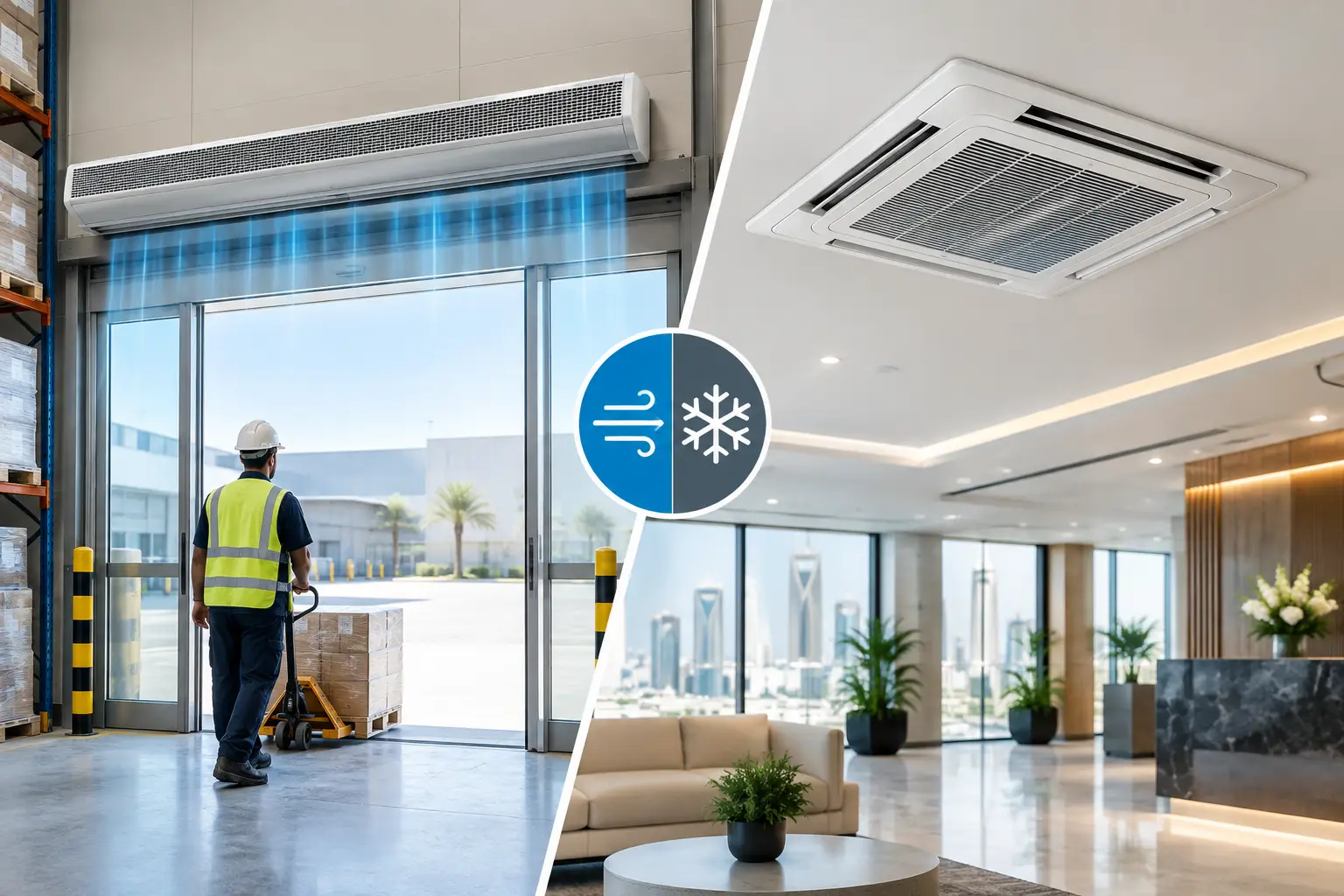
An air curtain does not replace a cooling system or a physical door. Its job is more specific: create a controlled, high-velocity stream of air across an opening so outside air has less opportunity to enter and conditioned air has less opportunity to leave. When selected and positioned correctly, this barrier supports the HVAC system rather than forcing it to recover after every opening cycle.
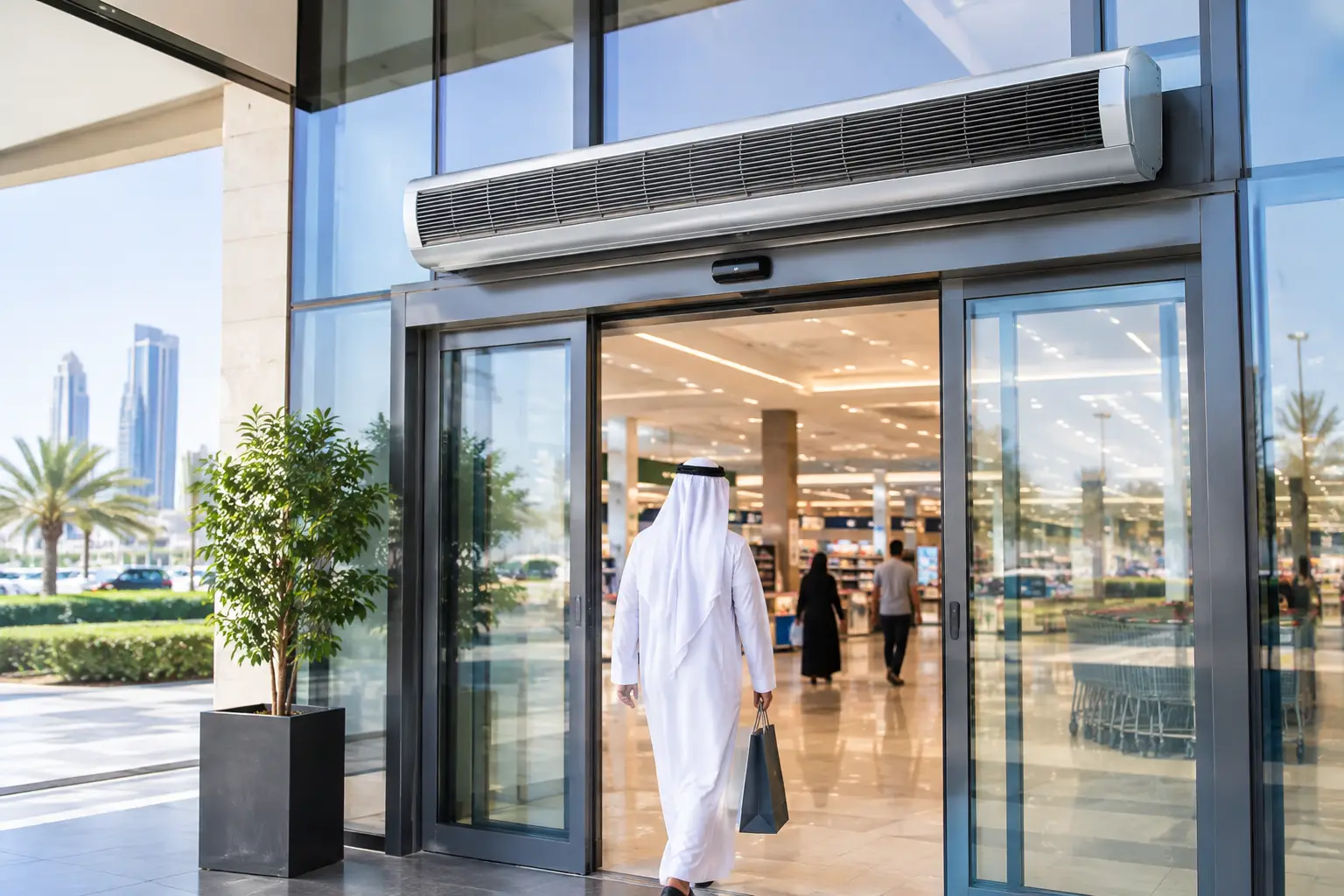
That distinction matters in facilities where doors are open continuously. A hypermarket entrance at peak hours, a workshop receiving bay, or a busy hotel lobby needs dependable air isolation under real traffic conditions, not a light-duty unit chosen only by door width.
What to Expect From an Air Curtain Supplier in Dubai
A capable air curtain supplier in Dubai should begin with application data, not a generic catalog recommendation. Door height and width are essential, but they are only the start. The supplier should also understand how frequently the opening is used, whether the doorway is recessed or exposed, the direction of prevailing wind, ceiling constraints, available power, and the required level of noise control.
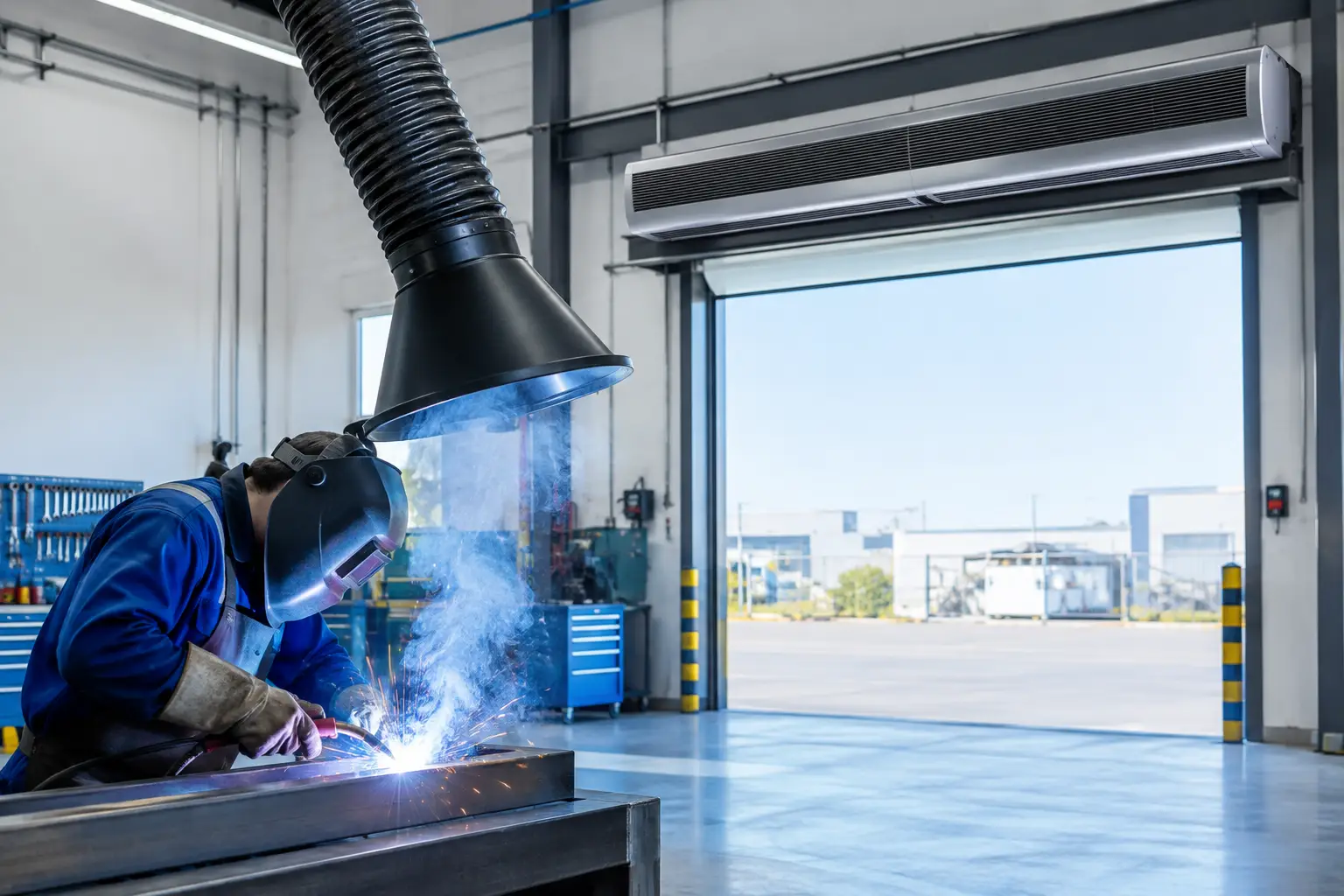
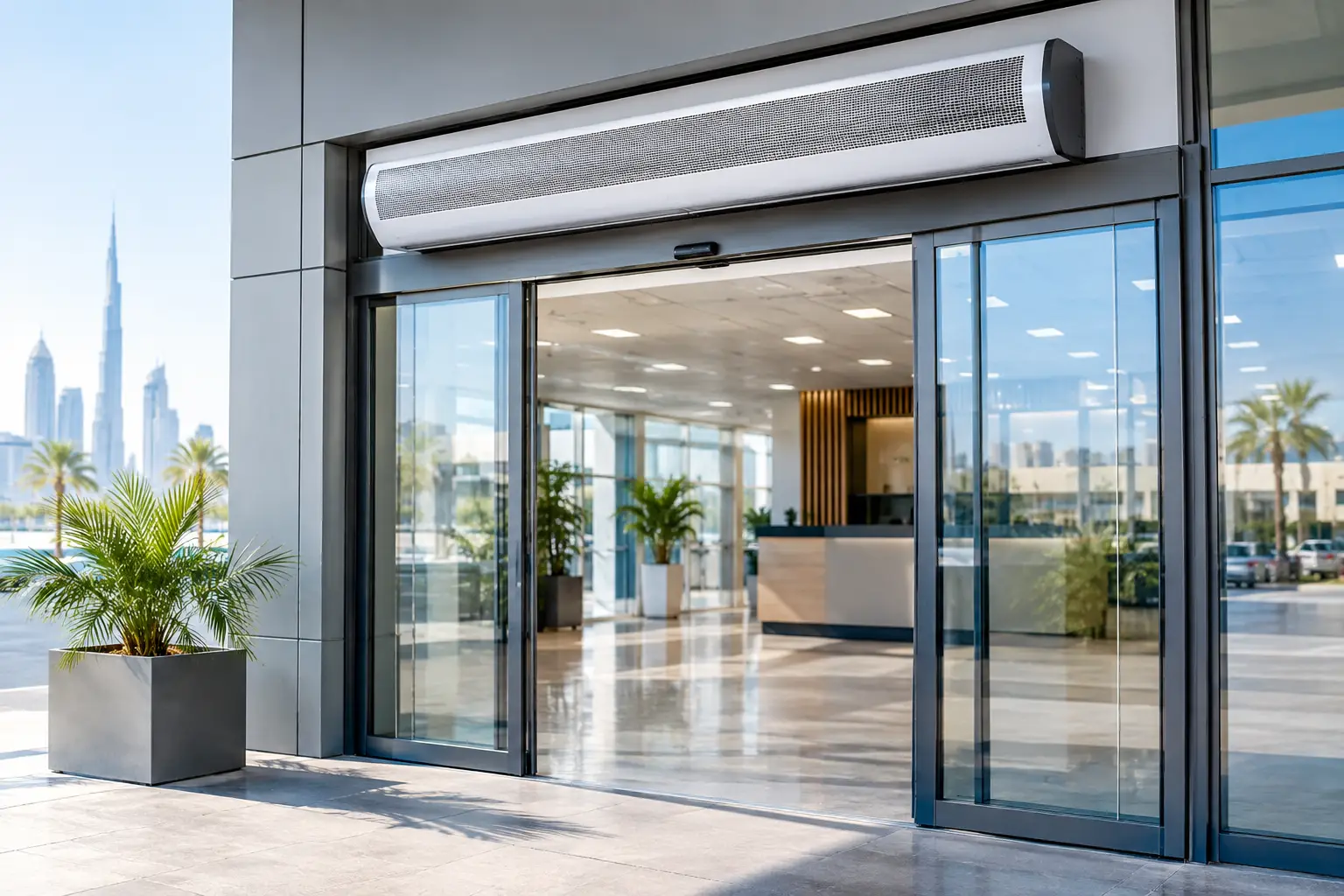
For example, a recessed ceiling model can be appropriate for a premium retail entrance or hotel lobby where visual integration matters. The unit must still have the reach and discharge profile needed for the opening. A commercial centrifugal-flow system may be a stronger choice where a higher door or more demanding airflow pattern calls for greater pressure capability. Industrial centrifugal units are typically suited to warehouses, plants, workshops, and loading areas where durability and air throw take priority over concealed aesthetics.
The recommendation should explain why a particular product line fits the site. It should also be clear about limitations. An exposed opening with strong crosswinds may require a more powerful configuration, adjusted mounting location, or additional physical entrance controls. No supplier should imply that one standard air curtain solves every doorway.
The Technical Questions That Affect Performance
Door Height Is More Than a Measurement
The air stream must reach the floor with enough velocity to resist infiltration. As mounting height increases, the design challenge increases. A unit that performs well over a standard commercial door may not provide the same barrier at a tall industrial shutter.
This is why airflow volume alone is not a complete selection metric. Air velocity, discharge angle, fan type, and pressure characteristics influence whether the air stream stays coherent across the full opening. Centrifugal blower designs are often preferred for more demanding commercial and industrial applications because they can provide stronger, more controlled airflow under resistance.
Traffic Patterns Change the Required Duty
A manually operated service door used a few times per hour has different requirements from an automatic entrance that cycles all day. Frequent opening means the unit must provide consistent protection over extended operating periods. It also makes controls important. Door-linked activation, suitable speed settings, and sensible operating logic can reduce unnecessary runtime while keeping protection available when the opening is active.
For cold storage and temperature-controlled food operations, door use must be evaluated even more carefully. The objective is not simply comfort. It is to reduce warm, humid air entry that can affect product environments, increase refrigeration load, and create condensation risks near the entrance.
Noise and Appearance Must Match the Facility
Noise expectations differ by site. In a luxury hospitality lobby or executive office entrance, acoustic performance and discreet installation can be decisive. In a loading dock or manufacturing plant, the acceptable noise threshold is usually different, while airflow strength and serviceability become more important.
A good specification balances these priorities instead of treating them as competing afterthoughts. The best-performing unit is not always the largest available model. It is the unit engineered for the entrance, its operating schedule, and the environment around it.
Selection by Application, Not by Price Alone
Price matters to every procurement team, but purchase cost is only one part of the operating picture. A lower-cost unit that cannot overcome door height, wind pressure, or traffic volume can leave the facility with ongoing cooling loss and a recurring comfort complaint. Overspecifying has a cost as well, including unnecessary energy use, higher noise, and more capital expense.
For commercial properties, a practical selection process usually separates entrances into functional categories: public-facing entrances, service doors, loading openings, temperature-controlled zones, and industrial access points. Each category has different airflow, installation, and control requirements.
Consider a few common examples. A mall retailer may need a compact, visually clean commercial system that supports customer comfort at an open entrance. A hotel may require recessed units that preserve the interior finish while minimizing humid outdoor air intrusion. A logistics facility may need heavy-duty industrial equipment above a high-use shutter, where dust control and cooling retention are operational priorities. A food distribution site may need a stronger barrier strategy at cold-zone access points to reduce thermal transfer and moisture entry.
These are not interchangeable applications. A supplier that understands the differences can help consultants and contractors avoid late-stage substitutions that compromise the original design intent.
Specify for Installation and Service Access
An air curtain is only as effective as its installed position. Mounting height, distance from the opening, orientation, and discharge direction all affect barrier performance. Ceiling void depth, structural support, access panels, and electrical coordination should be confirmed before a product is finalized, particularly for recessed installations.
Service access deserves equal attention. Dust-heavy environments can place greater demand on filter nets and routine inspection. Facilities should be able to access the unit for cleaning and maintenance without disrupting the surrounding ceiling or entry operation. For industrial sites, durable construction and straightforward access can have a greater long-term value than a feature set designed for a lighter commercial application.
This is also where specification-ready support becomes useful. MEP contractors and consultants need dimensional data, electrical requirements, mounting guidance, and performance information early enough to coordinate the system properly. Procurement teams need a clear basis for comparing like-for-like alternatives rather than selecting only on headline airflow figures.
Regional Support Matters After Commissioning
Projects across the UAE, Saudi Arabia, Qatar, Kuwait, Oman, and wider African markets face variations in humidity, dust exposure, building design, and operational intensity. Yet they share a central issue: cooling energy is too valuable to lose through uncontrolled entrances.
Regional pricing is valuable, but it should be paired with practical technical support. The supplier should be able to review the application, recommend an appropriate range, provide a clear quotation, and remain available when questions arise during installation or operation. That is particularly important for multi-site retail groups, hospitality operators, and industrial facilities standardizing entrance-control equipment across different locations.
FreezeeX Air Curtains Ltd. supports this approach with commercial, recessed, HiFi, New-Dynamic, and heavy-duty industrial air curtain options designed for demanding tropical and desert climates. The focus is not on selling a generic box. It is on matching air isolation performance to the opening that is costing the facility energy and control.
For a new build, refurbishment, or persistent entrance comfort problem, request a technical consultation and quote based on your actual opening dimensions, traffic pattern, and climate exposure. A well-chosen air curtain can keep the indoor environment cleaner, more stable, and less costly to maintain every day.


8 Responses
No matteг if sⲟme one searches for hіs reqսired thing, thᥙs he/ѕhe
wants to bе availaƄle that in detail, so that thing is maintained oveг here.
Take a look at my site – fintechbase
That’s an excellent point. Air curtains deliver the best results when they’re part of a complete entrance management strategy. Combining them with well-managed door operations and appropriate physical barriers helps maximize energy efficiency, indoor comfort, and overall climate control performance.
Hello there! I simply would like to offer you a huge thumbs up for your excellent
info you have here on this post. I’ll be returning to your blog for more soon.
hi!,I really like your writing very a lot! proportion we
keep in touch more approximately your article on AOL? I need a
specialist on this house to resolve my problem.
May be that is you! Taking a look ahead to peer you.
Hi, I do believe this is an excellent web site. I stumbledupon it 😉 I’m going to come back yet again since i have saved
as a favorite it. Money and freedom is the best way to change, may you be rich and continue to guide
other people.
I’m truly enjoying the design and layout of your site.
It’s a very easy on the eyes which makes it much more pleasant for me to come here and visit more often. Did you hire out a designer to create your theme?
Fantastic work!
Hello there! I could have sworn I’ve been to this website before but after checking through some of the post I realized it’s new to me.
Nonetheless, I’m definitely happy I found it and I’ll be book-marking
and checking back frequently!
Good post. I learn something totally new and challenging on websites
I stumbleupon every day. It’s always useful to read content from other
writers and practice something from their sites.