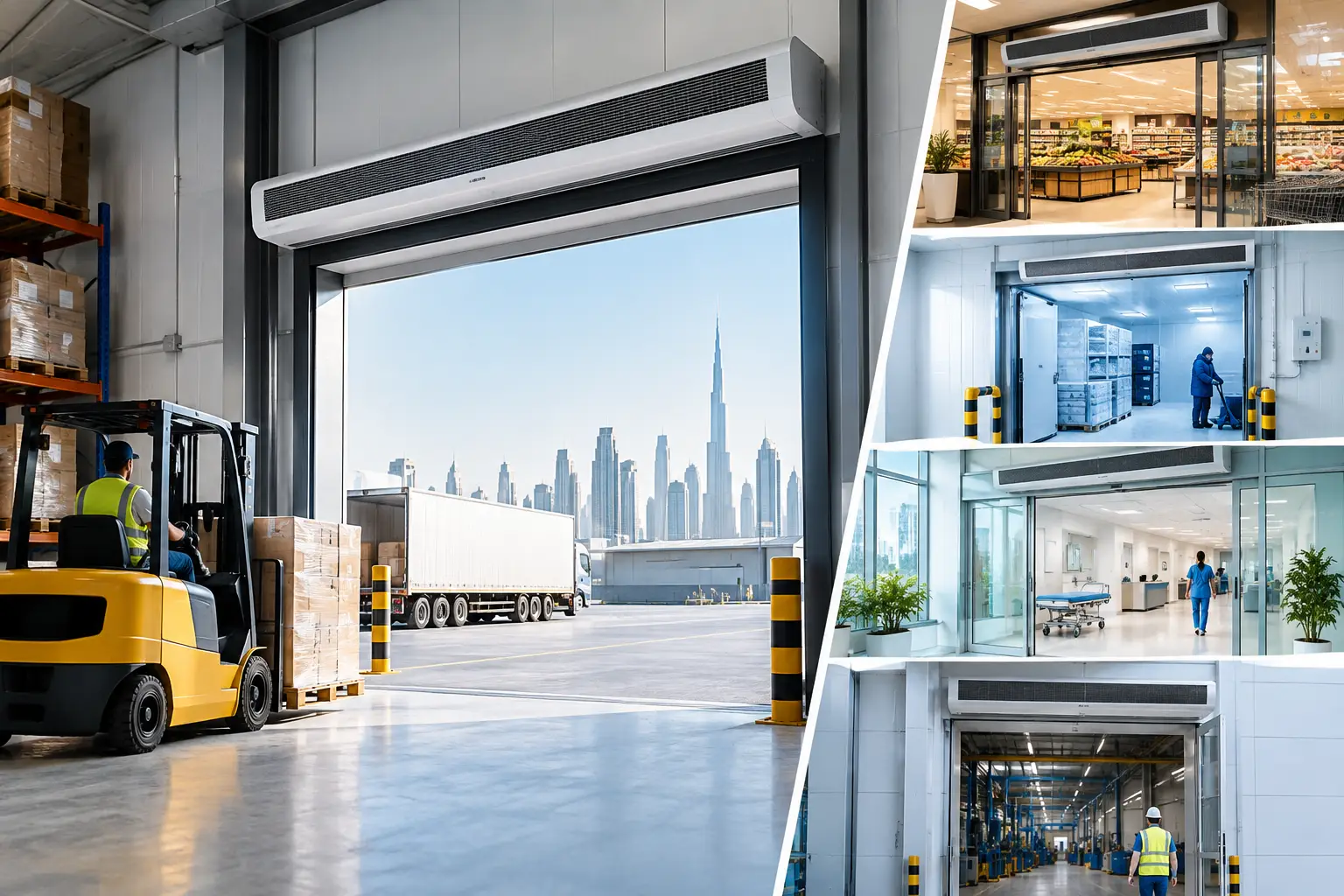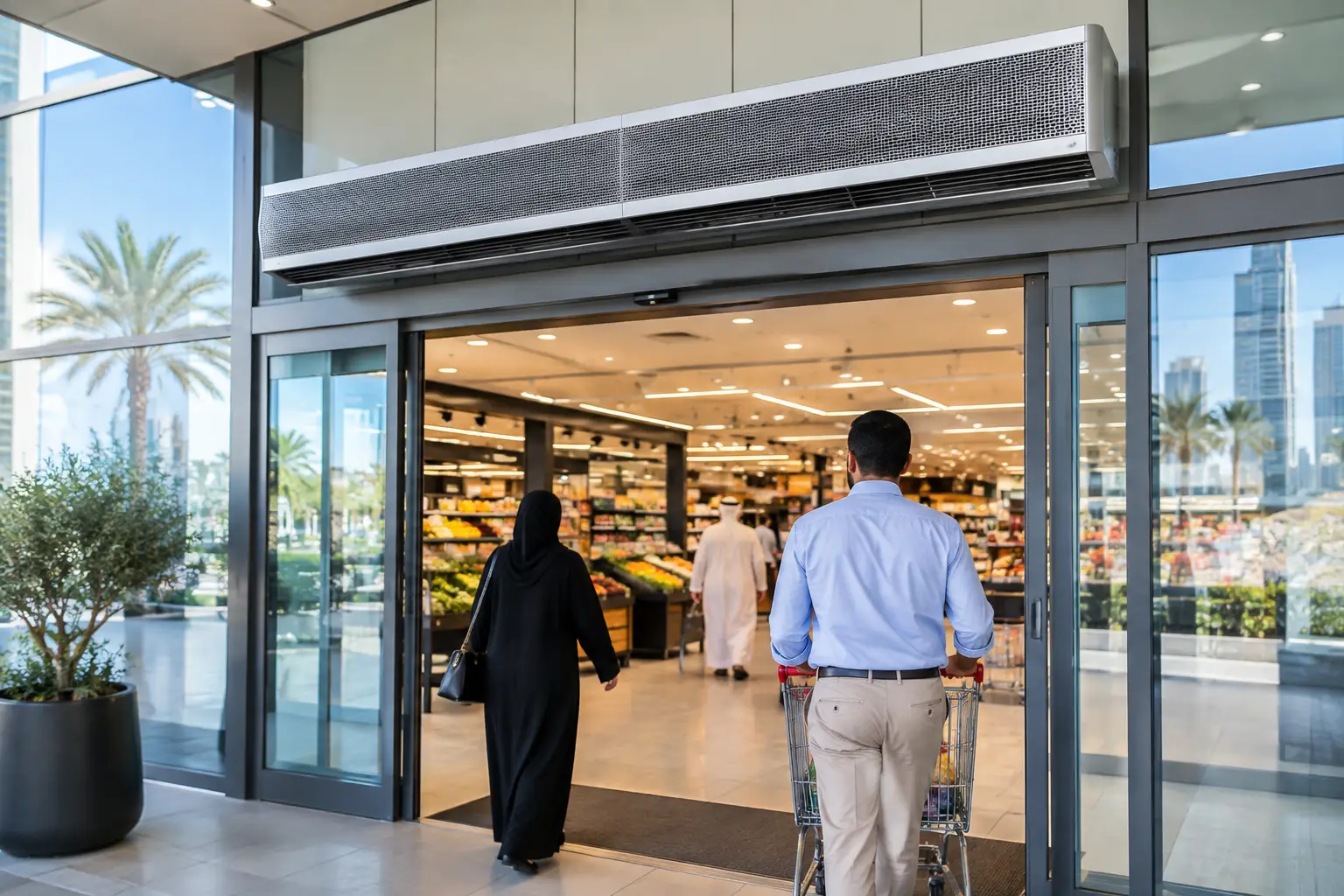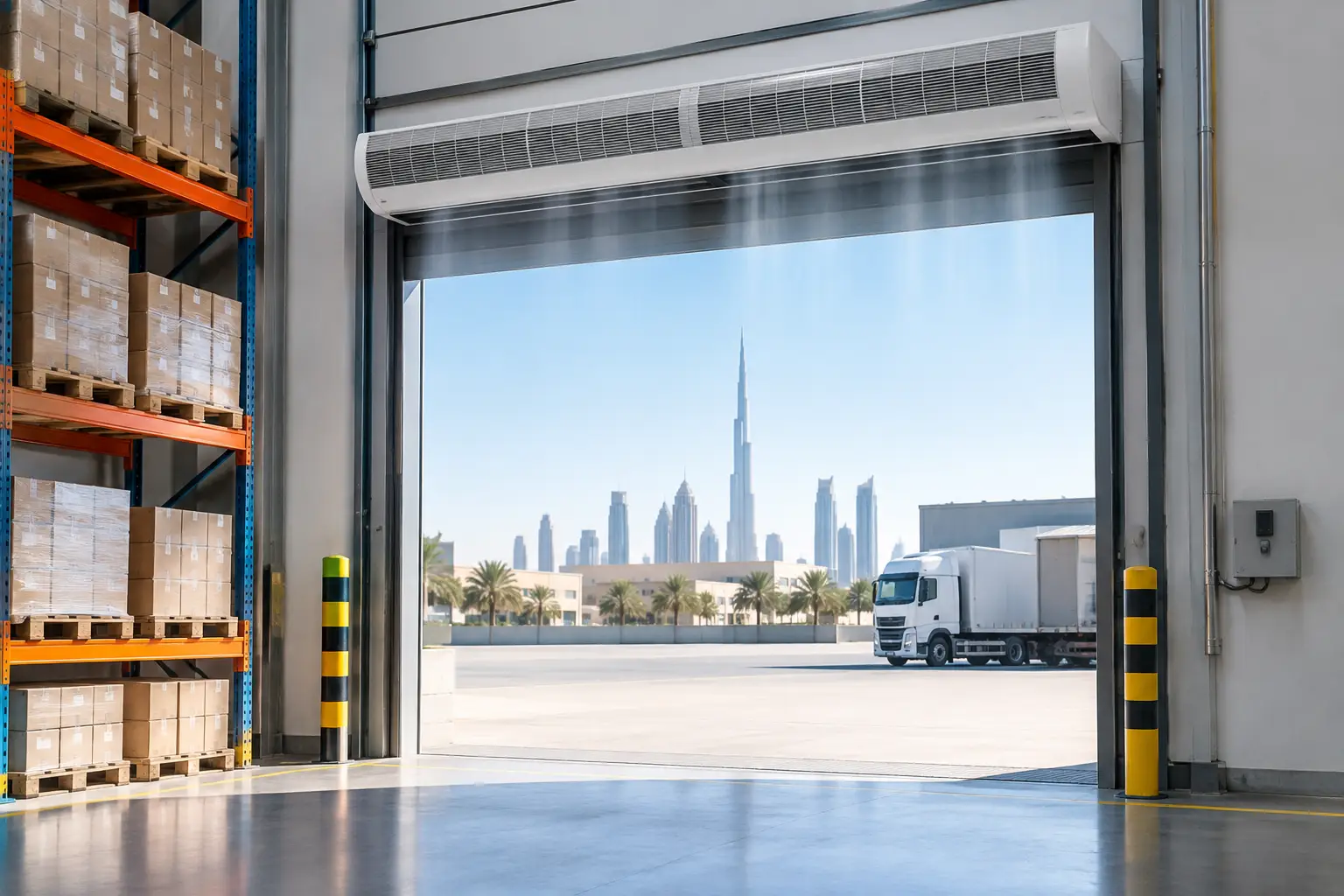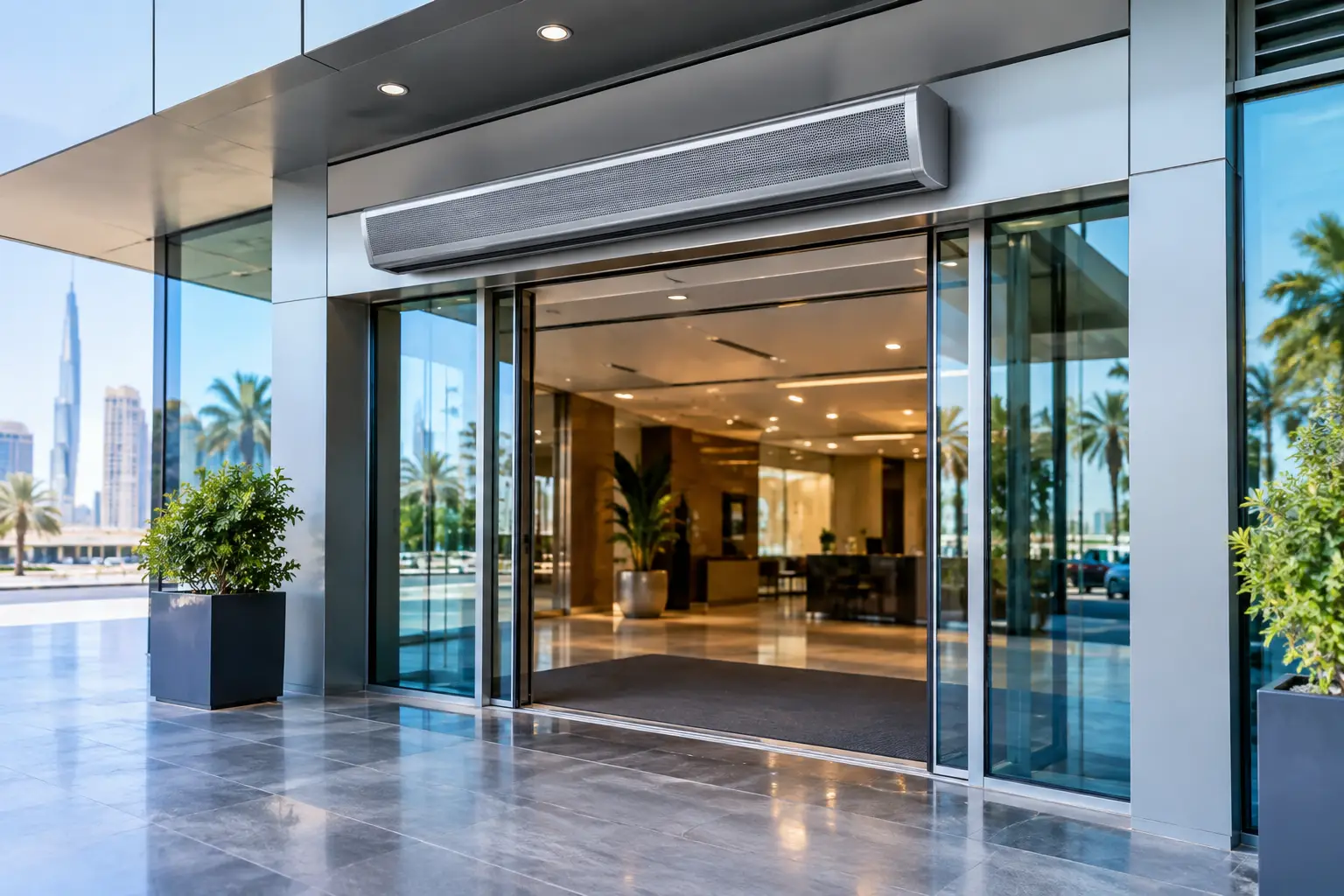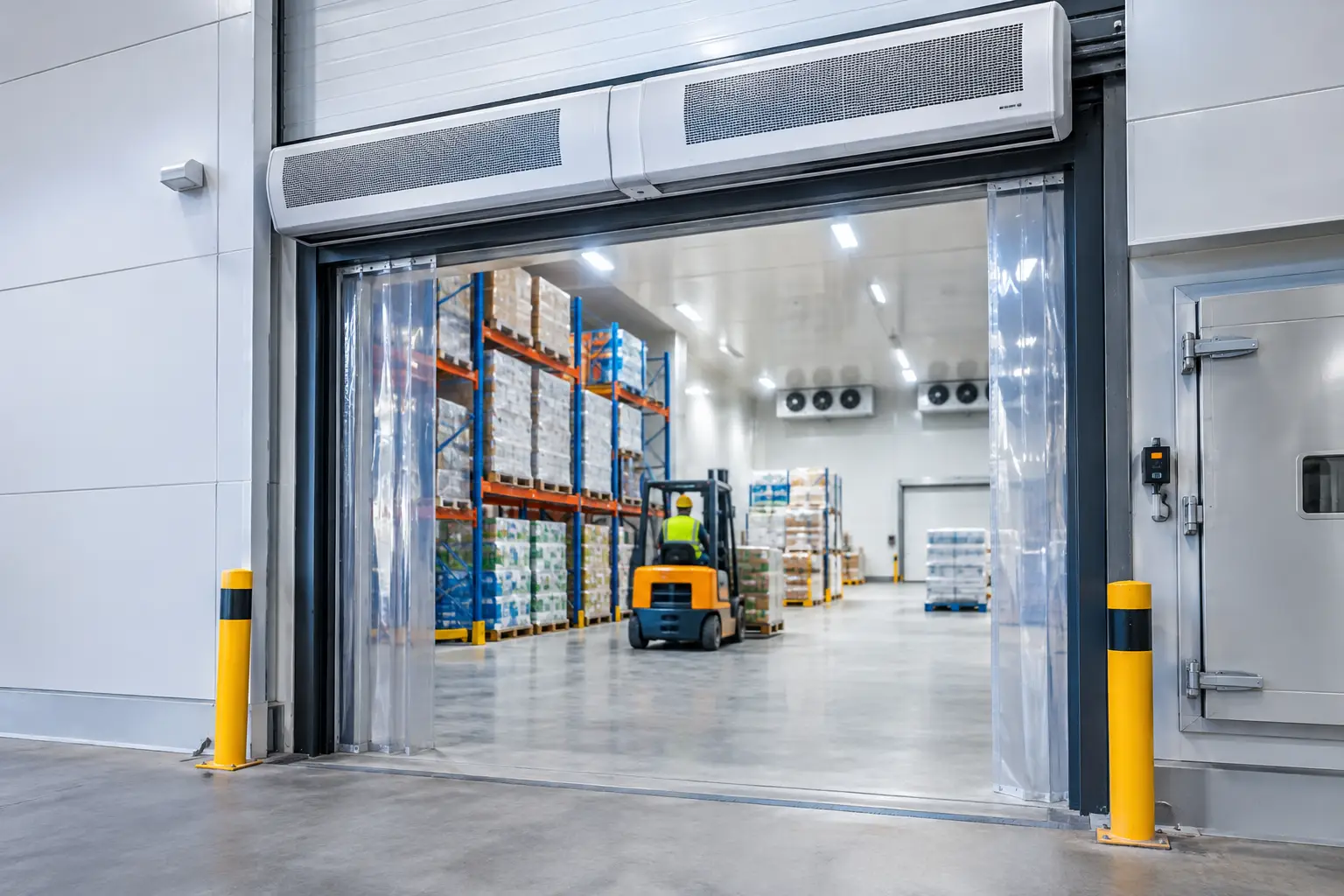
A busy loading bay in Dubai, a supermarket entrance in Riyadh, or a food processing facility in Lagos can lose conditioned air every time its doors open. That is why air curtain technology trends are moving beyond the simple idea of blowing air across a doorway. For commercial and industrial decision-makers, the focus is now on controlled air isolation that supports HVAC performance, protects sensitive interiors, and suits the realities of heat, humidity, dust, and frequent traffic.
The shift matters because entrances are no longer treated as passive openings. They are active points where outdoor heat, airborne dust, humidity, insects, and operational traffic meet the indoor environment. A well-specified air curtain can help manage that boundary without disrupting the movement of people, carts, or goods.
Which Air Curtain Technology Trends Matter Most?
The most useful changes are not necessarily the most complex. They are the ones that make system selection more application-specific, operationally practical, and easier to coordinate with a building’s HVAC strategy.
1. Application-specific airflow is replacing one-size-fits-all selection
Air curtains are increasingly selected according to door height, width, mounting position, traffic frequency, pressure conditions, and the level of environmental separation required. A decorative retail entrance, for example, has different needs from a warehouse shutter door or a chilled loading area.
This is changing how consultants and contractors write specifications. The question is no longer simply, “What unit fits above the door?” It is whether the unit can create a consistent air stream that reaches the opening threshold under actual site conditions.
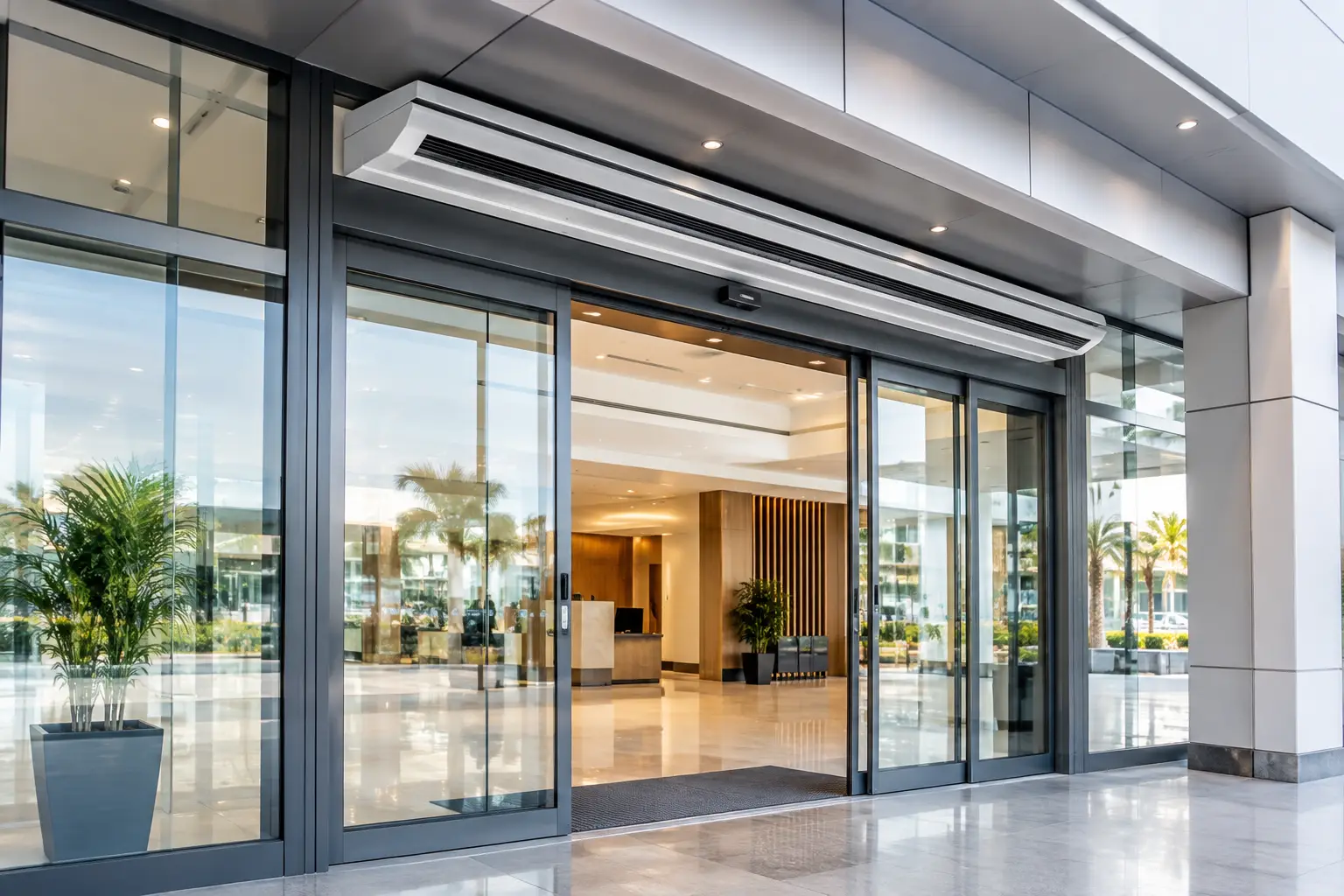
For projects with demanding commercial entrances, centrifugal air curtain designs are often considered where stronger, more controlled airflow is required. Recessed solutions may be better suited to projects where the architectural finish is a priority, provided the mounting arrangement supports effective discharge across the opening.
2. Smarter control strategies are becoming a specification priority
An air curtain running at full output when the doorway is closed wastes operating time. Conversely, a unit that responds too slowly when doors open can allow unwanted air infiltration at the exact moment protection is needed.
Current specification discussions increasingly consider how an air curtain will be controlled in day-to-day operation. Depending on the application, this may involve coordination with door status, operating schedules, or facility management routines. The objective is practical: run the right airflow when the entrance is active, rather than treating every hour as the same operating condition.
For facility managers, smarter control is not just an energy conversation. It can also reduce unnecessary runtime, limit noise during quieter periods, and support more consistent indoor comfort near customer-facing entrances.
3. Energy performance is being evaluated as part of the whole entrance system
Air curtains do not replace properly designed HVAC equipment or well-maintained doors. They support both by reducing the amount of outdoor air that enters during frequent opening cycles. In hot and humid GCC, MENA, and African markets, that can be particularly relevant because outdoor air brings a substantial heat and moisture burden into conditioned spaces.
The strongest project decisions examine the entrance as a system:
- Door opening frequency and average open duration
- Indoor and outdoor temperature and humidity difference
- Door geometry, including side gaps and mounting clearance
- Building pressure conditions and nearby exhaust or supply air movement
- Pedestrian, trolley, forklift, or loading traffic
- The contaminants that must be managed, such as dust, insects, fumes, or humidity
An air curtain may deliver meaningful operational value at a high-traffic supermarket entrance but have a different role at a pharmaceutical access point, where control of airborne contaminants and process discipline may drive the specification. The principle is consistent, but the performance target changes.
How Does Climate Change the Selection Process?
Desert heat, tropical humidity, and dust-laden outdoor air put greater pressure on entrance climate control. In locations such as Abu Dhabi, Doha, Muscat, Cairo, Nairobi, and Casablanca, a system must be selected for local operating conditions rather than copied from a generic schedule.
Heat and humidity require a stable air barrier
When conditioned indoor air meets extreme outdoor conditions at an open door, the resulting infiltration can affect occupant comfort and force HVAC systems to work harder. Humid environments add another concern: moisture entering through active entrances can affect comfort, surfaces, and temperature-sensitive operations.
A stable, correctly directed air stream is the essential requirement. Excessively weak airflow may not reach the floor area. Excessively aggressive airflow can create discomfort or interfere with normal entrance use. This is why discharge direction, installation height, and fan selection should be reviewed together rather than in isolation.
Dust and industrial contaminants change the operational goal
For warehouses, manufacturing facilities, workshops, and logistics centers, the priority may be limiting dust and outdoor debris while maintaining continuous movement. Restaurants and food processing facilities may prioritize insect deterrence and cleanliness. Hospitals and pharmaceutical environments may require closer attention to the interface between public circulation areas and controlled interior zones.
No single air curtain configuration is ideal for every one of these situations. The right recommendation depends on the opening and the exposure, not the building label alone.
Comparing Current Air Curtain Priorities by Application
| Application | Primary entrance challenge | Technology priority | Selection consideration | |—|—|—|—| | Retail stores and malls | Frequent pedestrian traffic and comfort | Controlled airflow and discreet integration | Door width, mounting appearance, customer comfort | | Supermarkets and restaurants | Heat, insects, and high opening frequency | Reliable daily operation and responsive control | Peak traffic periods and proximity to food areas | | Warehouses and logistics centers | Large openings, dust, and vehicle movement | Heavy-duty airflow capability | Opening height, door type, and loading activity | | Factories and workshops | Dust, fumes, and continuous operational access | Industrial-duty application fit | Internal pressure conditions and contaminant exposure | | Cold storage and food facilities | Temperature separation and controlled access | Targeted air isolation | Door cycle frequency and process requirements | | Hospitals and pharmaceutical sites | Indoor environmental protection | Precise application assessment | Entrance zoning and facility protocols |
What Is Driving Product Design and Specification?
Air curtain technology is progressing in several connected directions. These trends should be treated as selection prompts, not automatic requirements for every project.
Compact integration for architect-led projects
Architects and developers increasingly expect entrance equipment to support, rather than dominate, the visual design. Recessed ceiling air curtains can help retain a clean frontage where ceiling conditions and service access allow. The trade-off is that visual integration must never compromise the unit’s discharge path or maintenance accessibility.
Higher expectations for industrial durability
Industrial projects are demanding more than an air curtain that works under ideal conditions. Entrances may experience long operating hours, higher dust exposure, wide openings, and repeated impacts from operational traffic. This is driving attention toward industrial centrifugal configurations and product families designed for more demanding commercial use.
Greater attention to noise in occupied spaces
Noise has become a more visible consideration in hotels, offices, premium retail, healthcare settings, and customer-facing food venues. Low perceived noise supports comfort, but quiet operation cannot be assessed separately from airflow performance. The correct balance depends on the application and required separation level.
Better coordination between MEP and operations teams
A common reason air curtain projects underperform is that the product is chosen late, after ceiling details, electrical provisions, door hardware, and HVAC air distribution have already been finalized. The current trend is earlier coordination between MEP consultants, architects, HVAC contractors, and facility teams.
That coordination can prevent avoidable compromises, such as inadequate mounting space, unsuitable discharge direction, or a system selected without considering the door’s true operating cycle.
A Practical Specification Workflow for Consultants and Contractors
A disciplined selection process improves the chance that an air curtain will perform as intended. For new builds, this should happen before final coordination drawings. For retrofit projects, it should begin with a site review.
- Define the opening. Record clear door width, height, mounting location, door type, and whether the opening is exposed to wind or pressure differences.
- Understand traffic behavior. Identify how often the door opens, for how long, and whether movement involves pedestrians, carts, forklifts, or deliveries.
- Set the protection objective. Determine whether the main concern is cooling loss, dust, humidity, insects, smoke, fumes, comfort, or protection of a controlled interior environment.
- Review HVAC interaction. Consider nearby supply air, return air, exhaust, and pressure conditions that may influence the air stream.
- Match the product category to the duty. Choose between recessed, commercial, high-performance commercial, or industrial air curtain approaches based on the opening and operating environment.
- Plan for access and operation. Confirm electrical coordination, service clearance, control expectations, and the people responsible for daily operation.
Where Does It Depend on the Project?
Some trends are widely relevant, but not universal. A recessed air curtain may be appropriate for a hotel lobby yet unsuitable for a high-bay industrial shutter. A powerful industrial configuration can be necessary at a logistics entrance but excessive at a narrow, low-traffic retail doorway.
Likewise, advanced control integration makes most sense where opening patterns vary considerably or where facility teams actively manage energy use. For a consistently active entrance, dependable airflow and correct mounting may matter more than complex automation.
The decision should always be driven by site conditions, operational risk, and the performance outcome required at the opening.
Specify for the Entrance You Actually Have
The direction of air curtain technology is clear: better results come from better matching, not from selecting the most complex unit by default. For facilities operating in tropical, humid, and desert climates, entrance air isolation should be considered early as part of cooling-loss control, indoor comfort, and environmental protection.
FreezeeX Air Curtains Ltd. can review your entrance dimensions, traffic pattern, mounting constraints, climate exposure, and HVAC objectives to recommend a suitable commercial or industrial solution. Request a project consultation and quotation before finalizing your next entrance specification.