Humidity shows up at the door long before it shows up on a sensor report. In a hotel loading bay, a hypermarket entrance, or a cold room access point, moist outside air pushes inward every time the door opens. That is why selecting the right air curtain for humid environments is not a cosmetic decision. It is an operating-cost decision, a hygiene decision, and in many facilities, a product-protection decision.
In hot and humid markets, the entrance is often the weakest point in the building envelope. Conditioned air escapes, warm moisture enters, and the HVAC system works harder to recover. The result can be felt immediately – sticky indoor conditions, condensation near thresholds, fogging around temperature-controlled areas, and a steady rise in cooling demand. For facilities in places such as Dubai, Doha, Muscat, Lagos, Nairobi, and coastal North African cities, this is a daily operating problem, not a seasonal one.
Why humid sites need a different air curtain approach
A standard entrance solution may perform adequately in mild conditions, but humidity changes the requirement. Moist air is heavier in impact even when it is not heavier in density. It carries latent heat, drives condensation risk, and can undermine comfort faster than dry heat alone. When entrance traffic is high, that moisture load compounds quickly.
An air curtain for humid environments has to do more than create a visible air stream. It needs enough air velocity and correct coverage to hold a stable barrier across the full opening height and width. If the airflow is too weak, too narrow, or poorly distributed, humid air slips through at floor level and along the edges. That weakens indoor climate control and reduces the energy-saving value of the system.
This is especially relevant in tropical and desert-climate markets where buildings may face two different pressures at once. Coastal locations bring high humidity and salt-laden air. Inland and desert locations can combine intense heat, dust, and sudden shifts between dry outdoor conditions and heavily cooled interiors. In both cases, entrance protection has to be selected by application, not by price tag alone.
What an air curtain for humid environments actually does
At a technical level, the unit creates a high-velocity air barrier across an opening. That barrier reduces air exchange between indoor and outdoor zones when the door is open. In humid conditions, the practical benefit is lower moisture infiltration, reduced cooling loss, and better control over indoor air quality.
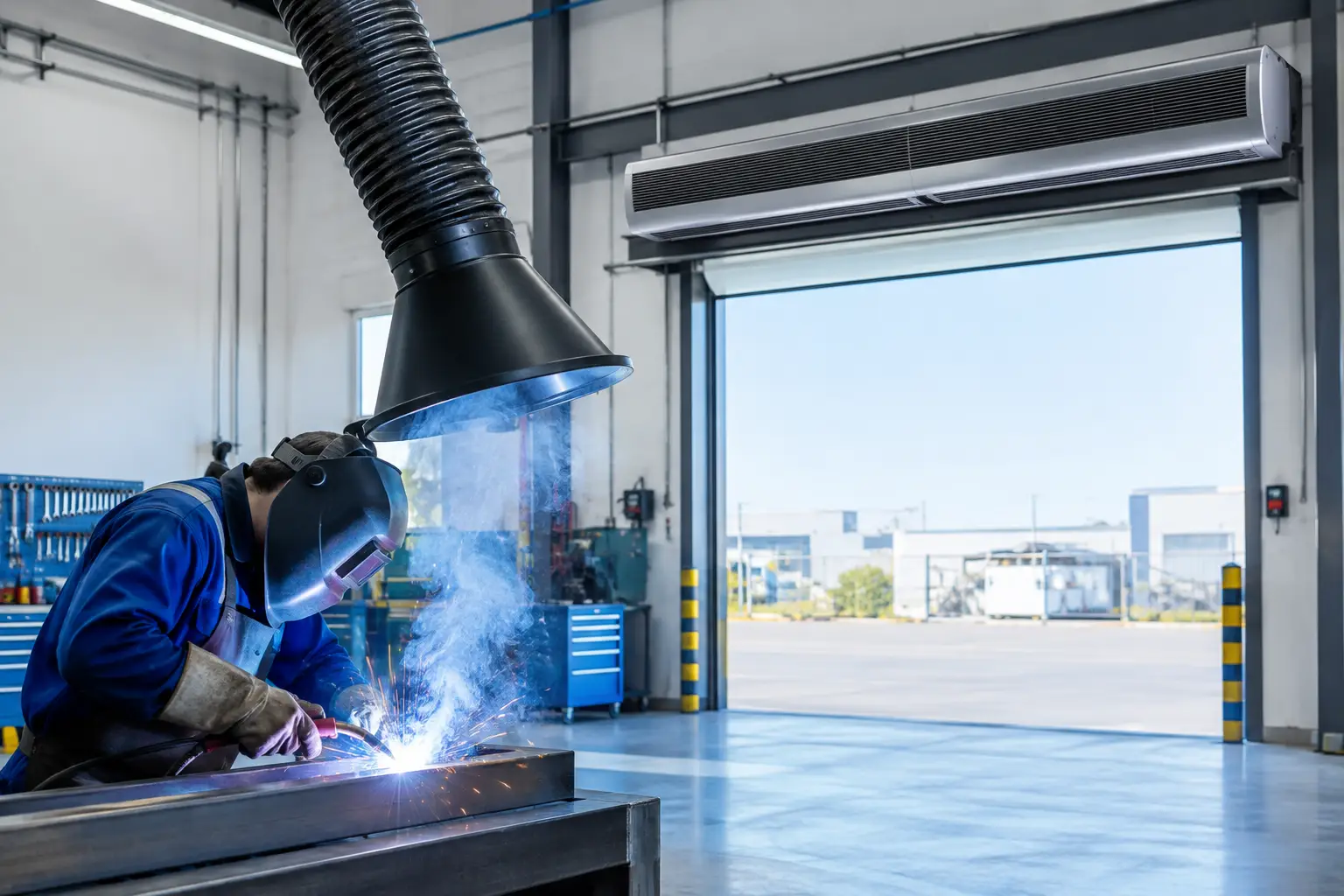
For a retail entrance, this helps maintain customer comfort near the doorway and reduces the load on the cooling system during trading hours. For a cold storage anteroom or food-related operation, it can help limit condensation and support cleaner separation between zones. For industrial facilities, it adds another layer of protection against airborne contaminants, insects, and warm air intrusion.
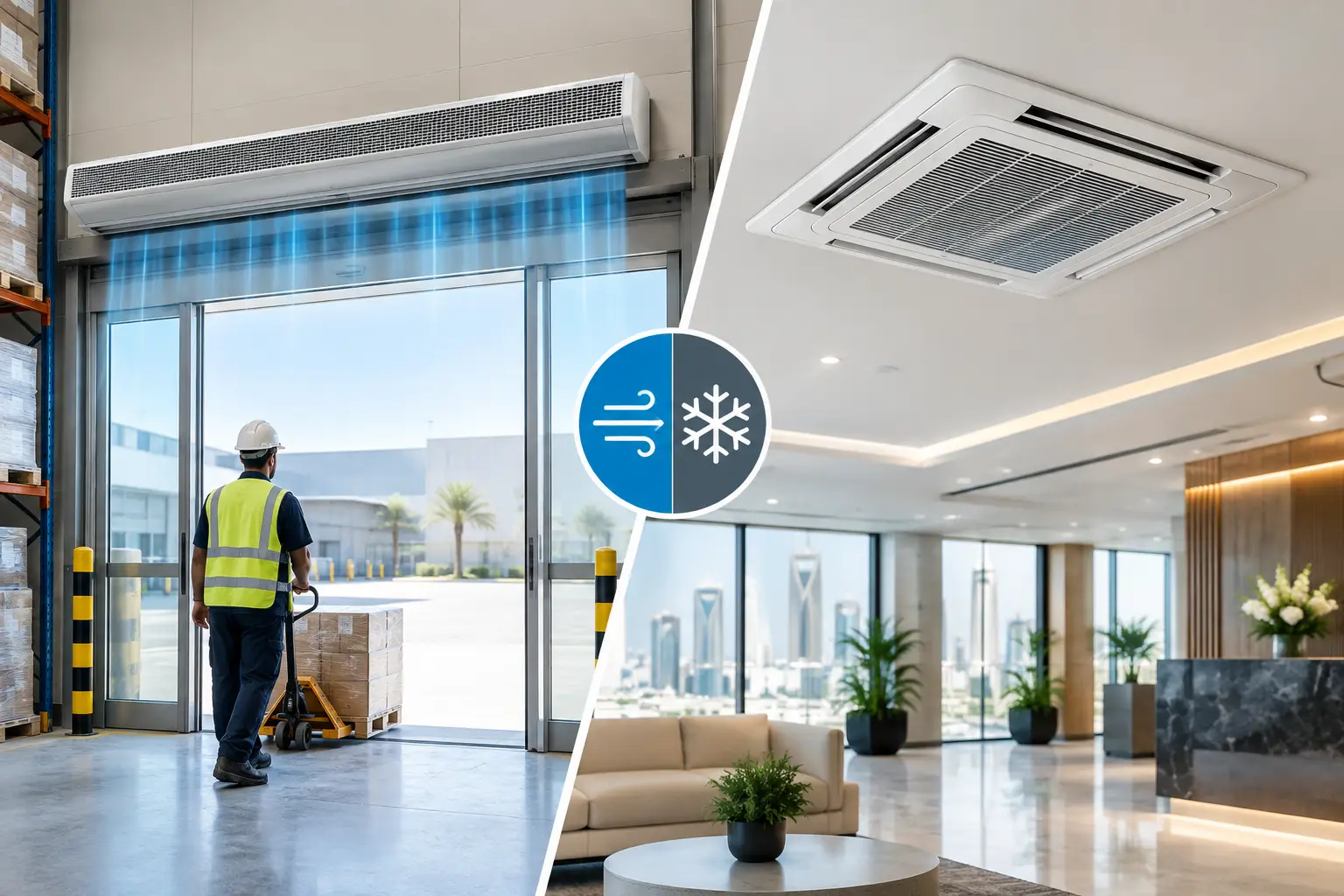
The key point is that an air curtain does not remove humidity like a dehumidifier. It reduces how much humid air enters in the first place. That distinction matters because many project teams expect one piece of equipment to solve a whole climate-control problem. In practice, the air curtain works best as part of an entrance control strategy that also considers door type, door opening frequency, pressure balance, and HVAC design.
Where performance is won or lost
The first factor is mounting height. A unit that performs well over a standard commercial door may not be suitable for a taller industrial opening. As mounting height increases, the system needs stronger throw and more stable air delivery to maintain protection at floor level.
The second factor is blower design. Centrifugal systems are often preferred for commercial and industrial applications because they can deliver more uniform airflow and stronger pressure characteristics across the opening. In humid, high-traffic sites, that consistency matters more than a headline specification pulled from a catalog.
The third factor is the opening itself. A recessed entrance, a vestibule, or a relatively sheltered doorway is easier to protect than a fully exposed loading entrance facing wind and heavy traffic. In challenging conditions, the barrier has to resist both air infiltration and environmental disturbance. That is why consultants and contractors should look at real site conditions rather than treating all doors as equal.
Noise is another trade-off. Higher air performance can mean higher sound levels if the product is not engineered well. In hospitality, premium retail, and office lobbies, acoustic control matters alongside climate performance. In a plant, warehouse, or workshop, airflow strength may take priority. Good specification is about balancing these requirements, not optimizing one while ignoring the rest.
Best applications for an air curtain for humid environments
Some applications see fast payback because the humidity problem is constant and measurable. Cold chain facilities are a strong example. When warm, moist ambient air reaches a cooler internal zone, condensation risk rises immediately. A properly selected air curtain helps reduce that transfer and supports more stable operating conditions around doorways.
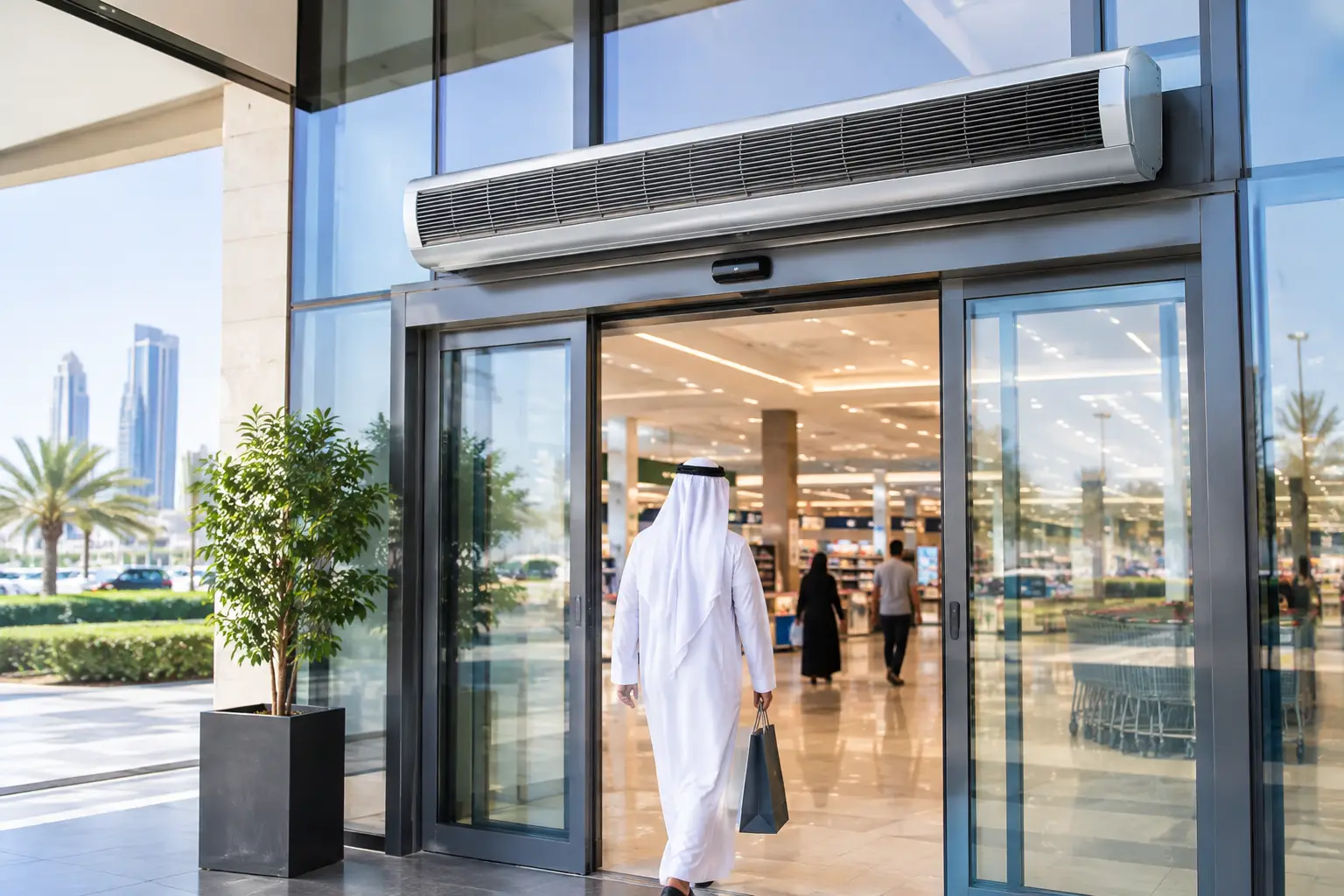
Hypermarkets and supermarkets also benefit, especially at main entrances, back-of-house delivery points, and access doors connecting conditioned and non-conditioned spaces. Every minute of door-open time increases HVAC strain. An effective air barrier helps protect comfort near the entrance and lowers the burden on cooling equipment.
Hotels, hospitals, malls, and commercial towers face a different version of the same issue. Their concern is often guest comfort, cleaner entry conditions, and controlled cooling loss in high-traffic openings. In humid climates, the difference between a protected entrance and an unprotected one is often visible in indoor comfort complaints and utility performance.
Industrial sites, workshops, and production plants may need a heavier-duty solution. Here, the air curtain often serves multiple functions at once – limiting hot air ingress, reducing dust and insects, and helping maintain a more controlled internal environment. In desert and tropical regions, that combination is often more valuable than any single feature.
How to specify correctly
The right specification starts with the opening dimensions, but it should not end there. Traffic frequency, indoor temperature setpoint, exposure to crosswinds, and surrounding humidity levels all influence performance. A door that opens every few minutes needs a different level of protection than one that stays open for long periods or serves continuous trolley traffic.
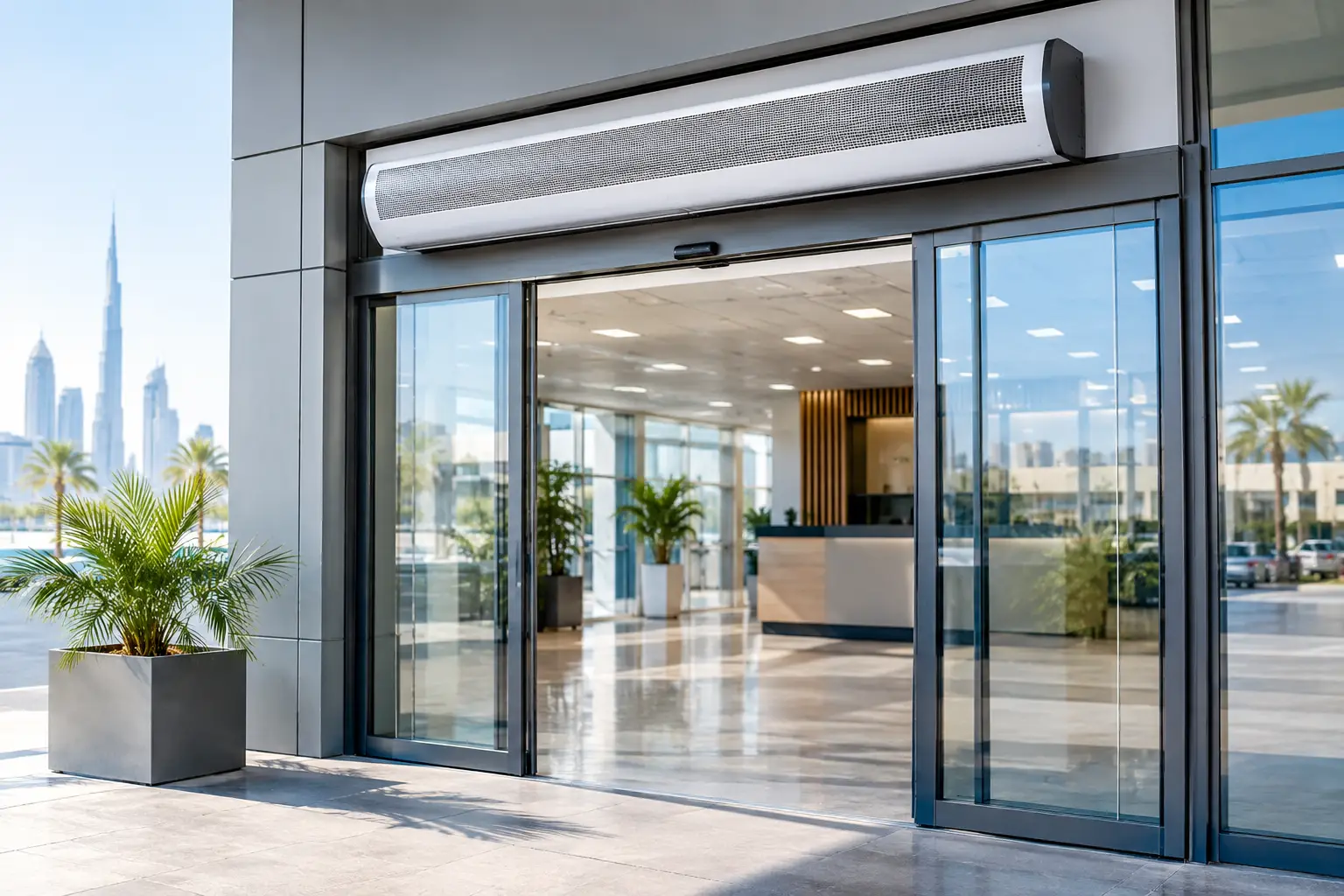
Electrical and control requirements also matter. Some facilities need door-switch activation. Others want continuous operation during peak hours, or speed control linked to operating schedules. In a commercial setting, appearance may influence product choice, especially for recessed ceiling installations or architecturally sensitive entrances. In an industrial facility, durability and service access usually matter more.
Material and finish can be relevant in humid or coastal areas. Corrosion resistance, internal component quality, and long-term reliability should be reviewed carefully where moisture and airborne contaminants are part of the operating environment. A low-cost unit can become an expensive mistake if it struggles with continuous duty or degrades quickly in harsh conditions.
This is where a consultation-based approach adds value. Rather than choosing from a generic category, buyers should match the unit type to the application – recessed models for clean architectural integration, commercial centrifugal systems for stronger entrance protection, or industrial centrifugal series for larger and more demanding openings.
Common mistakes buyers make
The most common mistake is undersizing. Buyers often select by door width alone and ignore height, exposure, and humidity load. The unit may run, but the air barrier never fully forms where it matters.
The second mistake is assuming any air curtain will perform the same in all climates. Humid coastal conditions in places like Lagos or Casablanca create different entrance challenges than dry, dusty exposure in Riyadh. Both need strong air isolation, but the site variables are different.
The third mistake is treating the product as a simple accessory. In reality, the entrance is part of the building’s climate-control system. If that opening is unprotected, cooling energy, comfort, and cleanliness are all compromised.
The commercial case for getting it right
For facility managers and procurement teams, the value is straightforward. A correctly selected air curtain can reduce cooling loss, improve comfort at entrance zones, limit moisture ingress, and support cleaner indoor conditions. Over time, that can mean lower pressure on HVAC equipment, fewer comfort complaints, and better environmental control at critical openings.
For consultants and contractors, correct specification reduces callbacks and protects project performance. The unit has to match the opening, the climate, and the use case. Anything less creates avoidable performance gaps.
In high-temperature, high-humidity markets across the GCC, MENA, and Africa, entrance control is not a secondary detail. It is part of operational efficiency. FreezeeX supports commercial and industrial buyers with specification-ready air curtain solutions built for tropical and desert climate performance.
If you are evaluating an air curtain for humid environments, the next step is not trial and error. It is application-based selection. Request a consultation or quote based on your opening size, traffic pattern, and site conditions, and specify the system around real performance requirements rather than assumptions.