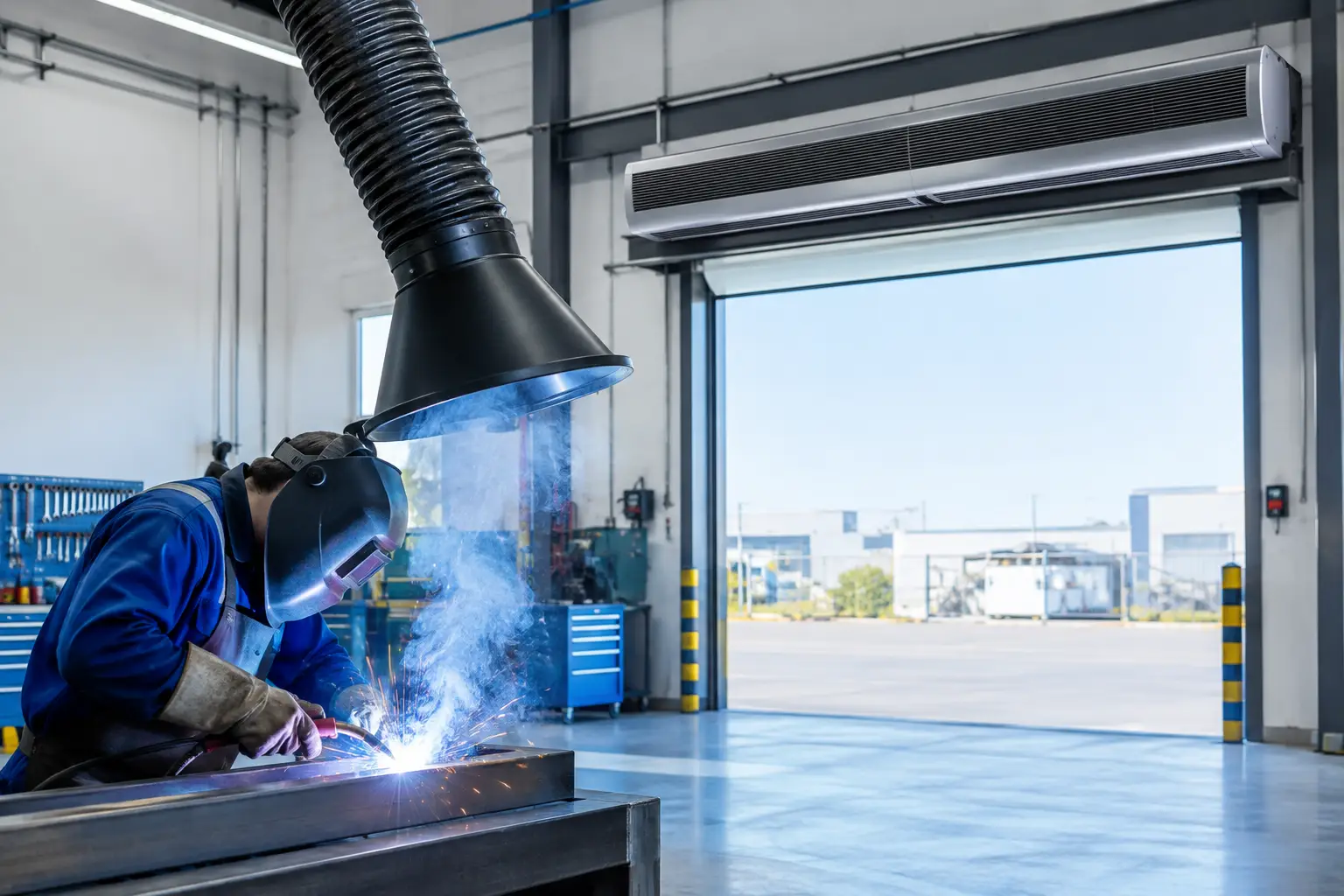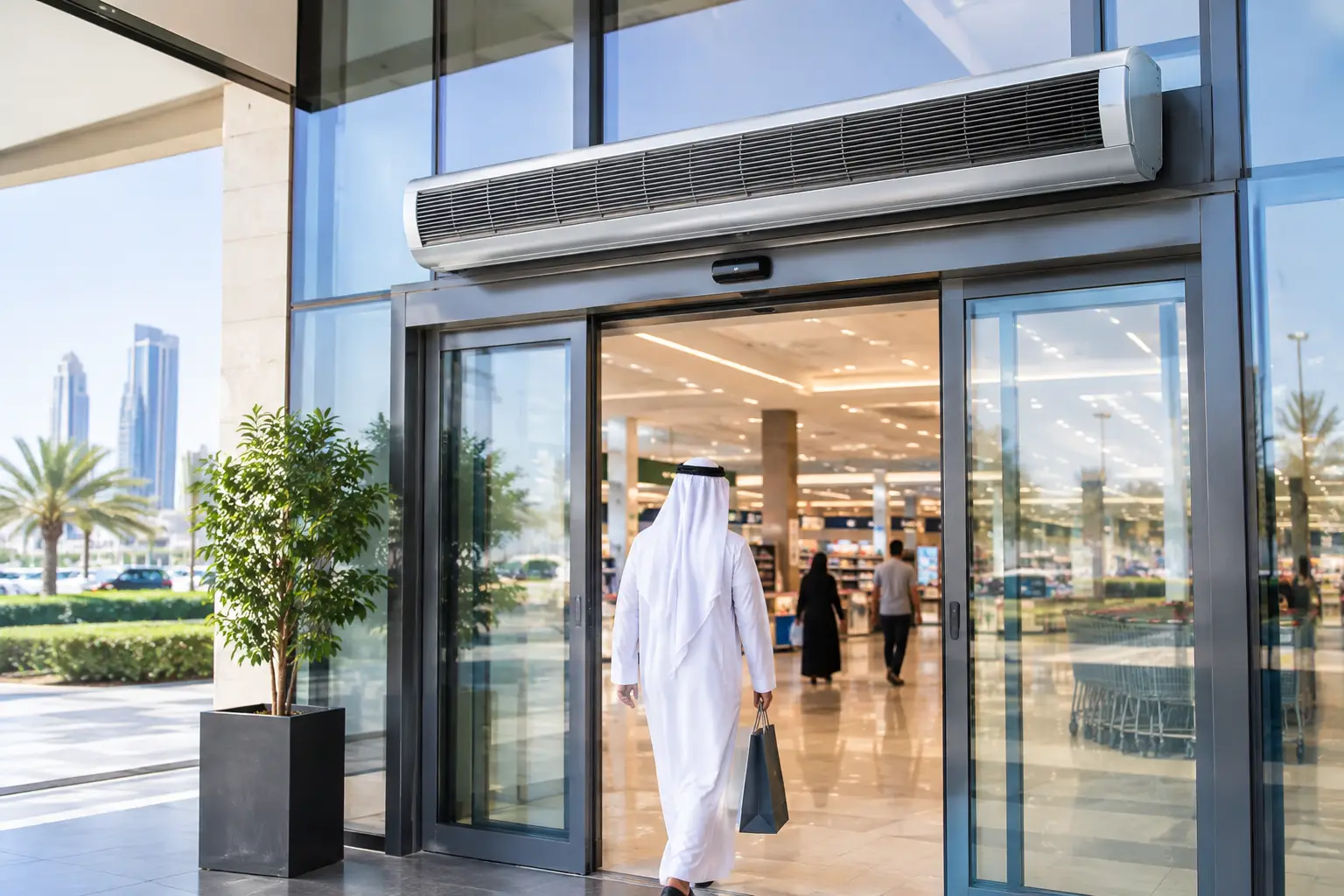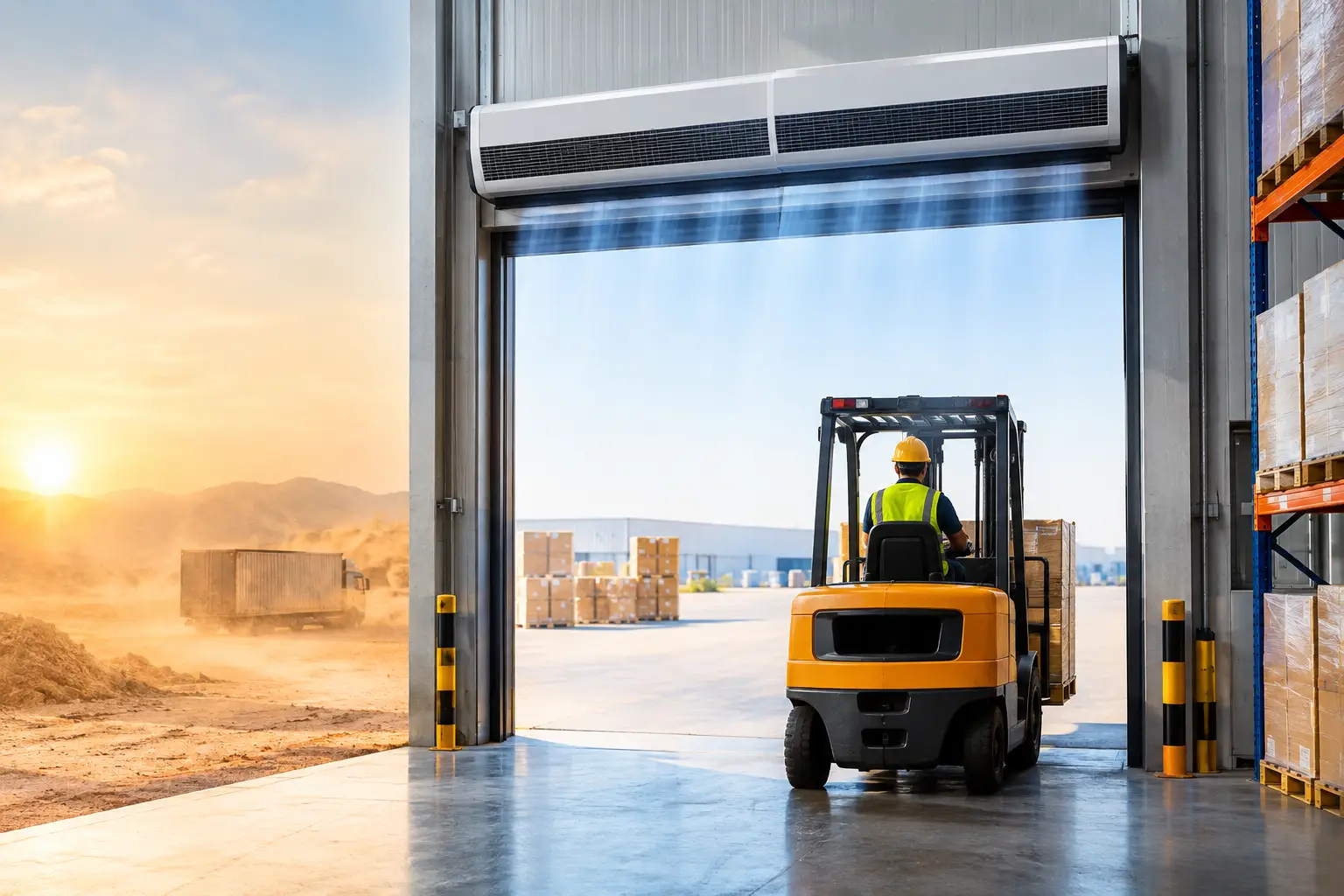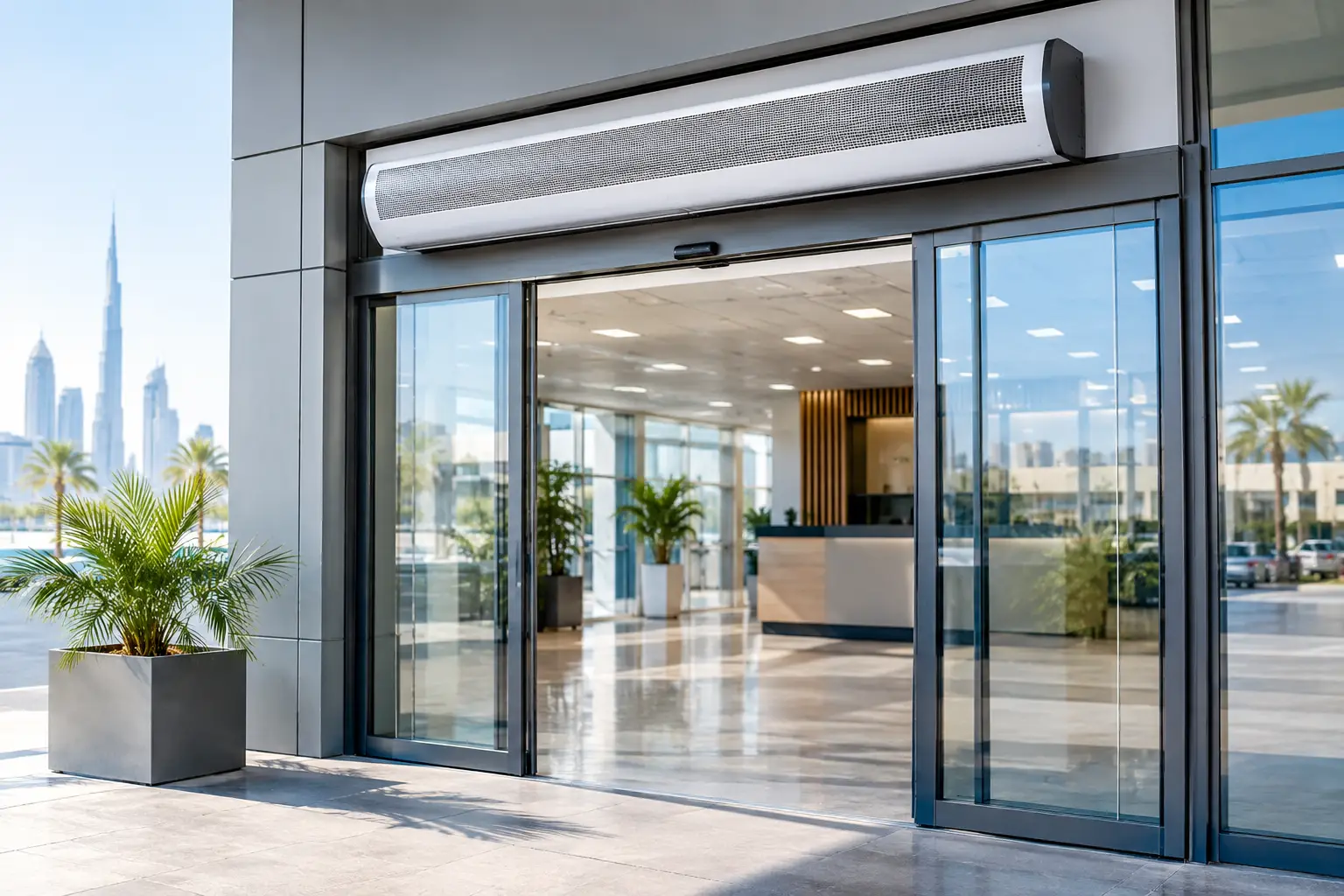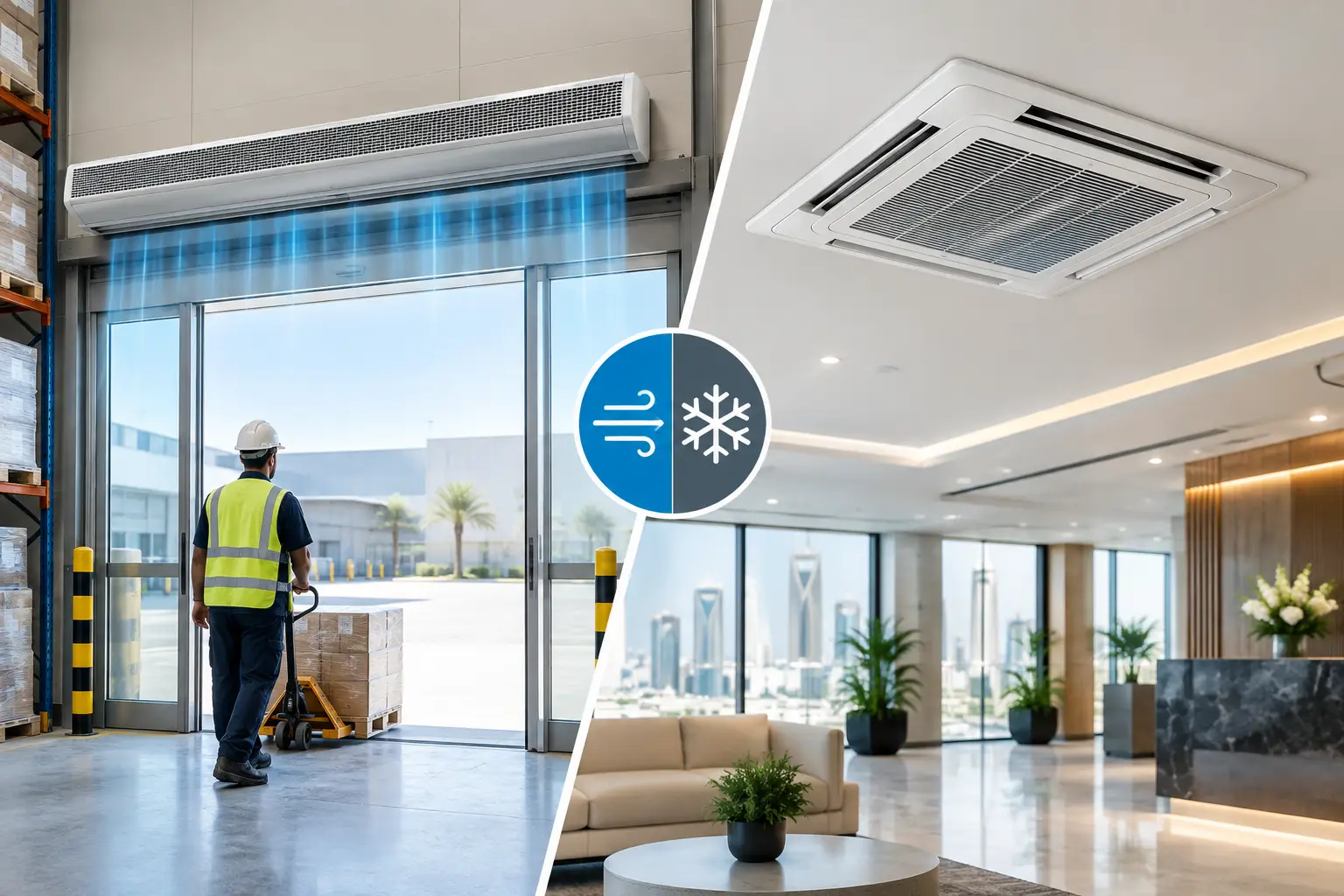
Every time a production door opens in a food plant, the building loses control. Cold air escapes, hot air pushes in, insects find an entry point, and dust rides the pressure change straight toward process areas. That is exactly why an air curtain for food factory operations is not a cosmetic upgrade. It is a control measure tied directly to hygiene, temperature stability, and operating cost.
In hot, high-traffic environments such as Dubai, Riyadh, Lagos, or Nairobi, the pressure on entrances is even higher. External heat and humidity are not minor variables. They affect product quality, employee comfort, refrigeration load, and the ability to maintain clean zones near loading bays, dispatch doors, and staff access points. When the wrong air curtain is specified, the unit runs, but the barrier fails. When the right one is matched to the opening and environment, the result is measurable.
Why an air curtain for food factory entrances matters
Food factories operate under tighter consequences than most commercial buildings. If an office entrance leaks hot air, the problem is mostly comfort and higher cooling bills. In a food processing facility, uncontrolled doorways can raise the risk of contamination, condensation, and unstable temperatures near production or storage areas.
A properly selected air curtain creates a high-velocity stream across the opening. That air stream helps separate indoor and outdoor conditions without physically blocking traffic. For facilities with forklifts, pallet movement, shift changes, and frequent dispatch activity, that matters. Strip curtains and hard doors have a place, but they can slow movement or create visibility issues. An air curtain supports traffic flow while protecting the indoor environment.
The business case usually comes down to four pressures: insect control, dust reduction, cooling retention, and humidity management. In desert and tropical climates, all four show up at once. That is why entrance protection in food facilities should be treated as part of the plant’s environmental control strategy, not as an accessory item added late in procurement.
Where food factories benefit most
Not every opening needs the same solution. A personnel door near packing lines needs a different air pattern than a high industrial shutter at a loading dock. The best results come from looking at each doorway as its own operating condition.
For raw material receiving bays, the goal is often to limit dust, hot air, and flying insects during repeated door cycles. For dispatch areas connected to chilled storage or temperature-sensitive zones, the focus shifts toward reducing cooling loss and minimizing warm-air infiltration. At internal transitions between cleaner and less controlled spaces, the air curtain may support better separation and cleaner movement paths.
This is where many projects go wrong. Buyers sometimes specify one model across every opening for simplicity. That can reduce upfront complexity, but it rarely delivers the best barrier performance. Door height, width, mounting position, traffic type, and surrounding pressure conditions all affect the required unit.
What actually determines performance
An air curtain is only effective if the air stream reaches the floor or opposing side of the opening with enough strength to resist infiltration. That sounds simple, but food plants present difficult conditions. Large doors, negative pressure near extraction areas, nearby conveyor movement, and strong outdoor heat loads all work against the barrier.
Air velocity is not the whole story
High speed matters, but speed alone is not a guarantee. The unit also needs the right air volume, discharge angle, and blower design. A weak unit with impressive headline velocity can lose effectiveness before the air stream completes the opening. For taller factory doors, industrial centrifugal designs are often better suited than lighter commercial units because they maintain stronger and more stable throw.
Mounting height changes everything
The higher the door, the harder the job. A model that performs well above a personnel entrance may fail at a roller shutter or loading bay. In food factories, this is a frequent issue because logistics openings are often oversized for pallet and vehicle movement. Specifiers should match the unit to actual installed height, not just door width.
Climate load matters in hot regions
In GCC and African markets, the incoming air is not just warmer. It can be extremely hot, dusty, humid, or all three depending on the site. That means the barrier has to resist stronger thermal and environmental pressure than a standard commercial application. Equipment selected for these regions should be built for sustained high-demand operation, not occasional door protection.
Air curtain for food factory hygiene control
Hygiene teams usually focus first on insects and airborne contaminants, and rightly so. Entrances are one of the simplest points of failure in any controlled food environment. An effective air curtain helps reduce flying insect entry and limits suspended particles moving inward when doors open.
That said, it should not be treated as a standalone hygiene system. It performs best as part of a broader entrance-control setup that may also include door discipline, screening, zoning, and pressure management. The trade-off is straightforward: an air curtain can dramatically improve doorway protection, but only if it is specified correctly and maintained consistently.
For food applications, buyers should also consider cleanability, motor reliability, casing durability, and suitability for continuous-duty use. A unit installed above a production-adjacent opening needs to hold up under long operating hours and regular cleaning schedules. Failure at the entrance does not stay at the entrance. It affects the spaces beyond it.
Energy savings are real, but only with the right specification
Many buyers first look at an air curtain as an energy-saving device. That is valid, especially where cooling costs are high and doors stay open for long periods. But expected savings vary widely by application.
A well-matched system can reduce conditioned air loss and lower HVAC strain at busy entrances. In facilities with refrigerated or temperature-controlled spaces, it may also help reduce load on adjacent cooling systems. However, if the unit is undersized, poorly angled, or installed at the wrong height, the energy claim falls apart. The fan consumes power while the doorway still leaks.
This is why quote-based selection matters more than off-the-shelf purchasing. Industrial air curtains should be chosen around door geometry, operating hours, local climate, and airflow conditions near the opening. In a food factory, the cheapest unit is often the most expensive one over time.
What buyers should ask before specifying
The right conversation starts with the opening, not the catalog. Buyers and consultants should be asking how high and wide the door is, how often it opens, what traffic passes through it, and what the indoor area is trying to protect. They should also look at whether the doorway connects to chilled storage, processing zones, packaging areas, or external loading.
Noise may matter in some sections of the facility, particularly near staffed internal doors, but at heavy-duty external openings, barrier strength usually takes priority. Likewise, recessed or architectural models may suit finished commercial environments, while food plants usually need more direct industrial performance and easier service access.
If the site operates in extreme heat or mixed dust-humidity conditions, climate adaptation should be part of the specification from the beginning. That is especially relevant across the Middle East and Africa, where summer loads and airborne contaminants can overwhelm lightly built systems.
A better way to think about return on investment
The return on an air curtain for food factory use should not be measured by electricity alone. The larger value often comes from operational stability. Fewer flying insects at entrances, lower dust movement into controlled areas, less warm-air intrusion near cold zones, and reduced HVAC overwork all support better plant performance.
For procurement teams, that means comparing units on barrier effectiveness and duty suitability, not just on initial price. For MEP contractors and consultants, it means avoiding generic schedules where every door receives the same treatment. For facility managers, it means choosing equipment that can keep performing through long operating hours in punishing climates.
FreezeeX supports this process with consultation-based air curtain selection for commercial and industrial sites, including food factories operating in desert and tropical conditions. The goal is not to place a product on a doorway. It is to specify the right air barrier for the real operating load.
If you are planning a new food facility, upgrading a loading bay, or trying to reduce contamination and cooling loss at critical entrances, request a technical consultation and quote based on your door sizes, traffic patterns, and climate conditions. The right specification will protect more than the entrance. It will protect the operation behind it.