
A supermarket entrance in Dubai can open hundreds of times during a trading day. Each opening allows hot, humid, dusty outdoor air to push toward conditioned sales areas, increasing the load on the HVAC system. Smart HVAC controls give facility teams a more precise way to respond, particularly when they are coordinated with a correctly specified commercial air curtain.
For high-traffic commercial and industrial sites, controls are not simply about putting the HVAC system on a schedule. They help manage the changing conditions at the building envelope: door position, occupancy, outdoor temperature, humidity, operating hours, and the demand created by nearby loading or customer entrances. The goal is to preserve indoor conditions without running every component at maximum output all day.
What Smart HVAC Controls Actually Manage
Smart HVAC controls connect equipment operation to real operating conditions. At an entrance, that may mean enabling an air curtain when an automatic door opens, adjusting its operating mode by schedule, or sending status information to a building management system. In larger facilities, the control strategy can also coordinate air conditioning zones, alarms, and energy monitoring.
Common smart HVAC control functions include:
- Door-activated operation
- Time-based scheduling
- Temperature and environmental sensing
- Remote control and monitoring
- Building Management System (BMS) integration
- Zoned control for different entrances
This matters because an entrance is not a static opening. A hotel lobby may have short bursts of traffic at check-in and event times. A logistics center may hold dock doors open during dispatch windows. A food processing facility may need controlled separation between areas with different hygiene or temperature requirements. One fixed setting rarely reflects all of those conditions.
A practical control package often includes door contacts, time scheduling, temperature sensors, remote controllers, and BMS interfaces. The appropriate combination depends on the entrance duty cycle and the building’s existing controls architecture. The more complex the facility, the more valuable it is to define control points early in the MEP design rather than treating them as an afterthought.
Why Entrance Controls Matter in Hot and Humid Climates
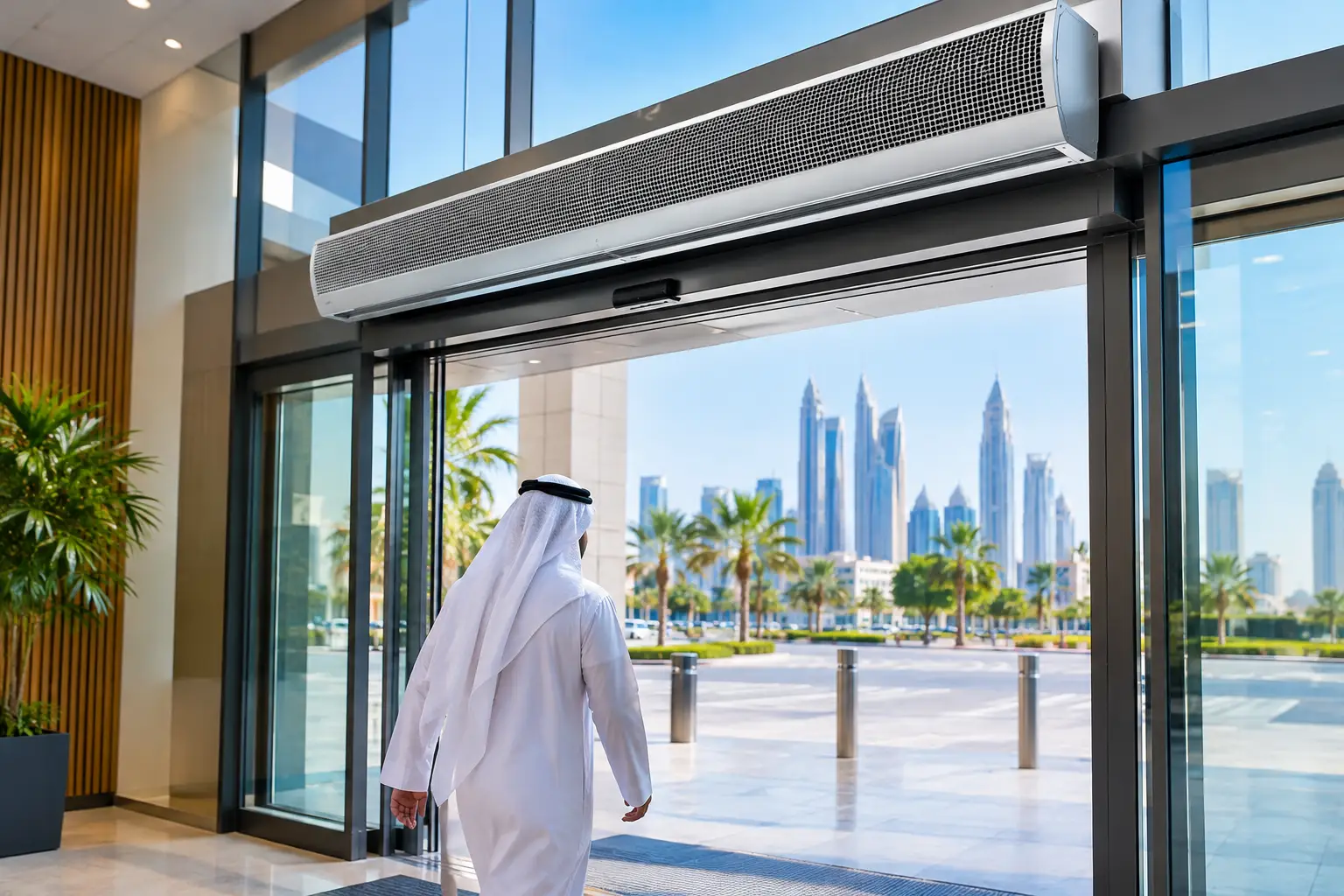
In Riyadh, Doha, Muscat, Cairo, and other demanding regional markets, exterior air can carry intense sensible heat, humidity, fine dust, and airborne contaminants. When doors open frequently, conditioned air escapes while outdoor air enters. The HVAC plant must then remove that additional heat and moisture to restore indoor comfort.
An air curtain forms a directional air stream across the opening to reduce uncontrolled air exchange. Smart controls improve this strategy by operating the unit when it is needed and aligning it with the door’s actual use. For example, a door-triggered signal can activate the air curtain immediately when an automatic entrance opens, rather than relying only on a manually operated switch.
That does not mean every location needs the most elaborate control sequence. A single-door retail shop with predictable hours may benefit from a straightforward schedule and door interlock. A major shopping mall, airport, or pharmaceutical facility may require integration with centralized controls, monitoring, and different operating profiles. The correct solution depends on the risk and cost of uncontrolled air infiltration, not on adding technology for its own sake.
Coordinating Air Curtains With Smart HVAC Controls
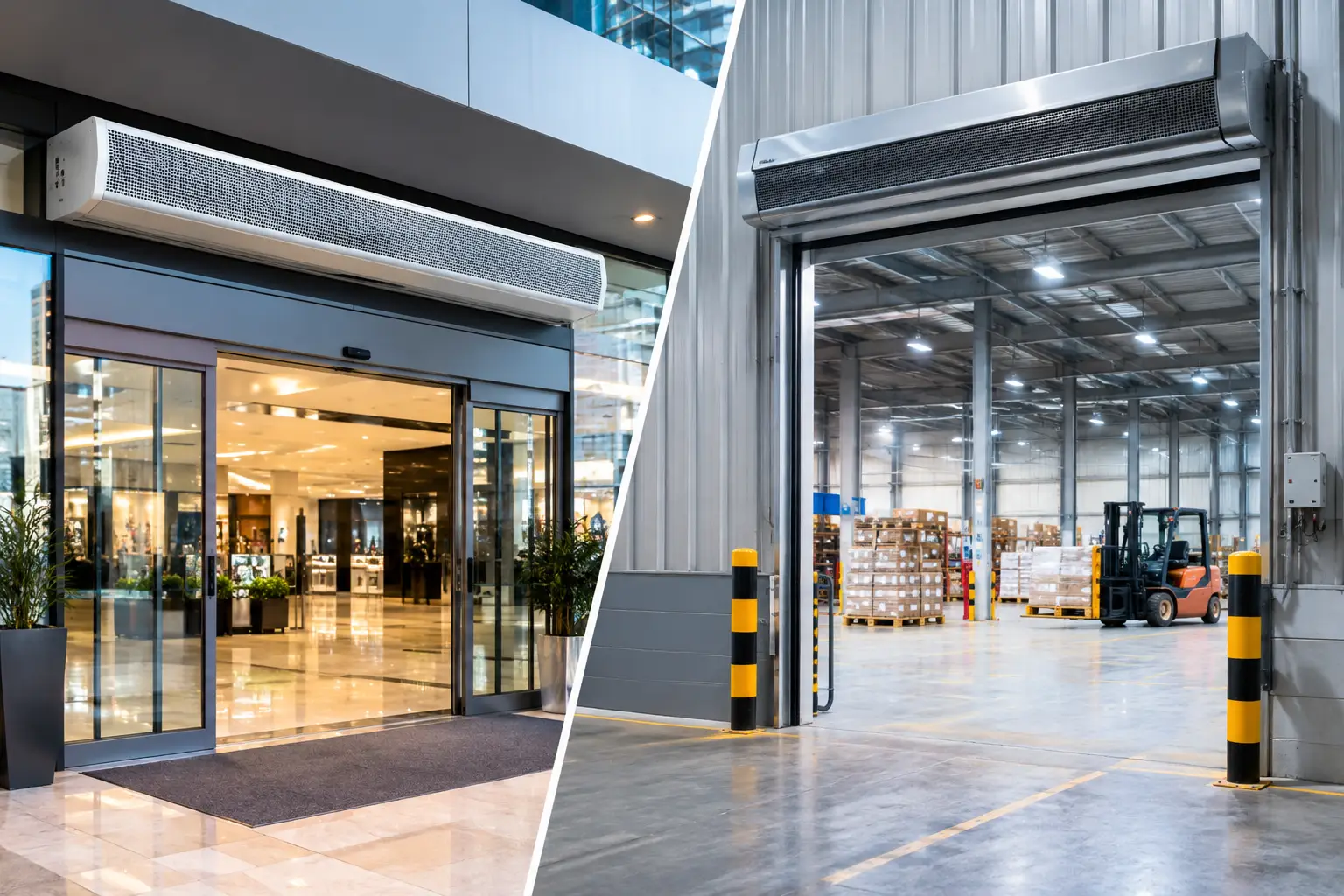
Air curtains and HVAC equipment serve related but different functions. The HVAC system conditions the interior space. The air curtain helps protect the entrance boundary when a door is open. A coordinated control approach prevents either system from carrying more load than necessary.
Door-Activated Operation
Door activation is often the most useful starting point for busy entrances. A door contact or automation signal tells the air curtain when the opening is in use. This helps maintain an effective air barrier during traffic while avoiding unnecessary operation during closed periods.
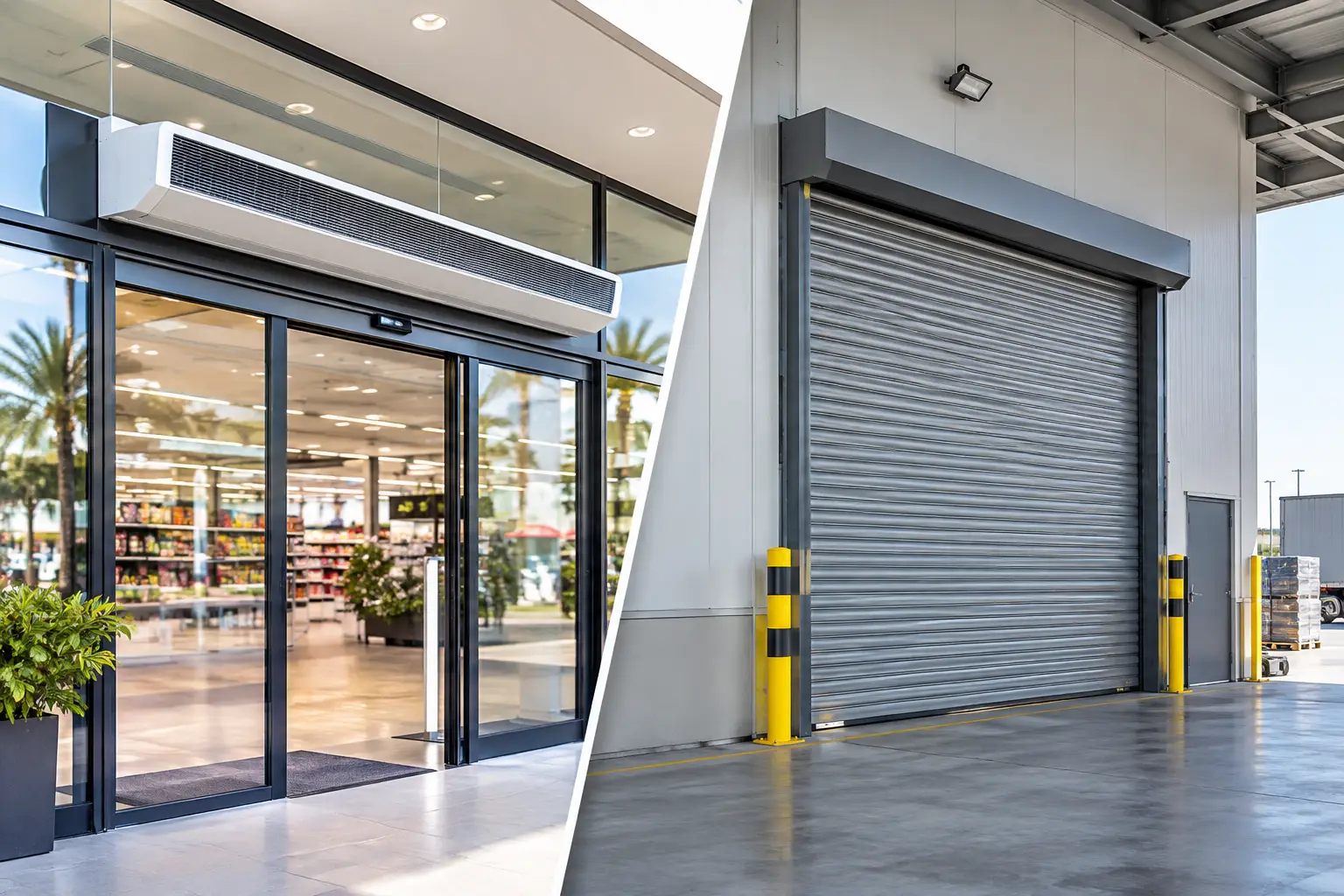
For sliding doors, revolving doors with service openings, or high-speed industrial doors, the signal type and timing need careful review. If the unit starts too late, the opening is already exposed. If the run-on time is too long, energy use and noise may increase without a corresponding benefit. Commissioning should confirm that airflow begins promptly and continues long enough to cover the practical door cycle.
Scheduled and Zoned Control
Schedules are effective where traffic follows known patterns. A restaurant may require full entrance protection over lunch and dinner service, while a warehouse may prioritize shift changes and loading windows. Scheduling can also prevent systems from being left on after closing, an issue that is easy to overlook across multi-site operations.
Zoning is important when a building has several entrances with different functions. The public entrance to a hotel, a staff door, a receiving bay, and a waste-handling access point should not necessarily operate under the same logic. Each opening has a different exposure level, door size, and occupancy pattern.
Building Management System Integration
For large projects, BMS integration gives facility managers visibility rather than just control. They can confirm whether units are enabled, identify operating hours, receive fault status where supported, and compare entrance activity with wider HVAC demand.
Integration should be specified clearly. Identify whether the project needs simple enable/disable control, fan-speed selection, status feedback, alarms, or communication through the BMS protocol used on site. Vague requirements can lead to avoidable coordination issues between the air curtain supplier, controls contractor, and MEP consultant.
The Limits of Controls: Airflow Selection Still Comes First
Smart HVAC controls cannot compensate for an undersized or poorly selected air curtain. The air stream must have sufficient velocity, volume, and throw to reach the floor or protected zone at the installed mounting height. Door width, height, crosswinds, pressure differences, and the location of supply and return air all influence results.
A recessed unit may suit an architecturally sensitive hotel or retail entrance, but it must still deliver the required coverage. A centrifugal industrial model may be more appropriate for warehouse doors, factories, and loading areas where mounting heights are greater and cross-drafts are stronger. In high-traffic commercial environments, the selection process must consider both physical performance and the way the unit will be controlled.
Noise is another trade-off. Increasing fan speed can strengthen the air barrier, but it may not be appropriate for a quiet hospital reception, premium retail entrance, or restaurant dining area. Variable operating modes can help balance protection and acoustic comfort, provided the unit is properly sized for the maximum required duty.
Control Strategies by Application
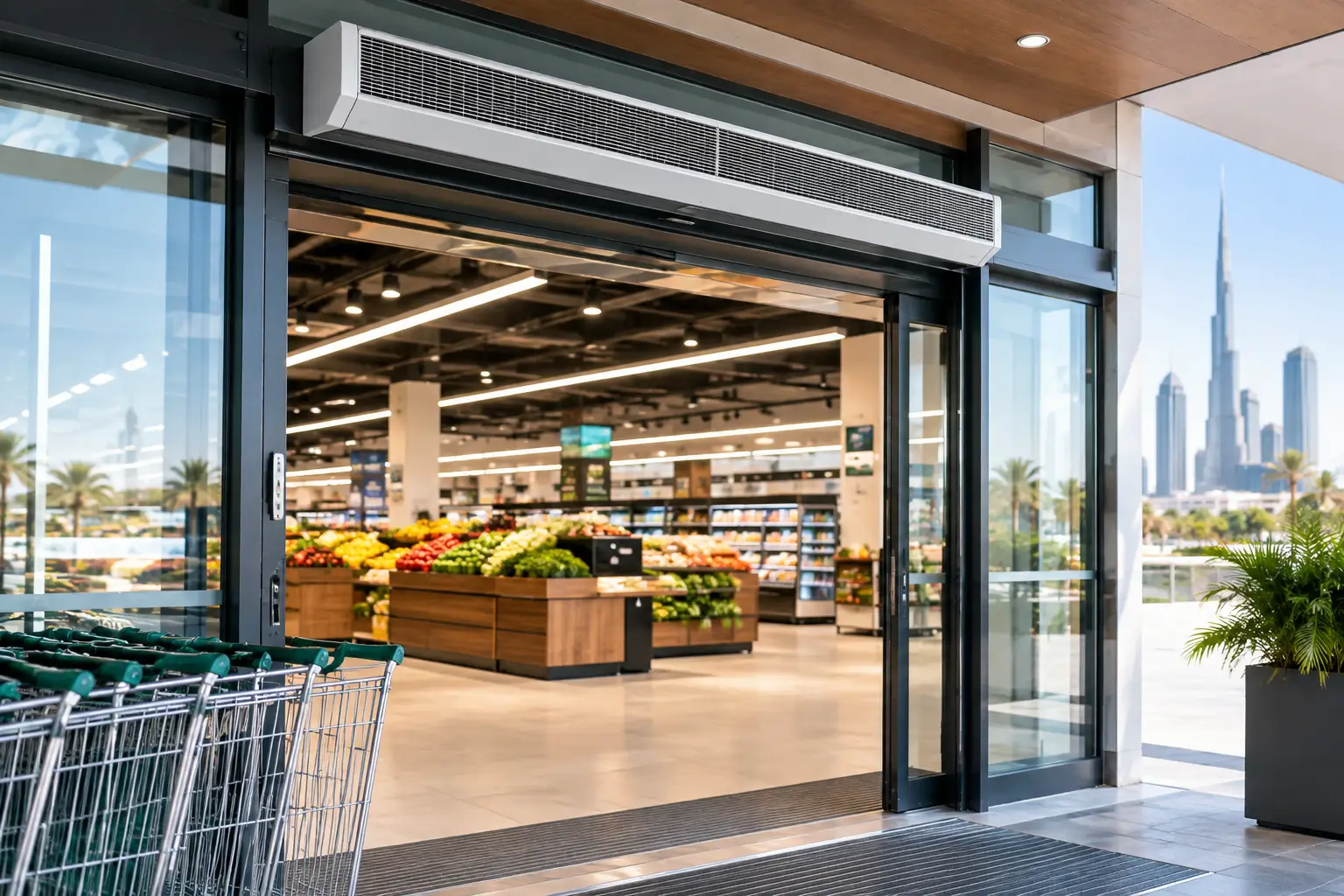
A supermarket benefits from entrance protection that responds quickly to automatic doors and remains consistent during long operating hours. The priority is reducing cooling loss while limiting dust and insects from entering customer areas.
At a cold storage entrance, the control approach may need to respond to larger doors, forklift movements, and extended open times. Here, the focus is on reducing temperature migration and moisture transfer while supporting operational flow. Door discipline, air curtain sizing, and control logic must work together.
Hospitals and pharmaceutical sites may place greater emphasis on separating indoor conditions from outdoor pollutants and maintaining a clean, comfortable entry environment. Controls should support the site’s wider pressure, access, and hygiene requirements without assuming that an air curtain alone provides a complete contamination-control solution.
Warehouses and factories need a more durable approach. Door positions can vary, traffic is often irregular, and dust exposure is higher. Industrial controls should be selected for reliable daily operation, clear status indication, and compatibility with site automation where required.
Questions to Resolve Before Specification
Before selecting smart HVAC controls for an entrance, project teams should establish the door dimensions, mounting height, opening frequency, expected door-open duration, exterior climate exposure, and nearby HVAC supply-air patterns. They should also decide whether the requirement is local control, door activation, scheduling, BMS integration, or a combination of these.
Ask who will own the control sequence after handover. A sophisticated system has little value if the facility team cannot understand the operating modes or if the required signals are unavailable. Clear documentation, accessible controls, and a realistic maintenance plan are usually more valuable than unnecessary complexity.
For facilities operating in desert heat, tropical humidity, or dusty industrial environments, entrance climate control deserves the same design attention as the interior HVAC zones it protects. Request a consultation and quotation for an air curtain and control approach matched to your door geometry, traffic volume, mounting conditions, and operating environment. A properly coordinated solution can protect comfort at the point where HVAC losses often begin.


One Response