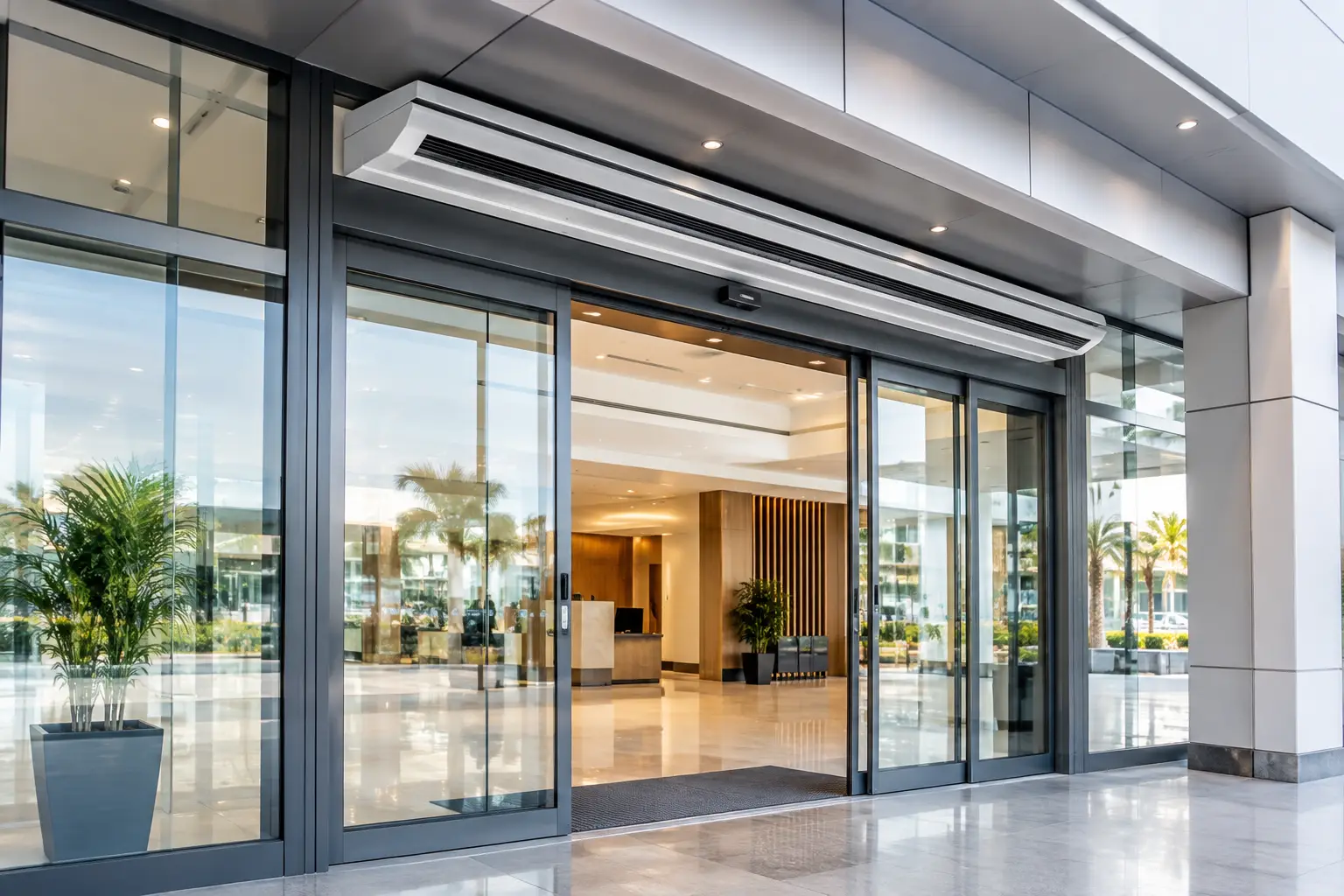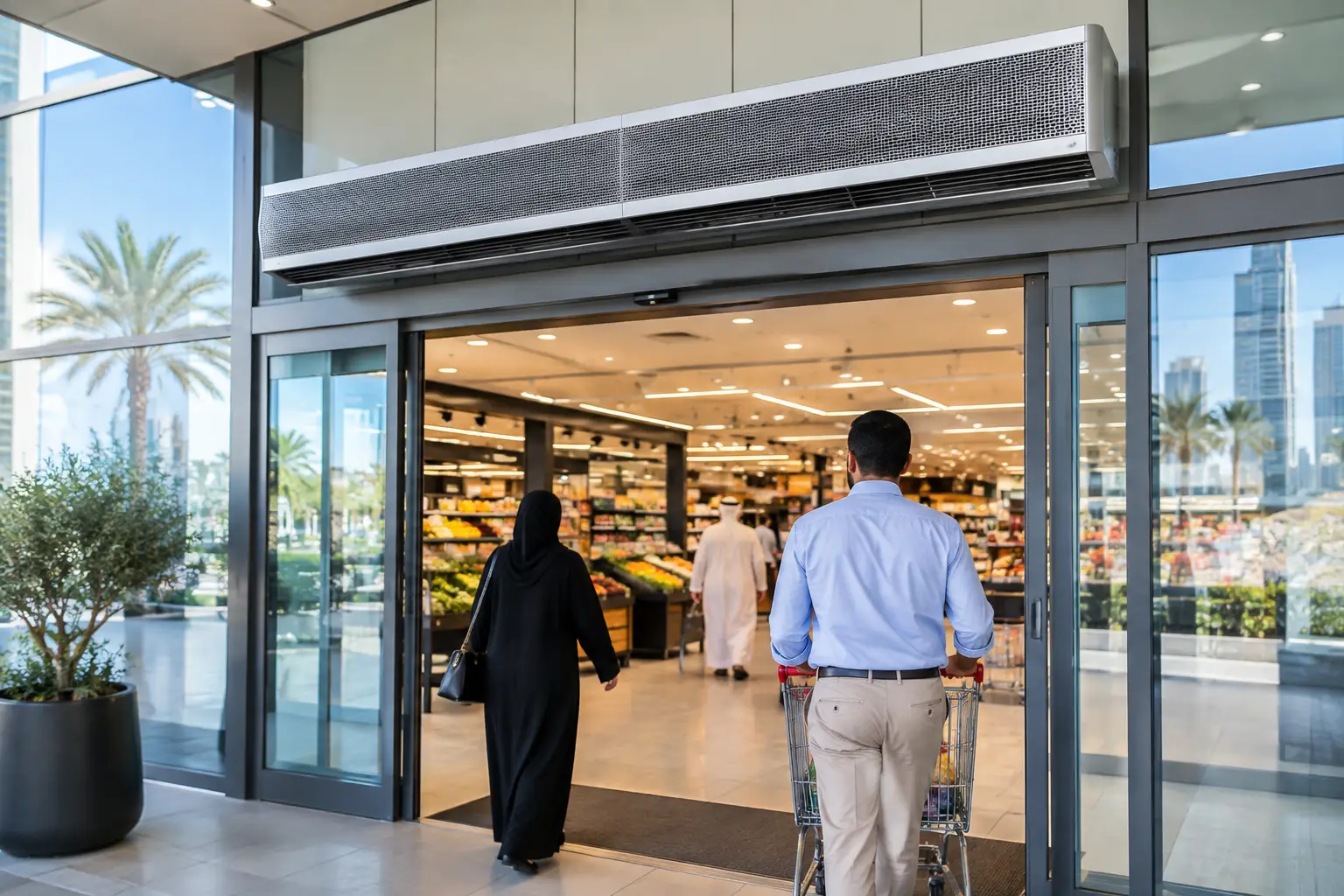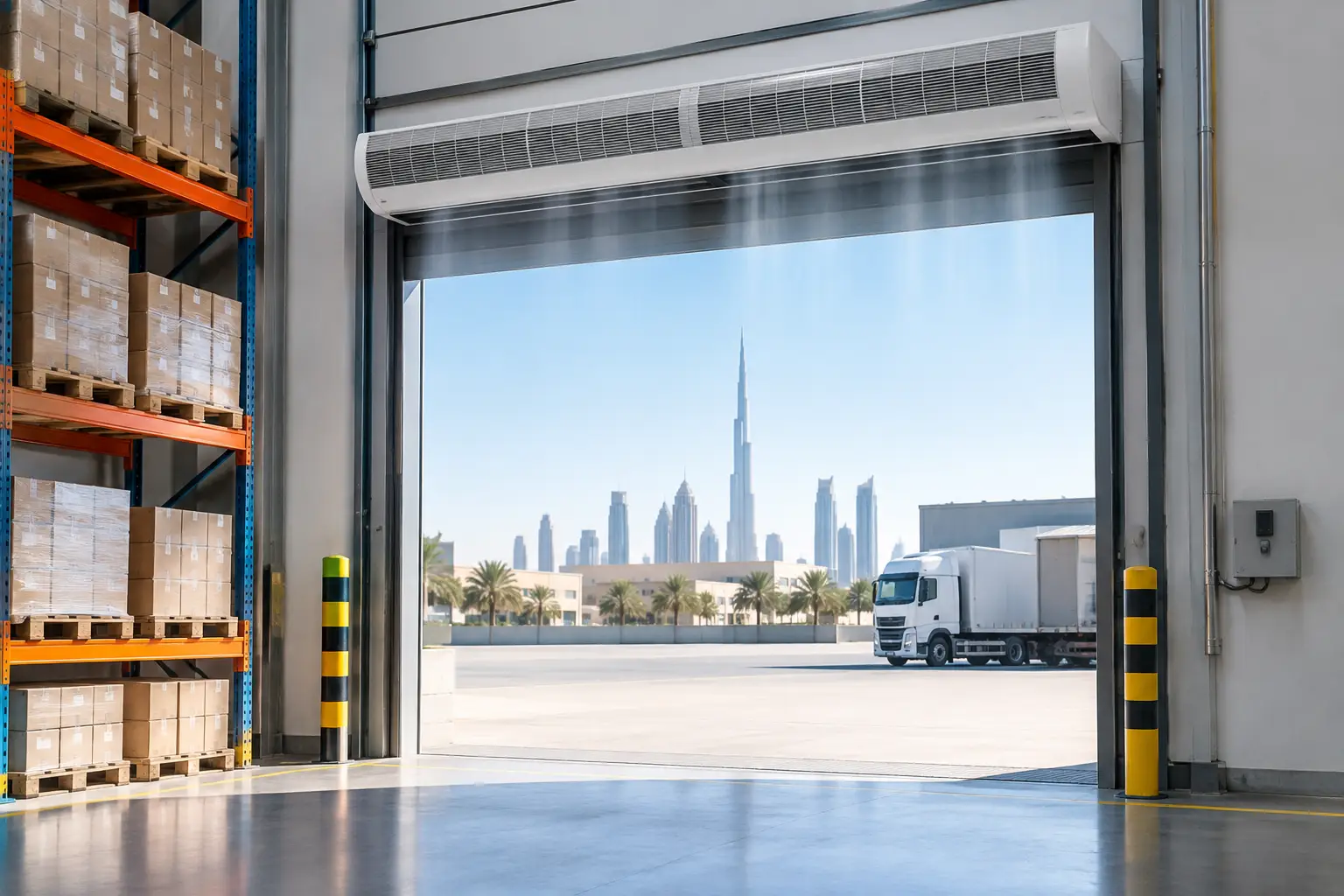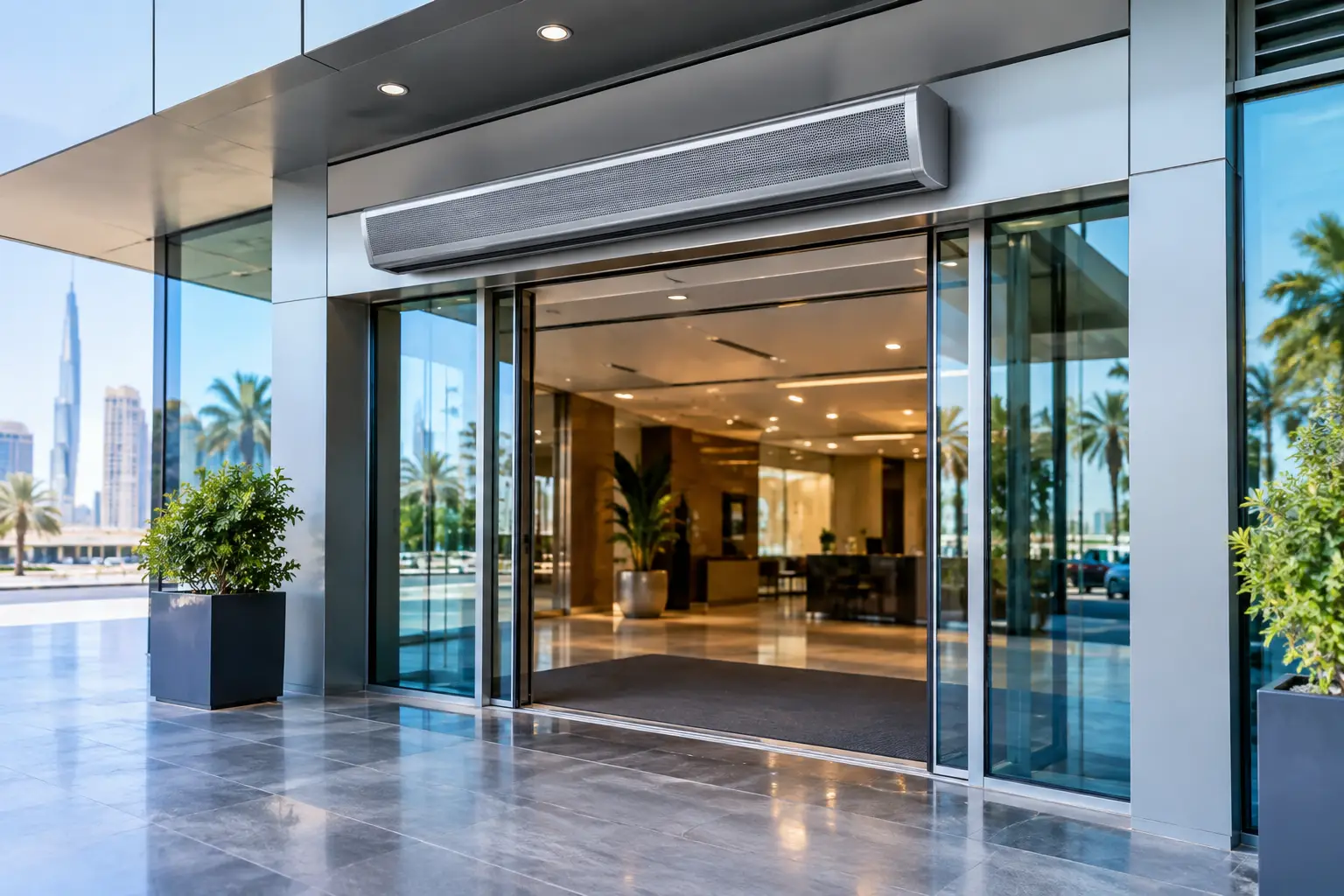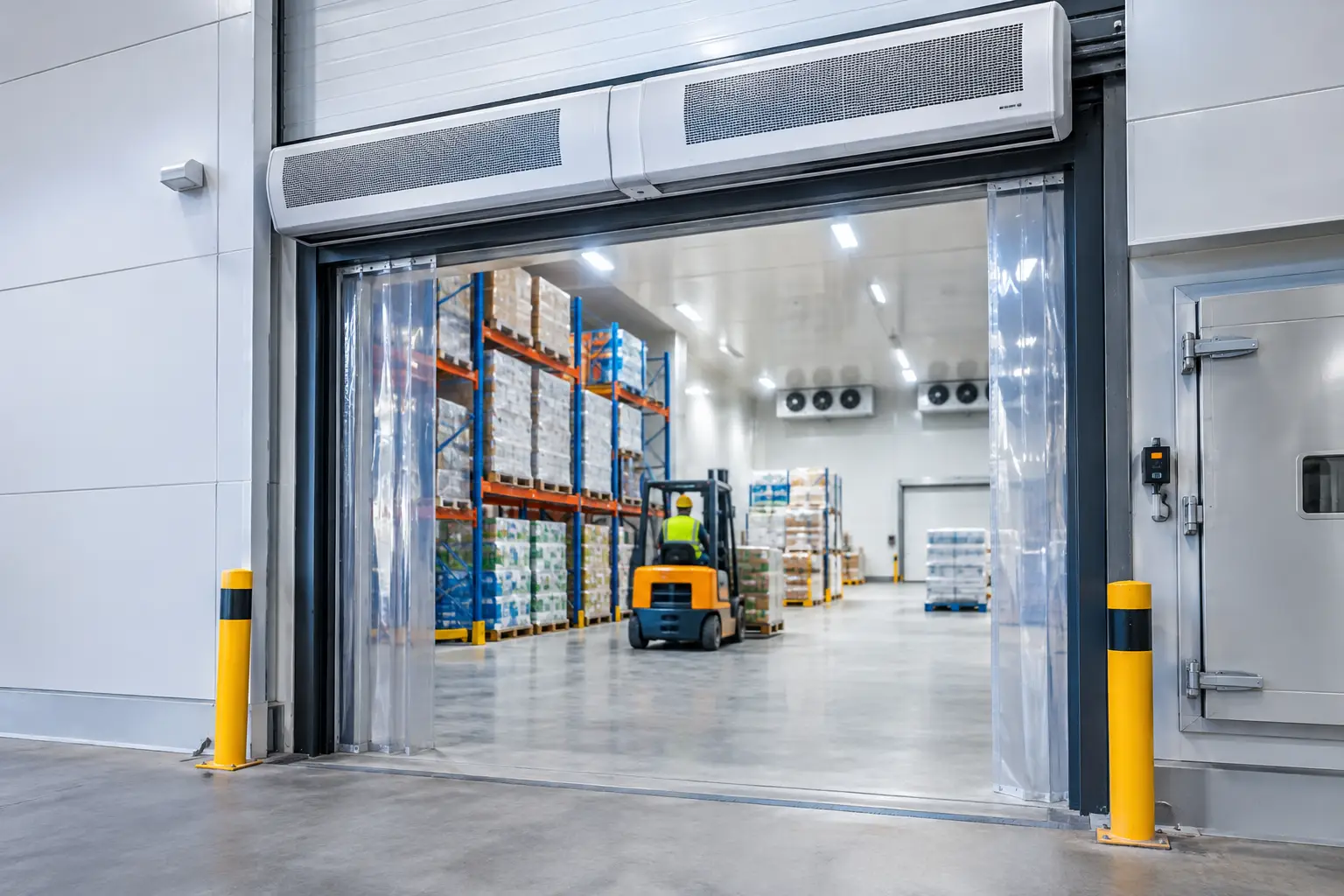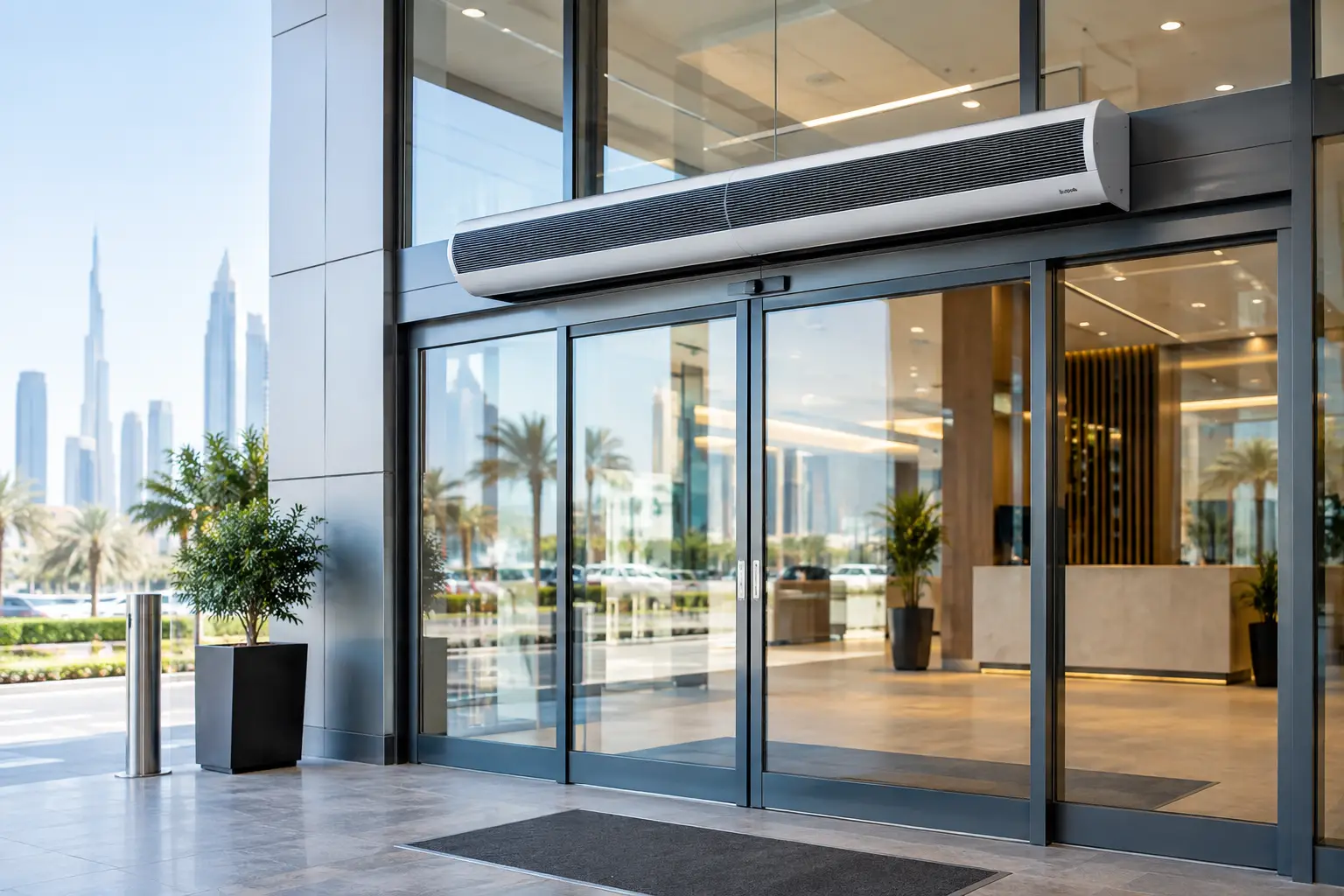
A warehouse door in Riyadh can stay open for minutes at a time and still cost far more than most teams expect. Every forklift movement, staff shift change, and delivery cycle lets conditioned air escape while heat, dust, insects, and humidity push inside. That is exactly why demand for industrial air curtains Saudi facilities can rely on has moved from a nice-to-have upgrade to a specification-level decision.
For industrial and commercial sites in Saudi Arabia, entrance control is not a cosmetic issue. It affects cooling load, product stability, hygiene, employee comfort, and how hard HVAC systems have to work across long hot seasons. In high-traffic environments, an air curtain creates a controlled air barrier at the opening, helping separate indoor and outdoor conditions without blocking movement. When it is selected correctly, the operational effect is immediate.
Why industrial air curtains matter in Saudi conditions
Saudi sites deal with a difficult combination of extreme heat, airborne dust, and frequent entrance activity. In some applications, humidity also becomes a factor, especially where goods, food handling, or temperature-sensitive operations are involved. Conventional doors help when they stay shut. The problem is that many facilities cannot keep them shut for long.
An industrial air curtain addresses that operational gap. Instead of treating the entrance as a weak point, it turns the opening into an actively protected zone. The system pushes a calibrated stream of air across the doorway to reduce heat transfer and limit contamination from outside air.
That matters in more places than many procurement teams initially assume. Manufacturing plants, logistics hubs, cold storage loading areas, workshops, hypermarkets, hotel service entrances, and large commercial buildings all face the same basic issue – uncontrolled air exchange at the door. The bigger the opening and the heavier the traffic, the more important performance becomes.
What industrial air curtains Saudi projects should be solving
The first job is cooling retention. In Saudi Arabia, air conditioning is not a seasonal convenience. It is a core operating cost. When hot outside air keeps entering through open doors, indoor temperatures become harder to maintain and HVAC systems run longer under heavier load.
The second job is contamination control. Desert dust does not just create cleaning issues. It affects product environments, customer-facing spaces, and equipment maintenance cycles. In food, retail, hospitality, and light industrial settings, insect control is also a practical concern, not a side benefit.
The third job is operational continuity. Strip curtains and physical barriers can restrict traffic flow. Keeping doors closed slows movement. An air curtain supports access while protecting the indoor environment. That balance is why it suits busy facilities better than passive entrance measures alone.
Performance depends on more than motor power
Many buyers start by asking for a powerful unit. That is understandable, but it is not enough. Air curtain performance depends on matching the unit to the opening height, door width, traffic pattern, and pressure conditions around the entrance.
A unit that is too small will fail at the threshold. A unit that is oversized but poorly configured may create noise, turbulence, or inefficient air distribution. This is where product selection becomes technical. Blower type, air velocity, installation height, mounting position, and control setup all affect whether the air barrier actually holds.
For example, a commercial entrance with moderate foot traffic needs a different configuration from a loading bay exposed to wind pressure and constant forklift movement. A recessed ceiling model may suit an architectural commercial setting, while an industrial centrifugal series is more appropriate for heavier use and larger openings. The right answer depends on the opening and the operating pattern, not just the budget line.
Choosing by application, not by category alone
The most effective specification process starts with the site condition. In a hypermarket or hospitality entrance, appearance, noise level, and continuous daily operation often matter alongside energy performance. In a plant or warehouse, durability, air throw, and tolerance for harsh conditions usually take priority.
Cold chain and temperature-controlled operations need even more care. If a chilled interior faces a hot exterior, the entrance becomes a point of major thermal stress. In these cases, an industrial air curtain can help reduce warm air infiltration and support more stable internal conditions, but only if the unit is properly sized and positioned. Poor selection at a cold room or dispatch area can create false confidence while the cooling system continues absorbing the penalty.
This is one reason consultation-based supply works better than commodity buying. Serious projects need a recommendation tied to opening dimensions, mounting constraints, and operating hours. Buyers are not just purchasing a machine. They are specifying a climate-control component that has to perform every day in desert or tropical conditions.
Desert performance changes the specification
Not every air curtain is built for the realities of Saudi and wider GCC environments. High ambient temperatures, dust exposure, and long daily run hours put pressure on motors, housings, blower systems, and internal components. That is why climate-adapted engineering matters.
For decision-makers, the question is not only whether a unit works on day one. It is whether it keeps delivering air isolation after months of high-heat operation at a demanding entrance. Equipment built for harsh-weather markets typically places more emphasis on durable construction, stable airflow performance, and practical serviceability.
This is where European-grade technology and American engineering positioning can make commercial sense when combined with regional pricing and specification support. The value is not branding language. The value is getting a unit that matches the environmental load without pushing the project into an unrealistic cost bracket.
Installation details that affect real results
Even a strong product can underperform if the installation is wrong. Mounting height, alignment, and coverage across the full door width are basic but critical. Gaps in the air stream or improper placement reduce barrier strength and allow heat and dust to slip through.
Controls matter too. Some facilities benefit from door-linked activation, while others need continuous operation during business hours. In high-traffic sites, the wrong control logic can lead to inconsistent protection and unnecessary wear. Noise expectations also need to be handled honestly. Higher-performance systems often generate more audible airflow, so the right balance depends on the space. A retail frontage and a workshop do not have the same tolerance.
Maintenance planning should also be part of the buying decision. Dust-heavy environments require realistic service intervals. Filter nets, blower access, and component durability all influence lifecycle value. A lower-priced unit that struggles in desert conditions can become more expensive through downtime, cleaning, or replacement pressure.
Where buyers often make the wrong call
One common mistake is treating all entrances the same. A facility may standardize on one model across multiple openings even when usage patterns vary sharply. That can lead to overspending on some doors and underperforming on the critical ones.
Another mistake is buying purely on air volume claims without checking effective air throw at the required height. Large openings need barrier integrity at the floor line, not just impressive numbers on a sheet. If the air stream breaks before it reaches the threshold, the protection is compromised.
Some teams also expect an air curtain to solve every entrance problem on its own. In reality, performance can depend on surrounding conditions such as crosswinds, door geometry, and adjacent HVAC pressure balance. The best results come when the air curtain is part of a broader entrance-control strategy, especially in exposed industrial sites.
Why specification support matters in Saudi projects
For consultants, contractors, and facility teams, speed matters – but so does getting the recommendation right the first time. When project stakeholders are working against opening dimensions, fit-out deadlines, and energy targets, they need more than a catalog. They need a supplier that can match product lines to actual site conditions.
That is where a solution-led approach stands out. Instead of pushing a generic unit, the supplier evaluates the opening type, traffic intensity, indoor condition, and climate exposure. That leads to a more credible recommendation, clearer quoting, and fewer performance disputes later.
For Saudi projects, especially those in logistics, industrial processing, retail, hospitality, and temperature-controlled operations, industrial air curtains are no longer just an accessory at the entrance. They are part of how facilities protect cooling investment, maintain cleaner interiors, and keep operations moving without sacrificing climate control.
If you are reviewing industrial air curtains Saudi facilities can depend on, the best next step is a technical consultation based on your opening sizes, site conditions, and application type. FreezeeX supports contractors, consultants, and facility teams with specification-ready recommendations and quote-based supply for desert and tropical climate performance.