
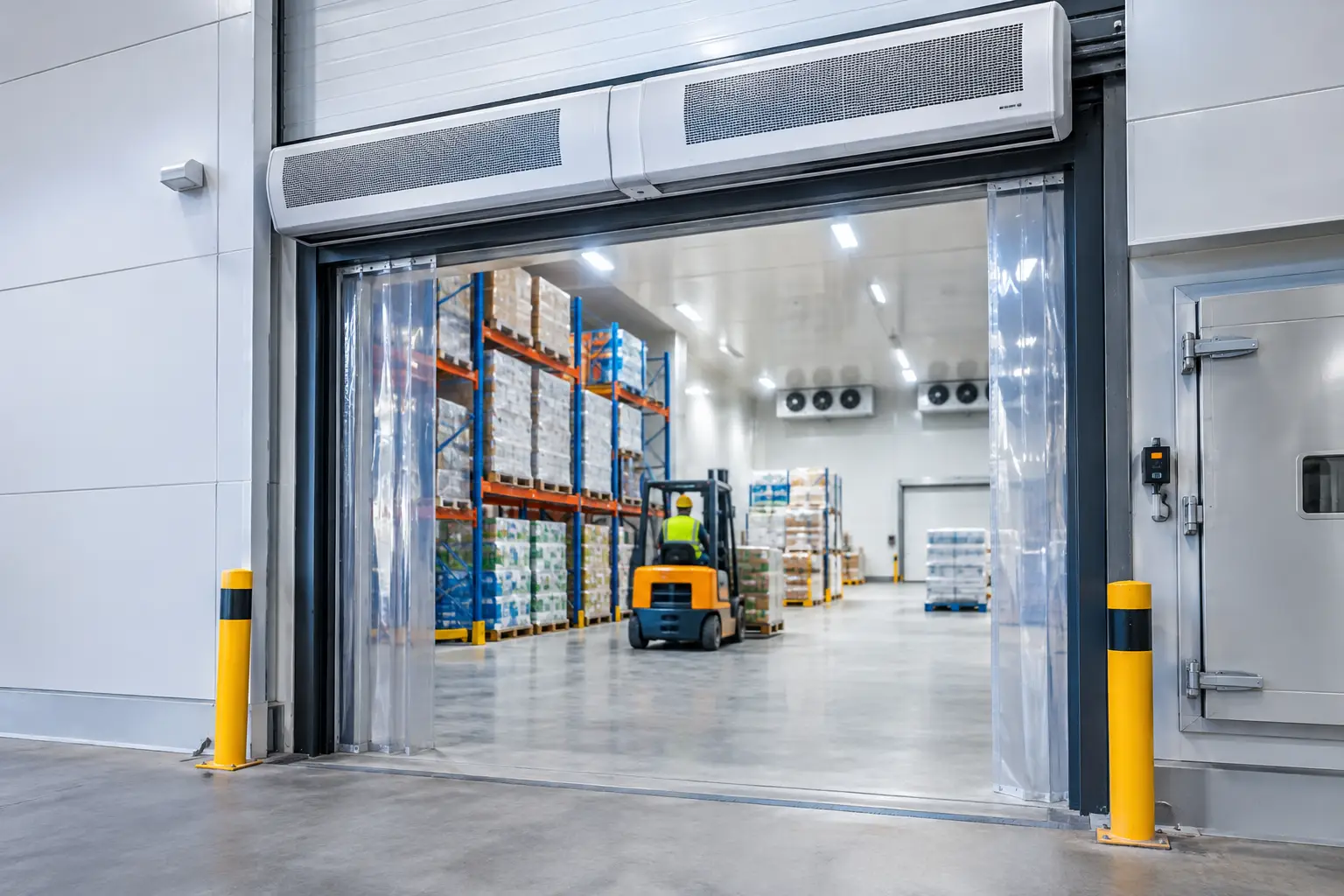
A warehouse door stuck open at 2 p.m. in peak summer can drain conditioned air faster than most operators realize. In hot, dusty, high-traffic facilities, an industrial air curtain for warehouse entrances is not a cosmetic add-on. It is part of the building’s operating strategy – protecting cooling capacity, reducing contamination at loading zones, and helping the site stay workable through constant door cycles.
For facility managers and project teams, the real question is not whether an air curtain helps. It is whether the selected unit can handle the opening size, traffic pattern, and climate pressure of the site. A light-duty unit above a busy dock door in Dubai, Riyadh, Lagos, or Nairobi will not solve the problem. The air barrier has to be engineered for the opening and for the environment around it. FreezeeX Air Curtains supplies industrial and commercial air curtain systems engineered for demanding warehouse environments across the UAE, GCC, and Africa. Whether the challenge is extreme heat, desert dust, humidity, or constant forklift traffic, selecting the correct air curtain specification can significantly improve entrance control and support HVAC efficiency.
What an industrial air curtain for warehouse entrances actually does
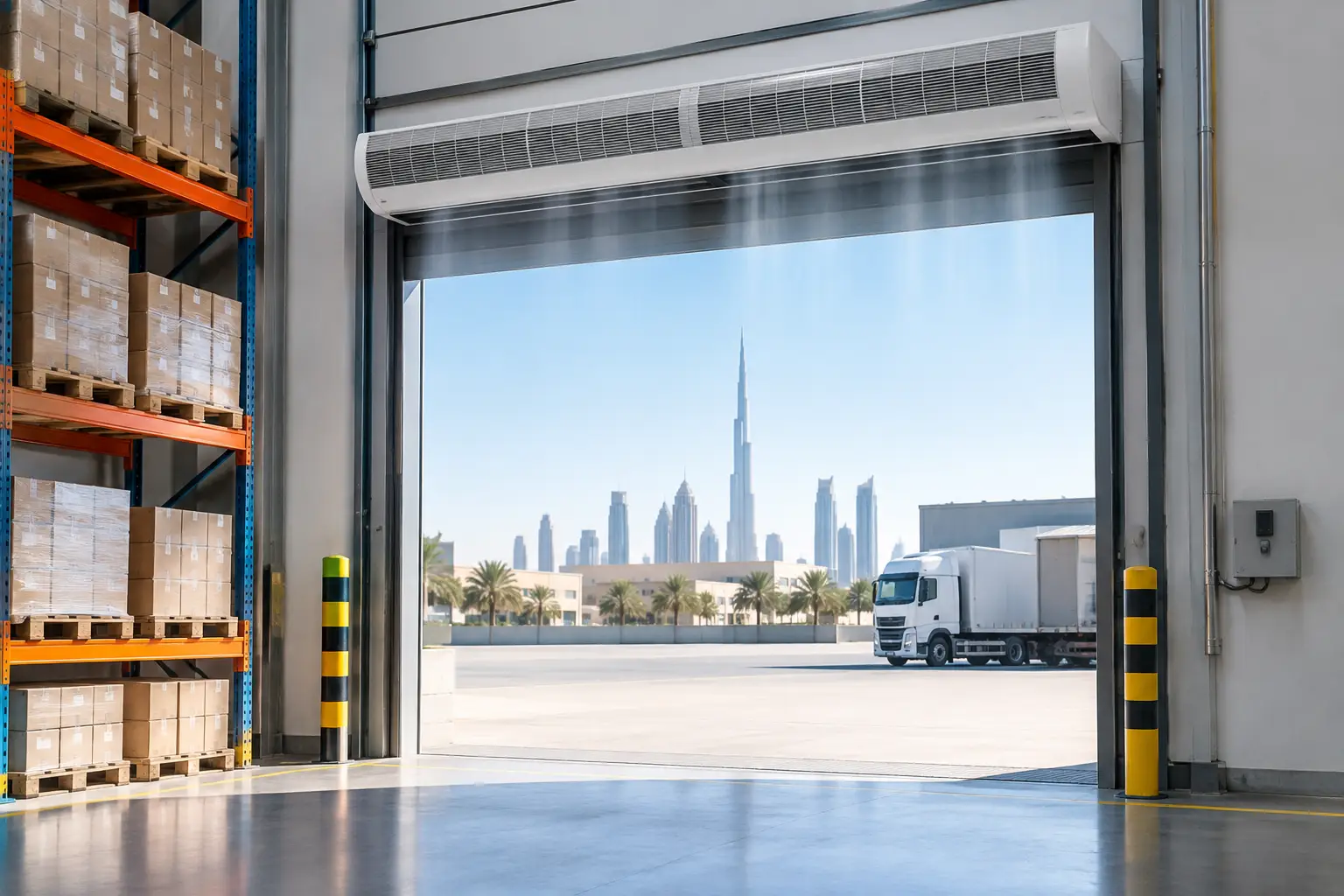
An industrial air curtain creates a controlled sheet of high-velocity air across an opening. That air stream acts as a barrier between indoor and outdoor conditions while the door remains open. In warehouse environments, that means less hot air entering, less cooled air escaping, and lower exposure to dust, flying insects, humidity, and fumes at access points.
That sounds simple, but warehouse applications are demanding. Door heights are often significant. Forklifts pass through constantly. Some facilities operate near cold rooms or temperature-controlled zones. Others face direct solar gain, desert dust, or humid outside air. The air curtain has to maintain barrier strength under pressure, not just produce airflow on paper.
This is why industrial models differ from standard commercial units. They are built for larger openings, stronger throw, longer run times, and harsher operating conditions. The right blower configuration, motor quality, casing durability, and control setup all matter more in a warehouse than they do at a typical pedestrian entrance.
Why warehouses in hot and dusty climates need more than basic airflow
In tropical and desert-climate markets, open-door losses become expensive very quickly. Every minute a warehouse opening stays exposed allows conditioned air to escape and outdoor heat to push further inside. The HVAC system then works harder to pull the space back under control. That raises energy use, increases equipment strain, and creates uneven working conditions close to the entrance.
Dust is the second issue, and in many industrial facilities it is just as serious as heat. Fine particles entering through loading bays can affect packaging areas, stock condition, product cleanliness, and maintenance intervals on nearby equipment. In food-related, hygiene-sensitive, or retail distribution environments, the impact is even more immediate.
Humidity and insects add another layer. In places such as coastal GCC cities or parts of West and East Africa, moisture infiltration can affect comfort, storage conditions, and condensation risk near controlled zones. Where doors open frequently, insect control also becomes a practical operations issue rather than a minor nuisance.
An industrial air curtain for warehouse operations helps address all of these pressures at once, but only if it is specified correctly. Bigger is not always better, and lower-cost units often disappoint because they were selected by width alone, without considering mounting height, air velocity at floor level, wind exposure, or the negative pressure conditions inside the building. Industrial air curtains are increasingly used in warehouses across Dubai, Abu Dhabi, Sharjah, Riyadh, Doha, Nairobi, and other fast-growing logistics markets where climate control and contamination reduction are operational priorities.
How to choose the right industrial air curtain for warehouse performance
The first factor is the opening itself. Width and height are the starting point, but they are not enough on their own. A warehouse receiving door, a dispatch opening, and an internal access point between production and storage may have similar dimensions but very different operating demands.
Mounting height affects whether the airflow can reach the floor with enough force to maintain separation. If the air stream breaks up before it reaches the bottom of the opening, the barrier becomes weak where infiltration is often strongest. This is a common issue when undersized units are installed over tall industrial doors.
Traffic intensity also matters. Forklifts, pallet jacks, and high-volume pedestrian movement disturb the air barrier. In a low-traffic opening, that disturbance may be manageable. In a busy logistics facility, it can reduce effectiveness if the unit is not designed for industrial use.
The third factor is pressure difference. Warehouses with extraction systems, process ventilation, or large fan-driven air movement can create internal pressure conditions that affect how the barrier behaves. A unit that performs well in a neutral environment may struggle when pressure imbalance pulls outside air inward.
Then there is the climate itself. In desert-facing sites, dust resistance and high ambient endurance are essential. In humid coastal environments, corrosion resistance and performance stability matter more. For operators in the GCC, Egypt, Nigeria, Kenya, or South Africa, climate-specific specification is not a marketing phrase. It is the difference between a system that performs and one that simply runs.
Where air curtains deliver the strongest return in a warehouse
The most obvious location is the main loading or dispatch entrance. This is where conditioned air loss is usually highest and where outside contamination enters fastest. If doors remain open for vehicle movement, staging, or high shipment volumes, the air curtain can reduce the penalty of each open cycle.
Internal transitions are often overlooked but can be equally valuable. Warehouses connected to chilled rooms, packing zones, retail back-of-house areas, or cleaner process spaces benefit from controlling air transfer between areas. In these cases, the objective is not only energy reduction but also maintaining hygiene and more stable room conditions.
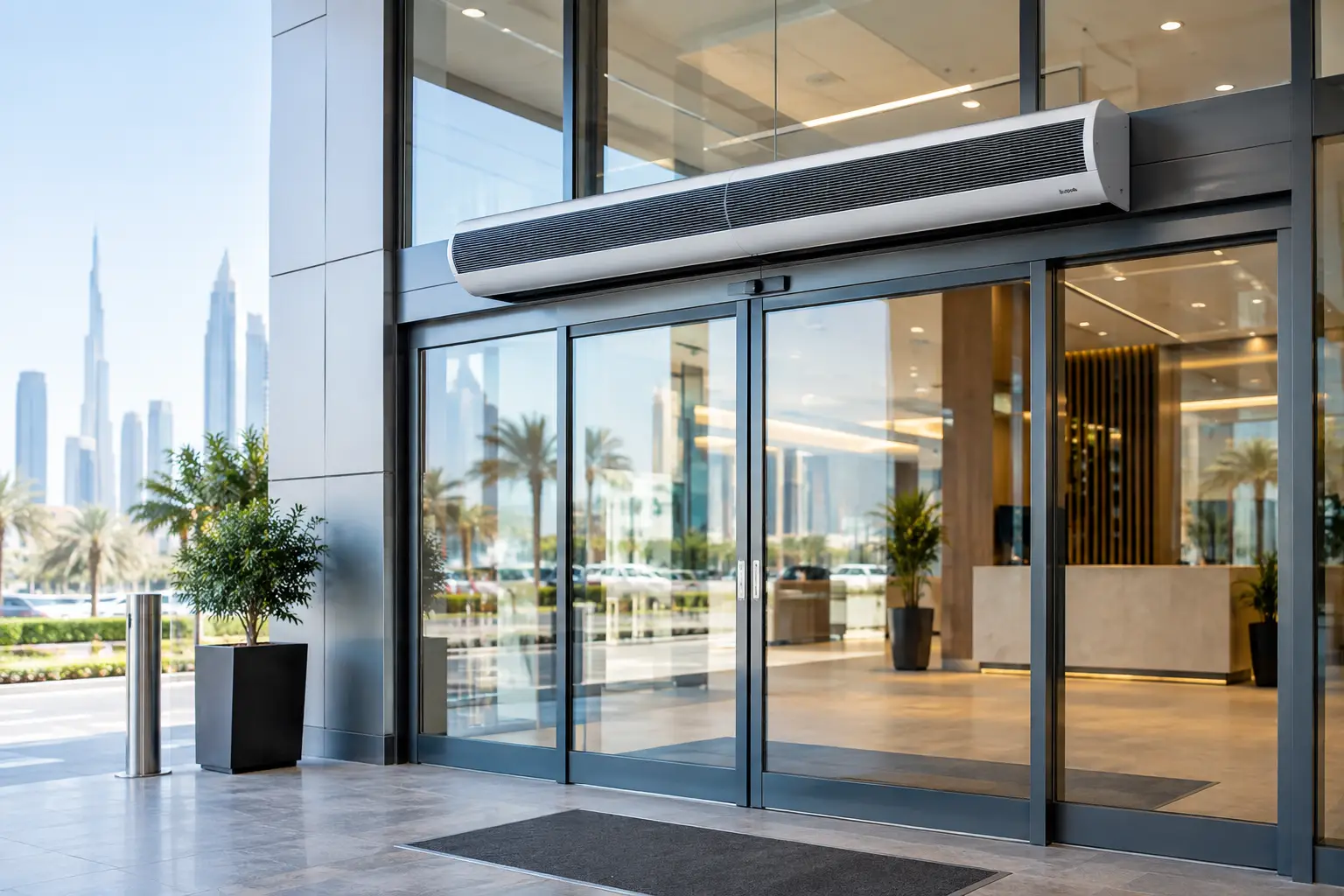
Staff entrances and high-traffic access doors also deserve attention. Smaller openings may not need the same power as a dock entrance, but frequent door activity can still create measurable cooling loss and comfort complaints. Matching the unit to the application is where good specification adds value.
What buyers should ask before specifying a system
A serious supplier should ask for more than the door size. They should want to know the mounting height, indoor temperature target, outdoor climate exposure, type of traffic, operating hours, and whether the opening faces direct wind or dust. If the discussion stays at price per unit, the project is already off track.
Noise can also matter, depending on the area. In a heavy industrial loading bay, a higher sound level may be acceptable. In mixed-use facilities or warehouse spaces connected to offices, retail, or hospitality logistics zones, noise performance should be considered early.
Control logic is another detail that affects long-term value. Some sites need door-linked operation to reduce unnecessary runtime. Others need continuous operation during peak hours. In larger facilities, coordination with building management strategy can improve efficiency and reduce operator intervention.
Maintenance access should not be ignored either. Filter nets, motor servicing, and cleaning requirements affect lifecycle performance. A strong industrial specification is not only about initial air velocity. It is also about whether the unit can stay effective in real operating conditions month after month.
Common mistakes that reduce air curtain performance
The most common mistake is under-specifying the unit to save capital cost. That usually leads to weak floor-level coverage, poor separation, and user complaints that the air curtain is “not working,” when the real issue is incorrect selection.
The second is treating all openings the same. A personnel door, a warehouse shutter, and an internal cold chain opening do not require the same configuration. Applying one model type across every entrance may simplify procurement, but it often reduces performance where it matters most.
The third is ignoring local conditions. A system chosen without accounting for desert dust, extreme ambient temperatures, or coastal humidity may face faster wear or lower effectiveness. Warehouses in this region need equipment built and specified for climate stress, not generic catalog matching.
A better way to evaluate value
The right buying decision is not based on unit cost alone. It should be measured against cooling energy loss, contamination control, working comfort near entrances, and the burden placed on the HVAC system. In many warehouse environments, a properly selected air curtain pays back through reduced cooling waste and better operational control, especially where doors cycle frequently all day.
That said, results depend on fit. An industrial air curtain for warehouse applications should be selected as part of the entrance design, not added late as a patch. When the specification reflects opening dimensions, traffic reality, and climate exposure, the system becomes a practical performance tool rather than an afterthought.
If you are evaluating an industrial air curtain for warehouse operations in the UAE, GCC, or African markets, the best starting point is a proper application review rather than selecting a unit based solely on door size. Factors such as mounting height, traffic frequency, climate exposure, and pressure conditions all influence long-term performance.
FreezeeX supports contractors, consultants, warehouse operators, and facility managers with application-based recommendations and quotation support for industrial air curtain systems designed for tropical and desert climates. Contact our team to discuss your project requirements and identify the most effective solution for your facility.
5 Responses
That’s why application-based selection is so important. Different facilities have different entrance demands, and factors such as traffic intensity, environmental exposure, and indoor climate requirements all influence the most effective air curtain solution. Matching the system to the application helps deliver reliable performance, better energy efficiency, and long-term operational value.