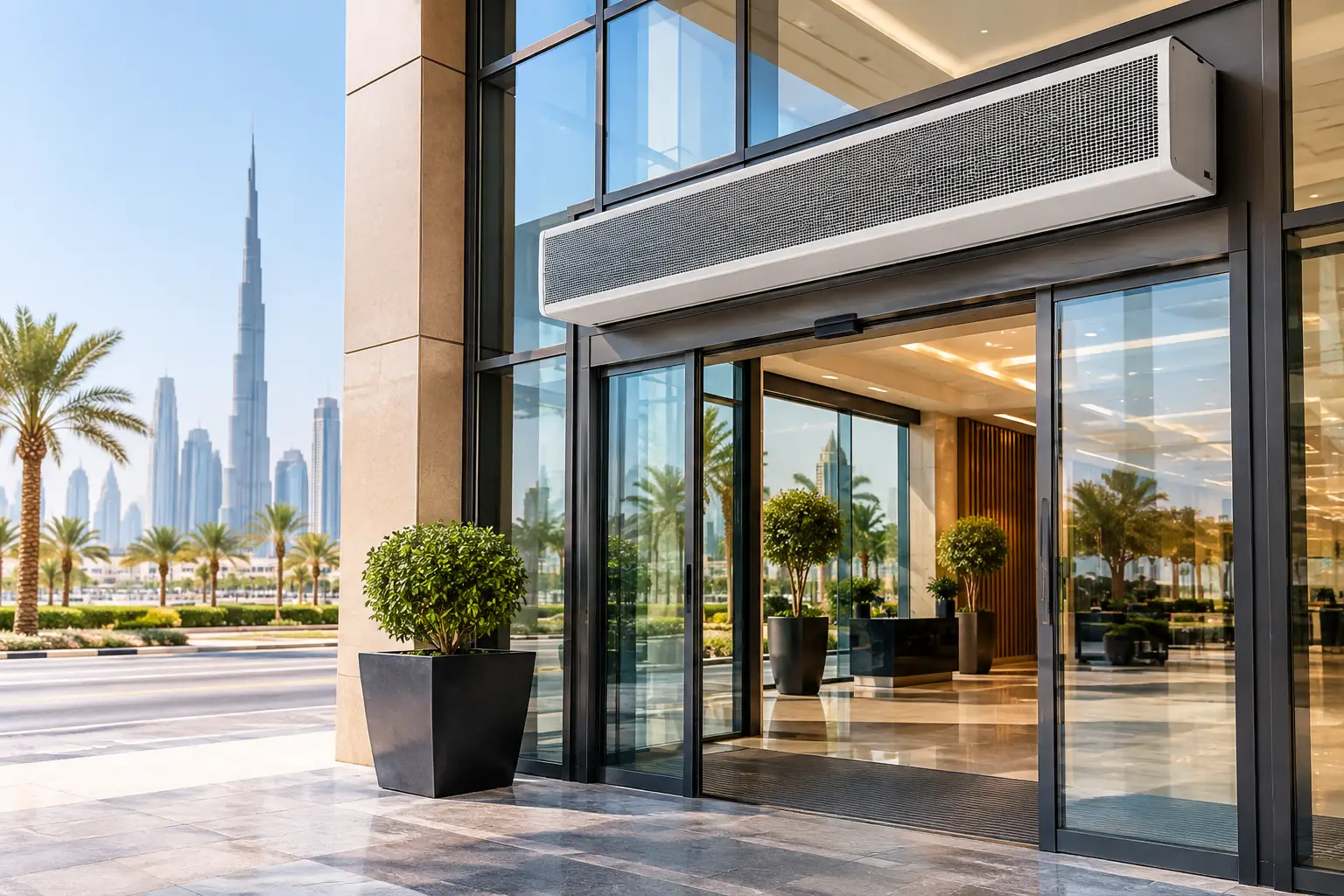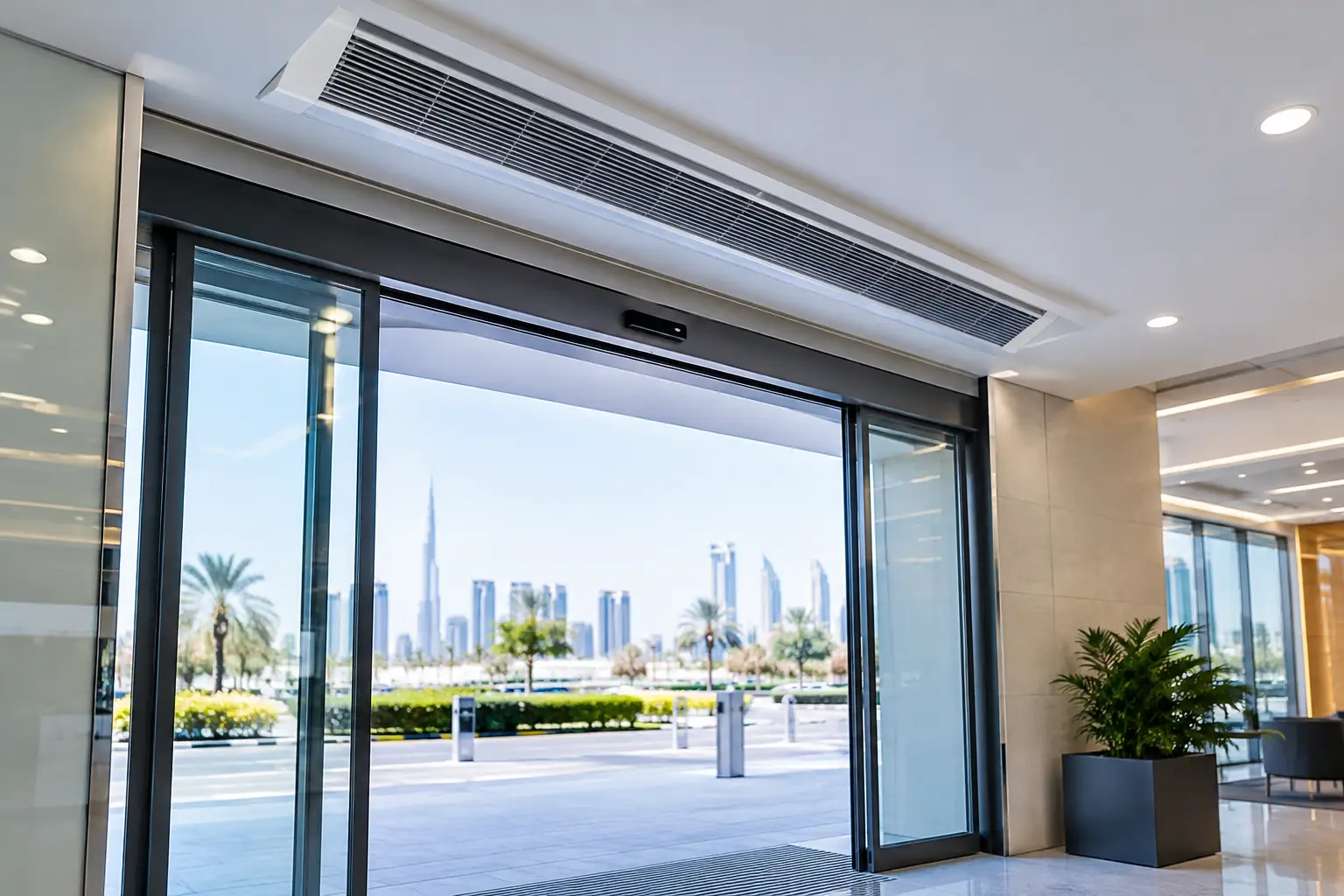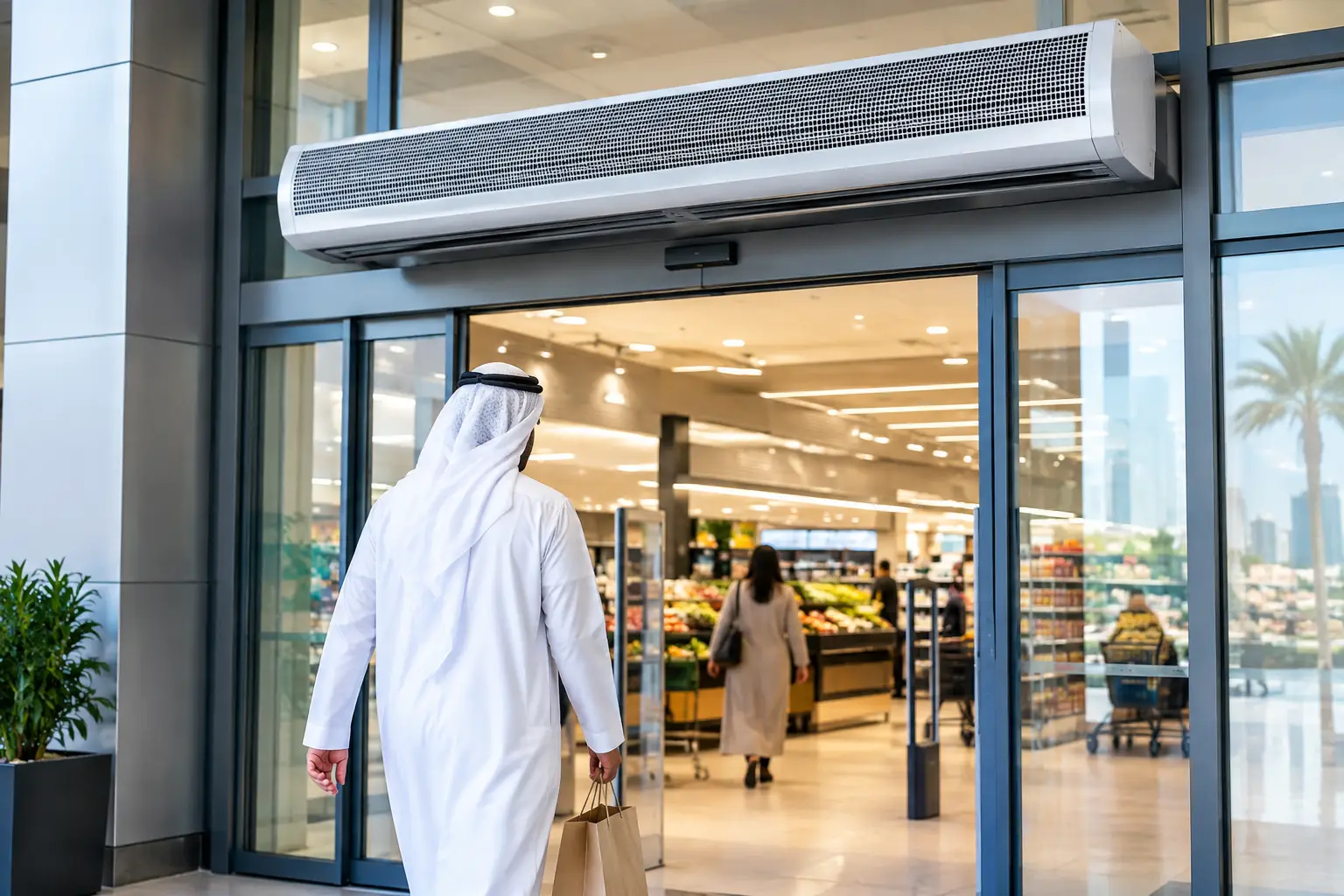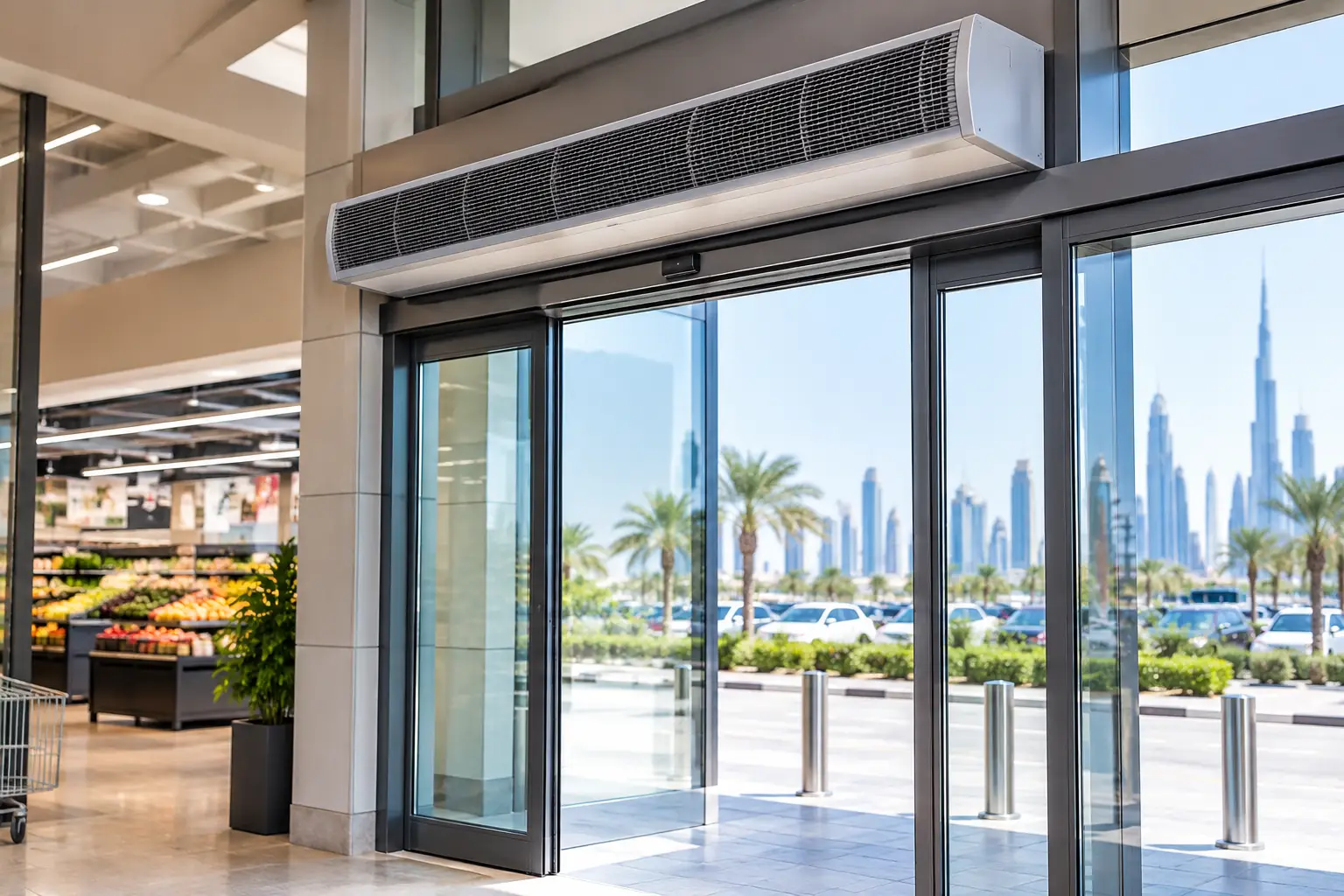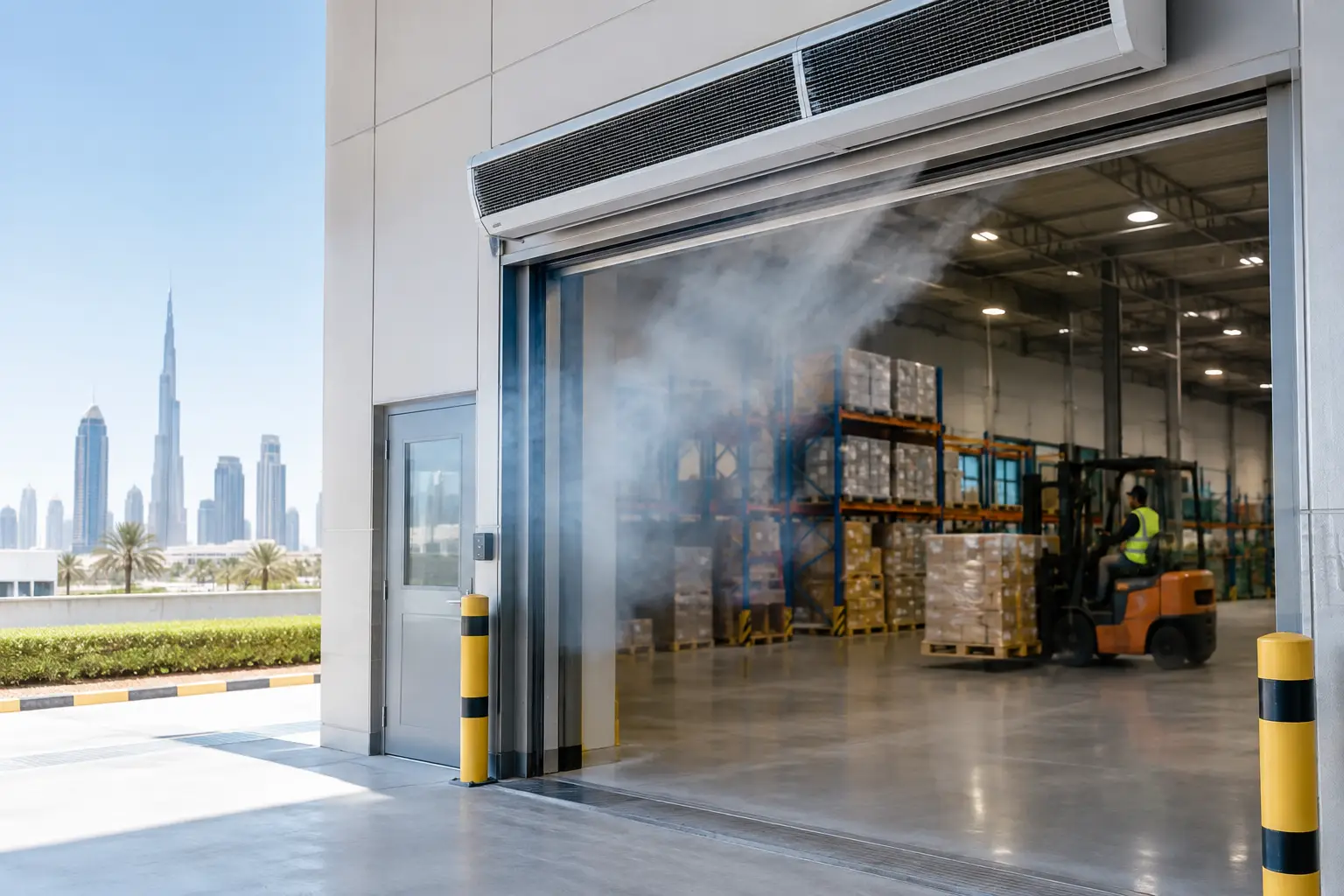
A loading bay in Dubai at 2 p.m. does not behave like a light-duty office entrance. The moment a door opens, conditioned air escapes, hot air pushes in, and dust, insects, and humidity follow. That is why an industrial entrance protection guide matters for facility managers, consultants, and contractors working in high-traffic sites across the GCC, MENA, and Africa.
At industrial scale, entrance protection is not just about comfort. It affects cooling cost, hygiene control, product quality, staff working conditions, and HVAC strain. In a hypermarket back-of-house area, a cold storage threshold, or a manufacturing plant in Riyadh, Lagos, or Nairobi, entrance performance can either support operations or steadily drain them.
What industrial entrance protection really means
Industrial entrance protection is the control of air movement, contamination, and temperature transfer at the point where indoor and outdoor environments meet. In hot and dusty regions, that usually means reducing heat infiltration, limiting airborne particles, deterring flying insects, and helping the building maintain a more stable indoor climate.
Many sites still rely on doors alone. That works only part of the time. If an entrance opens frequently, the door is no longer a true barrier. Forklift traffic, delivery cycles, shift changes, and customer movement all weaken the protection a closed door is supposed to provide.
That gap is where air curtains become a serious operational tool. A properly specified industrial air curtain creates a high-velocity air barrier across the opening. It does not replace a physical door in every application, but it does reduce the environmental exchange that happens whenever the entrance is in use.
Why this matters more in desert and tropical climates
In moderate climates, entrance losses may be a nuisance. In hot-weather markets, they become a cost center. Outdoor temperatures, suspended dust, humidity swings, and extended operating hours make entrance control far more critical.
A warehouse in Abu Dhabi or Muscat may face constant heat pressure for most of the day. A food facility in Cairo or Casablanca may need cleaner airflow control at service entries. A retail site in Doha or Kuwait City may have automatic doors cycling open continuously. In coastal and tropical zones, humidity infiltration adds another layer of difficulty because cooling systems must work harder to maintain indoor conditions.
This is where specifiers need to think beyond generic airflow claims. Performance in desert and tropical environments depends on throw distance, air velocity at the floor, blower type, installation height, and the ability of the unit to hold a stable barrier despite pressure differences across the opening.
The core risks at unprotected industrial entrances
When entrances are not properly protected, the losses rarely show up in one dramatic event. They appear as constant operational drag.
Cooling loss is usually the first issue. Conditioned indoor air escapes, and warm air enters, forcing the HVAC system to compensate. That raises energy use and can create uneven indoor temperatures near the entrance.
Dust infiltration is another major problem, especially for logistics facilities, workshops, retail stock areas, and industrial plants near roads, yards, or open land. Dust affects product cleanliness, maintenance cycles, and indoor air quality.
Insect control also matters more than many buyers expect. Food handling areas, hospitality service entries, and commercial kitchens cannot treat this as a minor issue. An active air barrier helps reduce entry points without obstructing traffic flow.
Humidity can be the hidden cost. In hot coastal conditions, moisture entering through busy entrances can affect comfort, surfaces, packaging, and cooling efficiency. That problem intensifies around cold rooms and controlled-temperature spaces.
How to use this industrial entrance protection guide for specification decisions
The right approach starts with the opening, not the catalog. Too many projects choose a unit based on general capacity labels instead of actual site conditions.
Start with the entrance geometry
Width and mounting height define the performance requirement. A tall industrial opening needs stronger throw and floor-level air velocity than a standard commercial doorway. If the air stream loses strength before it reaches the floor, the barrier is incomplete.
Openings also vary by use. A personnel door, a goods receiving bay, and a cold storage entrance each have different traffic patterns and environmental pressures. The same unit should not be expected to serve all three equally well.
Look at traffic intensity, not just door size
A medium-sized opening with nonstop movement can be harder to protect than a larger opening used occasionally. Hypermarkets, hotels, processing facilities, and workshops often need air curtains designed for continuous-duty performance, not light intermittent use.
This is where motor design, blower configuration, and build quality matter. Industrial centrifugal systems are often selected for stronger and more stable airflow, especially where heavy usage and higher mounting positions are involved.
Account for pressure differences
Some entrances are exposed to stronger wind effects or internal pressure imbalance. This can happen at loading areas, large lobbies, service corridors, or buildings with aggressive exhaust and ventilation setups. If pressure conditions are ignored, the air barrier may drift or weaken.
That does not mean the solution is always a bigger unit. Sometimes the answer is a different series, a better mounting position, or multiple units across a wider opening. Good specification is about fit, not oversizing for the sake of it.
Choosing the right air curtain type
Not every entrance needs the same equipment category. Commercial entrances with moderate height may suit compact or architectural models where appearance and noise control matter alongside performance. Industrial doors and service bays usually need stronger airflow and more durable construction.
Recessed ceiling models can work well in finished commercial environments where visual integration matters. Commercial centrifugal flow units are often a practical fit for retail, hospitality, and office entrances with frequent traffic. Heavy industrial applications typically call for higher-capacity centrifugal series engineered for larger openings and harsher operating conditions.
There is always a trade-off. Higher power can improve barrier strength, but noise, mounting constraints, and electrical requirements must still align with the project. The best result is rarely the most aggressive unit on paper. It is the unit that matches the entrance condition and operating objective.
Installation details that make or break performance
Even a well-selected air curtain can disappoint if installed poorly. Mounting height must stay within the effective operating range of the unit. Positioning should be centered and aligned to cover the full opening. Gaps reduce barrier integrity.
Discharge angle also matters. In many sites, a slight adjustment improves resistance against outdoor air intrusion. But too much angle can distort the stream and reduce floor contact. This is one reason consultation-led selection is more reliable than treating air curtains as plug-and-play equipment.
Controls should also reflect how the site operates. Door-activated operation, continuous use, or integration with building routines all have different implications for energy use and effectiveness. A unit that is frequently switched off at the wrong time offers little real protection.
Where buyers often get specification wrong
The most common mistake is underestimating the environment. A product suitable for a standard storefront may not hold performance at a logistics entrance in extreme heat. Another frequent error is focusing only on top-line airflow volume instead of usable air velocity at the opening.
Buyers also sometimes ignore maintenance access. In dusty markets, serviceability matters. Filter nets, motor access, and cleaning schedules should be considered early, especially in industrial and back-of-house applications.
And there is the issue of lifecycle thinking. A lower upfront price can look attractive, but if the unit struggles in high heat, high humidity, or constant-use conditions, the long-term result is weaker protection and higher operating cost elsewhere in the building.
Industrial entrance protection guide for common applications
For cold storage entrances, the priority is limiting temperature exchange and humidity ingress while allowing regular movement of goods. For hypermarkets and retail receiving areas, the focus is often cooling retention, cleanliness, and uninterrupted traffic flow. For hospitality service doors and kitchen access points, insect reduction and comfort become more visible concerns.
In workshops, factories, and plants, dust control and thermal isolation are often the main performance targets. In office and commercial towers with high footfall, the balance may shift toward appearance, sound levels, and consistent lobby conditions. The equipment category should reflect the operational reality of each site, not a one-size-fits-all standard.
FreezeeX typically sees the strongest results when the product line is matched to entrance type, climate exposure, and traffic pattern from the start. That is especially true in desert and tropical markets, where a generic specification often falls short under real operating pressure.
If you are planning a new project or upgrading an active facility, the next step is not guessing the model from a brochure. It is reviewing the opening dimensions, mounting height, traffic conditions, and climate exposure with a specialist who understands high-temperature industrial environments. Request a consultation or quote to identify the right air curtain solution for your entrance conditions and performance targets.