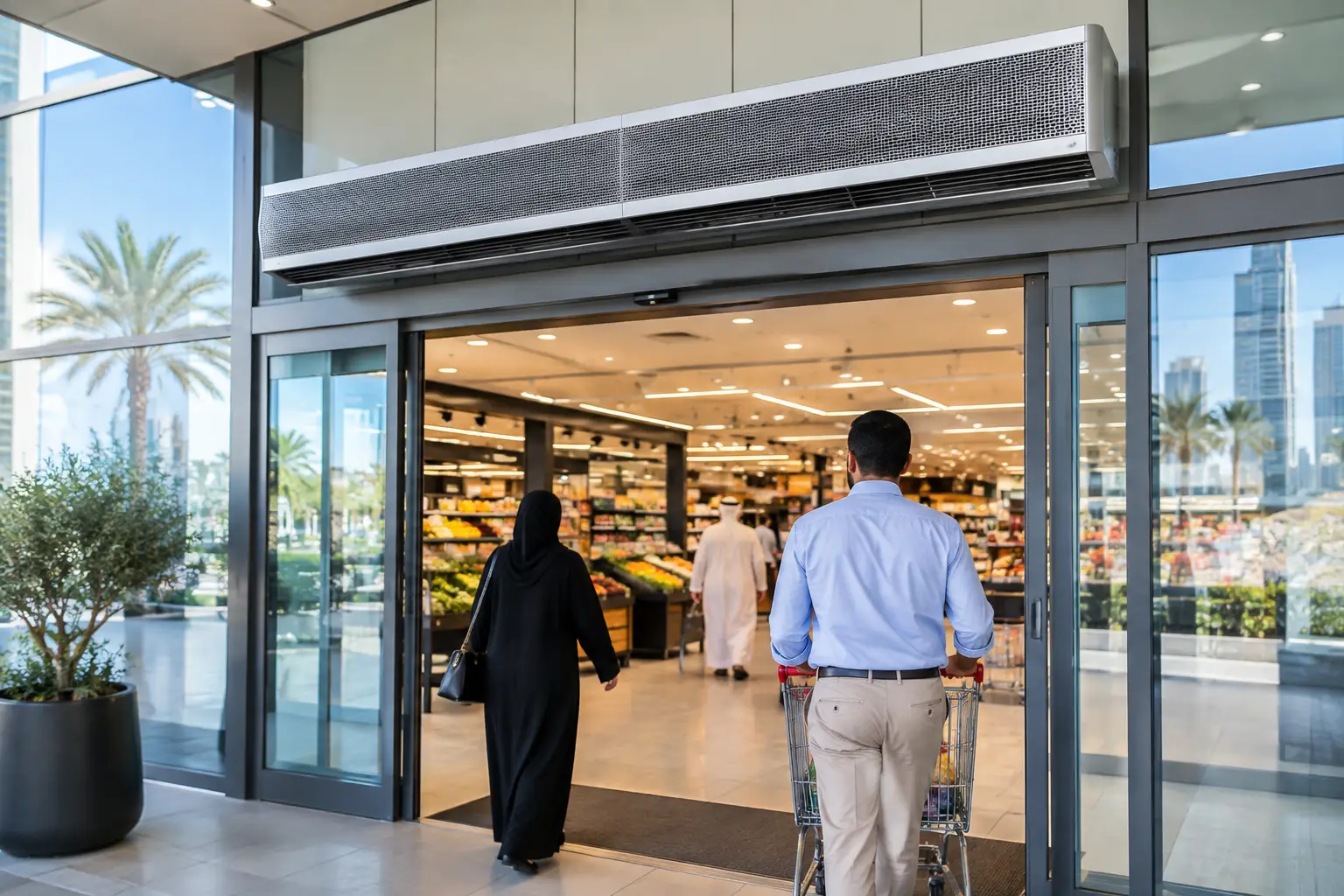
A supermarket in Dubai, Riyadh, or Lagos can lose conditioned air every few seconds the entrance stays open. That loss shows up fast – warmer aisles near the door, higher HVAC load, more dust, more flying insects, and customer discomfort at checkout. Choosing the best air curtains for supermarkets is not about buying the biggest unit on paper. It is about matching airflow performance to door geometry, traffic volume, and the climate outside.
For supermarket operators, consultants, and MEP contractors, that distinction matters. A poorly matched air curtain may run continuously and still fail to hold the entrance line. A properly specified system creates a stable air barrier that protects cooling, improves hygiene, and reduces pressure on the building’s main HVAC system.
What makes the best air curtains for supermarkets
Supermarkets are a demanding application. Entrances stay open for long periods, foot traffic is constant, and the indoor environment needs to remain controlled even when outside temperatures are extreme. In hot, humid, or dusty markets across the GCC, MENA, and Africa, the air curtain has to do more than soften the draft at the door. It has to defend the store envelope.
The best-performing systems usually get four things right. First, they deliver enough air volume and discharge velocity to reach the floor or the intended barrier line. Second, they suit the entrance layout, whether that means a standard sliding door, a wide hypermarket opening, or a delivery access point between front-of-house and storage. Third, they are built for long operating hours without unstable performance. Fourth, they are selected with local climate conditions in mind, not generic catalog assumptions.
That last point is often where projects go off track. A model that performs adequately in a mild retail environment may underperform in a desert-facing entrance with high ambient heat and frequent dust infiltration. In supermarkets, especially those handling chilled produce, dairy, frozen goods, and bakery zones, entrance control has a direct effect on operational consistency.
Airflow matters more than label claims
When buyers compare supermarket air curtains, they often focus first on size, motor wattage, or a simple marketing category such as commercial or industrial. Those details matter, but airflow profile matters more.
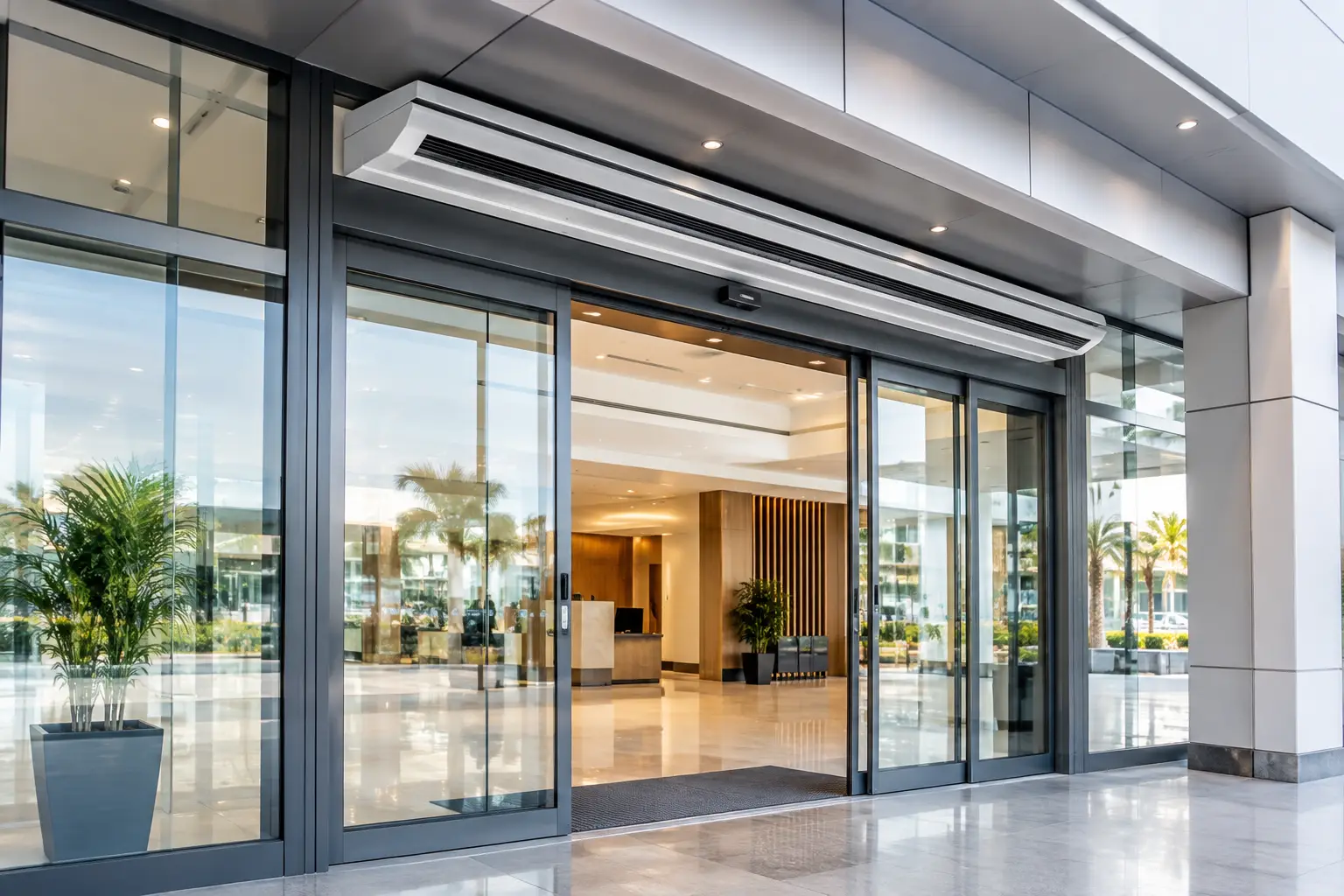
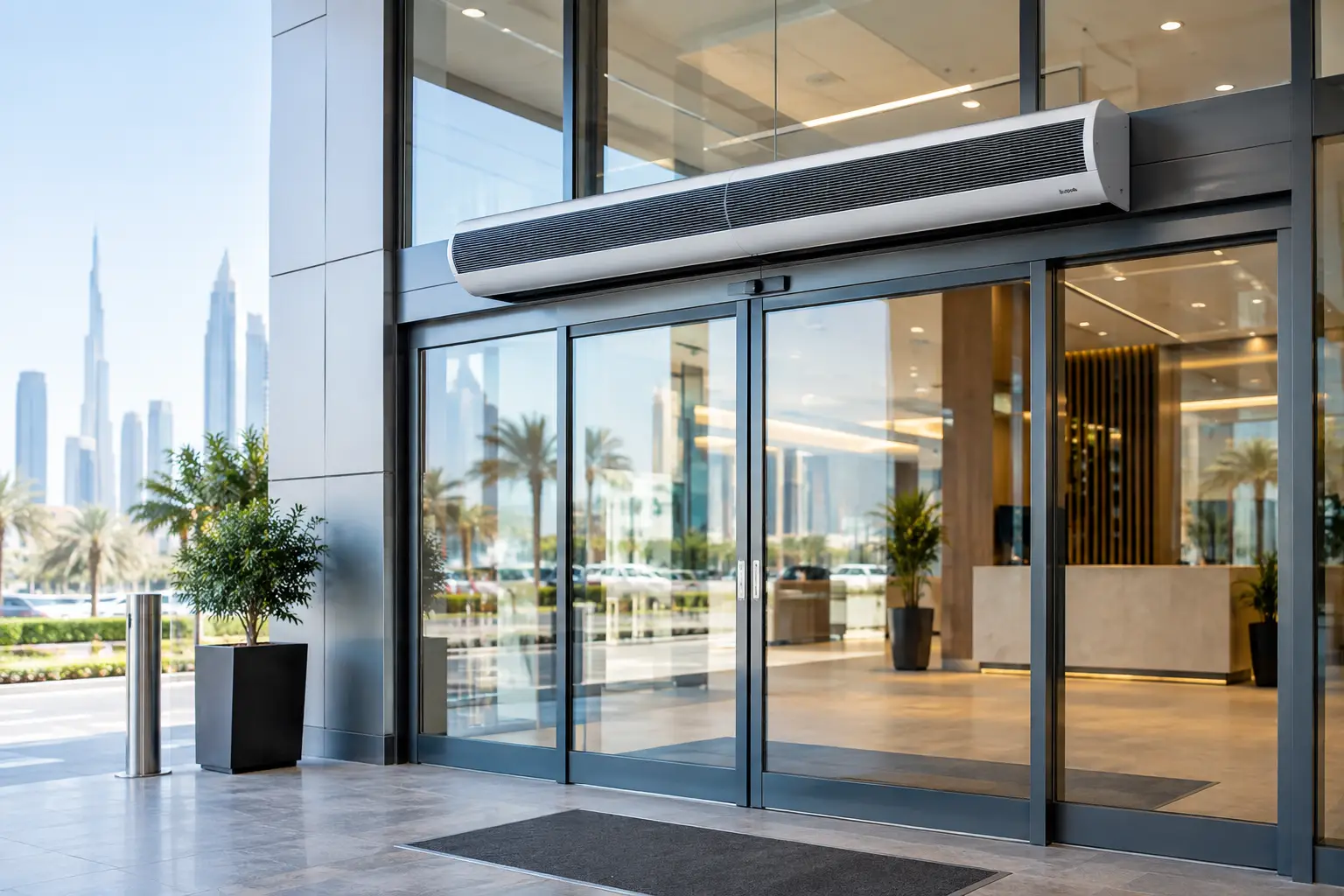
A supermarket entrance needs a stable, continuous air stream that can resist outside infiltration without creating excessive noise or customer discomfort. This is why blower design is not a minor detail. Commercial centrifugal flow systems are often preferred in demanding retail settings because they can maintain strong, more uniform air delivery across wider openings. In stores with premium fit-out requirements, recessed ceiling models may also be appropriate if the building design allows for proper installation depth and service access.
It depends on the entrance. A smaller neighborhood supermarket with automatic sliding doors may only need a commercial-grade system with carefully calculated coverage. A hypermarket with a wider opening and heavy trolley traffic may require a higher-capacity solution or multiple synchronized units. If the specification ignores opening width, mounting height, and external wind conditions, the result is predictable – air spill, warm air intrusion, and wasted electrical consumption.
Door height and opening width change everything
Air curtains should never be chosen by width alone. Door height determines whether the air stream can stay effective from top discharge to floor-level barrier. As mounting height increases, the unit needs the right motor and fan configuration to maintain usable velocity at the bottom of the opening.
Width matters too, especially in supermarkets with broad glazed entrances designed to maximize customer flow. One underpowered unit across a wide span often creates weak edges, and those edge gaps are where dust, humidity, and insects enter first. In practical terms, that means the best system may be a continuous run of coordinated units rather than a single oversized model.
Matching air curtain type to supermarket zones
Not every supermarket opening has the same requirement. The front entrance, the receiving bay, and the back-of-house chilled transition all behave differently.
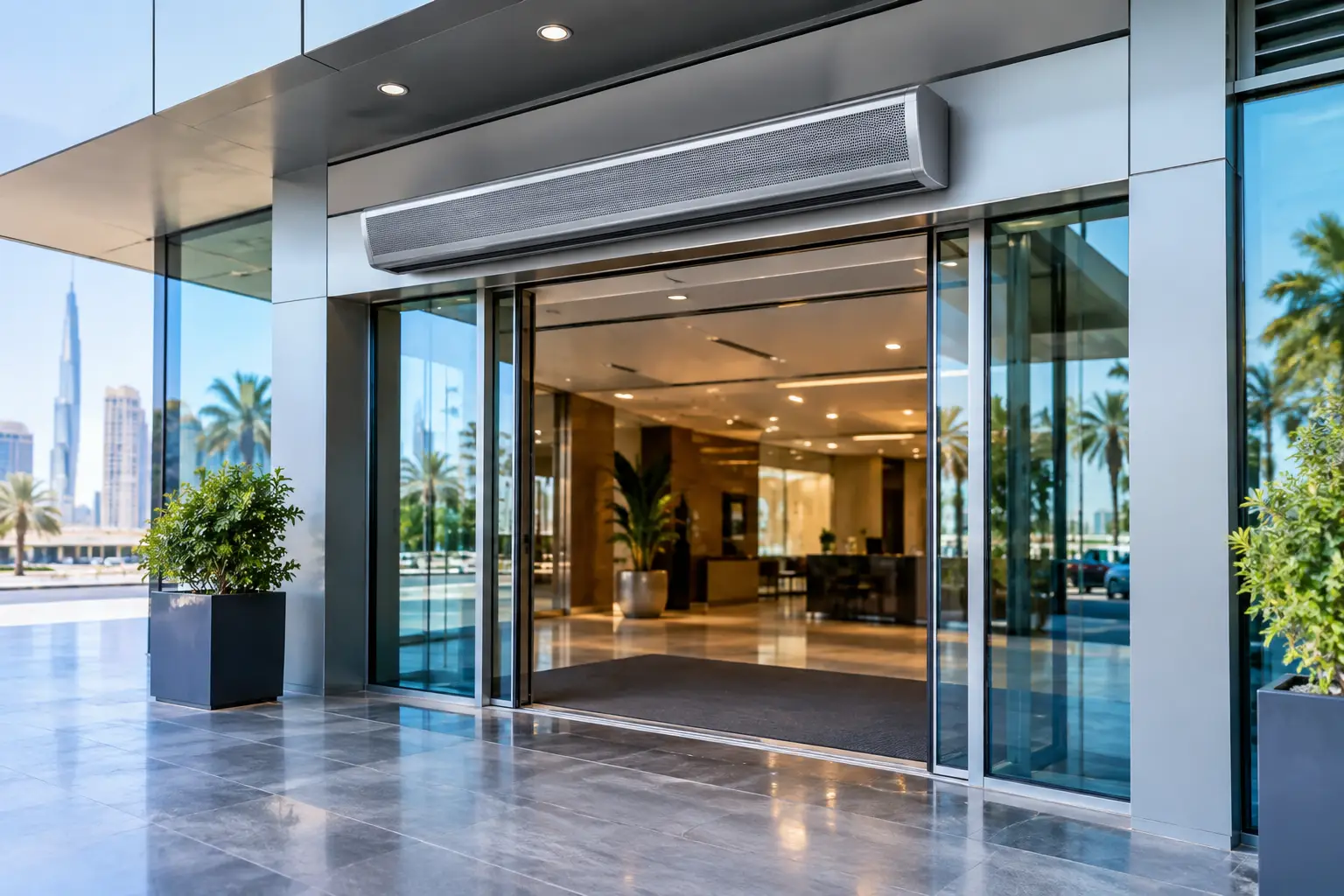
At the public entrance, appearance, noise control, and customer comfort all matter alongside performance. This is where slim commercial air curtains or recessed models often fit well, provided they still deliver enough air strength for the local climate. In premium retail environments, aesthetics matter, but not at the expense of barrier performance.
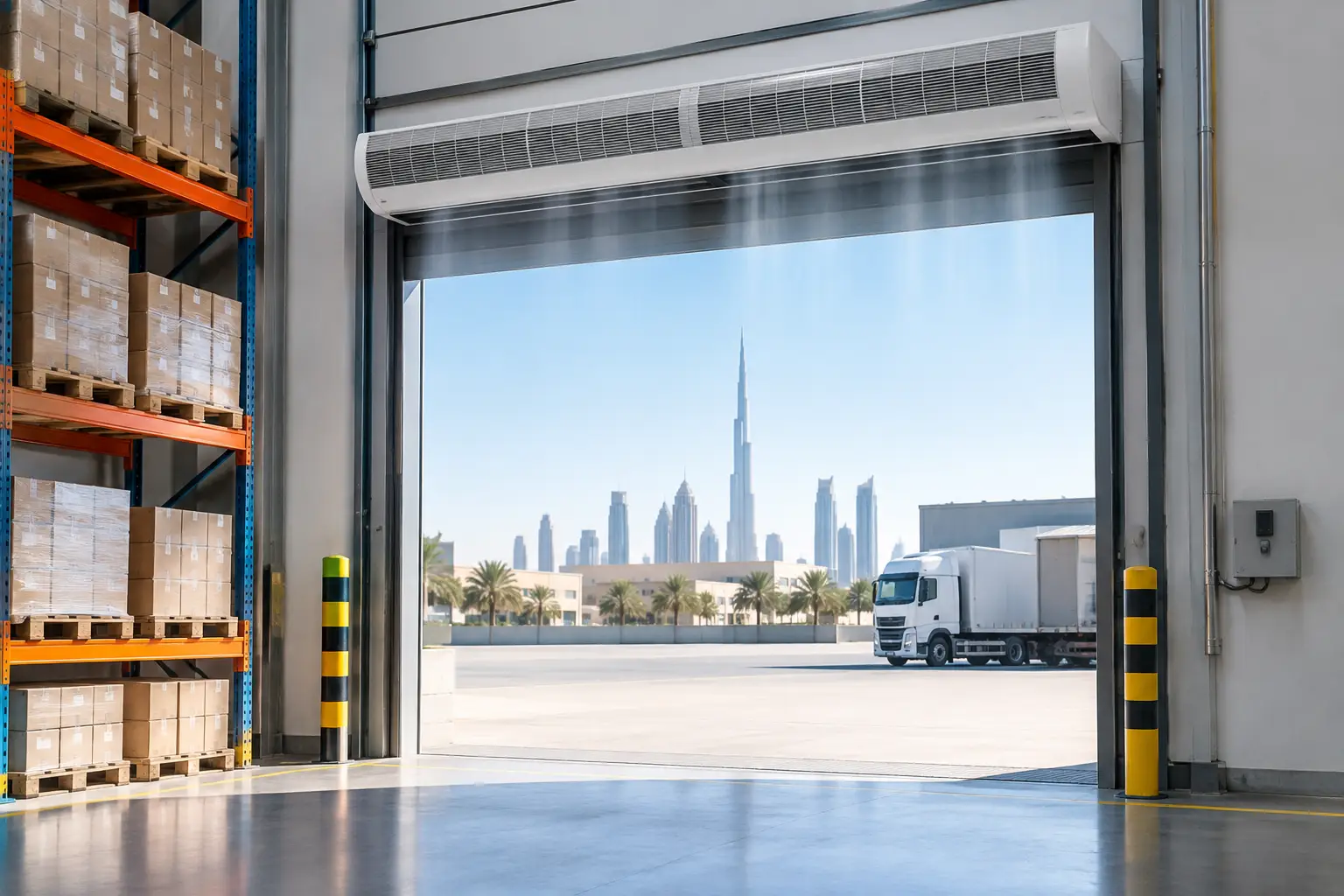
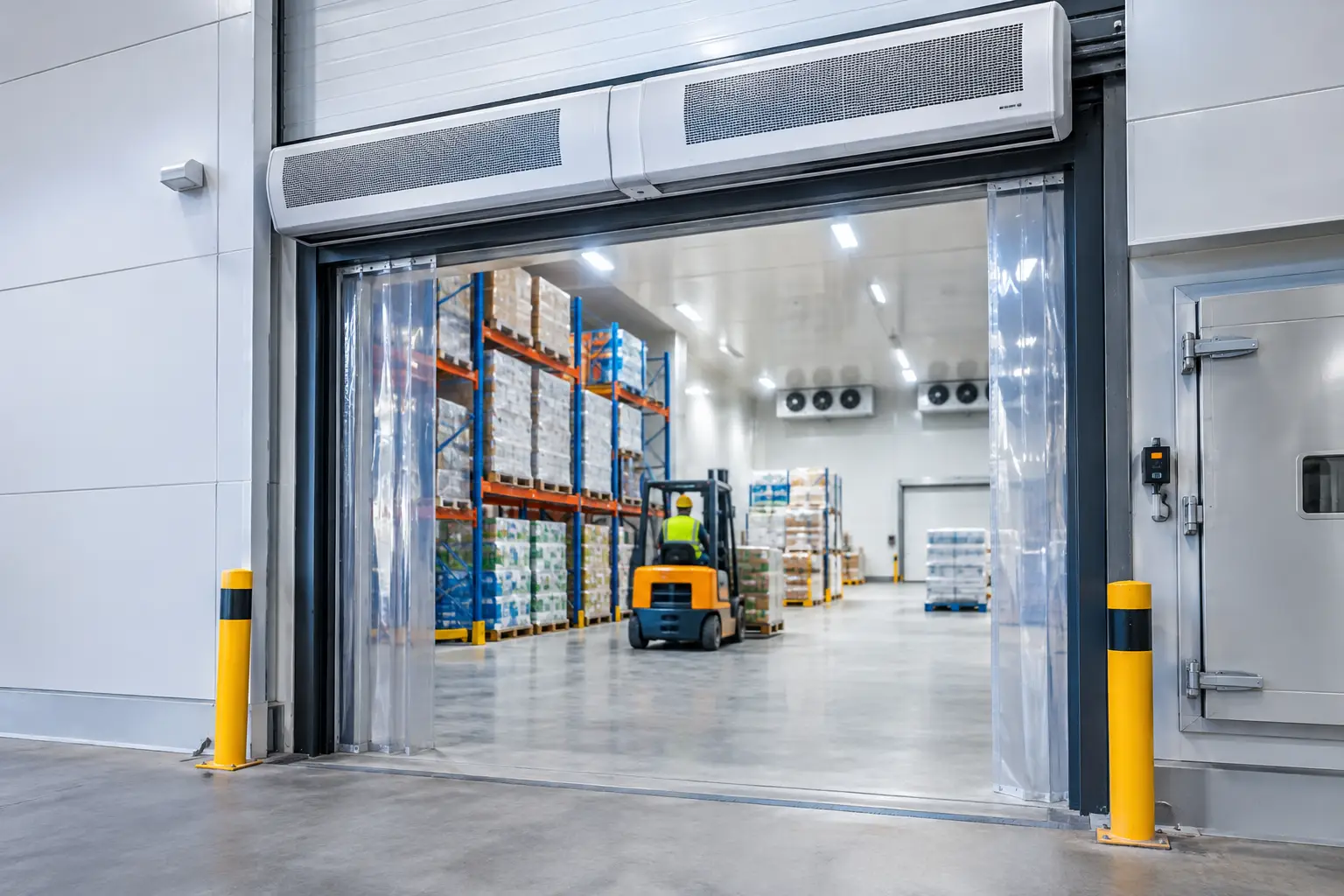
At loading and receiving doors, the operating conditions are harsher. Forklift movement, heat gain, dust, and frequent open-door cycles call for a more industrial approach. Industrial centrifugal series units are usually the better fit in these areas because they are built for heavier duty use and less forgiving environments.
For transition points near cold rooms or temperature-sensitive storage zones, the objective shifts slightly. Here, the air curtain helps reduce temperature transfer and moisture infiltration between spaces. The right specification can support better internal climate separation, which is especially valuable in high-ambient markets where every door opening increases condensation risk and cooling loss.
Climate performance is not optional
In a mild climate, many air curtains can appear similar. In tropical and desert conditions, the differences become obvious very quickly.
High ambient heat increases the pressure on the air barrier. Humidity makes infiltration more disruptive, especially around chilled products and fresh food sections. Dust is not just a comfort issue – it affects cleanliness, maintenance cycles, and the shopping environment. Insect control also becomes more important for supermarket hygiene and compliance.
That is why supermarket operators in cities such as Abu Dhabi, Doha, Cairo, Nairobi, and Casablanca should treat climate-adapted performance as a core selection factor. The best air curtains for supermarkets in these markets are engineered for continuous operation in hot conditions, not occasional use in moderate weather. That means durable motors, stable airflow, and reliable output during long business hours.
A lower-cost unit can look attractive at procurement stage, but if it fails to hold the entrance line during peak heat, the store pays for it elsewhere – in cooling loss, customer complaints, and HVAC strain. The smarter commercial decision is to evaluate total operating effect, not just upfront equipment price.
What buyers should look for before specifying
Supermarket air curtain selection should start with application data, not model names. The key questions are straightforward. What is the exact opening width and height? Is the entrance recessed or exposed to crosswind? How many hours per day will the unit operate? Is the objective mainly cooling retention, insect control, dust reduction, or all three? Is the installation at the main customer entrance, a service door, or a temperature-controlled internal opening?
Noise level also deserves attention. At cashier zones and customer-facing entrances, a louder industrial-style unit may not be the right answer even if the airflow is strong. In those cases, the better solution is often a higher-quality commercial system with balanced acoustic performance and sufficient throw.
Control integration is another practical issue. Supermarkets benefit from air curtains that can coordinate with door sensors or building operation schedules. That improves efficiency and avoids unnecessary run time. Filter nets, maintenance access, and serviceability should also be reviewed early, especially for stores in dusty environments where upkeep conditions are more demanding.
Common specification mistakes
The most common mistake is underestimating the climate load at the entrance. The second is assuming all commercial air curtains perform similarly if they share the same physical length. They do not. Internal engineering, fan design, motor quality, and air discharge characteristics create meaningful differences.
Another mistake is choosing purely for appearance in a store fit-out project. A clean architectural finish is valuable, but if the unit cannot maintain an effective barrier, the store loses more in operating cost than it gains in ceiling-line aesthetics. Good specification balances both.
Best fit over best generic option
There is no single universal answer to the best air curtains for supermarkets because supermarket formats vary so widely. A compact urban grocery store, a large-format hypermarket, and a mixed-use retail food hall all present different entrance conditions. The best option is the one that matches traffic intensity, opening dimensions, climate severity, and operating hours without overspending on unnecessary capacity.
For many projects, that means selecting from a portfolio that includes recessed ceiling models for architecturally sensitive entrances, commercial centrifugal flow systems for dependable daily retail use, and heavier-duty industrial units for service and logistics openings. A consultation-led approach is usually the safest path because it reduces the risk of underperformance after installation.
If you are planning a new supermarket project or upgrading an existing entrance, work from performance data, not guesswork. FreezeeX supports consultants, contractors, and facility teams with specification-ready recommendations for hot-climate retail environments across the GCC, MENA, and Africa. Request a quote or technical consultation to identify the right air curtain setup for your supermarket entrance and operating conditions.