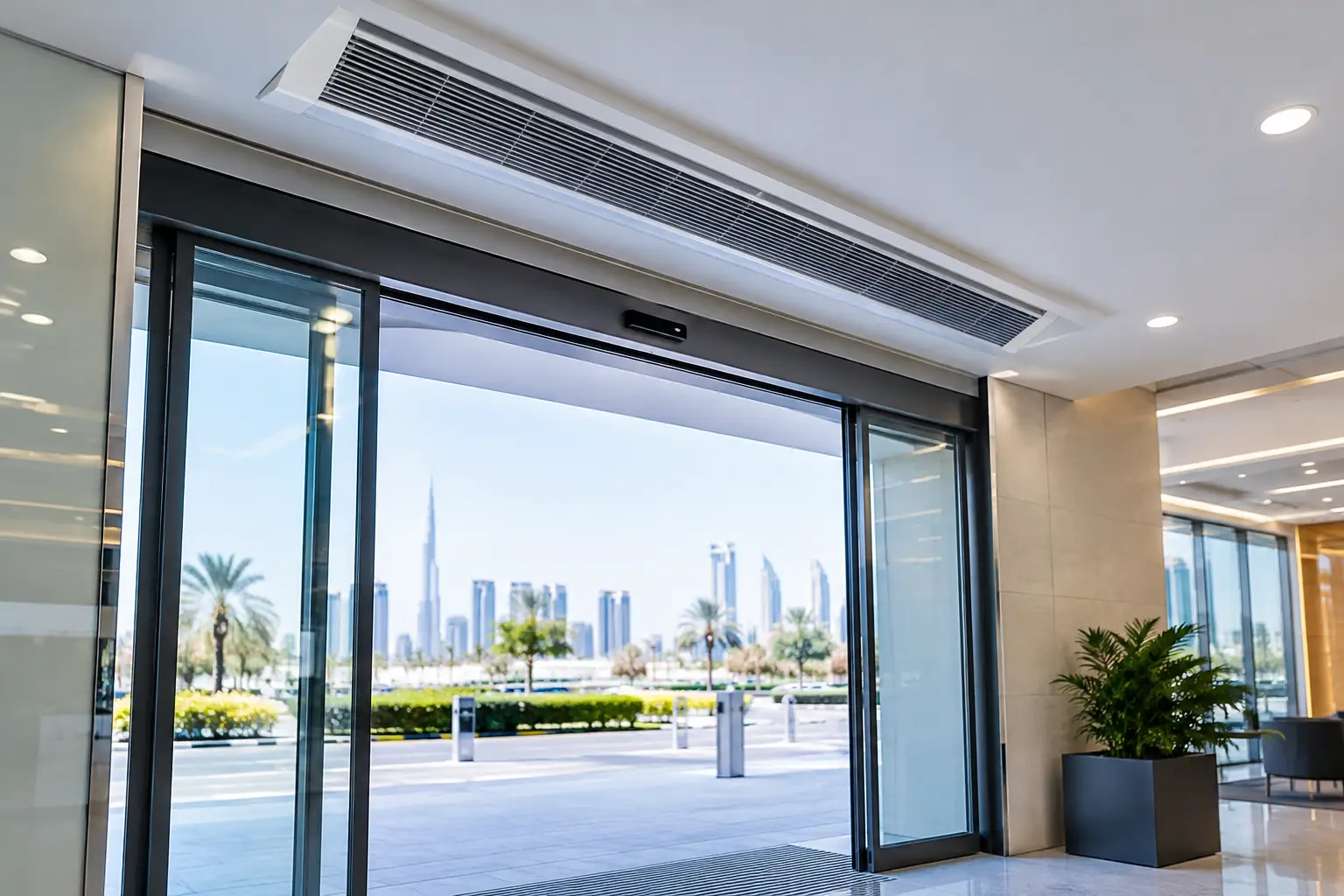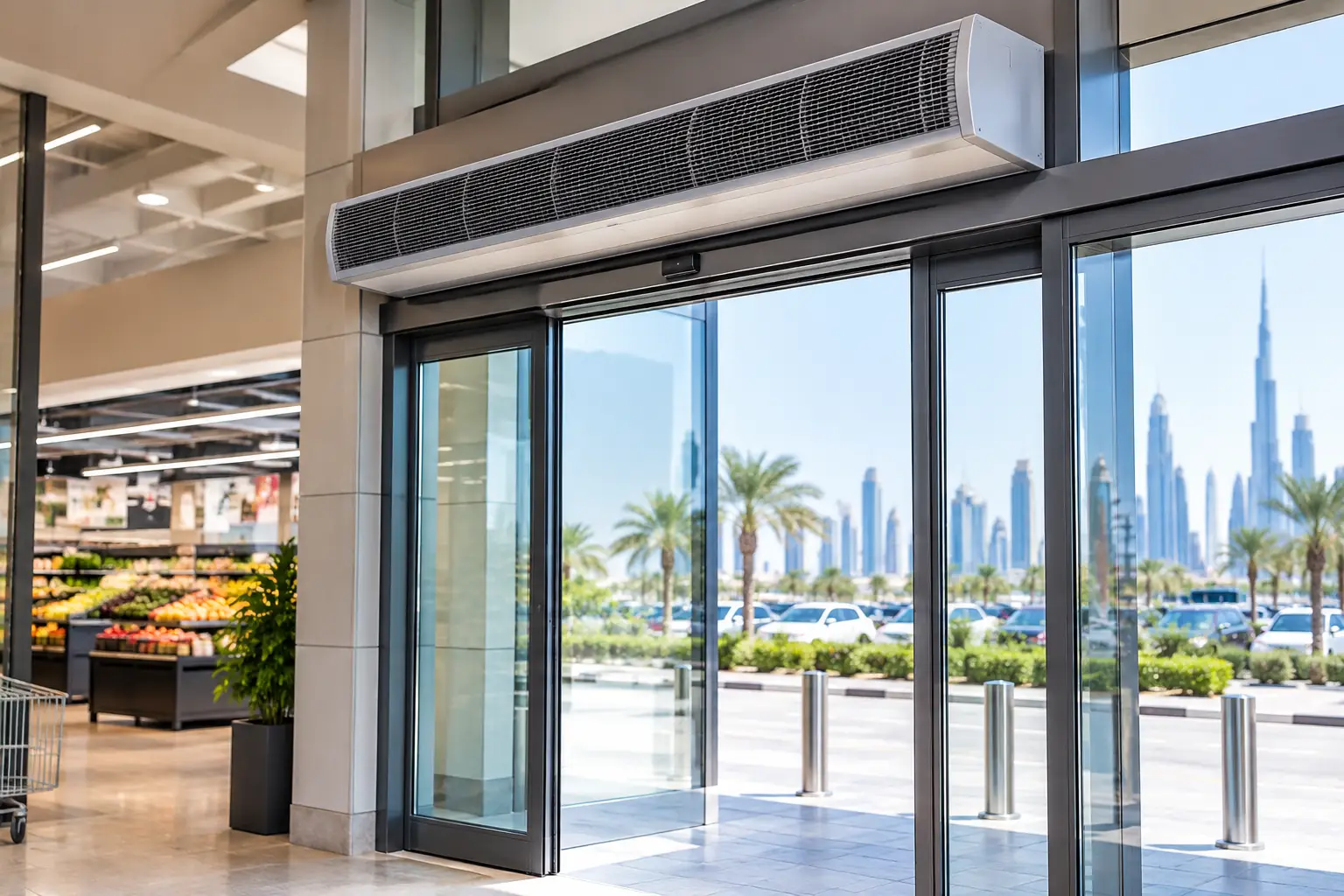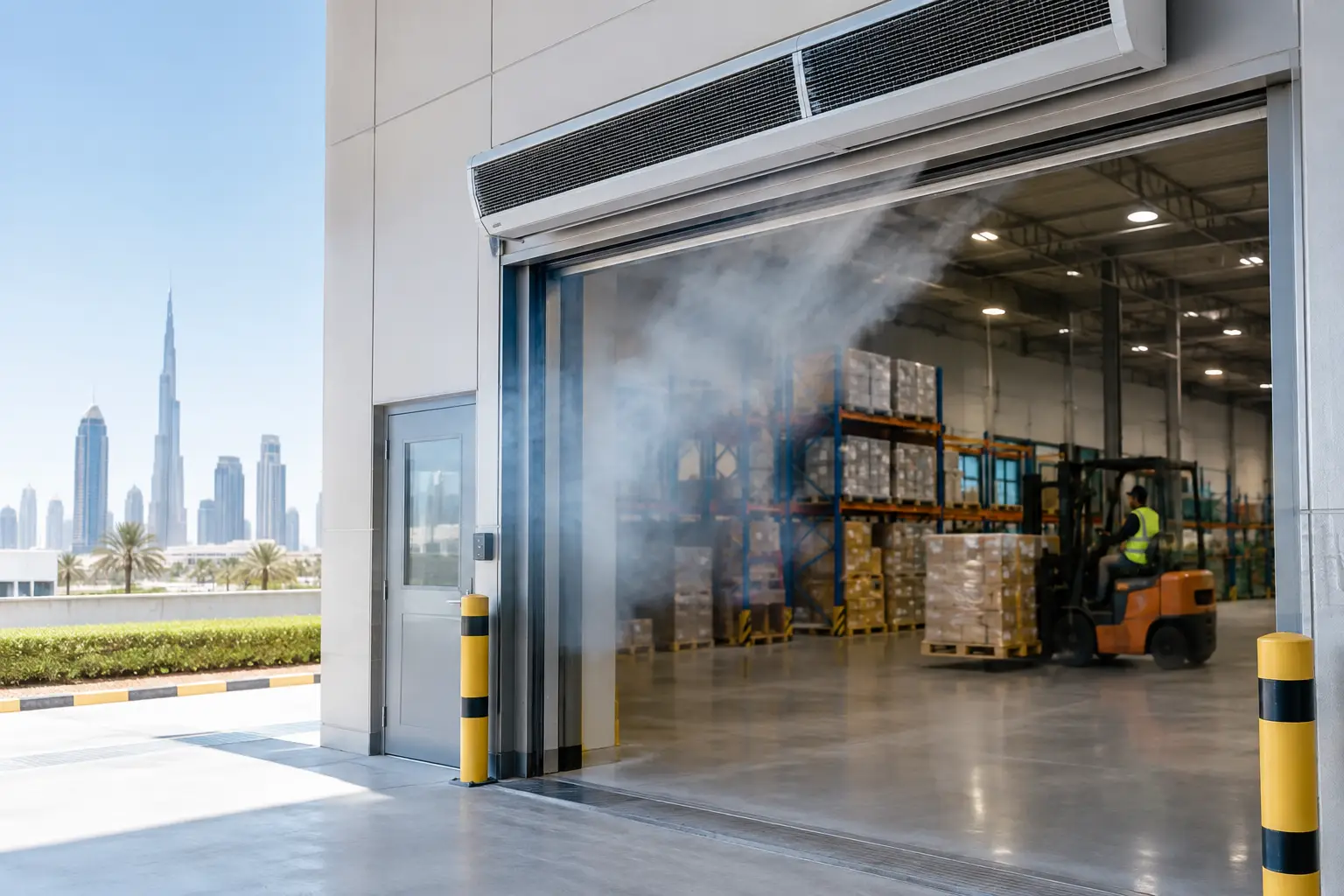
A warehouse door in Dubai, a hypermarket loading bay in Riyadh, and a cold room entrance in Lagos all face the same problem for different reasons – conditioned air escapes fast, outside heat pushes in harder, and the HVAC system pays for it all day. That is where an industrial air barrier review needs to be practical, not theoretical. Buyers in hot, dusty, high-traffic environments do not need generic product claims. They need to know what actually holds the line at the entrance.
What an industrial air barrier review should measure
An industrial air barrier is only as good as its performance under real site conditions. On paper, many units can claim coverage for a certain door height or width. In operation, the better question is whether the air stream stays stable when exposed to crosswinds, frequent door cycles, pressure differences, forklifts, and extreme outdoor temperatures.
That means a serious review starts with air velocity, but it cannot stop there. High velocity at the discharge point looks impressive in a catalog, yet it means less if the air stream breaks apart before reaching floor level. For industrial applications, consistency across the full opening matters more than a single peak number.
Blower design also changes the result. Centrifugal configurations are often preferred for industrial entrances because they can deliver more controlled airflow across wider spans and taller openings. In demanding facilities, that control helps reduce hot air infiltration, dust carryover, and flying insects without depending entirely on the building HVAC system to recover lost cooling.
Why climate changes the review criteria
A standard air curtain assessment may work for a mild commercial setting, but tropical and desert climates raise the bar. In cities such as Doha, Muscat, Cairo, and Nairobi, the entrance barrier must deal with heat, humidity, airborne dust, and high traffic at the same time. Those conditions expose weak equipment fast.
In these markets, motor reliability is not a secondary feature. It is part of operating continuity. If the unit cannot maintain output during long daily run times, the air barrier stops being an efficiency tool and becomes another maintenance issue. Housing strength, fan balance, corrosion resistance, and component quality all deserve closer attention in hot-region installations.
Humidity brings another trade-off. A stronger air barrier can help limit moisture migration into cooled spaces, which is valuable for hospitality sites, food retail, and cold storage transitions. But overspecifying airflow can create excessive noise or uncomfortable turbulence near staffed entrances. The right unit is not simply the most powerful one. It is the one matched to the opening, traffic pattern, and climate load.
Industrial air barrier review by application
The right review framework changes by site type because entrance conditions are rarely identical.
Cold storage and temperature-controlled areas
For cold storage operators, the priority is reducing temperature loss and condensation risk at doorways. An air barrier here has to support a controlled separation between zones, especially where doors open frequently for pallet movement. The key question is whether the unit limits warm, humid air intrusion enough to reduce evaporator strain and preserve internal temperature stability.
Performance at lower mounting heights may still be demanding in these spaces because the temperature differential is severe. Review the unit’s ability to create a tight air stream, not just a wide one. Stability matters more than headline reach.
Hypermarkets, retail entrances, and hospitality sites
At customer-facing entrances, comfort and cleanliness usually matter as much as energy savings. A poorly selected unit may block insects and reduce cooling loss, yet still create objectionable noise or draft discomfort. In this segment, the review should balance airflow strength with acoustic performance and visual fit.
This is where recessed or architecturally cleaner installations may make sense, but only if they still deliver the required barrier effect. A good-looking unit that fails during peak afternoon heat is not a commercial solution.
Workshops, factories, and logistics bays
Industrial bays face wider openings, higher ceilings, stronger pressure shifts, and more airborne dust. Here, the review should lean heavily on blower type, motor duty rating, casing strength, and service access. These sites often run long hours, and downtime has a direct operational cost.
A lighter commercial unit may appear attractive on budget, but that decision often shifts cost into maintenance, reduced barrier effectiveness, and added HVAC load. For heavy-use doors, industrial-grade construction is usually the better value over time.
The specs that matter most
A credible review looks past general claims and checks whether the specification matches the actual opening. Door height and width are the starting point, but they are not enough. Site exposure, internal pressure, nearby exhaust systems, and traffic volume all influence final performance.
Air volume and discharge velocity should be read together. A unit with high speed but poor distribution can leave weak spots across the entrance. Motor quality matters because industrial air barriers in hot climates may run continuously for long periods. Noise level matters too, but it should be judged in context. At a plant entrance, acceptable sound levels differ from a hotel lobby or premium retail frontage.
Filtration and inlet protection can also be overlooked. In dusty regions, these details affect both longevity and cleaning intervals. Serviceability deserves attention for the same reason. If routine access is difficult, maintenance tends to get delayed, and performance drops.
Common buying mistakes in an industrial air barrier review
The most common mistake is treating all doorways the same. A single model family rarely suits a cold room, a showroom entrance, and a manufacturing bay equally well. Application fit should lead the selection, not inventory convenience.
The second mistake is undersizing to protect initial budget. That usually creates a weak barrier, especially in hot-weather markets where infiltration pressure is already high. The result is familiar: cooling loss continues, dust still enters, and the facility manager is left explaining why the investment did not solve the problem.
The third mistake is reviewing equipment in isolation from the site. Air barriers interact with door geometry, building pressure, and HVAC behavior. A strong unit can still underperform if it is mounted poorly or specified without considering surrounding air movement.
What good performance really looks like
A successful installation is not defined by airflow alone. It shows up in operating results. Indoor conditions stay more stable near entrances. The HVAC system does not fight as hard to recover lost cooling. Dust and insects are reduced. Staff and customers notice fewer hot drafts. In cold chain areas, thermal disruption is lower during frequent access.
For procurement teams and consultants, that means the best review is one that connects technical data to operational outcomes. Ask whether the product is built for heavy-duty use, whether it is suited to desert and tropical conditions, and whether the supplier can support specification decisions before quoting. Equipment selection gets better when those questions are answered early.
A realistic view on performance claims
No industrial air barrier creates a perfect seal. Door size, traffic, wind exposure, and pressure imbalance all affect real-world results. If a review presents any unit as a total replacement for good door management or sensible HVAC design, that is a warning sign.
What a well-selected air barrier can do is significantly reduce infiltration and make climate control more efficient at busy openings. In high-temperature regions, that improvement is often enough to justify the investment through lower cooling waste, better cleanliness, and more stable indoor operation. The gains are real, but they depend on correct selection.
For buyers comparing options, the strongest signal is usually not the loudest specification sheet. It is a product range backed by application guidance, clear performance positioning, and equipment designed for harsh operating conditions. That is especially true in the GCC, MENA, and African markets, where heat load and dust exposure are not occasional problems. They are everyday operating conditions.
If you are evaluating an entrance for a warehouse, hypermarket, cold room, hotel, or industrial facility, the next step should be a specification review based on opening size, usage pattern, and climate exposure. FreezeeX Air Curtains Ltd. supports consultation and quote-based selection for demanding commercial and industrial sites, with systems built for tropical and desert climate performance. Request a project review and get a unit recommendation that fits the site, not just the catalog.