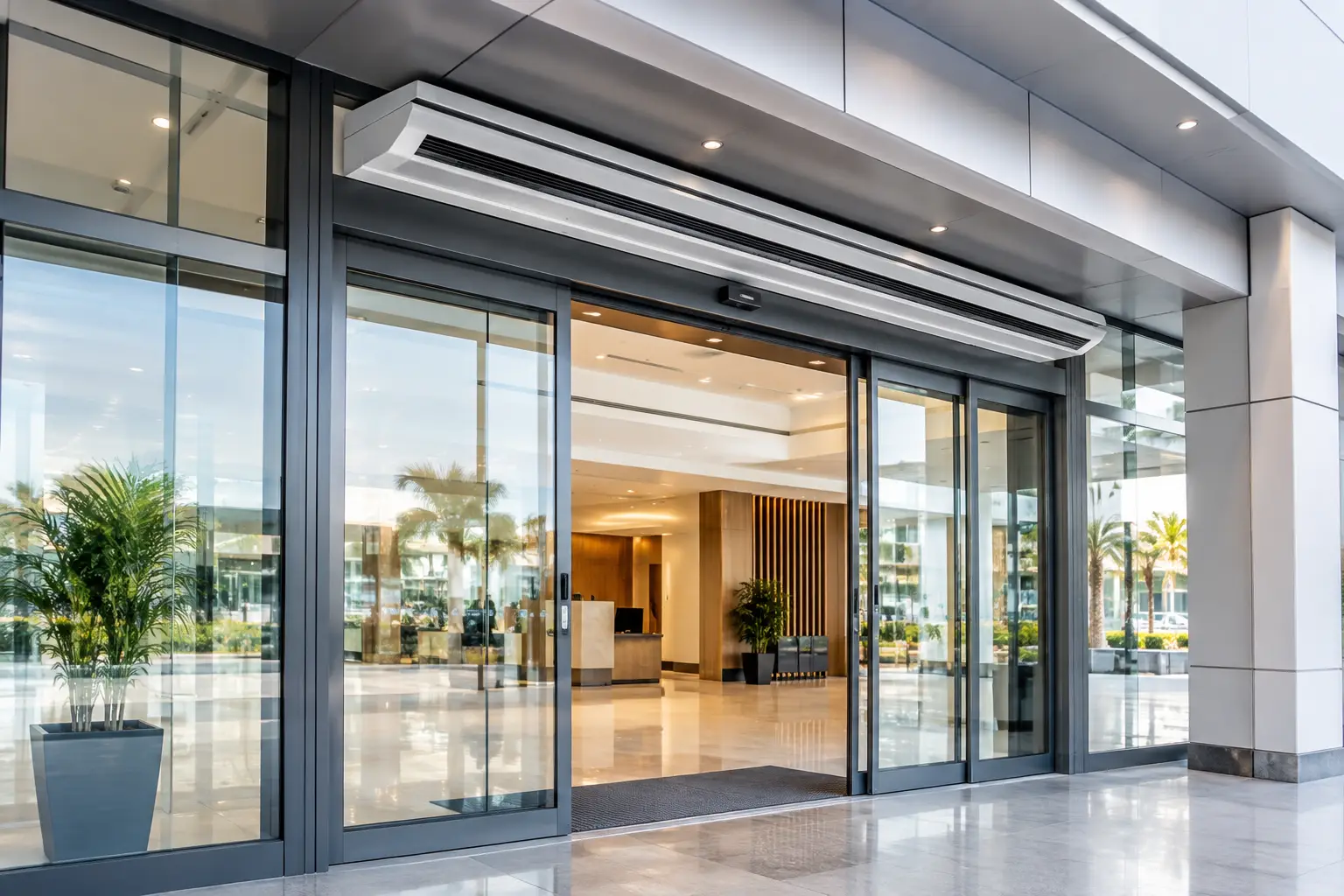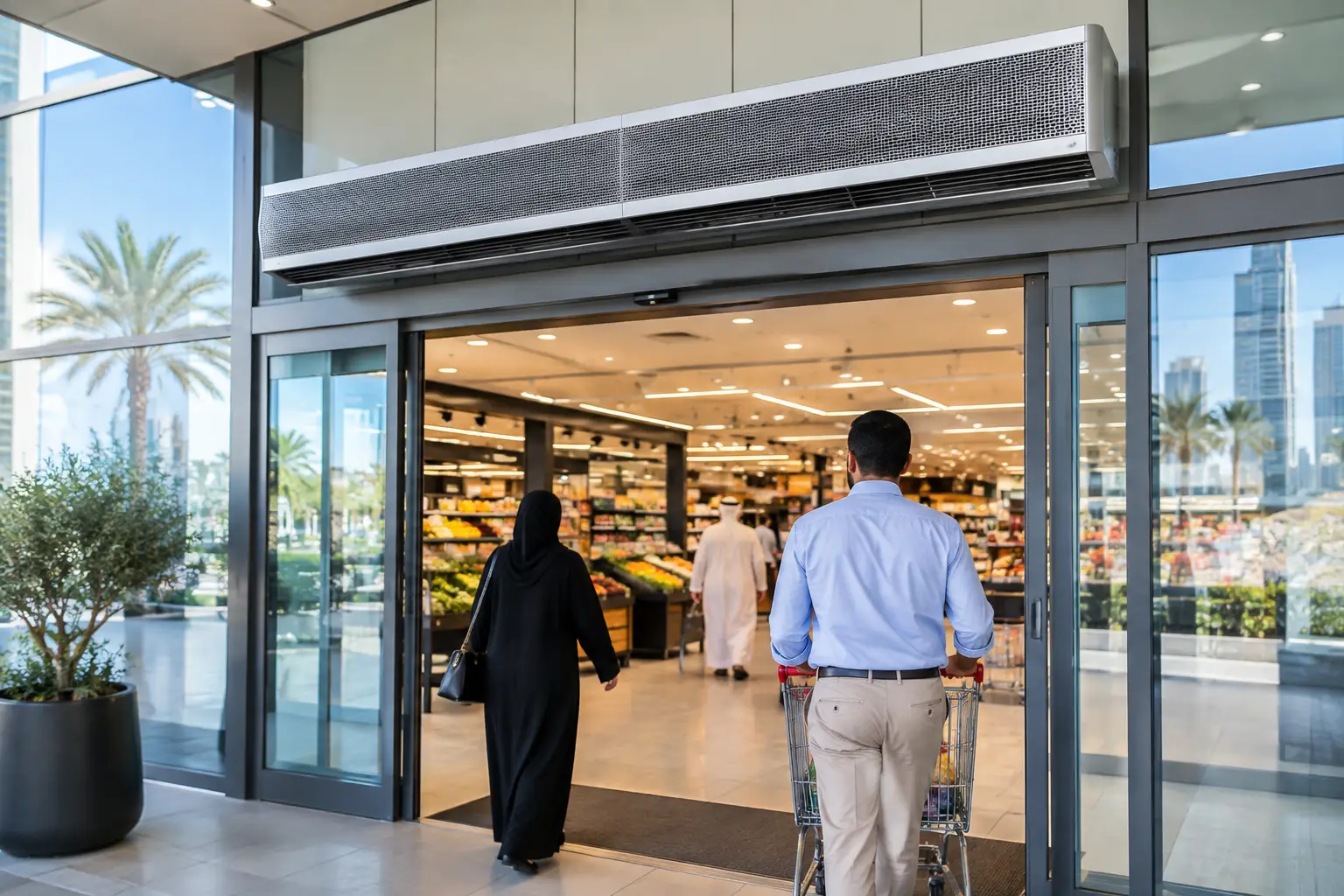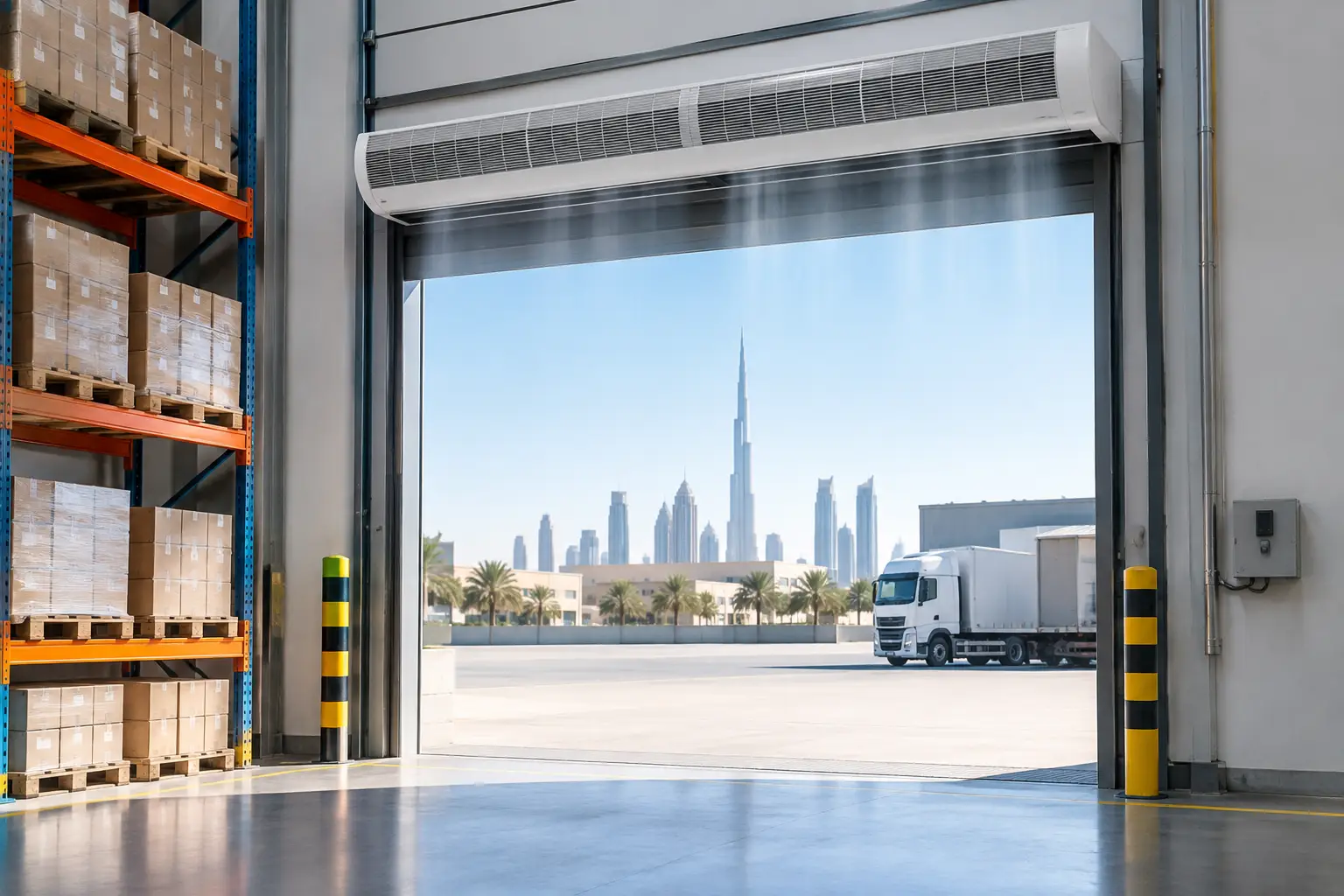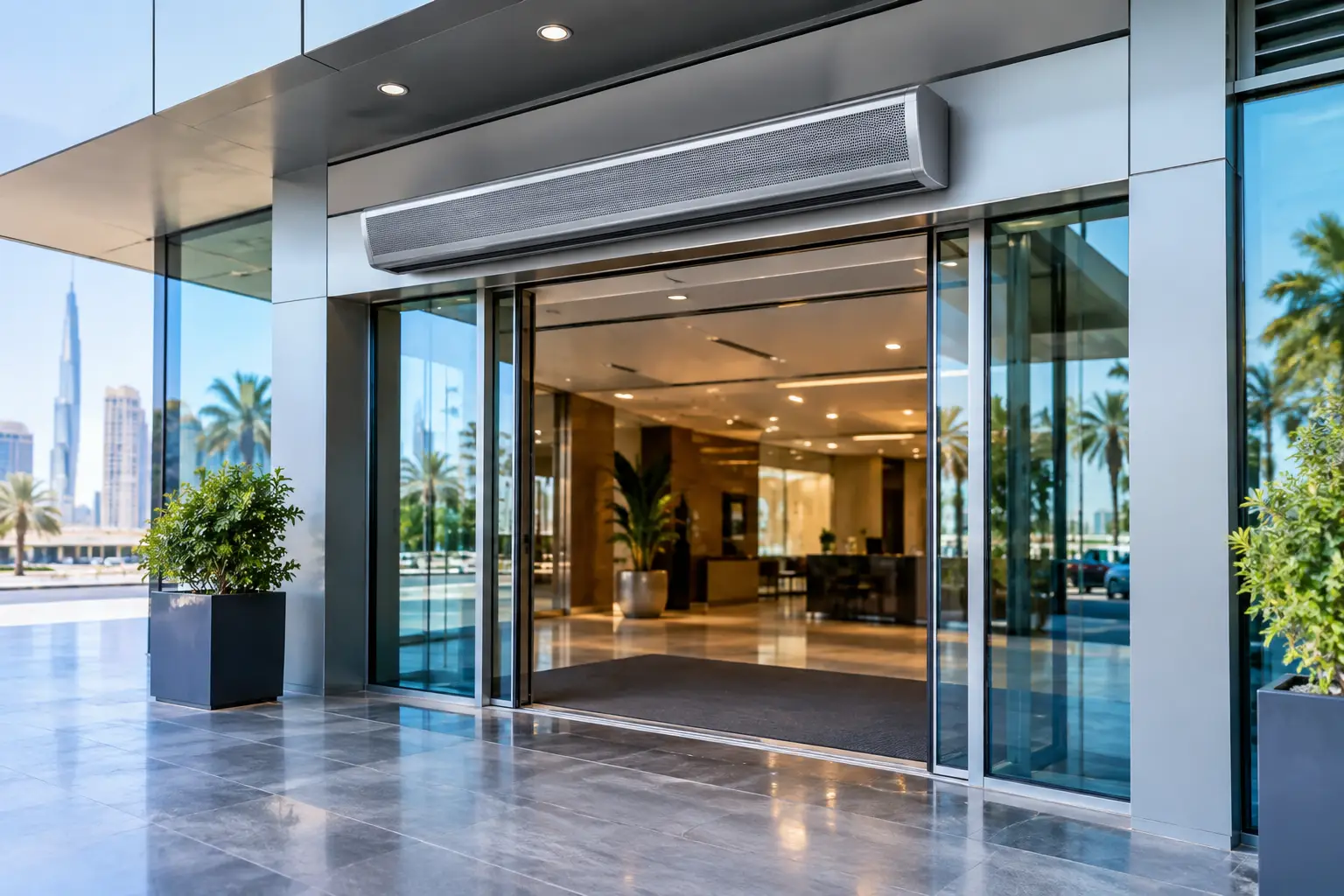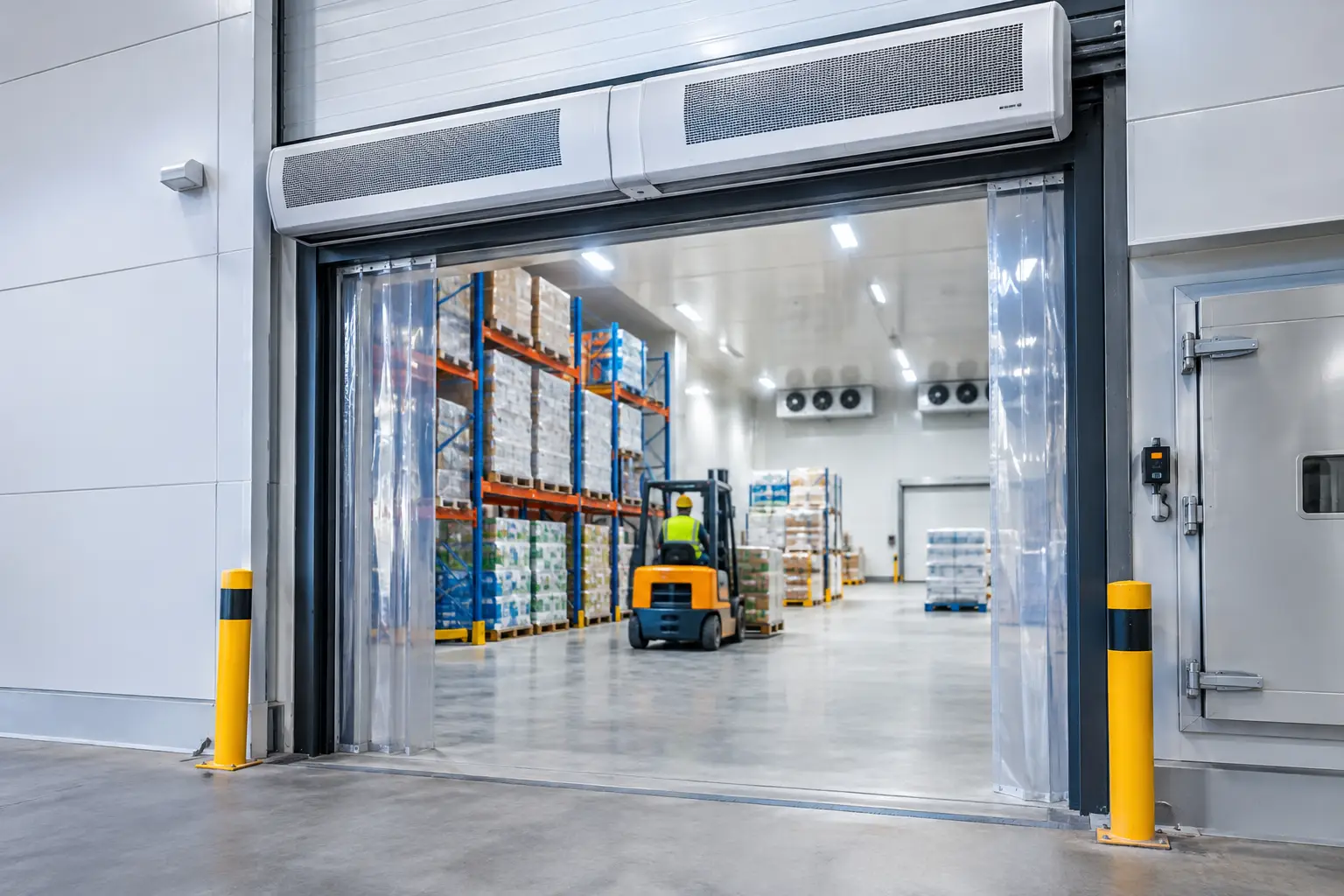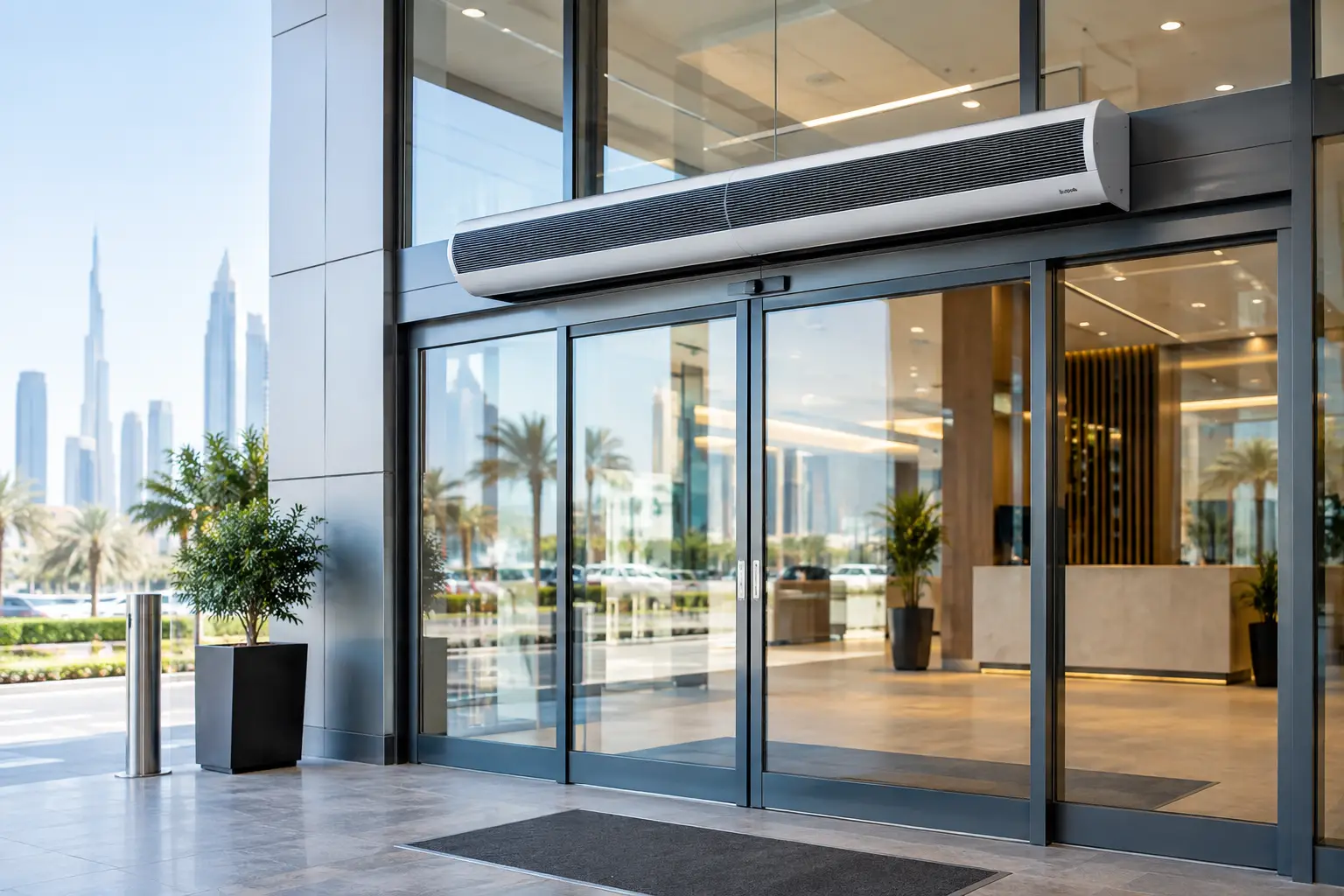
The cooling loss usually starts at the front door.
In retail stores, hotels, cold rooms, warehouses, and commercial buildings across Dubai, Riyadh, Doha, Lagos, and Nairobi, the entrance often becomes the weakest point in the climate-control strategy. If you are asking how to cut entrance heat gain, the answer is rarely a single product or a single setting. It is a matter of controlling airflow, reducing open-door exposure, and choosing entrance protection that can hold up in desert heat, humidity, dust, and constant foot or vehicle traffic.
For facility managers and project teams, this matters because entrance heat gain does more than raise indoor temperature. It drives longer HVAC run time, creates hot zones near doors, pulls in dust and insects, and makes temperature stability harder to maintain in spaces that rely on consistent cooling. Facilities looking to improve cooling efficiency may also benefit from understanding How Do Air Curtains Save Energy?.
Why entrance heat gain becomes expensive so quickly
Heat enters a building through conduction, radiation, and air infiltration, but at active entrances, infiltration is usually the biggest problem. Every time a door opens, hot outside air rushes inward while conditioned air escapes. In tropical and desert climates, that air is not just warm. It often carries humidity, fine dust, fumes, and airborne contaminants that add another layer of operational stress.
This is why entrance losses feel disproportionate. A well-designed cooling system can still underperform if the building envelope is repeatedly breached at the doorway. In high-traffic sites such as hypermarkets, loading areas, workshops, and hospitality entrances, the HVAC system ends up compensating for a problem that starts at the threshold.
The result is familiar: uneven cooling, customer discomfort near the entrance, condensation risk in some applications, and energy bills that stay higher than expected.
How to cut entrance heat gain with the right strategy
The most effective approach combines physical entrance design with active air control. If the site only addresses one side of the problem, results are usually limited.
Start with door behavior, not just door type
Many buildings focus on replacing doors when the real issue is how the entrance operates. A sliding door that stays open too long can leak more heat than a swing door with faster closing cycles. A receiving entrance used every few minutes has a different risk profile than a customer entrance with continuous traffic.
Look first at open-door duration, traffic pattern, and peak usage hours. In some facilities, the entrance heat gain spikes only during loading periods or lunch rushes. In others, the door is effectively open all day. That difference affects what solution will actually perform.
If the entrance cannot stay closed for operational reasons, then the building needs an engineered air barrier rather than passive measures alone.
Use an air curtain to create a real air barrier
For most commercial and industrial sites, the most direct answer to how to cut entrance heat gain is an air curtain matched to the doorway and usage conditions. An air curtain creates a high-velocity stream of air across the opening, limiting the exchange between outdoor and indoor air.
That sounds simple, but performance depends heavily on correct selection. In hot-weather markets, the unit must generate enough coverage and throw to protect the full door height and width. Undersized equipment may run continuously without creating proper separation, which gives the impression that air curtains do not work when the real problem is poor specification.
This is especially important in Gulf and African environments where high ambient temperatures, wind pressure, and airborne dust can overwhelm light-duty systems. Commercial entrances, industrial shutters, cold storage access points, and service doors each require different airflow characteristics. Centrifugal designs are often preferred where stronger, more stable discharge is needed, while recessed models may suit projects where architectural integration matters.
A properly selected air curtain can reduce cooling loss, support cleaner indoor conditions, and improve comfort at the entrance without obstructing traffic. Businesses concerned with cleaner entrances may also find our guides to Air Curtain for Dust Control and Air Curtain for Insect Control at Entrances useful. It also helps where doors must remain open for service efficiency.