
A supermarket entrance in Dubai, a cold room access point in Riyadh, or a busy loading area in Lagos can lose conditioned air almost nonstop. That is why buyers keep asking the same practical question: how do air curtains save energy? The short answer is that they reduce the amount of outside air entering through open doorways, which lowers the cooling burden on the HVAC system. The real answer is more useful, because energy savings depend on airflow design, door conditions, climate, and application fit.
How do air curtains save energy in real buildings?
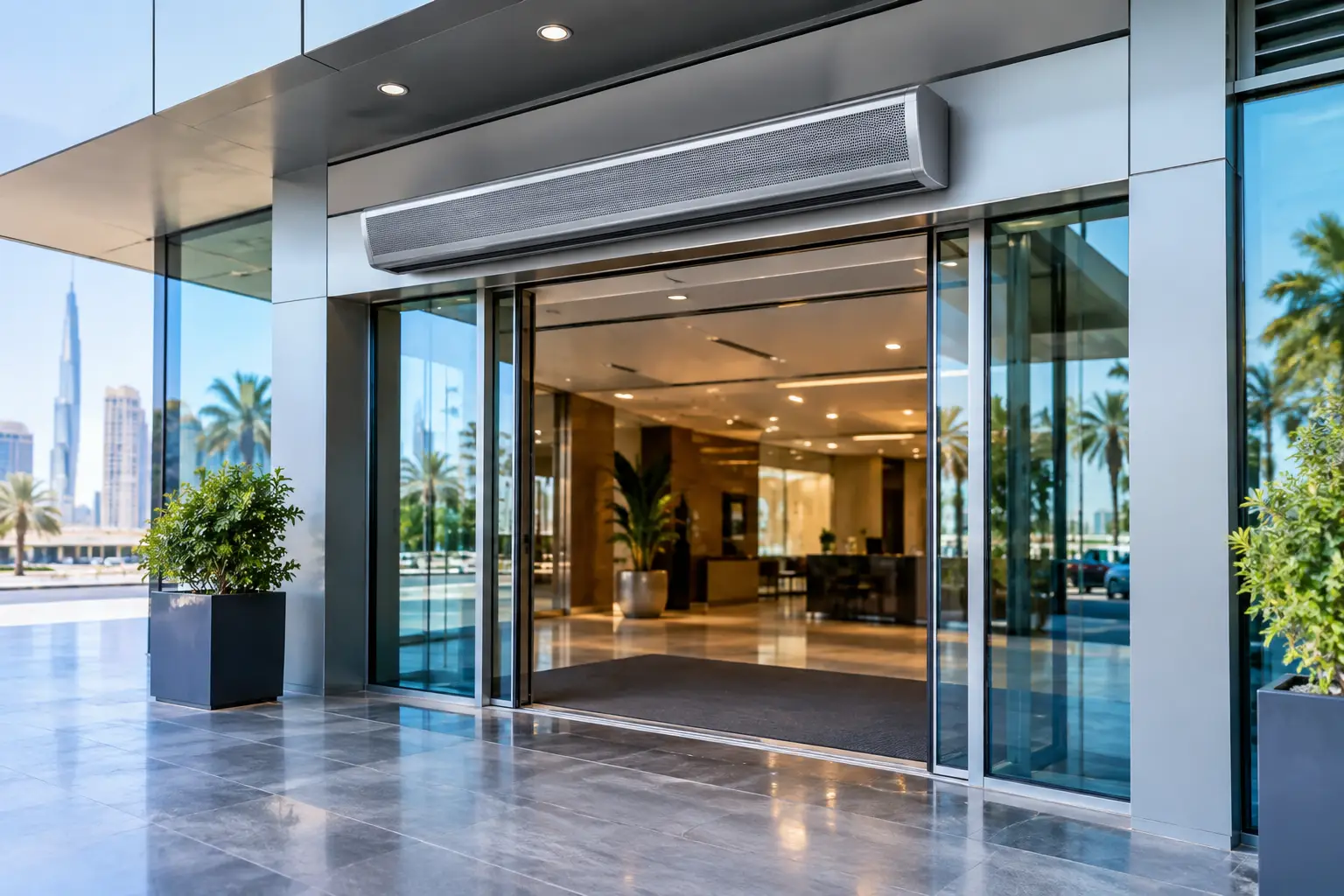
An air curtain creates a controlled, high-velocity stream of air across an opening. That air stream acts as a barrier between indoor and outdoor environments. It does not seal the doorway like a physical door, but it limits air exchange when traffic makes a closed-door strategy unrealistic.
In hot commercial and industrial environments, the biggest energy loss at entrances is usually not the fan power of the air curtain itself. It is the constant infiltration of hot air, humid air, dust, and sometimes insects whenever doors stay open. Every cubic foot of hot air that enters has to be cooled and, in humid climates, dehumidified. That pushes the HVAC system to run harder and longer.
An effective air curtain reduces that infiltration. Less heat enters the building. Less humidity enters the building. Indoor temperature stays more stable near the entrance, and the cooling plant or direct expansion system does not need to recover as aggressively after every door cycle.
That is the basic energy mechanism. The savings come from avoided cooling loss, not from magic, and not from the air curtain operating in isolation.
The energy loss most facilities underestimate
Many facilities focus on insulation, glazing, or HVAC efficiency while ignoring the doorway itself. In a high-traffic retail entrance or warehouse access point, the opening can behave like a permanent leak in the building envelope. In desert and tropical climates, that leak becomes expensive very quickly.
When outside air enters, the HVAC system pays twice. First, it must remove sensible heat, meaning the dry-bulb temperature load. Second, in humid locations such as coastal GCC cities or many African markets, it must remove latent load, meaning moisture. Latent load is often what drives up operating cost and comfort complaints near entrances.
Air curtains help on both fronts. By slowing the movement of outdoor air into the space, they reduce temperature gain and moisture intrusion. That matters in hotels, hypermarkets, food facilities, industrial plants, and commercial buildings where doors cannot remain closed for long.
Why this matters more in hot-weather markets
In places such as Abu Dhabi, Doha, Muscat, Cairo, Nairobi, or Casablanca, entrance climate control is not a minor detail. Extreme ambient heat, dusty conditions, and seasonal humidity create a tougher operating environment than many generic air curtain articles assume.
That is also where specification quality matters. A unit that performs adequately in a mild climate may not deliver the same barrier strength at a tall entrance or a frequently used industrial opening in a hotter region. Energy savings depend on maintaining air separation under actual site conditions, not laboratory assumptions.
Air curtains reduce HVAC runtime, but only when selected correctly
An air curtain does use electricity. That leads some procurement teams to ask whether it simply adds another motor load. It does add motor load, but that is only part of the equation. The relevant comparison is the fan energy consumed versus the cooling energy avoided.
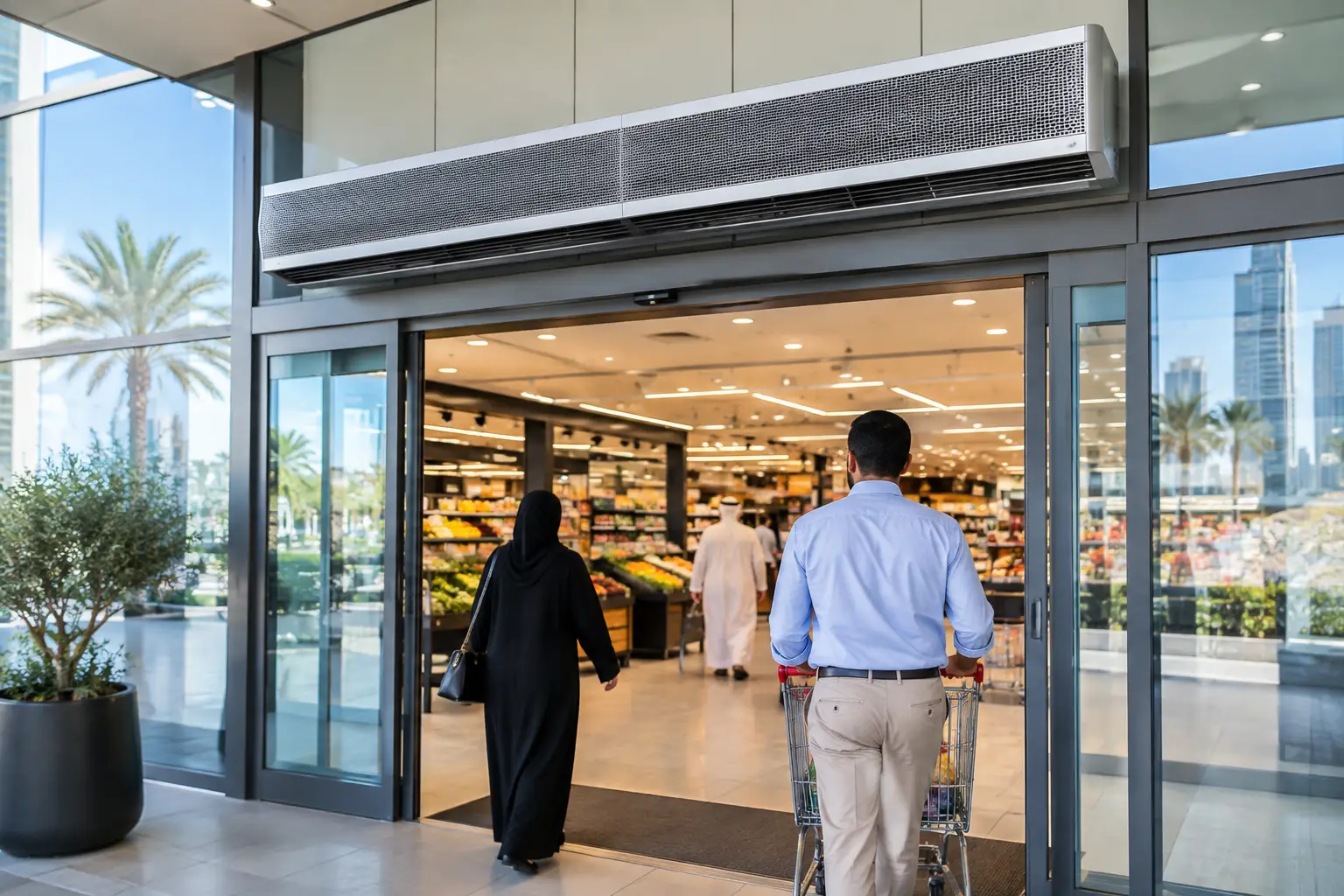
In most commercial use cases with frequent door opening, the avoided HVAC load is significantly more valuable than the fan energy required to create the barrier. That is why air curtains are commonly specified at entrances where cooling retention is a direct operating-cost issue.For retail stores, shopping malls, and commercial buildings, the Commercial HiFi Plus Series and Commercial Centrifugal Flow Series are commonly selected to help reduce cooling loss while maintaining customer comfort.
Still, not every installation delivers the same result. If the unit is undersized, mounted too high for its throw, or selected without considering crosswinds and door geometry, the barrier weakens. In that case, energy savings drop. If the opening is highly exposed and traffic is constant, a stronger commercial or industrial air pattern may be needed to maintain separation.
What affects actual savings
Door height is one factor. A taller opening requires sufficient air velocity and uniform coverage to reach the floor zone effectively. Traffic pattern is another. A front retail entrance with constant footfall behaves differently from a service corridor or loading bay.
Outdoor pressure conditions matter too. If a building is poorly balanced or exposed to strong external airflow, infiltration pressure increases and the air curtain must work harder to maintain the barrier. Humidity level matters as well, especially in hospitality, food retail, and cold storage transition areas where moisture control affects both comfort and product conditions.
Where the savings show up first
The first sign is usually not a utility bill spreadsheet. It is operational stability. Staff notice fewer hot spots near entrances. Facility teams see less temperature swing. Doors can remain functionally open for traffic without creating the same level of cooling loss.
In retail and hospitality spaces, that often improves customer comfort close to the entrance. In industrial environments, it helps protect conditioned production or storage zones from hot outside air. In cold storage support areas, it can reduce warm-air infiltration that otherwise increases load and moisture problems around access points.
There are also indirect savings. Reduced dust ingress can lower cleaning frequency and help protect indoor equipment. Reduced insect entry can support hygiene control in food-related operations. These are not always counted in energy models, but they affect total operating cost.
How do air curtains save energy compared with keeping doors closed?
If a door can stay closed almost all the time, a closed physical door is generally the strongest barrier. But many facilities do not operate that way. A hypermarket entrance, hotel lobby, commercial kitchen access route, or warehouse dispatch opening is often too active for a closed-door-only strategy.
That is where air curtains make commercial sense. They support access while reducing the penalty of an open doorway. In many projects, the question is not whether an air curtain beats a permanently closed door. The real question is whether it reduces losses in a doorway that is already open or opening constantly. In those conditions, the answer is usually yes.
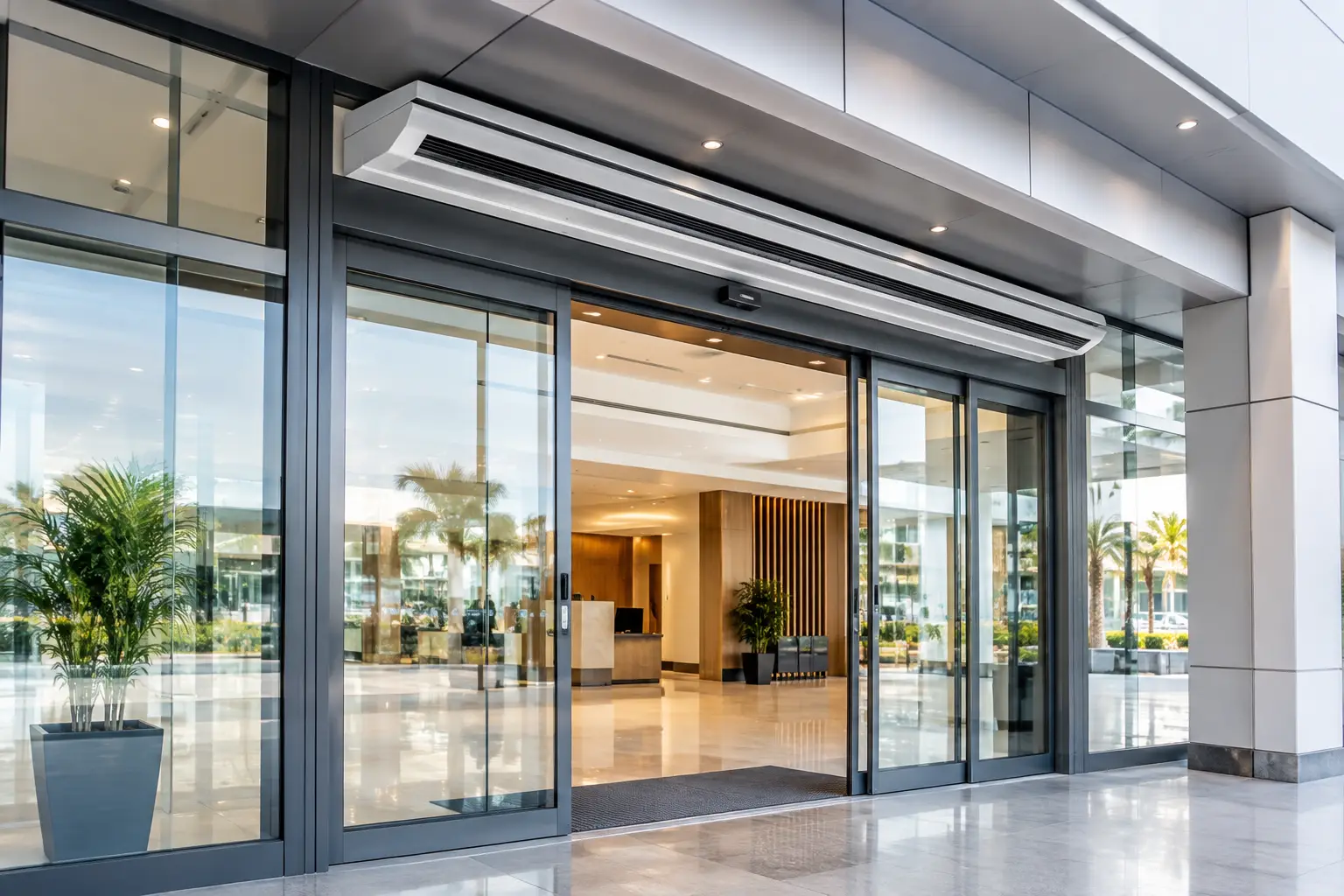
This is also why application matching matters.A recessed architectural entrance may prioritize appearance and customer-facing comfort, making the Recessed Ceiling Series an excellent solution for hotels, hospitals, and premium commercial environments.Both can save energy, but they do it under different operating demands.
The specification details that determine performance
Air volume, velocity profile, mounting height, and blower design all influence barrier quality. So does the width of the opening and the presence of side leakage. A well-specified unit creates a consistent air stream across the full doorway, not a weak center section with gaps at the edges.
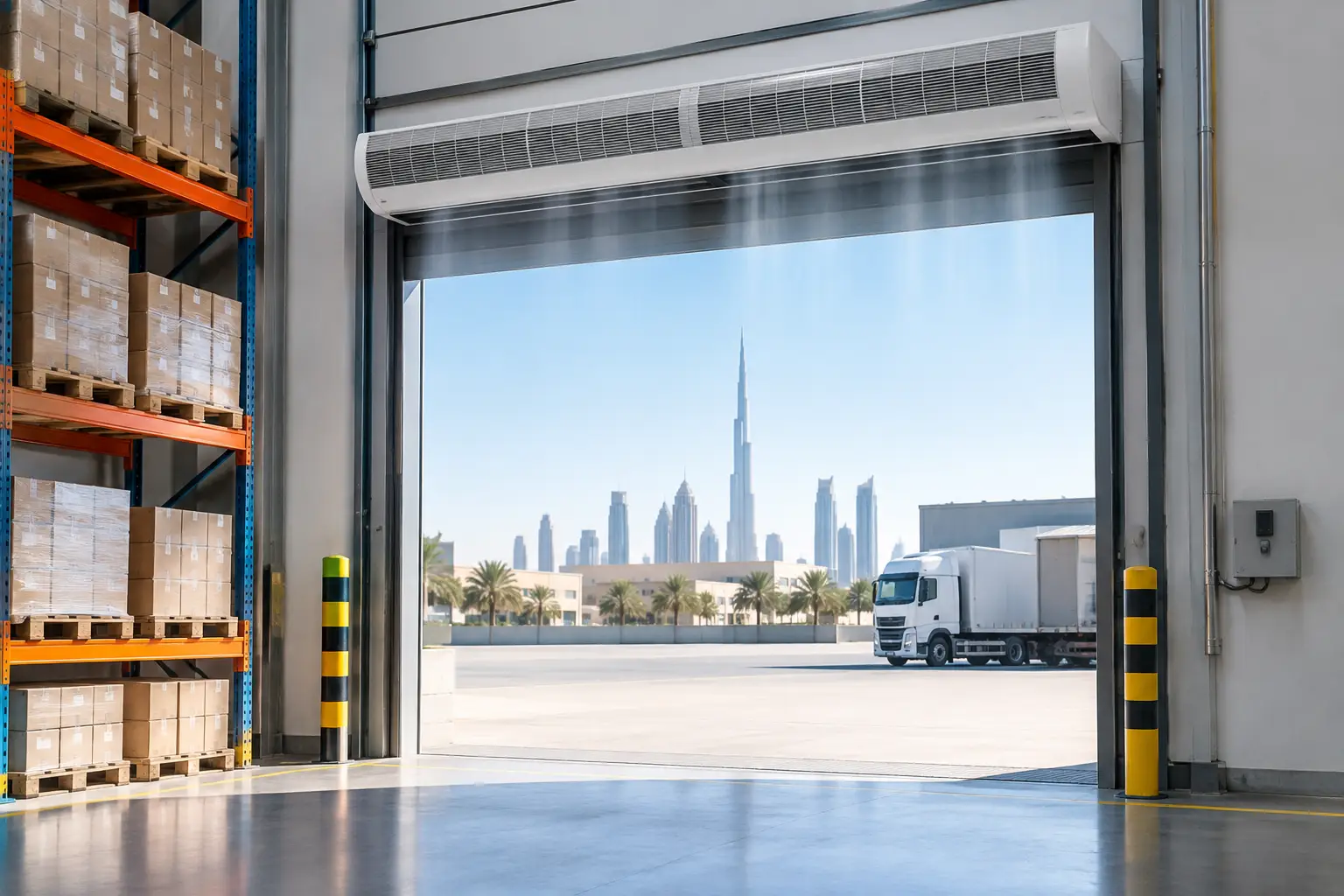
For high-traffic commercial sites, centrifugal designs are often preferred where stable airflow and lower noise are important.For larger and more demanding openings, the Industrial Centrifugal Series is commonly selected to maintain performance under harsh operating conditions and high traffic volumes.
This is why consultation-based selection is the right approach for serious projects. Energy performance cannot be judged by price or unit size alone. The entrance type, climate exposure, cooling strategy, and use pattern all need to be considered together.
Recommended Air Curtain Solutions for Different Applications
Choosing the correct air curtain is just as important as understanding how energy savings are achieved.
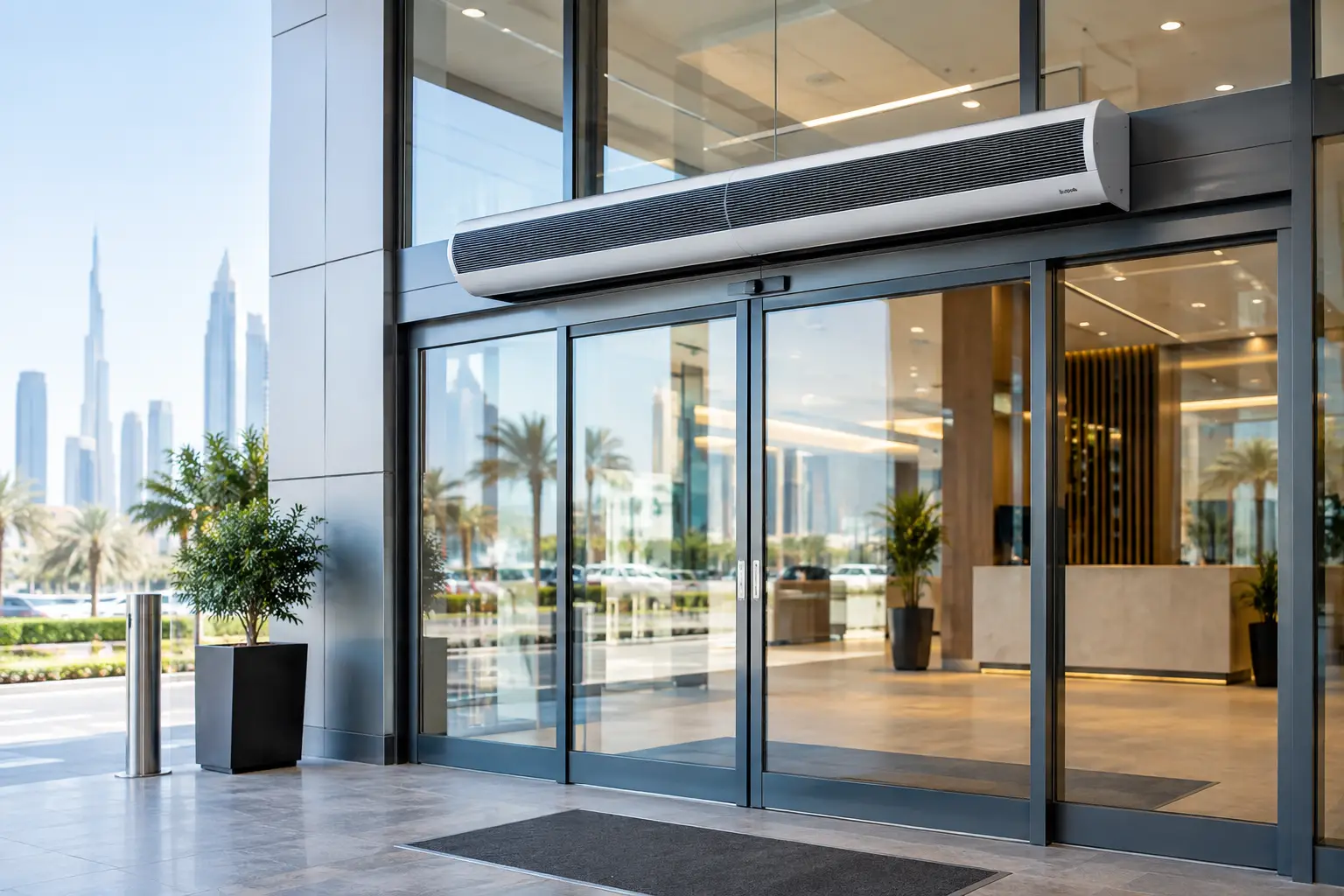
For retail stores, supermarkets, shopping malls, and customer-facing commercial entrances, the Commercial HiFi Plus Series and Commercial Centrifugal Flow Series provide effective climate separation while maintaining a professional appearance.
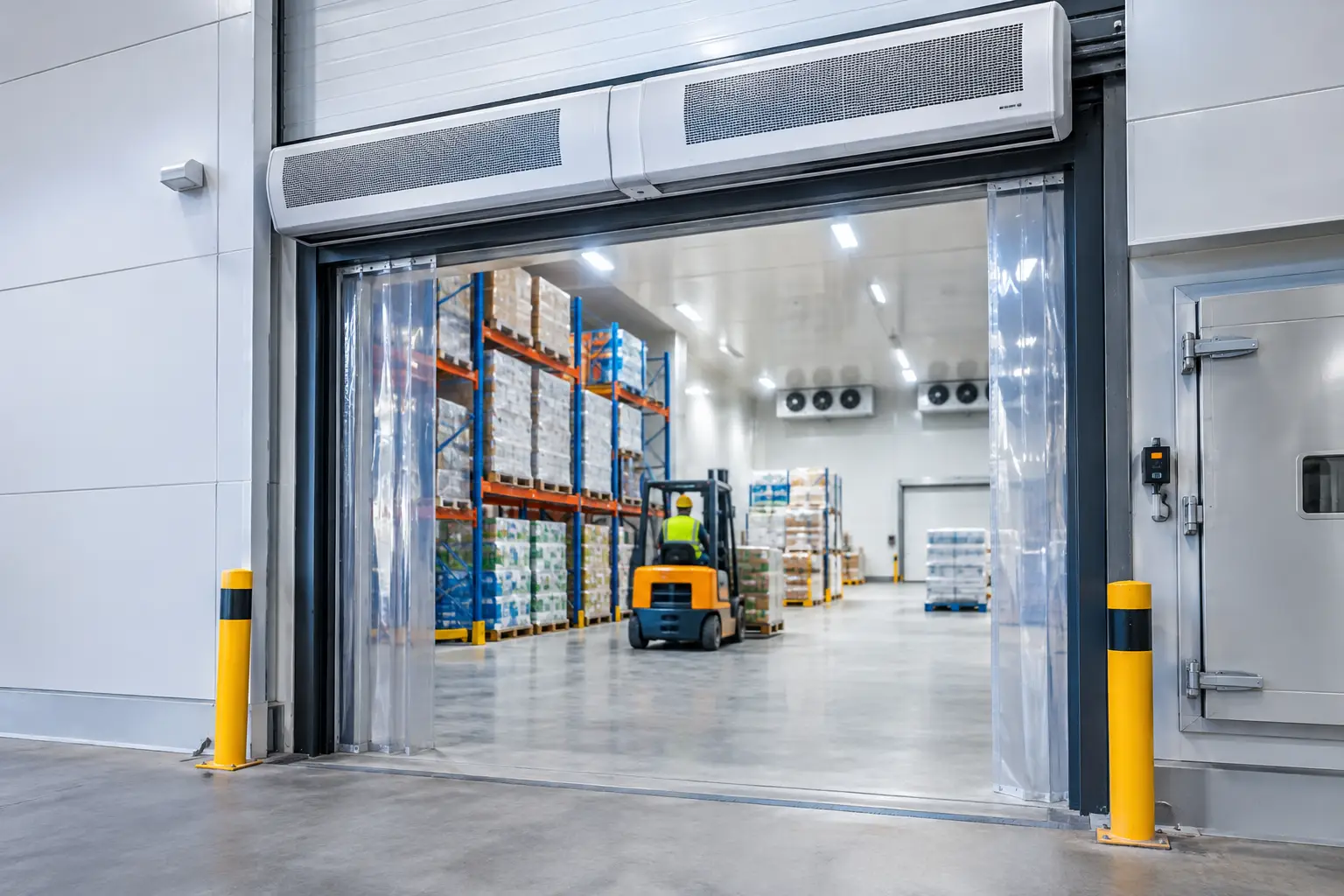
For warehouses, factories, logistics centers, and high-traffic industrial openings, the Industrial Centrifugal Series is designed to provide stronger airflow and reliable environmental separation in demanding conditions.
For premium commercial buildings, hotels, hospitals, and architecturally sensitive projects, the Recessed Ceiling Series offers a concealed installation while maintaining effective entrance protection.
Selecting the right solution depends on door dimensions, traffic frequency, environmental conditions, and performance requirements.
Common misconceptions about energy savings
One misconception is that any air curtain will automatically cut energy use. It will not. Poor selection or weak installation can leave the doorway underprotected.
Another misconception is that air curtains are mainly about comfort or insect control. Those are real benefits, but for many commercial and industrial buyers, the bigger issue is HVAC load reduction at busy openings.
A third misconception is that the same unit type fits every site. It does not. A decorative entrance in a premium commercial building has different requirements from a dusty logistics entrance or a hot industrial workshop. When the unit matches the environment, energy savings become much more reliable.
What buyers should ask before specifying one
The right questions are practical. How often is the opening used? What is the door height and width? Is the site exposed to wind, dust, or high humidity? Is the priority customer comfort, hygiene, cooling retention, or all three? What indoor condition is being protected?
For projects across the GCC, MENA, and African markets, climate-adapted performance should be part of the discussion from the start. Extreme heat and harsh ambient conditions change the duty of the system. They also change the cost of getting the specification wrong.
FreezeeX supports this kind of project-specific evaluation because entrance protection is not a commodity decision. It is an operating-cost decision tied directly to HVAC efficiency, cleanliness, and climate control reliability.
If you are evaluating an entrance for a retail site, cold storage facility, hotel, plant, or warehouse in a hot-weather market, the useful next step is not guessing at savings from a catalog page. It is reviewing the opening, traffic pattern, and environmental conditions to identify the right air curtain configuration.
FreezeeX offers Commercial HiFi Plus, Commercial Centrifugal Flow, Industrial Centrifugal, and Recessed Ceiling air curtain solutions for commercial and industrial applications across the UAE, GCC, MENA, and African markets. Contact our team for a consultation and project-specific quotation.
Frequently Asked Questions
Do air curtains reduce electricity costs?
Air curtains can help reduce cooling losses by limiting unwanted air exchange through frequently used entrances. This may reduce HVAC operating load and improve energy efficiency.
Are air curtains suitable for warehouses?
Yes. Industrial air curtains are commonly used in warehouses, logistics facilities, and loading bays where doors remain open for operational reasons.
Do air curtains work in humid environments?
When properly specified, air curtains help reduce the amount of humid air entering a facility, supporting indoor comfort and climate control.
Do air curtains replace physical doors?
No. Air curtains complement doors by reducing air exchange when doors must remain open or are frequently used.
13 Responses
Exactly. Entrance-related cooling loss is often overlooked because it happens gradually throughout the day. In high-traffic hypermarkets, reducing uncontrolled air exchange can help improve HVAC efficiency, maintain customer comfort, and support more stable indoor conditions across the store.
Exactly. In facilities where doors remain open for long periods or experience constant traffic, reducing unwanted air exchange can have a significant impact on cooling efficiency. A properly specified air curtain helps maintain indoor conditions while supporting smoother operations and lower HVAC strain.
That’s an important point for facility managers and building operators. An effective air curtain does more than improve comfort at the entrance—it helps reduce unwanted heat transfer, limit dust and insect infiltration, and support overall HVAC efficiency in busy commercial environments.
That’s a valuable consideration for facilities with busy entrances. Improving entrance efficiency is not only about comfort—it can also help reduce HVAC workload, improve temperature stability, and support better environmental control in high-traffic commercial and industrial spaces.
That’s an important point for commercial facilities. Reducing entrance heat gain is not only about lowering energy consumption—it also helps improve indoor comfort, reduce HVAC workload, and maintain more stable conditions in high-traffic environments where doors open frequently.
That’s an important operational benefit. By reducing the amount of heat and humidity entering through open doorways, air curtains help lessen the cooling load on HVAC systems, contributing to improved energy efficiency and more stable indoor conditions over time.