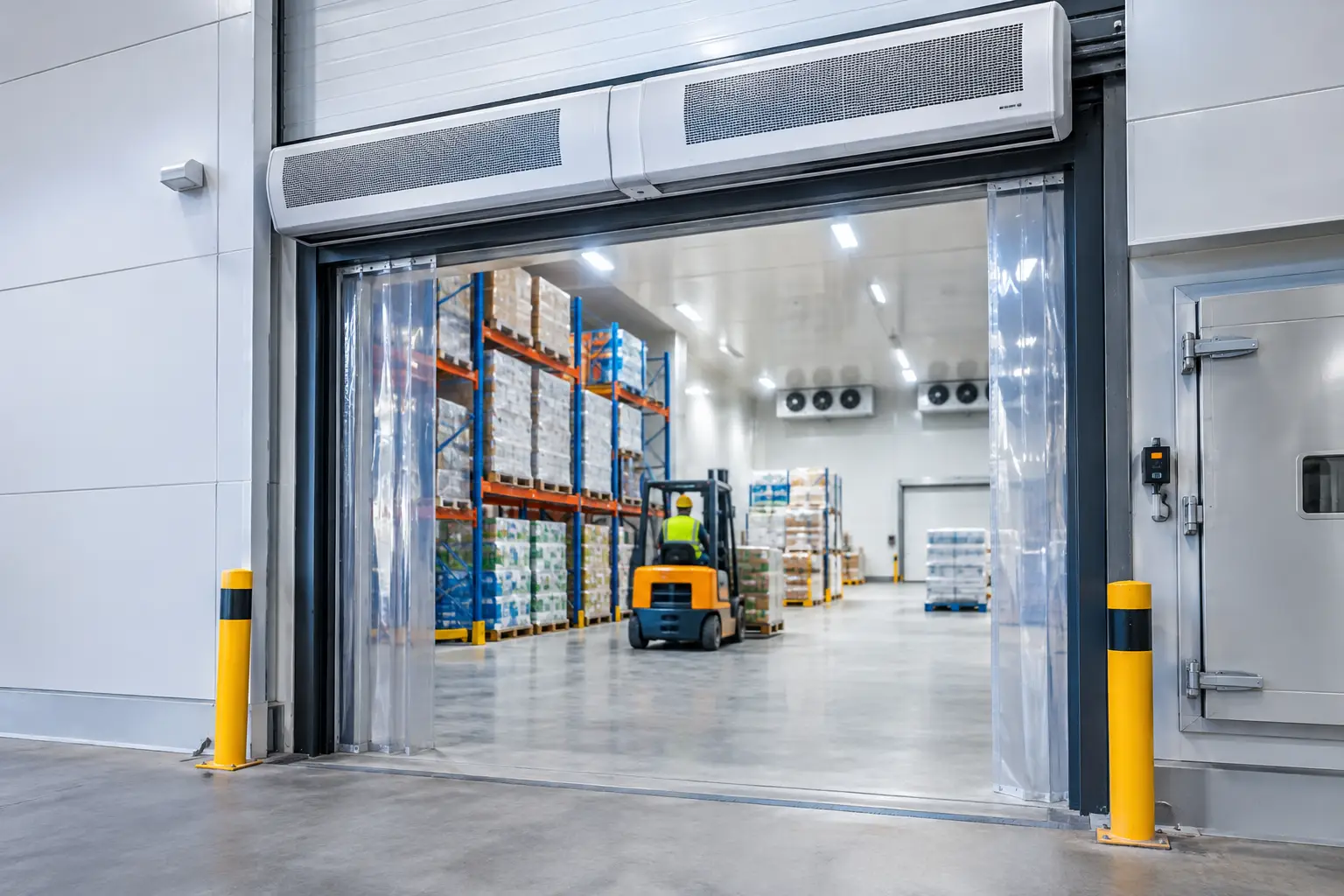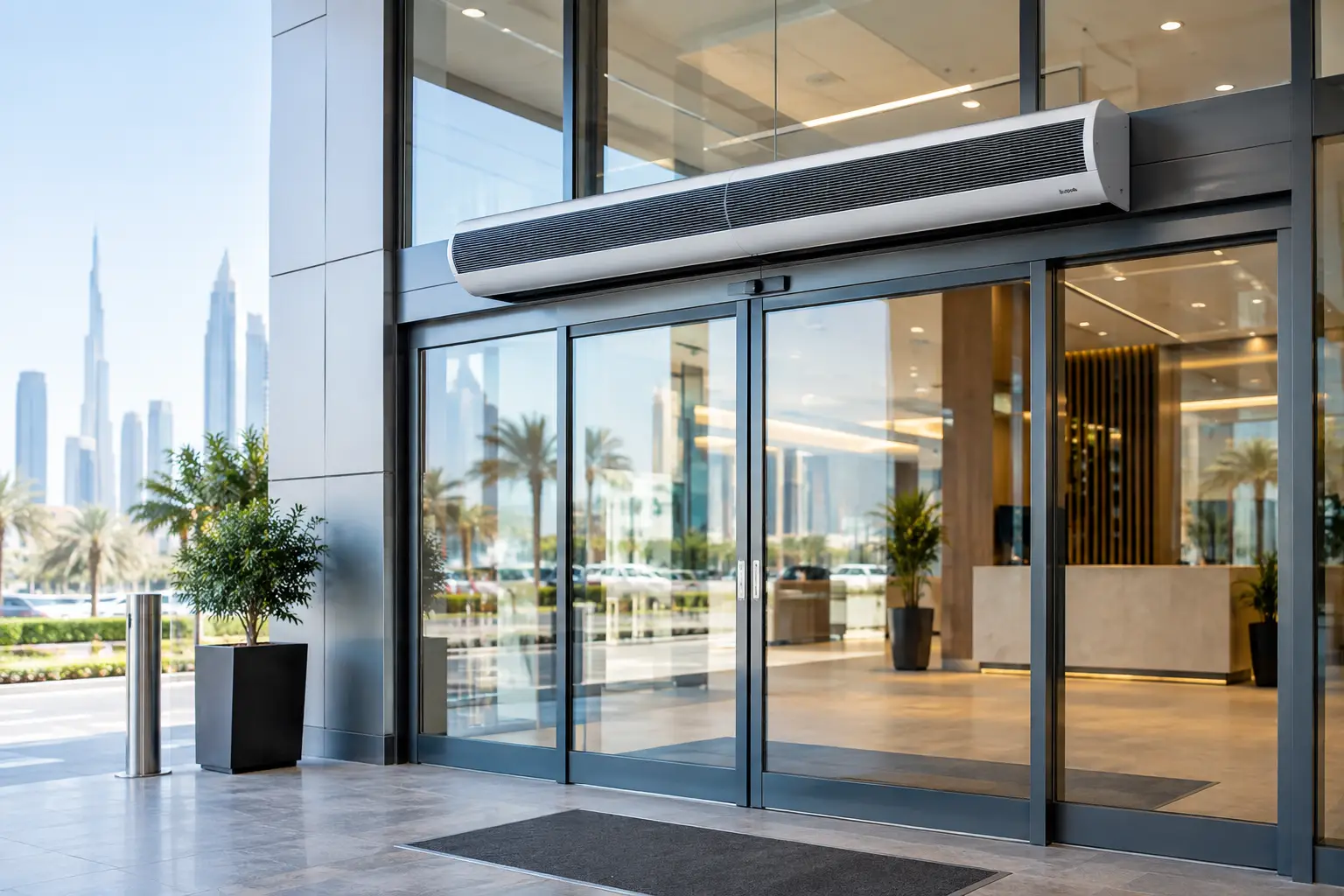
A cold room door that stays open for forklift traffic in Lagos or a hypermarket entrance facing desert heat in Riyadh loses money every minute. That is where the air curtain vs PVC strip curtains decision stops being a product preference and becomes an operating-cost question.
Both systems are used to separate indoor and outdoor conditions. Both aim to reduce cooling loss, block dust, and improve hygiene. But they do it in very different ways, and the better choice depends on traffic volume, climate pressure, visibility needs, and how your facility actually operates day to day.
Air curtain vs PVC strip curtains: the core difference
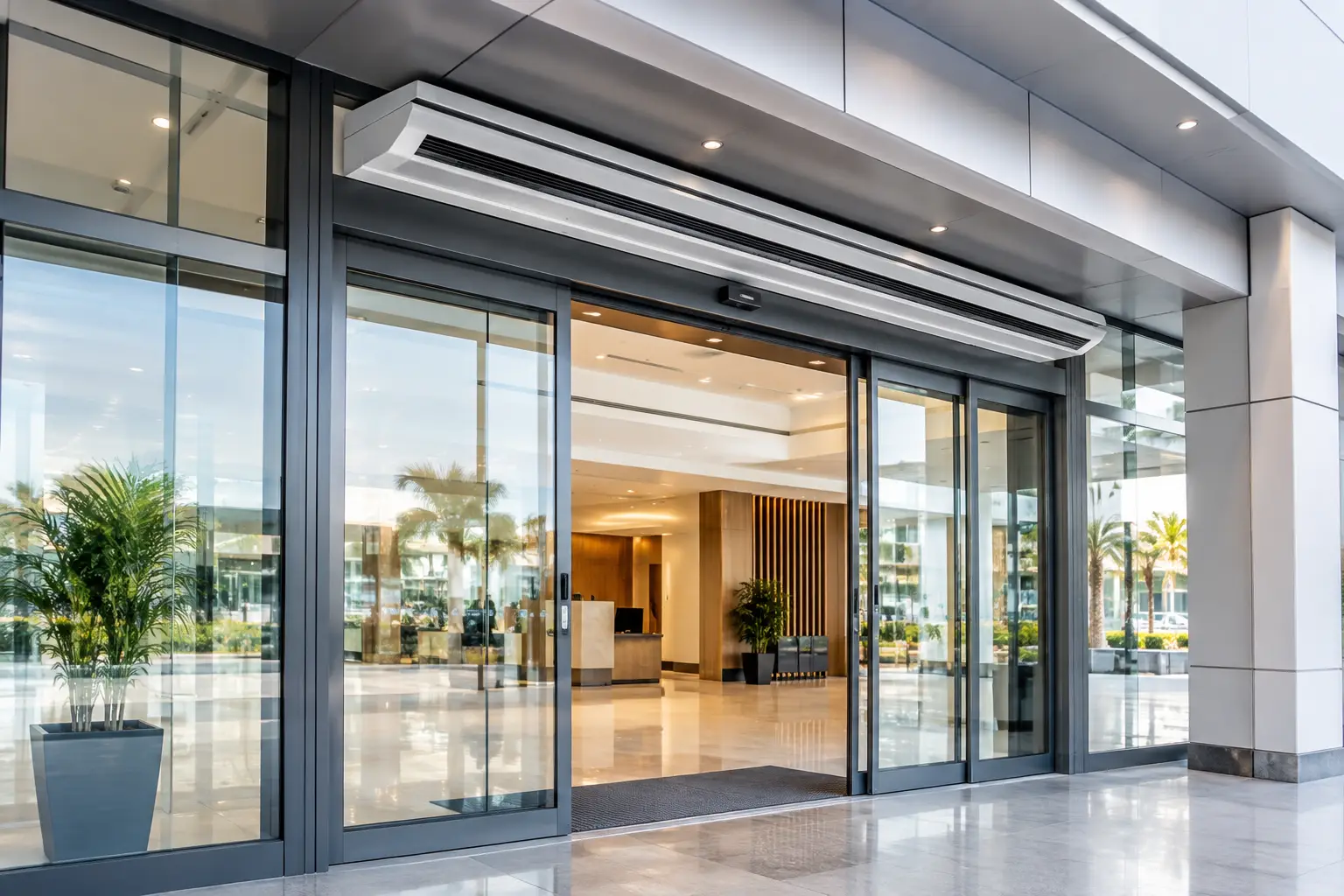
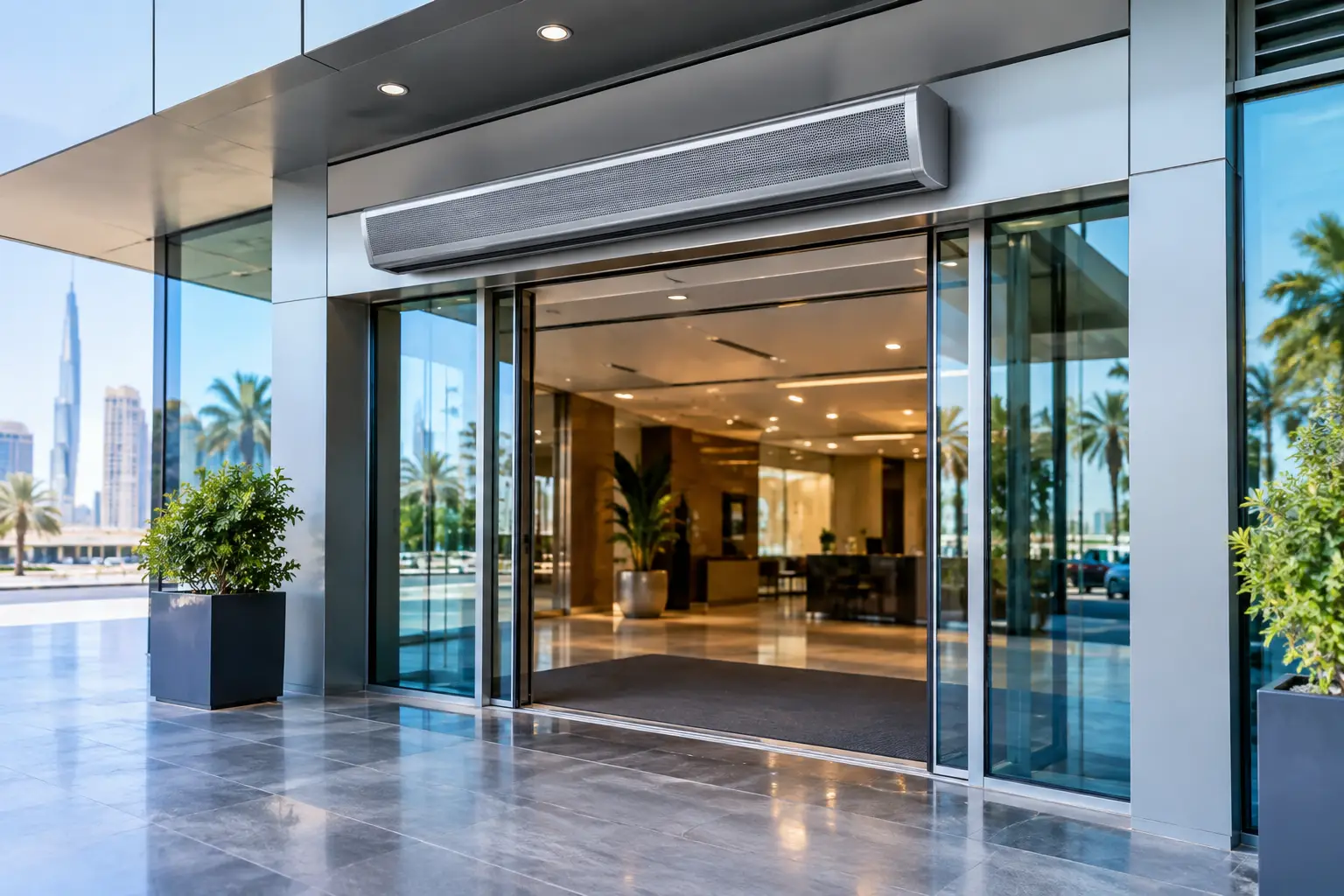
An air curtain creates a high-velocity air barrier across an opening. It is designed to reduce the transfer of hot air, humidity, dust, insects, and airborne contaminants without physically blocking the doorway. People, carts, and forklifts can pass through freely while the unit continues working.
PVC strip curtains are physical overlapping plastic strips hung across a doorway. They create a contact barrier. Traffic passes by pushing through the strips, which then fall back into place. This is a simple and familiar solution in warehouses, cold rooms, back-of-house service areas, and some industrial openings.
The difference matters most in high-temperature regions. In Gulf, MENA, and African markets, entrance control equipment does not just deal with mild ambient air. It deals with extreme heat, high humidity, blowing dust, and long operating hours. Under those conditions, barrier performance and operational practicality have to be assessed together.
Where air curtains usually perform better
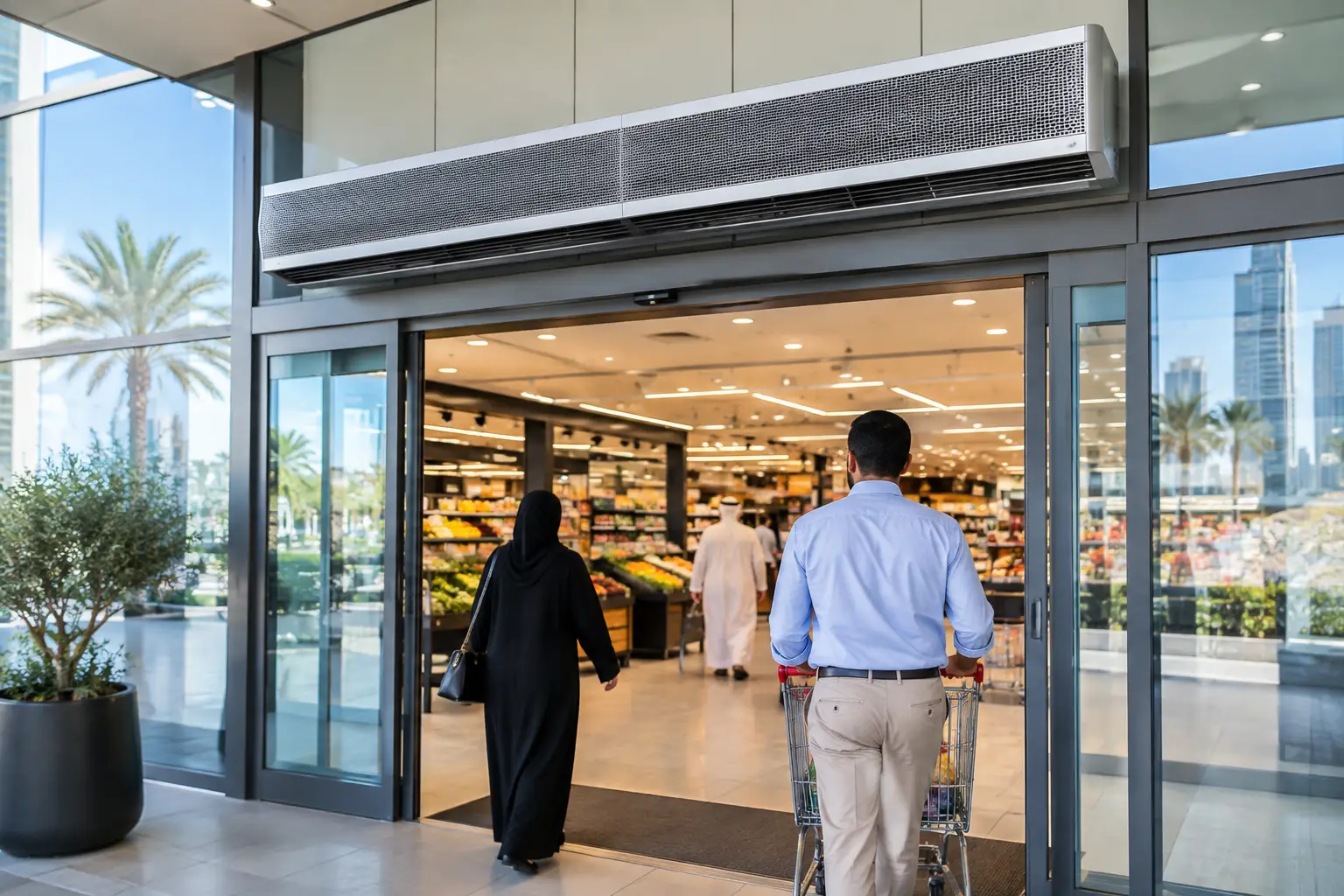
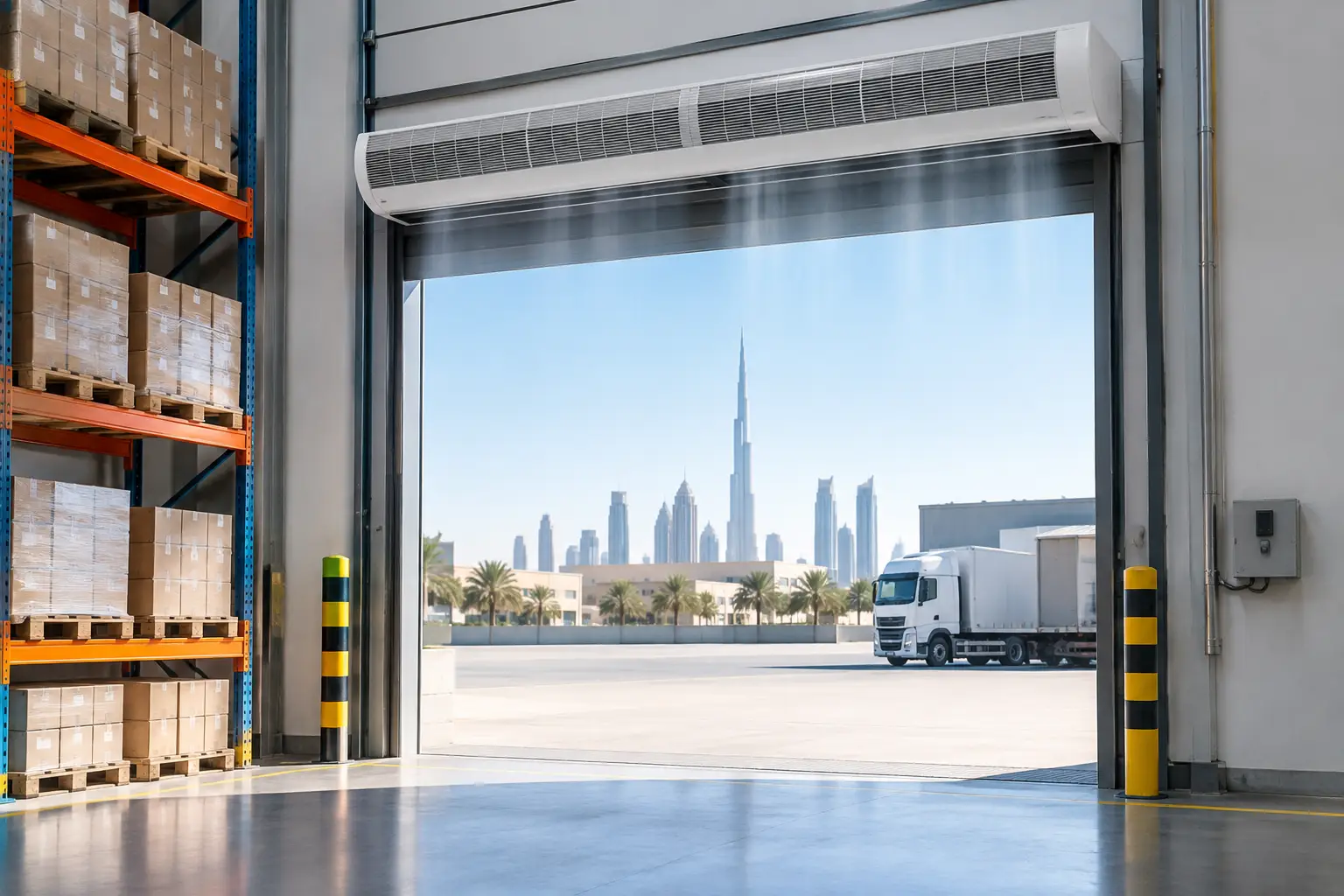
Air curtains are typically the stronger option when the opening has frequent traffic and the business cannot afford a physical obstruction. Retail entrances, hotel service corridors, hospitals, food processing zones, logistics doors, and industrial facilities often need open, visible, and continuous access. In these settings, a physical strip barrier can slow movement, create hesitation, and reduce visibility.
An air curtain avoids that issue. It keeps the entrance usable while supporting climate separation. That becomes especially valuable where the door opens directly into conditioned commercial space and the cooling load is high. In cities such as Dubai, Doha, or Cairo, the outside air can impose a heavy burden on HVAC systems for much of the day. A properly selected air curtain helps reduce that load while maintaining a cleaner, more controlled interior.
There is also a hygiene advantage. Because there is no physical contact surface to push through, air curtains are often preferred where cleanliness, presentation, or customer experience matter. Insect control is another reason many operators choose them, particularly for food-related environments and service entrances.
Noise, mounting height, blower design, and air velocity all matter, however. A weak unit installed on a large or tall opening will not deliver the barrier effect the site needs. This is why specification matters more than category alone.
Where PVC strip curtains still make sense
PVC strip curtains remain a practical option in some applications because they are simple, passive, and relatively low-cost. If the opening has moderate traffic, basic separation needs, and limited budget, strip curtains can still be effective. They are common in internal partitions, walk-in cold areas, stock rooms, and workshop zones where appearance and free-flow traffic are less critical.
They also continue working during a power interruption because they do not rely on motors or controls. In some industrial environments, that basic mechanical reliability is useful.
But the trade-off is clear. Strip curtains create drag on movement, collect dust, can cloud over time, and are less suitable where speed, visibility, and a professional front-of-house appearance matter. In hot and dusty regions, they may also require frequent cleaning or replacement to stay functional and presentable.
Climate performance in tropical and desert conditions
This is where the comparison gets more serious. In tropical and desert markets, openings face harsher pressure from heat, humidity, and airborne debris than many standard equipment comparisons assume.
PVC strips can physically block part of that intrusion, but they do not create an active air shield. Once strips are bent, parted, aged, or held open by traffic, the barrier weakens. In facilities with nonstop movement, that gap becomes operationally expensive.
A properly engineered air curtain is better suited to continuous entrance protection in these climates because it actively pushes back against infiltration. That is particularly useful at commercial entrances, dispatch doors, food service zones, and industrial openings where traffic is constant and outside conditions are aggressive. For buyers operating in Abu Dhabi, Muscat, Nairobi, or Casablanca, climate-adapted performance should not be treated as a secondary feature. It is the whole point of the specification.
Energy efficiency and cooling loss
For most B2B buyers, energy is the deciding factor. Every uncontrolled opening increases HVAC demand. The wider the doorway, the hotter the ambient conditions, and the longer the operating hours, the greater the cost.
Air curtains generally offer the stronger operational case where doors open frequently or remain open for long periods. They are designed to reduce cooling loss without interrupting traffic. This makes them valuable in supermarkets, cold chain transitions, hospitality service entrances, and industrial facilities where air-conditioned space is expensive to maintain.
PVC strip curtains can reduce exchange as well, but their effectiveness depends heavily on user behavior and strip condition. If staff or vehicles leave strips parted, trimmed, damaged, or missing, the savings drop quickly. In busy operations, that happens often.
This is why the lowest upfront cost does not always produce the lowest total cost. A buyer comparing only purchase price can miss the larger expense sitting in monthly utility bills and HVAC strain.
Traffic flow, safety, and user experience
If pedestrians, trolleys, pallet jacks, or forklifts pass through the opening all day, traffic flow cannot be treated as a minor issue. PVC strips introduce resistance and reduce line of sight. In warehouse or industrial settings, that can affect safety as much as convenience. In customer-facing environments, it can also affect presentation.
Air curtains keep the opening visually clear. That improves movement and preserves the intended use of the entrance. For hospitality, retail, healthcare, and commercial office environments, this usually makes air curtains the more suitable specification.
For hard-working back-of-house areas, the answer depends on traffic intensity. If movement is occasional and budget is tight, strip curtains may still be acceptable. If the opening is busy, the operational friction becomes harder to justify.
Maintenance and lifespan considerations
Neither option is maintenance-free. Air curtains require correct installation, proper sizing, and routine servicing to maintain airflow performance. Motor quality, fan type, and component durability matter, especially in environments with high dust loads or long daily run times.
PVC strip curtains look simpler, but they often create their own replacement cycle. Strips can discolor, crack, curl, or tear. In hot climates, material wear can accelerate. If the doorway is highly active, the ongoing replacement and cleaning burden can become more frequent than expected.
That is why experienced buyers compare service life in real conditions, not just brochure simplicity.
Which option is right for your facility?
If your site needs clear access, strong climate separation, better presentation, and lower cooling loss under extreme heat, an air curtain is usually the better investment. That is especially true for retail entrances, hospitality, healthcare, cold storage transitions, logistics operations, and industrial facilities with frequent movement.
If the opening is internal, traffic is limited, and the priority is a basic physical barrier at the lowest initial cost, PVC strip curtains may still serve the purpose. They are not wrong. They are simply more limited.
The better question is not which product is cheaper. It is which system fits the opening, the traffic pattern, and the climate load your operation actually faces.
In many projects, the answer is not either-or across the whole facility. Some sites use air curtains on main entrances and high-traffic openings, while using strip curtains on secondary internal zones. That mixed approach can make commercial sense when applied carefully.
For project consultants, contractors, and facility teams specifying entrance protection in hot-weather markets, selection should be based on opening dimensions, mounting conditions, traffic type, pressure differences, and the severity of ambient heat, humidity, dust, and insect exposure. That is where serious performance is decided.
If you are evaluating air curtain vs PVC strip curtains for a commercial or industrial site in the GCC, MENA, or Africa, the best next step is a specification-led review. FreezeeX supports quote-based selection for climate-adapted air curtain systems built for tropical and desert conditions. Share your opening size, application, and operating environment, and get a recommendation that fits the job rather than a generic product guess.