
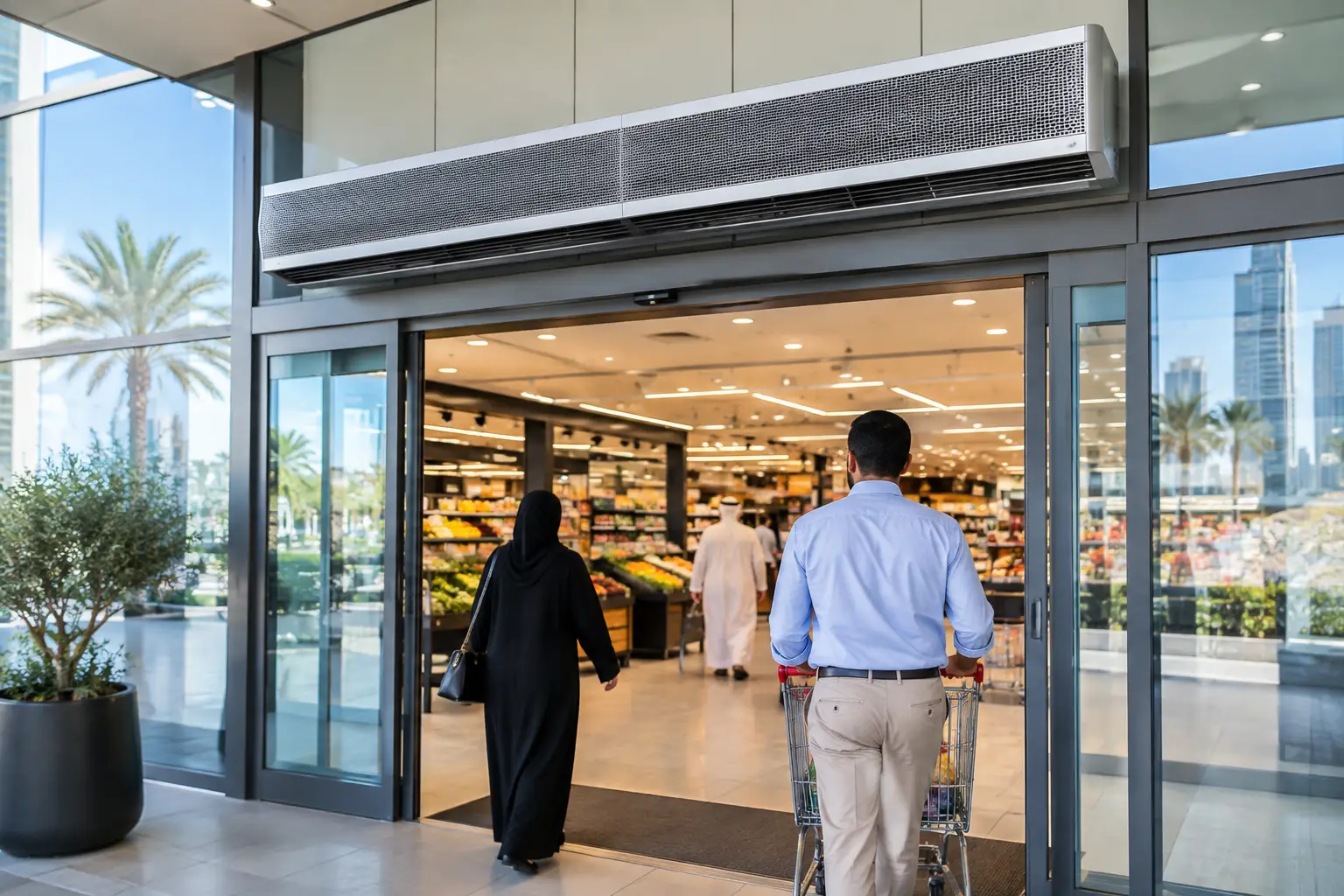
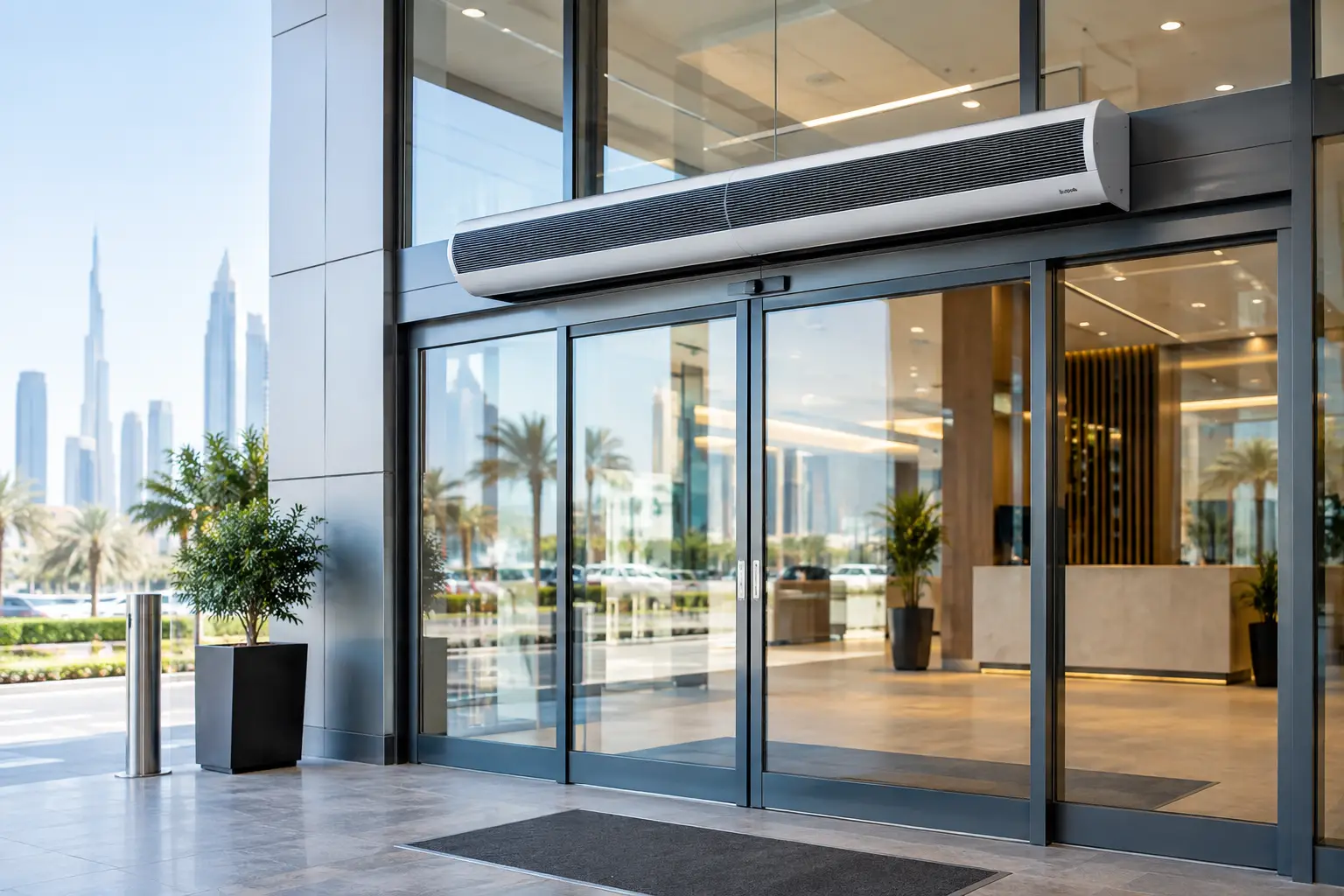
A hypermarket entrance tells you very quickly whether the building is under control. If sliding doors keep opening to hot wind, dust, humidity, and insects, conditioned air escapes fast and customer comfort drops just as quickly. That is why an air curtain for hypermarket entrance areas is not a cosmetic add-on. It is an operational control point that protects cooling performance, product environment, and the shopping experience in high-traffic retail buildings.
For hypermarkets across Dubai, Riyadh, Doha, Cairo, Lagos, and other hot-weather cities, entrance management is harder than it looks. Footfall is heavy, doors cycle constantly, and the pressure difference between indoor and outdoor air can work against the HVAC system all day. In desert and tropical climates, the problem gets worse. High ambient heat, airborne dust, and seasonal humidity create conditions where a poorly protected entrance becomes a permanent source of cooling loss.
Why an air curtain for hypermarket entrance performance matters
A hypermarket does not operate like a small shop. Entrance widths are larger, customer flow is continuous, and the building often includes open produce areas, bakery sections, chilled aisles, and sensitive merchandising close to the front zone. When untreated outside air enters repeatedly, the impact spreads beyond the doorway.
The first effect is rising HVAC load. Conditioned air leaks out while hot outside air pushes in, forcing cooling systems to run longer and harder. The second effect is environmental instability near the entrance. Customers feel the temperature shift immediately, while staff stationed near cashier lanes or promo displays deal with that discomfort for hours. The third effect is hygiene control. Dust and flying insects are not just a nuisance in food-led retail – they are a facilities issue with direct operational consequences.
An effective air curtain creates a high-velocity air barrier across the opening. It does not physically seal the doorway, so customer movement remains easy, but it sharply reduces the exchange between indoor and outdoor air masses. In a hypermarket, that means lower cooling loss, cleaner entrance zones, and more stable indoor conditions during peak trading hours.
What hypermarkets in hot climates need from an air curtain
Not every unit is suitable for a retail entrance with large openings and extended operating hours. In GCC, MENA, and African markets where temperature extremes are common, selection should be based on performance under real site conditions rather than brochure claims alone.
Air velocity is one of the first factors that matters. A hypermarket entrance often has high and wide door dimensions, so the air stream must be strong enough to reach the floor or near-floor level with sufficient force. If the airflow is too weak, the barrier breaks down where it matters most.
Mounting height and door width also shape the correct specification. A standard commercial unit may be suitable for a smaller retail entrance, but a main hypermarket entry usually requires a more powerful commercial centrifugal or heavy-duty configuration. The goal is not simply to install a machine above the door. The goal is to create effective air isolation across the full opening under continuous traffic conditions.
Climate should guide the final decision. In dry desert environments, dust exclusion becomes a major requirement. In humid coastal zones, moisture infiltration can affect comfort and increase strain on cooling systems. In both cases, the air curtain should be selected for sustained performance in high ambient temperatures, not occasional mild-weather use.
The trade-off between power, noise, and aesthetics
Hypermarkets usually care about appearance as well as performance. Recessed models can provide a cleaner architectural finish, especially in premium retail developments. Exposed units may be easier to service and sometimes offer stronger output for demanding openings. Neither is automatically better.
Noise is another practical trade-off. A stronger unit generally delivers better entrance protection, but poor selection can create unnecessary sound at the customer threshold. That is why the right answer depends on ceiling design, door geometry, entrance depth, and expected traffic volume. The most effective specification balances visual integration, service access, and real airflow performance.
Recommended FreezeeX Air Curtains for Hypermarket Entrances
Different hypermarket entrances require different air curtain solutions depending on door size, customer traffic, climate exposure, and architectural requirements.
For standard retail and supermarket entrances, the Commercial Centrifugal Flow Series provides dependable airflow performance and effective environmental separation throughout trading hours.
For larger retail entrances with heavier footfall, the Commercial HiFi Plus Series delivers enhanced airflow coverage and reliable performance under demanding operating conditions.
Where architectural integration is a priority, the Recessed Ceiling Series offers effective entrance protection while maintaining a clean visual appearance.
Selecting the correct system ensures better customer comfort, reduced cooling loss, improved hygiene, and more stable indoor conditions across the retail environment.
Common entrance problems an air curtain can reduce
In hypermarkets, most entrance issues are not isolated. They stack on top of each other and create cumulative cost.
Cooling loss is usually the biggest hidden expense. Retail operators looking to reduce HVAC load may also find value in understanding How Do Air Curtains Save Energy?. Every time conditioned air escapes through a large active entrance, the HVAC system has to compensate. Over time, that translates into higher energy consumption and less efficient indoor climate control.
Dust infiltration is a close second in many markets. Stores exposed to traffic, sand, or dry outdoor conditions can benefit from strategies discussed in our guide to Air Curtain for Dust Control. Stores in areas exposed to traffic, sand, or dry outdoor conditions often struggle to keep front-of-store zones clean. A properly selected air curtain helps reduce the amount of airborne particles entering the building, which supports both housekeeping and product presentation.
Insect control matters even more where fresh food, bakery, or produce sections operate near the customer entrance. Many retailers also evaluate solutions covered in our article on Air Curtain for Insect Control at Entrances. While an air curtain is not a substitute for a broader hygiene strategy, it is a strong frontline barrier that limits insect entry without obstructing traffic.
Humidity is often underestimated. In coastal cities and tropical regions, moist outside air can make entrance zones feel warmer and heavier than the rest of the store. It can also increase the burden on cooling equipment. Reducing that air exchange helps maintain a more stable interior environment.
How to choose the right air curtain for hypermarket entrance projects
The correct specification starts with the opening itself. Door height, clear width, and whether the entrance uses sliding doors, vestibules, or open access all affect equipment sizing. Customer volume also matters. A low-traffic secondary entrance has different demands than a primary entry used continuously from morning to late night.
The next step is understanding the external environment. A hypermarket on a dusty roadside in Riyadh or Cairo has a different exposure profile from a coastal site in Muscat or Lagos where humidity is more aggressive. The equipment should be matched to those local conditions, especially when the building depends heavily on constant cooling.
Mechanical design also deserves attention. Centrifugal flow systems are often preferred for commercial and industrial applications because they provide stable, directed airflow suited to demanding doorways. Build quality, motor reliability, serviceability, and component durability are all relevant in projects where the unit will operate daily for long hours.
Control strategy should not be overlooked. A hypermarket air curtain works best when coordinated with door operation and site usage patterns. Depending on the project, that may mean automatic activation with door cycles or continuous operation during peak footfall periods. What matters is consistent barrier performance, not simply switching the unit on and off.
Why consultation matters more than catalog selection
For large retail entrances, oversimplified product selection creates expensive mistakes. An undersized unit will not deliver proper air separation. An oversized or poorly placed unit can waste energy, generate avoidable noise, or conflict with the architectural layout.
That is why consultation-led specification is the safer route for hypermarkets, retail developers, MEP contractors, and facility teams. The right supplier should review door dimensions, mounting constraints, traffic intensity, and climate exposure before recommending a model range. In demanding markets, specification-ready support is not a bonus. It is part of getting the result right the first time.
Frequently Asked Questions
Why do hypermarkets need air curtains?
Hypermarkets experience continuous customer traffic and frequent door openings. Air curtains help reduce cooling loss, dust infiltration, humidity ingress, and flying insect entry while maintaining customer comfort.
Do air curtains reduce hypermarket energy costs?
Yes. By reducing unwanted air exchange between indoor and outdoor environments, air curtains help lower HVAC workload and improve cooling efficiency.
Which air curtain is best for a hypermarket entrance?
The best solution depends on doorway dimensions, mounting height, customer traffic, climate conditions, and operational requirements. Commercial centrifugal systems are often preferred for large retail entrances.
Can air curtains improve hygiene in food retail environments?
Yes. Air curtains help reduce the entry of dust, insects, and airborne contaminants, supporting cleaner retail conditions around produce, bakery, and fresh-food areas.
Long-term value beyond the entrance line
When decision-makers evaluate an air curtain, they sometimes focus only on the doorway itself. In a hypermarket, the value is broader. Better entrance control supports lower cooling waste, more stable temperatures in front trading zones, and cleaner conditions near displays and cashier areas. It can also improve staff comfort in the sections of the store that absorb the most outdoor exposure.
That operational value is especially relevant in hot-climate markets where cooling costs are already significant. A building with strong entrance air isolation places less unnecessary load on its HVAC system and maintains a more controlled retail environment throughout the day. Over time, that makes the entrance equipment part of the store’s energy and performance strategy, not just part of the door package.
Choosing the Right Air Curtain for Hypermarket Entrance Performance
Choosing the right air curtain for hypermarket entrance performance requires more than selecting a unit based on dimensions alone. The best results come from matching airflow performance, entrance conditions, climate exposure, and customer traffic to the correct solution.
FreezeeX supports commercial projects with climate-adapted air curtain solutions designed for heavy-use entrances in desert and tropical conditions. Explore the FreezeeX Product Range, visit our Home Page, or contact our team through the Contact Us page for a project-specific recommendation.
The right air barrier pays for itself through better climate control, improved customer comfort, reduced cooling loss, and stronger operational performance across the entire retail environment.
4 Responses
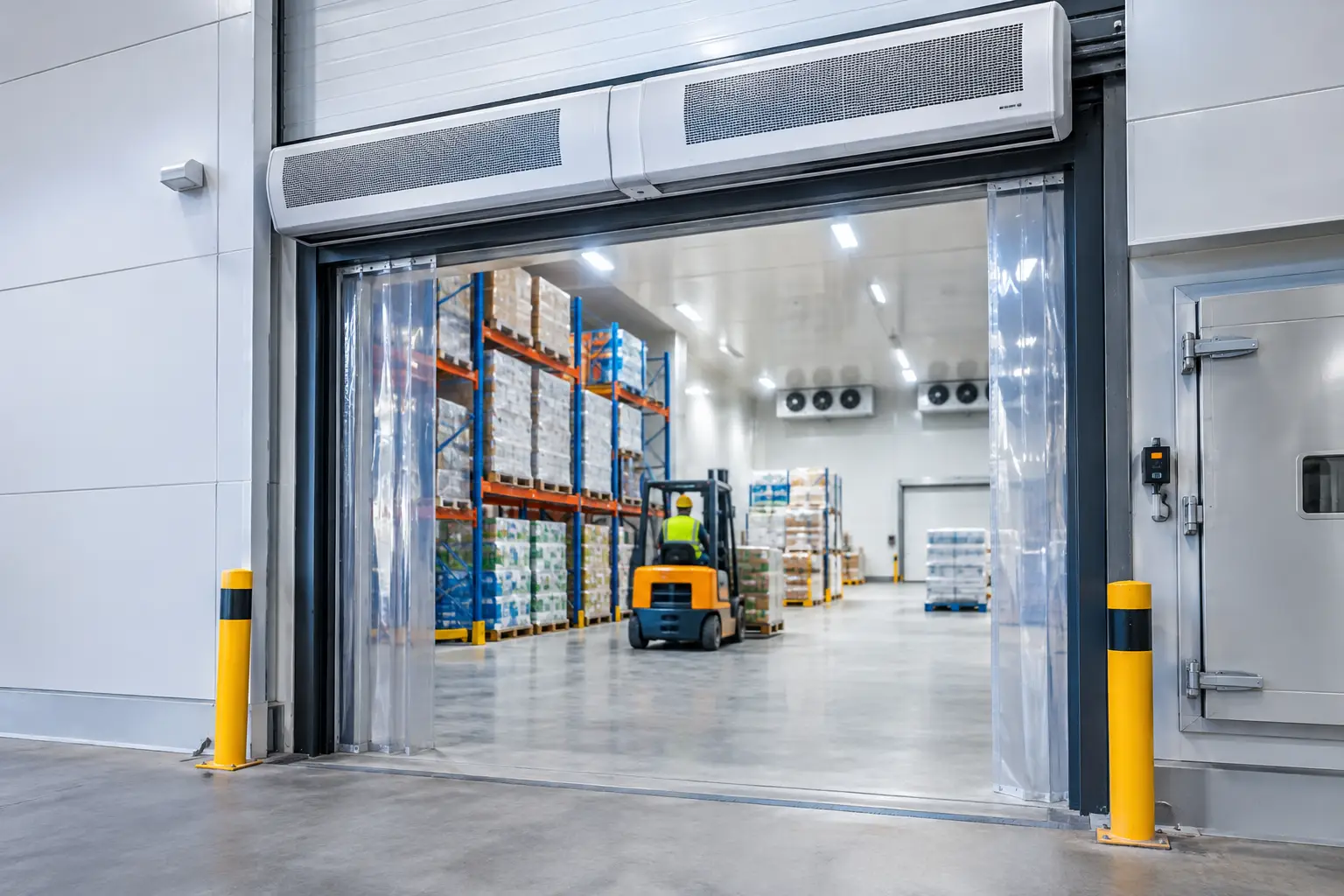
At a hypermarket entrance, hotel service entry, cold room access point, or industrial loading zone, the main concern is typically the loss of conditioned air and the intrusion of heat, dust, insects, or humidity whenever doors are opened.
That’s an important point for commercial facilities. Reducing entrance heat gain is not only about lowering energy consumption—it also helps improve indoor comfort, reduce HVAC workload, and maintain more stable conditions in high-traffic environments where doors open frequently.