A loading entrance that stays open through peak operations can turn conditioned air into a continuous operating cost. This Dynamic Series air curtain review looks at where this product range fits, what performance factors matter, and how contractors and facility teams should assess it for demanding commercial entrances in hot, humid, and dusty climates.
The Dynamic Series is not a general-purpose comfort accessory. It is an entrance climate-control solution intended for commercial and industrial sites where frequent door opening allows outdoor heat, dust, humidity, insects, and airborne contaminants to enter. Its value depends on correct sizing, mounting height, doorway geometry, and the pressure conditions around the building.
What the Dynamic Series Is Designed to Address
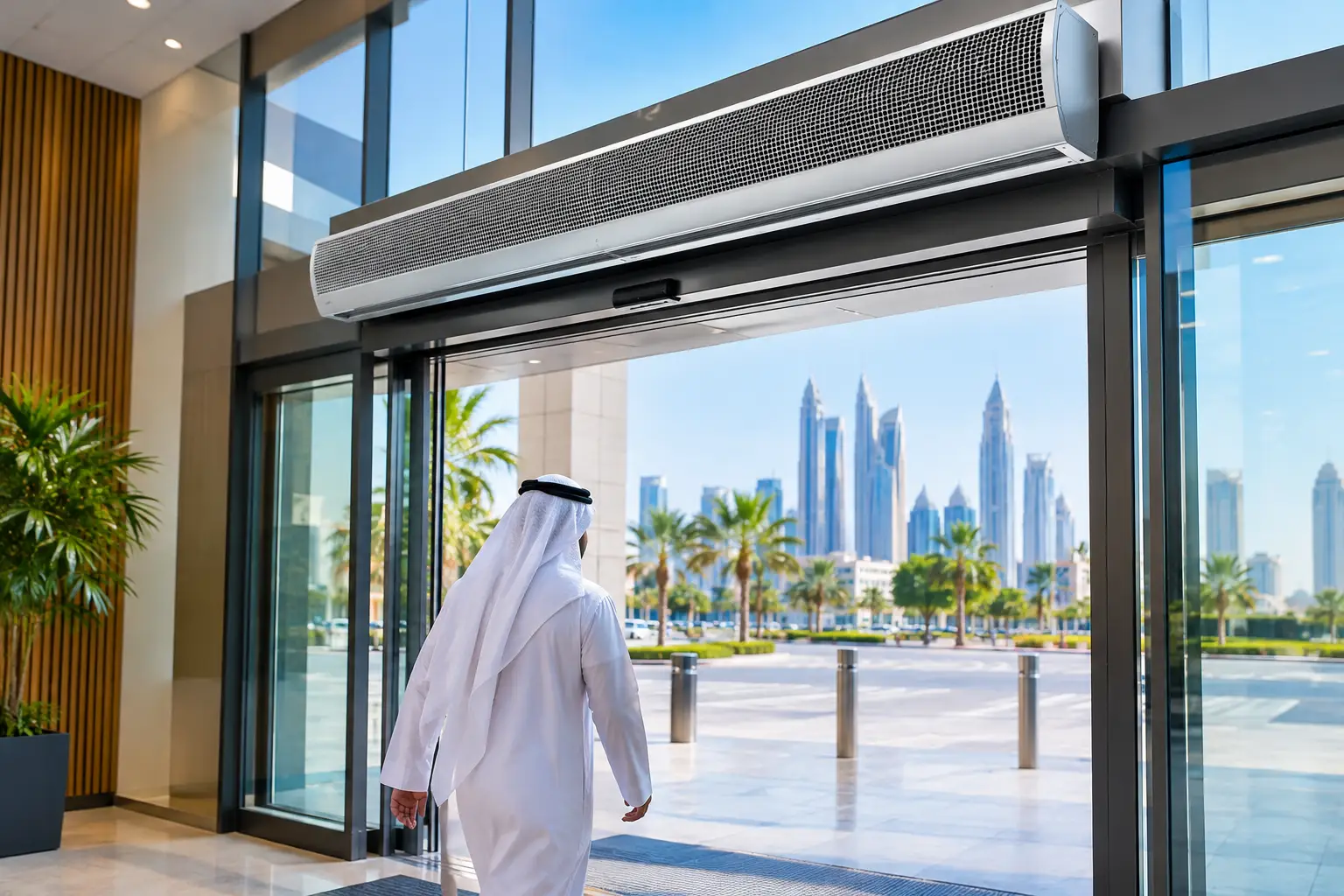
An air curtain creates a directed air stream across an open doorway. That air stream does not physically seal the opening, but it creates resistance to air exchange between the conditioned interior and the external environment. At a supermarket entrance in Dubai, a warehouse in Riyadh, or a food-processing doorway in Lagos, this can reduce the rate at which hot and contaminated outdoor air reaches the occupied or conditioned zone.
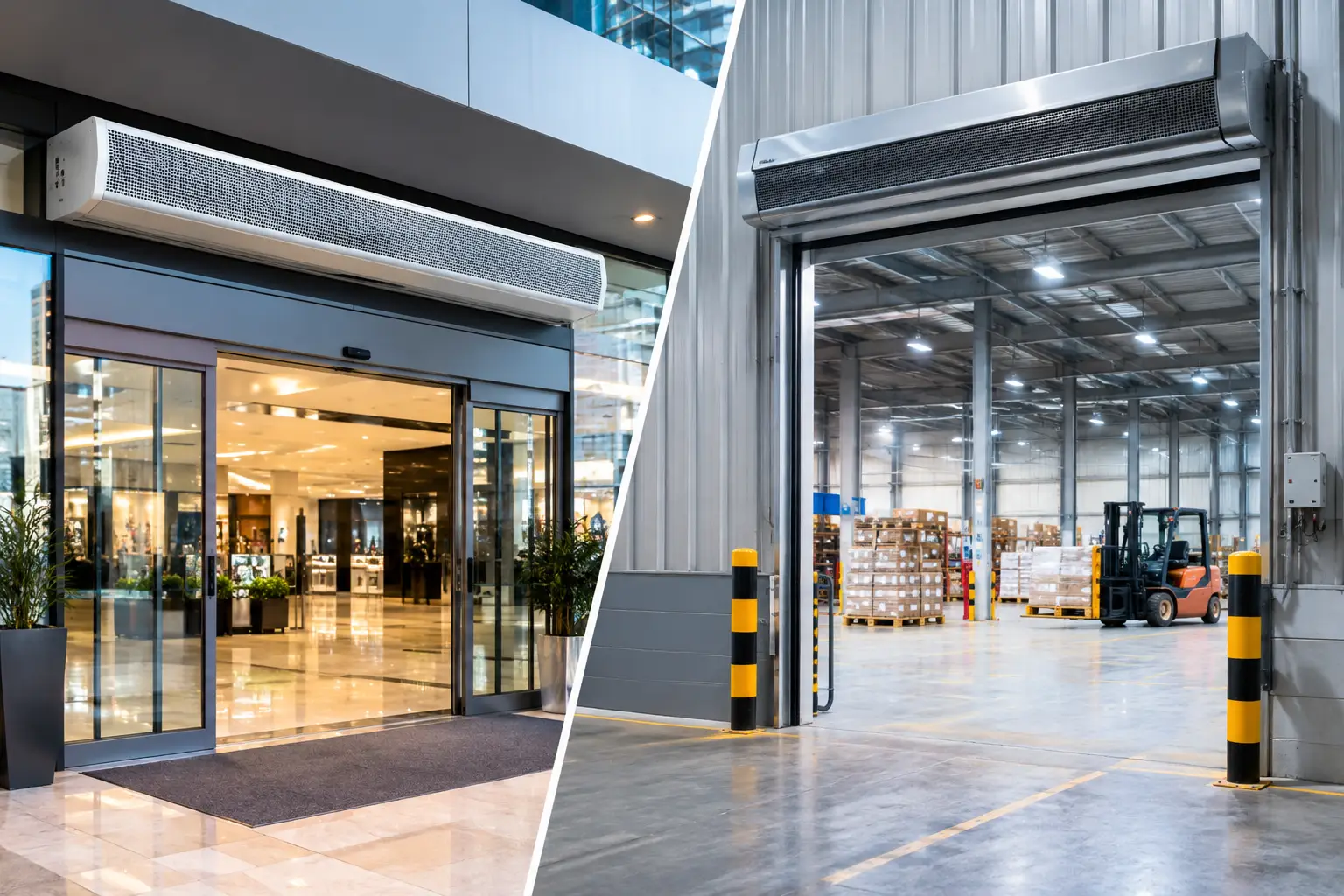
The Dynamic Series is most relevant where a doorway has regular traffic and the building needs to preserve indoor comfort without interrupting movement. Typical applications include retail entrances, hotel service doors, logistics facilities, factory access points, restaurants, hospitals, and commercial storage areas.
The operational objective is straightforward: reduce infiltration while allowing people, trolleys, carts, and goods to pass freely. In locations exposed to desert dust, high humidity, or extreme ambient temperatures, the air curtain becomes part of the wider HVAC-efficiency strategy rather than a standalone item.
Dynamic Series Air Curtain Review: Key Performance Considerations
A useful review should focus on application fit, not just appearance or a stated airflow figure. Air curtains perform at the opening, where actual site conditions can be less forgiving than a product data sheet. The Dynamic Series should therefore be assessed against the conditions it will face every day.
Key performance factors to review:
- Airflow reach and doorway coverage
- Doorway width and mounting height
- Suitability for hot, humid, and dusty locations
- Noise levels in occupied areas
- Door traffic and operating conditions
- Installation and maintenance access
Airflow reach and doorway coverage
The first question is whether the discharge air reaches the floor or threshold area with sufficient velocity. A high-mounted unit can look appropriate above a wide entrance but still deliver weak separation at the lower section if it is not selected for the mounting height.
This matters especially at tall warehouse doors, entrances with strong crosswinds, and high-traffic retail openings. The air stream must cover the full width of the clear opening and retain enough momentum to resist outside air. For wide doors, multiple units may be required to avoid gaps in the air barrier.
The correct selection is based on the finished opening width and height, not merely the nominal door size. Site teams should also account for signs, ceiling drops, roller shutters, door frames, or structural members that can disturb the discharge path.
Suitability for hot, humid, and dusty locations
Outdoor conditions in the GCC, MENA, and many African markets place unusual demands on entrance systems. At a desert-facing facility, fine dust can enter whenever a door is opened. In coastal cities such as Dubai, Doha, Muscat, and Lagos, humidity adds another infiltration load that the air-conditioning system must manage.
A properly specified Dynamic Series unit can help limit this direct exposure. However, an air curtain is not a substitute for filtration, positive-pressure design, or properly sized HVAC equipment where those measures are required. It works best as a layer of control at frequently opened entrances.
For facilities where product quality, hygiene, or controlled temperature is critical, the opening must be evaluated as part of the complete air-management plan. Hospitals, pharmaceutical facilities, food preparation areas, and cold storage operations may require more stringent separation performance, interlocks, or a different air curtain category based on the risk profile.
Noise and occupied-area expectations
Noise deserves early consideration in customer-facing spaces. An entrance air curtain must move air with enough force to create effective separation, and that naturally involves fan and motor sound. In a warehouse or production facility, the acceptable sound level may be very different from a hotel lobby, restaurant entry, or premium retail store.
The trade-off is practical. Lower fan speed may reduce perceived sound but can weaken the barrier at the threshold. Higher speed can improve resistance to infiltration but may not suit a quiet front-of-house environment. The right decision comes from matching the model, mounting position, and operating speed to the application rather than selecting on airflow alone.
Where the Dynamic Series Fits Best
The Dynamic Series is a strong candidate for commercial doors that see consistent use but do not require the extreme coverage associated with very large industrial openings. It suits projects that need practical air isolation with a clean, professional installation above the entrance.
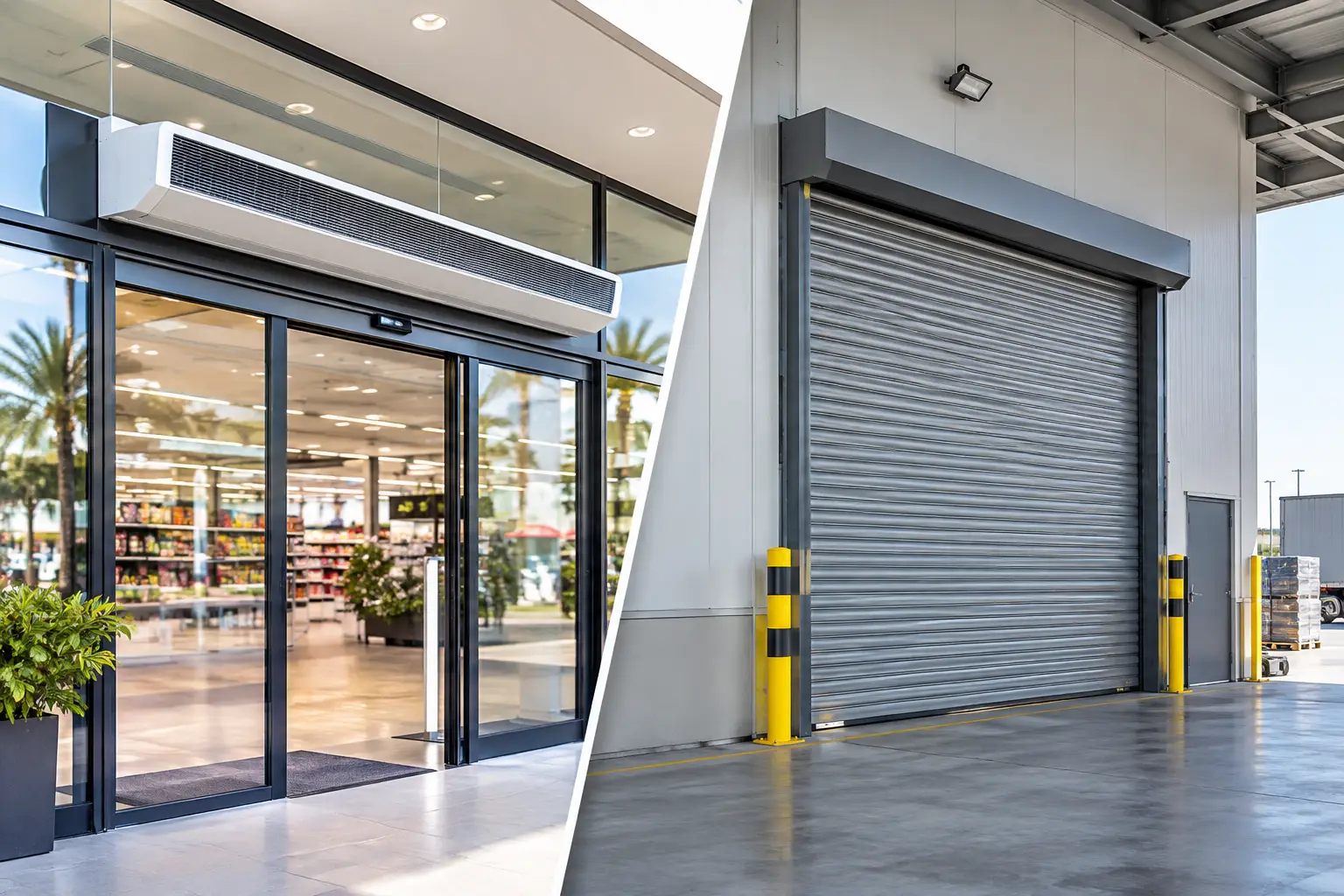
At retail stores and supermarkets, it can support indoor comfort near the front entrance, where customers otherwise feel warm outdoor air entering each time automatic doors cycle. At restaurants and hotels, it can help reduce the entry of insects, humidity, and street dust without obstructing access.
For warehouses, workshops, and logistics centers, the model should be considered where the doorway is within its recommended performance range and where the main concern is frequent personnel or goods movement. Larger, taller, or heavily exposed loading bays may need an industrial centrifugal solution designed for greater throw and more aggressive external conditions.
This distinction matters. Installing a commercial-style unit on an oversized industrial doorway often leads to a disappointing result, not because air curtains do not work, but because the selected product does not have enough reach for the opening.
Factors That Can Limit Results
Air curtains are sensitive to conditions around the entrance. A Dynamic Series installation can be affected by strong prevailing wind, nearby supply-air diffusers, extractor systems, uneven building pressure, or doors recessed deeply into a façade. These factors can bend, split, or weaken the air stream.
Door operating behavior also matters. An air curtain is most effective when it is activated consistently with door opening. Where automatic doors are used, controls should be coordinated so the unit operates when the entrance is exposed. For manually operated service doors, management should determine whether continuous operation during business hours or door-linked activation makes more sense for traffic levels and energy use.
Maintenance planning should be included in the specification. In dusty commercial or industrial environments, intake areas and filters need accessible inspection and cleaning. Restricted intake airflow can reduce output, increase sound, and compromise the air barrier. Facility teams should confirm that the installed position allows safe access without disrupting operations.
Specification Questions for Consultants and Contractors
Before approving a Dynamic Series air curtain, project teams should confirm the clear opening dimensions, finished mounting height, expected traffic pattern, and exposure to external wind. They should also identify the objective: conserving cooling, reducing dust entry, limiting insects, improving comfort near the doorway, or supporting a hygiene-sensitive operation.
Electrical requirements, control method, ceiling coordination, and service access should be resolved before installation. For recessed or architecturally sensitive entrances, the visual integration of the unit may influence whether a recessed ceiling air curtain is more appropriate. For higher-velocity industrial requirements, a centrifugal model may provide a better engineering fit.
It is also worth reviewing the operational schedule. A retail entrance open for twelve hours a day has different requirements from a warehouse door opened intermittently by forklift traffic. The expected runtime affects control selection, energy planning, and the value of variable operating speeds.
The Practical Verdict
The Dynamic Series is worth considering for busy commercial entrances where cooling loss, dust, humidity, and comfort complaints are tied directly to frequent door opening. Its strongest value is achieved when it is selected as an engineered air barrier for the actual doorway, not treated as a one-size-fits-all product.
For demanding sites in Dubai, Abu Dhabi, Riyadh, Doha, Cairo, Nairobi, or other hot-climate markets, the key question is not simply whether an air curtain is needed. It is whether the selected unit has the right airflow reach, width coverage, control strategy, and durability for the entrance environment.
A project-specific consultation can confirm whether the Dynamic Series matches your opening or whether a recessed, commercial centrifugal, HiFi Plus, or industrial centrifugal option will deliver better long-term results. Share the entrance dimensions, mounting height, traffic conditions, and climate exposure with FreezeeX to receive a specification-ready recommendation and quotation.