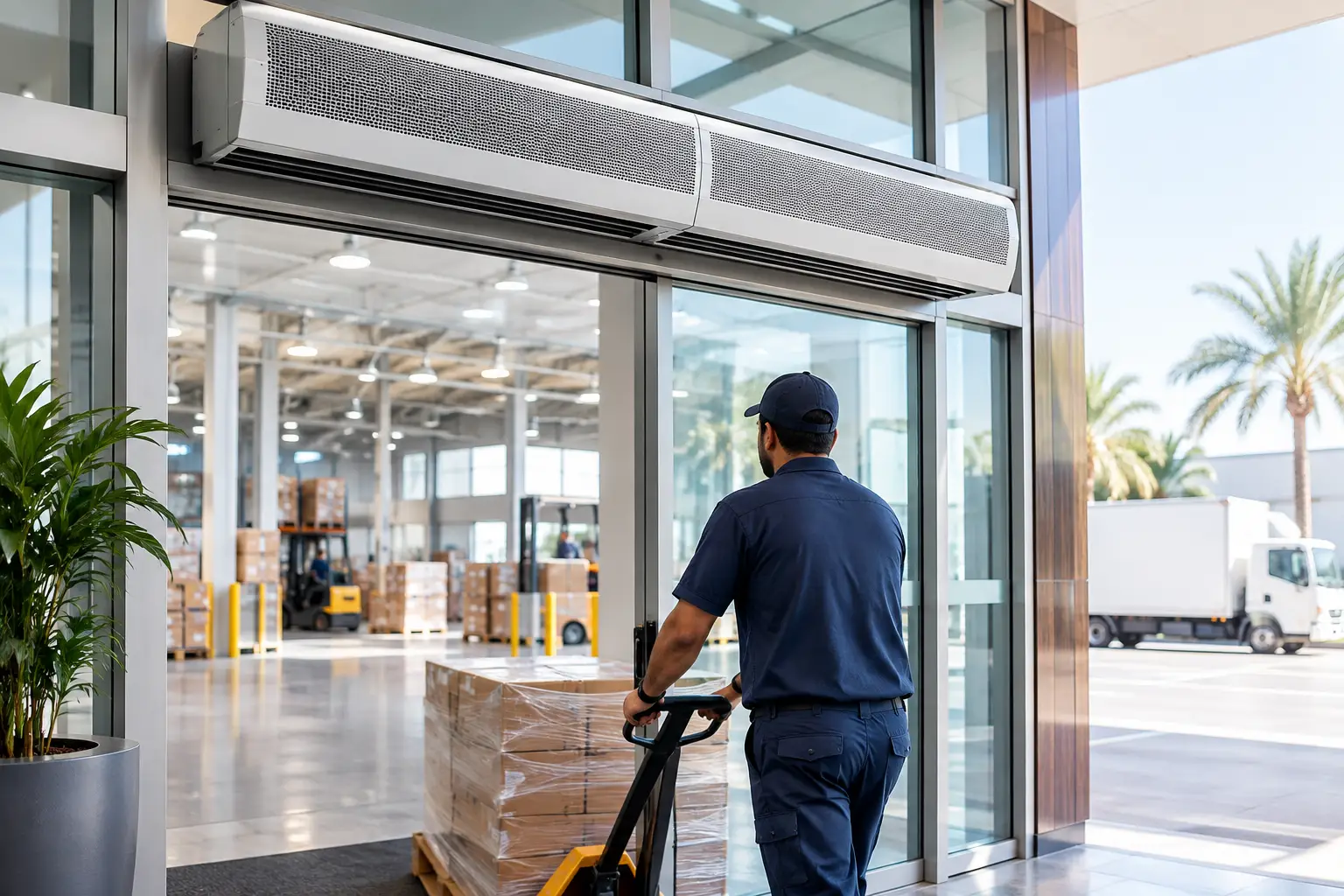
A loud entrance air curtain can undermine an otherwise well-designed commercial space. In a hotel lobby, healthcare reception, premium retail store, or food-service counter, persistent fan noise can affect customer comfort and staff concentration. This air curtain noise planning guide helps project teams balance acoustic expectations with the air velocity needed to protect conditioned interiors from extreme heat, humidity, dust, insects, and outdoor contaminants.
For facilities in Dubai, Riyadh, Doha, Muscat, Cairo, Lagos, and similar high-temperature markets, lowering noise cannot mean under-sizing the unit. The objective is to achieve effective air isolation at the doorway while managing how equipment selection, installation conditions, and operating settings influence the sound heard by occupants.
Why Air Curtain Noise Needs Early Planning
Air curtains are frequently specified late, after the doorway geometry, ceiling design, and HVAC strategy are already fixed. That approach creates avoidable compromises. A unit that must work harder to overcome a tall opening, a recessed obstruction, or strong outdoor pressure conditions may need higher fan output. Higher output can increase audible noise at the entrance.
Noise planning belongs alongside airflow planning because the two are connected. The sound level a person experiences is shaped not only by the equipment itself, but also by the application, surrounding finishes, mounting location, door traffic, and how the unit is controlled throughout the day.
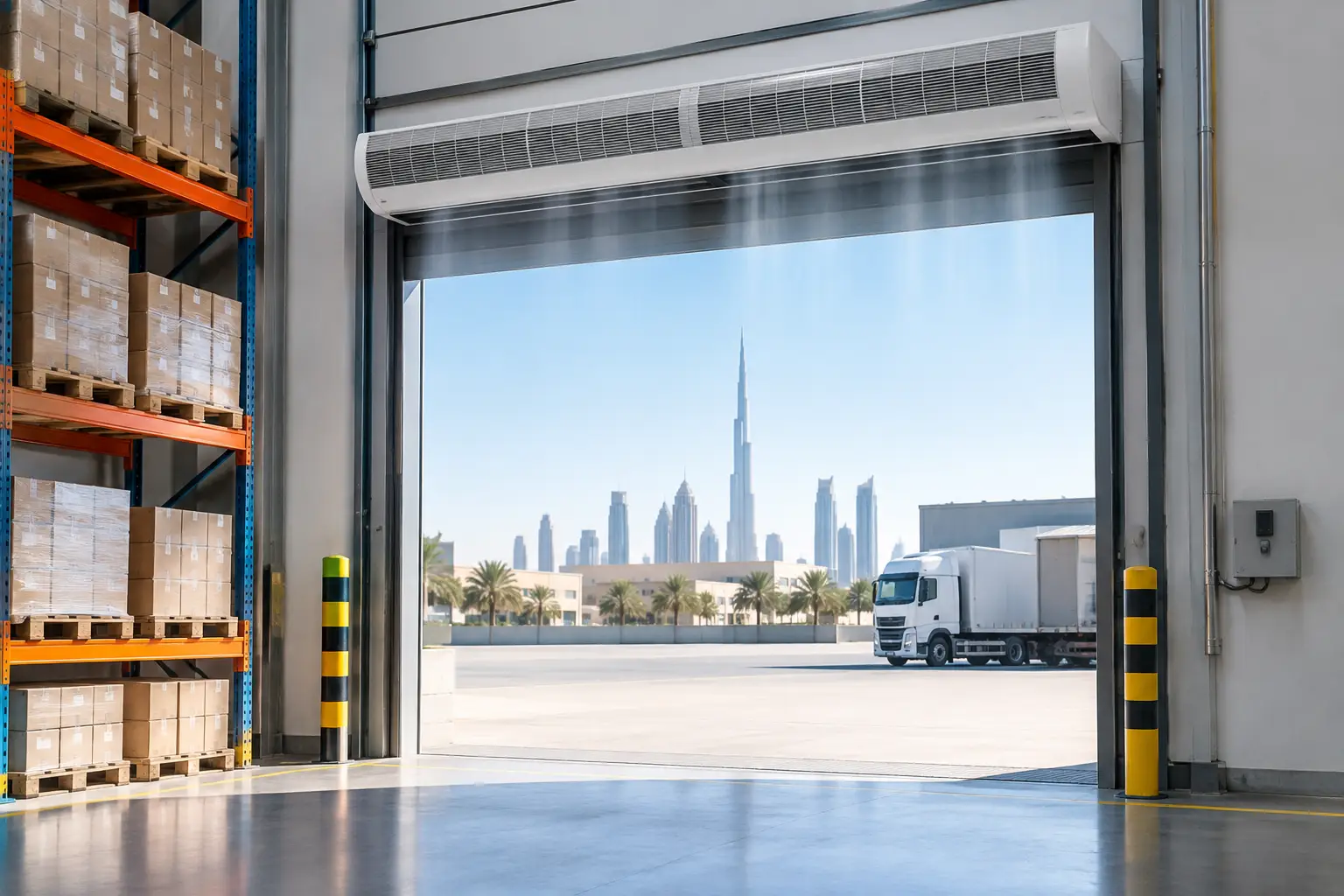
This is particularly relevant where entrance doors remain open for long periods. Supermarkets, logistics facilities, malls, factories, restaurants, and airport-adjacent operations need dependable separation between indoor and outdoor conditions. In desert and tropical climates, heat gain, wind-driven dust, and humidity are operational concerns, not minor comfort issues.
What Creates Noise at an Air Curtain Entrance?
An air curtain is not the only sound source at the doorway. Project teams should distinguish equipment noise from noise generated by airflow and the building itself. Doing so prevents the wrong corrective action during specification or handover.
Equipment and airflow factors
The following conditions commonly influence the perceived noise level:
- Fan and motor operating speed: Higher output settings generally create more audible fan sound, even when the unit is correctly selected.
- Air discharge velocity: A powerful discharge is often necessary for wider, taller, or heavily exposed openings, but turbulent air can be more noticeable near occupants.
- Unit selection for the opening: An undersized unit may be operated at a higher setting than intended, while an oversized approach may be unnecessary for a sheltered, low-traffic entrance.
- Mounting height and discharge alignment: A poorly positioned discharge can cause airflow to strike nearby surfaces or fail to form an effective barrier.
- Vibration transmission: Inadequate support, loose mounting components, or interaction with ceiling systems can transfer vibration into surrounding finishes.
The room changes what people hear
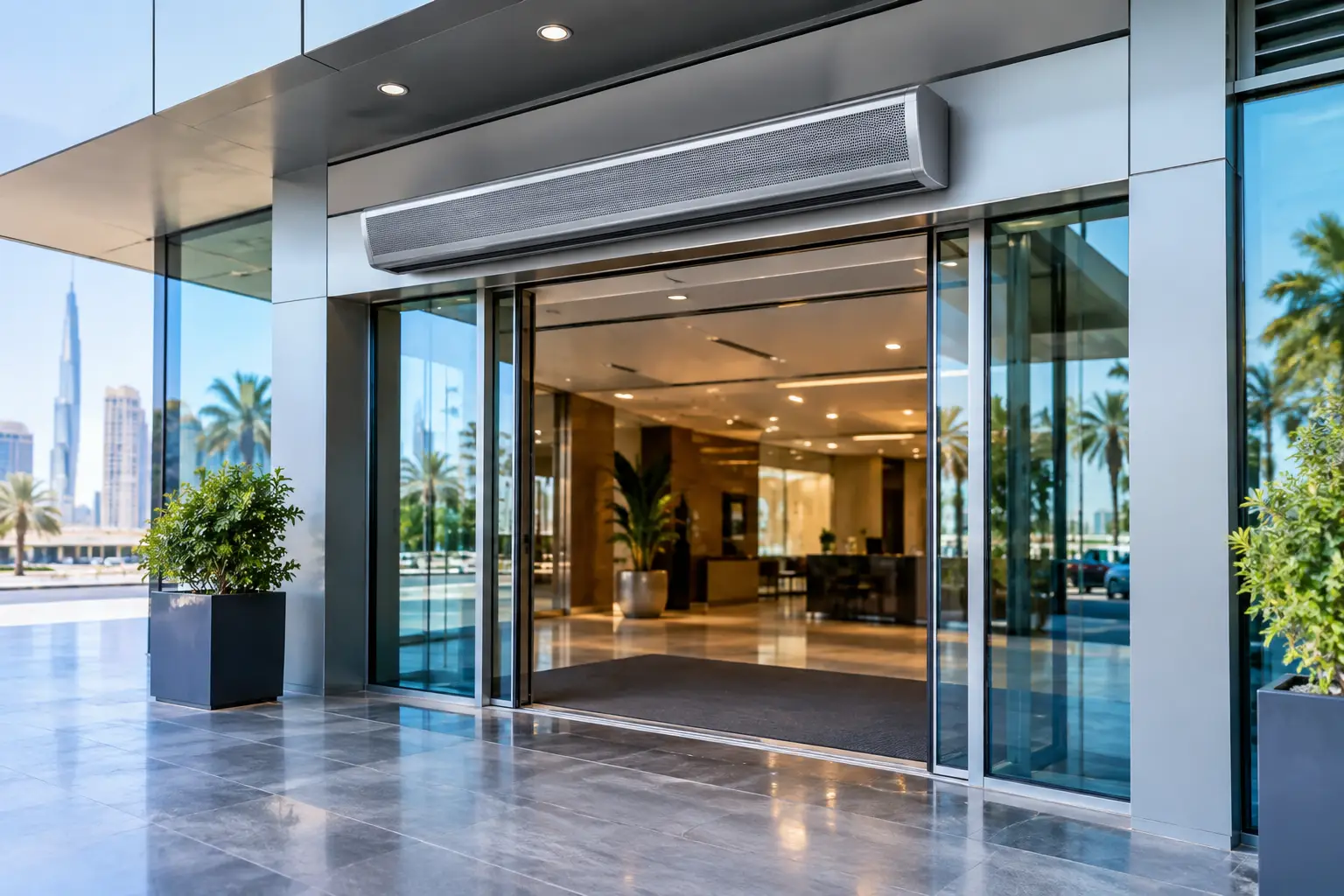
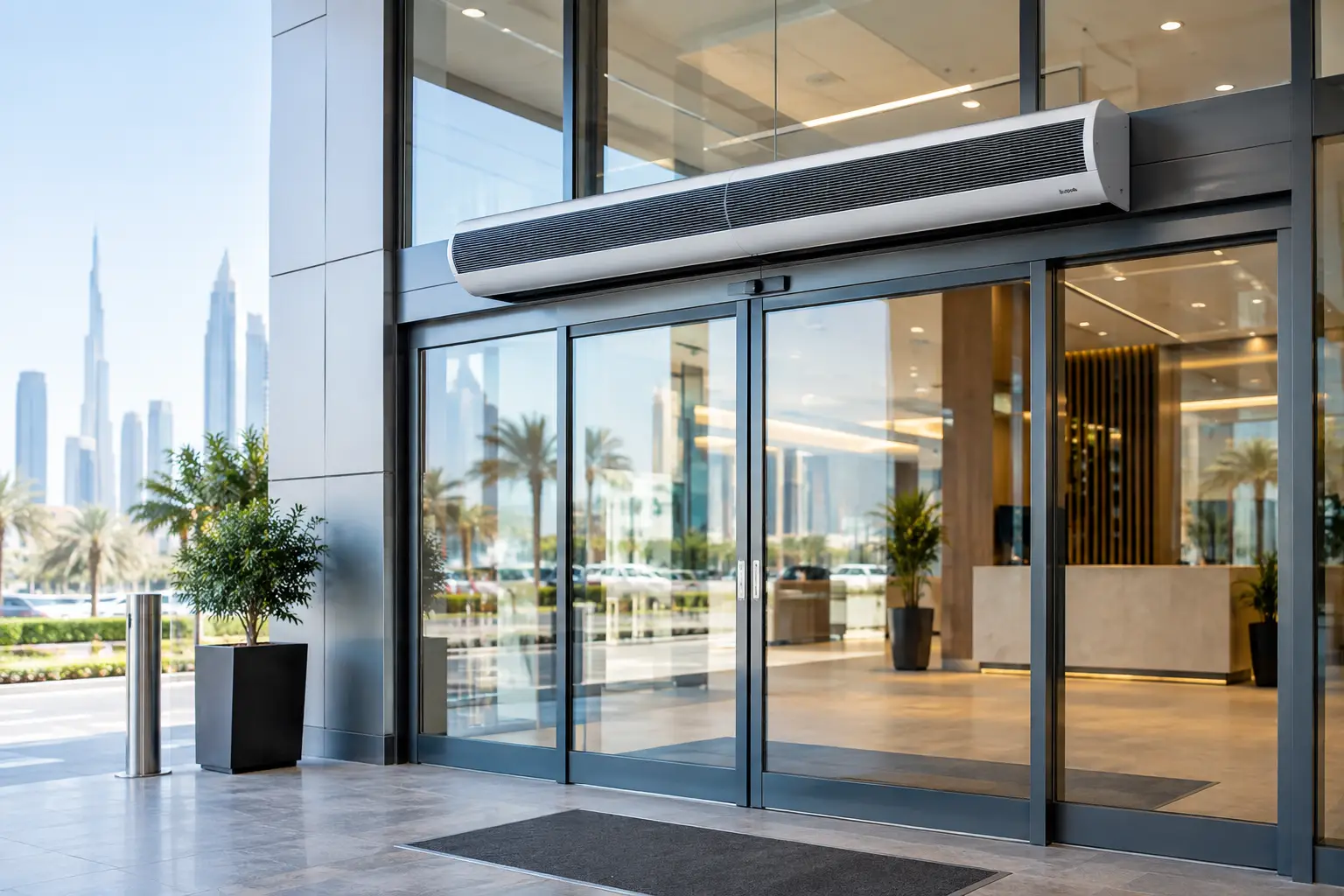
A highly reflective lobby with stone, glass, metal, and hard ceilings will make fan sound seem more prominent than a warehouse with higher ambient activity. Reception desks, checkout counters, security points, and waiting areas also place people close to the entrance for long periods. That is why the same air curtain can be acceptable in one setting and distracting in another.
Rather than setting one universal noise target, define the acoustic expectation by zone. A loading dock can prioritize air separation and durability. A hospital entrance needs controlled performance with greater attention to occupant perception. A retail entrance falls between those two requirements and depends heavily on brand positioning, traffic volume, and door configuration.
Air Curtain Noise Planning Guide by Application
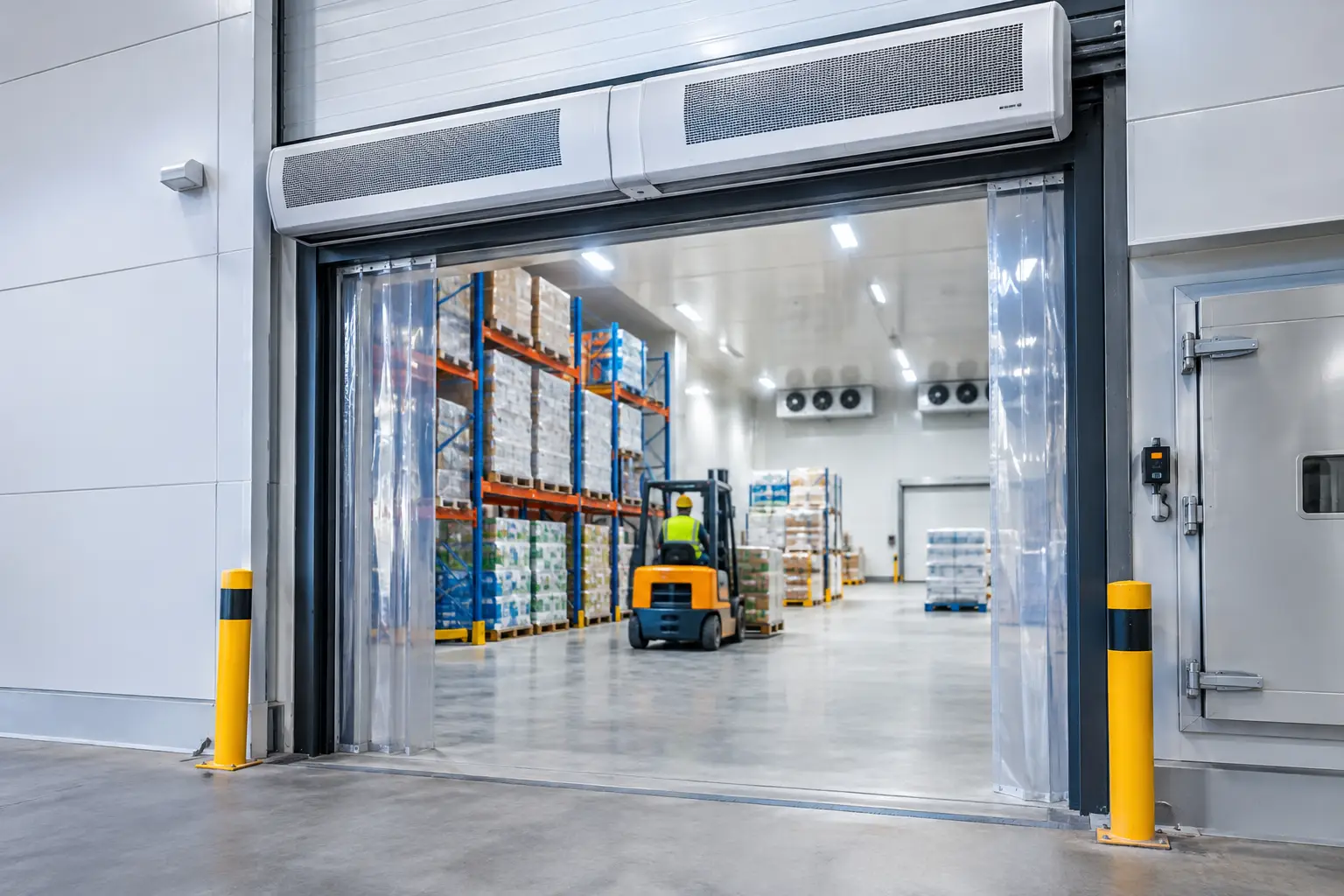
| Application | Noise planning priority | Design implication | |—|—|—| | Hotel, office, clinic, or premium retail entrance | High guest and visitor comfort | Consider mounting integration, proximity to reception areas, and the need for quieter routine operation. | | Supermarket or shopping mall entrance | Balanced comfort and continuous operation | Plan for long operating hours, high foot traffic, and broad entrance widths without compromising climate control. | | Restaurant or food-service entrance | Customer comfort and hygiene protection | Coordinate the unit location with service counters, dining areas, and the risk of insects or humid outdoor air. | | Warehouse, factory, or logistics opening | Reliable industrial separation | Prioritize opening coverage, mounting conditions, outdoor exposure, and the operational noise already present in the area. | | Cold storage or temperature-sensitive facility | Environmental control at the opening | Evaluate the doorway use cycle and the need to limit infiltration while avoiding unnecessary fan output. |
FreezeeX product selection should start with the entrance function, not with a preference for the quietest-sounding option in isolation. A lower-output solution that does not maintain a stable air barrier can increase cooling loss and reduce comfort across the wider facility.
How to Specify an Air Curtain Without Creating an Acoustic Problem
A practical specification process gives the consultant or contractor enough information to select a system that is appropriate for both performance and the occupied environment.
- Document the opening accurately. Record clear width, clear height, door type, mounting position, and any ceiling bulkheads or structural restrictions. A few inches of lost mounting clearance can affect the available equipment options.
- Assess the outdoor challenge. Identify heat exposure, humidity, dust, wind, pressure differences, and how often the door remains open. A sheltered mall entrance does not behave like a warehouse door facing a hot, dusty service yard.
- Map occupied positions near the entrance. Note reception desks, cashiers, hosts, security staff, patient waiting areas, and other positions where people remain close to the air curtain. These locations deserve more acoustic attention than transient walking zones.
- Set operating scenarios. Consider peak traffic, normal business hours, overnight access, deliveries, and door-open events. Controls and operating modes should support the real schedule rather than forcing one constant fan setting.
- Coordinate ceiling and structural details. Recessed designs can support a cleaner visual result in suitable interiors, but they require enough coordinated space and service access. Surface-mounted commercial or industrial systems may be the practical choice where access and mounting flexibility matter more.
- Review the complete recommendation before approval. Confirm that the proposed system is matched to opening size, mounting height, traffic level, climate exposure, and HVAC intent. Noise should be reviewed in the context of this complete duty, not as a standalone number.
Choosing the Right Product Approach
Different air curtain configurations suit different planning priorities. The right choice depends on the entrance rather than a single claim about quiet operation.
Recessed ceiling installations
Recessed Ceiling Air Curtains can be appropriate where architects want the entrance equipment integrated into the ceiling plane. They require early coordination with ceiling depth, support arrangements, access requirements, and discharge placement. In a quiet lobby, this coordination can be as valuable acoustically as it is visually because it reduces the likelihood of poor placement or finish-related vibration issues.
Commercial entrances with regular foot traffic
For retail, supermarkets, restaurants, and commercial facilities, Commercial Centrifugal Flow Series and Commercial HiFi Plus Series solutions should be assessed against the opening’s size, traffic pattern, and aesthetic requirements. The specification should make clear whether the priority is an unobtrusive public-facing entrance, sustained operation during long opening hours, or protection from particularly challenging outdoor conditions.
High-demand industrial openings
Factories, logistics centers, workshops, and warehouse entrances often need Industrial Centrifugal Series or New Dynamic Series options evaluated for their operating environment. These locations may tolerate more ambient sound, but that does not remove the need for good planning. A unit should still be sized and positioned to create the needed barrier without excessive operating demand.
Common Mistakes That Make an Entrance Seem Louder
The most frequent issue is treating the air curtain as an add-on after all other entrance decisions are final. Teams then discover that the available mounting point is too high, the unit sits directly above a staffed position, or the selected finish traps vibration.
Another mistake is assuming that quieter always means better. In a hot, humid, or dusty environment, reducing output below what the opening needs can weaken the air barrier. The facility may then experience greater warm-air infiltration, dust entry, humidity concerns, or increased HVAC load. The better outcome is a correctly engineered system that runs appropriately for its duty.
Finally, avoid judging performance during a single brief site observation. Entrance conditions vary with traffic, external temperature, wind, door position, and nearby activity. A meaningful review considers the facility’s busy periods and the people who work closest to the opening every day.
Plan for Quiet Performance and Strong Air Isolation
Air curtain noise planning is a design decision, not a last-minute adjustment. When airflow requirements, staff locations, mounting details, and climate exposure are evaluated together, facilities can maintain a more comfortable entrance without sacrificing protection from outdoor heat, humidity, dust, and insects.
For a project in the GCC, MENA, or Africa, request a consultation and quotation from FreezeeX with the opening dimensions, mounting details, traffic pattern, and operating environment. A properly matched commercial or industrial air curtain can support quieter day-to-day operation while delivering the powerful air isolation demanded by tropical and desert-climate facilities.