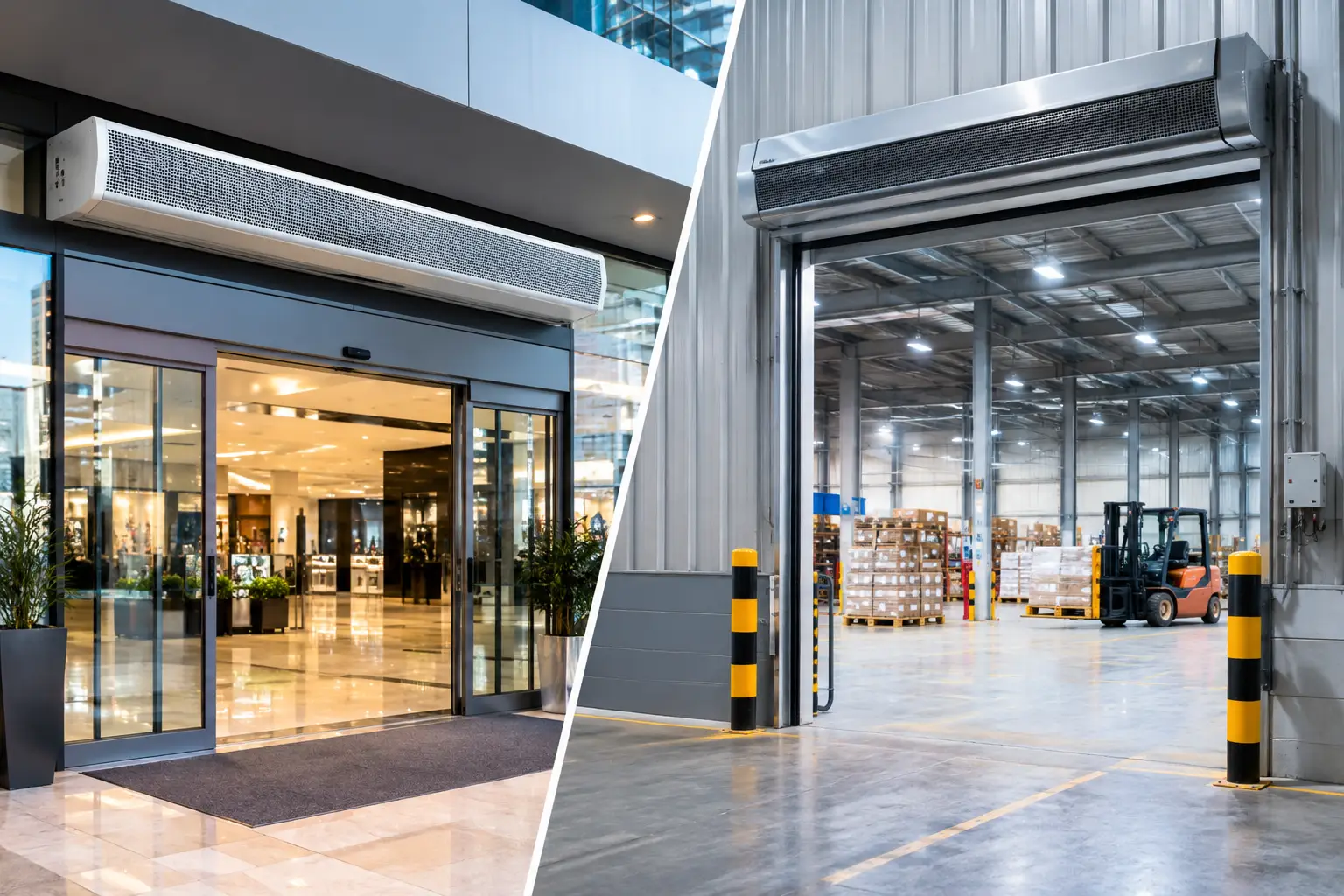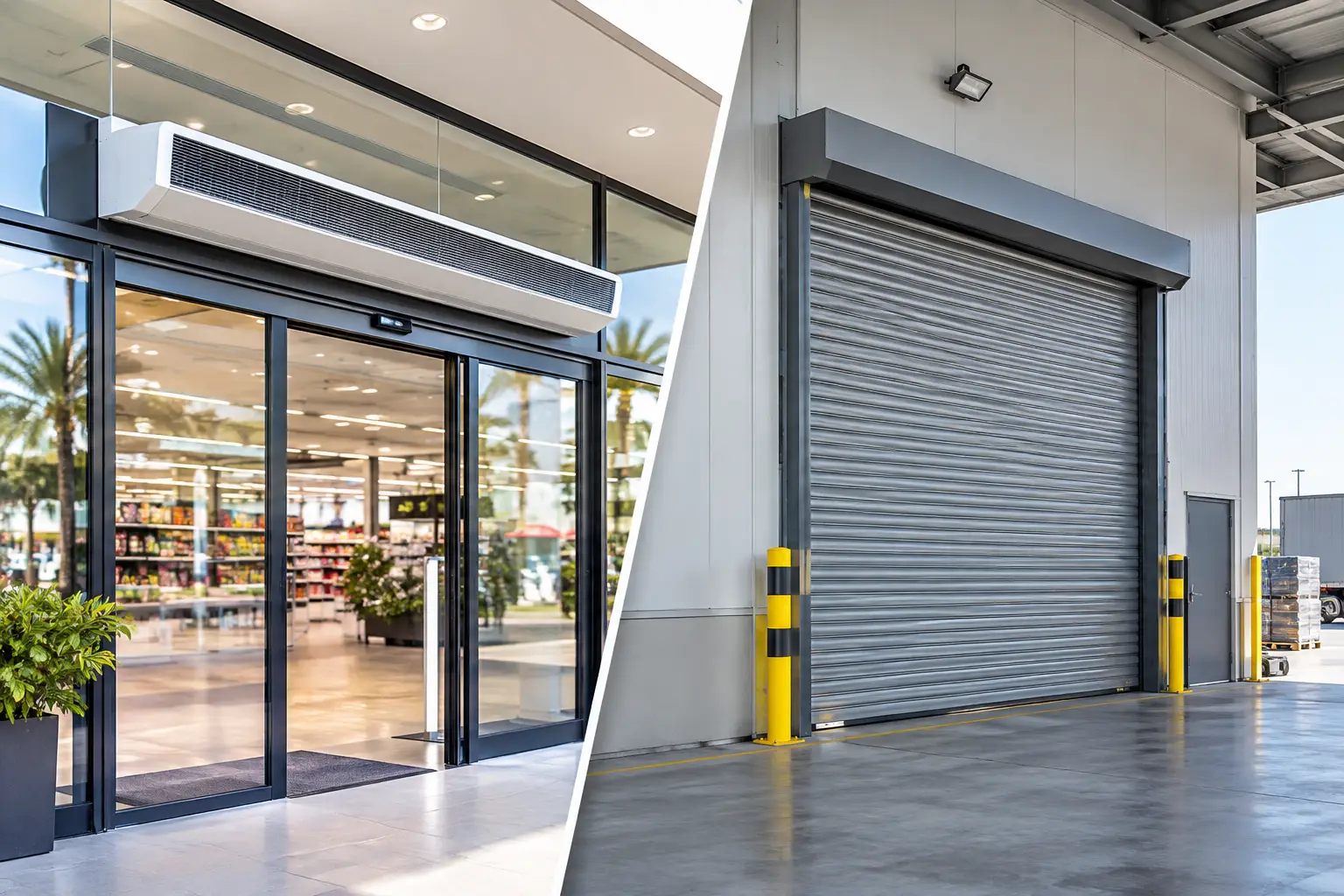
A busy entrance is often the weakest point in a conditioned building. Every delivery, customer arrival, pallet movement, or open loading door allows outdoor heat, humidity, dust, and insects to challenge the indoor environment. This Dynamic Series review considers where a commercial air curtain belongs in that equation and what project teams should assess before specifying it for demanding facilities.
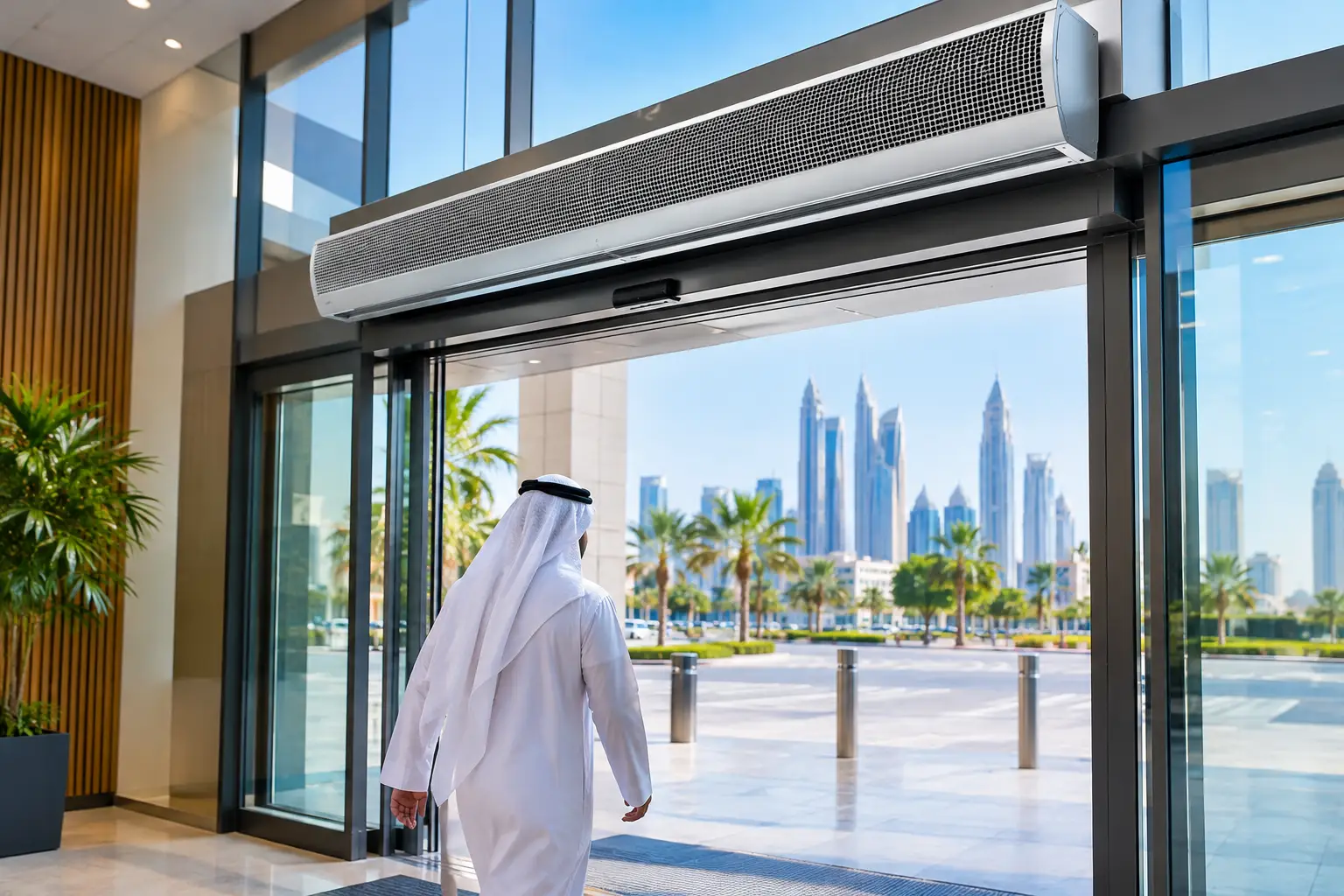
For businesses operating in Dubai, Riyadh, Doha, Muscat, Cairo, Lagos, Nairobi, and similar hot-climate markets, entrance climate control is not a cosmetic upgrade. It is part of protecting HVAC performance, indoor comfort, hygiene conditions, and operational continuity at high-traffic openings.
What Is the Dynamic Series Intended to Address?
The New Dynamic Series sits within the FreezeeX commercial and industrial air curtain range. Its role is to create a controlled air barrier across an open doorway, helping separate conditioned indoor air from the harsher outside environment without preventing people, trolleys, or goods from moving through the entrance.
An air curtain should not be viewed as a replacement for properly designed cooling, doors, or building-envelope measures. It is an entrance-focused control measure that supports them. When a door must remain open frequently, a correctly selected unit can reduce the direct pathway through which hot air, humidity, airborne dust, and flying insects enter.
That distinction matters for facility managers. The best result comes from treating the air curtain as part of the entrance strategy, not as an isolated piece of equipment selected only because an opening looks large.
Why Does Entrance Air Isolation Matter in Desert and Tropical Climates?
In GCC, MENA, and African commercial environments, outdoor conditions can place exceptional pressure on indoor cooling systems. Desert heat and dust are common concerns in locations such as the UAE and Saudi Arabia. Coastal humidity can be equally disruptive in parts of the Gulf and tropical markets. A frequently opened entrance exposes the conditioned space to both the temperature and contaminant load outside.
The operational effects can include:
- Increased cooling demand near entrances and reception zones
- Reduced comfort for customers, staff, patients, or visitors
- Greater dust ingress into retail, warehouse, and processing areas
- Higher risk of insects entering food-facing or hospitality operations
- More humidity entering spaces where cleanliness or product handling matters
A properly applied air curtain helps create Powerful Air Isolation at the point where these pressures begin. It can support Smarter Energy Savings by reducing avoidable cooling loss, although actual energy results depend on door use, building pressure, HVAC capacity, climate, and installation quality.
Dynamic Series Review: Where It May Be a Good Fit
The right air curtain series depends on the opening and the operating environment. The Dynamic Series should be evaluated by project requirements rather than selected through a generic “one model fits all” approach.
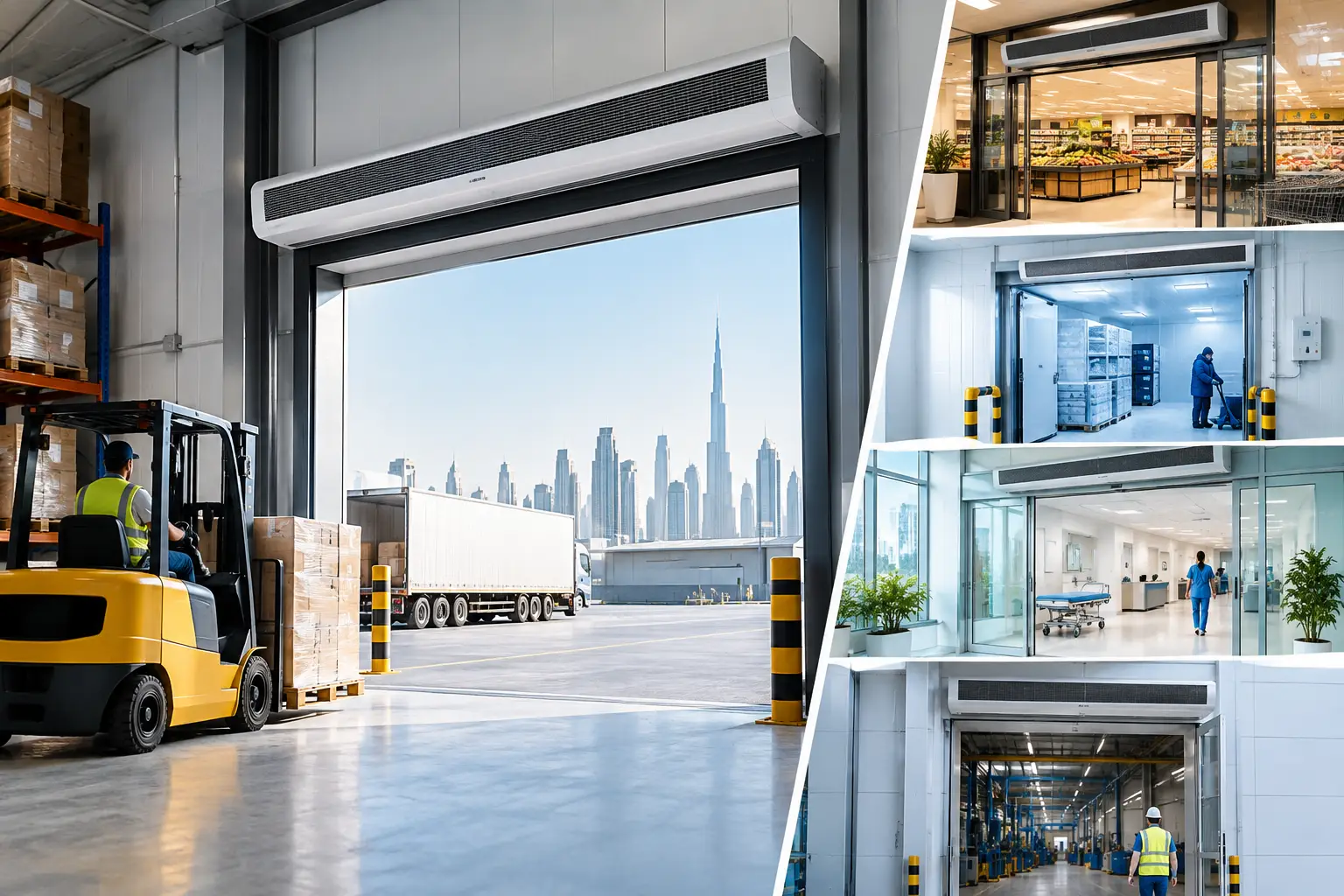
It may be relevant where a commercial or industrial facility has regular pedestrian, trolley, or goods movement and needs better separation between indoor and outdoor conditions. Typical applications may include retail entrances, supermarkets, shopping malls, hotels, restaurants, warehouses, logistics facilities, factories, and commercial service counters.
High-Traffic Commercial Entrances
Retail and hospitality properties often face a difficult balance: the entrance must remain welcoming and accessible, but indoor comfort must be maintained close to the door. In a mall-facing store, hotel lobby, or supermarket entrance, frequent opening cycles can make the conditioned zone near the doorway feel noticeably different from the rest of the building.
For these environments, the specification discussion should focus on opening width and height, traffic frequency, mounting position, and the relationship between the entrance and existing HVAC supply. A visually neat installation may matter, but it cannot take priority over effective coverage of the full opening.
Warehouses, Logistics, and Industrial Operations
Warehouses and industrial facilities face a different set of demands. Doors may be larger, traffic may involve carts or forklifts, and the building may be exposed to dust, vehicle movement, or fluctuating internal pressure. A small commercial solution may not be suitable simply because it fits physically above the door.
For heavy-duty applications, teams should compare the Dynamic Series requirement against the broader FreezeeX Industrial Centrifugal Series. The critical question is not which name sounds more powerful. It is whether the selected system can be engineered around the actual opening, mounting height, operating hours, and exposure level.
Hygiene-Sensitive Facilities
Hospitals, pharmaceutical operations, food processing facilities, and cold storage support areas often require closer consideration of air movement and contamination control. An air curtain can help limit the entry of airborne dust, insects, humidity, smoke, or fumes through active entrances, but it is not a substitute for a facility’s hygiene protocols, pressure regime, or access controls.
Specifiers should clearly define the purpose of the opening. Is it primarily a staff entrance, a delivery point, a customer door, or a transition between operational zones? That answer determines the correct performance objective and reduces the risk of applying a general entrance solution to a specialized process requirement.
What Should a Project Team Evaluate Before Specifying It?
A useful Dynamic Series review starts with site conditions, not a catalog comparison. Air curtain performance is closely tied to installation context. Two identical doorways on paper can need different recommendations when one faces prevailing dust, one is recessed, and one opens directly into a highly cooled sales floor.
Use the following specification workflow when preparing an inquiry:
- Measure the clear opening width and height, including the usable area when doors are fully open.
- Identify the mounting arrangement, such as above the doorway, within a recessed ceiling zone, or another approved project position.
- Record the type and frequency of traffic, including pedestrians, shopping carts, delivery trolleys, or material-handling movements.
- Describe external conditions, including direct sun, desert dust, humidity, fumes, nearby vehicle activity, and wind exposure.
- Confirm the indoor objective: comfort retention, dust control, insect reduction, humidity control, or support for a hygiene-sensitive entrance.
- Review the existing HVAC layout and whether supply air, return paths, or building pressure could affect the air barrier.
This information allows a supplier to recommend a suitable configuration rather than simply matching a unit to the door width. It also gives MEP consultants and contractors a clearer basis for coordination before ceilings, electrical provisions, and entrance details are finalized.
How Does the Dynamic Series Compare With Other Air Curtain Approaches?
FreezeeX offers several series because entrance conditions vary. The table below is a selection framework, not a claim that one range is automatically better than another.
| Requirement | Air Curtain Approach to Evaluate | Why It Matters | |—|—|—| | Architecturally discreet ceiling integration | Recessed Ceiling Air Curtains | The mounting concept must suit the ceiling design while still covering the opening effectively. | | General commercial entrances | Commercial Centrifugal Flow Series or Commercial HiFi Plus Series | Commercial applications need a solution matched to traffic, opening geometry, and comfort expectations. | | Dynamic, frequently used entrances | New Dynamic Series | Review it where the project needs a commercial entrance air barrier suited to active operations. | | Large or demanding industrial openings | Industrial Centrifugal Series | Heavy industrial use calls for evaluation of operating conditions, scale, and exposure. |
The trade-off is straightforward. A more discreet option may suit a finished retail or hotel environment, while a more industrial-focused solution may be necessary where the opening is larger or environmental exposure is more severe. The final choice depends on the application, not on a single feature or product label.
Common Specification Mistakes to Avoid
The most common mistake is sizing an air curtain only by door width. Width matters, but so do mounting height, air path, exposure, and the behavior of people and goods moving through the opening. A system that appears adequate on a drawing may underperform if it is mounted too high, interrupted by structural elements, or installed at an entrance subject to strong outdoor air movement.
Another mistake is assuming that all entrances have the same objective. A front-of-house retail door, a restaurant service opening, and a dusty warehouse access point do not present the same challenge. Their priorities may range from customer comfort to insect reduction or dust containment.
Finally, avoid treating the air curtain as a last-minute mechanical addition. Early coordination helps ensure practical mounting space, appropriate power provisions, access for planned service, and alignment with HVAC and architectural details.
Request a Dynamic Series Assessment for Your Entrance
The most effective air curtain recommendation begins with a clear picture of the opening and its daily operating conditions. FreezeeX works with contractors, consultants, facility teams, and project developers to assess entrance size, mounting position, traffic volume, climate exposure, and HVAC requirements before preparing a quotation.
For facilities exposed to intense heat, tropical humidity, desert dust, and continuous traffic, a well-matched Dynamic Series solution can help protect the conditioned indoor environment where it is most vulnerable. Share your project details with the FreezeeX team to request a consultation and specification-led quote.