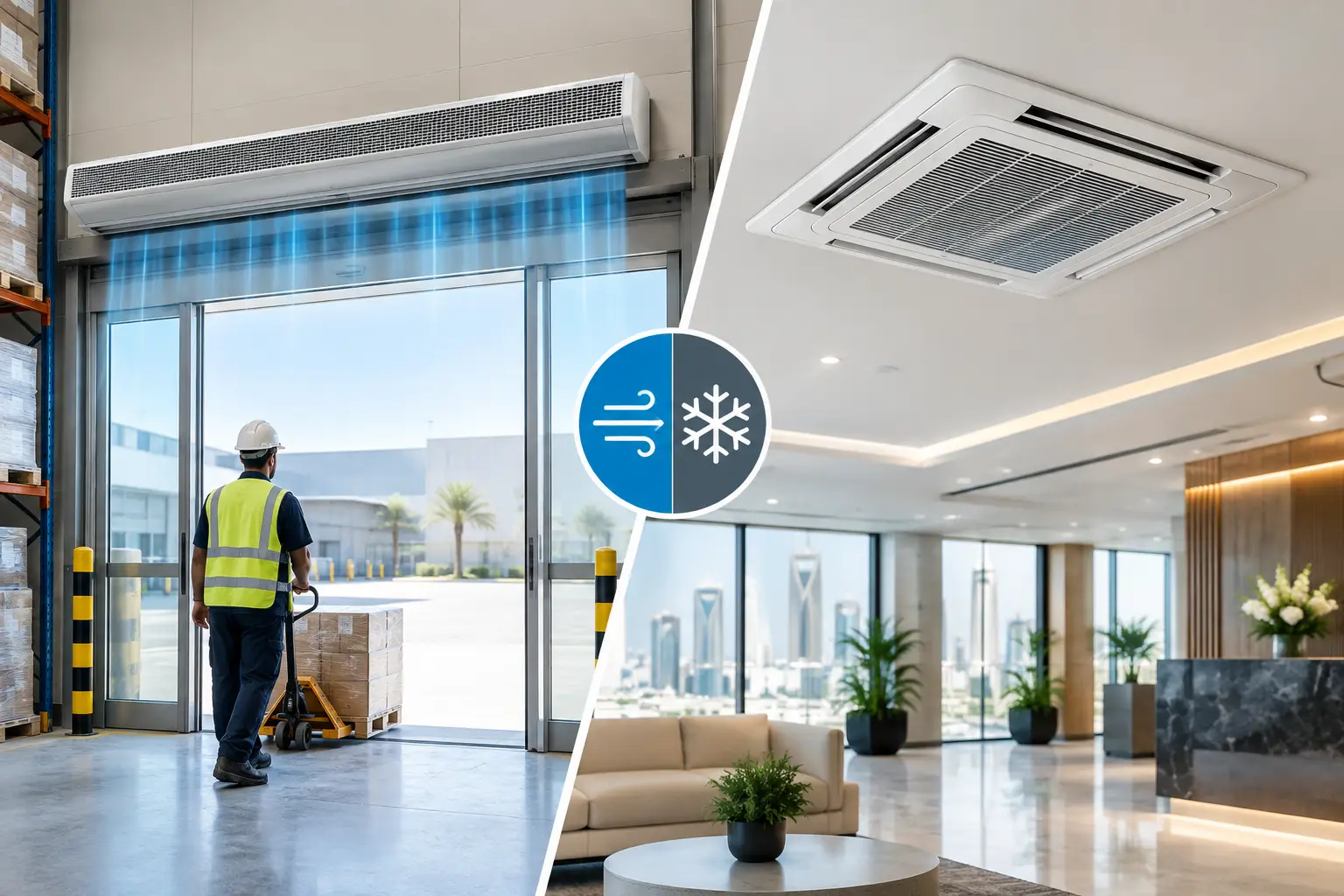
When a loading bay, warehouse entrance, or retail back-of-house door stays open in 110°F heat, the problem is not just comfort. It is cooling loss, dust intrusion, humidity drift, insect entry, and HVAC equipment working harder than it should. That is why top industrial doorway climate solutions matter most in facilities across Dubai, Riyadh, Doha, Lagos, Nairobi, and other high-heat markets where open-door traffic is part of daily operations.
For facility managers and project teams, doorway climate control is rarely a cosmetic upgrade. It is an operational control measure. The right system protects conditioned air, stabilizes indoor environments, supports hygiene standards, and reduces avoidable energy waste at one of the weakest points in the building envelope.
What the top industrial doorway climate solutions actually solve
Industrial and commercial doorways create a constant pressure point between indoor and outdoor conditions. In desert and tropical climates, that pressure point becomes more aggressive. Hot outside air pushes in, cooled indoor air escapes, and every door cycle increases the burden on the HVAC system.
The result shows up quickly. Cold rooms lose temperature stability near the entrance. Hypermarkets develop warm zones and higher humidity close to delivery doors. Industrial plants pull in airborne dust that settles on stock, equipment, and work areas. Hospitality and food-service facilities face the added problem of flying insects entering through service doors and main access points.
The best doorway climate solutions are designed to create a controlled barrier at the opening without slowing movement of people, carts, pallets, or goods. That sounds simple, but performance depends on matching the solution to door height, width, traffic pattern, pressure conditions, and the site climate itself.
Air curtains lead the top industrial doorway climate solutions
For most high-traffic facilities, industrial air curtains are the most effective and commercially practical answer. They create a high-velocity air stream across the doorway opening, forming an invisible barrier that helps separate indoor and outdoor air masses.
When specified correctly, an air curtain can reduce conditioned air loss while also limiting dust, fumes, humidity, and insects. This is especially valuable in hot-weather regions where entrance openings are frequent and prolonged. In these environments, a standard door closer or strip curtain often becomes a compromise. It may slow movement, create maintenance issues, or simply fail to provide enough climate separation for demanding operations.
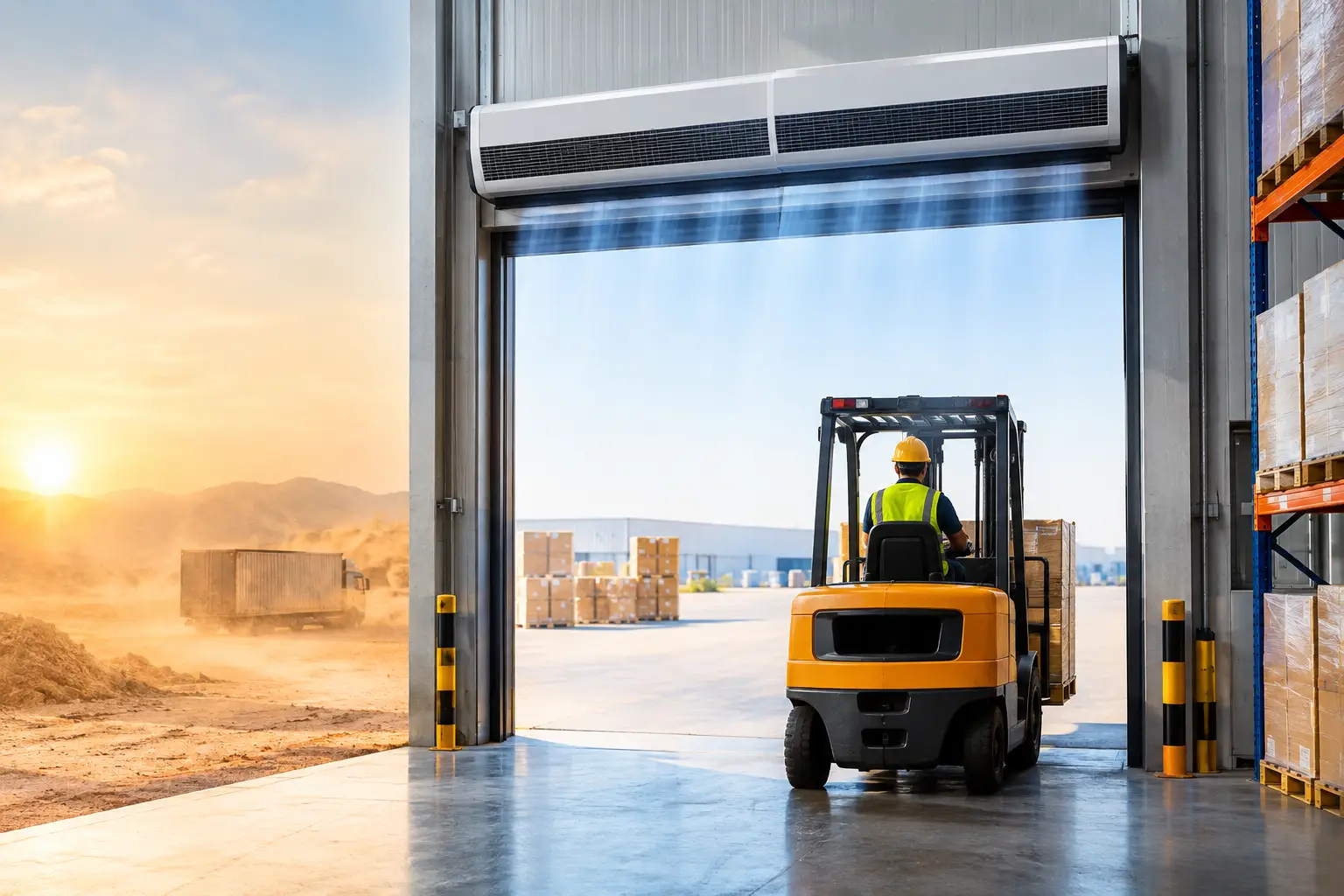
Air curtains offer stronger performance because they protect the opening while keeping the entrance usable. That matters in facilities with forklifts, customer traffic, repeated deliveries, or 24-hour operations.
Why industrial air curtains outperform passive barriers
Passive doorway barriers still have a role, but they are not always the strongest option for active industrial sites. PVC strip curtains can help in lower-traffic zones or internal partition areas, yet they are less suitable where visibility, hygiene, and uninterrupted movement are priorities. High-speed doors can reduce exposure time, but they do not protect the opening while the door is open.
An industrial air curtain works during the period that matters most – when traffic is moving through the doorway. That is the key difference. Instead of only reducing open-door time, it actively manages the opening itself.
That said, performance is not automatic. Poorly sized units, weak airflow, bad mounting height, or incorrect angle settings can reduce effectiveness. The equipment has to match the actual site conditions, not just the door dimensions on a drawing.
Choosing top industrial doorway climate solutions by application
The right solution depends on what the doorway is exposed to and what the facility is trying to protect.
In cold storage transition areas, the main goal is usually reducing temperature exchange and condensation risk at access points. Here, strong and consistent air velocity is critical, especially where doors connect chilled spaces to warm loading or prep areas. A unit that is too weak may look fine on paper but fail once humidity and traffic increase.
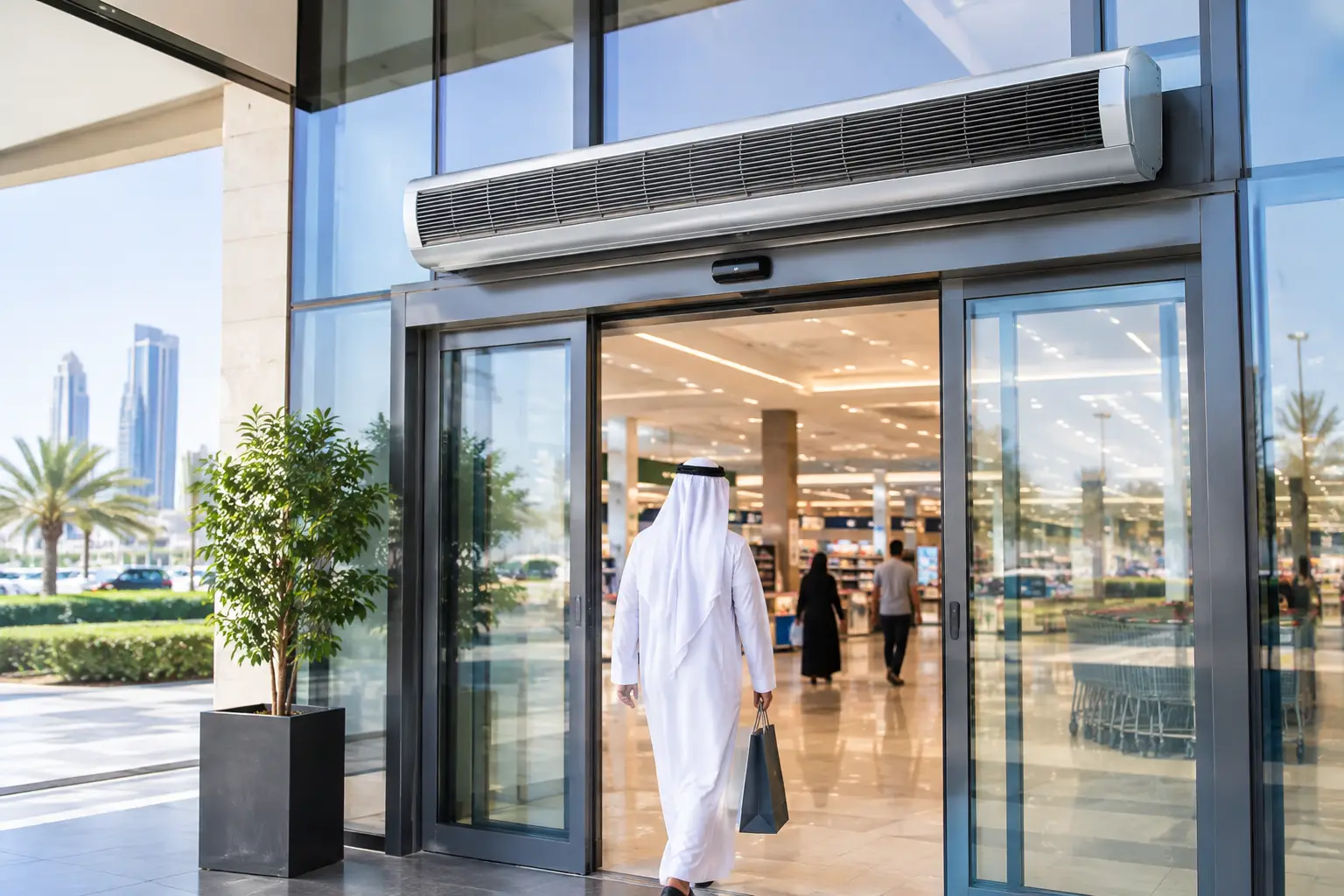
In hypermarkets, malls, and large commercial entrances, the focus is broader. Cooling retention matters, but so do customer comfort, insect control, and a cleaner entrance zone. Noise levels may also matter more in these spaces than they do in a workshop or plant. The best answer is often a commercial or industrial-grade air curtain with the correct blower profile for long operating hours and visible public-facing use.
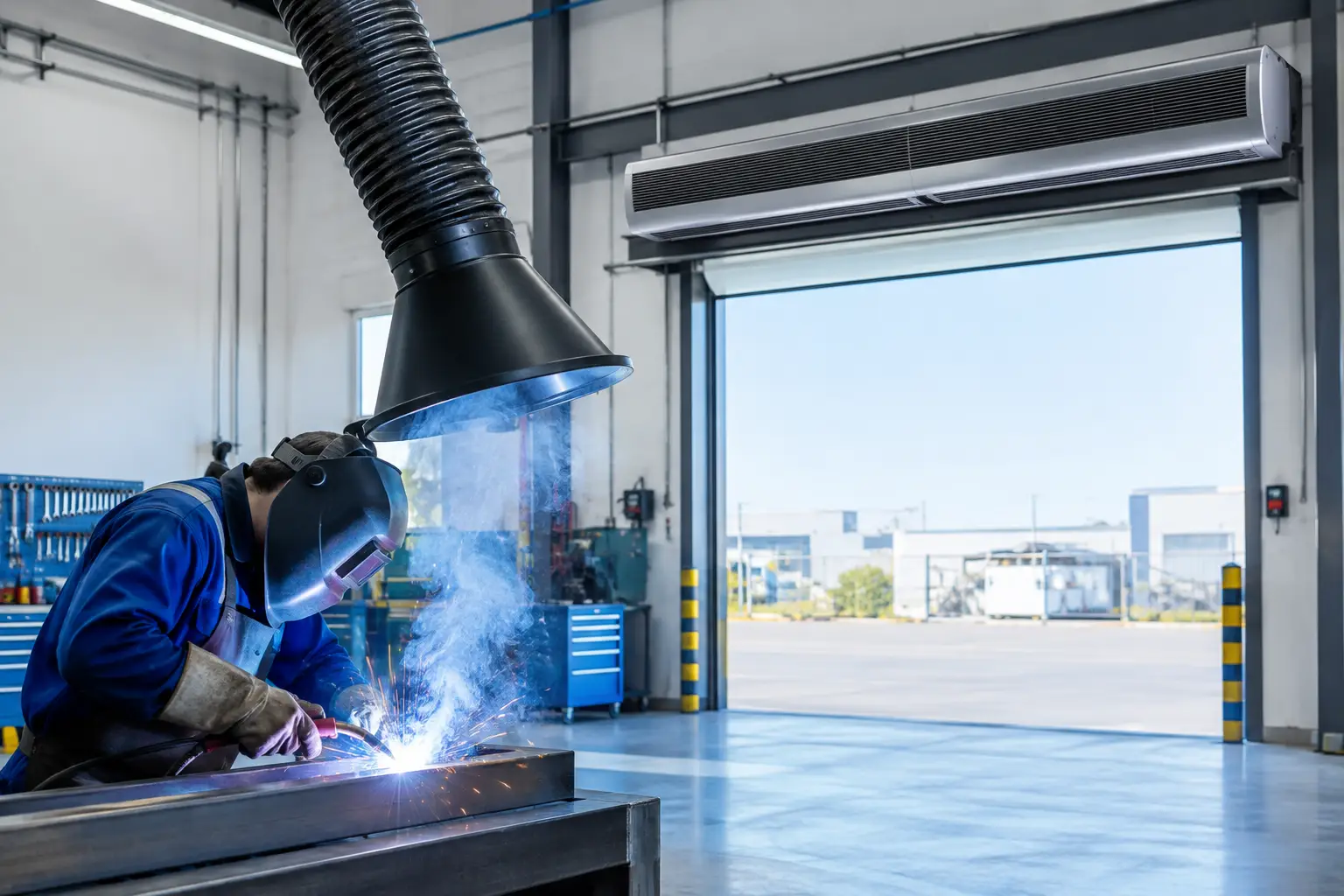
In industrial plants and workshops, dust exclusion is often the priority. Entrances that open onto yards, service roads, or production support areas need stronger air throw and durable construction. Heat resistance, serviceability, and motor reliability become more important than aesthetics.
For hospitality service doors and food-related operations, hygiene and air isolation usually lead the decision. The system must help reduce flying insect entry while supporting a more stable indoor environment. In these cases, consistent coverage across the full door width matters more than headline motor power alone.
Climate matters more than many specifications admit
Not every doorway solution performs the same way in Cairo, Muscat, or Casablanca as it would in a mild environment. Extreme outdoor heat, sand exposure, coastal humidity, and long operating hours put real pressure on equipment performance.
This is where many buying decisions go wrong. Teams compare products by basic airflow numbers only, without considering how those units behave under harsh ambient conditions. A system may be rated attractively but still struggle in a dusty industrial yard, a humid service corridor, or a large entrance exposed to frequent wind pressure.
Top industrial doorway climate solutions for MENA and African markets must account for climate reality, not ideal lab conditions. That means selecting equipment built for sustained use in high-temperature environments, with durable blower systems, appropriate housing, and installation configurations that suit actual site exposure.
FreezeeX positions its air curtain systems around this exact requirement – climate-adapted entrance protection for tropical and desert conditions where standard selection shortcuts usually fail.
What specifiers should evaluate before selecting a system
The first question is not brand or model. It is what the doorway is costing the facility today. If the opening is causing cooling loss, humidity fluctuations, pest risk, customer discomfort, or poor air cleanliness, then the system should be evaluated as an operational control investment, not just a line item.
From there, specifiers need to assess mounting height, door width, opening frequency, and whether the doorway faces direct outdoor exposure. A recessed entrance in a controlled lobby behaves differently from a loading bay with constant vehicle movement and crosswinds.
Motor type and blower design also matter. Centrifugal flow systems are often preferred for stronger, more stable air distribution in demanding commercial and industrial settings. They generally support better air coverage and operational consistency than lighter-duty approaches intended for less exposed doorways.
Noise is another trade-off. In a public commercial environment, quieter operation may influence model choice. In a heavy industrial application, stronger performance usually takes priority. Neither choice is wrong. It depends on the balance between exposure level and occupant expectations.
Maintenance access should not be overlooked. In high-use facilities, serviceability affects lifecycle cost. Filter protection, motor durability, and ease of cleaning all influence long-term value, especially where airborne dust is common.
Installation quality decides whether the investment pays off
Even strong equipment underperforms when installation is treated casually. Placement height, discharge angle, and full-width coverage determine whether the air stream actually seals the opening. Gaps at the sides or weak velocity at floor level reduce the barrier effect and weaken the business case.
Controls also matter. Some sites benefit from door-linked activation, while others need continuous operation during open hours. In facilities with multiple entrances, zoning strategy can improve both effectiveness and energy use. A one-size-fits-all setup rarely delivers the best result.
This is why consultation-led selection is usually the smarter route for industrial buyers. Facility conditions, door geometry, and traffic type should guide the recommendation. A quote built around application fit is more valuable than a generic catalog comparison.
Why the best solution is usually the one that fits the doorway, not the biggest unit
Bigger is not always better. Oversized systems can increase noise, waste energy, and create turbulence without improving separation. Undersized units, of course, fail outright. The goal is balanced performance – enough velocity and coverage to create reliable air isolation without introducing unnecessary operating cost.
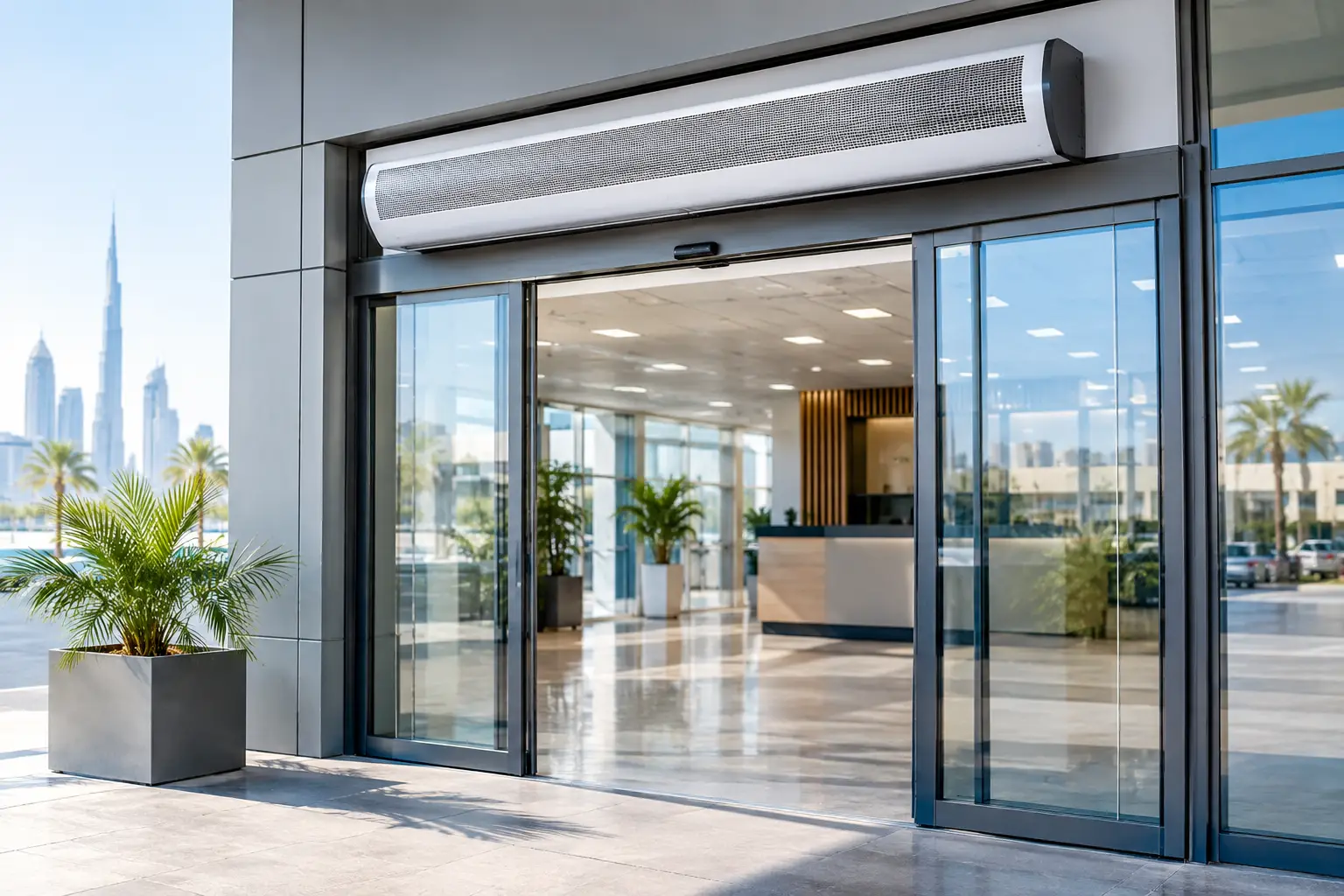
For many facilities, the strongest result comes from matching the air curtain category to the entrance type. Recessed ceiling models may work well in architecturally finished commercial spaces. Heavy-duty industrial centrifugal units are better suited to exposed doors, plants, logistics areas, and larger openings. Specialized commercial systems can bridge the gap where aesthetics, airflow, and continuous use all matter.
That fit-for-purpose approach is what separates a doorway climate solution from a doorway accessory.
If you are evaluating top industrial doorway climate solutions for a facility in the GCC, MENA, or African markets, the next step should be a site-specific assessment. Door height, exposure, traffic volume, and climate conditions all affect the correct selection. Request a consultation or quote based on your actual application, and choose a system built to hold performance in desert heat, tropical humidity, and real industrial operating conditions.