
When an entrance air curtain starts underperforming, the first signs are rarely dramatic. Cooling loss creeps up, dust appears deeper inside the facility, insects get through more often, and door zones feel harder to control during peak traffic. In hot, humid, and desert-climate sites, an air curtain maintenance checklist is not a paperwork exercise. It is part of protecting energy performance, hygiene standards, and entrance reliability.
For facility managers, MEP contractors, and operators of retail, hospitality, industrial, and cold-chain sites, maintenance should be tied to operating conditions, not just the calendar. A hypermarket entrance in Dubai, a loading bay in Riyadh, or a food facility in Lagos will not place the same stress on an air curtain as a low-traffic internal doorway. Dust load, humidity, operating hours, and door width all change what good maintenance looks like.
Why an air curtain maintenance checklist matters
Air curtains work by creating a controlled air barrier across an opening. That barrier has to be strong enough, uniform enough, and properly aligned to limit the transfer of hot air, humidity, dust, and flying insects. If airflow drops, becomes uneven, or shifts off target, performance falls quickly even if the unit still appears to be running normally.
That gap between operation and performance is where many sites lose money. Fans may still turn, but a dirty intake, worn blower assembly, loose electrical connection, or misaligned discharge angle can reduce real isolation performance. In tropical and desert environments, where cooling systems already work hard, even a small decline at the entrance can increase HVAC load and affect comfort in occupied zones.
A structured checklist helps teams catch gradual issues before they become service calls, complaints, or energy waste. It also gives procurement and operations teams a clearer basis for deciding when a unit needs adjustment, component replacement, or a higher-duty specification.
The core air curtain maintenance checklist
Start with the simplest question: is the air curtain delivering a full, stable air stream across the opening? A visual and operational check often reveals the first warning signs. Listen for unusual fan noise, vibration, or inconsistent motor sound. If one section of the doorway feels weak while another feels strong, airflow distribution may already be compromised.
Next, inspect the intake area and any filter net or protective screen. In high-dust environments such as warehouses, workshops, roadside commercial sites, and logistics facilities, intake blockage is one of the fastest ways to reduce performance. Dust buildup restricts air volume, makes motors work harder, and can raise internal temperatures over time.
The discharge outlet should also be checked for dirt accumulation, bent louvers, or physical obstruction. On units installed above busy entrances, this can be overlooked because the equipment remains out of direct sight. But outlet contamination or damaged directional vanes will affect air throw and barrier shape.
Electrical inspection matters just as much as airflow inspection. Confirm terminal tightness, stable power supply, proper control response, and clean internal wiring paths. Heat, vibration, and long operating hours can loosen connections over time. In high-traffic commercial properties, intermittent control faults are often misread as product weakness when the actual issue is poor maintenance discipline.
Motor and blower condition should be assessed for wear, dust loading, and balance. Centrifugal models in particular depend on clean, stable rotating assemblies to maintain designed air volume. If the blower wheel is dirty or imbalanced, you may see more noise, lower throw, and premature bearing stress.
Mounting security is another checkpoint that should not be skipped. A unit that has shifted slightly, or one with loosened brackets after months of vibration, may no longer direct air correctly at the threshold. This becomes more critical on wide commercial entrances and industrial openings where precision matters.
Finally, review control settings and operating schedules. An air curtain that runs at the wrong speed, starts late, or is disconnected from door-trigger logic can waste energy while still failing to protect the entrance. The right maintenance checklist always includes controls, not just mechanical parts.
What to check weekly, monthly, and quarterly
The best checklist is not overly complicated. It should match the site’s risk level and traffic profile.
Weekly checks are usually visual and operational. Confirm the unit starts correctly, airflow feels even, noise is normal, and no obvious dust buildup is visible at intake or discharge points. In facilities with high contamination loads, these checks may need to happen more than once per week.
Monthly maintenance should include cleaning of intake screens or filter nets, wiping accessible surfaces, checking discharge angle, and verifying that the air stream reaches the floor line or target zone as designed. This is also the right time to look for vibration, mounting looseness, and signs of electrical overheating.
Quarterly inspections should go deeper. Open the unit where service access allows, inspect blower assemblies and motors, tighten electrical terminals, review control sequence, and assess wear on key components. For industrial and near-continuous-use sites, quarterly maintenance is often the minimum standard rather than the preferred one.
The schedule changes when the environment is harsher. Facilities in Doha, Muscat, Cairo, or Nairobi may deal with very different dust, humidity, and door-use patterns. The right interval depends on actual operating stress. That is why a generic schedule copied from another building often falls short.
Common maintenance failures that reduce performance
The most common issue is assuming that if the unit is powered, it is performing. Air curtains can lose a meaningful percentage of effectiveness before complete failure occurs. This is especially expensive at entrances where conditioned air is escaping throughout the day.
Another common problem is cleaning the visible exterior but ignoring internal dust on blowers and motor compartments. Surface cleaning improves appearance. It does not restore airflow.
Control mismatch is another hidden failure point. If a unit was specified for one door condition but later paired with a different opening schedule, speed setting, or sensor logic, barrier performance can drop. This is common after renovations, tenant changes, or entrance automation upgrades.
Underservicing in extreme climates is also a recurring issue. Desert dust, coastal humidity, and long daily run hours accelerate buildup and wear. Maintenance intervals that might be acceptable in a mild environment can be too slow for GCC and African commercial conditions.
Signs your site needs more than routine maintenance
Sometimes the checklist reveals a bigger issue. If airflow remains weak after cleaning, the problem may be motor degradation, blower wear, incorrect sizing, or installation mismatch. If the door opening has changed or traffic volume has increased, the original unit may no longer be suited to the application.
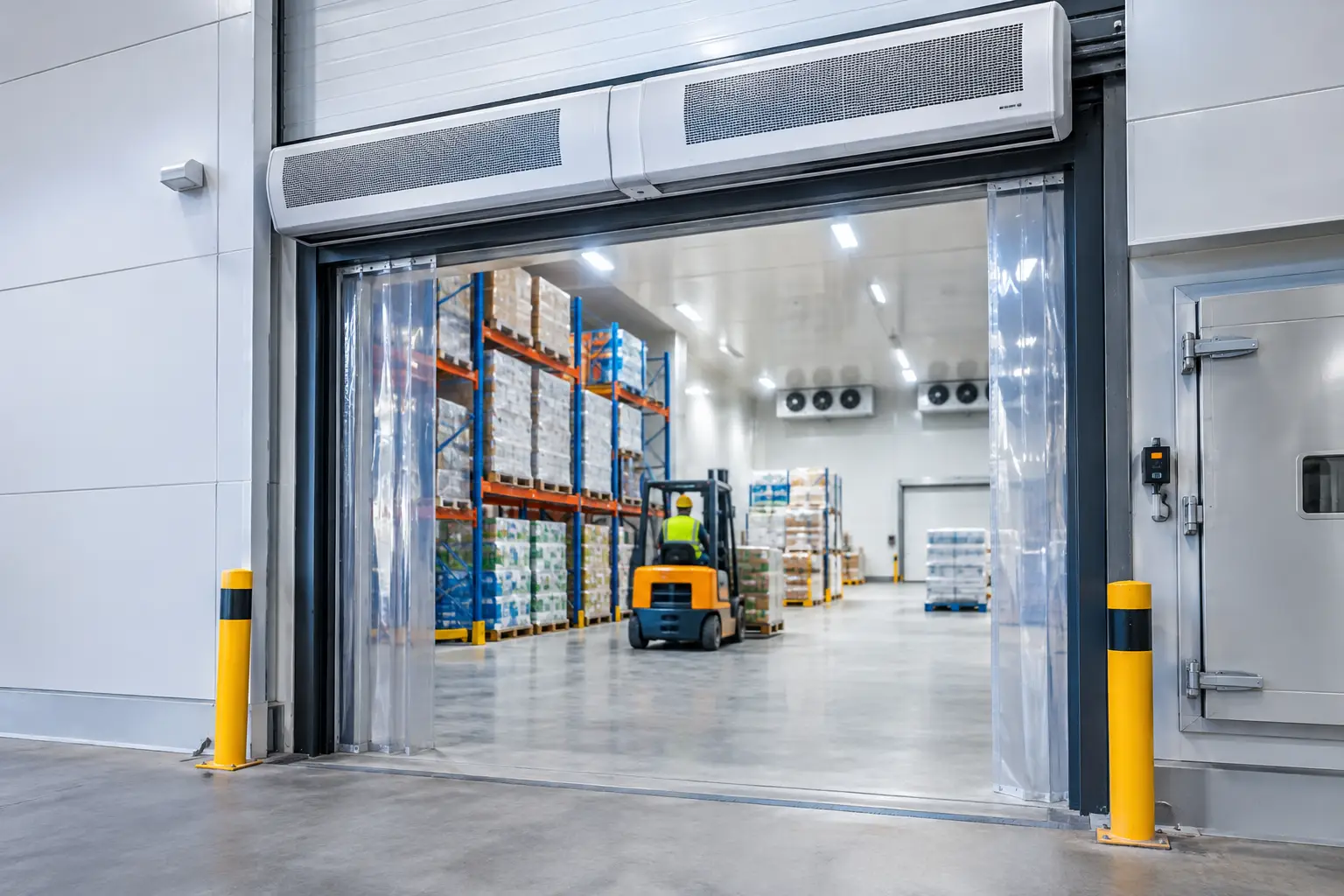
This is especially relevant in large-format retail, cold storage transitions, and industrial loading areas. A standard commercial unit may not hold performance where a heavier-duty centrifugal or high-velocity specification is required. In these cases, maintenance alone will not solve recurring cooling loss or ingress problems.
That is why serious operators look at maintenance results alongside application fit. A good service record helps identify whether the issue is upkeep, control logic, or product selection.
Using the checklist to protect energy and hygiene outcomes
Air curtain maintenance is not just about preventing breakdowns. It directly supports energy control, occupant comfort, and environmental separation. In hospitality and food-related environments, stable entrance protection helps reduce dust and insect penetration. In retail and office settings, it helps maintain a more consistent indoor climate near entrances. In industrial sites, it can support process control and cleaner internal zones.
For procurement teams and consultants, documented maintenance also improves lifecycle planning. Units that are cleaned, checked, and adjusted on schedule tend to hold performance longer and provide clearer data for replacement timing. That matters when budgeting across multiple sites or standardizing equipment across a portfolio.
A checklist should therefore be practical, repeatable, and tied to outcomes. If maintenance records show frequent airflow decline, repeated contamination, or control instability, the next step is not guesswork. It is a technical review of duty, environment, and specification.
In high-temperature markets, entrance protection is never static. Conditions change, traffic patterns change, and building pressure conditions shift with operation. The strongest approach is to treat maintenance as part of system performance, not just equipment care.
If your facility is seeing cooling loss, dust ingress, or unreliable entrance control, it may be time to review both maintenance practice and unit suitability. FreezeeX supports commercial and industrial buyers with specification-based guidance for tropical and desert-climate applications. If you need help assessing an existing installation or planning a replacement strategy, request a consultation or quote tailored to your site conditions.





9 Responses
Hey There. I found your blog using msn. This is a really well written article.
I’ll make sure to bookmark it and come back to read more of your useful info.
Thanks for the post. I will definitely return.
Thank you for your kind words and for taking the time to share your feedback. We’re delighted that you found the article informative and useful. We appreciate your support and look forward to providing more practical insights on air curtain selection, installation, and energy-efficient building solutions.
I am sure this article has touched all the internet viewers, its really really nice post on building up new web site.
Hey! Do you know if they make any plugins to help with SEO?
I’m trying to get my blog to rank for some targeted keywords but I’m not seeing very
good success. If you know of any please share.
Cheers!