
A loading bay in Riyadh or a supermarket entrance in Dubai can lose conditioned air in seconds. Once the door opens, hot air pushes in, fine dust follows, and the HVAC system starts paying for it. That is exactly why a desert climate air barrier guide matters for commercial and industrial facilities operating in extreme heat.
In desert markets, entrance control is not a minor comfort issue. It affects cooling cost, hygiene, equipment strain, and customer or staff experience. For facility managers, MEP contractors, and project consultants, the right air barrier strategy starts with one basic point: not every entrance needs the same air curtain, and not every air curtain will hold performance under desert conditions.
What a desert climate air barrier guide should solve
In moderate environments, an air barrier may be selected mainly for comfort at the doorway. In desert and hot-weather regions, the performance requirement is higher. The system has to resist strong temperature differentials, frequent door cycles, airborne dust, and in many locations, humidity swings tied to coastal or mixed climate conditions.
That changes the buying decision. The goal is not simply to blow air downward. The goal is to create stable air isolation across the full opening height and width so outside heat, dust, insects, and humidity are reduced before they enter the conditioned space.
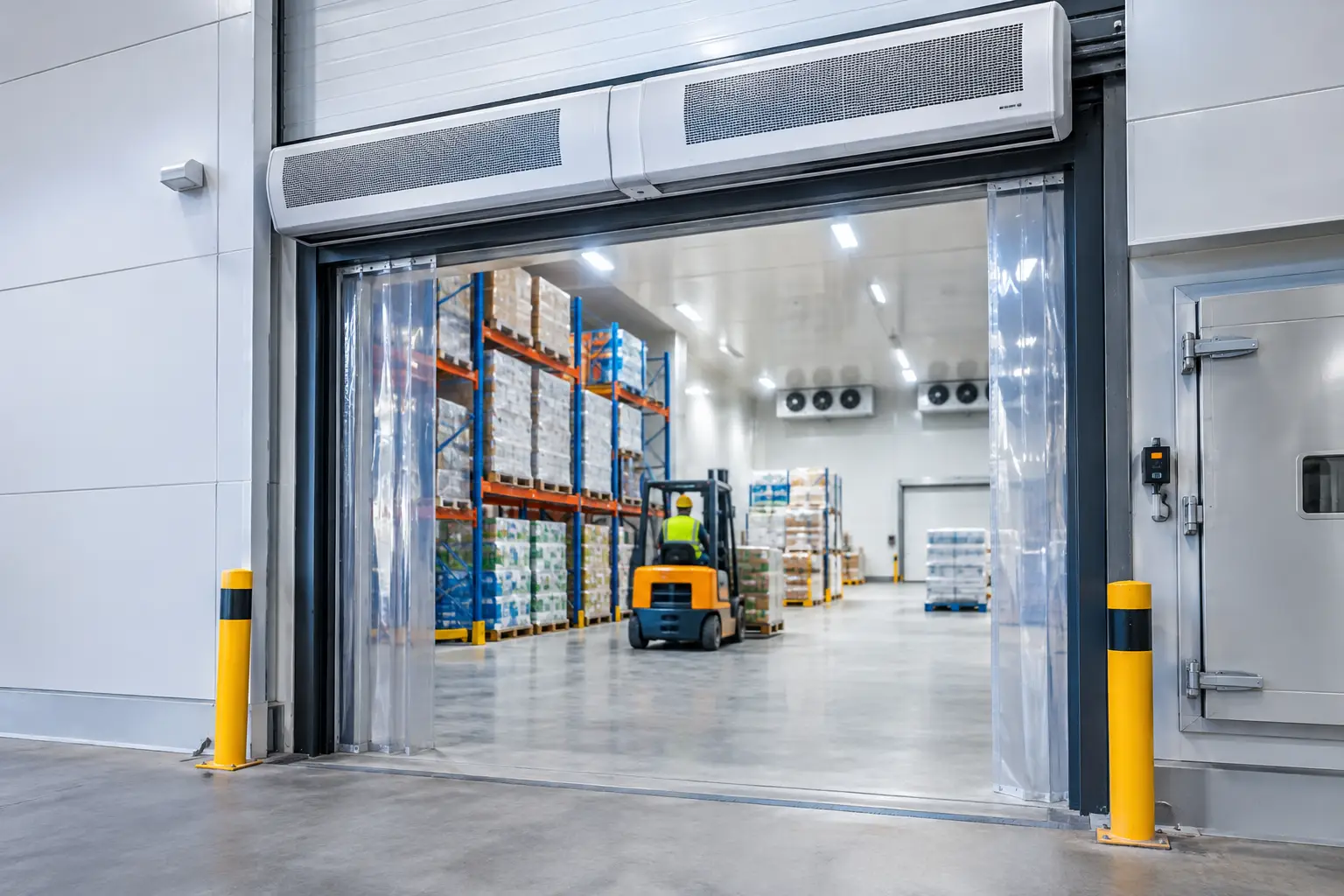
For a hotel entrance in Doha, the priority may lean toward guest comfort, quieter operation, and appearance. For a cold storage site in Abu Dhabi, the focus shifts to aggressive separation between ambient heat and controlled indoor temperature. In an industrial plant in Lagos or a warehouse in Nairobi, durability and dust resistance may matter more than aesthetics. The principle is the same, but the specification is not.
Why desert entrances are harder to protect
Desert-facing facilities deal with three pressure points at the same time. First, the outdoor air is extremely hot, which increases the cooling load every time doors open. Second, wind and pressure differences can disrupt the air stream if the air curtain is undersized or poorly positioned. Third, airborne particles are often part of the daily operating environment, especially around logistics sites, service entries, and industrial zones.
That means weak airflow is expensive. If the unit does not project a consistent stream to floor level, the barrier breaks. If discharge velocity is too low for the opening height, performance drops fast. If the casing, motor configuration, or intake protection is not suited to dusty operation, maintenance frequency rises and reliability falls.
This is why specifiers in desert and tropical climates should evaluate air curtains as part of entrance performance, not as decorative accessories. The barrier has to work under real traffic and real climate pressure.
Desert climate air barrier guide for equipment selection
The first question is opening type. A standard commercial doorway, a recessed lobby entrance, a hypermarket opening, and an industrial shutter door all create different demands. Width and height are only the start. Traffic frequency, door hold-open time, internal setpoint, and nearby pressure conditions all affect the required air curtain class.
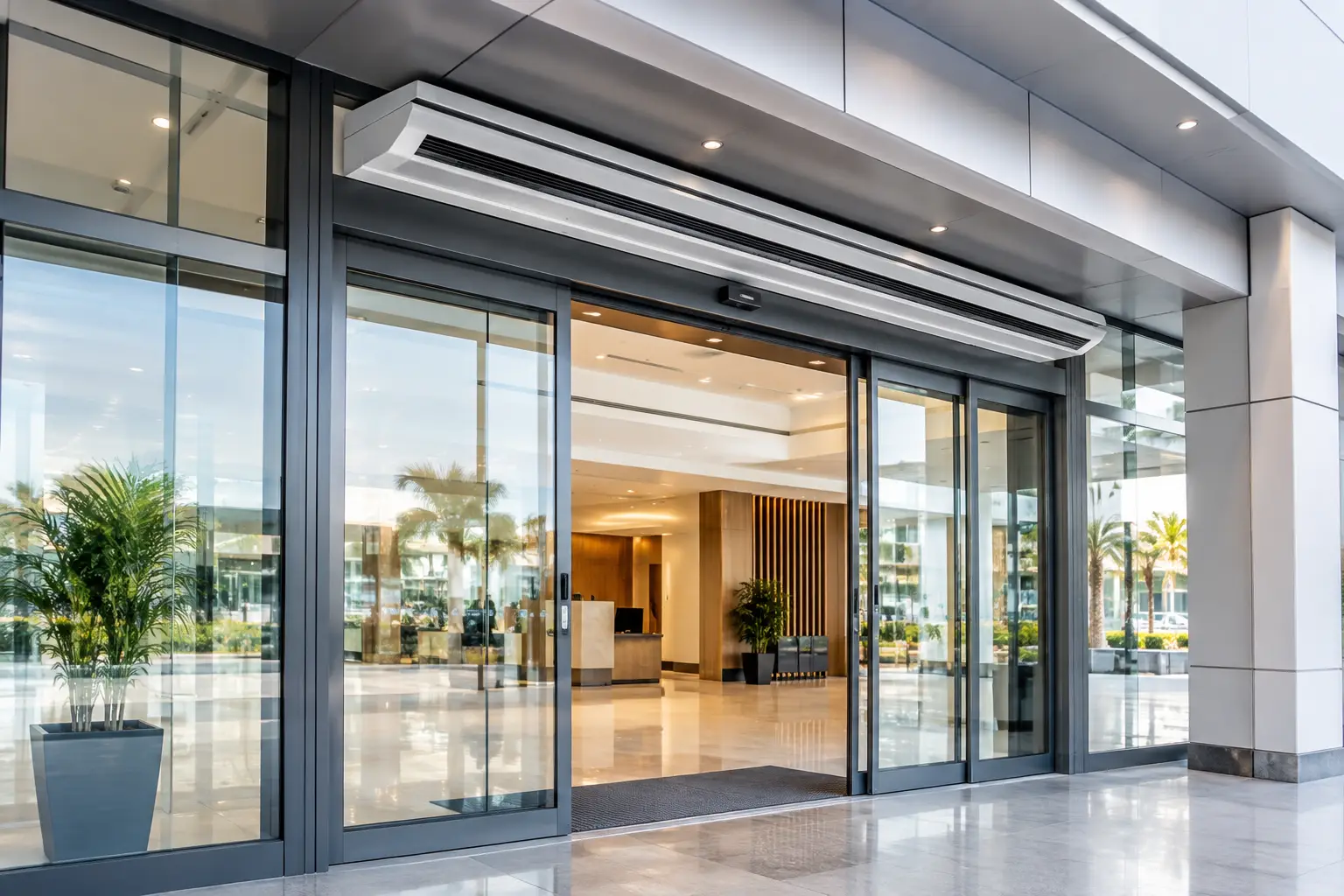
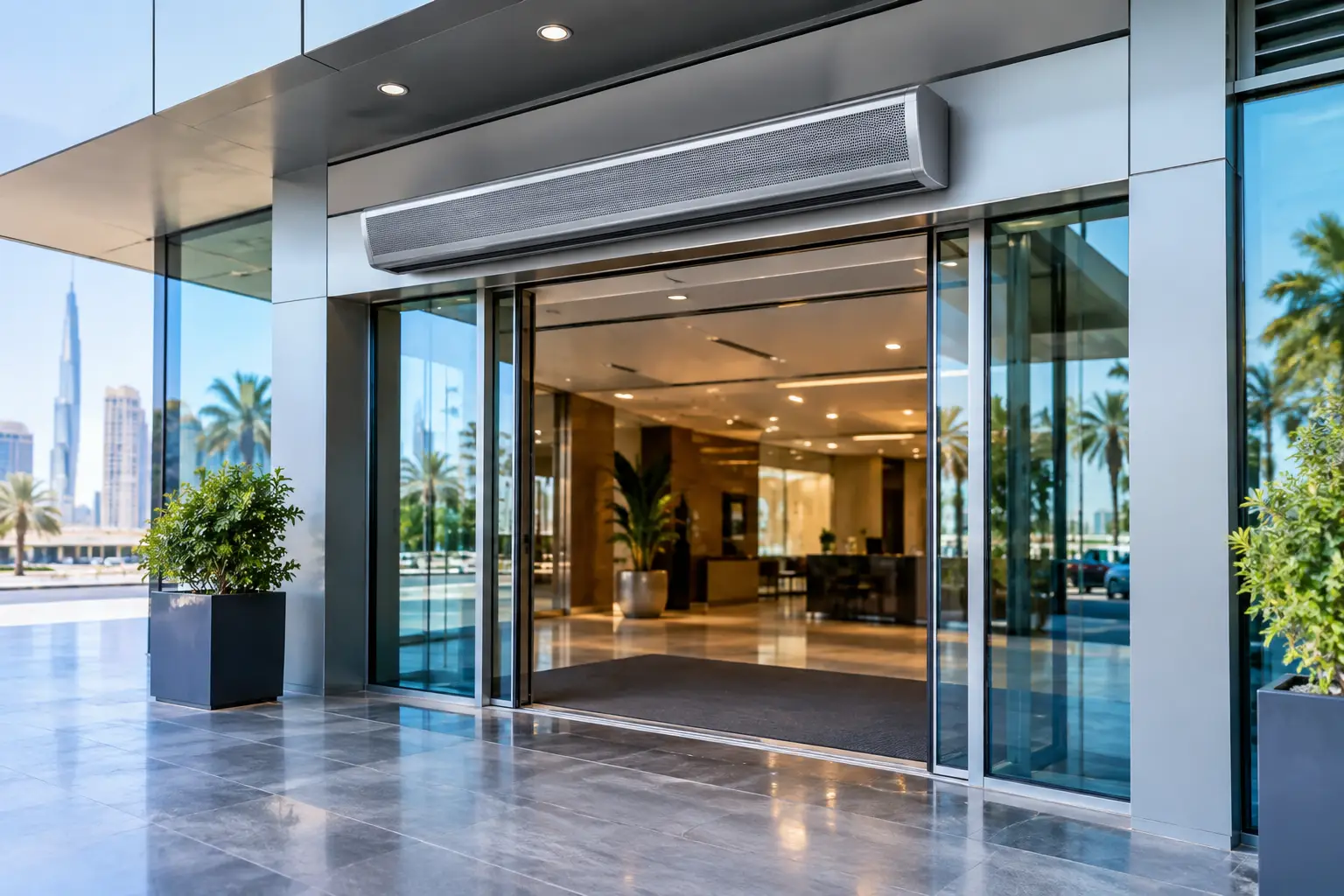
For lower to متوسط commercial openings, a commercial centrifugal unit often gives a practical balance of throw, noise control, and energy efficiency. In customer-facing environments such as retail, hospitality, and office buildings, that matters because the barrier has to perform without becoming disruptive.
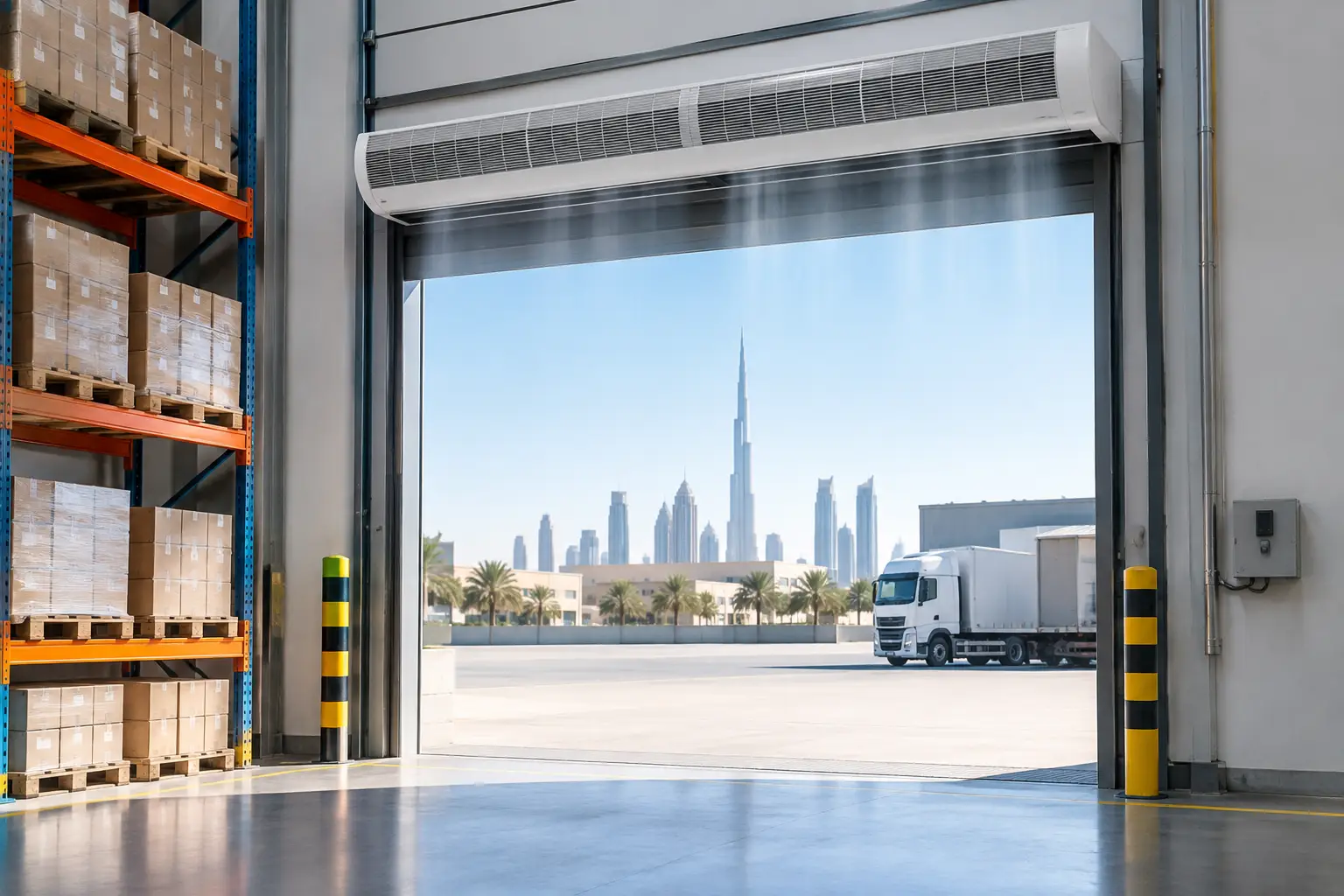
For larger openings or more severe conditions, industrial centrifugal series are usually the better fit. These applications need stronger air delivery, more durable construction, and better consistency across wider spans. A workshop, plant entrance, dispatch area, or cold room access point cannot rely on a light-duty commercial unit and expect stable separation in peak summer conditions.
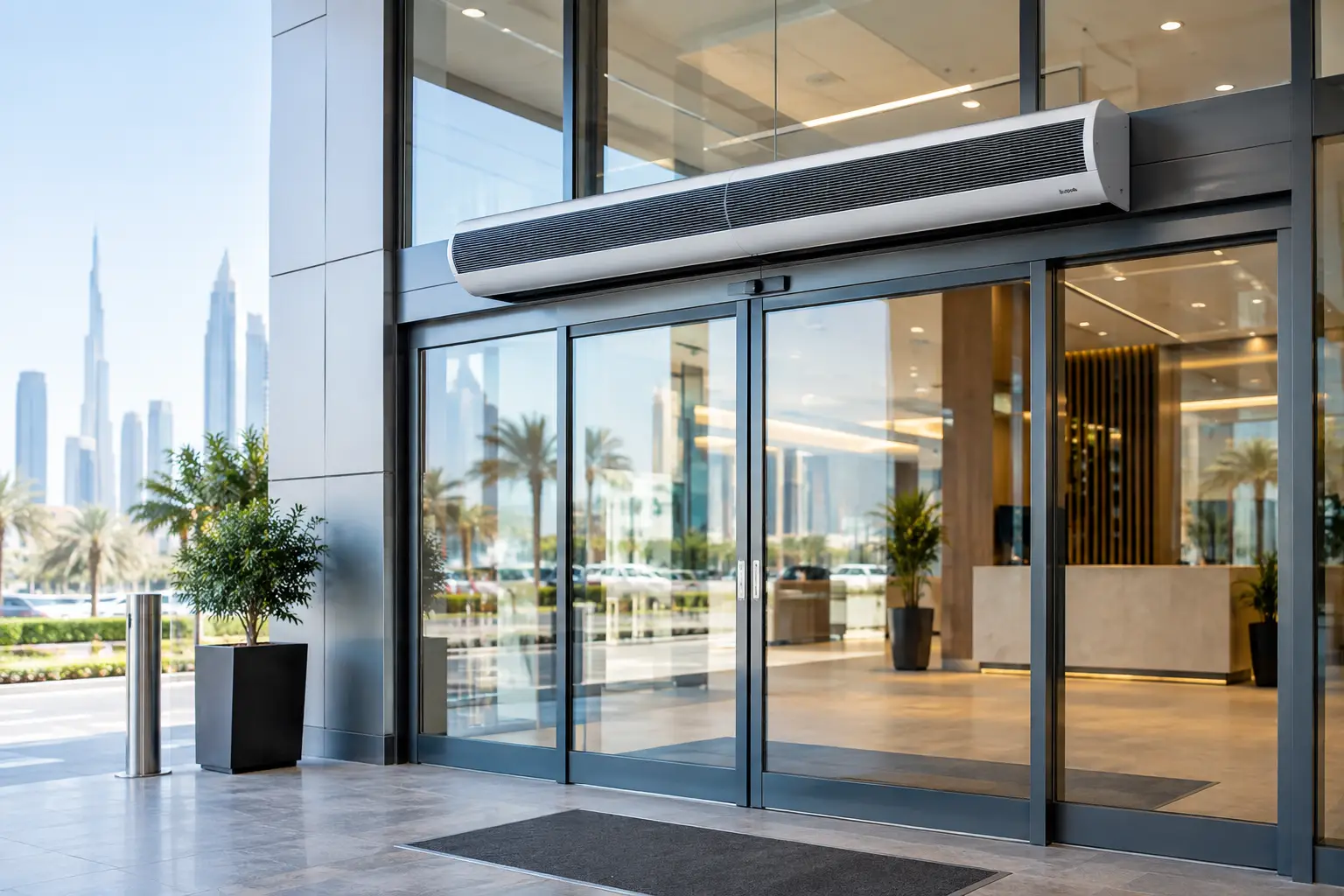
Recessed ceiling models suit projects where visual integration matters, but concealed installation should never come at the expense of service access or effective discharge placement. A clean architectural finish is useful only if the unit still delivers the required air stream at the actual opening.
The next question is motor and blower performance. In desert environments, consistent velocity matters more than headline claims. Spec sheets should be checked for installation height, airflow volume, and whether the unit is truly matched to the opening. Oversizing is not always ideal because it can create noise or uncomfortable drafts. Undersizing is worse because it gives the appearance of protection without the actual barrier effect.
The role of dust, insects, and humidity control
A good air barrier does more than reduce heat gain. In many GCC, MENA, and African operating environments, dust infiltration is a daily concern. Retail floors need cleaner entrances. Hospitality sites need a controlled first impression. Food-related operations and cold storage facilities need stronger hygiene control.
This is where air curtain design details matter. Intake protection, motor reliability, and stable airflow all affect how well the system performs over time. Fine particles can reduce efficiency if maintenance planning is ignored. Insect control also depends on proper air velocity and full-width coverage. Gaps at the side or weak flow near the floor reduce effectiveness quickly.
Humidity is more situational, but it matters in mixed climates and coastal cities such as Dubai, Muscat, or Casablanca. Facilities may face hot dry conditions part of the year and humid conditions at other times. An air barrier that reduces uncontrolled air exchange helps the HVAC system hold indoor conditions with less strain.
Installation decisions that change performance
Even a strong unit can underperform if the installation is wrong. Mounting height, alignment, and discharge angle have a direct effect on barrier integrity. The air stream should cover the opening cleanly and reach the floor zone without drifting too far inward or outward.
Door geometry matters too. Revolving doors, automatic sliding doors, loading entries, and service doors all behave differently. Nearby crosswinds, ceiling obstructions, and negative pressure from extraction systems can also weaken the barrier. That is why consultation-based selection is usually the smarter route for commercial projects. The equipment should be matched to the site, not selected by doorway width alone.
Noise expectations should also be addressed early. In hospitality and premium retail spaces, acceptable noise levels are lower than in industrial facilities. The right answer may be a different series, a different mounting approach, or a staged speed setting that balances protection with occupant comfort.
When the cheapest option costs more
Procurement teams are often under pressure to control upfront cost. That is reasonable. But in desert applications, a low-cost unit that fails to maintain air separation usually shifts the expense somewhere else – higher cooling demand, more dust ingress, faster HVAC cycling, and more frequent maintenance.
This is one of the most common specification mistakes in hot-climate projects. The air curtain is treated as a generic line item instead of an operating-cost control measure. Over time, the difference shows up in energy use, indoor cleanliness, and complaints from occupants or operations staff.
A better buying approach is to evaluate lifecycle value. Ask whether the unit is designed for high-temperature environments, whether it can handle the opening under actual traffic conditions, and whether the supplier can recommend the right product line based on application rather than price alone. That is especially relevant for high-throughput sites such as hypermarkets, logistics centers, industrial plants, and cold-chain facilities.
Where this guide matters most
The strongest use cases are facilities where doors open often and indoor conditions have commercial value. Hypermarkets, hotels, warehouses, cold storage operations, factories, workshops, office towers, and large retail entrances all benefit when the air barrier is engineered for climate pressure instead of treated as a standard accessory.
In cities such as Cairo, Doha, Kuwait City, and Riyadh, the common challenge is clear: keep cooled air inside while reducing dust, heat, and insect entry at busy doors. In African and MENA markets with mixed operating conditions, the same logic applies, but durability and maintenance planning often carry even more weight.
FreezeeX addresses this need with climate-adapted air curtain solutions built for tropical and desert performance, backed by specification support for contractors, consultants, and facility teams that need the right fit, not guesswork.
If your project is dealing with entrance heat gain, dust ingress, or cooling loss, the right next step is a technical review of the opening, traffic pattern, and operating conditions. Request a consultation or quote based on your application, and specify the air barrier around real performance at the door.

4 Responses
That’s an important reminder that installation quality directly affects real-world performance. Proper mounting, alignment, and discharge settings help maintain an effective air barrier, especially in hot climates where even small reductions in entrance protection can increase HVAC workload and reduce indoor comfort.