A loading bay door left open during peak dispatch can quickly turn a conditioned warehouse into a high-load HVAC zone. Thermal barriers address that problem at the point where it starts: the entrance. By separating indoor and outdoor air without interrupting people, carts, or goods movement, they help commercial facilities control cooling loss, dust, humidity, insects, and airborne contaminants.
For facilities in Dubai, Riyadh, Doha, Muscat, Cairo, Lagos, and similar hot or humid markets, entrance control is not a minor comfort measure. Outdoor heat and moisture can enter repeatedly throughout the day, forcing air-conditioning systems to work harder and making indoor conditions less stable. The right barrier strategy protects operational performance as well as occupant comfort.
What Are Thermal Barriers at Entrances?
A thermal barrier is any system that reduces heat transfer and air exchange between two spaces. At a commercial doorway, this can include physical doors, vestibules, strip curtains, and air curtains. Each has a role, but they do not deliver the same result in high-traffic operations.
An air curtain creates a high-velocity stream of air across an opening. When correctly selected and installed, that stream forms an invisible separation between conditioned indoor air and hot, dusty, or humid outdoor conditions. The door can remain open for customer access or material handling while the air curtain limits the uncontrolled exchange that normally occurs through the opening.
This distinction matters. Insulation slows heat transfer through a wall, roof, or closed door. An entrance air curtain addresses infiltration: the warm air, humidity, dust, and contaminants that move through an open doorway. Most commercial facilities need both approaches, but at busy entrances, air isolation is often the missing part of the building-performance plan.
Why Entrance Thermal Barriers Matter in Hot Climates
In desert and tropical climates, the temperature difference between indoor and outdoor spaces can be substantial. A frequently opened entrance allows hot air to enter while conditioned air escapes. In coastal locations, humidity adds another layer of load. The HVAC system must remove both sensible heat and moisture, which can increase energy use and make it harder to maintain a consistent indoor environment.
The operational effects are usually visible before they appear in utility data. Retail staff notice warm zones near doors. Supermarkets may experience discomfort around fresh-food areas. Warehouses see dust accumulation near loading positions. Restaurants and hotels face more frequent insect entry. Pharmaceutical, healthcare, and food-processing operations must also consider the movement of airborne particles between spaces.
A properly engineered air curtain can reduce these pressures while preserving access. It is not a substitute for air conditioning, filtration, or correctly designed doors. It supports those systems by reducing the outdoor load that reaches them in the first place.
The barrier must match the opening
An air curtain is only as effective as its coverage and airflow pattern. A compact retail doorway and a six-meter industrial shutter require very different equipment. If discharge velocity is too low, the airstream may not reach the floor or may be deflected by outdoor wind. If the unit is oversized or poorly positioned, it can create unnecessary noise, drafts, and energy consumption.
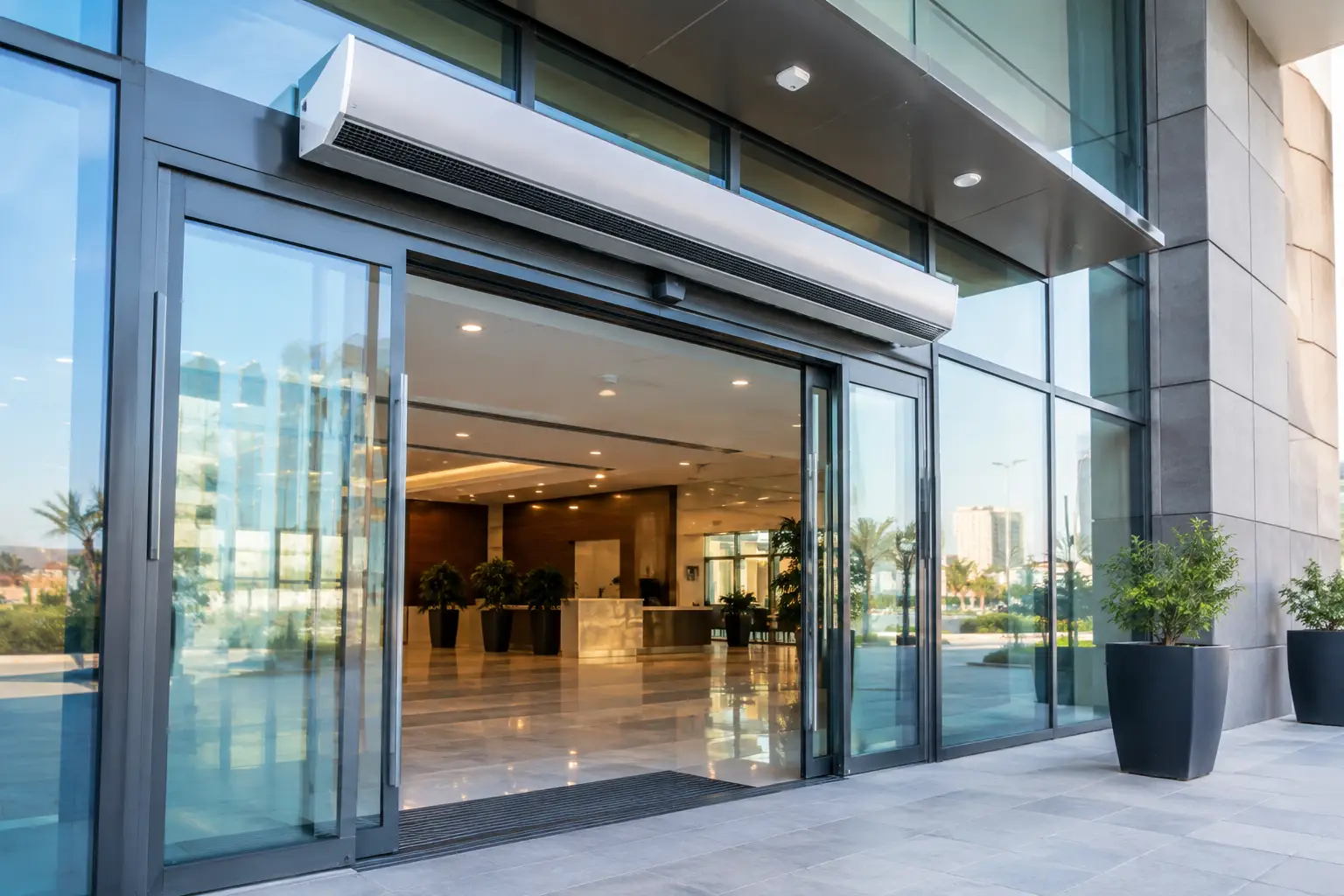
Selection should account for opening width and height, mounting position, door usage, prevailing air pressure, indoor cooling conditions, and the level of exposure to wind or vehicle traffic. For recessed architectural entrances, a concealed ceiling-mounted unit may suit the design intent. For high doors in factories, logistics centers, and warehouses, an industrial centrifugal model is typically more appropriate because it is designed to project airflow across larger openings.
Air Curtains Compared With Other Entrance Controls
Physical barriers remain useful, particularly when an opening can stay closed between movements. Fast-acting doors, sectional doors, and dock doors can reduce exposure, but they cannot fully protect a space while vehicles, staff, or customers are passing through. An air curtain provides protection during those open-door periods.
Strip curtains are another common option for back-of-house and cold storage transitions. They can slow air movement, but they introduce physical contact, can obstruct visibility, and may be less suitable for customer-facing entrances or intensive pallet traffic. They may also collect dust and require regular cleaning.
Vestibules can be effective in new-build projects with sufficient footprint, but they require additional construction, door coordination, and traffic management. In many existing facilities, an air curtain is the more practical retrofit because it protects the opening without changing the customer route or loading workflow.
The right answer can be a combination. A warehouse may use a dock door for closed periods, an industrial air curtain during loading, and localized pressure control for sensitive zones. A hospital entrance may pair automatic doors with a recessed air curtain to support comfort and reduce dust ingress. The key is to evaluate the actual operating pattern rather than specifying a barrier by door size alone.
Where Commercial Thermal Barriers Deliver Value
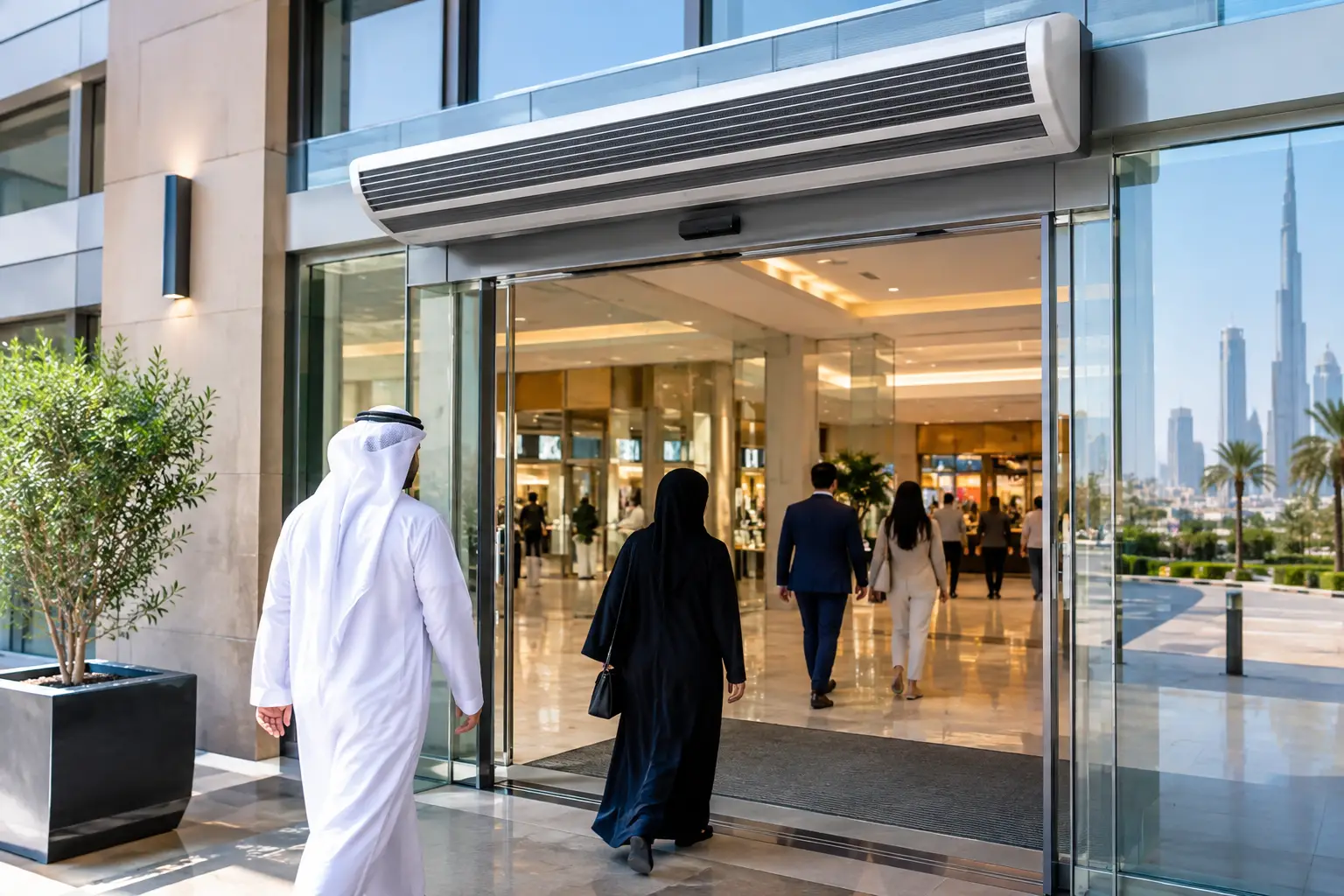
Retail entrances are a clear example. Frequent customer traffic makes it unrealistic to rely on closed doors at all times, especially during busy periods. An air curtain helps keep cooled air inside while reducing outdoor dust, insects, and hot air entering the sales floor.
In supermarkets and hypermarkets, entrance air control supports more stable conditions near checkout areas and perimeter displays. It can also reduce the warm-air burden placed on HVAC systems serving large, open sales spaces. Food-service entrances benefit from improved protection against insects and airborne dust, particularly where deliveries and customer movement occur near each other.
Industrial sites face a different set of demands. Warehouses, workshops, factories, and distribution centers often have tall openings, forklift traffic, and repeated door cycles. These applications require durable equipment with the throw, motor capacity, and housing construction needed for heavy-duty service. The goal is not simply comfort. It is to limit infiltration that affects worker conditions, inventory protection, cleanliness, and cooling costs.
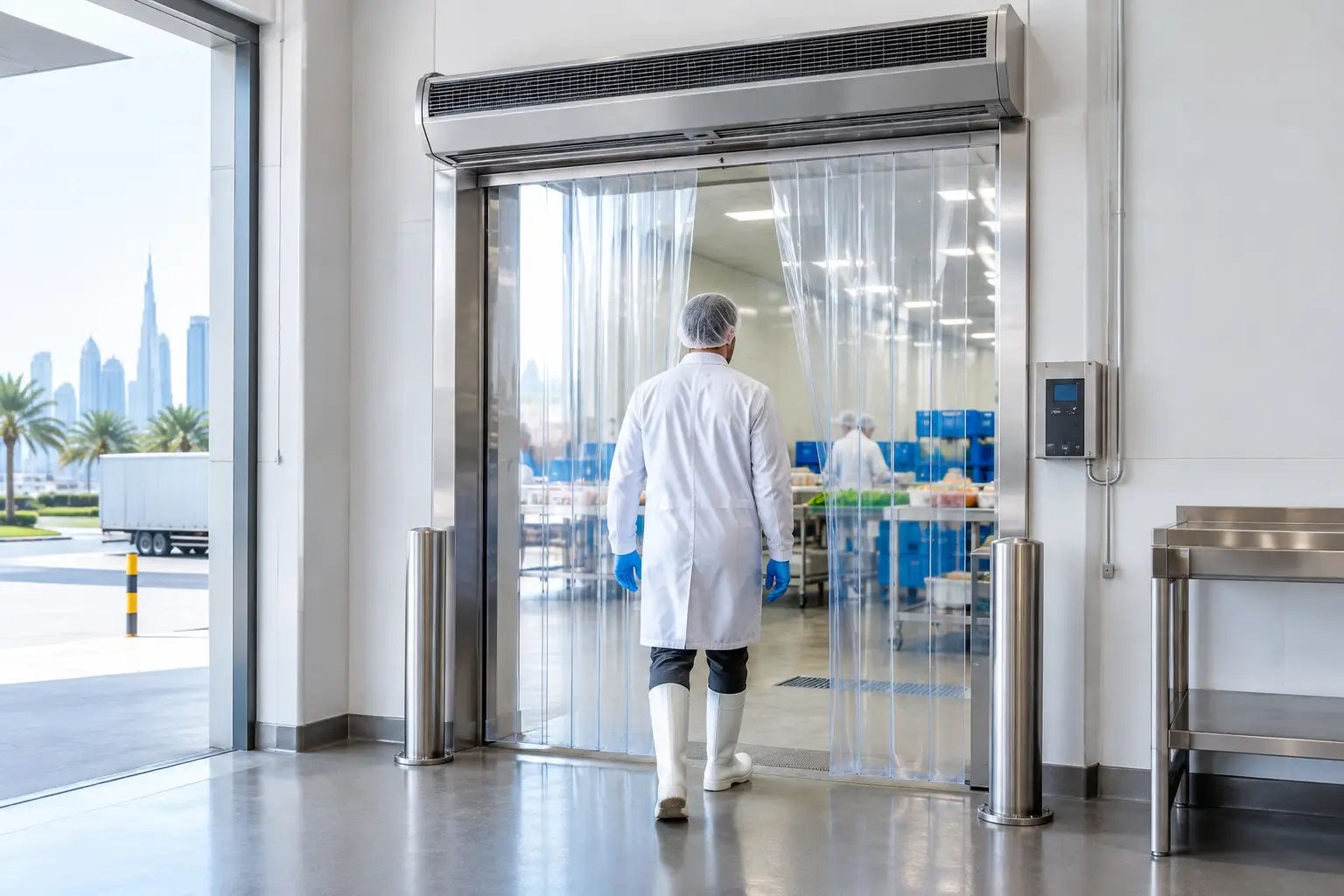
Cold storage and temperature-controlled processing areas require especially careful planning. Large temperature differences create strong air movement at open doors, and moisture entry can affect product conditions and create condensation concerns. Air curtains can be part of the entrance strategy, but they must be selected around the specific door height, temperature differential, traffic type, and hygiene requirements.
Specifying an Effective Air Curtain System
A commercial thermal barrier should be specified as an entrance system, not selected as a generic appliance. Start with a site assessment. Measure the clear opening dimensions and confirm whether the unit will be surface-mounted or recessed. Review how long doors stay open, how often they cycle, and whether forklifts, pedestrians, trolleys, or customers use the opening.
Then consider environmental pressure. An entrance exposed to direct afternoon sun, desert winds, vehicle movement, or a nearby exhaust source needs a different approach from a protected internal lobby. Building pressure also matters. If the indoor space is strongly negative, outdoor air will be drawn inward and the air curtain must overcome that condition.
For specification teams, the following performance questions are more useful than focusing on nominal unit length alone:
- Does the airflow reach the full opening height under site conditions?
- Is the discharge pattern appropriate for the mounting position and door geometry?
- Can the unit operate reliably during the facility’s busiest periods?
- Are noise levels suitable for a hotel, retail floor, hospital, or customer-facing lobby?
- Is the construction appropriate for dust, humidity, and intensive industrial use?
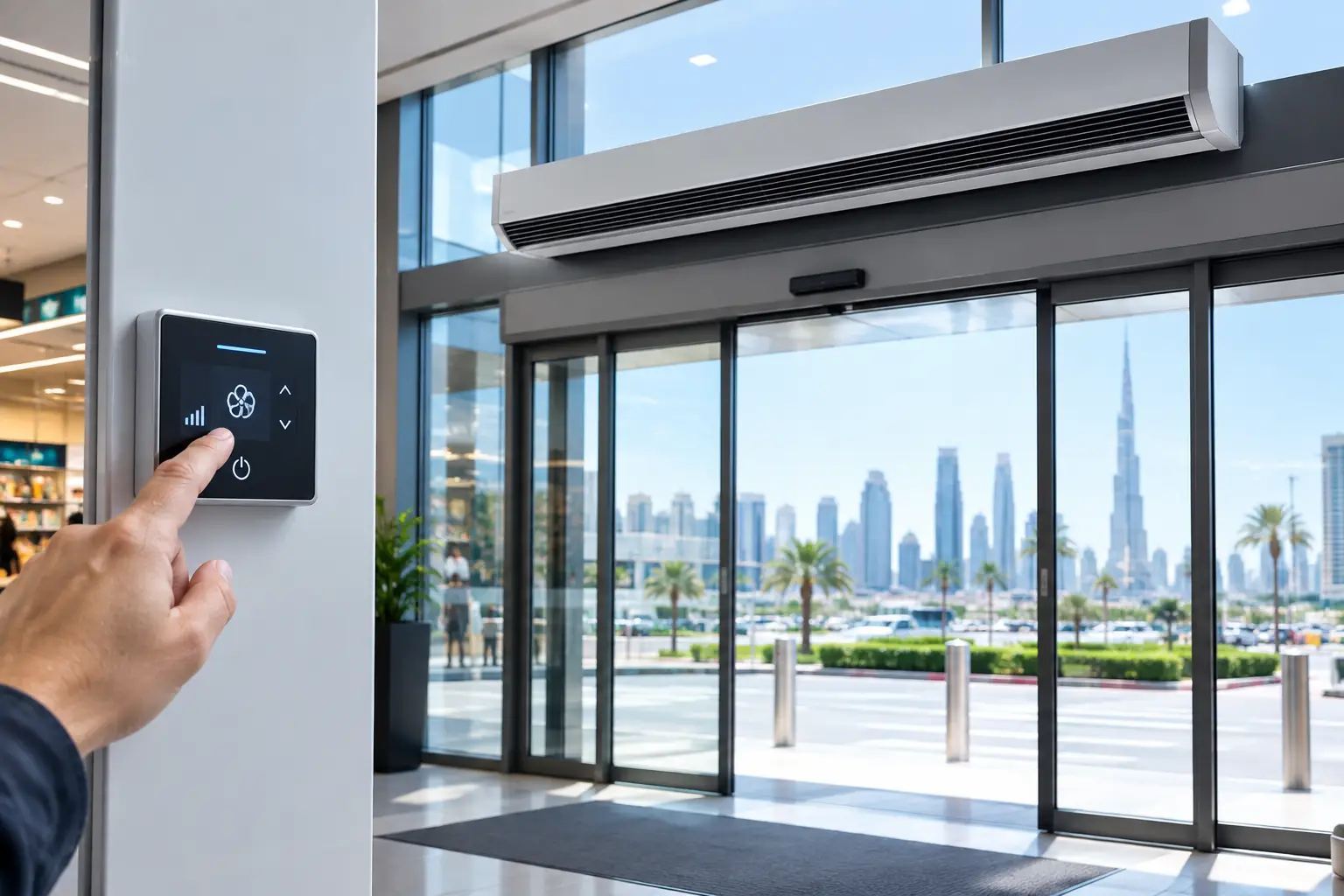
Controls should also support the way the facility operates. Door switches, speed settings, and building-management integration can allow the unit to respond to opening cycles rather than running at full output without need. That can improve energy performance while maintaining protection when the entrance is active.
Common Mistakes That Reduce Barrier Performance
The most common mistake is treating an air curtain as a one-size-fits-all product. A unit sized only to match doorway width may fail if the mounting height, wind exposure, or traffic volume is not considered. Another error is placing the unit too far from the opening, allowing the airstream to disperse before it reaches the threshold.
Maintenance planning also matters. Intake areas and filter nets, where fitted, should remain clear so airflow is not restricted by dust buildup. Facility teams should include air curtain inspection within routine commercial HVAC maintenance, checking mounting integrity, airflow direction, controls, and unusual noise. This is particularly relevant in dusty industrial zones and high-humidity coastal environments.
Finally, avoid judging performance only by the sensation of air at the doorway. The objective is controlled air separation, not maximum draft. Effective systems balance throw, velocity, coverage, and noise for the application.
A Practical Path to Better Entrance Control
For facilities operating in hot, tropical, humid, and desert conditions, thermal barriers are most effective when they are integrated into the wider HVAC and entrance design. They reduce avoidable cooling loss, support cleaner indoor conditions, and help operations keep doors open when business requires it.
FreezeeX evaluates entrance size, mounting arrangement, traffic volume, climate exposure, and HVAC requirements before recommending a commercial or industrial air curtain configuration. Request a consultation and quotation to match the air barrier to the conditions your entrance faces, rather than relying on a standard size or generic performance claim.