A loading-bay door left open for a delivery cycle can become the highest-load point in an otherwise well-managed facility. In Dubai, Riyadh, Lagos, Nairobi, and other hot-weather markets, outside air does not merely raise the temperature near the entrance. It carries humidity, dust, insects, and heat directly into conditioned space. Knowing how to reduce HVAC door losses means controlling that exchange at the opening itself, not asking the cooling system to recover from it all day.
For hypermarkets, hotels, cold storage operations, workshops, plants, and large commercial buildings, entrance losses are an operational issue. They increase cooling runtime, create uncomfortable entry zones, compromise hygiene, and make indoor conditions less predictable during busy hours. The right solution depends on the opening size, traffic pattern, pressure conditions, and climate exposure, but the objective remains simple: maintain a strong separation between outdoor air and the indoor environment.
Why Door Openings Create Disproportionate HVAC Losses
A closed building envelope can be designed for controlled heat gain. An open doorway changes the equation immediately. Hot air flows inward, while conditioned air escapes outward. In humid coastal conditions, the incoming moisture adds a latent cooling load that can be as problematic as the temperature difference itself. In desert environments, dust and fine particles enter with the airflow and increase cleaning demands around entrances, retail displays, and production areas.
The largest losses rarely come from a single brief opening. They come from repetition: customer entrances that operate continuously, warehouse shutters opened during dispatch, hotel service doors, and loading bays with irregular vehicle movements. When doors remain open because the operation requires it, improving the door seal alone is not enough. The facility needs an active barrier.
Door losses also affect comfort and equipment performance beyond the entrance. Thermostats deeper in the building may call for additional cooling after hot air migrates inward. This can create uneven temperatures, longer compressor operation, and a perception that the HVAC system is undersized when the real weakness is uncontrolled infiltration.
How to Reduce HVAC Door Losses With an Air Curtain
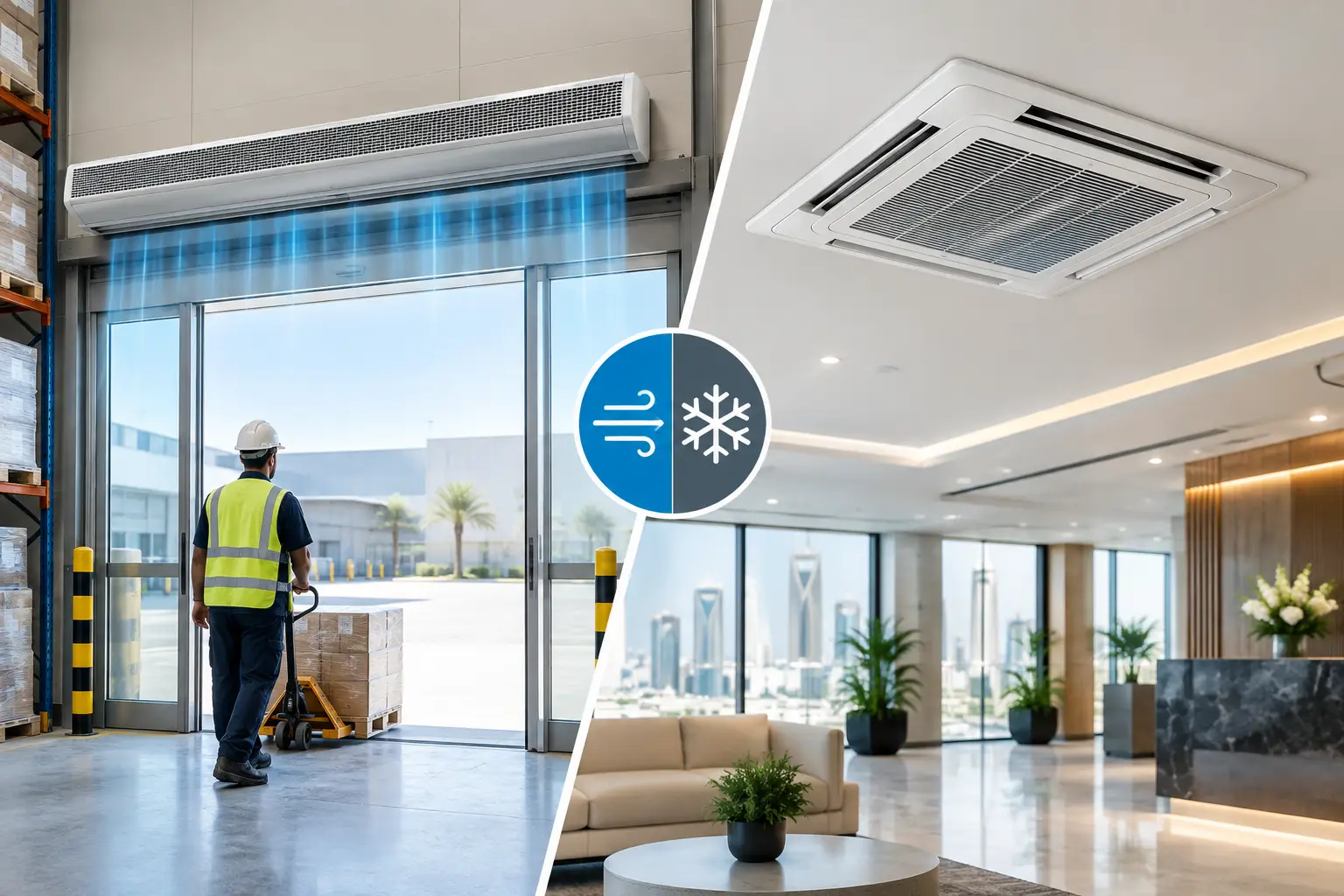
An air curtain projects a controlled, high-velocity stream of air across an opening. Properly selected and installed, that stream acts as an invisible barrier that resists the movement of hot outdoor air, cooled indoor air, dust, humidity, and flying insects. It allows people, carts, and goods to pass without the operational delay of keeping a physical door shut.
The word properly matters. An undersized unit, poor mounting height, or weak airflow at the floor will not provide meaningful isolation at a demanding entrance. For B2B facilities, air curtain selection must begin with the actual opening and operating conditions, not with a generic unit length.
Match airflow to the opening, not just the door width
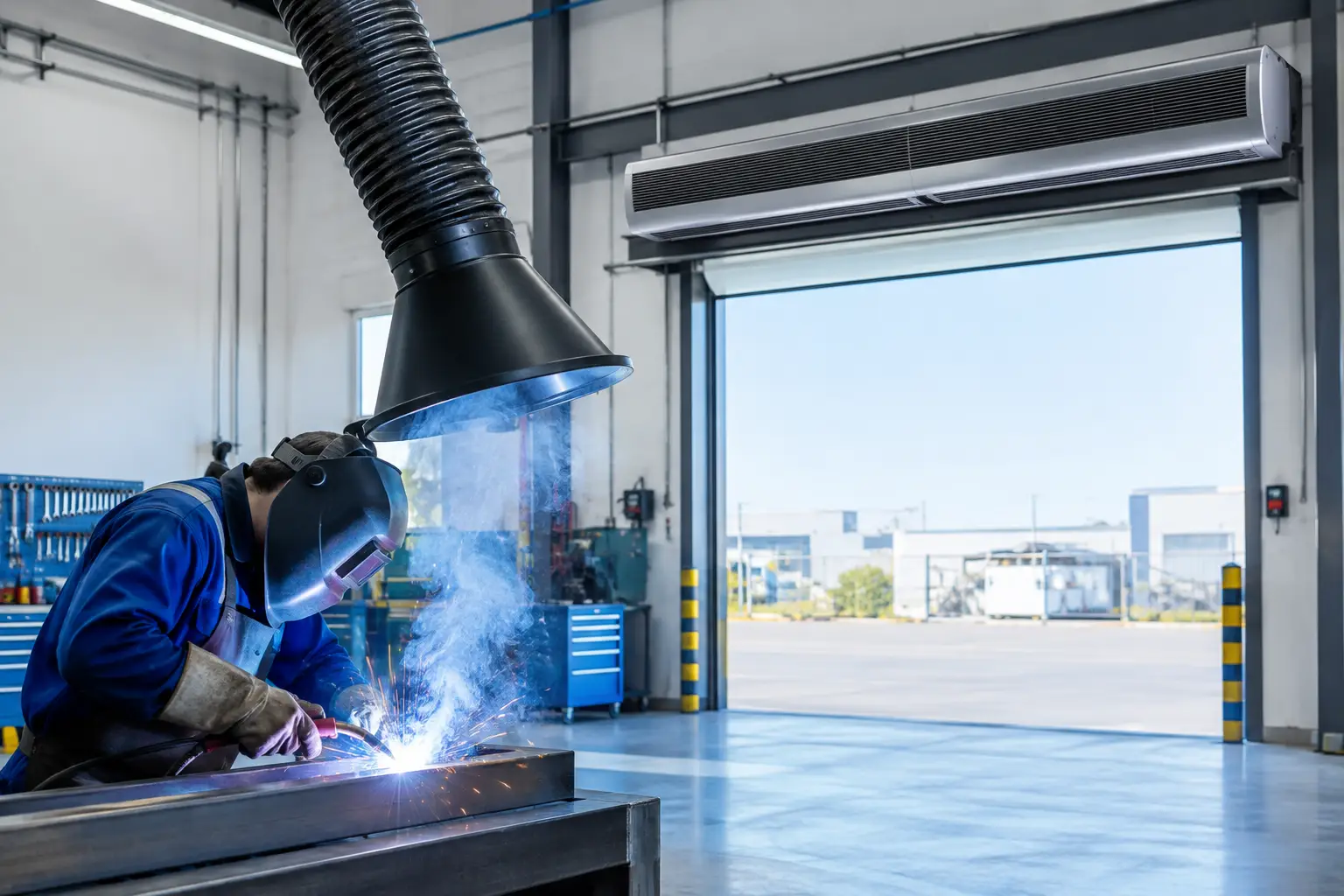
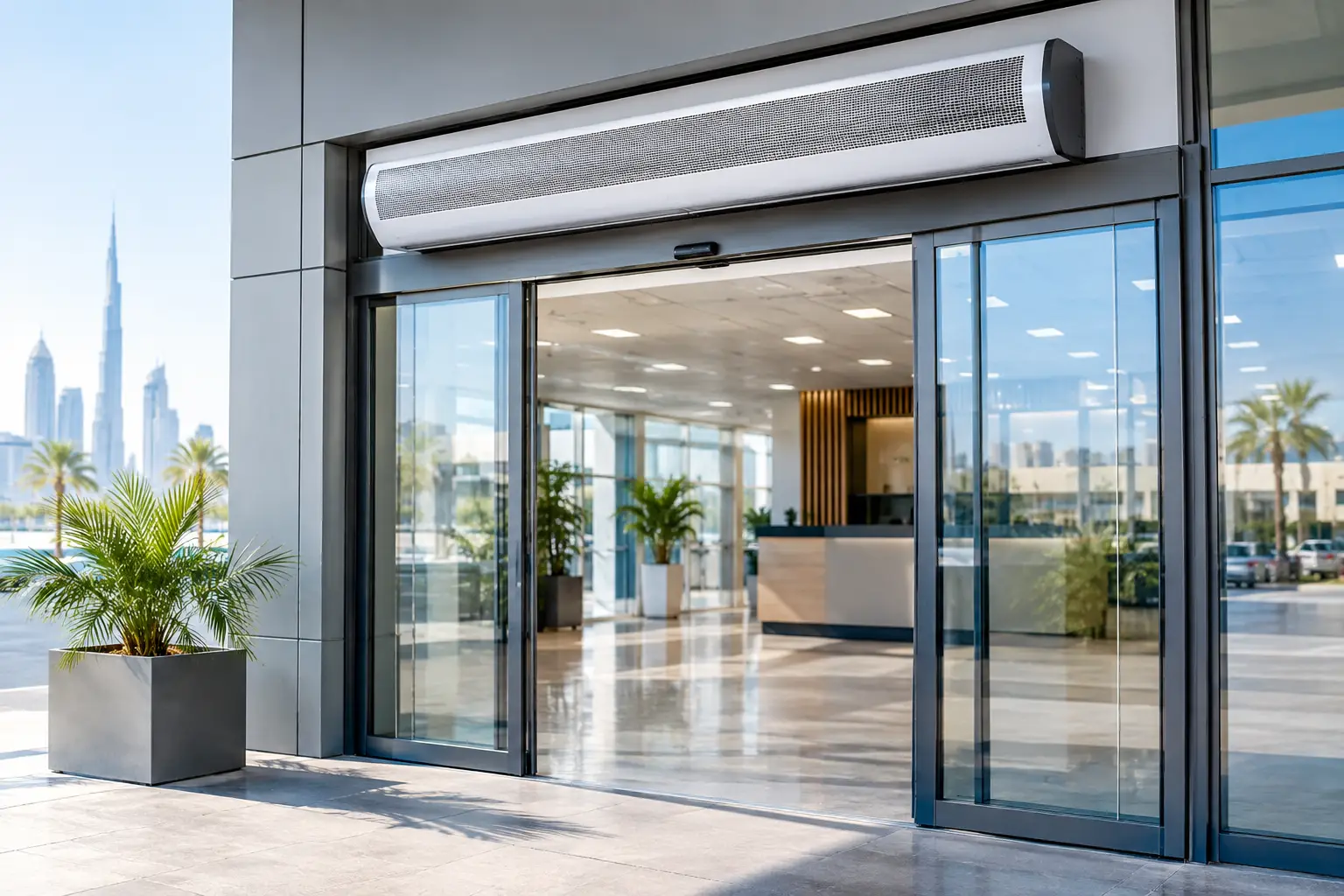
Door width determines how much coverage is needed, but door height and exposure determine the required air throw and velocity. A standard retail entrance has different demands from a five-meter industrial shutter. A recessed ceiling unit may suit a premium hotel lobby or commercial entrance where visual integration matters. A centrifugal commercial or industrial unit is typically better suited to taller doors, dusty environments, and heavier daily traffic.
The airflow must reach the floor with enough force to resist crosswinds and pressure differences. If the air stream breaks up halfway down the opening, hot air will enter beneath it. For wide openings, multiple units may be required to create continuous coverage. Gaps between units are a common specification mistake and can leave a direct path for infiltration.
Position the unit to protect the full opening
Air curtains are generally installed above the door on the interior side, aligned so the discharge stream reaches the threshold. The discharge angle may need adjustment to account for external wind, stack effect, or a facility that operates under negative pressure. This is not a set-and-forget decision. A loading dock with frequent truck activity may require different commissioning than a front-of-house retail entrance.
Obstructions also matter. Signage, deep soffits, structural beams, sprinkler coordination, and poorly placed door hardware can disrupt the air pattern. MEP contractors should coordinate the mounting location early, especially for recessed installations. The goal is a clean, uninterrupted air stream across the complete door opening.
Reduce the Time the Door Stays Open
An air curtain improves protection while the opening is in use. It should work alongside disciplined door operation, not replace it. Every unnecessary minute a shutter remains open adds heat and humidity load.
At loading bays, review the handoff process. Are doors opened before the vehicle is ready? Are pallets waiting in the opening? Is there a traffic pattern that keeps one bay open for convenience? Small changes in sequencing can reduce exposure without slowing throughput. Where operations allow it, use dock doors in zones rather than opening a full bank at once.
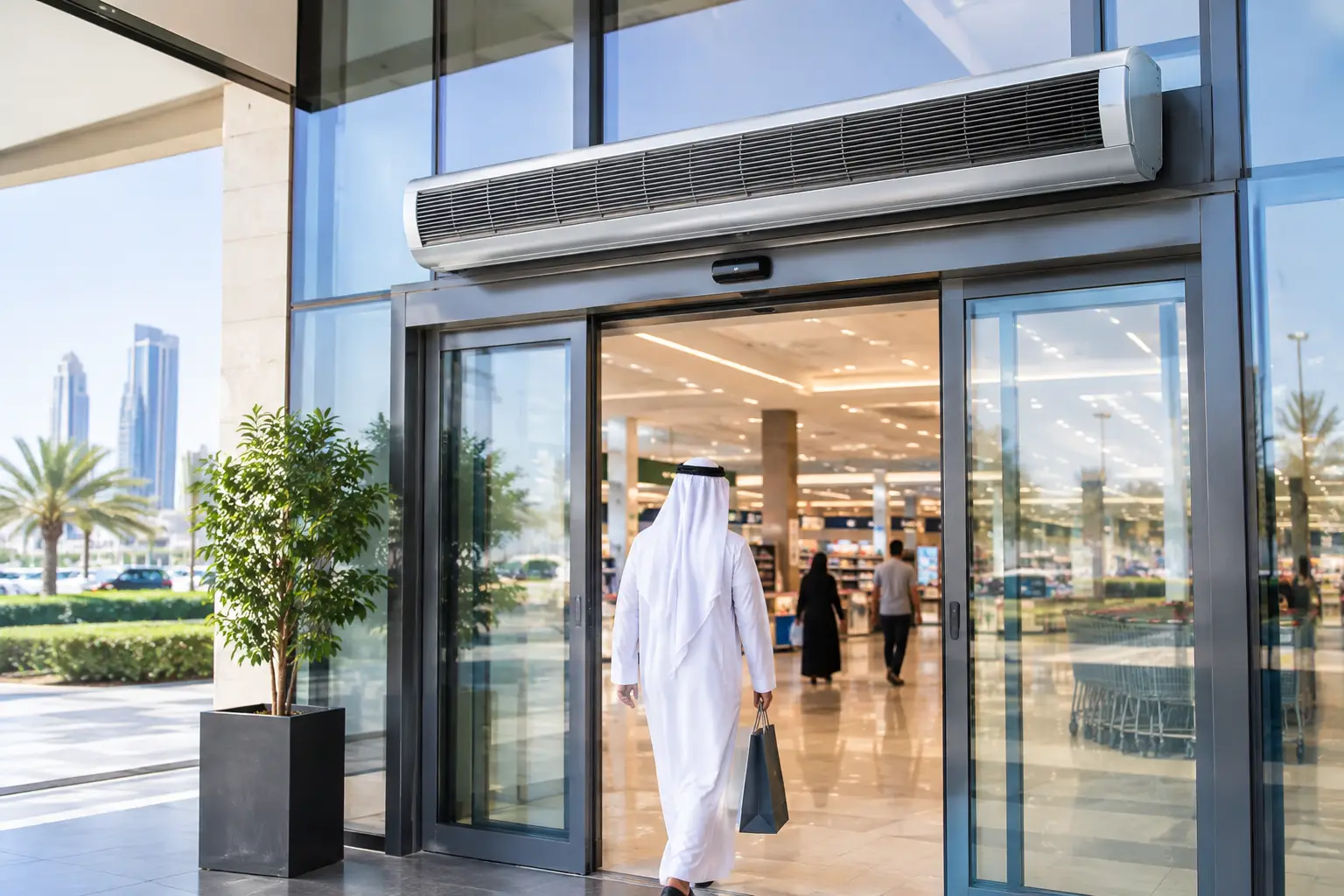
For public entrances, automatic doors or vestibules can reduce the duration and size of the opening. This may be valuable in hospitality, high-end retail, and office facilities, though it involves more construction and can affect visitor flow. In high-traffic sites where a vestibule is impractical, a correctly specified air curtain is often the more operationally efficient approach.
Control Pressure, Leakage, and Adjacent Openings
Door infiltration is not caused by the entrance alone. Building pressure can either support or fight the air barrier. A strongly negative indoor pressure pulls outdoor air inward through every available opening, including doors, dock gaps, and service penetrations. An excessively positive building can push cooled air out whenever a door opens.
Facility managers should investigate persistent drafts rather than treating them as normal. Check whether adjacent service doors are propped open, whether door closers are functioning, and whether weather seals at closed doors are intact. These measures do not eliminate the need for air isolation at active entrances, but they reduce the pressure imbalance that makes an air curtain work harder.
In facilities with separate temperature zones, consider how door locations connect them. A cold room opening into a hot dispatch area requires a different protection strategy than an exterior customer entrance. The priority is preventing uncontrolled transfer from the harsher zone into the controlled zone, while maintaining safe and efficient movement of people and goods.
Specify for Tropical and Desert Operating Conditions
An air curtain that performs acceptably in mild conditions may not hold the line during a hot afternoon in the Gulf, North Africa, or tropical Africa. Outdoor temperatures, airborne dust, humidity, long operating hours, and high footfall all influence the specification.
For harsh-climate sites, assess motor duty, blower design, casing durability, filtration where applicable, maintenance access, and noise requirements alongside airflow performance. A luxury lobby may prioritize low-noise operation and concealed installation. A food distribution area may prioritize powerful air isolation, hygiene support, and continuous-duty reliability. An industrial plant or workshop may need a centrifugal system designed to withstand heavier airborne contamination and a larger opening.
There is a trade-off between high velocity and occupant comfort. Excessive discharge speed at a customer entrance can feel unpleasant, while insufficient velocity does not stop infiltration. The correct solution balances barrier strength with the way people use the door. This is why a site-specific assessment is more valuable than selecting equipment by price or nominal width alone.
Commission, Maintain, and Measure the Result
Air curtains require commissioning. Once installed, verify that the air stream reaches the threshold, has no weak zones, and remains stable when exterior doors, nearby shutters, or extraction systems are operating. Observe the entrance at peak traffic, not only during a quiet inspection. That is when wind effects, pressure changes, and real operating behavior become visible.
Maintenance should include cleaning intake grilles and filter nets where fitted, checking blower operation, confirming mounting security, and inspecting controls. Dust accumulation can restrict airflow and reduce the barrier’s effectiveness, particularly at industrial entrances and in desert environments. Maintenance intervals should reflect the site condition rather than a generic calendar schedule.
Measure performance through operating evidence: reduced warm drafts near entrances, improved comfort for staff and visitors, less dust migration, fewer insect complaints, and lower cooling recovery after busy periods. Energy savings will vary with door size, operating hours, climate, and the existing HVAC strategy. The most credible assessment compares performance before and after the entrance-control measures are in place.
For facilities where open doors are part of daily operations, cooling loss is not an unavoidable cost of doing business. It is a controllable design condition. FreezeeX can assess your opening dimensions, traffic profile, and tropical or desert climate exposure to recommend an air curtain solution suited to the application. Request a technical consultation and project quote before finalizing your entrance HVAC specification.