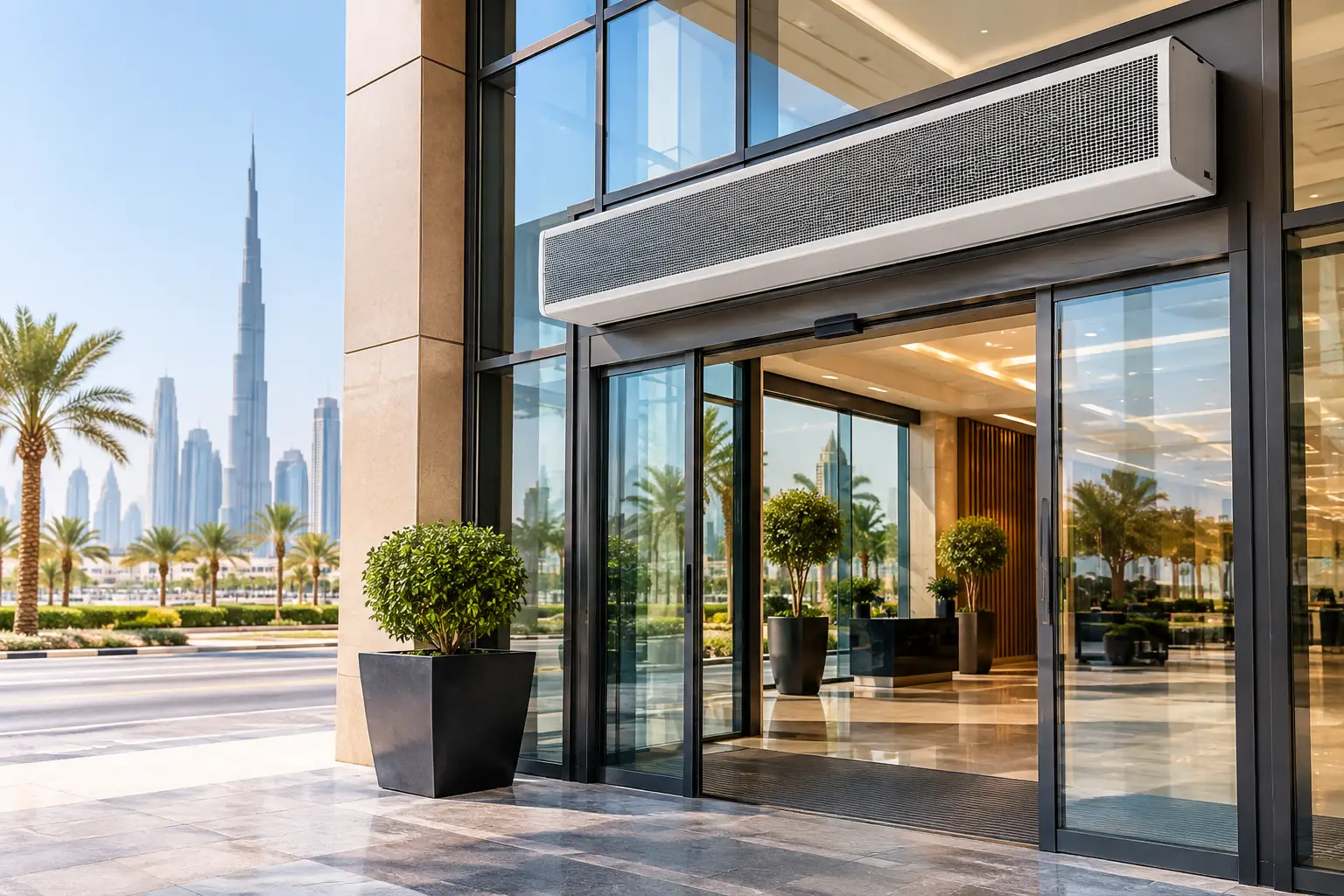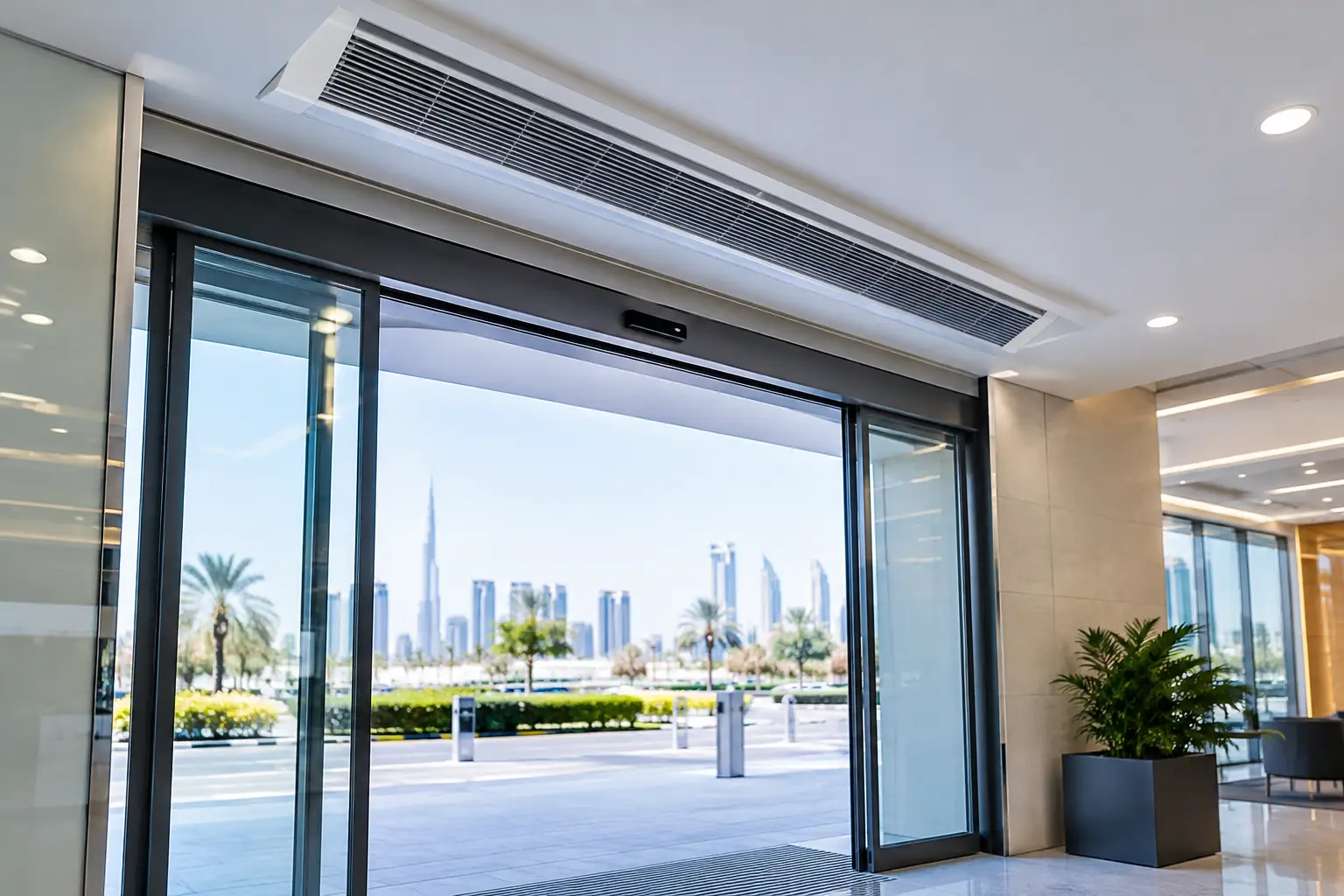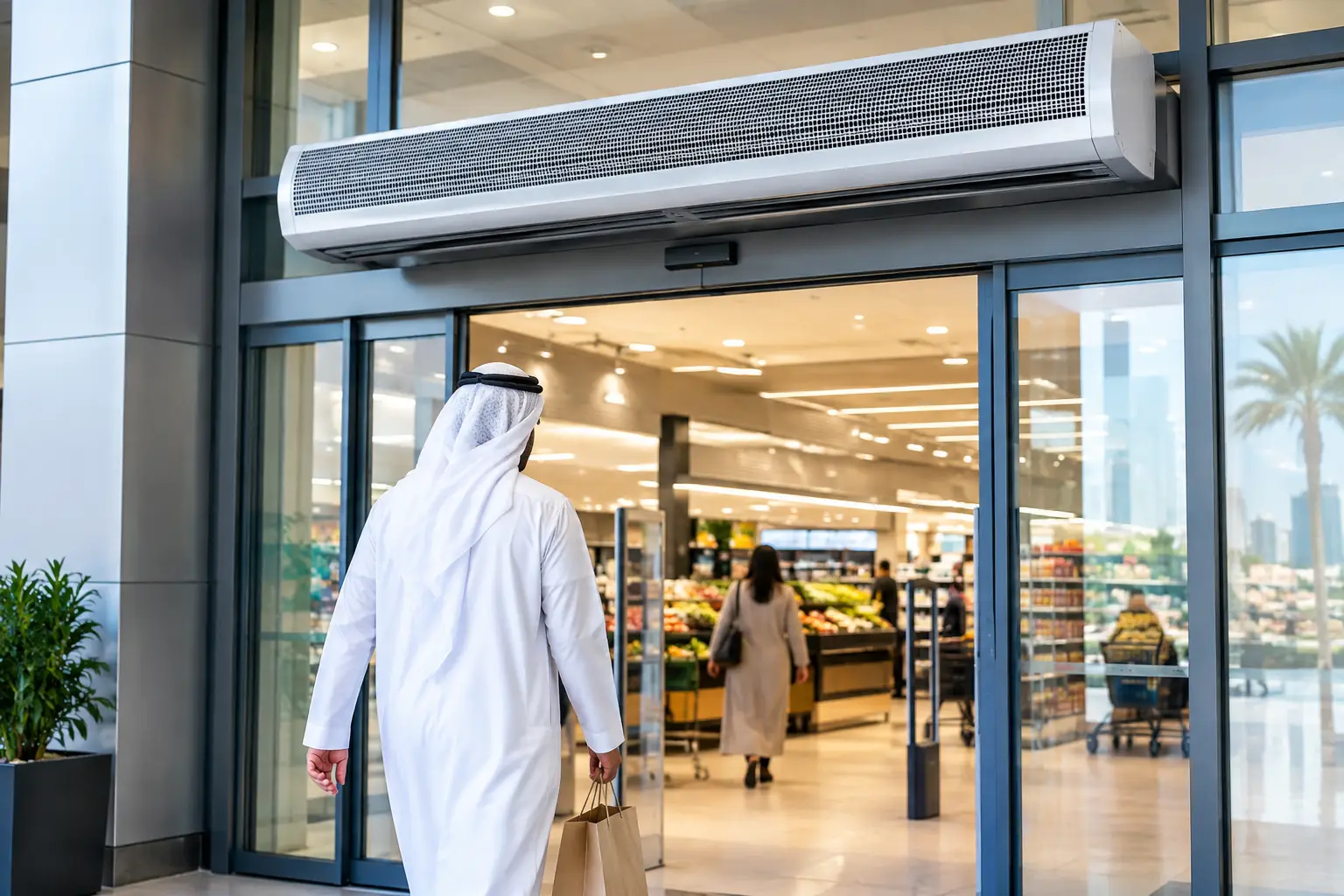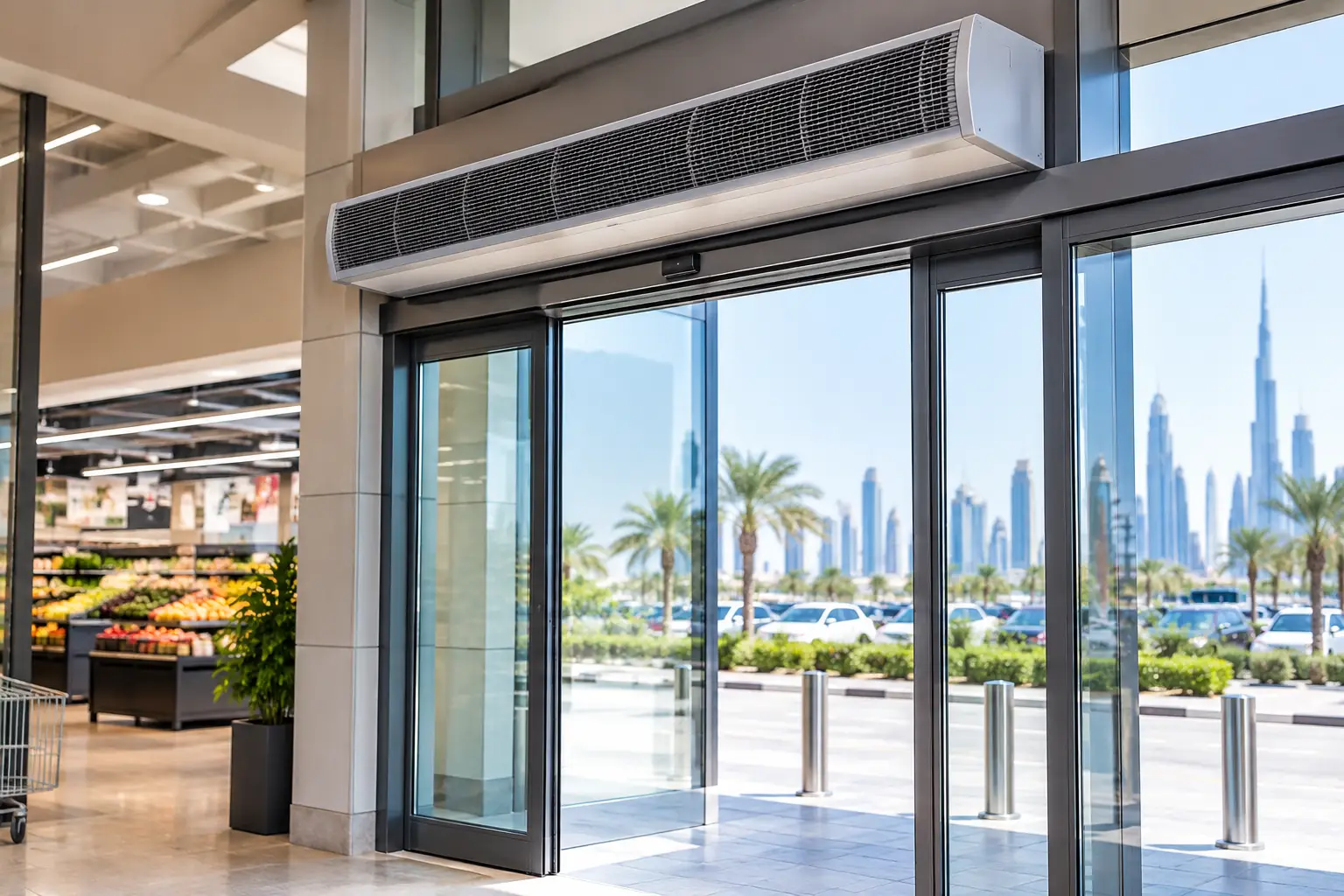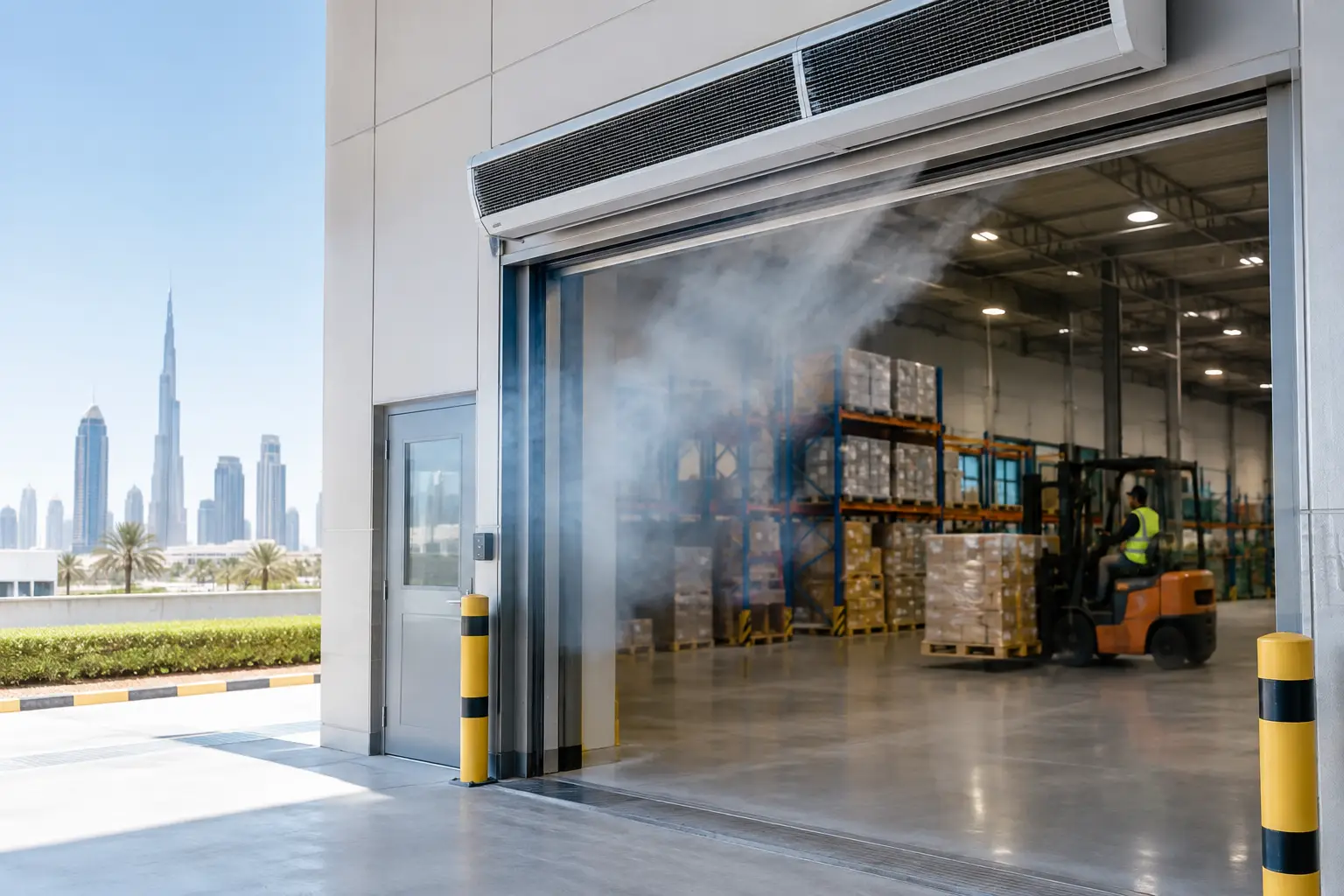
A loading-bay door opens for 30 seconds, and the problem is not only lost conditioned air. It is an open invitation for flies, dust, humid air, and odors to enter with every delivery. So, do air curtains stop flies? A correctly selected and installed commercial air curtain can significantly reduce fly entry, but it is not a substitute for hygiene controls, door discipline, or proper facility design.
For food retail, hospitality, cold storage, processing areas, warehouses, and industrial facilities, the value lies in creating a continuous high-velocity air barrier across the opening. That barrier makes it physically difficult for flying insects to cross while keeping the indoor environment more stable in extreme heat, humidity, and dusty conditions.
Do Air Curtains Stop Flies? Yes, With the Right Design
Flies do not need much time or space to enter a facility. They follow odors, light, air currents, and traffic through frequently opened doors. A commercial air curtain projects a controlled stream of air from above an entrance toward the floor, forming an invisible barrier between the interior and exterior.
When the air stream reaches the floor with sufficient strength and remains continuous across the full width of the opening, it disrupts the flight path of flies and other small flying insects. Rather than passing easily through the doorway, insects encounter a downward force and turbulent zone that can push them back outside or prevent them from maintaining stable flight into the building.
The practical answer is not that an air curtain makes an entrance insect-proof. No open doorway can promise that. The practical answer is that it reduces insect ingress substantially when the unit is engineered for the actual doorway, operating pattern, and local climate.
That distinction matters to facility managers. A small, underpowered unit above a wide loading door may run continuously yet provide little meaningful insect control. A correctly specified centrifugal-flow system, mounted at the proper height and matched to the opening, can support cleaner operations while reducing the cooling load created by open doors.
Why Airflow Strength Matters More Than the Unit Name
An air curtain is effective against flies only when its discharge air reaches the floor or threshold area with enough velocity to maintain separation. The fan type, discharge nozzle, installation height, and outdoor pressure conditions all affect that result.
High doors need more than a standard commercial unit. Warehouses, workshops, plant entrances, and logistics bays often require industrial centrifugal air curtains designed to throw air farther and resist disruption from wind, vehicle movement, and pressure differences. For a recessed lobby entrance or a hypermarket customer doorway, the priorities may be lower noise, visual integration, and continuous coverage during high foot traffic.
A common mistake is selecting equipment by door width alone. Width is essential, but height is equally critical. The air stream loses strength as it travels downward. If the installation height is too great for the selected model, gaps form near the floor – exactly where crawling insects, airborne dust, and low-level outdoor air can enter.
Doorway conditions also matter. A building with strong extraction, frequent delivery traffic, or exterior crosswinds may create pressure conditions that pull outdoor air inward. In hot desert locations, this can bring in dust and intense heat. In humid tropical environments, it can bring moisture and insect activity. The air curtain must be selected to overcome these forces, not merely operate beside them.
What Determines Fly-Control Performance?
The quality of an insect-control air barrier comes down to application fit. Four conditions deserve close attention during specification:
- Full opening coverage: The unit or unit combination must cover the entire door width without dead zones at the sides. A small uncovered gap can become the easiest route for flies.
- Correct mounting height: The selected model must maintain effective airflow from the mounting point to the floor. Taller entrances typically require higher-performance centrifugal systems.
- Airflow direction: The discharge should be aligned correctly and adjusted for the building’s pressure conditions. An improperly aimed stream can break apart before it protects the threshold.
- Operating discipline: The air curtain should operate whenever the doorway is open or likely to open. Controls tied to door activity can help maintain consistent protection without unnecessary runtime.
These are not minor commissioning details. They determine whether the air curtain functions as a real environmental barrier or simply as moving air above the door.
Air Curtains Are Part of an Insect-Control System
Insect control at a commercial entrance is strongest when the air curtain supports broader operating standards. Flies are attracted by waste, food residues, standing water, odors, and poorly managed delivery areas. If these conditions exist outside a doorway, even a powerful air barrier is working against a constant source of pressure.
For supermarkets, restaurants, food-service back-of-house areas, and hospitality facilities, cleaning schedules and waste handling remain essential. Doors should not be held open longer than necessary, particularly during peak heat or delivery periods. Where possible, the exterior approach should be kept clear of waste containers and organic debris that attract insects toward the entrance.
Air curtains also work best with physical door controls. A fast-closing door, strip barrier, vestibule, or well-managed loading procedure can reduce the time that the air barrier must defend a fully open space. The right combination depends on operations. A high-traffic retail entrance needs a different solution than a cold-storage dispatch bay or an industrial workshop receiving heavy vehicle deliveries.
The benefit is operational rather than cosmetic. Fewer flies entering a facility can support food hygiene requirements, reduce customer complaints, improve staff comfort, and help protect sensitive stock. At the same time, the same air barrier limits the rush of hot outdoor air that forces cooling systems to work harder.
Desert Heat and Tropical Humidity Change the Specification
An air curtain that performs adequately in mild conditions may be insufficient at an entrance in Dubai, Riyadh, Doha, Lagos, Nairobi, or Cairo. High ambient temperatures create a strong cooling-loss problem whenever doors open. In coastal and tropical markets, humidity can add condensation risk and make indoor conditions harder to maintain. Dust and sand further increase the need for a stable entrance barrier.
These conditions do not make insect control impossible. They make proper equipment selection more critical. Higher external temperatures and building pressure differences can disturb the air stream. Wide entrances, tall doors, and long operating hours place additional demands on the motor, blower assembly, and controls.
For this reason, contractors and consultants should evaluate air curtains as part of the entrance’s climate-control strategy, not as a standalone fly deterrent. The selected unit must have the airflow performance to protect the opening while supporting the facility’s cooling objectives. In harsh climates, a system that is undersized for the door may waste energy without solving either problem.
FreezeeX air curtain systems are specified around this real-world requirement: powerful air isolation for commercial and industrial entrances exposed to intense heat, humidity, dust, and continuous traffic. Model selection should reflect the opening dimensions, installation height, traffic pattern, and environmental conditions rather than a generic product category.
When an Air Curtain May Not Be Enough
There are cases where an air curtain alone will not deliver the expected fly-control result. An entrance exposed to constant high wind, a door left open for extended periods, or a facility with poor sanitation outside the doorway may need additional measures. Similarly, a very tall or unusually wide opening may require multiple units or a heavier industrial configuration to maintain full coverage.
The warning signs are straightforward: insects still appear near the threshold, dust enters at floor level, staff feel a hot draft through the opening, or cooled air is visibly lost whenever doors open. These signs often point to an application mismatch, incorrect mounting position, inadequate coverage, or a pressure issue elsewhere in the building.
A site assessment should look beyond the doorway itself. Measure the clear opening, note the mounting height, observe prevailing wind, review how long the door remains open, and identify any sources of insect attraction nearby. This gives the specification team the information needed to recommend the correct airflow class and control approach.
For facilities where hygiene, cooling retention, and entrance uptime are non-negotiable, request a FreezeeX consultation or project quote based on your actual opening and operating conditions. The right air curtain will not just make flies work harder to enter – it will help keep hot, humid, and dusty outdoor conditions where they belong: outside the facility.