A 4-meter warehouse entrance in Dubai or a constantly opening supermarket loading door in Riyadh creates a problem that a light, short air stream cannot solve. Hot outdoor air, dust, humidity, insects, and airborne contaminants move through the opening quickly, placing an immediate load on indoor cooling. Centrifugal airflow gives commercial and industrial air curtains the pressure and throw needed to form a more dependable separation between two environments.
For facility managers and MEP teams, this is not simply a question of selecting a powerful-looking unit. The quality of the air barrier depends on the blower design, installation height, door geometry, traffic pattern, and surrounding pressure conditions. A correctly selected centrifugal air curtain can support HVAC efficiency and indoor comfort. A poorly specified unit can leave gaps in the barrier, consume unnecessary energy, and create avoidable operational complaints.
What Centrifugal Airflow Means in an Air Curtain
Centrifugal airflow is produced when an impeller draws air into the blower and accelerates it outward through rotating blades. The resulting air is directed through a discharge nozzle across the doorway. Compared with a typical axial fan arrangement, a centrifugal blower is generally better suited to applications requiring higher static pressure, focused air delivery, and a longer effective air throw.
That distinction matters at commercial entrances. An air curtain must project air from its mounting point to the floor, or close enough to the threshold to resist infiltration. As mounting height increases, the discharge stream loses momentum through entrainment, mixing with surrounding air as it travels. Centrifugal blower designs help maintain a concentrated stream over greater distances, making them a practical choice for high doors and demanding operating conditions.
This does not mean centrifugal is automatically the right answer for every entrance. A low retail doorway with limited operating hours may not require the pressure capability of an industrial centrifugal unit. Selection should match the actual entrance duty rather than rely on motor size alone.
Why Centrifugal Airflow Performs at High-Traffic Doors
At a busy entrance, an air curtain is working against more than outdoor temperature. Door opening frequency, forklift movement, nearby extraction systems, stack effect, and differences in indoor and outdoor pressure can all disrupt the air barrier. In hot and humid regions, these conditions also increase the risk of warm, moisture-laden air entering conditioned spaces.
Centrifugal airflow is valuable because it can deliver air with greater usable pressure. This gives the discharge stream a better chance of reaching the occupied zone and resisting crosswinds or pressure shifts around the opening. For a logistics center, that can reduce the volume of hot, dusty air entering during goods movements. For a food preparation or pharmaceutical environment, it can help support cleaner separation at frequently used service doors.
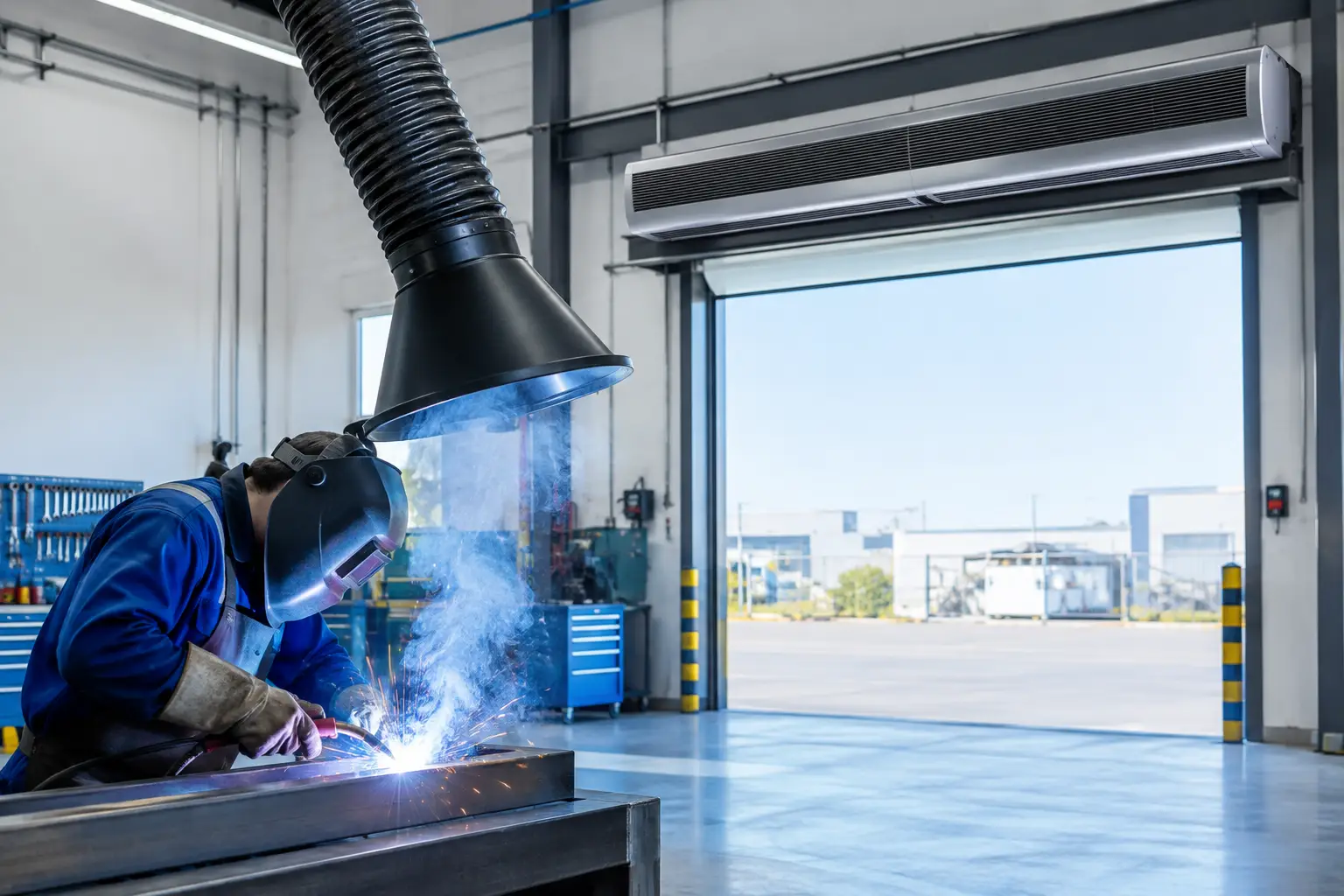
The operational benefits are often most noticeable in facilities where doors stay open for extended periods. Warehouses, factories, distribution centers, airport service areas, and cold storage access points typically need more than a decorative overdoor unit. They need an air curtain specified around real opening height, width, and traffic conditions.
Pressure Is Only Useful When It Is Controlled
High airflow volume alone does not guarantee effective separation. If air is discharged too broadly, too aggressively, or at the wrong angle, the stream may break apart before reaching the floor. Excessive velocity can also create discomfort at pedestrian entrances or interfere with lightweight materials near a doorway.
A well-engineered centrifugal air curtain balances volume, discharge velocity, nozzle design, and direction. The aim is a stable, continuous curtain of air that follows the opening profile without creating excessive turbulence. For this reason, airflow data should be reviewed alongside recommended mounting height and coverage width, not as an isolated specification.
Where Centrifugal Air Curtains Are Most Appropriate
Centrifugal systems are commonly considered where entrance conditions are demanding, particularly where mounting height is significant or the facility faces harsh external conditions. They are well suited to industrial and commercial locations such as:
- warehouse and logistics loading entrances with regular vehicle or pallet traffic
- factories and workshops exposed to dust, fumes, or process-area pressure changes
- cold storage and food distribution access doors where cooling loss needs close control
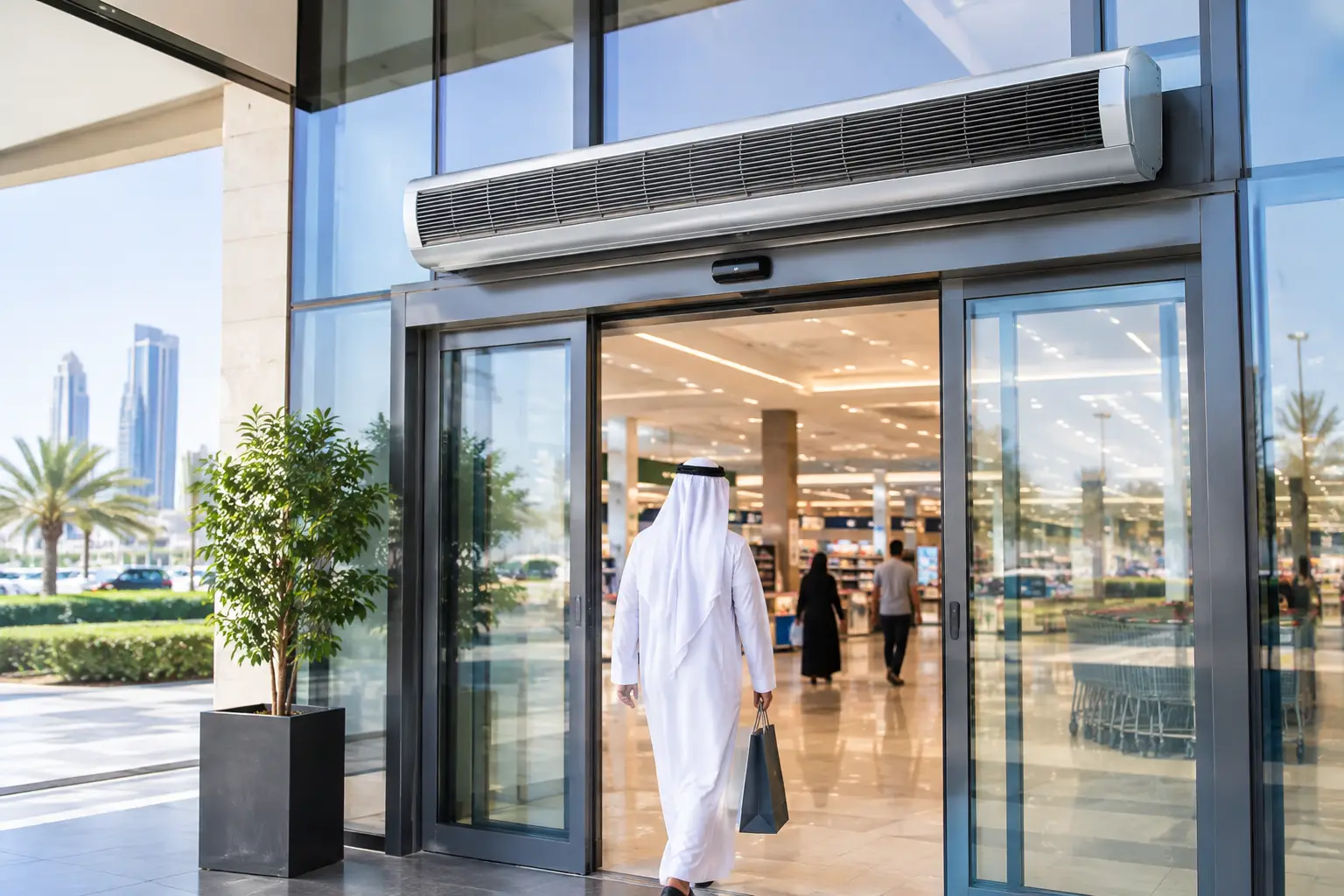
- supermarkets and hypermarkets with high customer traffic or back-of-house receiving doors
- airport, hospital, and hotel service entrances where cleanliness and comfort both matter
In these applications, the air curtain supports the building’s primary cooling system rather than replacing it. By reducing uncontrolled infiltration, it can help limit cooling demand at the entrance and improve conditions close to the door. Results depend on site conditions, but the principle is direct: less outdoor air entering means less conditioned air needing to be replaced.
Selecting Centrifugal Airflow for Door Height and Width
The starting point is the physical opening. Door height determines the required air throw, while door width determines how many units or what unit length is needed for continuous coverage. A gap between adjacent units or an undersized installation can become the weak point in the barrier.
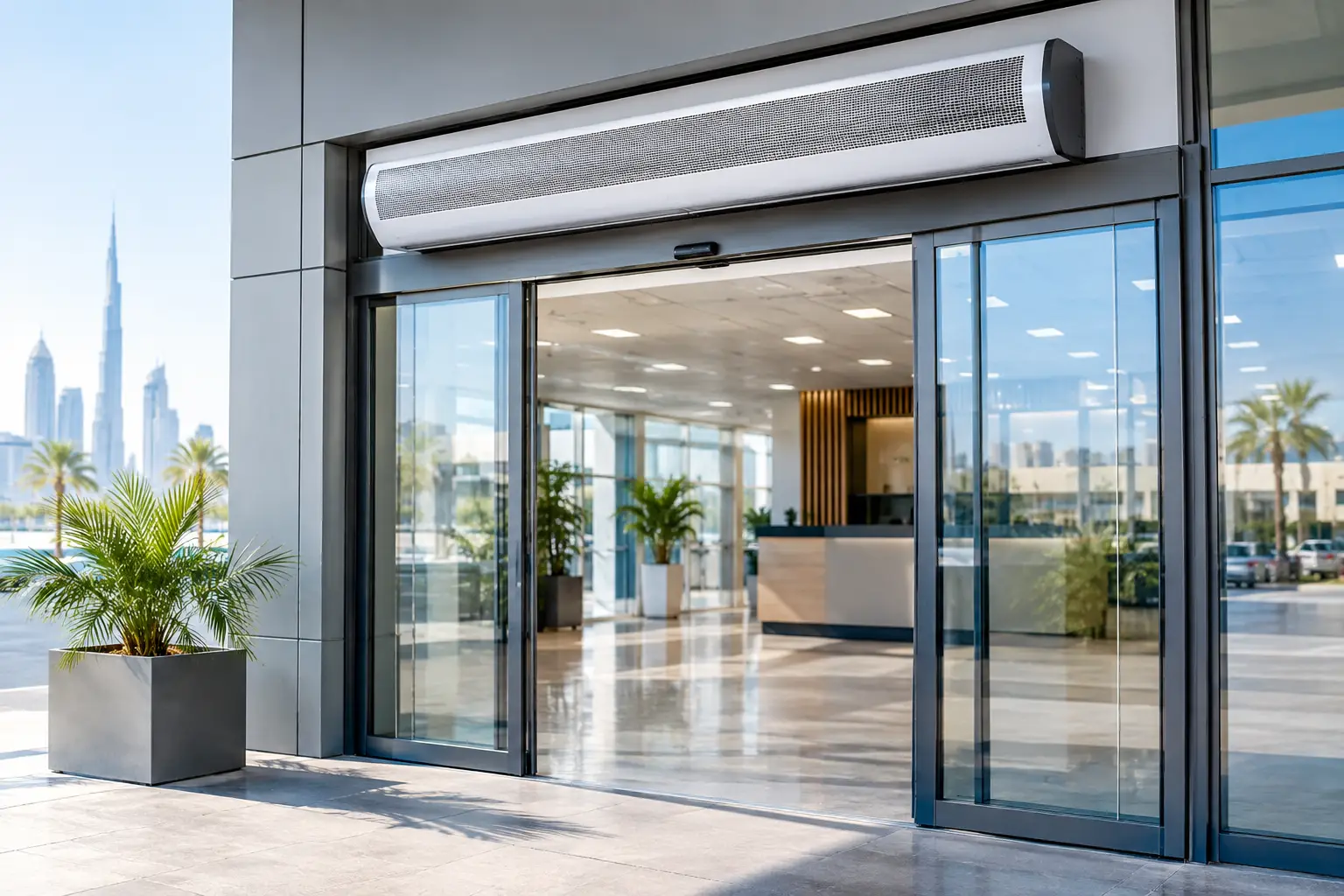
Mounting position matters as well. Most air curtains are installed above the opening, but some projects require recessed mounting, side mounting, or integration with architectural ceilings. A recessed installation may be visually preferred in a hotel lobby, retail center, or premium commercial entrance, yet it still requires adequate intake clearance and a discharge path that preserves airflow performance.
The next consideration is the operating environment. A personnel entrance and a loading bay may have the same dimensions but need different solutions. The loading bay may experience vehicle movement, outdoor drafts, longer door-open periods, and more dust. It may require an industrial centrifugal configuration with a stronger, more focused discharge stream. The personnel door may prioritize acoustic performance and appearance alongside barrier effectiveness.
For large openings, multiple units are often used to create full-width coverage. The units must be selected and arranged so their discharge patterns meet consistently, without dead zones. This is a specification decision that should be confirmed before installation, especially where door frames, shutters, sprinkler arrangements, or ceiling features constrain the mounting location.
Climate Conditions Change the Specification
Desert and tropical conditions place unusual pressure on entrance climate control. In Dubai, Abu Dhabi, Doha, Muscat, Riyadh, Cairo, Lagos, and Nairobi, facilities may contend with extreme heat, airborne dust, humidity, or a combination of all three. The outside air entering through an open door can quickly affect comfort, product handling conditions, and HVAC operating time.
Humidity deserves particular attention. When humid outdoor air enters a heavily cooled space, condensation risks can increase around entrances and nearby surfaces. In food handling, healthcare, and pharmaceutical settings, this may affect housekeeping and process control. A correctly applied centrifugal air curtain helps reduce the volume of humid air crossing the threshold, although it should be coordinated with the facility’s pressure strategy and cooling design.
Dust is another reason to specify for performance rather than appearance. Fine particulate matter can enter through exposed warehouse, factory, and retail entrances, increasing cleaning demands and affecting indoor conditions. An air curtain is not a replacement for sealed doors or filtration systems, but a stable air barrier can reduce the direct path of contamination when a door must remain open.
Common Specification Errors to Avoid
The most frequent error is choosing a unit based only on doorway width. Width coverage is essential, but it says little about whether the air stream can reach the floor effectively from the proposed installation height. Always assess the relationship between height, air throw, and expected pressure conditions.
Another error is treating all entrances as identical. A front retail entrance, a restaurant delivery door, and a heavy industrial shutter face different airflow challenges. Noise limits, operating hours, hygiene requirements, and door-use patterns should shape the selection.
Finally, air curtains should not be specified in isolation from the building HVAC design. Strong negative pressure inside a facility can pull outdoor air through the opening despite a capable unit. Conversely, unsuitable discharge direction can push conditioned air outward. Coordination between the air curtain supplier, HVAC engineer, and MEP contractor is essential for dependable results.
A Practical Approach to Centrifugal Airflow Selection
For a reliable recommendation, provide the clear opening width and height, installation height, door type, expected traffic, and whether the location is exposed to heat, humidity, dust, insects, smoke, or fumes. It also helps to identify whether the entrance serves customers, staff, forklifts, deliveries, or controlled processes.
FreezeeX evaluates these details to match the entrance with a suitable commercial or industrial centrifugal air curtain configuration. For projects across the GCC, MENA, and Africa, climate exposure should be treated as a core design input, not an afterthought. A unit that performs adequately in a sheltered, low-traffic opening may not hold the same barrier at an exposed loading door in severe heat and dust.
Request a consultation or project quotation with your entrance dimensions and operating conditions. The right centrifugal airflow strategy can protect indoor comfort and cooling efficiency while keeping a demanding commercial doorway operational.