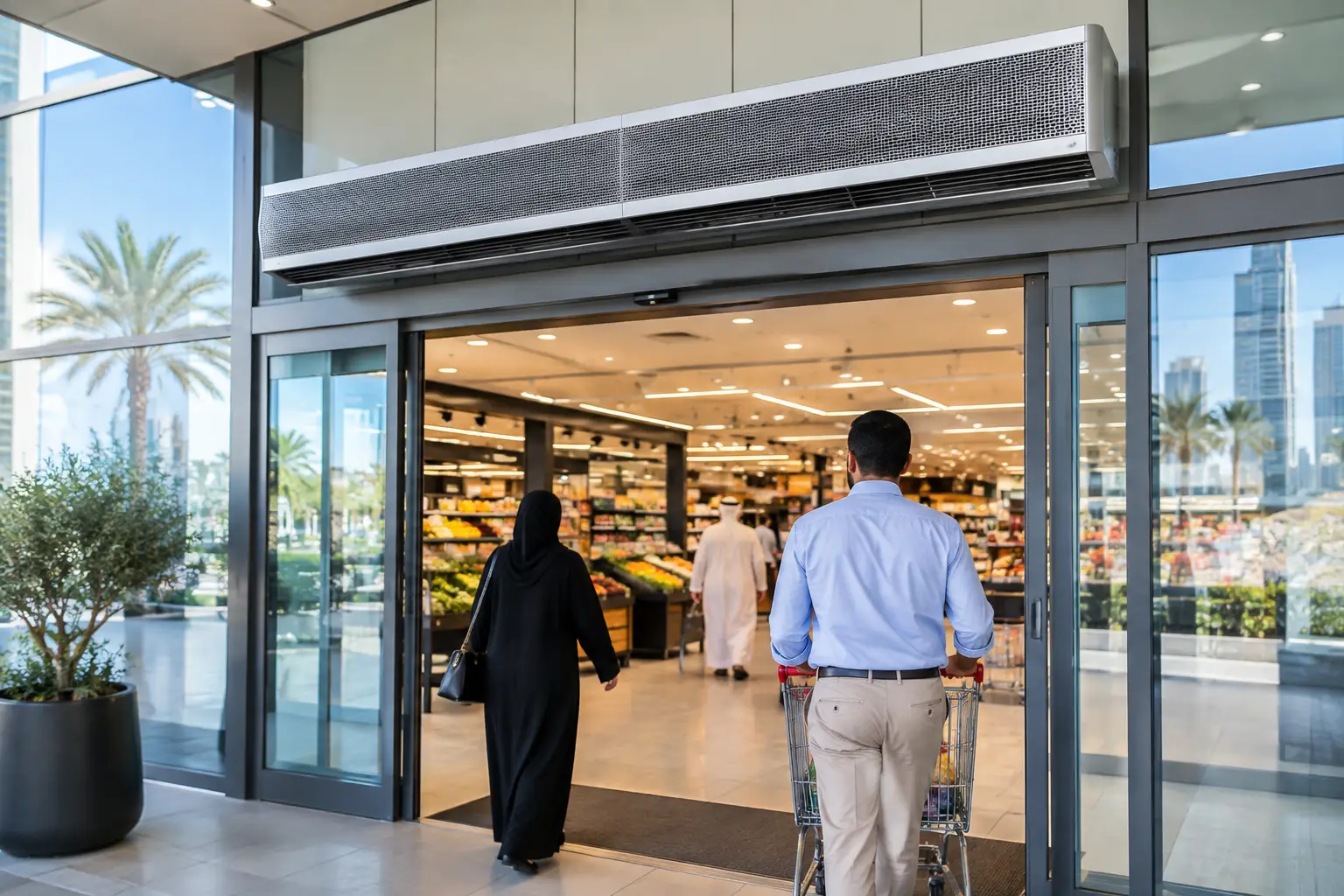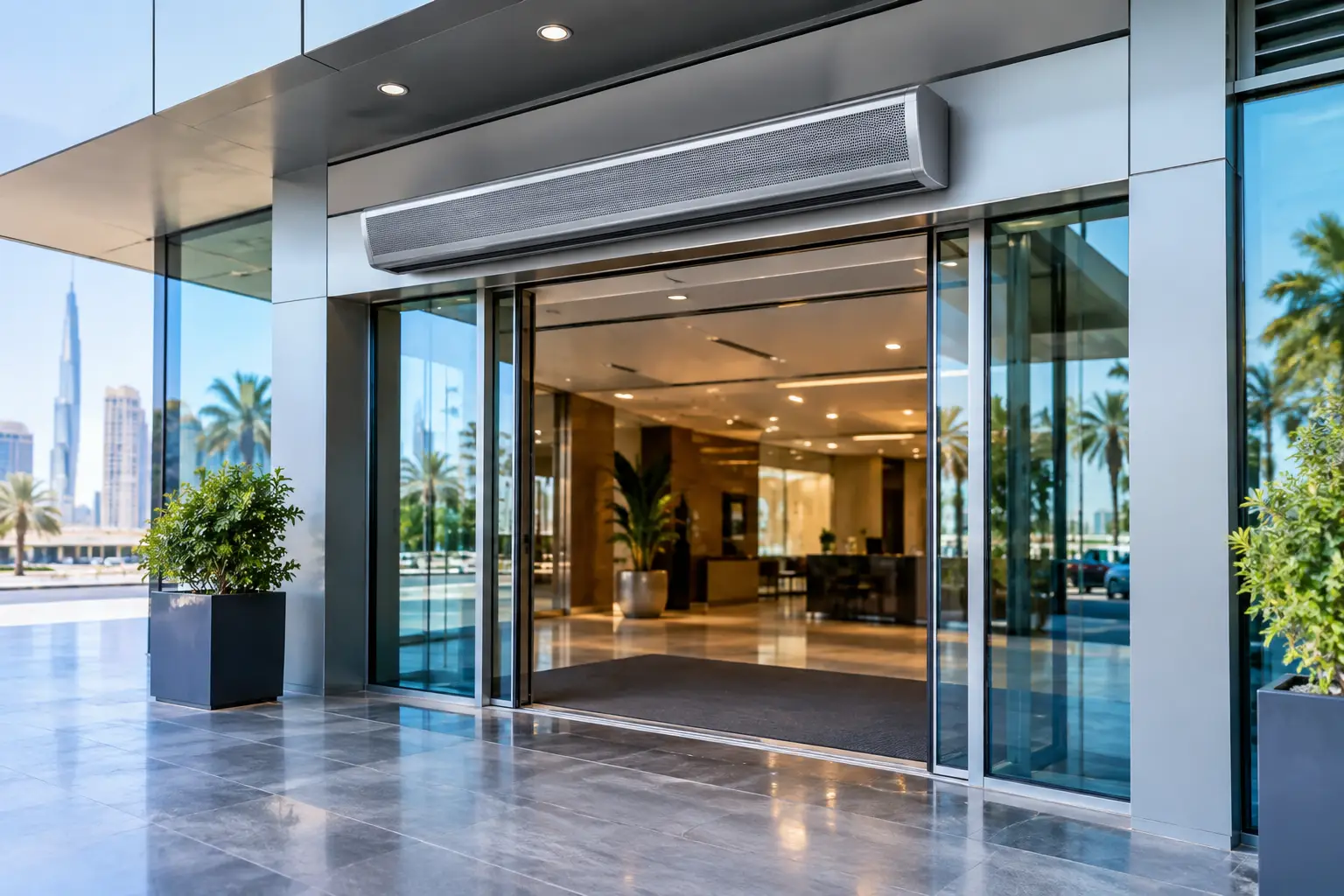
A supermarket entrance in Dubai at 2 p.m. tells you everything you need to know about air barriers. Doors keep opening, cooled air keeps spilling out, and heat, dust, humidity, and flying insects keep trying to come in. In that environment, the best commercial entrance air barriers are not a nice-to-have. They are part of the building’s operating strategy.
For facility managers, MEP contractors, and procurement teams, the question is rarely whether an air barrier is useful. The real question is which type will perform reliably at a specific doorway, under a specific traffic load, in a specific climate. That matters even more across the GCC, MENA, and African markets, where high ambient temperatures, sand exposure, and seasonal humidity can quickly expose weak specifications.
What makes the best commercial entrance air barriers effective
A commercial entrance air barrier works by creating a controlled sheet of high-velocity air across an opening. When it is correctly selected, that air stream reduces the exchange between conditioned indoor air and the harsher outside environment. The result is lower cooling loss, better indoor comfort, and improved control over dust, insects, and moisture migration.
But effectiveness depends on more than installing any air curtain above a door. Performance comes from the relationship between mounting height, air volume, discharge velocity, doorway width, and the surrounding pressure conditions. A unit that performs well at a standard office entry may fail at a hypermarket entrance, a loading access point, or a high-frequency hospitality doorway.
This is why the best commercial entrance air barriers are usually selected by application, not by price alone. A cheaper unit with insufficient throw will run continuously and still leave the opening exposed. A stronger, properly matched system often delivers better energy performance and fewer complaints from operations teams.
Why hot-climate sites need a stricter standard
In tropical and desert environments, entrance protection is under constant pressure. High outdoor temperatures increase the cooling penalty every time doors open. In coastal cities, humidity adds another layer of load. In industrial zones and roadside retail, dust and airborne particles become a daily maintenance issue.
That changes the specification standard. Buyers in Riyadh, Doha, Abu Dhabi, Cairo, Lagos, or Nairobi cannot rely on generic recommendations written for mild climates. They need air barrier systems built to maintain separation when outdoor conditions are aggressive and door cycles are frequent.
A unit intended for these markets should be judged on motor durability, airflow stability, casing quality, and its ability to maintain an effective air stream without excessive noise or wasted power. In practical terms, that means looking for engineered commercial and industrial models rather than light-duty products dressed up for commercial use.
Best commercial entrance air barriers by application
The right category depends on the door and the operating pattern around it.
Recessed ceiling air barriers for premium entrances
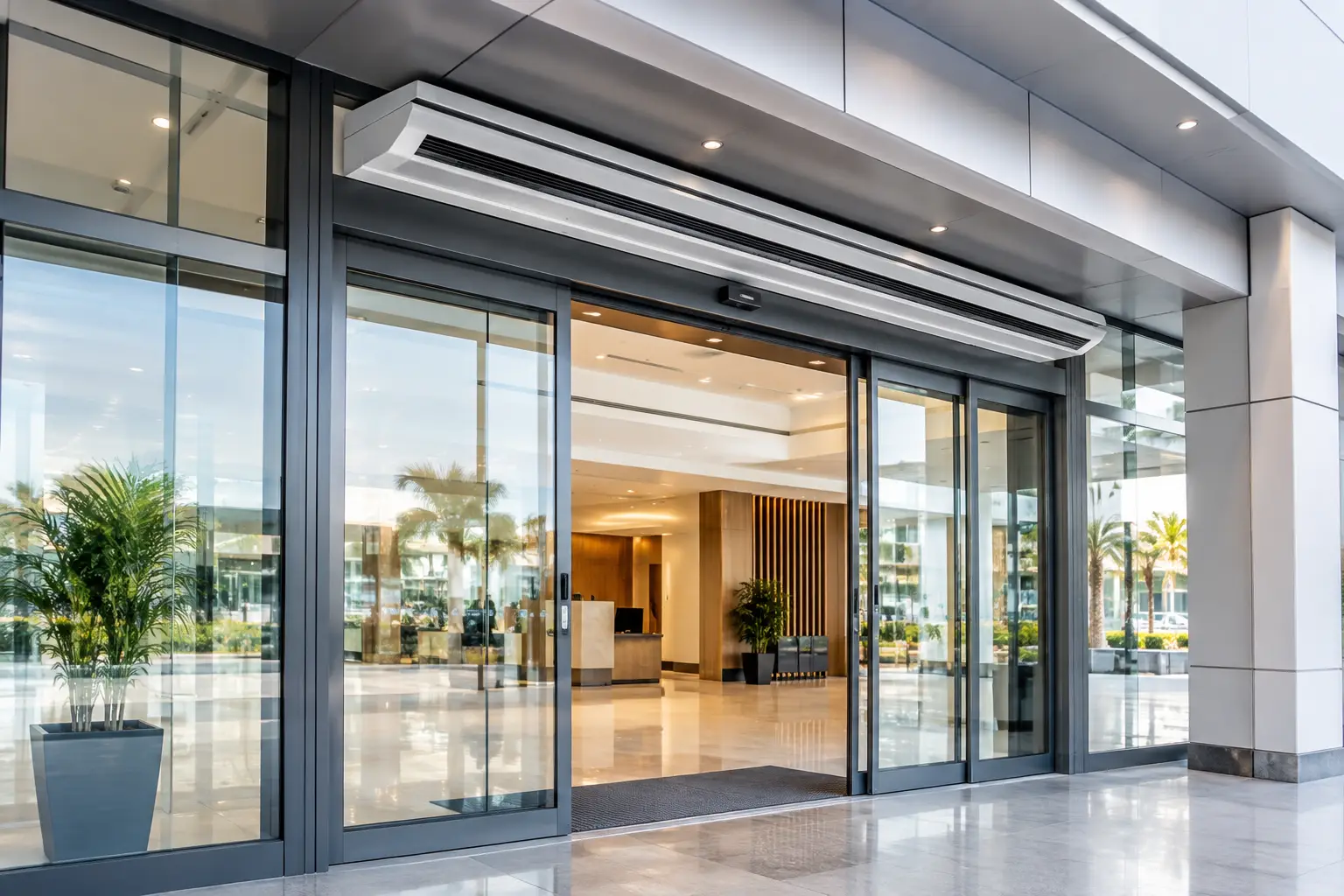
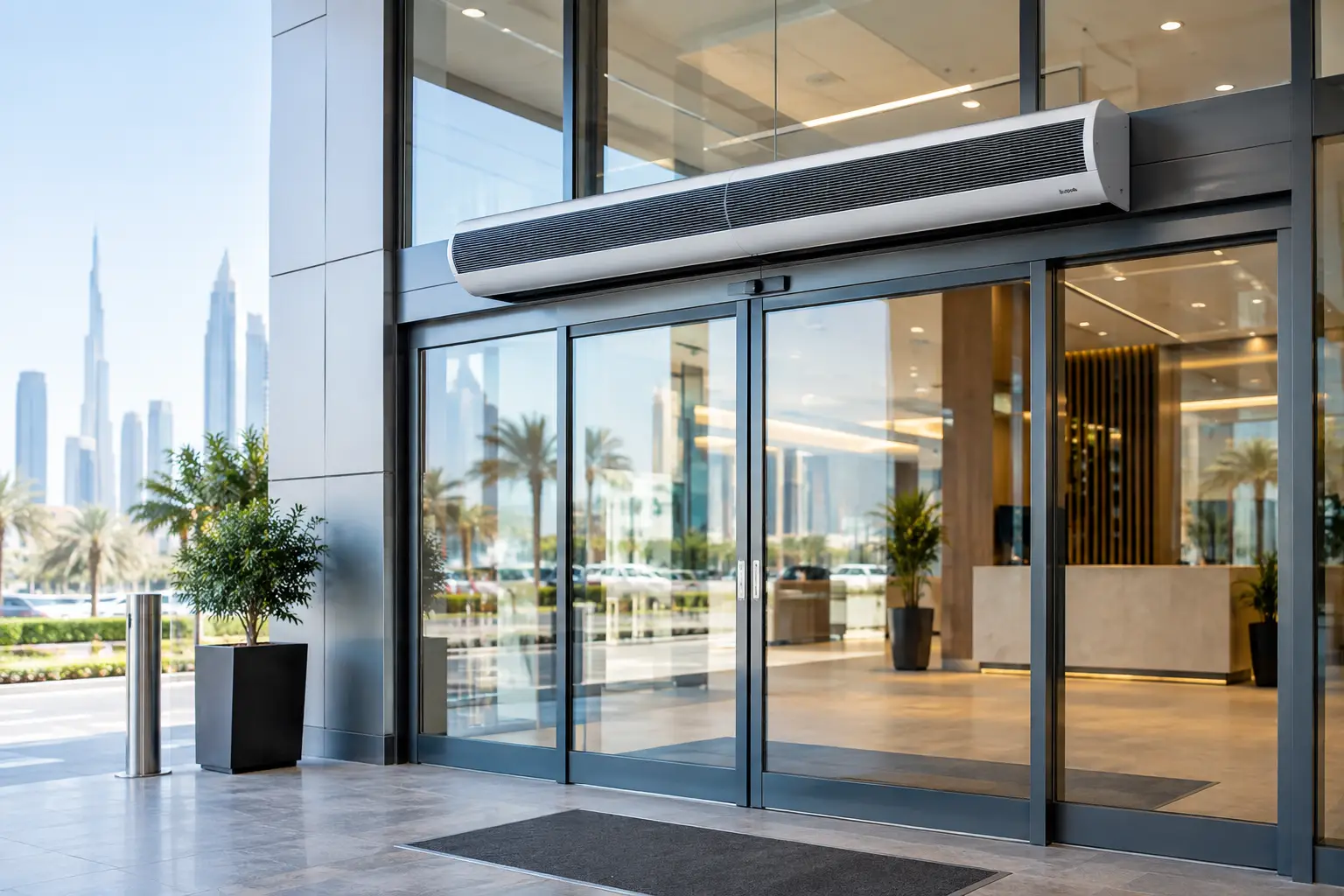
Recessed ceiling models suit commercial spaces where appearance matters, such as hotels, corporate lobbies, premium retail, and higher-end public buildings. They keep the entrance line clean while still delivering air separation at the doorway.
The trade-off is that ceiling coordination becomes more important. Consultants need enough void space, proper access for servicing, and an installation layout that preserves airflow performance. If the architectural brief is strict but the entrance is still exposed to heat and humidity, recessed systems can be the right answer as long as design coordination happens early.
Centrifugal commercial units for reliable daily performance
For many offices, restaurants, retail units, clinics, and standard commercial entrances, centrifugal commercial systems are the practical middle ground. They typically offer stable airflow, dependable motor performance, and a better fit for repeated daily operation than lighter cross-flow designs.
These units are often the best choice when the priority is simple and effective entrance control with a strong balance between capital cost and operational value. In hot-weather markets, that balance matters. The unit has to reduce HVAC loss without creating a maintenance burden.
High-performance commercial systems for busy public-facing sites
High-traffic entrances need more than baseline coverage. Hypermarkets, malls, food retail, transport-connected facilities, and hospitality venues often deal with constant door cycling and larger openings. In those cases, a higher-performance commercial system is usually the better fit.
Here, the difference shows up in consistency. A stronger unit maintains a more stable air barrier during busy periods, which helps protect comfort near the entrance and reduces the load on downstream cooling equipment. If complaints tend to come from entrances that never seem to stay under control, the issue is often under-specification rather than poor operation.
Industrial centrifugal air barriers for heavy-duty openings
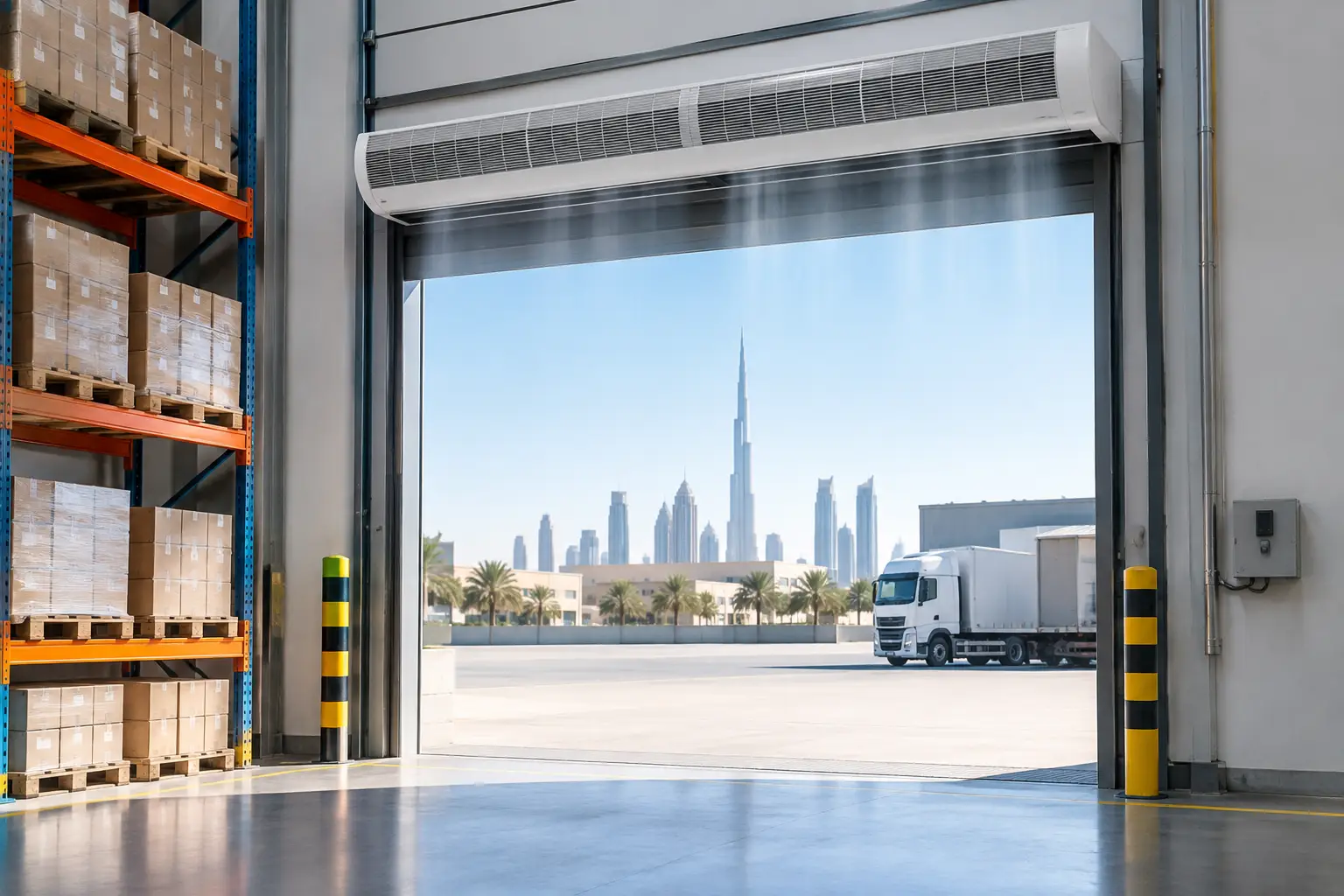
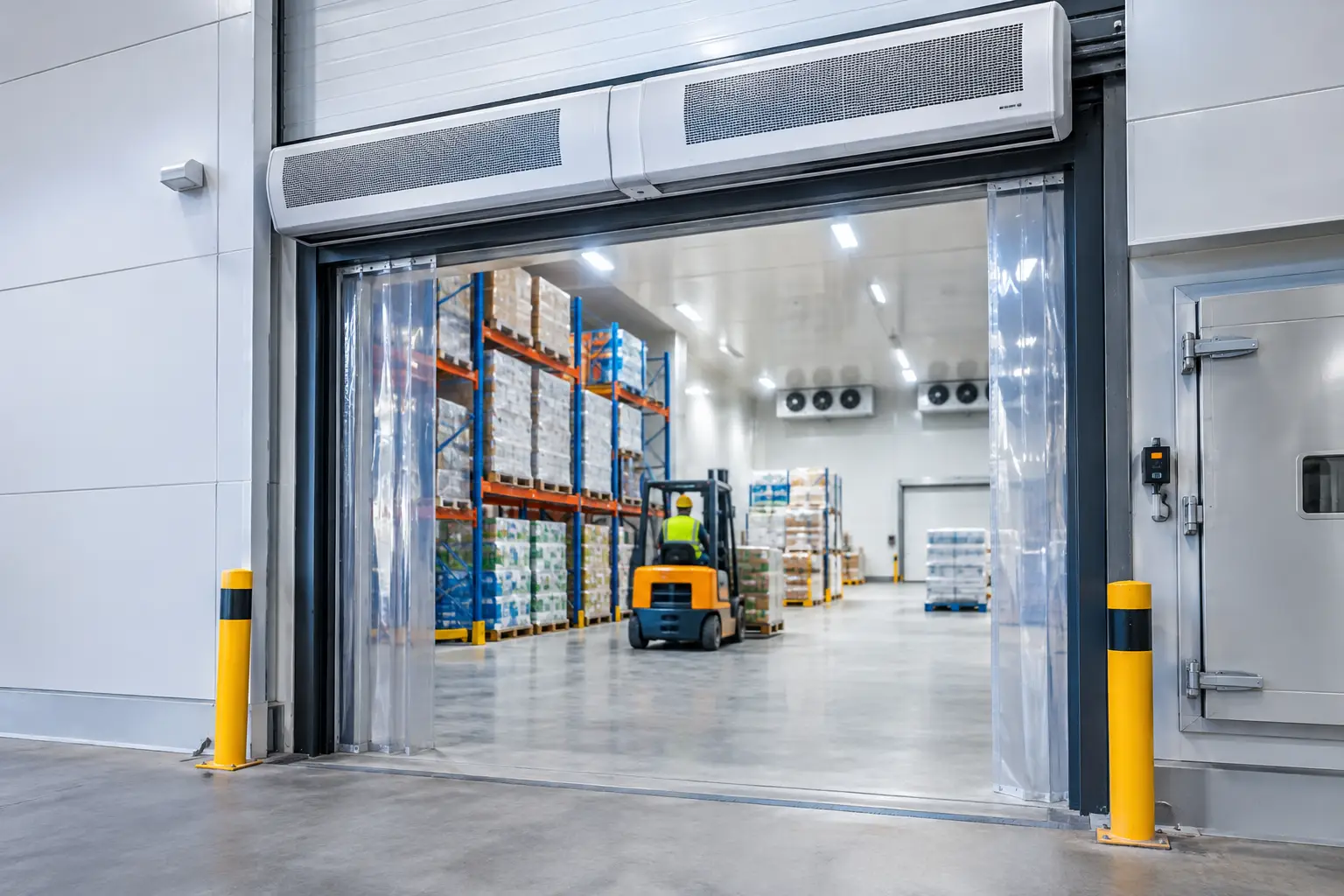
Industrial plants, workshops, logistics areas, and service entries require a different class of equipment. Openings may be higher, wider, or exposed to stronger environmental pressure. Dust control may matter as much as cooling retention.
For these applications, industrial centrifugal series units are usually the correct route. They are built for heavier use and tougher conditions, with airflow characteristics suited to demanding openings. The decision here is rarely about appearance. It is about maintaining a functional barrier where standard commercial equipment would be overwhelmed.
How to evaluate air barrier performance before you specify
The best buying decisions usually come from asking better technical questions early.
Start with the doorway, not the catalog
Door height and width come first. A narrow retail door and a wide hospitality entrance are different engineering problems. The same applies to openings with vestibules versus direct exposure to outside conditions.
If the entrance is taller than average or regularly exposed to wind and pressure shifts, the unit must have enough throw and discharge strength to reach the floor zone effectively. Without that, the air barrier looks active but leaves the lower opening vulnerable.
Consider traffic pattern and door operation
A swinging door, a sliding automatic entrance, and a loading access point all create different operating conditions. High-frequency openings increase infiltration pressure and raise the value of a stronger air curtain system.
This is where many projects get value wrong. A lower-cost unit may appear acceptable on paper, but heavy footfall changes the requirement. Busy entrances need equipment sized for real operating intensity, not ideal conditions.
Match the unit to the climate threat
In desert locations, airborne dust and heat gain are often the primary concerns. In tropical coastal settings, humidity control becomes more significant. In food-related environments, insect control can be a major driver alongside energy savings.
That mix should shape the recommendation. The best commercial entrance air barriers are not identical across every site because the problem itself is not identical.
Look at serviceability and lifecycle cost
Facility teams live with equipment long after installation. Access for cleaning, motor reliability, and component quality matter because neglected or difficult-to-service units lose performance over time.
Noise also matters, especially in hospitality, offices, and customer-facing retail. A stronger unit is not automatically a louder or worse one, but poor selection can create that outcome. The aim is effective air isolation with acceptable acoustics for the setting.
Common mistakes that lead to poor results
One of the most common mistakes is choosing by door width alone. Width matters, but mounting height and environmental exposure matter just as much. Another mistake is assuming all commercial units perform similarly. They do not. Motor design, blower configuration, and air discharge profile create real differences in barrier quality.
A third issue is treating the air barrier as a cosmetic accessory instead of a mechanical control device. Once a site is paying heavily for conditioned air, the entrance becomes an energy boundary. If that boundary is unmanaged, cooling systems work harder than they should.
There is also the problem of generic specification. A product that seems fine for a moderate urban entrance may struggle in a hot, dusty external exposure in Muscat or at a humid hospitality entrance in coastal East Africa. Climate-specific selection is not marketing language. It directly affects performance.
Choosing a supplier, not just a model
For B2B buyers, equipment supply should include application guidance. The right supplier should ask about entrance dimensions, mounting height, operating hours, traffic volume, and the local climate challenge before recommending a unit. That consultation step is especially important on mixed-use projects where front-of-house entrances and service entries may need different air curtain categories.
This is where a specialist supplier brings more value than a commodity seller. The conversation shifts from product availability to operational fit. For projects across the UAE, Saudi Arabia, Qatar, Egypt, Nigeria, Kenya, and similar hot-weather markets, that fit determines whether the system becomes a measurable energy-control asset or just another line item.
FreezeeX focuses on that application-based approach, with air curtain ranges designed for commercial and industrial use in tropical and desert conditions. The point is not to push a single model into every doorway. It is to match the barrier performance to the real entrance problem.
If you are comparing options for a hotel, hypermarket, cold storage access point, office tower, or industrial facility, the best next step is a technical review of the opening, traffic pattern, and climate exposure. Request a consultation or quote based on your project conditions, and specify an air barrier system that protects cooling performance where it matters most – at the entrance.