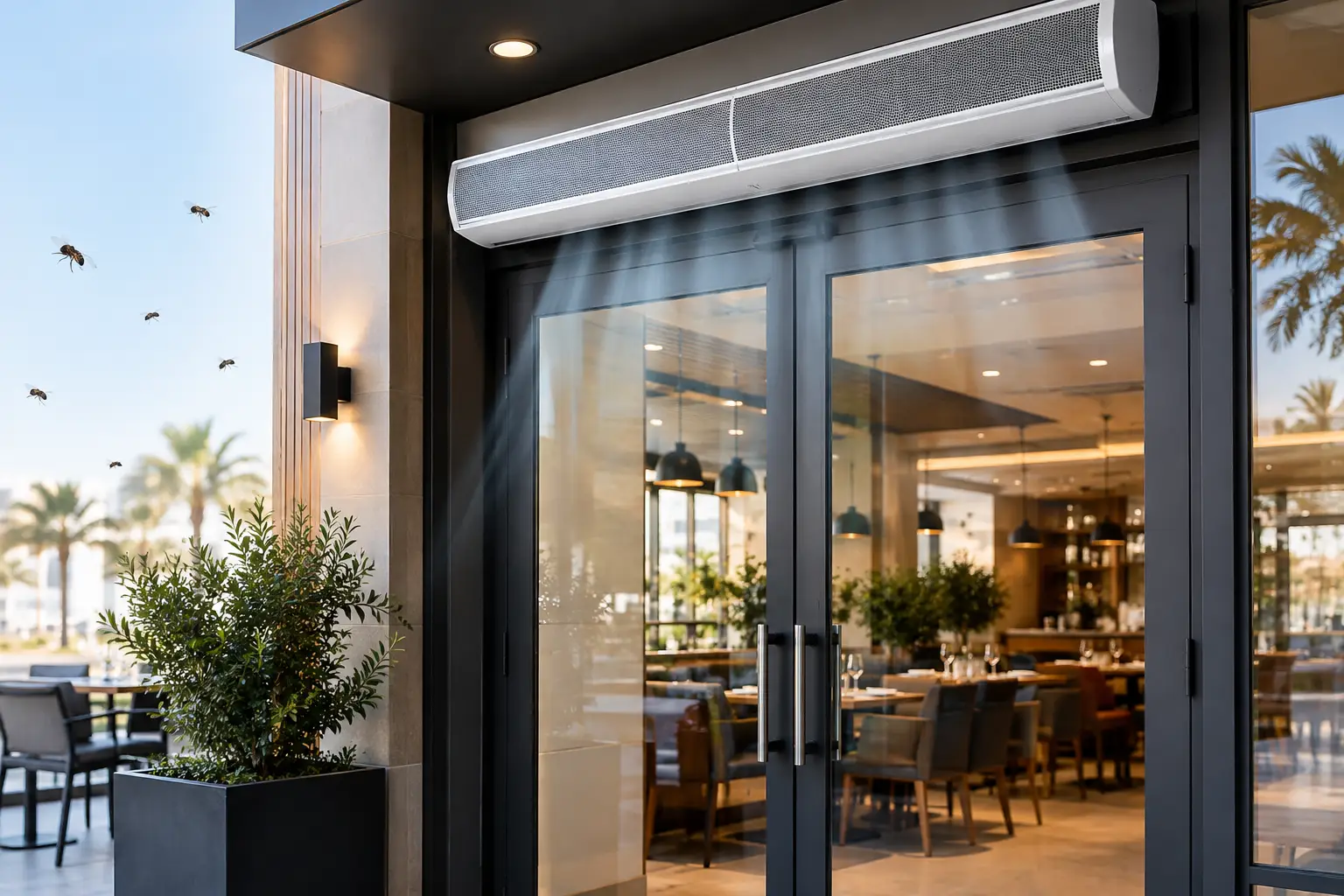
A restaurant entrance can become an insect entry point in seconds. To prevent insects at restaurant entrances, operators need more than a clean doorway or occasional pest-control treatment. They need an entrance strategy that maintains a reliable air barrier while customers, delivery teams, and staff move through the building.
This is particularly relevant in Dubai, Riyadh, Doha, Muscat, Cairo, Lagos, and other hot, humid, or dusty markets. Open doors bring in more than guests: flies, mosquitoes, airborne dust, humidity, and outdoor heat can all affect dining comfort, hygiene controls, and cooling costs. A properly specified commercial air curtain helps protect the opening without slowing customer traffic.
Why restaurant entrances attract insects
Restaurants create the conditions insects look for: food aromas, moisture, lighting, waste-handling activity, and a consistently open path from outdoors to conditioned indoor space. Front doors may be open frequently during busy service, while side and rear entrances often handle deliveries, waste removal, and staff movement.
The risk is not limited to a visible insect problem in the dining area. Insects that enter through public or service doors can create sanitation concerns near food preparation zones, disrupt customer experience, and increase the burden on cleaning and pest-management programs.
In tropical and desert climates, this challenge is compounded by the pressure difference between hot outdoor air and cooled indoor areas. Every door opening can pull warm, humid, dust-laden air inward. The same opening that allows insects inside also places more demand on the restaurant’s HVAC system.
What actually prevents insects at restaurant entrances?
No single measure is sufficient for every restaurant. Effective entrance protection combines building operation, sanitation discipline, and engineered air isolation. An air curtain is especially valuable because it creates a high-velocity stream of air across the full door opening, making it difficult for flying insects to cross when the door is open.
Unlike physical strip barriers or closed-door policies, an air curtain can maintain visibility and customer flow. This matters at high-traffic restaurant entrances where hosts, guests, servers, and delivery personnel need unobstructed access.
A practical prevention plan usually includes these connected measures:
- A correctly sized commercial air curtain above or beside each frequently used entrance
- Door-closing discipline for low-traffic and back-of-house doors
- Clean waste storage and scheduled removal away from customer entry points
- Sealed gaps around frames, thresholds, and service penetrations
- Exterior lighting and landscaping choices that do not draw insects directly toward doors
- Routine inspection of door hardware, air curtain operation, and nearby sanitation conditions
Air curtains do not replace professional pest management where it is required. Their role is to reduce insect access at the opening itself, limiting the frequency with which insects reach the interior in the first place.
Why an air curtain is effective at a restaurant door
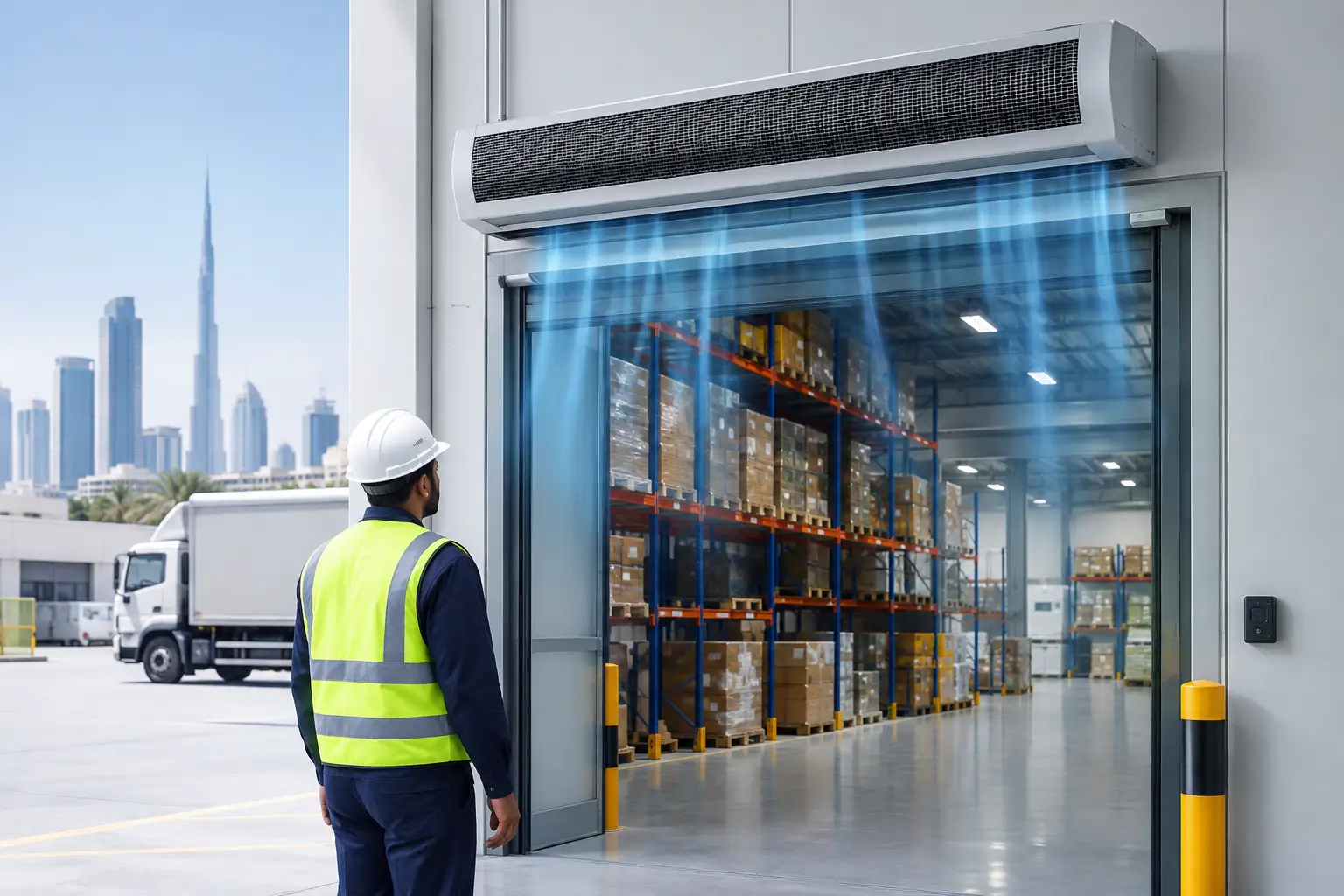
An air curtain works by projecting a controlled stream of air downward across an open doorway. When designed for the mounting height, doorway width, exposure conditions, and traffic pattern, this stream acts as an invisible barrier between the indoor and outdoor environments.
For restaurant operators, the operational benefits extend beyond insect control. The same air barrier can reduce the intrusion of hot air, humidity, dust, and odors while helping conditioned air remain inside. That can support a more stable indoor environment near the entrance, where guests may otherwise notice warm drafts or uncomfortable humidity.
The air stream must reach the threshold
The presence of an air curtain alone is not enough. Its effectiveness depends on whether the air stream reaches the floor or threshold with enough consistency to protect the full opening. A unit installed too high, too far back from the opening, or undersized for the door width may leave gaps that insects and outdoor air can exploit.
Crosswinds also matter. A restaurant facing a busy street, open parking area, coastal frontage, or exposed mall entrance may experience side pressure that deflects the air stream. This is why air curtain selection should consider the actual site, rather than relying only on a door’s nominal dimensions.
Placement depends on the entrance type
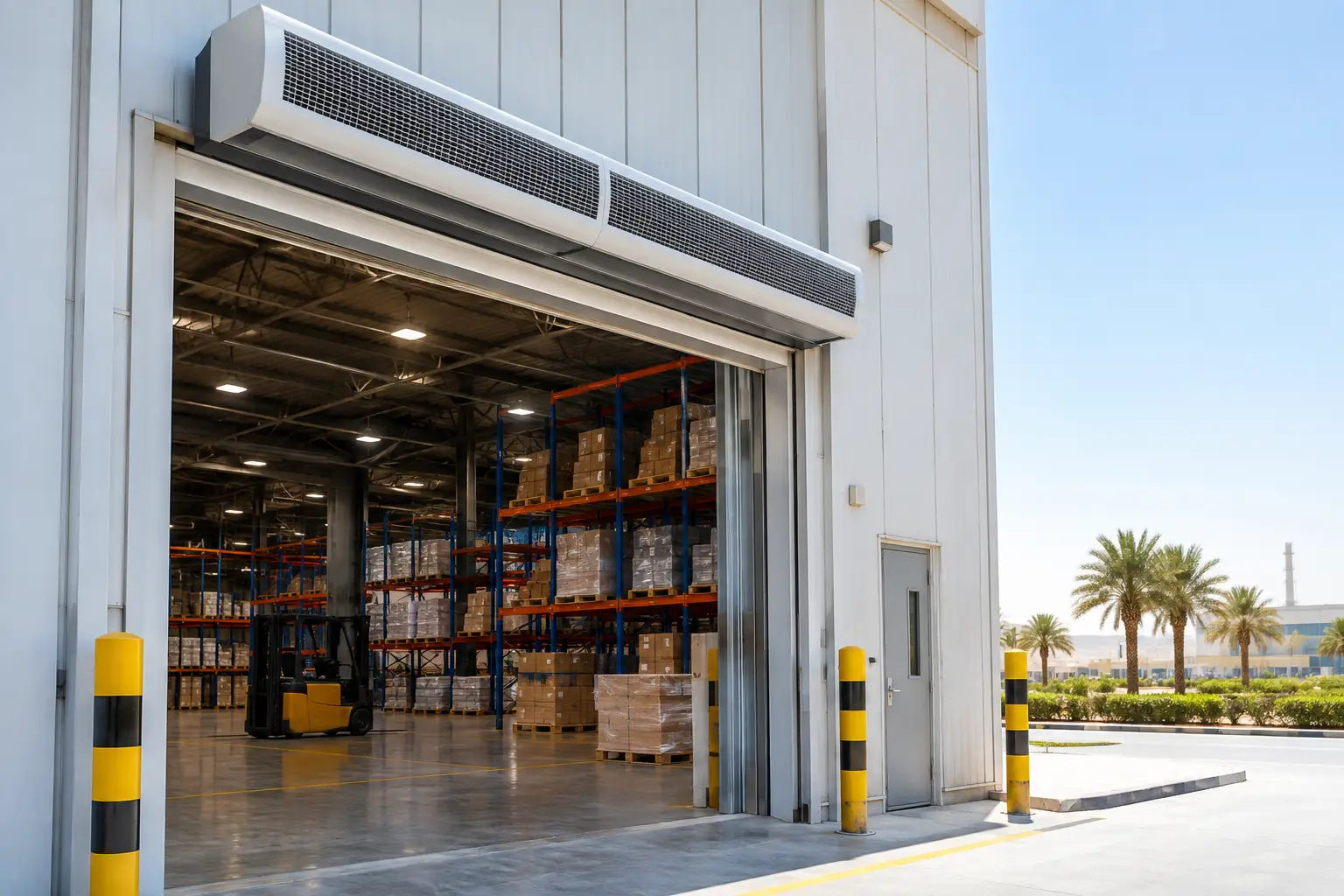
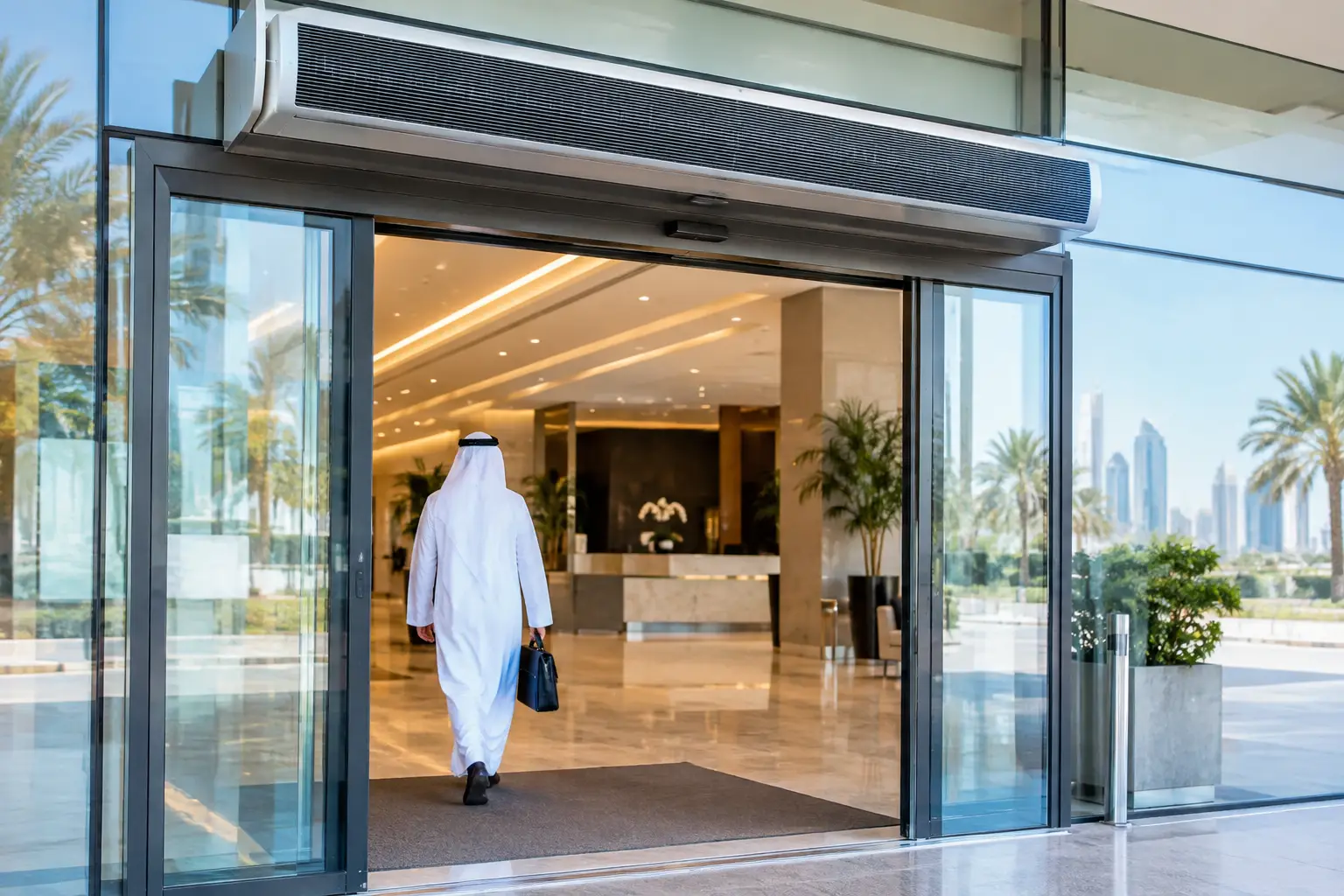
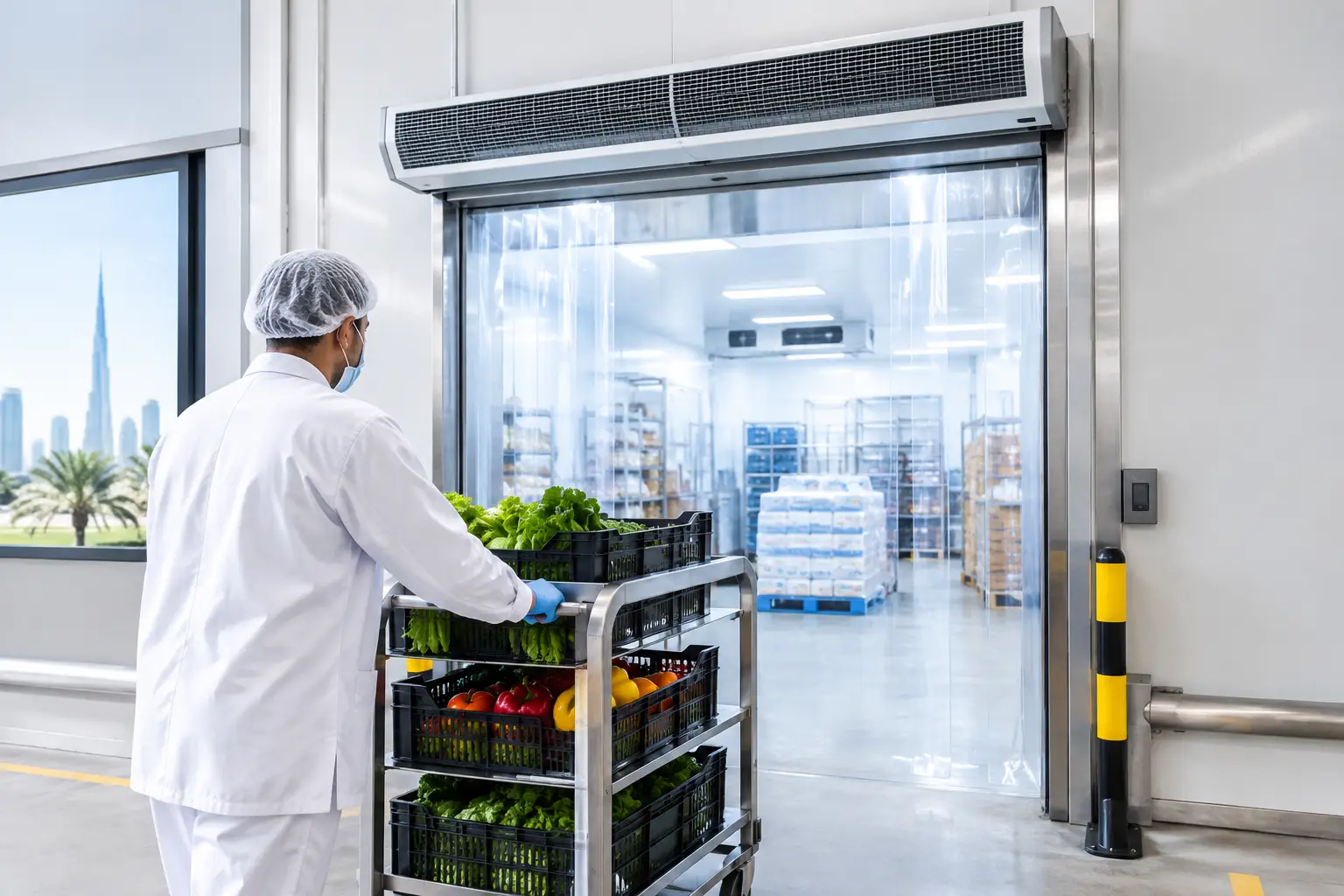
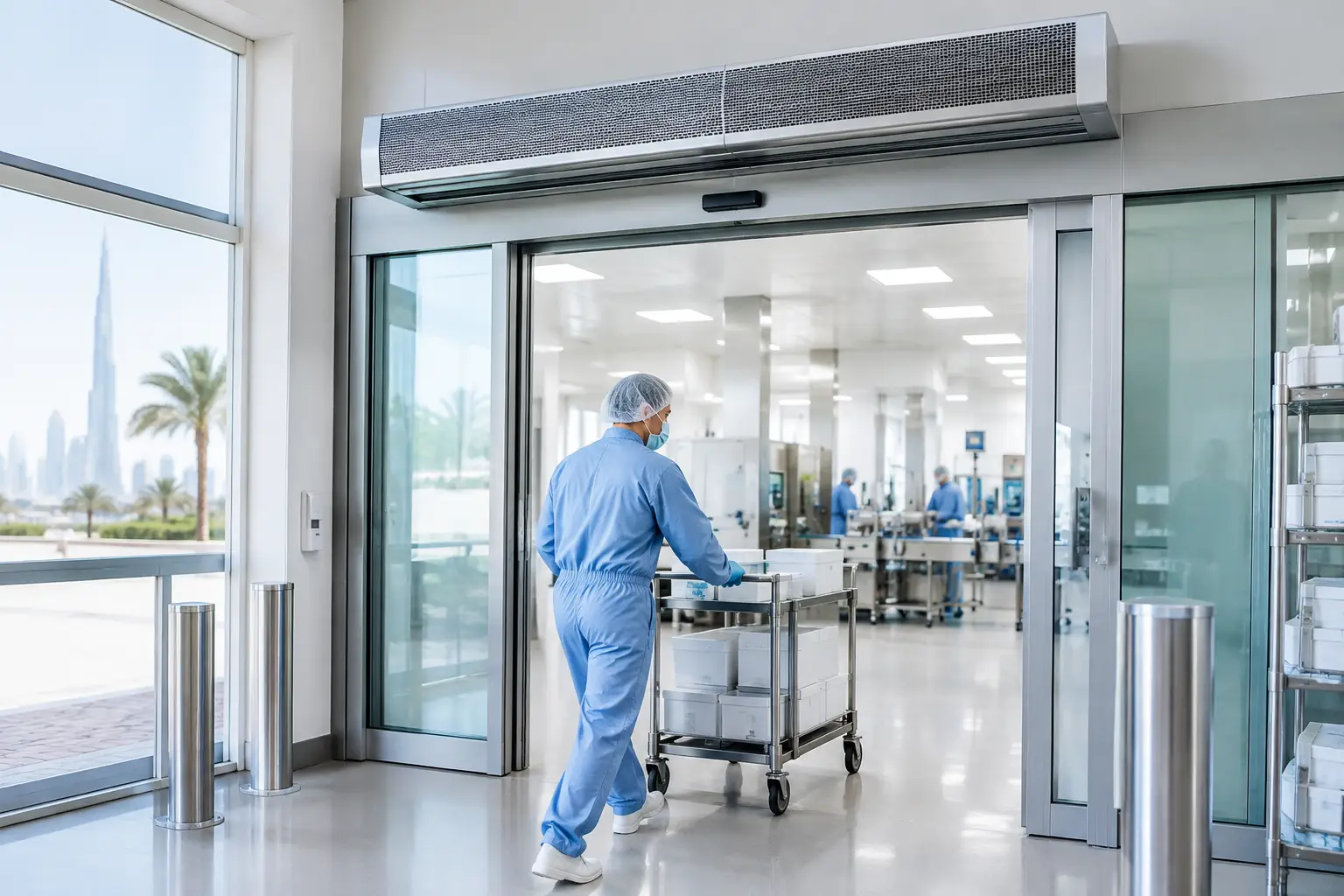
A front-facing customer entrance has different needs from a loading or waste-service door. Customer-facing doors often require a discreet installation and controlled sound levels, while rear entrances may demand a heavier-duty solution for larger openings and more demanding operating conditions.
| Entrance condition | Primary concern | Specification priority | |—|—|—| | Main dining entrance | Insects, heat, guest comfort | Coverage across the full opening, appearance, controlled noise | | Mall or food-court entrance | Frequent opening cycles and shared indoor air | Consistent air isolation and fit with building access conditions | | Back-of-house delivery door | Flies, dust, heat, and intensive traffic | Durable commercial or industrial-duty performance | | Waste-handling or receiving door | Odors, insect activity, sanitation exposure | Strong barrier performance and coordinated hygiene procedures |
How should restaurants specify an air curtain?
The right approach is an entrance assessment, not a product-only decision. A consultant, MEP contractor, or facilities team should document the opening and how it performs during actual operating hours.
Use this selection process
- Measure the clear opening. Record the usable width and mounting height, including any soffit, ceiling recess, signage, or door hardware that affects placement.
- Assess traffic and door behavior. Establish whether doors are manual, automatic, frequently held open, or used for deliveries. A busy entrance requires a solution suited to repeated operating cycles.
- Identify environmental exposure. Consider outdoor heat, humidity, dust, wind direction, nearby traffic, landscaping, and the proximity of waste areas. These conditions influence the strength and stability of the required air stream.
- Define hygiene-sensitive zones. Note whether the entrance leads directly toward dining, food preparation, storage, or receiving areas. Service entrances near food operations usually require closer attention to insect exclusion.
- Coordinate with HVAC and architecture. The air curtain should support the facility’s cooling strategy and fit the available mounting position. Recessed ceiling options may suit finished customer spaces, while commercial or industrial configurations may be better suited to exposed service openings.
- Confirm maintenance access. The equipment should remain accessible for professional inspection and cleaning. An inaccessible unit is harder to keep performing as intended in a busy food-service environment.
FreezeeX evaluates these application details before recommending an air curtain series. This consultation-led approach helps avoid a common problem: choosing equipment based only on price or door width while overlooking mounting height, pressure conditions, and traffic volume.
Common gaps that undermine insect control
A restaurant may have a clean entrance and still struggle with insects because the protective measures do not match actual operations. The most common failure is treating the front entrance as the only access point. In practice, rear delivery doors, staff doors, and waste-area doors often create the largest exposure.
Another issue is intermittent operation. If an air curtain is switched off during peak arrivals, delivery windows, or warm periods to reduce perceived energy use, the building loses the barrier precisely when it is most needed. The correct selection and operating strategy should balance barrier performance, customer comfort, and energy objectives.
Door geometry can also create problems. Double doors, unusually wide openings, sliding doors, and recessed vestibules may require a different mounting arrangement than a standard single door. For wide restaurant entrances, multiple units may be needed to provide continuous coverage instead of leaving unprotected sections.
Pair entrance air isolation with sound sanitation practice
Air curtains are most effective as part of a broader food-service hygiene plan. Keep exterior waste containers managed and positioned away from guest doors where possible. Address standing water, clean spills promptly, and inspect seals around service doors. These practices reduce insect attraction; the air curtain reduces the opportunity for insects to enter.
Facility managers should also review entrance performance after operating changes. A new outdoor dining area, revised delivery route, extended opening hours, or increased foot traffic can change the exposure profile. What worked for a low-volume daytime restaurant may not be adequate for a late-night, high-turnover venue.
A better entrance standard for hot-climate restaurants
For restaurants operating in extreme heat, tropical humidity, or dusty desert conditions, entrance protection is a building-performance issue as much as a hygiene issue. A well-specified commercial air curtain can help preserve indoor comfort, reduce cooling loss, and create a more controlled boundary at the door while customers continue moving freely.
Before your next fit-out, renovation, or facilities upgrade, arrange a consultation and quotation with FreezeeX. A site-informed recommendation can match the air curtain to your entrance dimensions, traffic pattern, mounting constraints, HVAC requirements, and climate exposure – giving your restaurant a more dependable first line of defense at every door.