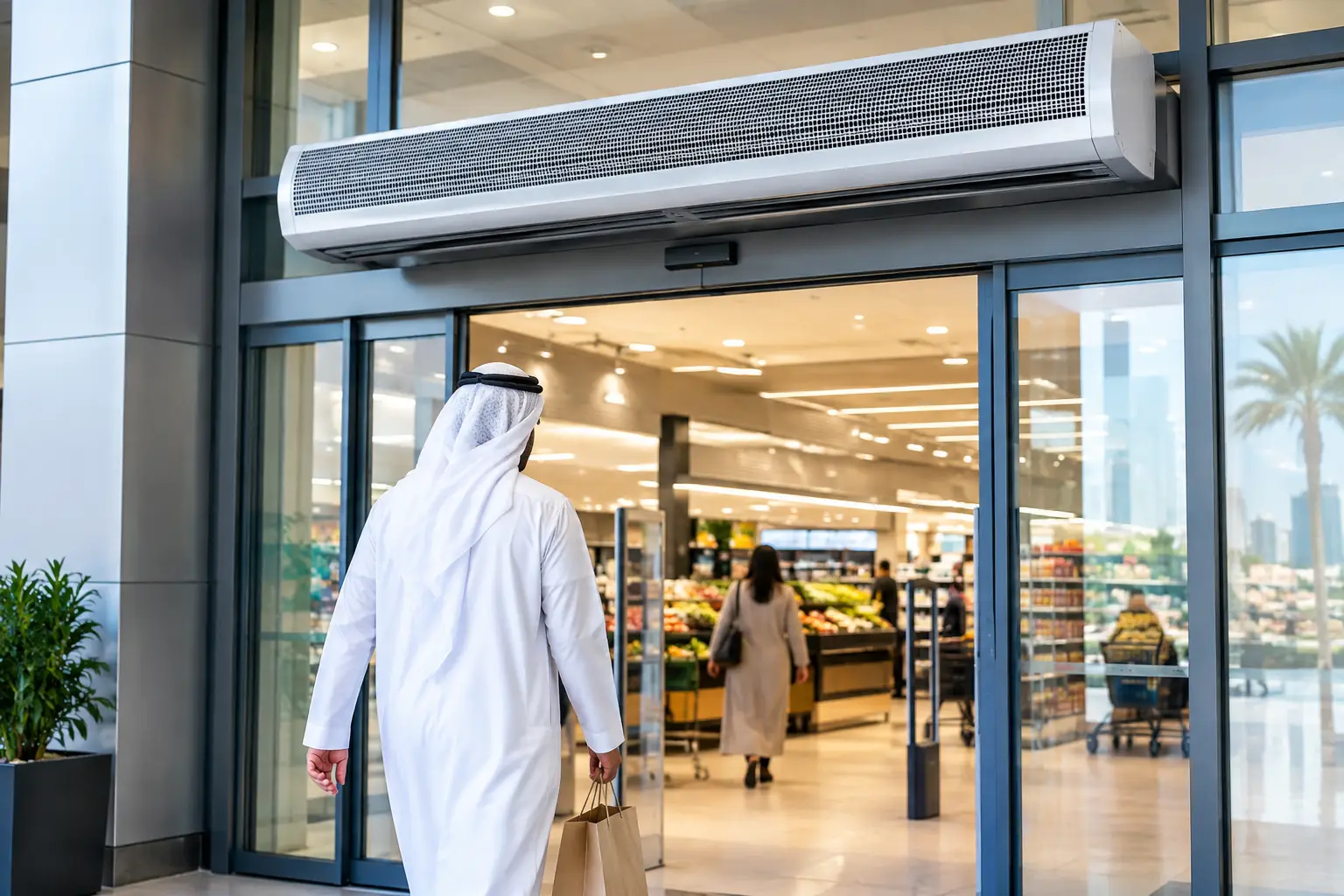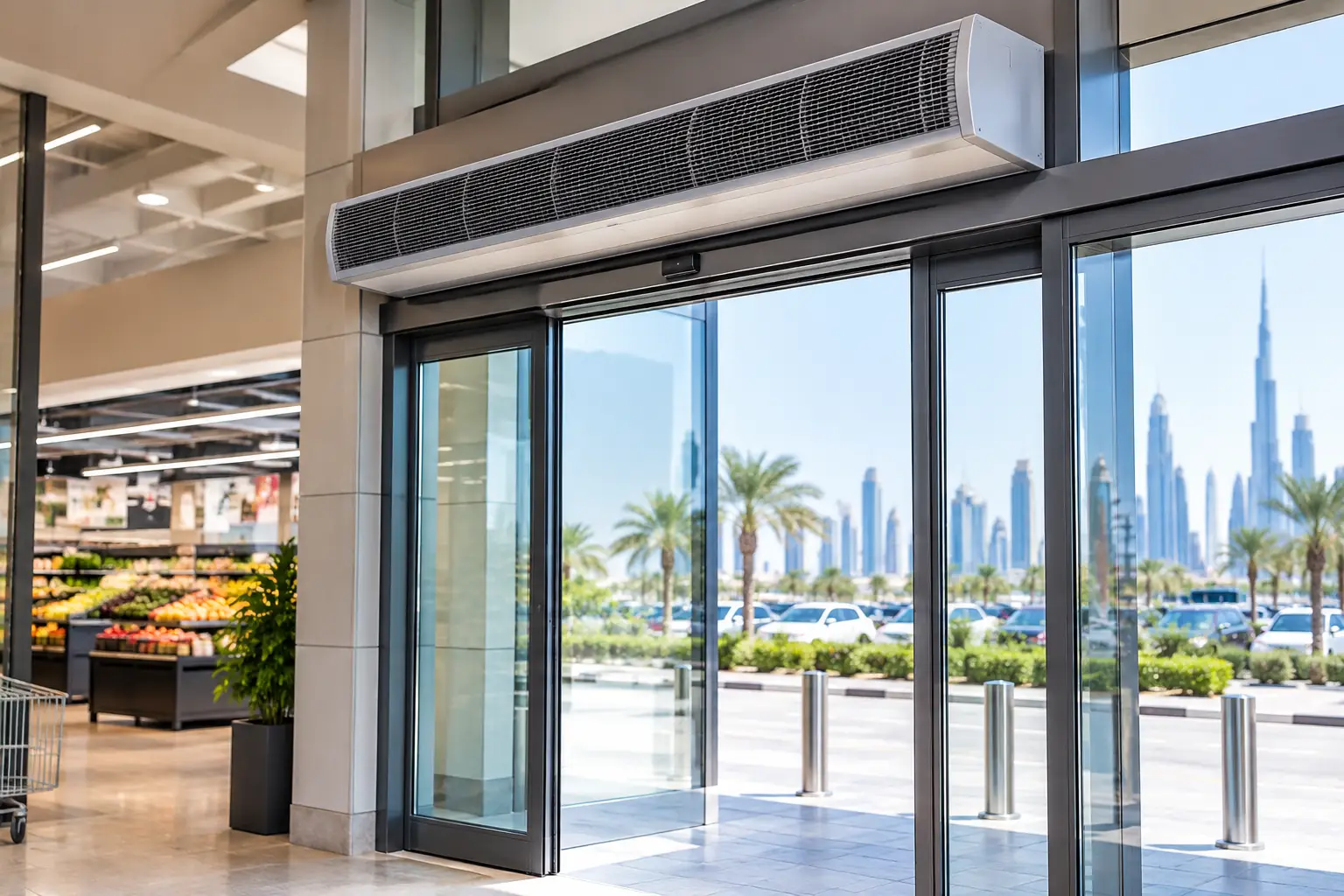
A receiving door left open during a busy delivery period can admit far more than warm outdoor air. In food plants, supermarkets, pharmaceutical facilities, and hospitals, it can also introduce dust, humidity, flying insects, odors, and airborne particles that complicate hygiene control. The top hygienic entrance barriers are therefore not simply door accessories. They are engineered systems that help maintain a controlled indoor environment while people, carts, forklifts, and deliveries continue moving.
For facilities operating in Dubai, Riyadh, Doha, Cairo, Lagos, or other hot and dusty markets, entrance protection must perform under high ambient temperatures, humidity, and frequent door openings. The right solution depends on the opening, traffic pattern, pressure conditions, and hygiene risk at that specific threshold.
What Makes an Entrance Barrier Hygienic?
A hygienic entrance barrier reduces the likelihood that external contaminants enter through an open doorway. It does not replace sanitation procedures, building pressurization, pest management, or controlled-access protocols. Instead, it supports those measures at one of the building envelope’s most vulnerable points.
For many commercial and industrial sites, an air curtain is the primary active barrier. Installed above or alongside an entrance, it projects a controlled air stream across the opening. The stream helps separate conditioned indoor air from hot, humid, dusty, or insect-prone outdoor conditions without obstructing normal movement.
Its effectiveness comes down to air coverage and air momentum at the floor, not just the unit’s published airflow volume. A system that looks substantial but loses its air stream halfway down a tall loading door will provide limited protection where it matters most. Correct unit selection, discharge angle, mounting height, and commissioning are central to hygienic performance.
Physical doors and vestibules still have a place, particularly where a door can remain closed between movements. But at entrances that must stay open for customer traffic or material handling, an air curtain can provide continuous environmental separation without slowing operations.
Top Hygienic Entrance Barriers by Application
There is no single barrier that suits every hygiene-sensitive facility. A small pharmacy entrance, a supermarket loading bay, and a food processing dispatch door face very different pressures. The most suitable options are defined by application.
1. Commercial air curtains for retail and public entrances
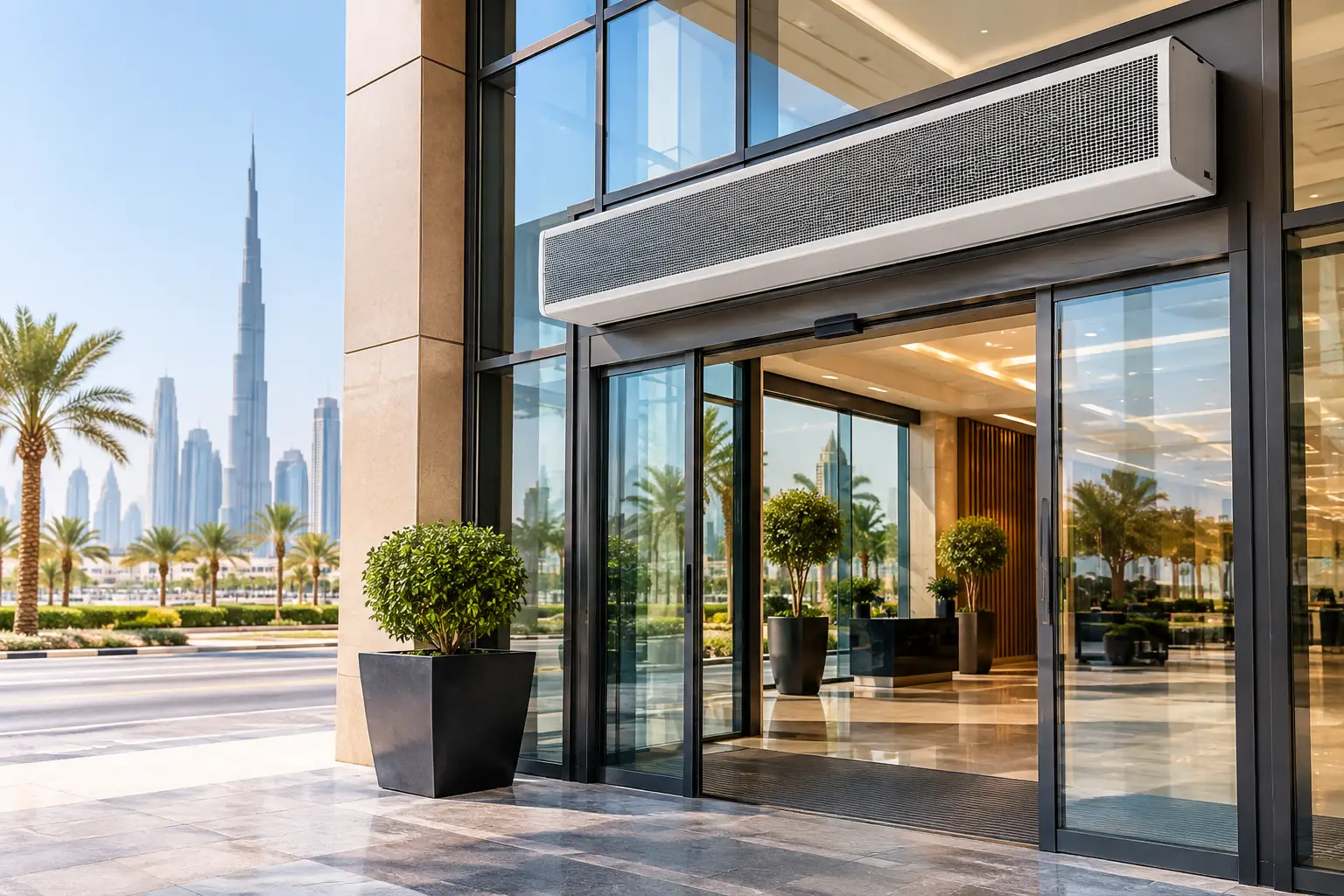
Supermarkets, hotels, restaurants, clinics, and shopping centers need an entrance barrier that protects comfort and cleanliness while remaining appropriate for customer-facing spaces. Commercial air curtains are commonly specified for standard-height doors with regular pedestrian traffic. They help limit the entry of outdoor heat, dust, humidity, and insects while reducing the burden placed on air conditioning systems.
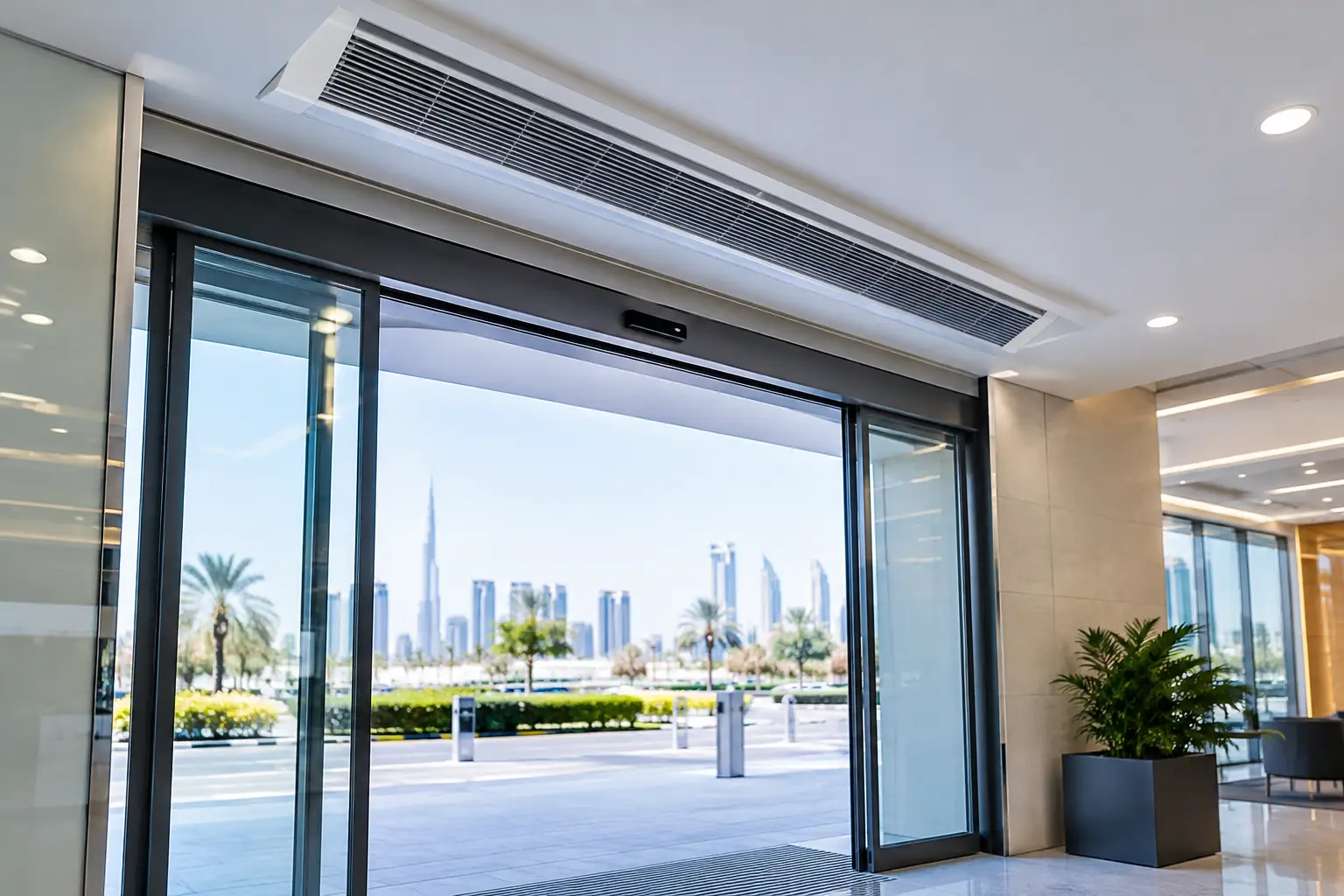
Appearance, noise level, and integration with automatic doors are practical selection factors in these applications. A recessed ceiling air curtain may suit a premium hotel lobby, healthcare reception, or mall entrance where visible equipment should be minimized. Surface-mounted commercial models can be the more practical choice where access for inspection and servicing is a priority.
For a retail entrance, the goal is not to create an aggressive blast of air. It is to maintain a stable, properly directed air seal that customers can pass through comfortably while the indoor environment remains controlled.
2. High-velocity industrial air curtains for loading doors
Warehouses, logistics centers, factories, and distribution hubs require a different approach. Their openings are often taller and wider, and the traffic includes forklifts, pallets, and frequent vehicle movements. Outdoor pressure changes can be significant, especially where large doors connect directly to yards exposed to heat, wind, sand, and dust.
Industrial centrifugal air curtains are often appropriate when higher air throw and stronger floor-level coverage are required. Centrifugal blowers are well suited to demanding duty cycles and can maintain the pressure needed for larger openings. For a high-traffic logistics entrance, the system should be sized around the full clear opening and the time the door remains open – not the nominal door size alone.
This is where underspecification becomes expensive. A light-duty commercial model may operate, but it may not form a meaningful barrier at a 16-foot or 20-foot industrial doorway. The result can be continued heat gain, dust ingress, insect activity, and unnecessary HVAC load.
3. Air barriers for food processing and packaging areas
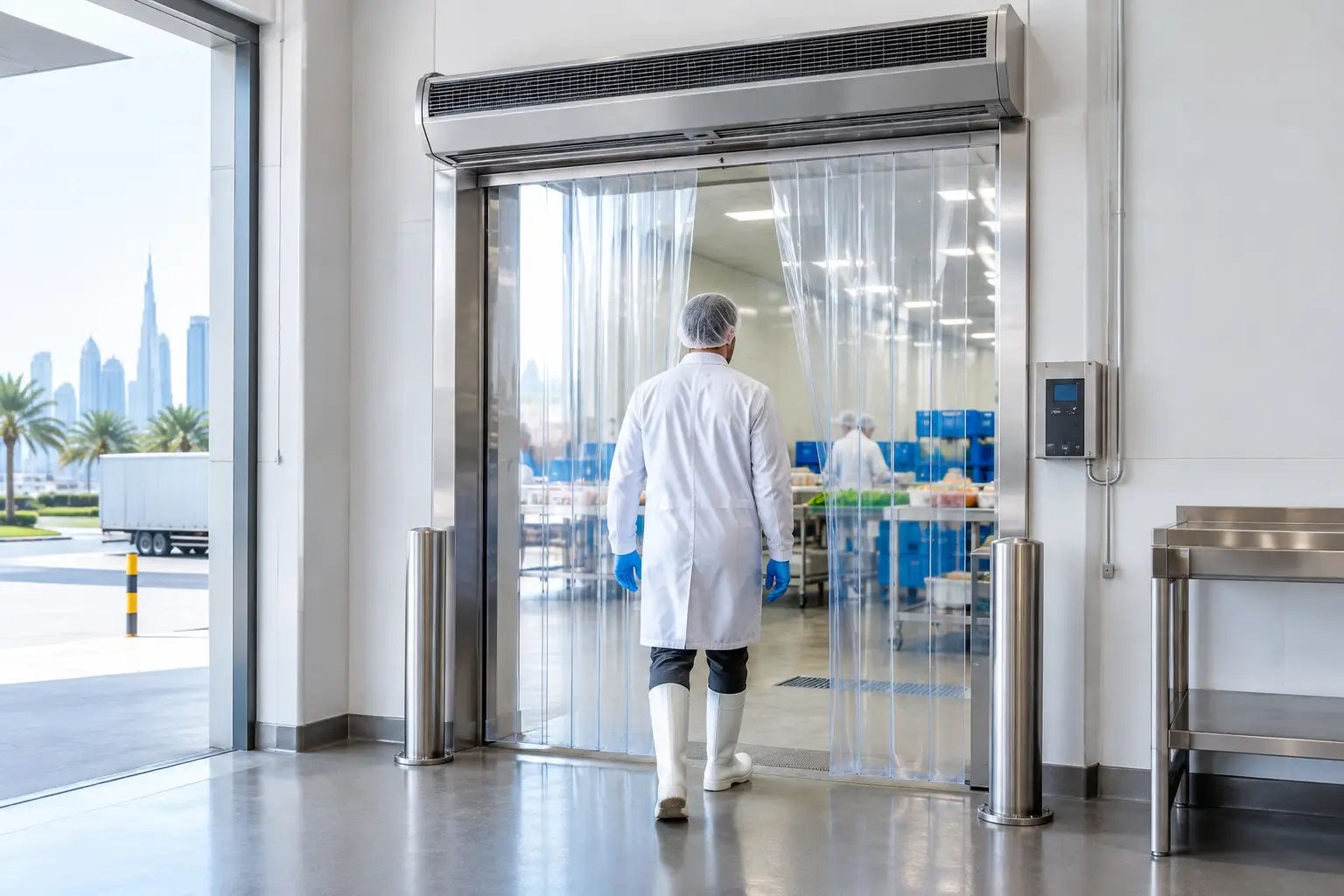
Food production, packaging, and dispatch areas require close attention to pest control, moisture migration, and process hygiene. An air curtain can help reduce exposure at exterior personnel doors, raw-material receiving areas, and finished-goods dispatch points, particularly when operations prevent doors from staying closed.
The best specification begins with the zone classification. A low-risk external dispatch door may need a powerful industrial unit designed to resist outdoor conditions. A doorway separating two internal hygiene zones may require more controlled airflow, coordinated with the facility’s pressure strategy. In either case, the air curtain should complement the site’s HACCP plan rather than be treated as a standalone hygiene control.
Consider the surrounding conditions as well. Flour dust, food particles, grease-laden environments, and washdown requirements can all influence enclosure selection, maintenance access, and cleaning procedures. Facility teams should choose equipment designed for the actual operating environment, rather than assuming every air curtain is suitable for every food application.
4. Controlled entrance protection for healthcare and pharmaceutical sites
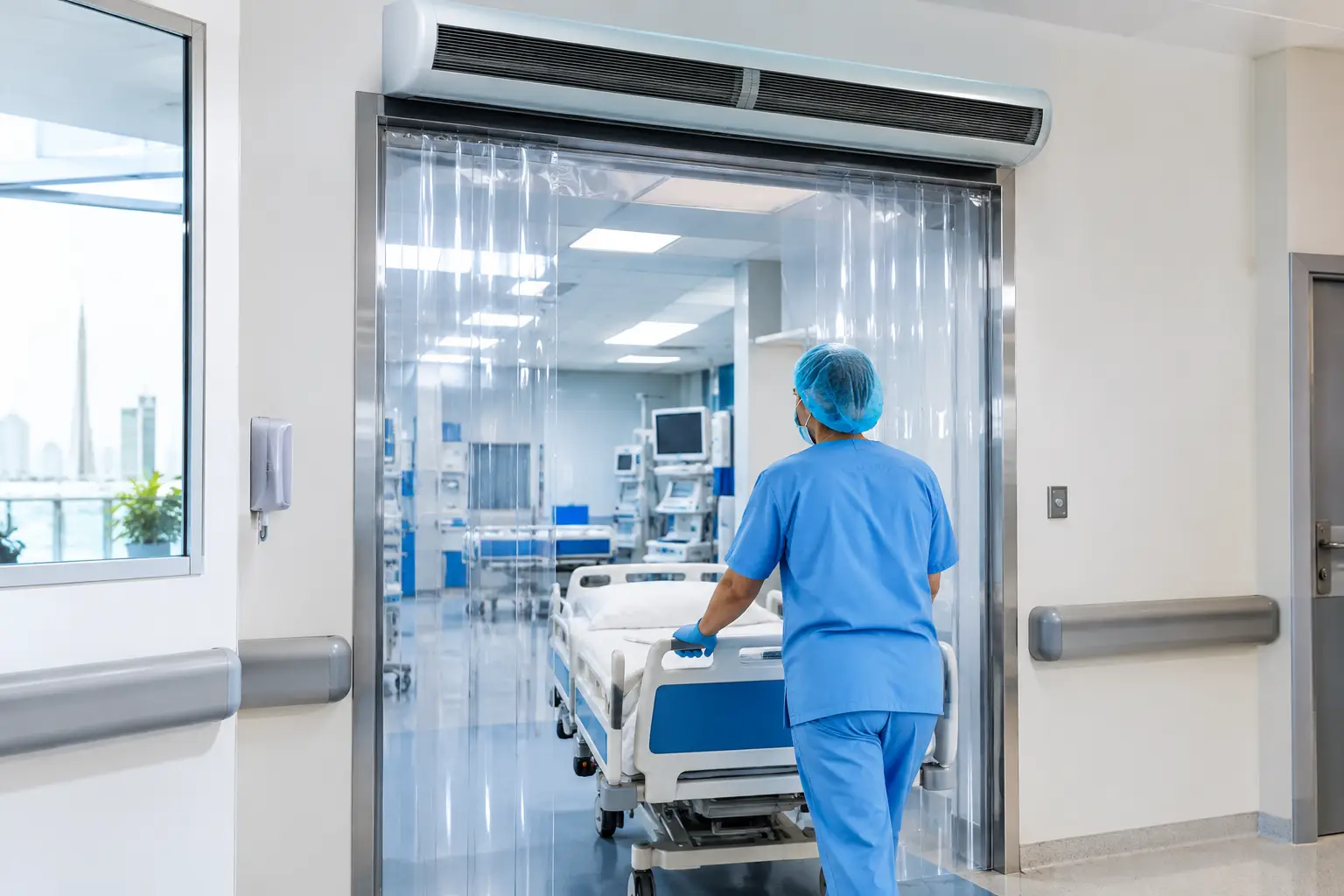
Hospitals, laboratories, and pharmaceutical facilities often have stricter requirements around pressure relationships, access control, and contamination management. An air curtain may be useful at noncritical external entrances, delivery bays, staff doors, or service corridors. However, it is not a substitute for purpose-designed cleanroom airlocks or specialized contamination-control systems where regulated processes apply.
The key question is whether the door separates a controlled zone from an uncontrolled one and how frequently it opens. Engineers should review room pressure, supply and return air arrangements, adjacent spaces, and the potential effect of the air stream on sensitive processes. A well-chosen barrier can support operational hygiene; a poorly coordinated one can disrupt airflow intent.
Selection Factors That Matter More Than Product Labels
Terms such as commercial, industrial, hygienic, and high-performance are useful starting points, but they do not complete a specification. The following factors determine whether an entrance barrier will work in practice:
- Opening dimensions and mounting height: The unit must project an effective air stream to the floor across the entire width of the opening.
- Door use and traffic volume: A pedestrian door that opens briefly needs different performance than a forklift door held open during loading.
- External climate exposure: Desert dust, coastal humidity, extreme heat, and wind can change the required air velocity and installation arrangement.
- Indoor conditions: Temperature setpoint, relative humidity, room pressure, and process sensitivity all affect the target performance.
- Mounting position: Over-door mounting is common, but side-mounted arrangements may be necessary where headroom is restricted or doors are unusually tall.
- Controls and interlocks: Door contacts, automatic activation, and variable-speed control can reduce unnecessary runtime while maintaining protection during active use.
These considerations explain why quoted airflow alone is not a reliable purchasing comparison. A unit must deliver usable velocity at the doorway, with an air pattern that remains stable despite crosswinds, stack effect, and pressure differences.
Designing for Desert and Tropical Conditions
In the GCC, MENA, and African markets, entrance barriers face conditions that are more demanding than ordinary comfort applications. Outside temperatures can be extremely high, airborne dust levels can rise quickly, and coastal locations can combine heat with substantial humidity. When a door opens, the HVAC system must counter both sensible heat and moisture entering the building.
A correctly specified air curtain helps limit that exchange. This can support more stable temperatures near entrances, improve occupant comfort, and reduce unnecessary cooling loss. At a food or pharmaceutical facility, it also reduces the environmental disturbance that can occur when hot, humid outdoor air reaches cooler controlled spaces.
Placement matters in these climates. The discharge should be aimed to create a consistent separation plane, not pushed outward so aggressively that it breaks apart in wind. For exposed loading docks, a site assessment may identify the need for higher-velocity equipment, a different discharge angle, or complementary physical controls such as dock doors and traffic procedures.
Avoid Common Specification Mistakes
The most frequent error is selecting a unit by door width alone. Height, exposure, usage, and required air velocity are equally important. Another is installing the air curtain after the project is complete, without confirming mounting clearance, electrical coordination, door controls, or maintenance access.
Hygiene-sensitive facilities should also avoid treating an air curtain as an insect-control guarantee. It is one component of a broader strategy that includes door discipline, building sealing, cleaning, drainage, waste management, and pest-control procedures. Used within that system, it can substantially improve entrance conditions.
For a project-specific recommendation, FreezeeX can review door dimensions, mounting position, traffic intensity, indoor conditions, and local climate exposure before preparing a quotation. Specify the entrance barrier around the actual operating risk, and it can protect hygiene performance without interrupting the movement your facility depends on.