
A supermarket entrance in Dubai at 2 PM tells you everything you need to know about entrance climate control. Doors keep opening, cooled air keeps escaping, and dust and humidity keep pushing in. In that setting, a centrifugal air curtain system is not an accessory. It is part of the building’s operating strategy.
For facility managers, MEP contractors, and project consultants, the real question is not whether an air curtain works. The question is which airflow design holds performance under pressure – high footfall, long operating hours, hot ambient conditions, and demanding hygiene standards. That is where centrifugal technology earns attention.
What a centrifugal air curtain system actually does
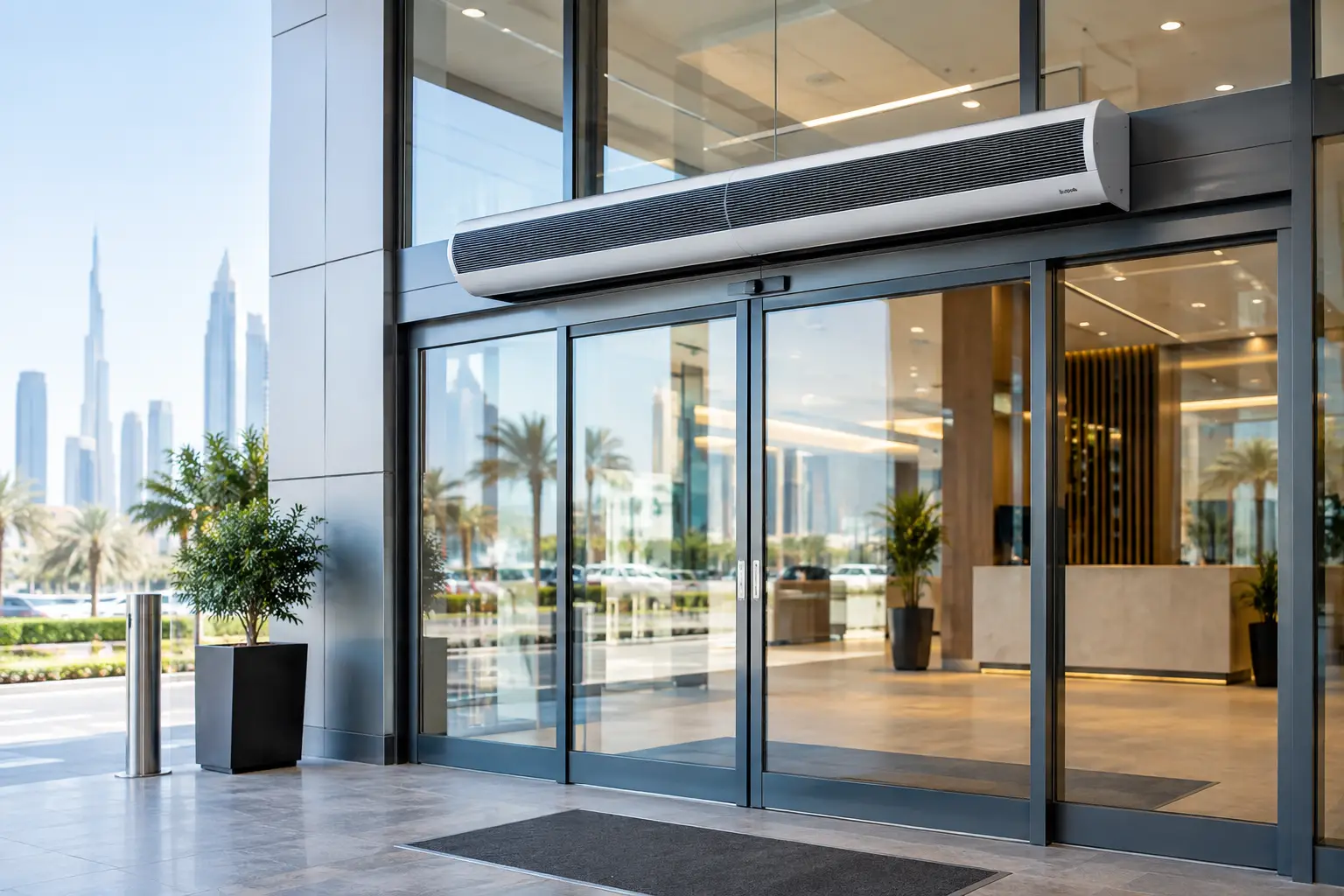
A centrifugal air curtain system creates a high-velocity air barrier across an opening to reduce the exchange between indoor and outdoor air. The purpose is straightforward: keep conditioned air in, reduce heat and dust infiltration, and support a cleaner, more stable indoor environment.
What makes the system centrifugal is the fan design. Instead of relying on axial airflow alone, it uses centrifugal blowers to generate stronger and more stable pressure characteristics. That matters in commercial and industrial entrances where airflow has to remain effective across wider door widths, heavier traffic, or more challenging external conditions.
In hot-weather markets such as the GCC, North Africa, and much of Sub-Saharan Africa, entrances are a constant weak point in the cooling envelope. Every opening increases HVAC load. Every burst of dusty or humid air affects comfort, hygiene, and operating cost. A properly selected centrifugal unit helps reduce that penalty.
Why centrifugal airflow matters in harsh climates
Not every entrance faces the same conditions. A glass-front retail entrance in Doha behaves differently from a loading bay in Lagos or a cold room access point in Riyadh. But across these environments, climate pressure is the same basic problem – extreme heat, airborne dust, humidity, and repeated door cycles.
A centrifugal air curtain system is often chosen because it can deliver stronger discharge performance and better air throw consistency than lighter-duty alternatives. That gives it an advantage where the door is taller, the opening is busier, or the outdoor air pressure is more aggressive.
This does not mean centrifugal is automatically the right answer for every project. Smaller entrances with limited traffic may not require that level of fan performance. But when the site faces serious cooling loss or contamination risk, underspecifying the air curtain usually costs more over time than choosing the stronger platform from the start.
Better cooling retention at the entrance
In a hotel lobby, hypermarket, or commercial office, the entrance is often where conditioned air is lost fastest. The HVAC system then works harder to recover setpoint conditions. Over long operating hours, that raises energy use and puts more strain on cooling equipment.
A centrifugal system helps maintain a tighter air barrier, which supports indoor temperature stability. In regions where outside temperatures stay extreme for much of the year, that operational benefit is not marginal. It directly affects running cost and occupant comfort.
Stronger resistance to dust, insects, and humidity
Many facilities are not only fighting heat. They are also managing dust ingress, flying insects, and humidity migration. For food retail, hospitality, healthcare-adjacent commercial spaces, and certain industrial facilities, that is an operational and hygiene issue.
A well-engineered centrifugal air curtain system helps limit these contaminants at the point of entry. The result is a cleaner threshold zone and less pressure on internal housekeeping and environmental control measures. Performance still depends on mounting height, discharge angle, and door conditions, but the blower design gives the system a stronger base to work from.
Where centrifugal air curtain systems make the most sense
The best applications are usually the ones where entrance conditions are too demanding for light commercial units. High-traffic retail stores, hypermarkets, industrial workshops, logistics facilities, cold storage areas, hospitality entrances, and large office lobbies are common examples.
In these environments, buyers are not looking for a decorative product. They are looking for controlled air separation that holds up during daily operations. The heavier the traffic and the harsher the external environment, the more valuable centrifugal airflow becomes.
Commercial entrances
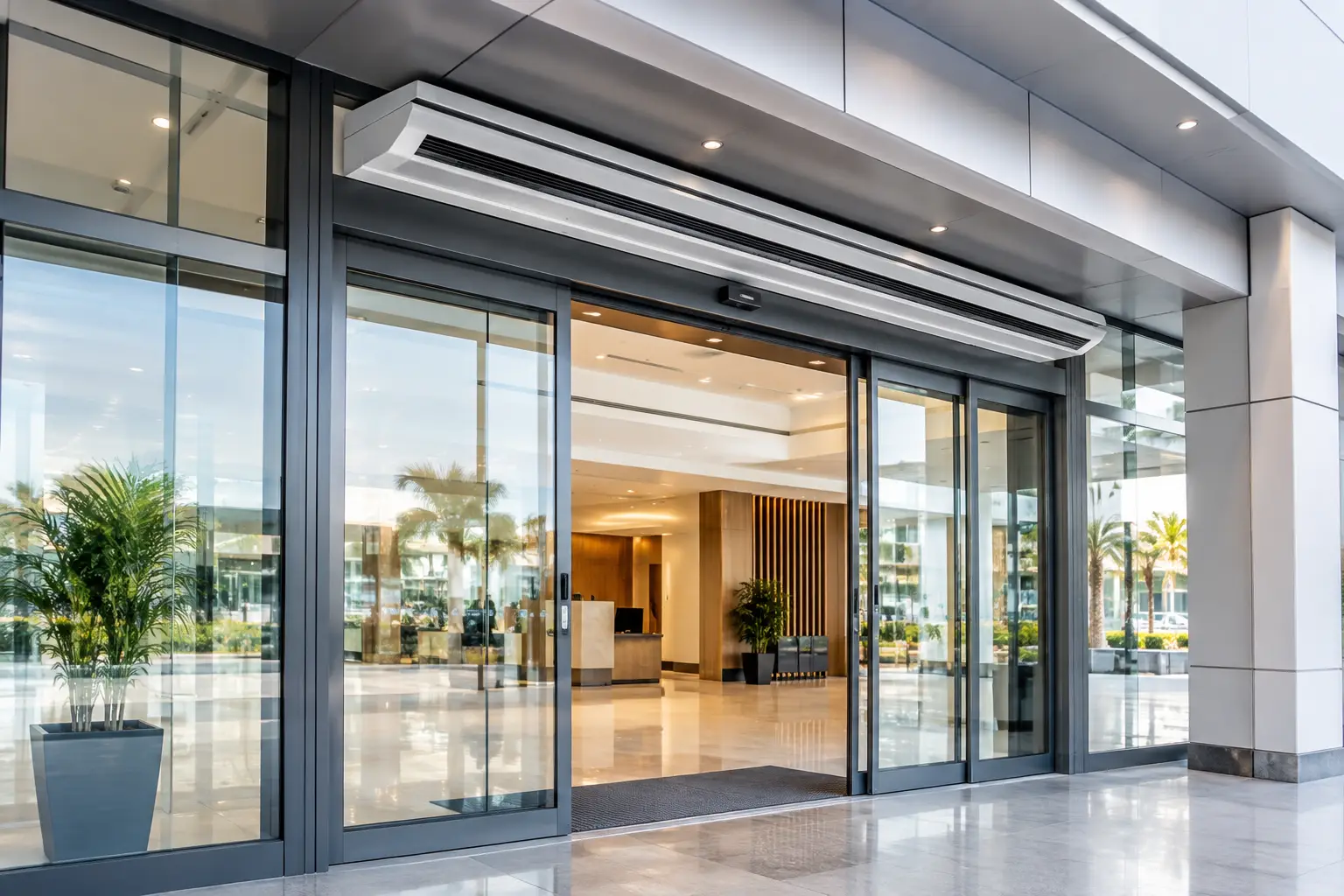
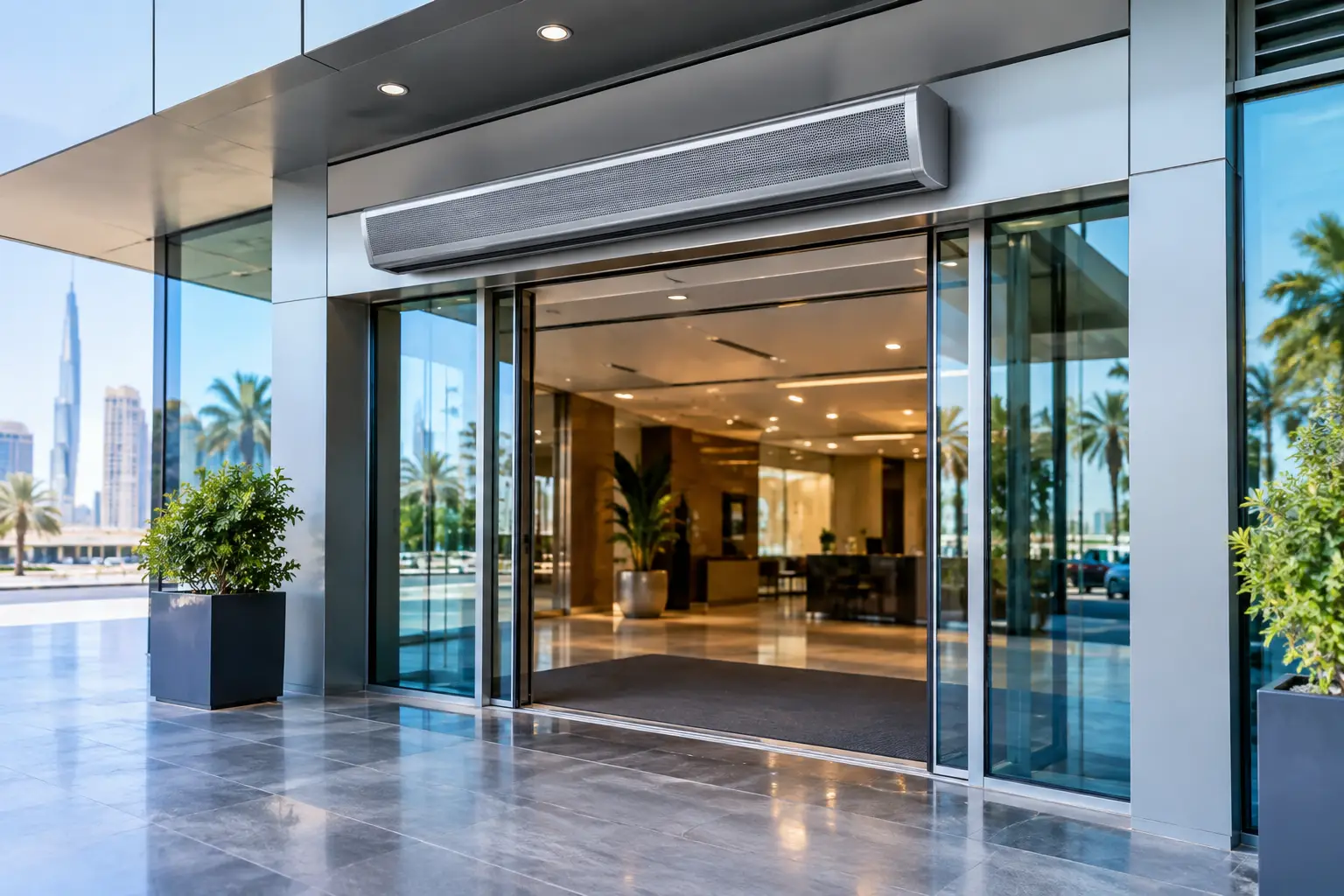
Retail and hospitality operators often need a balance of performance, appearance, and acceptable noise levels. A centrifugal air curtain system can fit that requirement well when the unit is properly selected for the opening size and customer-facing environment. Recessed or architectural formats may be preferred where visual integration matters.
Industrial and service entrances
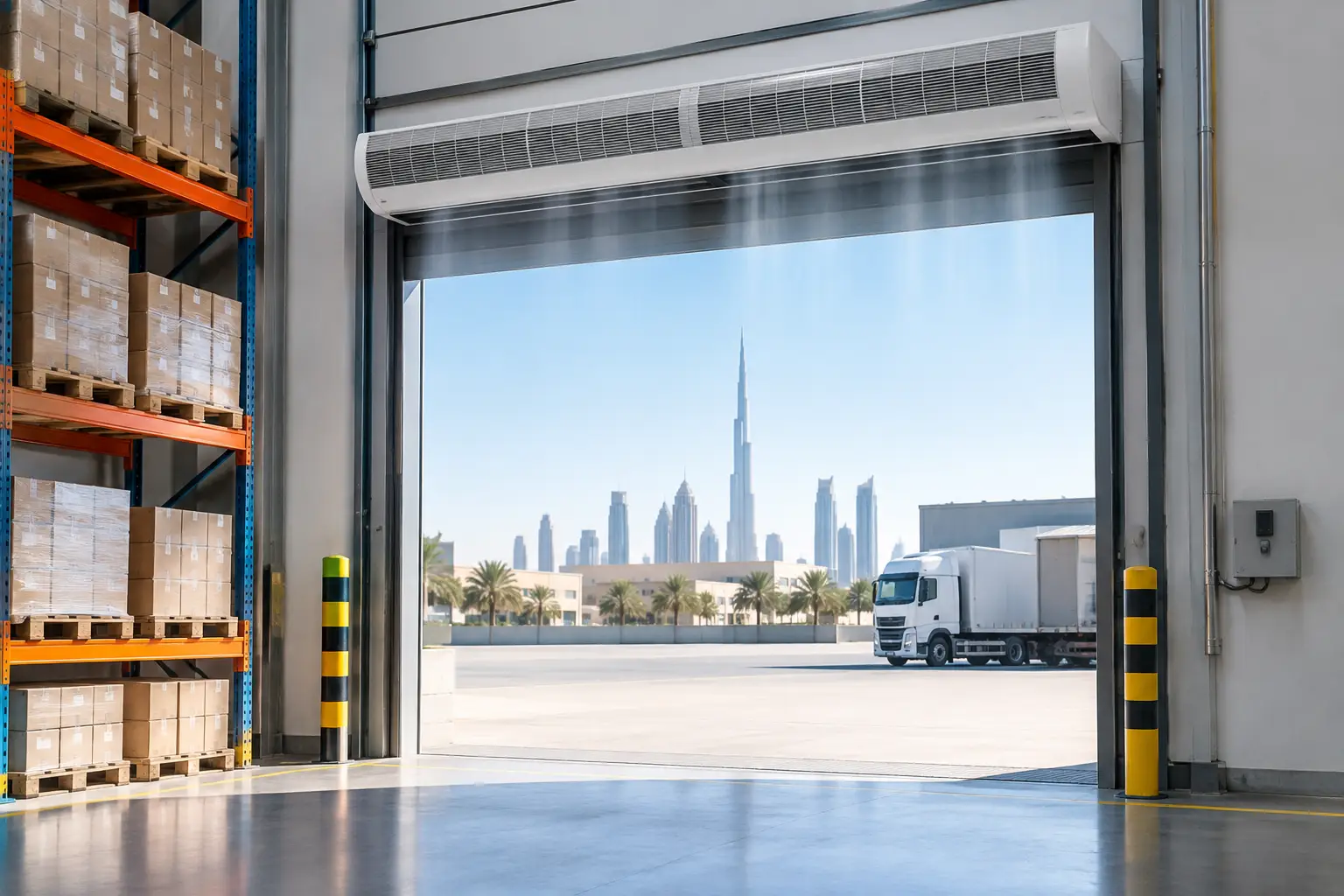
Workshops, plants, and back-of-house service entries usually place more emphasis on airflow strength and durability than aesthetics. Here, centrifugal systems are especially relevant because the operating conditions are less forgiving. Heat, dust, and extended run times quickly expose weak equipment.
Cold storage and temperature-sensitive zones
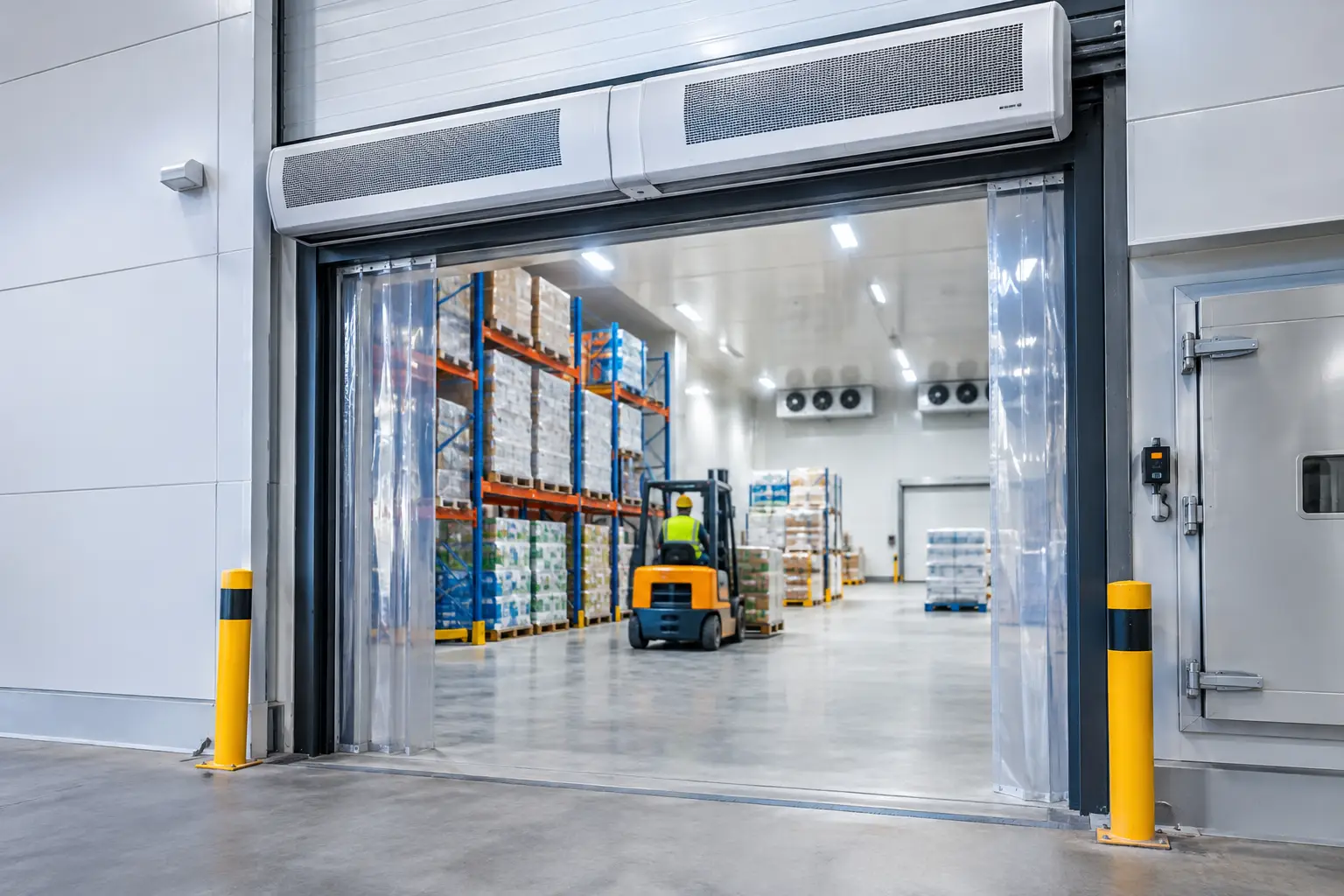
Where a cooled or chilled space opens into a warmer surrounding area, air exchange becomes expensive very quickly. A centrifugal air curtain system can help reduce infiltration at these transition points, supporting temperature control and limiting unnecessary cooling loss. The exact specification depends on opening dimensions and traffic frequency, but this is one of the clearest use cases for higher-performance air barriers.
What buyers should evaluate before specifying one
The mistake many projects make is treating all air curtains as interchangeable. They are not. Performance depends on the unit’s fit to the opening and the environment.
Door height is one of the first checks. A system that performs well on a lower doorway may struggle on a taller entrance if air throw is insufficient. Traffic pattern matters too. A door that opens occasionally places very different demands on the air barrier than a busy retail or logistics access point.
Ambient conditions should also shape the selection. In desert and tropical climates, the external air load is more aggressive than in milder regions. Dust concentration, crosswinds, humidity, and heat all affect real-world performance. That is why specification should focus on the actual site, not just catalog dimensions.
Noise is another practical consideration. In customer-facing spaces, sound levels matter. In industrial spaces, airflow strength may take priority. There is always a trade-off between power, acoustics, and installation constraints, so the right system is usually the one that matches the building’s purpose rather than chasing a single headline specification.
Installation quality affects results
Even a strong centrifugal air curtain system can underperform if it is installed poorly. The mounting position, discharge angle, and coverage across the full door width all influence whether the air barrier works as intended.
If the unit is too high for its rating, if airflow does not cover the full opening, or if site conditions create excessive turbulence, performance drops. This is why contractors and consultants usually get better outcomes when air curtain selection is tied to application support rather than treated as a late-stage commodity decision.
Electrical coordination, controls integration, and service access also deserve attention. In high-use commercial buildings, maintenance practicality matters. Equipment that is difficult to access or poorly coordinated with door operation can create avoidable downtime.
Why consultation matters more than a catalog shortcut
On paper, many air curtains can appear similar. In operation, the difference becomes obvious. The wrong unit leaves gaps in the air barrier, struggles against hot external air, or creates noise without delivering effective separation.
A consultation-based approach reduces that risk. It allows the supplier to assess opening size, mounting conditions, climate exposure, operating hours, and hygiene requirements before recommending a solution. For projects in places such as Dubai, Riyadh, Cairo, Lagos, Nairobi, or Casablanca, that climate-specific selection process is especially valuable because ambient conditions are not forgiving.
FreezeeX Air Curtains Ltd. positions centrifugal systems around that exact requirement – strong entrance protection for commercial and industrial sites that operate in tropical and desert climates, where cooling loss is expensive and contamination control matters every day.
The operational case for centrifugal performance
When buyers evaluate entrance equipment seriously, the decision usually comes down to building performance. Will the system reduce cooling loss? Will it help control dust and insects? Will it support comfort at the entrance without adding unnecessary strain to the HVAC load? Will it hold up in a harsh operating environment?
A centrifugal air curtain system is often the right answer when those questions need a stronger yes. It is not the lowest-spec option, and it should not be selected casually. But for demanding commercial and industrial entrances, it offers a more dependable level of air isolation where standard solutions may fall short.
If you are specifying an air curtain for a retail, hospitality, industrial, or cold storage project in a hot-weather market, the best next step is a technical review of the opening and operating conditions. Request a consultation or quote to identify the right centrifugal air curtain system for your facility and climate exposure.

4 Responses
That’s one of the reasons centrifugal air curtains are widely used in demanding commercial and industrial applications. Their consistent airflow helps maintain an effective air barrier at busy entrances, supporting better climate control, cleaner indoor conditions, and reliable performance throughout the day.