A quiet entrance is not simply a comfort feature. In a hotel lobby, hospital reception, upscale retail store, or food service entrance, excessive air curtain noise can affect customer perception, staff concentration, and the overall feel of the space. The best quiet air curtains balance low sound output with sufficient air velocity to isolate conditioned indoor air from heat, humidity, dust, insects, and outdoor contaminants.
For commercial facilities in Dubai, Riyadh, Doha, Muscat, Cairo, Lagos, and similar hot or humid markets, that balance matters. Selecting a low-noise unit with inadequate throw or airflow will not control infiltration. Selecting an oversized industrial unit for a public-facing doorway may solve the air barrier problem while creating an unacceptable acoustic environment. The right specification starts with the opening, application, and operating conditions.
What Makes an Air Curtain Quiet?
Air curtain sound levels are shaped primarily by the fan system, motor design, discharge velocity, casing construction, and installation method. A quieter unit is not necessarily a weaker unit. It is a system engineered to deliver the required air stream efficiently, without unnecessary turbulence, vibration, or high-speed fan noise.
Centrifugal fan designs are often well suited to projects where acoustic performance matters. Their enclosed blower wheels can produce a more controlled airflow than simpler fan arrangements, particularly when matched to the correct entrance height and width. Motor quality and speed control also matter. A unit operating at an appropriate speed for the door opening will generally sound more controlled than one pushed to its maximum setting to compensate for poor sizing.
The installation detail is equally important. Loose mounting, an uneven soffit, poorly aligned sections, or insufficient clearance around the air intake can add vibration and restrict performance. For prominent entrances, recessed installation can reduce visual impact and help contain perceived equipment noise, provided the ceiling void, service access, and intake path have been properly coordinated.
Best Quiet Air Curtains: Start With the Application
There is no single air curtain that is right for every commercial entrance. The best quiet air curtains are the models that meet the required air separation duty at the lowest practical sound level for that location.
Hotels, Offices, Clinics, and Premium Retail
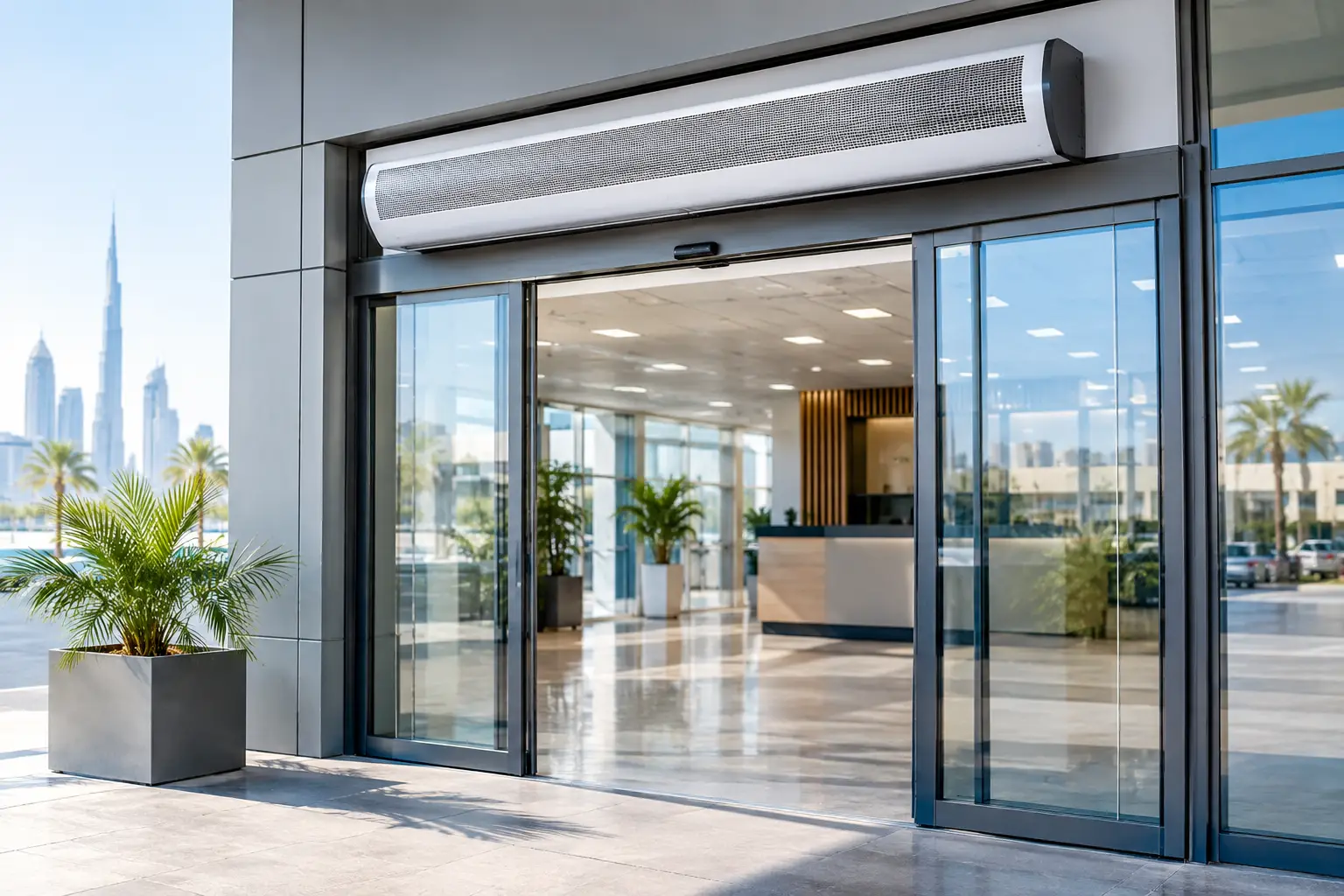
Public-facing buildings usually place the highest value on low perceived noise. A lobby door may remain open frequently, but the air curtain must operate without competing with conversation, reception activity, or the interior design intent. Commercial units with centrifugal airflow and variable speed control are often appropriate because they can be tuned to the actual entrance conditions rather than operated at maximum output at all times.
For a glazed entrance exposed to direct solar gain, quiet operation should not lead to undersizing. Heat entering through an open doorway in a Gulf summer can place a major burden on the building’s air-conditioning system. The selected unit must create a continuous air stream across the full opening, including the edge zones where infiltration often occurs.
Restaurants, Supermarkets, and Food Service Entrances
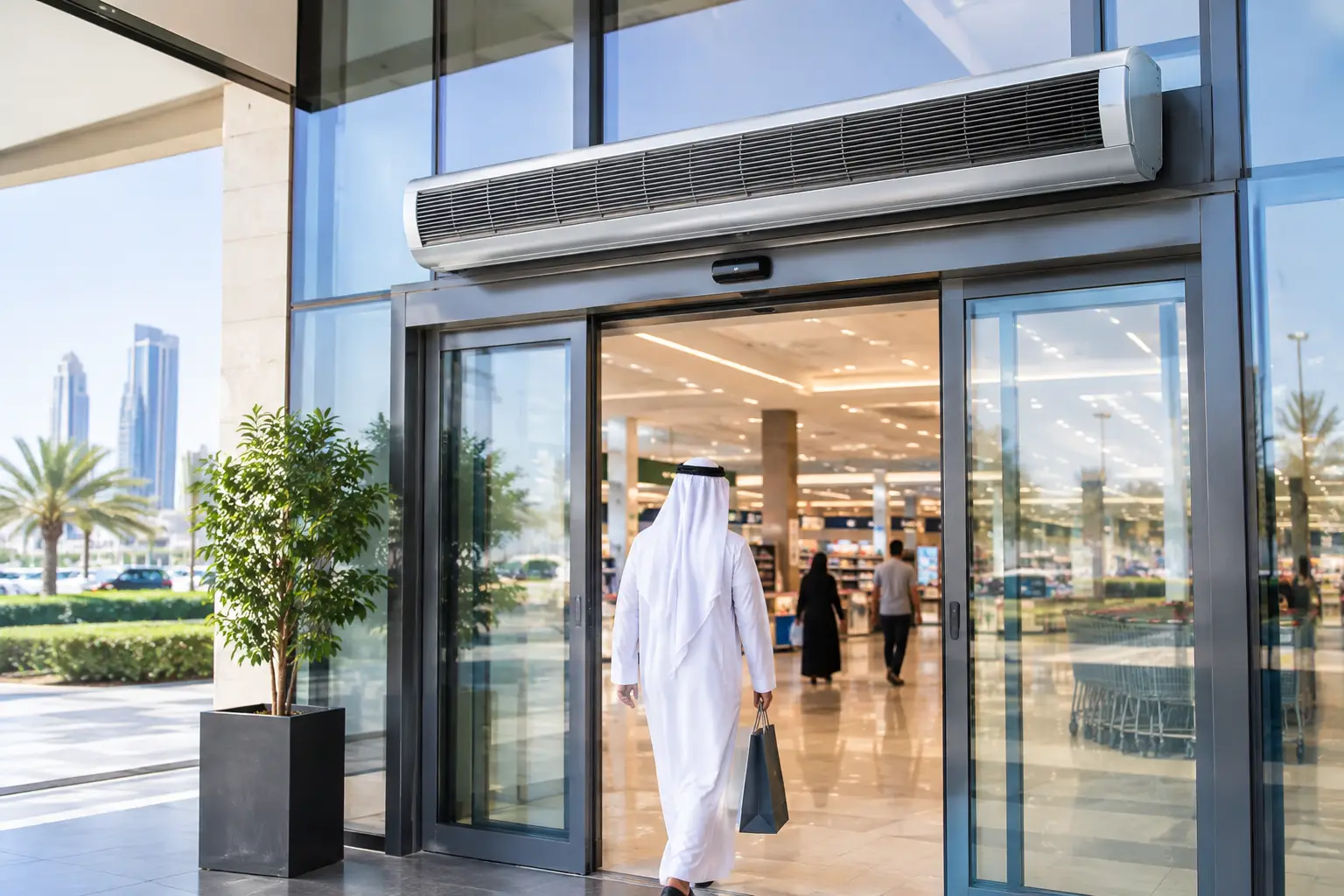
Noise expectations vary by location. A customer entrance in a restaurant or premium supermarket needs a quieter profile than a back-of-house receiving door, but both need protection from insects, dust, humidity, and warm outside air. In food-related facilities, maintaining a more stable indoor environment also supports comfort and helps reduce the load on cooling equipment.
A commercial centrifugal air curtain can be a practical fit for customer entrances with regular foot traffic. For wider supermarket doorways, multiple units may be preferable to one unit that is forced to operate at a higher speed. Correct sectional sizing helps maintain even coverage while keeping sound output reasonable.
Hospitals and Pharmaceutical Facilities
Hospitals, laboratories, and pharmaceutical environments demand more than a low decibel figure. Air movement at the entrance must support cleaner indoor conditions while avoiding disruptive noise near patient areas, reception points, and controlled workspaces. Air curtains do not replace a building’s filtration, pressurization, or infection-control strategy, but they can reduce the volume of unconditioned and contaminated outside air entering through active doorways.
Specification should account for door usage patterns, adjacent pressure zones, ceiling design, and the need for dependable operation. A recessed ceiling air curtain is often considered where a clean architectural finish and reduced visual intrusion are priorities, while accessible service planning remains essential for long-term reliability.
Warehouses, Factories, and Logistics Centers
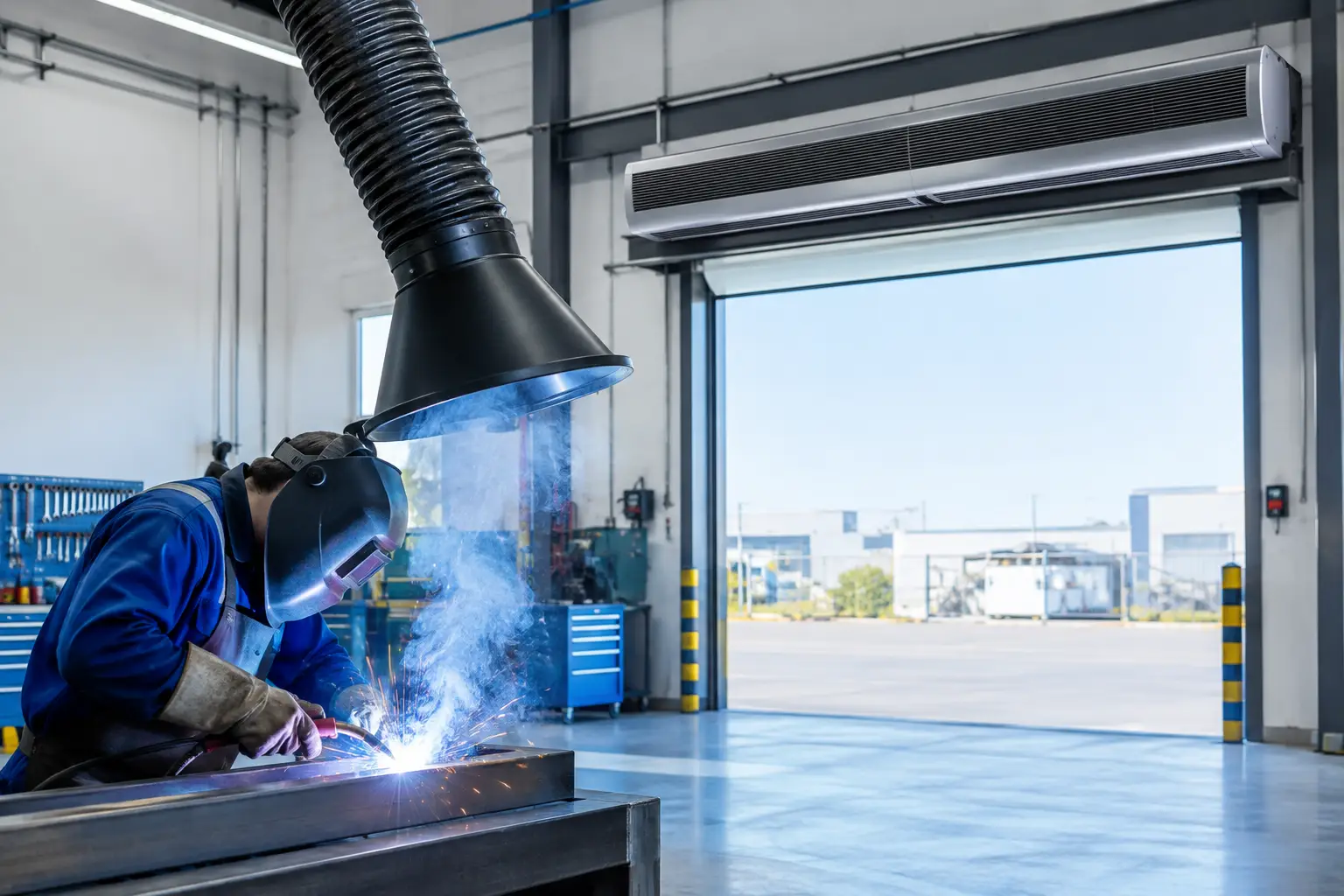
Industrial entrances require a different acoustic judgment. At a loading bay, the surrounding machinery and vehicle activity may make a higher sound level acceptable. The priority is usually strong air isolation across a taller or wider opening, particularly where outside heat, dust, fumes, and humidity can enter during frequent goods movement.
Industrial centrifugal air curtains are designed for these heavier-duty conditions. However, it is still worth avoiding unnecessary oversizing. An accurately selected industrial model can deliver the required throw to the floor or threshold zone without wasting energy or generating more noise than the site needs. Where openings are very large, zoning units by door section or operating them through door sensors can improve both energy control and the working environment.
Noise Level Is Only One Specification
When comparing equipment, sound pressure level in decibels is useful, but it should never be reviewed in isolation. Manufacturers may state readings at different distances, fan speeds, or test conditions. A meaningful comparison requires like-for-like data and a clear understanding of where occupants will stand relative to the unit.
Airflow volume and discharge velocity must also be assessed together. High airflow without sufficient directional control may create turbulence. High velocity from a unit installed too close to customers can feel uncomfortable, even if the published sound level is acceptable. The objective is a stable air barrier that reaches the protected zone without creating drafts or acoustic disturbance.
For consultant-led projects, the specification should confirm the mounting height, doorway width, door type, prevailing external conditions, internal temperature target, and traffic profile. A hinged entrance used occasionally behaves very differently from an automatic sliding door that cycles continuously throughout the day.
Recessed vs. Surface-Mounted Units
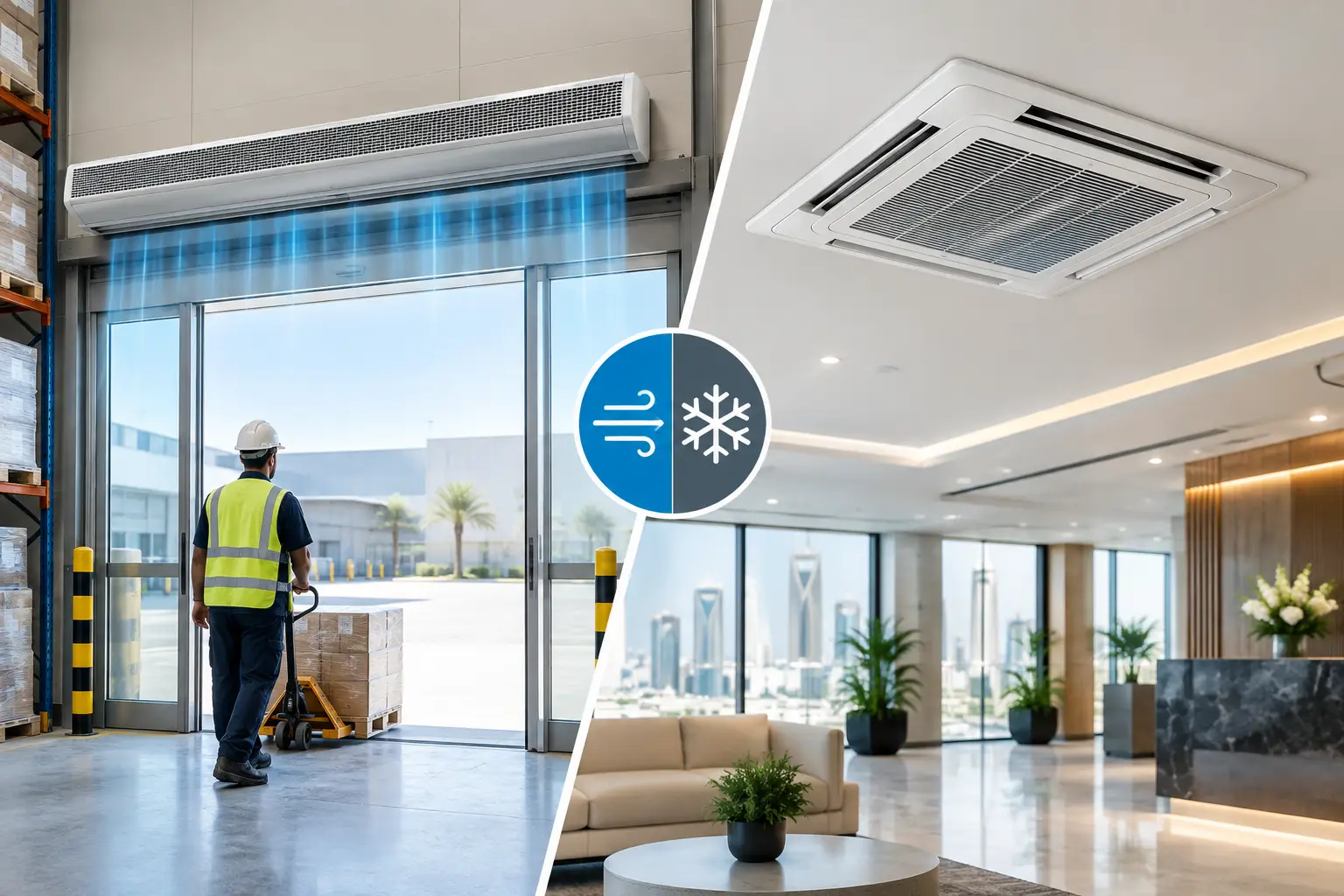
Recessed ceiling air curtains are often selected for entrances where aesthetics and perceived quietness are major considerations. The unit is integrated into the ceiling plane, leaving only the discharge grille visible. This approach suits hotel lobbies, corporate offices, malls, clinics, and premium retail environments, but it requires early coordination with ceiling and MEP layouts.
Surface-mounted units can be easier to install, inspect, and service. They are often a sound choice for supermarkets, warehouses, back-of-house doors, factories, and retrofit projects where ceiling void space is limited. A surface-mounted unit is not automatically noisy. With correct sizing, secure installation, and a suitable fan design, it can provide effective and controlled operation.
The decision depends on the entrance’s performance duty and architectural constraints, not appearance alone.
How to Specify a Quiet Air Curtain Correctly
A practical selection process should begin with the actual opening rather than a generic product category. Provide the clear door width and height, mounting position, ceiling limitations, operating hours, door activation method, and the building’s air-conditioning conditions. For facilities in desert, tropical, and humid climates, also identify direct sun exposure, wind effects, dust levels, and peak outdoor temperatures.
It is especially useful to distinguish between a door that is open intermittently and one that is effectively open for long periods. High traffic changes the infiltration load and may require a stronger air stream, a wider arrangement, or controls that respond to door operation. In some applications, a two-speed or sensor-controlled setup allows the system to run quietly during lower demand and increase output when the entrance is active.
Ask for sound data at the intended operating speed, not just the lowest available setting. Confirm whether the selected configuration can maintain the required air barrier at that speed. This avoids a common compromise: choosing a quiet unit on paper, then increasing it to full output after commissioning because it cannot manage the doorway.
Choosing for Long-Term Performance
Quiet operation should remain consistent over the service life of the air curtain. Dust accumulation, damaged fan components, restricted intake areas, and poor mounting can gradually increase sound and reduce airflow. In dusty commercial and industrial locations, selecting a design with practical service access and appropriate protective features supports more stable performance.
For facilities across the GCC, MENA, and Africa, climate suitability is central to that long-term decision. Equipment must handle extreme ambient heat, humidity, airborne dust, and demanding door cycles without sacrificing the entrance experience. A properly selected commercial or industrial air curtain reduces cooling loss while helping maintain a more comfortable, controlled indoor environment.
For a project-specific recommendation, request a consultation and quotation with the entrance dimensions, mounting details, traffic level, and site climate conditions. A FreezeeX specialist can match the air curtain duty and acoustic requirement to the way your entrance actually operates, rather than forcing a standard unit into a complex commercial environment.