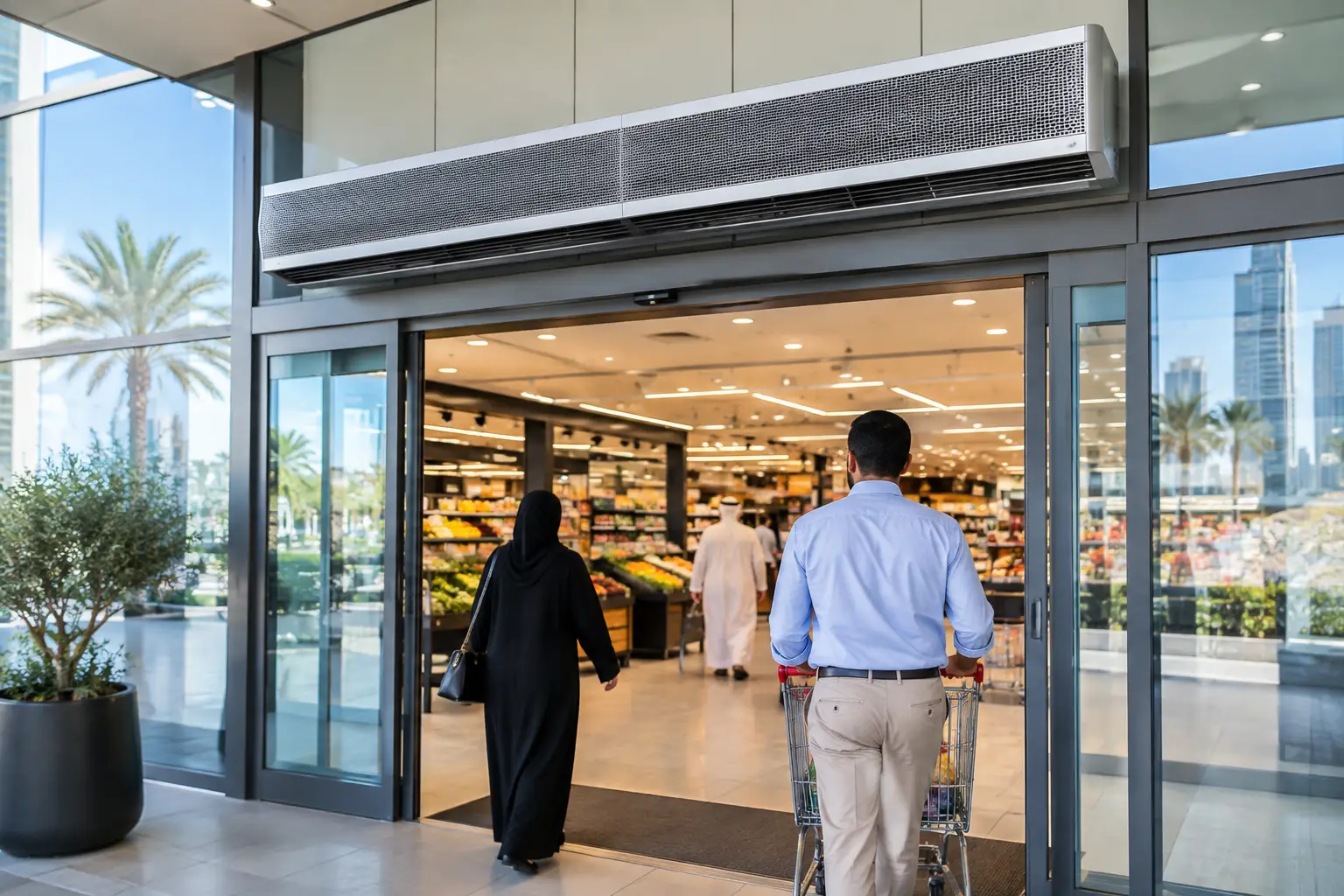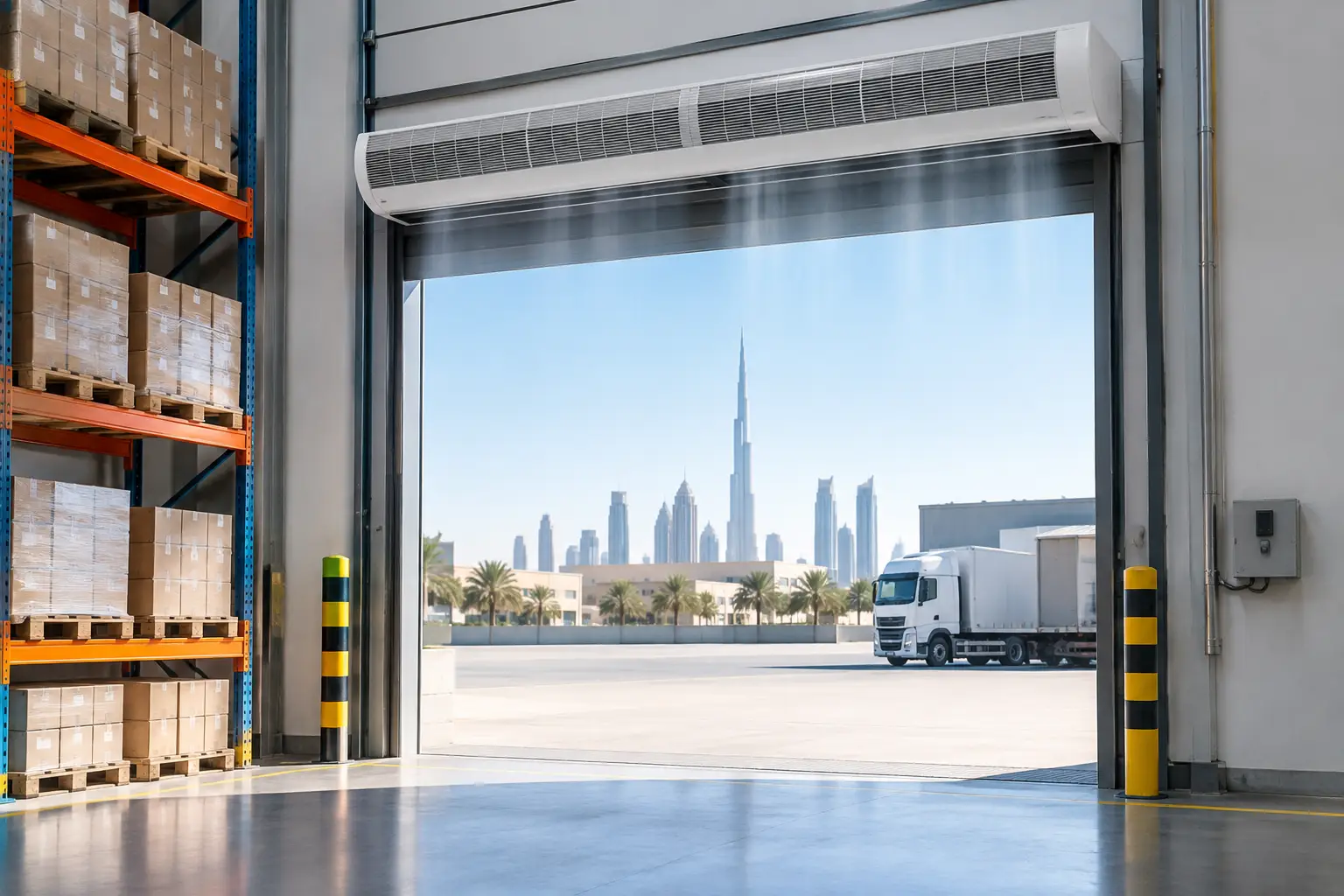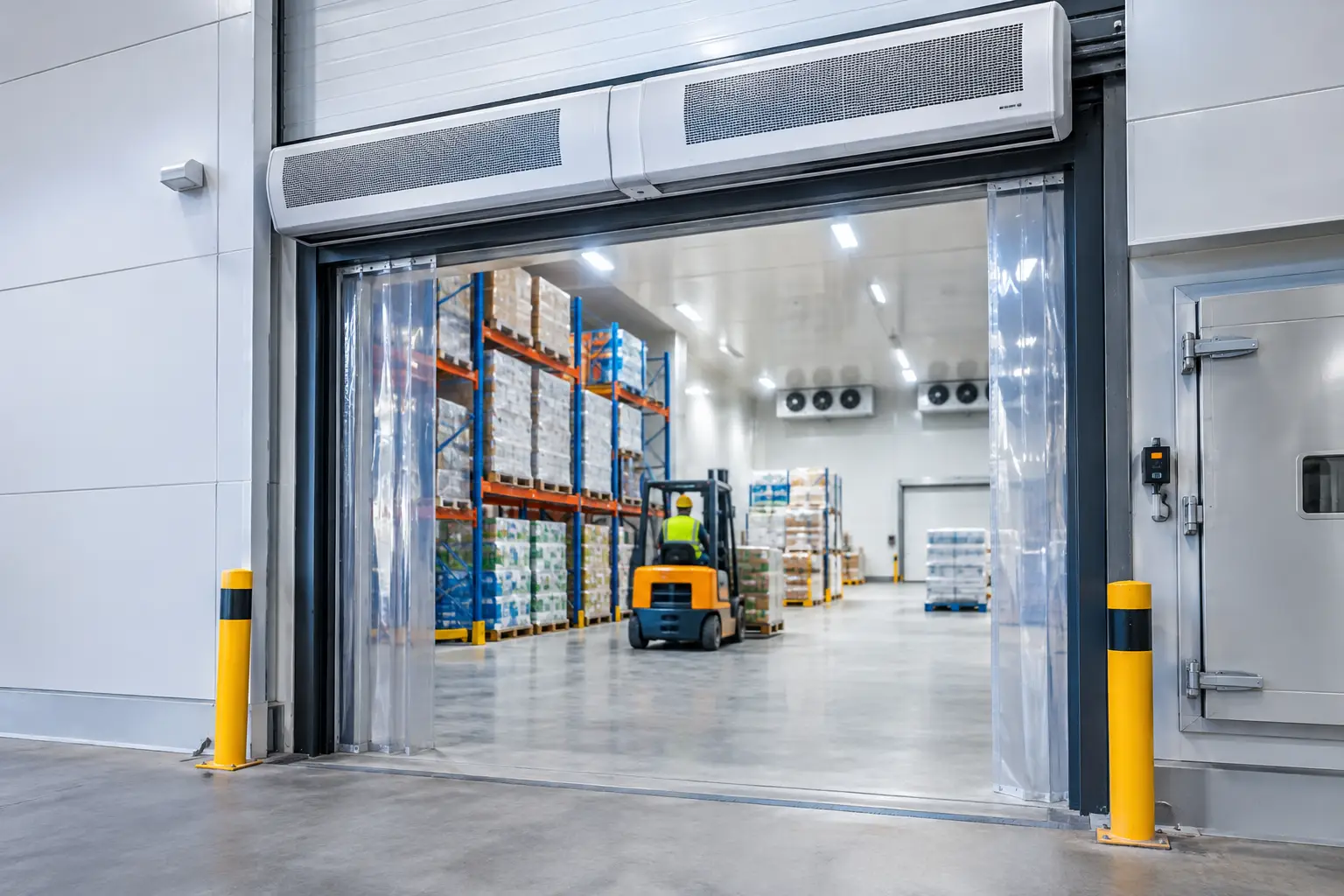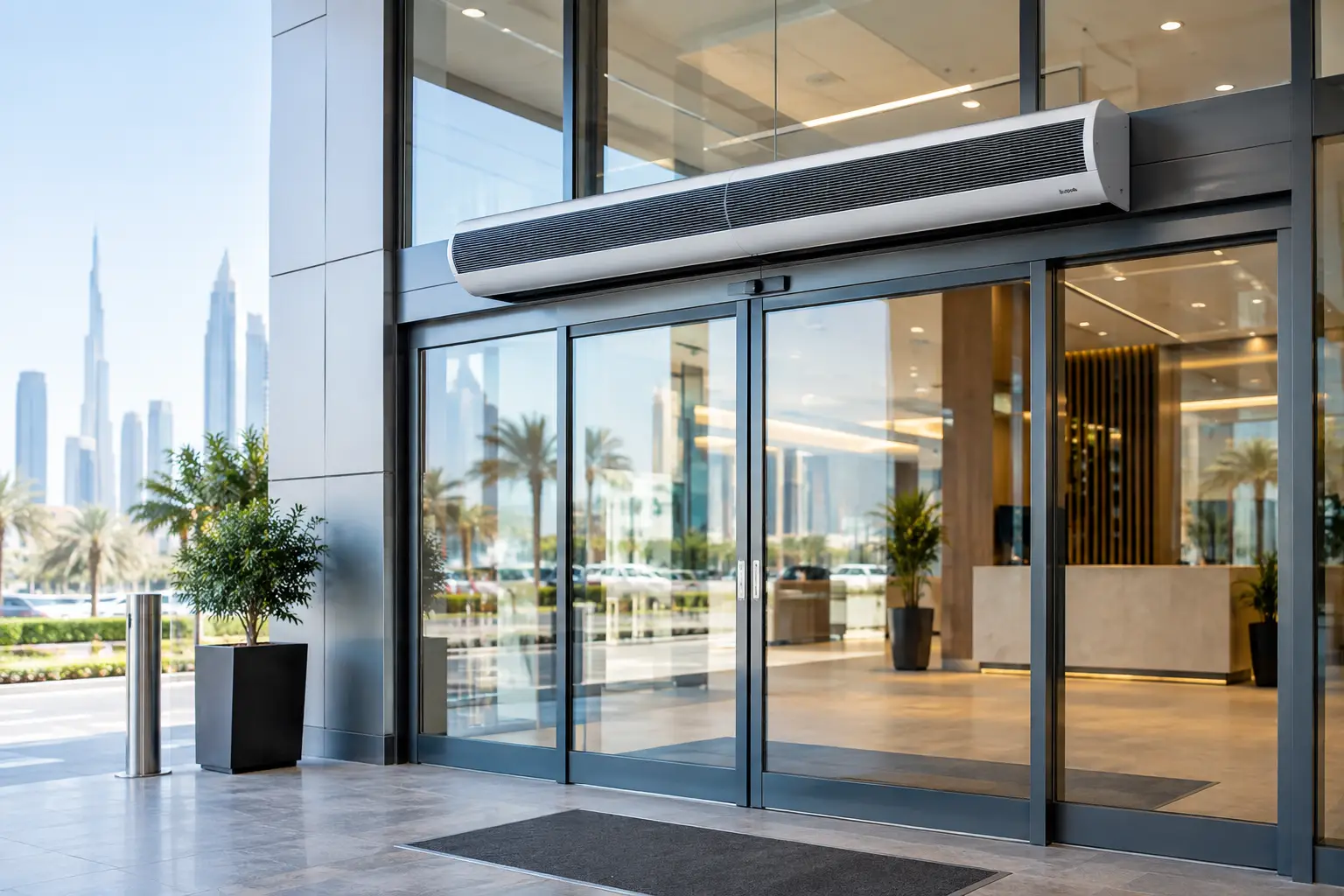
A cleanroom doorway is often its most vulnerable boundary. Each time a door opens, pressure differentials can weaken and airborne particles, humid air, dust, insects, and unfiltered contaminants can move toward the controlled area. Understanding how air curtains support cleanrooms starts with this practical issue: they create an engineered air barrier at frequently used openings, helping protect the room without forcing staff or materials to stop at every entry point.
For pharmaceutical plants, food processing areas, laboratories, electronics manufacturing zones, and hospital-controlled environments, an air curtain is not a substitute for cleanroom filtration, gowning, pressure control, or validated operating procedures. It is a supporting entrance-control measure. When selected and installed correctly, it can reduce the contamination load that reaches the door opening and help HVAC systems maintain more stable indoor conditions.
How air curtains support cleanrooms at doorways
An air curtain discharges a controlled stream of air downward across an open doorway. This stream forms a separation zone between the cleanroom and the adjacent space. Rather than physically closing access, it reduces the exchange of air that occurs when people, carts, pallets, or production materials pass through.
At a cleanroom entrance, the objective is not simply to feel airflow. The objective is to limit cross-contamination while preserving the room’s intended pressure relationship with surrounding areas. A properly engineered unit can help resist incoming air currents, reduce the entrainment of dust and moisture, and support the cleanroom’s environmental control strategy during door-open periods.
This matters most where door traffic is high. A material transfer entrance in a pharmaceutical facility, for example, may open many times per shift. The same applies to food packaging rooms receiving ingredients from a warehouse, or controlled assembly areas connected to a general factory floor. Repeated door openings can create a meaningful load on filtration and cooling systems, particularly in hot, humid, or dusty operating environments.
Reducing particle and dust ingress
Particles do not only enter a cleanroom through obvious gaps or poor housekeeping. They can ride on pressure-driven airflow, drafts from adjacent corridors, forklift movement, and air displaced by people or carts passing through doors. In desert and tropical markets, exterior or semi-conditioned areas may also carry fine dust, humidity, and elevated heat into the building.
An air curtain reduces this exposure by creating a high-velocity plane of air across the opening. The barrier does not make contamination impossible, and its performance is affected by door geometry and traffic patterns. However, it can reduce the amount of unconditioned, particle-laden air entering while the door is open.
For controlled production areas, that reduction can help lower the burden placed on upstream filtration and reduce the frequency of environmental disturbances near entrance zones. It is particularly useful at secondary boundaries, such as between a loading or preparation area and a lower-classified clean zone.
Supporting pressure control, not replacing it
Cleanrooms commonly rely on pressure cascades to keep airflow moving in the desired direction. Positive pressure may protect a cleaner area from an adjacent less-controlled space, while negative pressure may be required where containment is the primary concern. An air curtain must be assessed in the context of that pressure design.
When correctly specified, the air stream can support the boundary at an open door by reducing air exchange. When incorrectly specified, it can create turbulence, interfere with directional airflow, or make a pressure-control problem harder to diagnose. This is why cleanroom applications require more than choosing a unit by doorway width alone.
The air curtain’s discharge velocity, air volume, mounting height, nozzle design, fan control, and placement all need to work with the facility’s supply and extract air balance. For critical rooms, the design team should confirm performance through commissioning and environmental validation after installation.
Where air curtains are most useful in controlled facilities
Air curtains are generally most valuable at openings that must remain accessible but are exposed to less-controlled conditions. They are especially relevant where the alternative is a door staying open for long periods during operations.
Typical applications include material receiving transitions, packaging room entrances, clean corridor doors, transfer vestibules, warehouse-to-production openings, and personnel access points with frequent traffic. In pharmaceutical and medical environments, they may support operational boundaries around support areas, staging rooms, or logistics passages, subject to the facility’s contamination-control plan.
They can also help at food processing clean zones, where airborne dust, insects, humidity, and outdoor heat can compromise operational conditions. In a facility in Dubai, Riyadh, Doha, or Lagos, the outside air challenge can be severe even when the opening is not directly exposed to the exterior. A busy loading area can transmit heat and dust through several connected doors.
Air curtains are less suitable as a simple add-on for the most sensitive critical zones without detailed engineering review. If an opening is part of a highly controlled aseptic process, a high-grade electronics environment, or an area with strict airflow-unidirectionality requirements, the potential for airflow disruption must be evaluated carefully. In some cases, an interlocked door arrangement, airlock, or other validated transfer method is the better solution.
Specification factors that determine performance
Cleanroom support depends on air curtain selection, not merely installation. The unit must produce a stable, continuous stream that reaches the floor or the opposing threshold without excessive spread. If the air stream breaks down before it reaches the opening’s lower edge, contaminants can pass beneath or around it.
Key specification factors include:
- Doorway height and width
- Mounting height and discharge coverage
- Airflow direction and pressure conditions
- Traffic frequency and door operation
- Cleanroom classification and hygiene requirements
- Noise and acoustic requirements
- Existing HVAC and pressure-control conditions
Mounting height is a major consideration. Higher doors require sufficient throw and carefully managed velocity. A unit designed for a standard commercial entrance may not perform adequately over a tall industrial opening, while an oversized industrial unit can produce unnecessary turbulence in a sensitive internal transition.
Airflow direction also matters. Most applications use a top-mounted horizontal unit blowing downward, but site constraints and room pressure arrangements may call for a different configuration. The design should consider door recesses, overhead obstructions, automatic door travel, adjacent supply grilles, and the path used by personnel and material-handling equipment.
Noise is another practical factor. In laboratories, pharmaceutical facilities, and hospital environments, high sound levels can affect staff comfort and communication. Fan selection and speed control should balance barrier performance with acceptable acoustic conditions.
For demanding facilities, specify against the actual operating condition rather than an idealized drawing. The project team should account for door-open duration, traffic frequency, door width and height, nearby external openings, ambient temperature, humidity, dust exposure, and the existing HVAC pressure regime.
Energy and humidity benefits in hot climates
Cleanrooms consume significant energy because they must maintain temperature, humidity, filtration, and pressure targets. Every uncontrolled door opening increases the amount of hot or humid air that the HVAC system must condition. In hot desert climates, this can also introduce dust that affects filters and interior cleanliness.
By reducing air exchange at active entrances, an air curtain can help limit cooling loss and humidity migration. The resulting benefit depends on the door schedule and the difference between conditions on each side of the opening. A seldom-used internal door may see limited value, while a high-traffic production or logistics entrance can represent a recurring HVAC load.
This is not a guarantee of a fixed energy reduction. Actual savings depend on building pressure, equipment runtime, ambient conditions, and operational discipline. Still, for facilities in the GCC, MENA, and Africa where outdoor heat, humidity, and dust create constant pressure on conditioned spaces, entrance air control is a practical part of energy management.
Integrating air curtains into a cleanroom strategy
The strongest results come when an air curtain is treated as one component of a wider contamination-control system. It should complement suitable door design, pressure monitoring, filtration, cleaning procedures, access control, and material transfer protocols.
Before specification, establish what the doorway needs to protect against. Is the priority airborne dust from a warehouse, humidity from an external loading area, insects near food production, or the loss of conditioned air from a high-traffic clean corridor? The answer determines the airflow requirement and whether a commercial or industrial centrifugal air curtain is appropriate.
It is also essential to define the cleanroom classification and acceptable operating conditions. The more sensitive the room, the more carefully the air curtain must be assessed for turbulence and validated in the facility’s final configuration. A system that works well at a general production entrance may not be suitable at a critical process boundary.
For new builds and retrofit projects, FreezeeX can assess entrance dimensions, mounting constraints, traffic volume, climate exposure, and HVAC conditions to recommend an air curtain suited to the application. A consultation-led approach is particularly valuable where cleanroom performance and tropical or desert climate conditions must work together. The right question is not whether an air curtain can replace cleanroom controls. It is whether a properly specified air barrier can make an active doorway a more controlled, efficient part of the facility.