
A loading-bay door left open during a hot afternoon can turn a well-cooled facility into a costly problem. Conditioned air escapes, outdoor heat and humidity move in, dust collects near the entrance, and the HVAC system runs harder to recover. That is the practical answer to when should businesses use air curtains: when an opening must stay accessible without allowing the outdoor environment to take control of the indoor one.
For commercial and industrial facilities in the UAE, GCC, MENA, and Africa, this is not a minor comfort upgrade. In desert and tropical climates, entrance protection directly affects energy use, hygiene, staff comfort, merchandise conditions, and operational continuity. The right air curtain creates a controlled, high-velocity air barrier across an open doorway, separating two very different environments without slowing people, carts, or deliveries.
When Should Businesses Use Air Curtains?
Businesses should consider air curtains wherever doors open frequently, remain open for extended periods, or connect a conditioned space to hot, humid, dusty, or insect-prone outdoor areas. A conventional door only works when it is closed. An air curtain adds protection during the moments when a door has to be open for business to continue.
The strongest case is usually found at entrances with repeated traffic: retail doors, hotel entrances, restaurant service entries, hypermarket receiving bays, warehouse doors, industrial workshops, and cold-storage access points. Each opening cycle creates a path for unwanted air infiltration. In facilities with dozens or hundreds of cycles a day, the accumulated cooling loss can be substantial.
Air curtains are especially valuable when outdoor conditions are severe. A facility in Dubai, Riyadh, Doha, Lagos, Nairobi, or Cairo may face intense heat, airborne sand or dust, high humidity, or all three depending on the season and location. The greater the temperature and humidity difference between indoors and outdoors, the more aggressively the building loses its controlled environment when doors are open.
They are not a replacement for properly designed cooling equipment, sealed building fabric, or operational door discipline. They are an entrance-control solution. Their value depends on selecting the correct unit, mounting height, door width, airflow pattern, and operating controls for the site.
High-Traffic Commercial Entrances
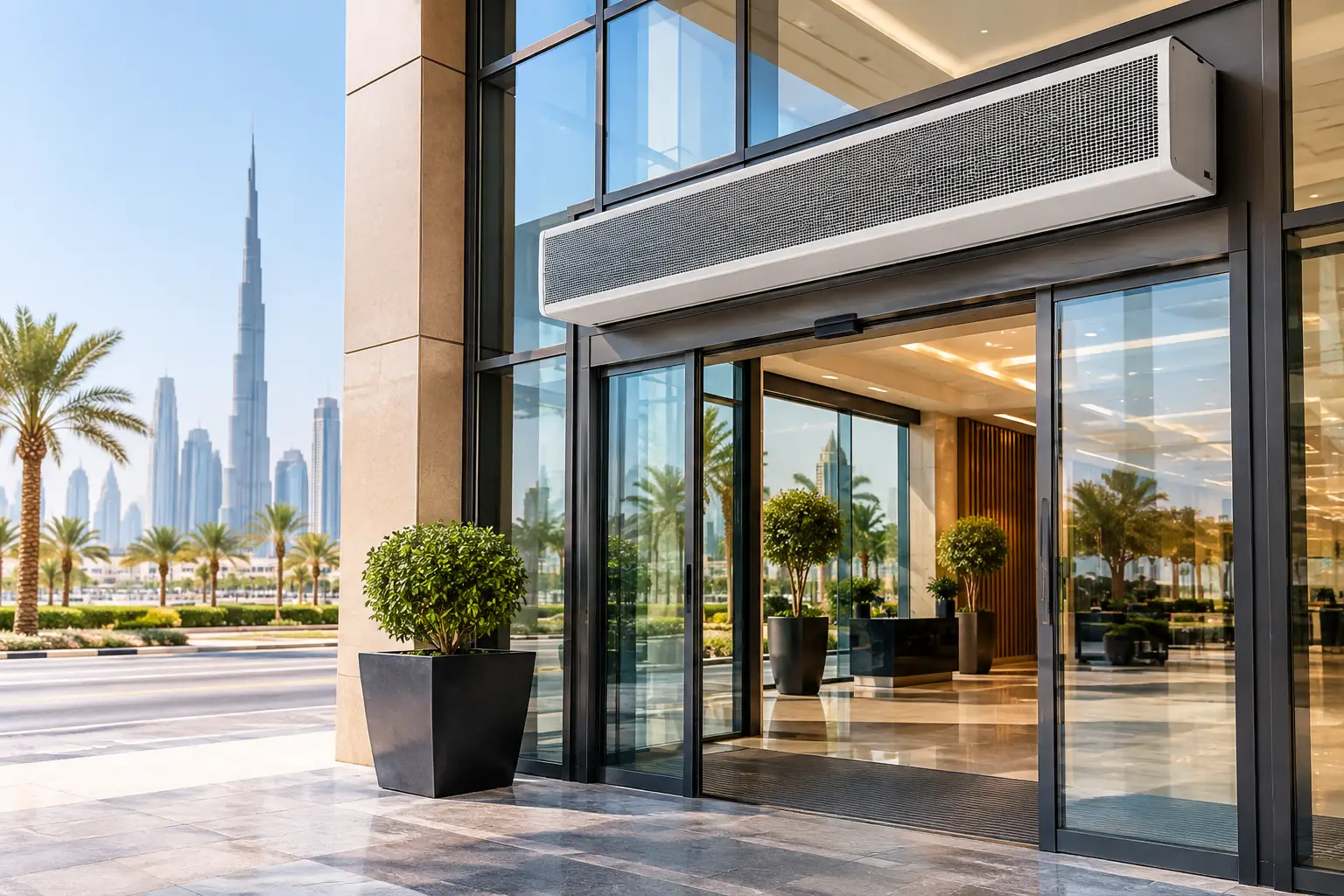
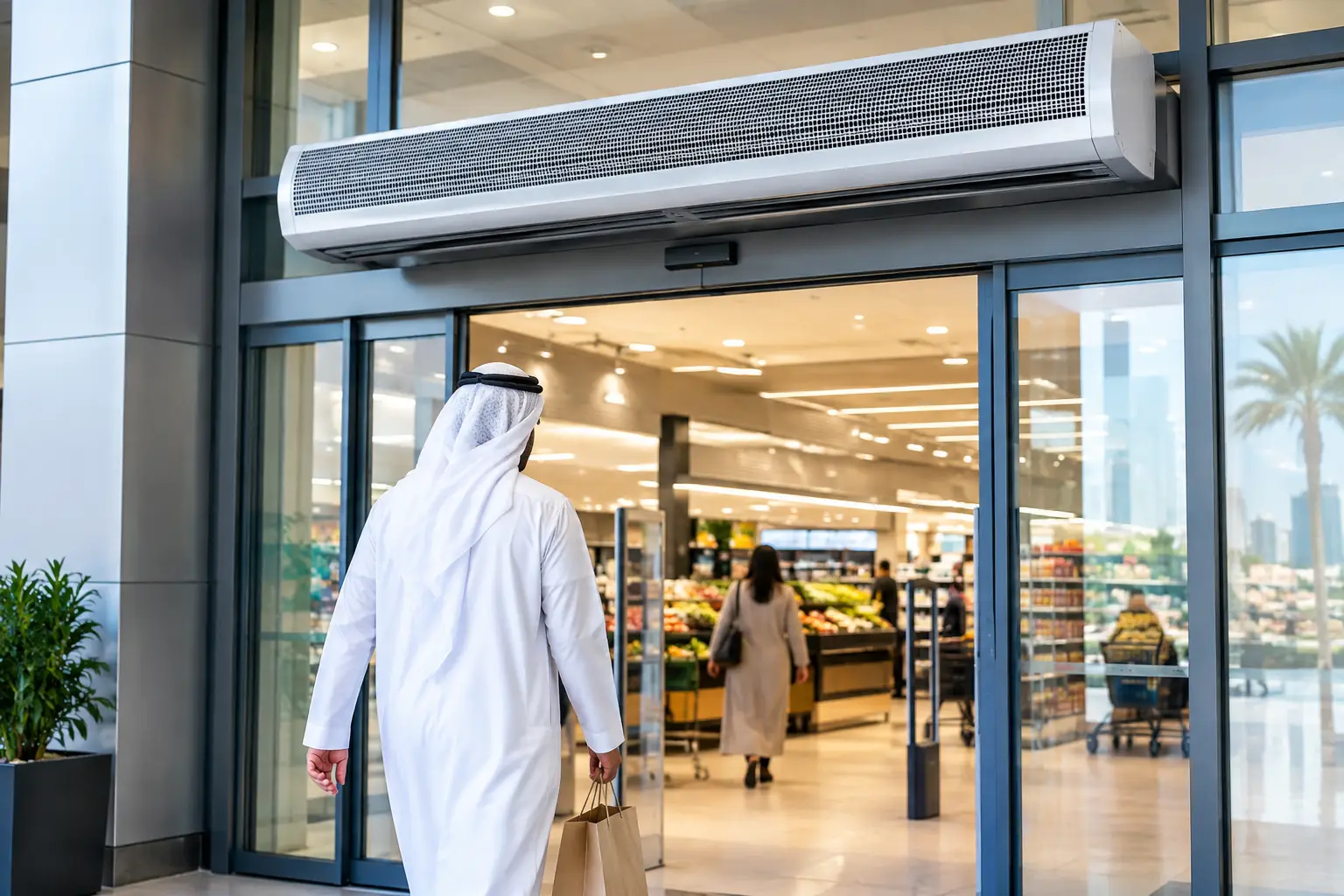
Main entrances in retail, hospitality, offices, and large public-facing facilities are common air-curtain applications. Sliding and swing doors may open continuously at peak periods, particularly in hypermarkets, malls, hotels, and commercial buildings. The result is a noticeable warm zone around the entrance and a heavier cooling load across the entire space.
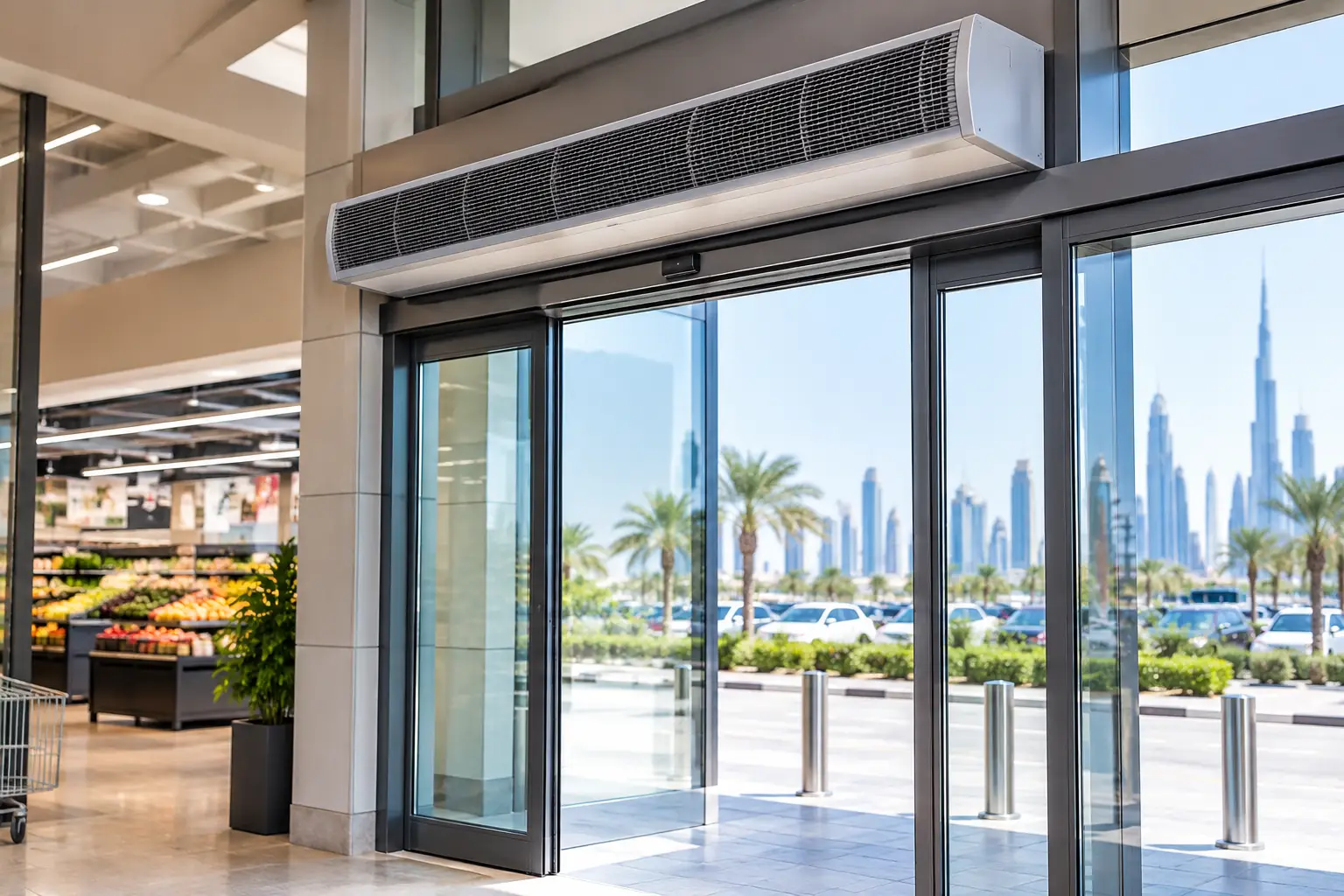
A correctly specified commercial air curtain directs air downward across the opening to reduce the exchange of indoor and outdoor air. This helps maintain a more stable indoor temperature near the doorway, where customer discomfort is often most visible. It can also reduce the amount of dust and insects entering with foot traffic.
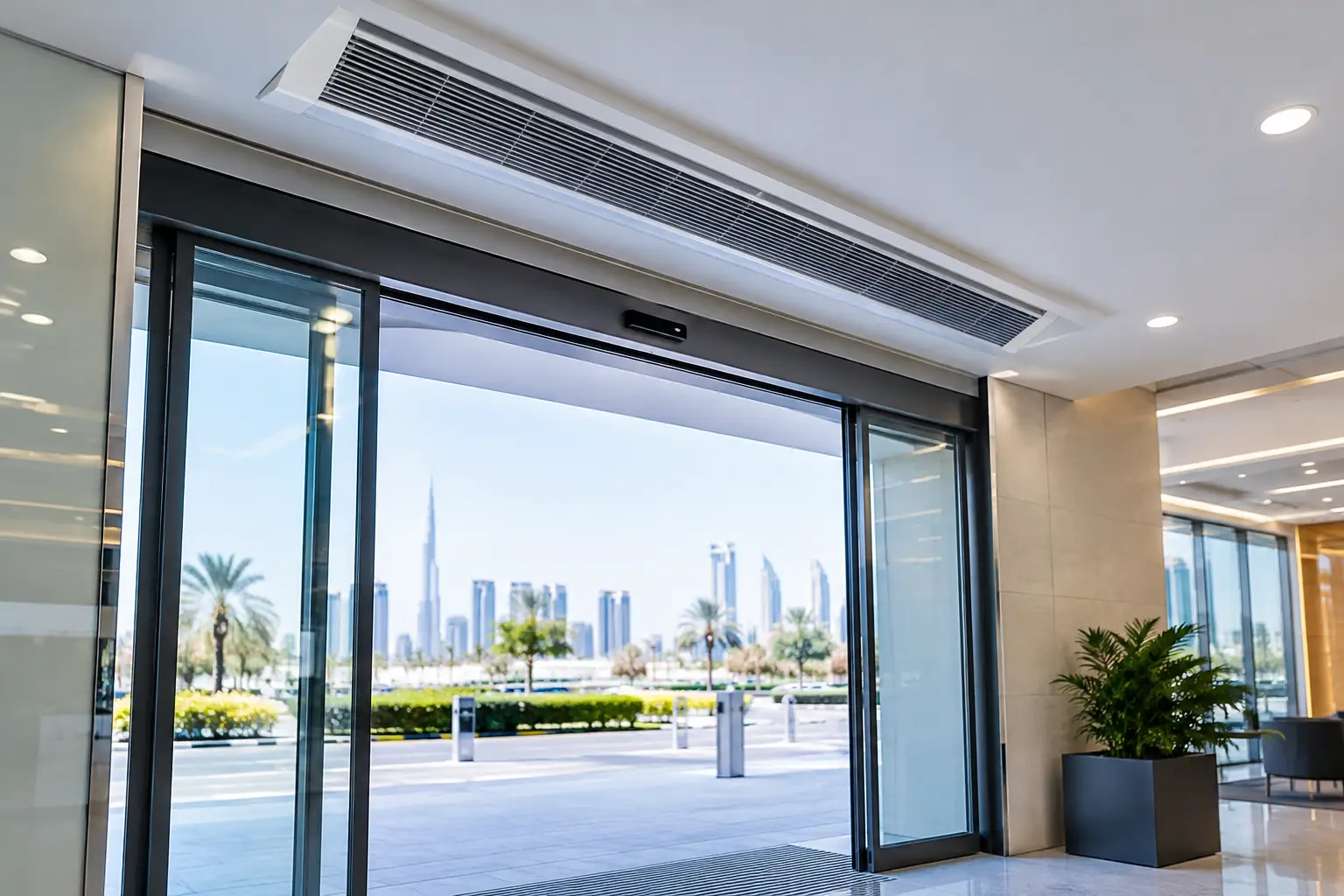
Appearance matters in these applications. Recessed ceiling models can suit premium hotel lobbies, corporate entrances, and finished retail spaces where equipment should remain visually discreet. Visible commercial centrifugal or HiFi units may be appropriate where service access, performance, and cost control take priority. The choice should reflect ceiling conditions, entrance geometry, and the building’s architectural requirements, not appearance alone.
Loading Bays, Warehouses, and Industrial Openings
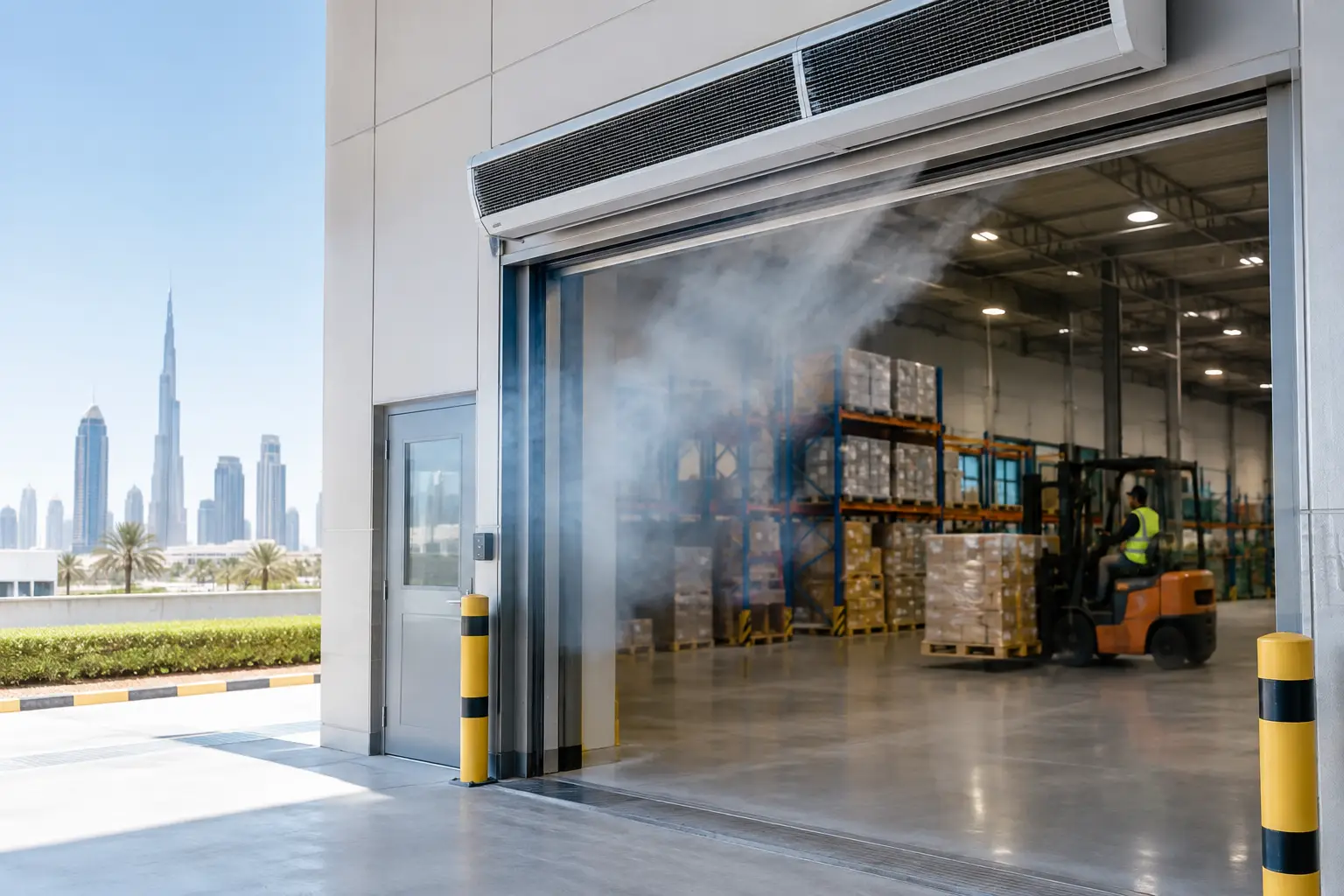
Industrial doors create a different challenge. Openings are taller, wider, and exposed to stronger outdoor pressure. Forklifts, pallet jacks, goods vehicles, and staff movements may keep doors open for long periods. A low-capacity commercial unit fitted to a large loading bay will not create an effective barrier, regardless of its stated airflow volume.
This is where heavy-duty industrial centrifugal air curtains are often required. They are designed for demanding applications that need stronger air throw, durable components, and stable performance over larger mounting heights. Workshops, plants, logistics hubs, manufacturing facilities, and receiving areas can benefit when their doors are a persistent source of heat, dust, flying insects, and humidity.
The trade-off is straightforward: higher-performance equipment requires proper engineering review. Door height, width, exposure to wind, nearby extraction systems, and traffic patterns all influence the specification. In some sites, a single unit is sufficient. At wider openings, multiple units may need to work as one continuous barrier. Controls should also match operations, such as door contacts, manual switches, or building-management integration.
Cold Storage and Temperature-Controlled Operations
Cold storage operators have a clear reason to use air curtains, but their requirements are more specialized. Every time a cold-room or temperature-controlled loading door opens, warm and humid air moves toward the colder zone. This can increase refrigeration demand, create condensation, affect floor safety, and place sensitive goods at greater risk.
An air curtain can reduce that air exchange while preserving access for deliveries and internal logistics. However, cold-storage applications should never be approached as a generic doorway installation. The target temperature, doorway dimensions, traffic frequency, and moisture load must be assessed together. Some facilities need an air curtain to support strip curtains or high-speed doors rather than replace them.
For food distribution, pharmaceutical handling, and high-volume grocery operations, hygiene also matters. Airflow barriers can help limit insect entry and airborne debris at service doors, supporting cleaner working conditions without creating a physical obstruction for staff or goods movement.
Facilities Struggling With Dust, Insects, or Humidity
Not every air-curtain decision starts with an energy audit. Sometimes the trigger is operational: dust accumulating near displays or production lines, insects entering through service doors, or humidity making the entrance area feel sticky and uncomfortable.
Air curtains help because they interrupt the direct path between outdoor and indoor air. In dry desert conditions, the focus may be reducing hot air and dust infiltration. In tropical and coastal environments, controlling humid outside air is equally important because it can make indoor cooling feel less effective and contribute to moisture-related issues near entrances.
That said, an air curtain cannot solve every air-quality issue. If a facility has gaps in loading doors, uncontrolled vehicle movements, poor housekeeping, or major pressure imbalances caused by internal systems, those factors should be addressed as part of the project. The best results come from treating the entrance as a system rather than expecting one piece of equipment to compensate for every building defect.
Signs the Existing Setup Is Costing More Than It Should
Facility teams should investigate air curtains when they see a recurring pattern rather than a one-time complaint. Common indicators include a consistently hot zone near entry doors, cooling equipment running heavily during busy hours, dust tracks around entrances, frequent insect-control issues, or visible condensation near cold-room access points.
Another useful signal is behavior. If staff prop doors open for convenience, if deliveries queue at open bays, or if customers constantly trigger automatic doors, the building is operating with an exposed thermal boundary for much of the day. That is exactly where air isolation can produce a measurable operational benefit.
In high-traffic facilities, the goal is not simply to create a noticeable blast of air. Excessive noise, poorly directed airflow, or undersized coverage can undermine the result. A well-chosen system should protect the opening while remaining appropriate for the setting, whether that means quiet performance at a hotel entrance or high-output protection at a plant door.
How to Specify the Right Air Curtain
The first specification questions are practical: What are the door width and mounting height? How often does the opening stay open? Is the entrance exposed to prevailing wind, vehicle movement, dust, insects, or high humidity? Is the objective energy containment, hygiene, worker comfort, product protection, or a combination of these?
From there, the equipment category becomes clearer. Recessed models suit finished ceilings and customer-facing spaces. Commercial centrifugal units support busy retail, hospitality, and office entrances. Industrial centrifugal systems are built for workshops, warehouses, plants, and loading areas. High-performance options may be necessary where door heights, wind exposure, or severe heat demand more forceful air isolation.
Installation quality is as important as the equipment itself. The discharge must cover the full opening, the unit must be mounted at the correct height and position, and the controls must reflect how the doorway is used. A consultation-led approach prevents a common and expensive mistake: selecting a unit based only on door width or purchase price.
FreezeeX helps project teams match air curtain performance to real operating conditions, with solutions designed for tropical and desert-climate facilities. For a new project, retrofit, or persistent entrance-control problem, request a technical consultation and quote based on your doorway dimensions, traffic pattern, and climate exposure.

2 Responses
A practical and well-structured explanation that clearly shows when air curtains are necessary, especially in high-traffic and extreme climate conditions. It effectively connects operational challenges with real-world solutions without overcomplicating the concept.
Thank you for your valuable feedback. We’re pleased that the article clearly demonstrated the importance of air curtains in high-traffic and challenging climate conditions. Our aim is to provide practical, easy-to-understand guidance that helps businesses make informed decisions for effective entrance climate control.