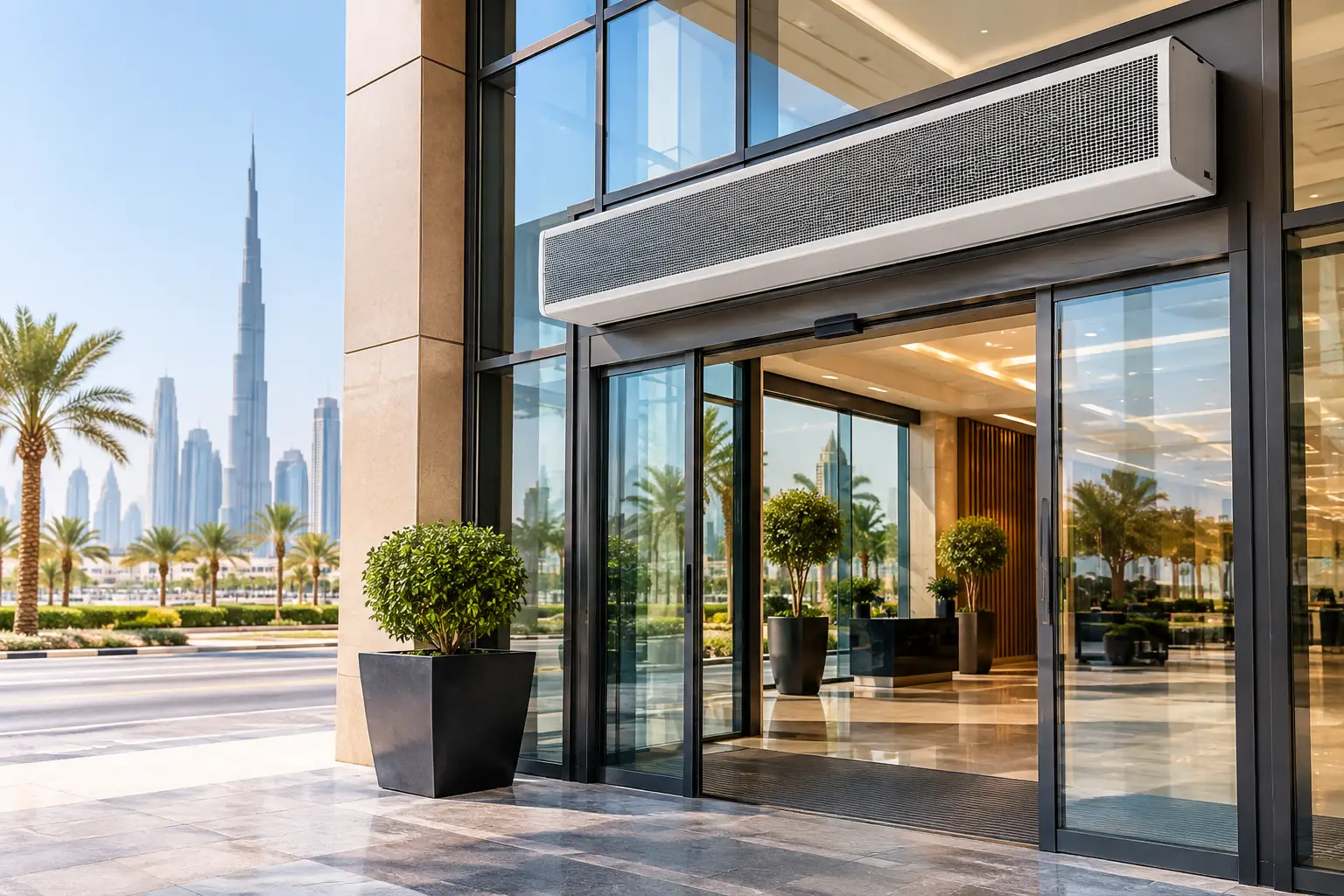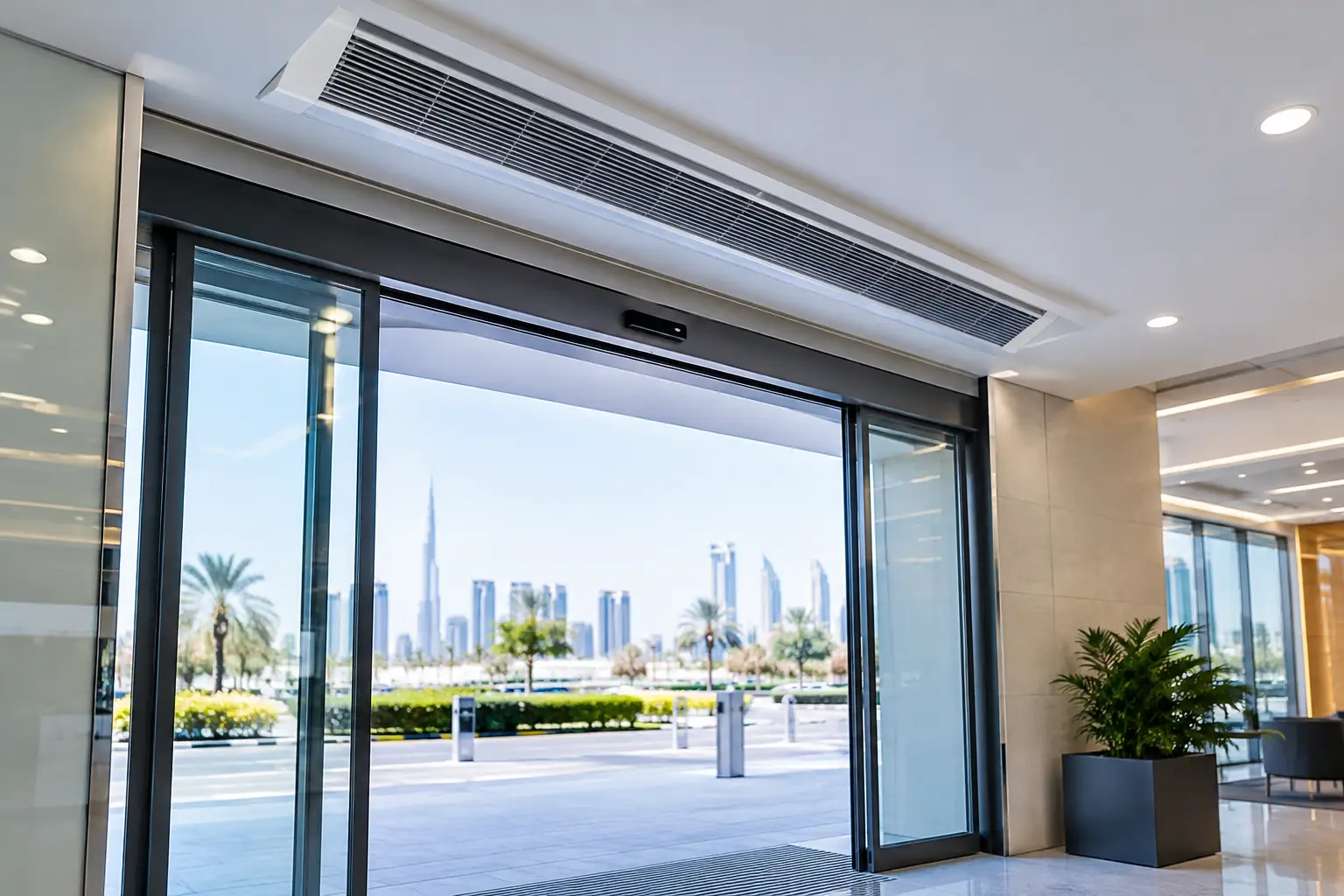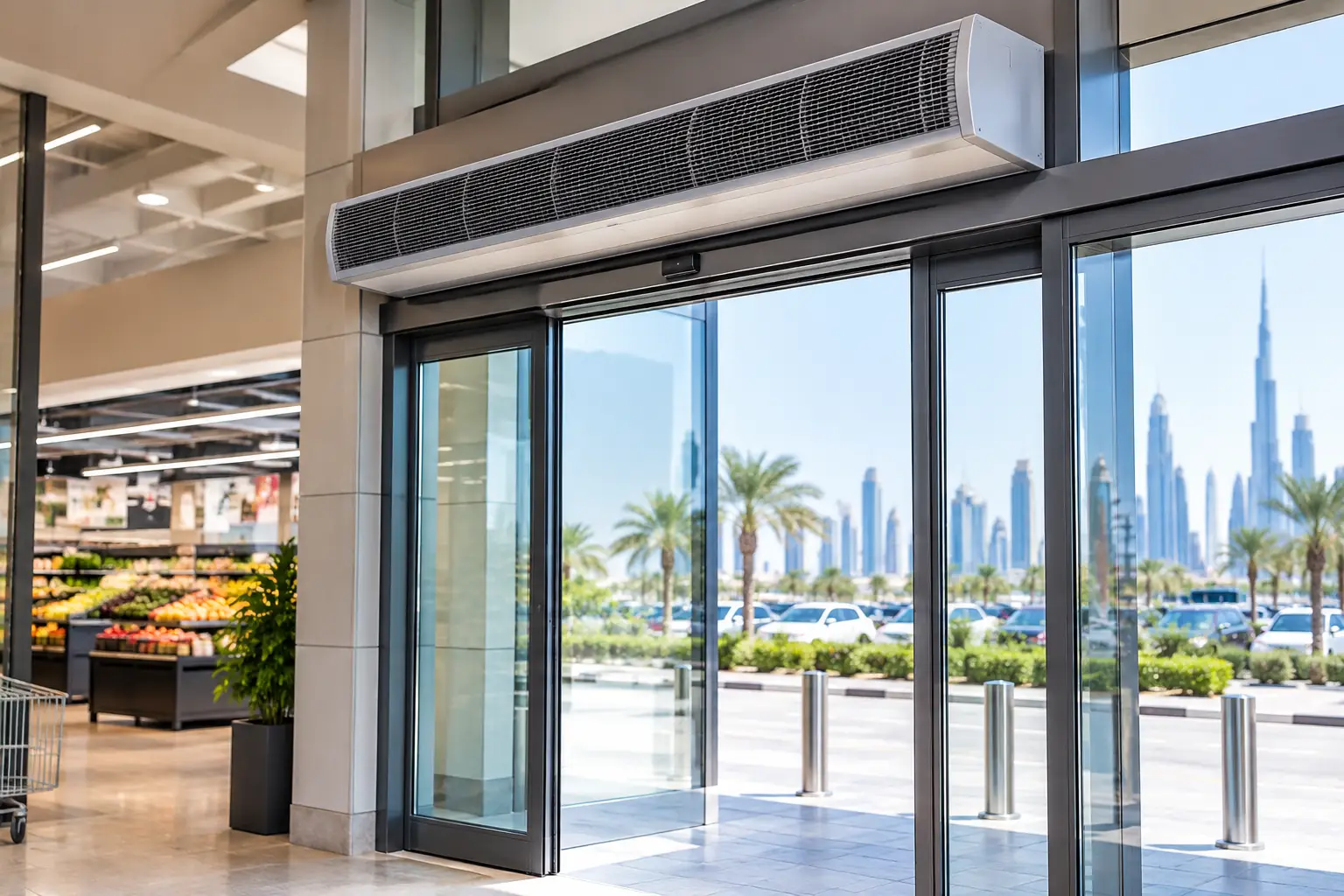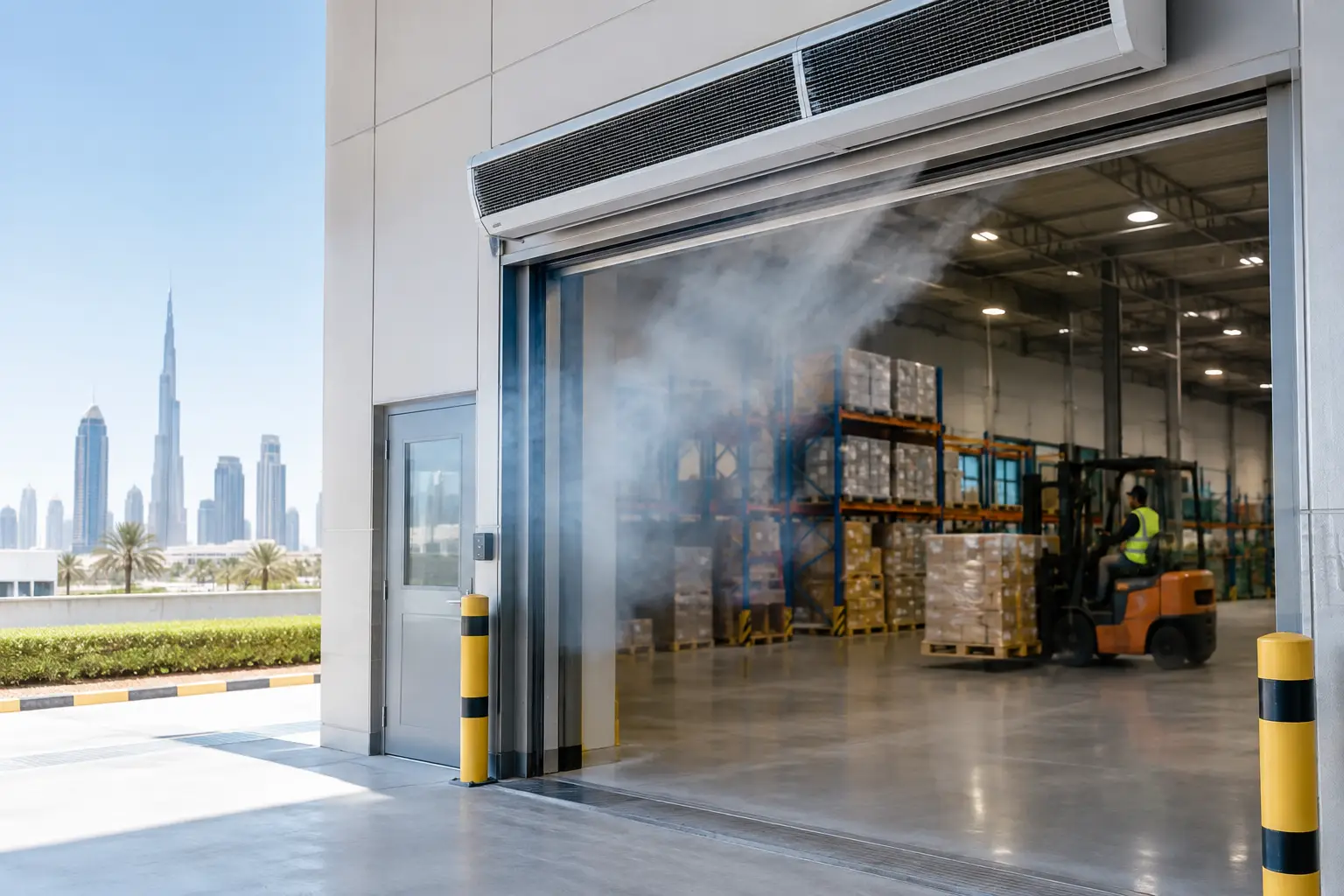
Every time a main entrance stays open in Dubai, Riyadh, Lagos, or Nairobi, money leaves with the conditioned air. In high-traffic commercial and industrial buildings, that loss is not theoretical. It shows up as rising HVAC load, unstable temperatures near entrances, more dust inside, and constant complaints from staff and visitors. That is why many facility teams ask the same question: are air curtains worth installing?
For the right building, yes. In many hot-weather applications, an air curtain delivers measurable operational value. But it is not a universal fix, and the return depends on door type, traffic pattern, climate exposure, and whether the unit is correctly specified.
Are air curtains worth installing in commercial buildings?
If your entrance is opening frequently into extreme heat, humidity, dust, or flying insects, an air curtain is often worth the investment because it protects the indoor environment without slowing access. That matters in hypermarkets, hospitality sites, cold storage loading zones, workshops, commercial lobbies, and plant entrances where doors cannot remain closed for long.
An air curtain creates a high-velocity air barrier across the doorway. It does not physically seal the opening, but it reduces air exchange between indoor and outdoor spaces. In practical terms, that means less hot air entering, less cooled air escaping, and better control over airborne contaminants.
For B2B buyers, the real question is not whether air curtains work. They do, when applied correctly. The real question is whether the savings and operational benefits justify the equipment and installation cost in your specific facility.
Where the value shows up first
In hot and desert-climate markets, cooling loss at entrances is a serious operating cost. A constantly open door forces the HVAC system to work harder to hold temperature. That pressure gets worse in buildings with long operating hours, direct sun exposure, or heavy foot traffic.
An air curtain helps by reducing infiltration. The immediate benefit is often more stable indoor temperatures near the doorway. Staff at reception desks, security stations, checkout lanes, and service counters notice the difference quickly because the hot draft is reduced.
The second value point is cleaner indoor conditions. In many parts of the GCC, MENA, and Africa, outside air brings fine dust, humidity, fumes, and insects. An effective air barrier helps limit how much of that enters with each door cycle. For food retail, hospitality, and light industrial facilities, that hygiene and cleanliness benefit can be just as important as energy savings.
There is also a productivity angle. When entrances create hot zones inside the building, occupants compensate with lower thermostat settings or portable workarounds. Neither is efficient. Better entrance control supports more predictable building performance.
When air curtains are most worth it
Air curtains tend to deliver the strongest return in facilities with one or more of the following conditions.
High-traffic entrances are the clearest case. If a door opens every few seconds, a standard door closer or access policy will not solve the problem. An air curtain provides climate control without disrupting movement.
Large openings are another strong fit, especially in industrial or logistics environments. Roller shutter doors, service entries, and loading points can create major cooling losses in hot weather. A properly engineered industrial unit can reduce that exposure significantly, although performance depends heavily on mounting height and airflow strength.
Humidity-sensitive and hygiene-sensitive spaces also benefit. In supermarkets, food processing support areas, hospitality back-of-house zones, and some healthcare-adjacent environments, the barrier helps reduce airborne intrusion and supports a more controlled internal environment.
Buildings in tropical and desert climates see more value than mild-climate buildings because the temperature and air-quality difference across the doorway is more severe. That is one reason air curtains are often a stronger business case in cities such as Abu Dhabi, Doha, Cairo, Casablanca, and Muscat than in temperate locations.
The cost side of the decision
Air curtains are not just a line item for equipment. Buyers should look at total project value, which includes specification, mounting conditions, power supply, controls integration, and long-term performance.
A small commercial entrance unit has a very different cost profile from a heavy-duty industrial system installed above a tall opening. Recessed architectural models may also require more coordination during fit-out because ceiling design, access panels, and serviceability need to be planned early.
The cheapest unit is rarely the best value. Undersized air curtains often fail because the air stream does not reach the floor with enough force to maintain separation. Oversized units can create unnecessary noise, turbulence, or energy use if they are poorly selected. The right answer sits in the middle: enough performance for the opening, the climate, and the operating pattern.
For procurement teams, this is where specification support matters. A quote should be based on door width, mounting height, entrance exposure, traffic volume, and application type, not just a generic product category.
Are air curtains worth installing if energy savings are the goal?
Yes, but the savings are usually part of a wider operational gain rather than a single dramatic number. An air curtain can reduce cooling loss, which lowers pressure on the HVAC system. In hot-weather facilities with constant door activity, that can translate into meaningful savings over time.
Still, energy performance depends on how the system is used. If a unit runs at the wrong speed, is installed too high for its capacity, or is left operating when doors are closed for long periods, results will be weaker. Likewise, if the entrance is exposed to strong crosswinds, the air barrier must be designed for that condition.
That is why realistic buyers evaluate payback in context. The return may come from a combination of lower cooling demand, fewer comfort complaints, reduced dust entry, better insect control, and improved environmental consistency. In many facilities, those combined benefits justify the investment faster than energy savings alone.
The trade-offs buyers should understand
Air curtains are effective, but they are not invisible infrastructure. They create airflow and, depending on the model, some audible fan noise. In offices, hotels, and premium retail sites, sound level and visual integration matter. That may push the project toward quieter commercial units or recessed ceiling models.
Maintenance is another factor. Like other air movement equipment, air curtains need periodic inspection and cleaning to maintain performance. In dusty regions, filter nets and internal components should not be ignored. A neglected unit will not perform like it did on day one.
It is also worth stating clearly that an air curtain is not a substitute for every door strategy. In some applications, it works best alongside automatic doors, vestibule planning, or access control. The strongest results usually come from treating entrance climate control as a system, not as a single device solving every problem alone.
Choosing the right type matters more than most buyers expect
This is where many projects succeed or fail. Commercial centrifugal flow units, recessed systems, and industrial centrifugal models each serve different operating conditions. A clean-looking lobby in a hospitality project has different needs than a warehouse transfer point or a busy hypermarket entrance.
The blower design, air velocity, mounting height, casing format, and control options all affect performance. For example, a unit specified for standard commercial traffic may not hold up in a workshop or plant entrance exposed to heat, dust, and prolonged opening cycles. Likewise, an industrial model may be excessive for a refined front-of-house application where appearance and sound matter.
In hot regions, climate-adapted performance should be part of the specification conversation from the start. Equipment needs to perform in real conditions, not ideal lab conditions. That means considering ambient heat, humidity, dust load, and daily operating intensity.
So, are air curtains worth installing?
For many commercial and industrial sites, absolutely. If your entrance is driving cooling loss, bringing in dust and insects, or creating uncomfortable hot zones inside the building, an air curtain is often one of the most practical upgrades available. It protects access, supports HVAC efficiency, and improves indoor control without slowing movement through the doorway.
But the value is strongest when the unit is correctly matched to the application. Buyers who treat air curtains as commodity equipment often end up with disappointing results. Buyers who assess entrance conditions properly usually see why this category matters.
If you are evaluating whether air curtains are worth installing for a facility in a tropical or desert-climate market, the smart next step is a specification-based review. FreezeeX Air Curtains Ltd. works with contractors, consultants, and facility teams to match the right air curtain system to the opening, traffic level, and climate exposure. Request a consultation or quote to assess the best-fit solution for your project.