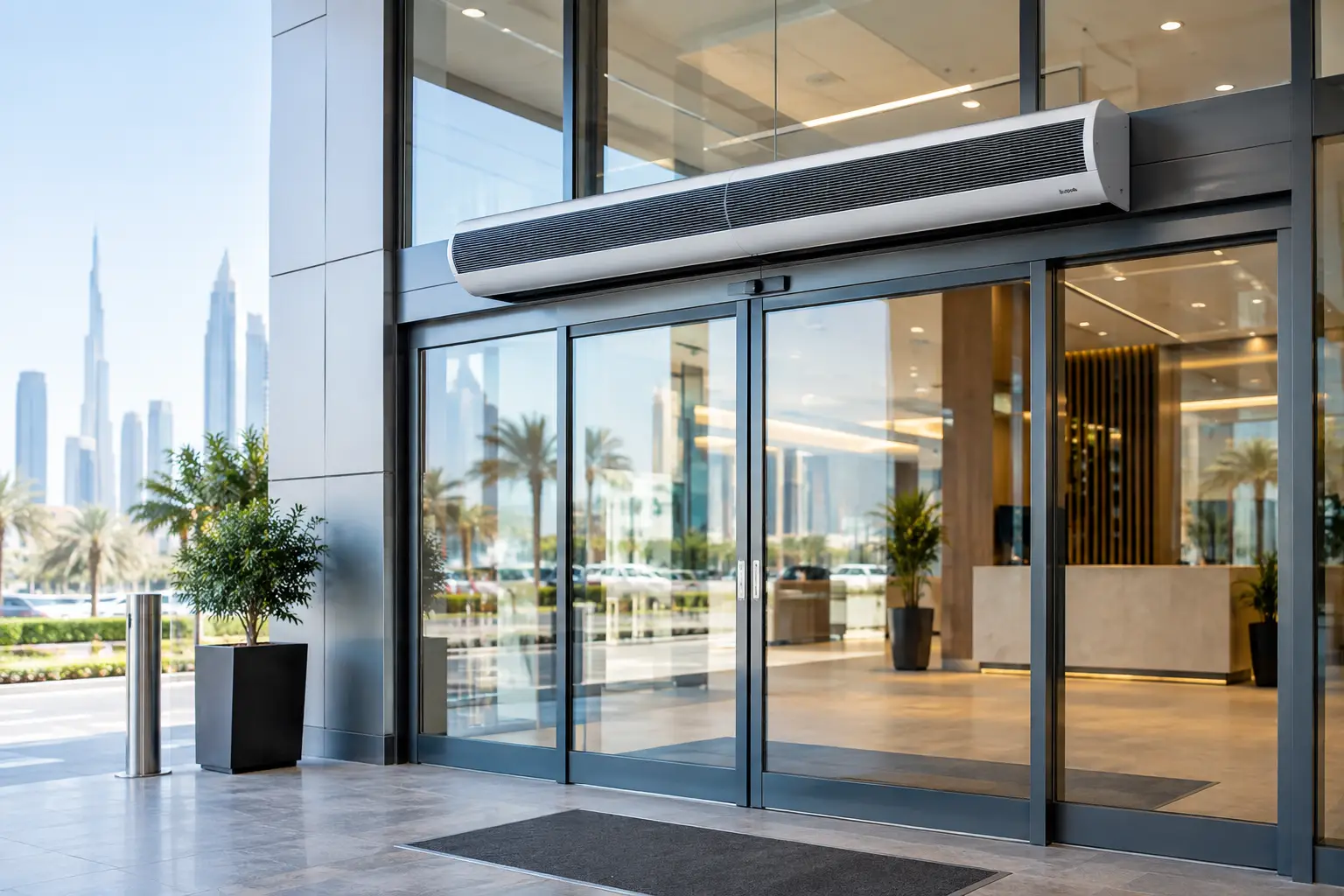
At a hotel lobby in Dubai or a hypermarket entrance in Lagos, noise travels fast. Guests hear it. Staff notice it. Facility teams get complaints long before anyone mentions energy loss. That is why a quiet commercial air curtain matters more than many specifications first suggest. It is not only about blocking hot air, dust, humidity, and insects. It is also about protecting the entrance environment without adding an aggressive mechanical sound to the space.
For commercial buildings in GCC, MENA, and African markets, this balance is harder than it looks. Entrances are exposed to extreme heat, frequent door cycles, and long operating hours. In those conditions, the wrong air curtain can either be too weak to perform or powerful enough to do the job but too loud for the application. The right selection depends on airflow design, installation method, door geometry, and the expectations of the building itself.
Why noise matters in entrance performance
Noise is often treated as a comfort issue, but in commercial operations it is also a brand and usability issue. In hospitality, a loud unit at the main entrance can undermine the guest experience. In retail, constant mechanical noise near checkout zones or open entrances affects dwell time and staff comfort. In offices, clinics, and premium mixed-use sites, acoustic disruption can become a tenant complaint even when the unit is technically doing its job.
That does not mean the quietest model is always the best choice. A low-noise unit that fails to create an effective air barrier will allow cooled air to escape and let outdoor heat and dust push inward. In hot and desert-facing environments, that failure shows up quickly in higher HVAC load, less stable indoor temperature, and more contamination at the entrance.
The real goal is controlled acoustic performance with sufficient throw, velocity, and coverage. A quiet commercial air curtain should sound appropriate for the site while still delivering strong air isolation.
What makes a commercial air curtain quiet
Noise level is shaped by several engineering decisions, not one. Fan type is a major factor. Centrifugal systems are often preferred in commercial and industrial applications because they can deliver strong, stable airflow with better acoustic control than lower-grade alternatives. Motor quality, wheel balance, casing construction, internal insulation approach, and grille design also influence how sound is produced and transmitted.
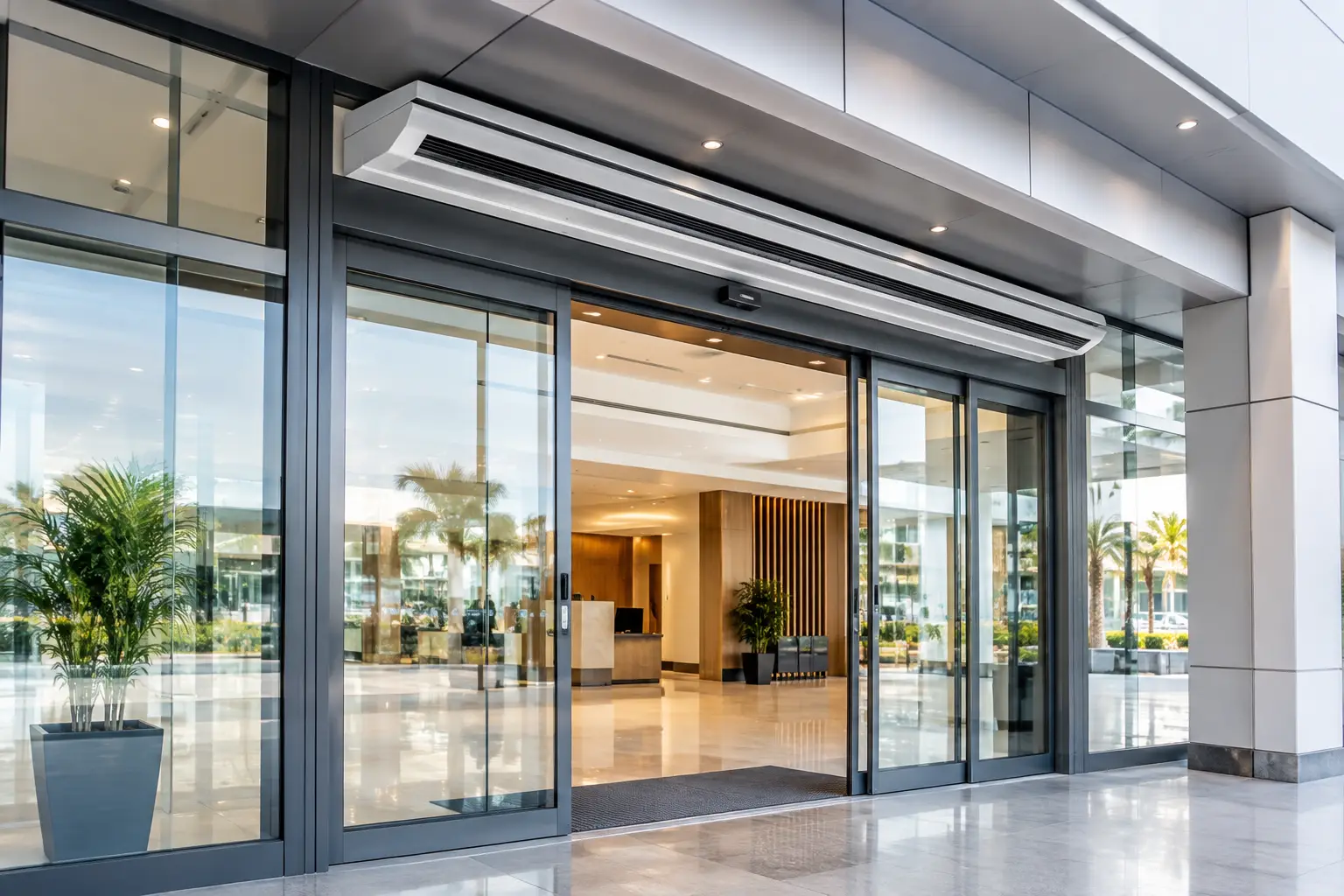
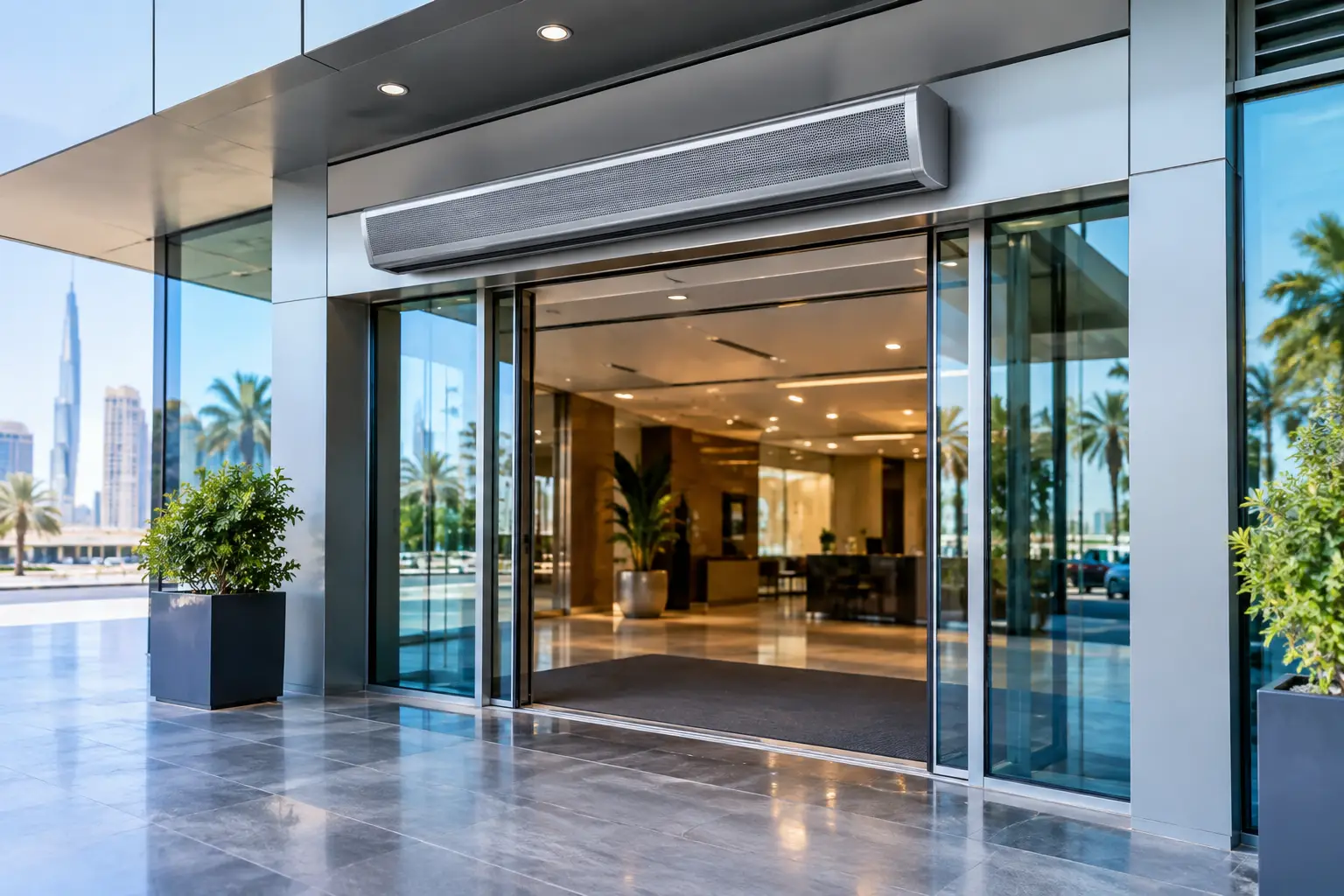
Installation position matters just as much. A recessed ceiling air curtain can reduce visible equipment presence and help the entrance feel cleaner and less intrusive. In many commercial settings, that also improves perceived noise because the unit is integrated into the ceiling line rather than hanging directly in the occupied zone. Surface-mounted units can still perform very well, but they need proper placement and specification.
Air velocity must be matched carefully to opening height and surrounding pressure conditions. When units are oversized or set too aggressively, sound levels can rise without delivering proportional performance gains. When units are undersized, operators sometimes increase settings to compensate, which can create both noise and poor barrier effectiveness.
Quiet commercial air curtain selection is application-specific
A quiet commercial air curtain for a boutique retail entrance is not the same as one specified for a cold storage dispatch area or a busy workshop door. Buyers who treat all entrances the same usually end up with preventable issues.
Hospitality and premium commercial spaces
Hotels, showrooms, malls, and corporate entrances typically need strong climate separation with restrained sound output. Here, appearance and acoustic comfort matter almost as much as thermal performance. Recessed models or refined commercial centrifugal units are often a better fit because they support a cleaner architectural result and a more controlled sound profile.
In these settings, even moderate noise can feel excessive because the space is designed to be calm. The air curtain must protect the conditioned interior without announcing itself every time someone walks through the door.
Hypermarkets and retail entrances
Retail entrances in cities such as Riyadh, Cairo, or Nairobi face a different pressure. Traffic is constant, doors remain open for long periods, and outdoor heat can be intense. The unit must be strong enough to hold the line against infiltration, yet not so loud that it adds fatigue for staff stationed nearby.
This is where commercial centrifugal flow units often make sense. They offer the kind of airflow stability needed for long operating hours and repeated door exposure. A quiet result here is less about silence and more about controlled operational sound at the right performance level.
Industrial and back-of-house openings
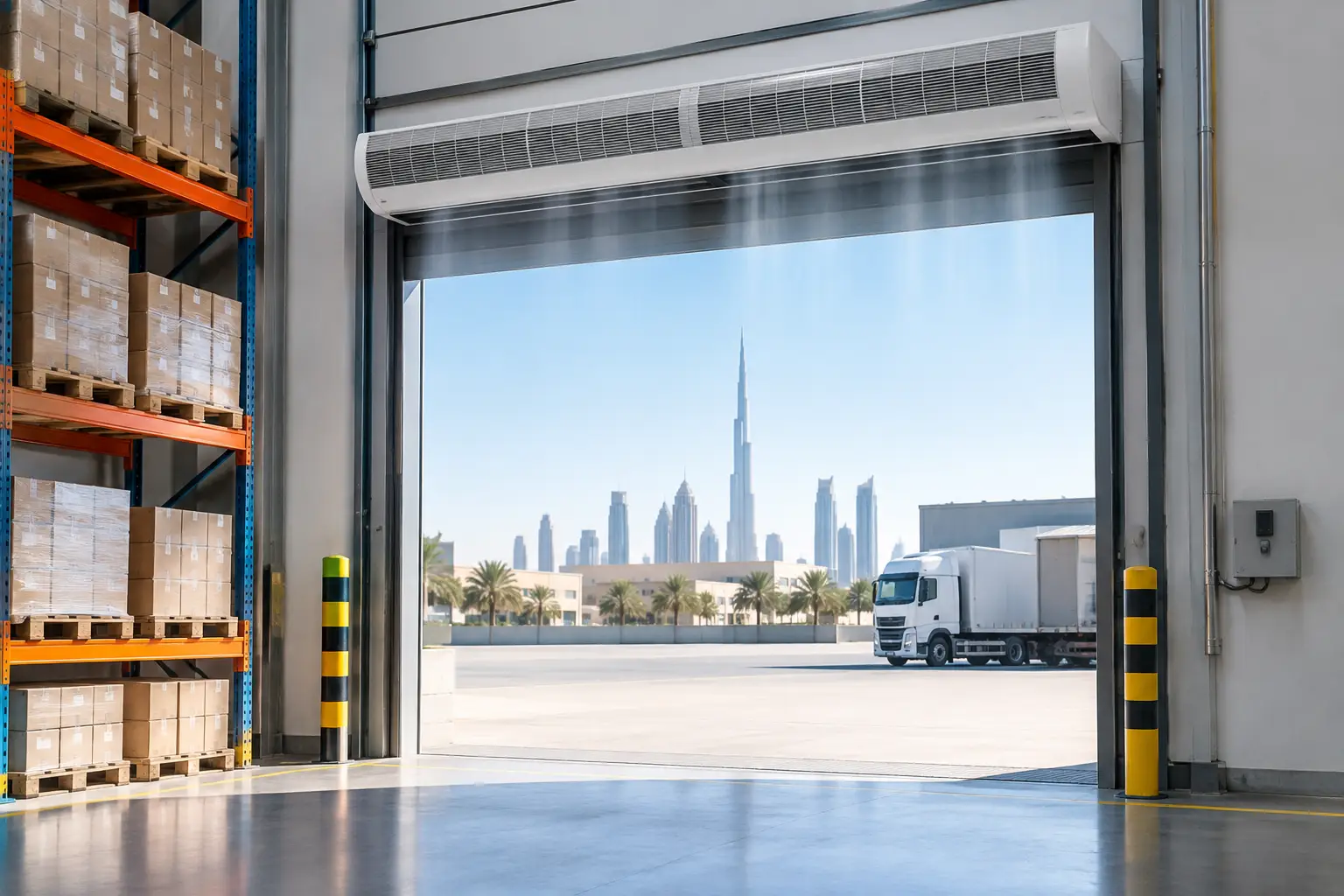
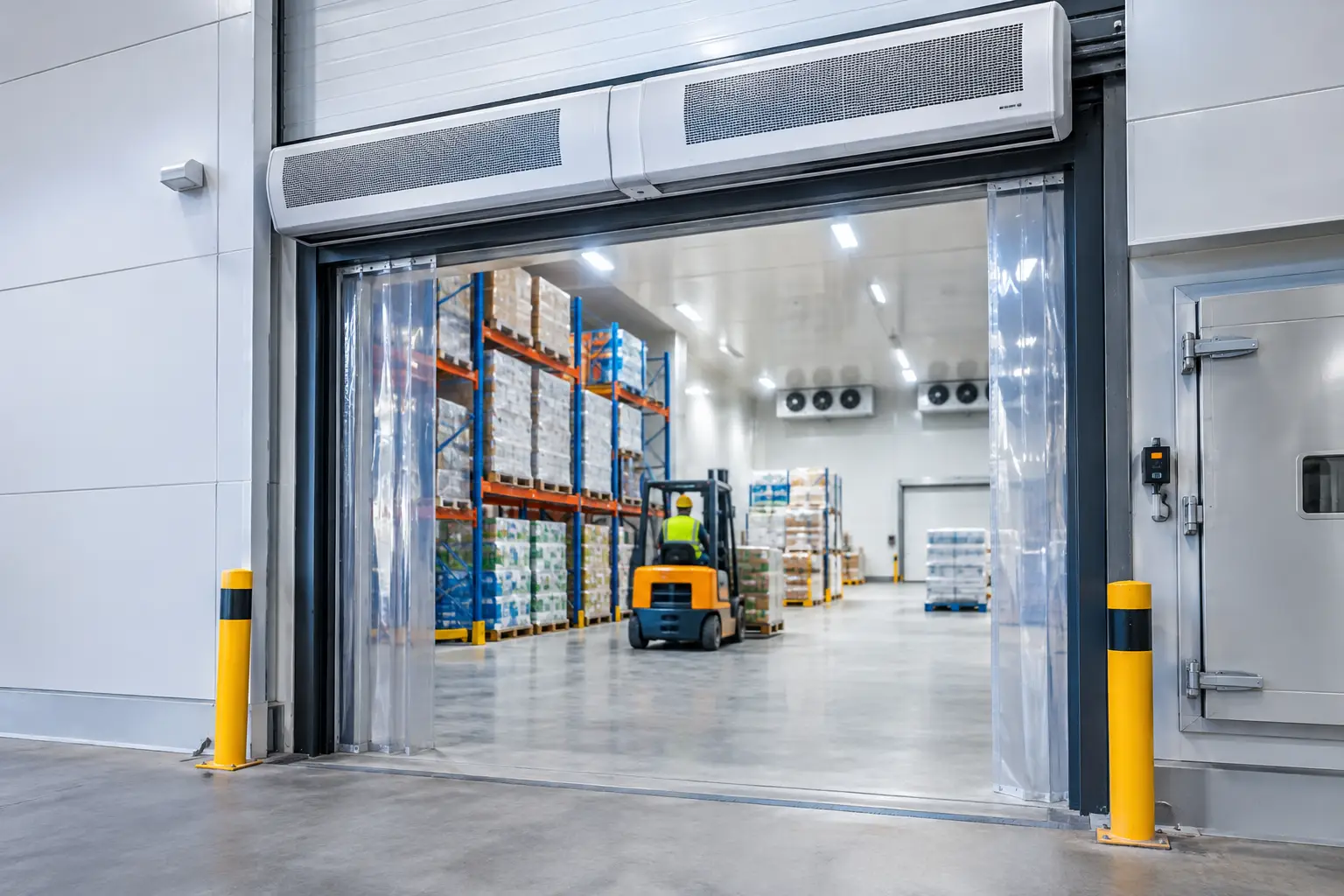
Industrial plants, loading points, service corridors, and workshop entrances usually tolerate higher sound levels than front-of-house spaces. Even so, noise should not be ignored. Excessive mechanical sound in operational areas can affect communication, fatigue, and perceived equipment quality.
For these sites, the better question is not whether the unit is quiet in absolute terms. It is whether the noise level is appropriate for the environment while maintaining the air barrier needed for heat, dust, and insect control. Heavy-duty units can be engineered for this balance, especially where high ambient temperature and harsh site conditions demand more forceful performance.
Climate conditions change the specification
In tropical and desert climates, air curtains work harder. High external temperature, humidity swings, airborne dust, and pressure differences across entrances all increase the demand on the unit. This is why standard selection habits from mild-climate markets do not translate well to projects in the Gulf, North Africa, or Sub-Saharan commercial centers.
In Dubai, Abu Dhabi, Doha, or Muscat, the issue is often extreme heat and sustained cooling loss at frequently used entrances. In coastal or humid markets, moisture control becomes part of the challenge. In industrial districts and logistics sites, dust infiltration can be just as costly as temperature gain.
A quiet commercial air curtain in these regions must be designed for performance under pressure. That means looking beyond headline decibel figures. A unit can test quietly in ideal conditions yet struggle in a live entrance exposed to heat load, cross drafts, and heavy footfall. What matters is real operating behavior in the actual climate and application.
The trade-off buyers should understand
There is always a trade-off between acoustic softness, air volume, mounting constraints, and entrance size. Some buyers ask for the lowest possible noise level, then expect the same unit to cover a wide, tall, constantly open doorway in peak summer conditions. That is rarely realistic.
If the opening is large or the site has strong pressure imbalance, the air curtain needs enough throw and velocity to maintain separation. Reducing fan speed purely for acoustic reasons can weaken the barrier. On the other hand, selecting an industrial-strength unit for a refined lobby can solve one problem while creating another.
The best result comes from matching the unit to the entrance instead of chasing a single number. Door height, width, mounting height, door usage pattern, surrounding HVAC design, and the acceptable sound environment all need to be considered together.
What specifiers and facility teams should ask
When evaluating options, buyers should push past generic claims such as low noise or energy saving. The useful questions are more practical. What is the mounting height? How often is the entrance open? Is the space customer-facing or operational? Is the main concern heat gain, dust, insects, humidity, or all four? Does the site need a recessed finish, or is visible equipment acceptable? What outdoor conditions does the doorway face during peak season?
These answers shape product choice quickly. They also prevent overbuying and under-specifying, both of which cost money. A weaker unit may look economical at first but can drive ongoing cooling loss. A unit that is too aggressive for the space may trigger complaints and get turned down by staff, which defeats the whole point of installing it.
For contractors and consultants, this is where specification-ready support matters. Model family, blower type, control method, and installation configuration should all be aligned to the project rather than copied from a previous job with different conditions.
Performance that works without dominating the space
A well-chosen quiet commercial air curtain does its work in the background. It reduces hot air intrusion, limits dust and flying insects, supports indoor comfort, and helps the cooling system carry less unnecessary load. At the same time, it respects the space it serves, whether that is a five-star hotel entrance, a supermarket threshold, or a controlled industrial opening.
That balance is what serious buyers should look for. Not silence at any cost, and not raw airflow without regard for occupant experience. The goal is dependable entrance protection with sound levels that fit the application and climate.
For projects in hot, humid, or desert-exposed environments, that balance requires more than a catalog guess. It needs proper assessment of the doorway, traffic pattern, and performance target. If you are specifying for a commercial or industrial site and need guidance on the right quiet commercial air curtain, request a consultation and quote based on your actual entrance conditions. The right system will protect the opening, support energy efficiency, and stay appropriate to the space every hour it runs.