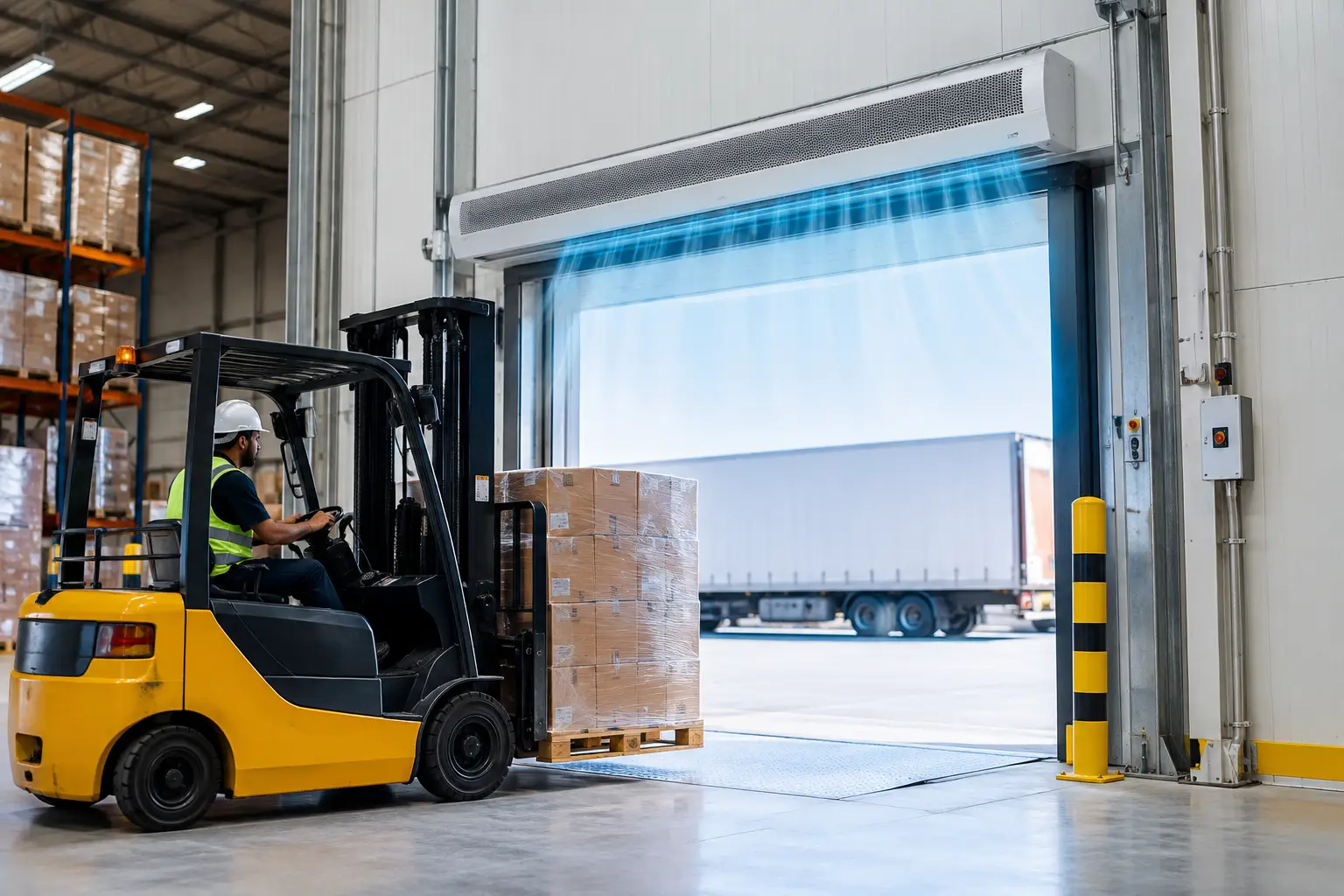
A logistics door can open hundreds of times in a shift. Each opening allows hot, humid, dusty outdoor air to move toward conditioned loading areas, dispatch halls, and receiving zones. The best air curtains for logistics are not simply the highest-powered units available. They are systems matched to the opening height, door cycle, vehicle activity, pressure conditions, and local climate.
For distribution centers in Dubai, Riyadh, Doha, Muscat, Cairo, Lagos, and other demanding markets, the specification needs to account for extreme heat, airborne dust, humidity, and sustained traffic. A correctly selected air curtain creates a controlled air barrier at the doorway, limiting the exchange between indoor and outdoor air while preserving the operational speed that logistics facilities require.
What Makes an Air Curtain Suitable for Logistics?
Logistics applications place different demands on entrance equipment than a standard retail doorway. Loading bays, warehouse shutters, dispatch doors, and material-transfer openings are often wider, taller, and exposed to stronger external air movement. Forklifts, pallet trucks, personnel, and delivery vehicles may pass through continuously, so the air curtain must perform without becoming a bottleneck.
The core requirement is effective air isolation across the entire opening. This depends on more than airflow volume. The discharge velocity must be sufficient to reach the floor or intended separation point, while the air stream must remain stable enough to resist crosswinds, pressure differences, and turbulence caused by traffic.
A useful logistics specification considers five connected factors:
- Opening width and mounting height
- Traffic volume and door-open duration
- Indoor and outdoor temperature and humidity difference
- Exposure to wind, dust, fumes, or insects
- Whether the doorway serves ambient, temperature-controlled, or cold-storage space
An undersized unit may look adequate during a brief test but lose effectiveness at a busy loading dock. An oversized unit may increase energy use, noise, and capital cost without improving the barrier. The right selection is based on application data, not only the physical door dimensions.
Best Air Curtains for Logistics by Door Application
High-traffic warehouse and distribution entrances
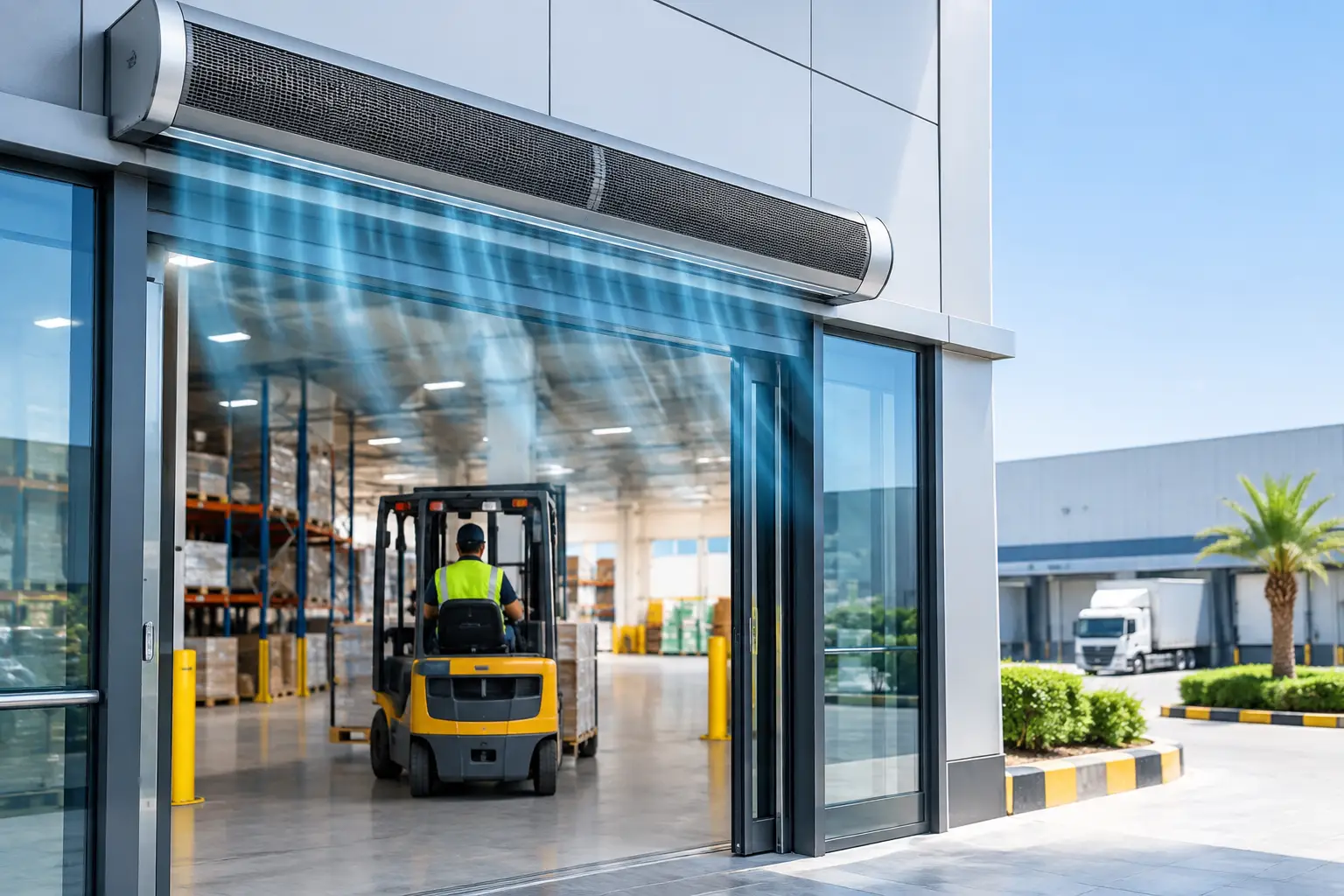
For warehouse entrances and general dispatch doors, an industrial centrifugal air curtain is usually the strongest starting point. Centrifugal blower designs are well suited to applications that require higher pressure capability and stable throw over larger openings. They can help control dust, heat, humidity, and insects where roller shutters or sectional doors remain open during active operations.
The Industrial Centrifugal Series is suited to heavy-duty logistics conditions where durability and sustained airflow are more important than low sound levels. This type of equipment is particularly relevant for loading zones exposed to desert dust or high ambient temperatures, where the air barrier must work against difficult external conditions.
However, mounting height matters. A unit selected for a 10-foot personnel opening will not deliver the same result over a tall loading-bay shutter. For high openings, specify the equipment based on the required air reach and site conditions, then confirm performance with the manufacturer rather than relying on nominal width alone.
Covered receiving doors and internal transfer points
Not every logistics opening requires the same industrial duty. Internal transfer doors, covered receiving bays, warehouse-to-office transitions, and lower-height service openings may benefit from a commercial centrifugal or high-performance commercial model.
The Commercial Centrifugal Flow Series can be appropriate where reliable air separation is needed but mounting heights and environmental exposure are more moderate. In facilities that value lower perceived noise near staff work areas, a higher-efficiency commercial air curtain can provide a better balance between airflow performance and acoustic comfort.
The decision depends on the door’s actual operating pattern. A door used once per hour has very different requirements from a receiving point operating through every delivery window. Site teams should document peak traffic, not just average daily movement, because the peak period is when cooling loss and contamination risk are greatest.
Cold storage and temperature-controlled logistics
Temperature-controlled logistics requires more careful engineering. At a cold-room or chilled dispatch opening, the objective is to reduce infiltration of warm, humid air that can increase refrigeration load, create condensation risk, and disrupt internal temperature stability. An air curtain is not a replacement for a properly managed door system, but it can reduce air exchange during frequent openings.
For these applications, curtain velocity, mounting location, door geometry, and refrigeration operating conditions should be reviewed together. A weak air stream can be displaced by temperature-driven airflow and forklift movement. Excessively aggressive airflow, on the other hand, may create unnecessary turbulence at the opening. The specification should focus on an effective barrier at the required opening height, with professional assessment of the facility’s thermal conditions.
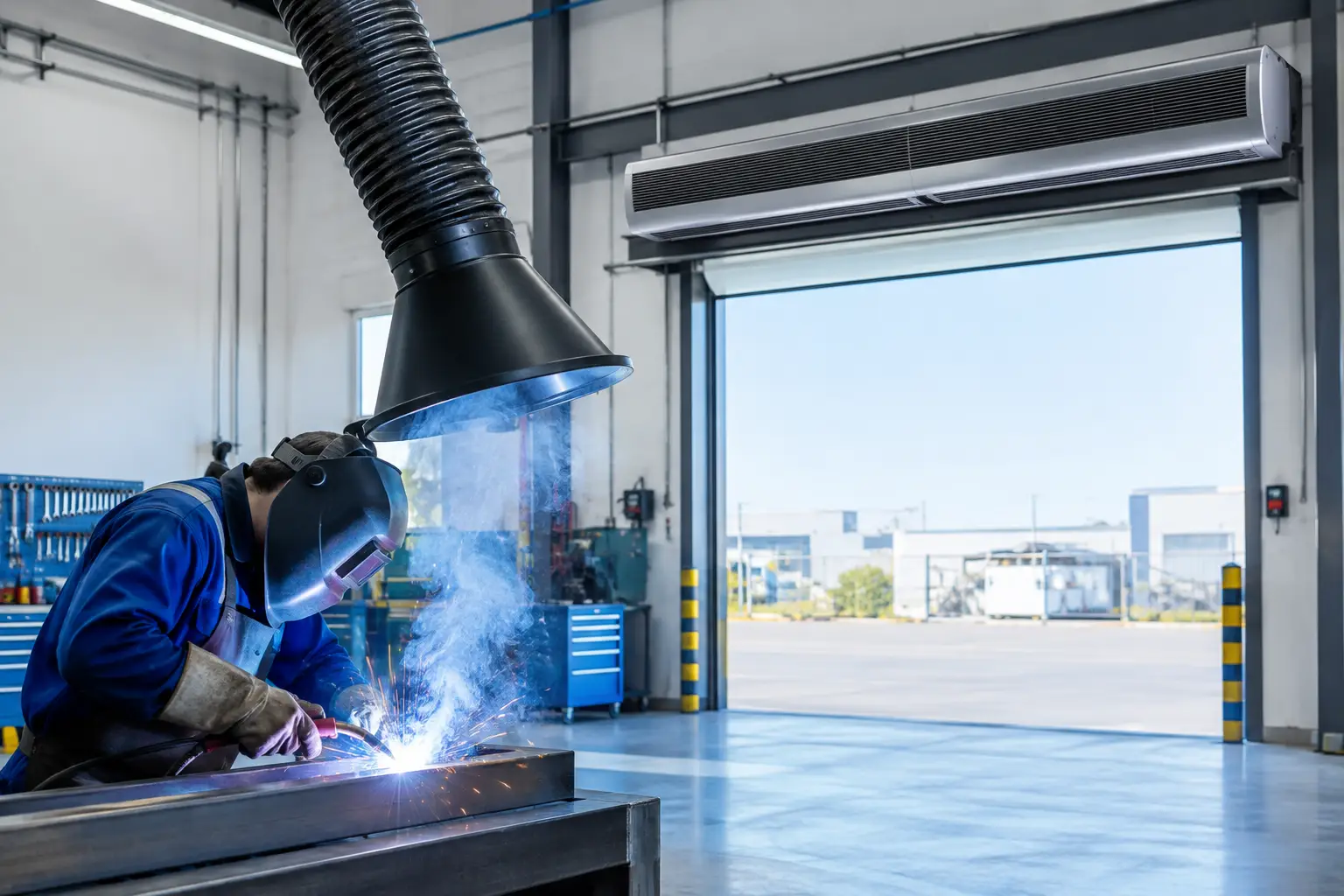
Where hygiene and controlled environments are priorities, air curtains can also help reduce the entry of dust, insects, and airborne contaminants. This is relevant to food distribution, pharmaceutical logistics, and clean packing areas, where maintaining separation at frequently used access points supports wider environmental-control measures.
Recessed entrances in logistics offices and visitor areas
Logistics facilities often include reception zones, security entrances, staff access doors, and customer collection points alongside industrial operations. These areas may require a cleaner architectural finish without sacrificing entrance climate control.
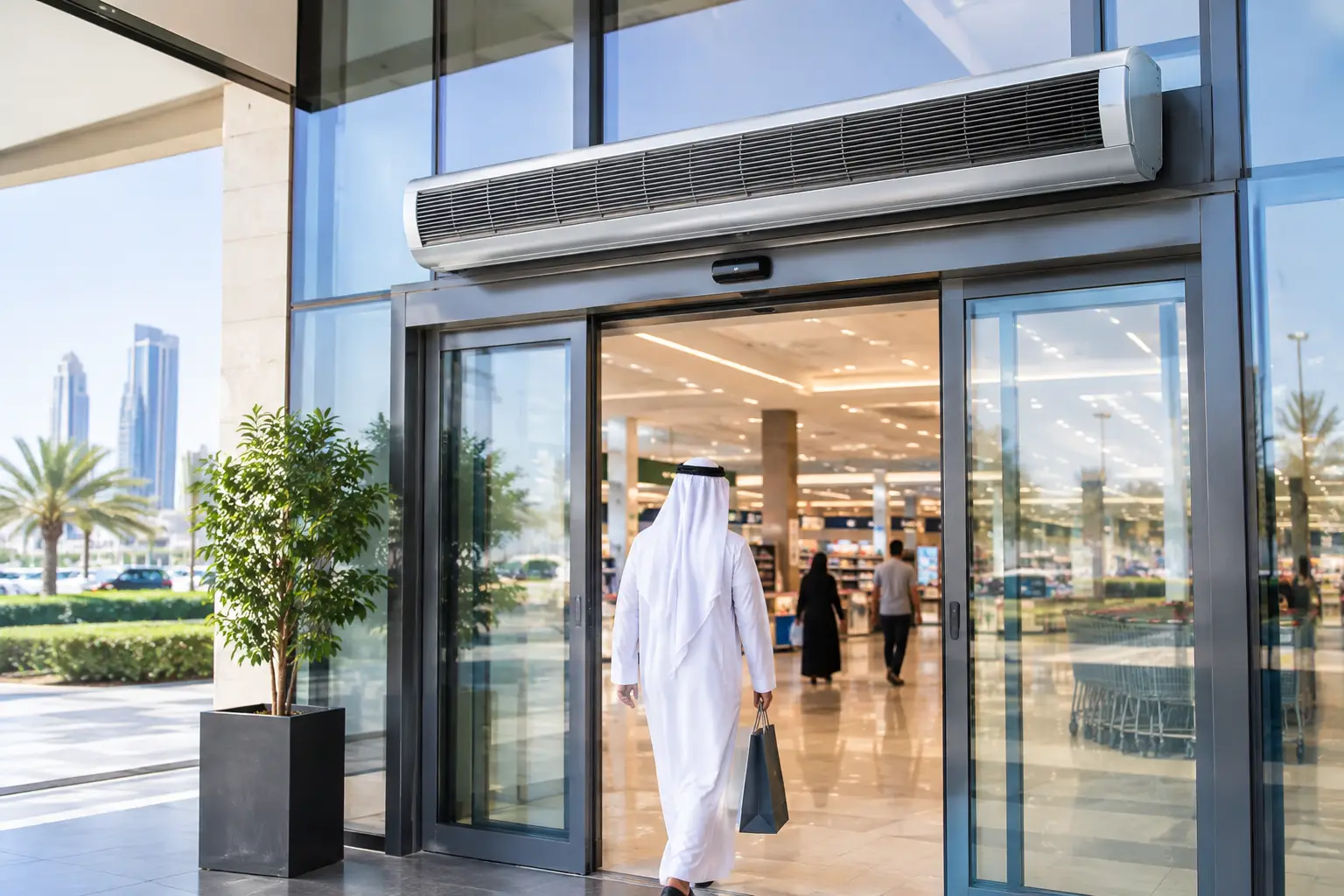
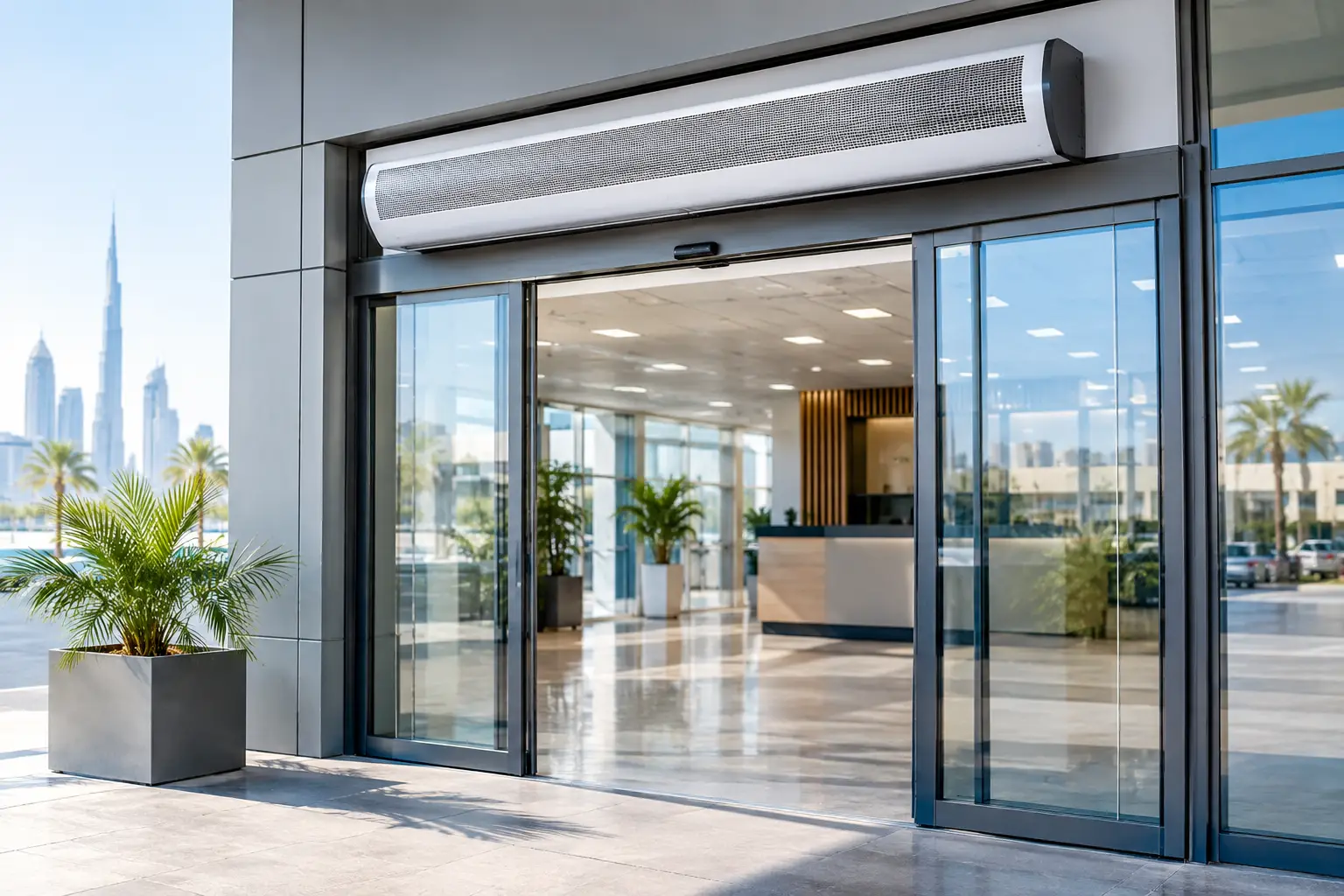
A Recessed Ceiling Air Curtain can suit finished ceiling applications where the unit should remain visually integrated with the entrance design. It is generally more appropriate for lower-height, controlled entrances than exposed loading docks. The important distinction is application fit: recessed equipment supports the building’s presentation and comfort, while industrial equipment is selected for demanding operational doors.
Airflow, Mounting, and Door Conditions Drive Performance
Air curtains work by projecting a controlled stream of air across an open doorway. In logistics facilities, that stream must overcome the conditions that try to pull outside air indoors: wind pressure, stack effect, vehicle movement, and the large temperature difference between a cooled warehouse and the outdoor environment.
Mounting the unit directly above the opening is common, but it is not automatically the correct arrangement for every site. Door-head clearance, obstructions, shutter tracks, sprinkler coordination, and structural access all affect the final layout. Side-mounted or custom configurations may be considered where overhead installation is constrained, although they require careful design to ensure full coverage.
The discharge direction is equally important. The air stream should be adjusted to meet the intended barrier line without blowing excessively into the facility or being pushed outward by external conditions. This is why commissioning and professional setup matter. Even a well-chosen unit can underperform if it is installed at an unsuitable height or aimed incorrectly.
Energy Efficiency Is About Reducing Door Losses
An air curtain does consume electrical power, so its value should be evaluated against the cooling energy and operational disruption associated with open doors. In hot and humid GCC, MENA, and African climates, conditioned air escaping through a high-traffic entrance can place a persistent load on the building’s HVAC system.
By limiting warm-air infiltration, a suitable air curtain helps maintain more stable indoor conditions near the doorway. This can reduce discomfort for staff, lessen the burden on cooling equipment, and help protect temperature-sensitive goods. The result depends on the door schedule, internal setpoint, external climate, and how effectively the air barrier covers the opening.
Variable speed control can add value where door activity changes significantly by shift or time of day. A facility may need stronger airflow during active dispatch periods and lower output when a doorway is used mainly by personnel. This approach should be assessed alongside controls integration and the operating philosophy of the site.
Common Specification Errors to Avoid
The most common mistake is treating air curtains as a one-size-fits-all product category. Selecting solely by door width ignores mounting height, which has a direct effect on whether the air stream reaches its intended point. Another error is specifying commercial equipment for a high, exposed industrial shutter simply because the nominal width appears to match.
Noise should also be considered in context. At a loading dock, equipment noise may be secondary to airflow reach and durability. At a security desk or customer collection entrance, acoustic performance can carry more weight. The right answer changes with the environment.
Finally, avoid assuming that an air curtain can compensate for poor door management. Dock seals, door controls, traffic routing, and building pressure all influence results. Air curtains are most effective when they are part of a coordinated entrance-control strategy.
Specify the Right System for the Site
For a logistics project, provide the opening width and height, mounting position, daily and peak traffic, indoor temperature target, and any exposure to wind, dust, humidity, insects, smoke, or vehicle fumes. Photos and a simple layout of the doorway can also help identify installation constraints before equipment is selected.
FreezeeX can assess these details and recommend an air curtain configuration suited to industrial, commercial, cold-storage, or finished-entrance applications. Request a consultation or project quotation before finalizing the specification, especially for high-traffic doors operating in tropical, humid, or desert climates. A properly matched air barrier protects the conditions your facility works hard to maintain while keeping goods and people moving.