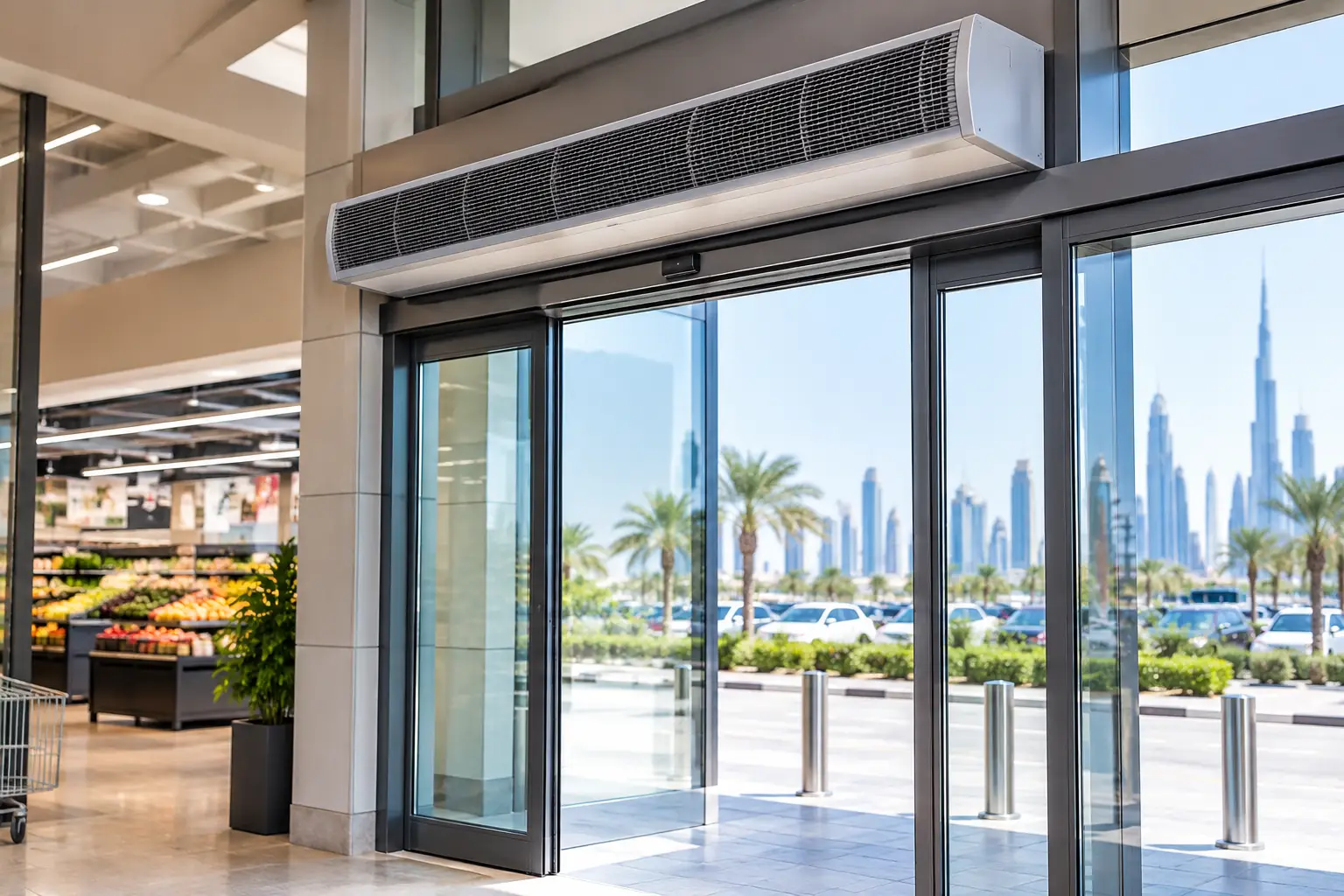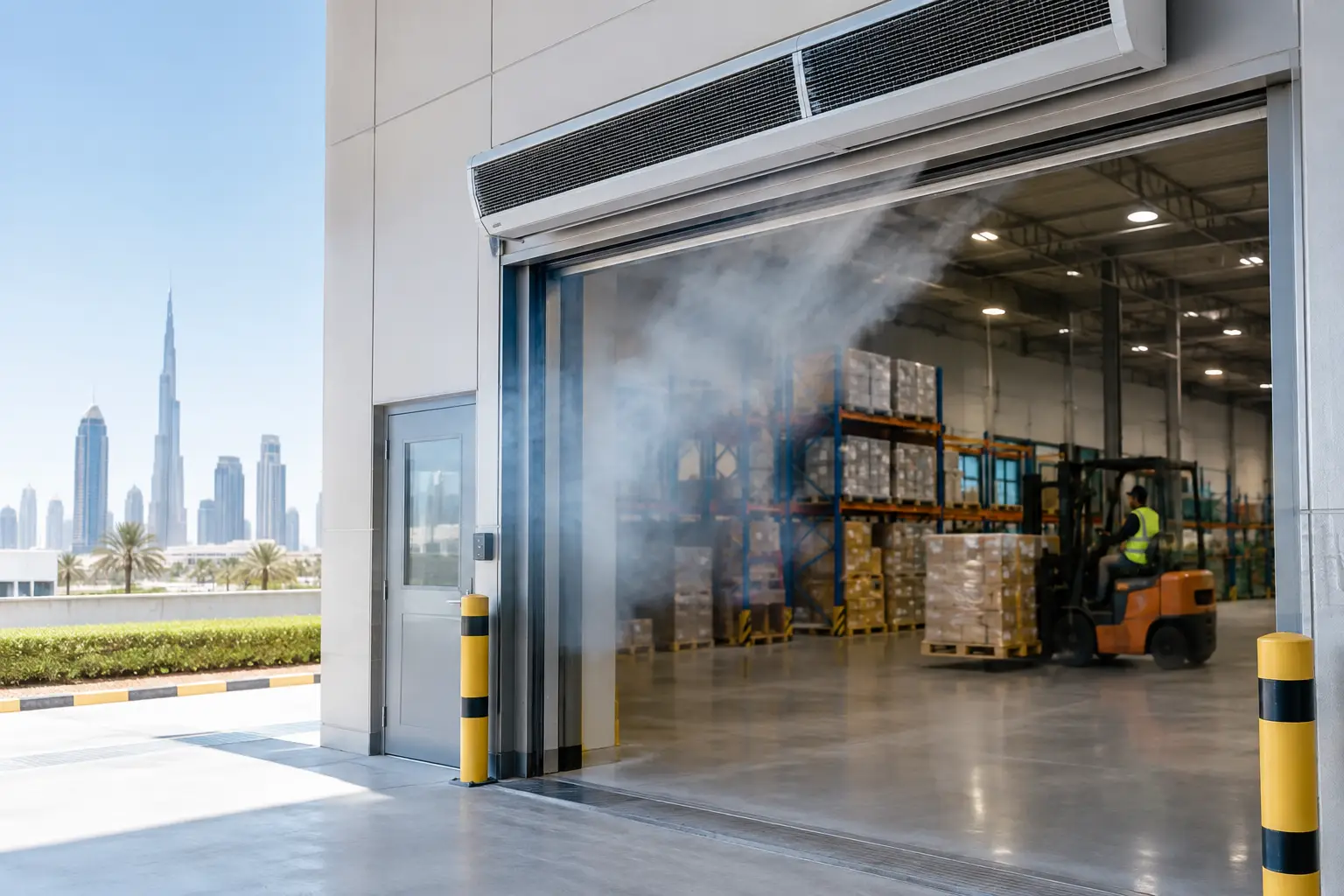
A supermarket entrance in Dubai can open hundreds of times a day. A warehouse loading door in Riyadh may stay open for long vehicle movements. In both cases, outdoor dust, humid air, insects, and vehicle-related pollutants have a direct path indoors. So, are air curtains hygienic? Yes, when they are properly selected, installed, and maintained as part of an overall building hygiene strategy.
An air curtain does not sanitize air or replace cleaning, filtration, or ventilation systems. Its hygiene value comes from prevention: it creates a high-velocity air barrier across an opening that reduces the uncontrolled exchange of outdoor and indoor air. For facilities where product quality, occupant comfort, and cleanliness matter, that barrier can materially reduce exposure at one of the building’s most vulnerable points.
Are Air Curtains Hygienic? The Practical Answer
Air curtains can support a more hygienic commercial environment because they help limit the entry of airborne contaminants while allowing doors to remain operationally open. At entrances to food outlets, hospitals, logistics facilities, retail stores, and manufacturing sites, this is especially relevant during high traffic periods.
The effectiveness depends on whether the discharge air reaches the floor or threshold with sufficient velocity to resist outside air movement. A weak or poorly positioned unit may move air without creating a reliable seal. A correctly engineered system, by contrast, forms a continuous airstream that helps separate two environments.
For commercial operators, the key distinction is simple: an air curtain is a contamination-control measure, not a disinfection device. It can reduce what enters through the doorway, but it cannot eliminate contaminants already present inside the building.
What an Air Curtain Can Help Keep Out
Open doors create pressure and temperature differences that pull outside air inward. In hot, humid, and dusty climates, that incoming air often carries more than heat. A correctly specified air curtain can reduce the ingress of several common hygiene concerns:
- Dust, sand, and fine outdoor particulates that affect retail floors, equipment, and stored goods
- Flying insects at restaurant, supermarket, food processing, and hospitality entrances
- Humidity that can contribute to condensation, odors, and surface moisture in cooled spaces
- Smoke, fumes, and traffic-related airborne pollutants near loading bays or street-facing doors
- Unconditioned hot air that increases cooling load and can disrupt stable indoor conditions
This is particularly useful in Gulf and African commercial environments, where desert dust, tropical humidity, and high ambient temperatures can quickly compromise an open entrance. In a pharmacy, hospital reception area, or food preparation support zone, reducing the volume of uncontrolled outside air also supports more consistent indoor housekeeping standards.
Hygiene Depends on Airflow Design, Not the Product Name
Not every air curtain will deliver the same hygienic benefit. The right unit depends on door height and width, mounting location, traffic type, external wind exposure, and the pressure conditions on both sides of the entrance.
For example, a narrow retail doorway may need a commercial unit installed directly above the opening. A tall warehouse shutter may require a higher-output industrial system with the throw and discharge velocity needed to maintain separation at floor level. Specifying a light-duty unit for a high loading bay can leave gaps in the air barrier, especially when forklifts, delivery vehicles, or crosswinds disrupt the airflow.
The air stream should cover the entire doorway width, with adjacent units arranged to avoid dead zones. Mounting height also matters. As height increases, the system needs greater airflow performance to ensure the jet remains effective by the time it reaches the threshold.
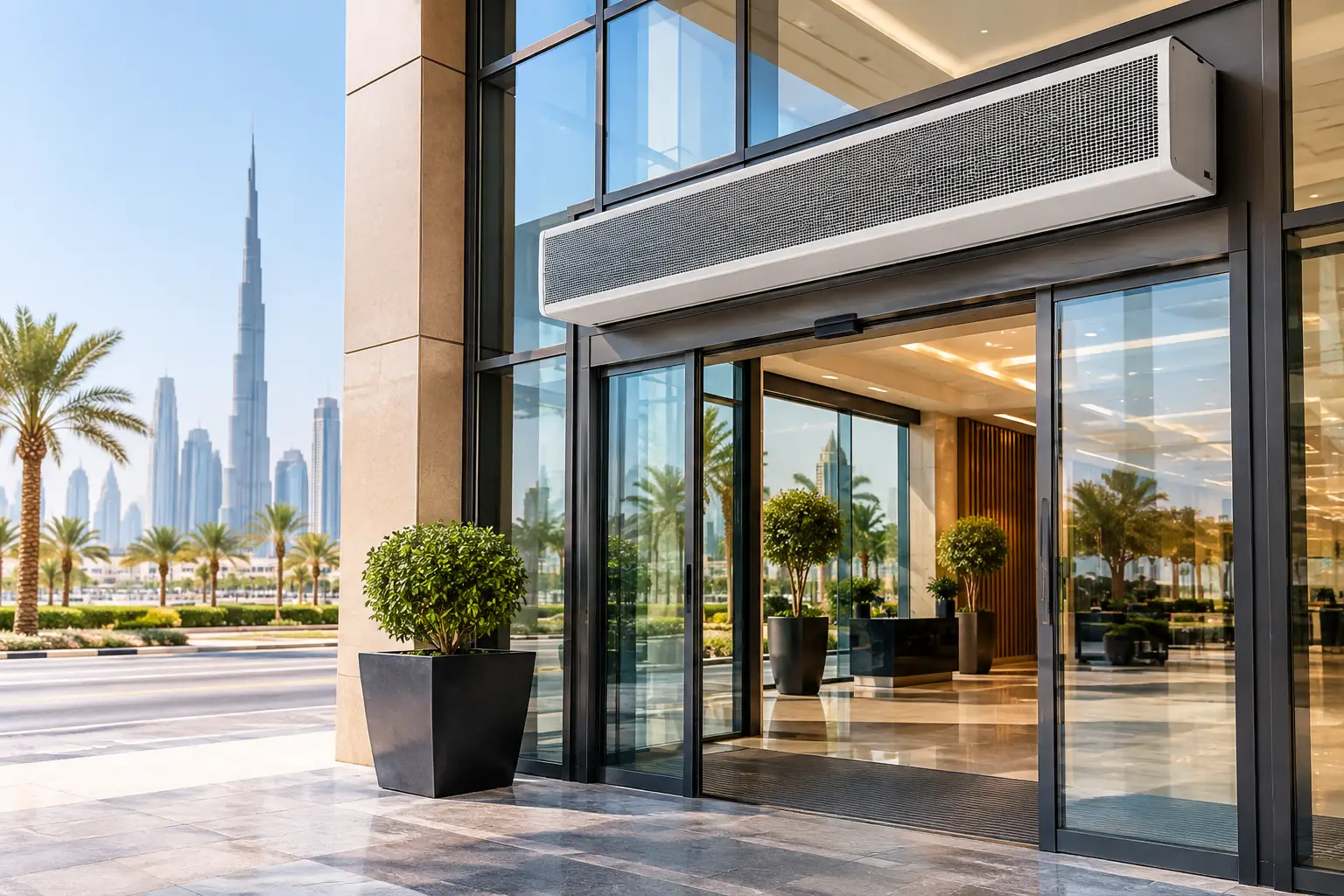
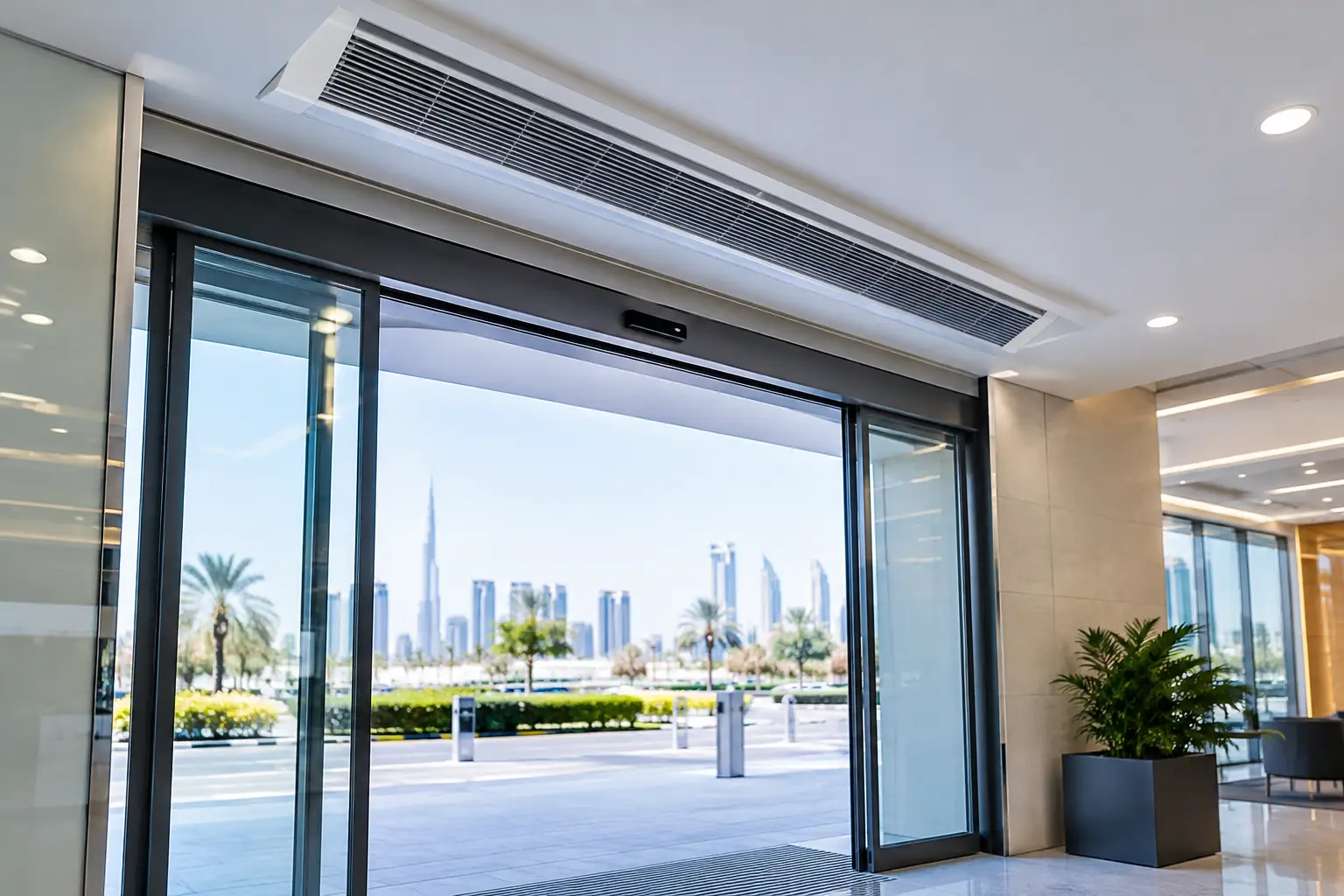
For architect and MEP teams, this means air curtains should be evaluated early in the entrance design, not treated as an afterthought. Recessed ceiling models can suit finished retail, hotel, and office entrances where appearance matters, while commercial centrifugal and industrial centrifugal configurations are more appropriate where performance and durability take priority.
Where Hygienic Air Separation Matters Most
The hygiene case is strongest in facilities with frequent opening cycles, controlled indoor environments, or a direct need to limit insects and airborne debris.
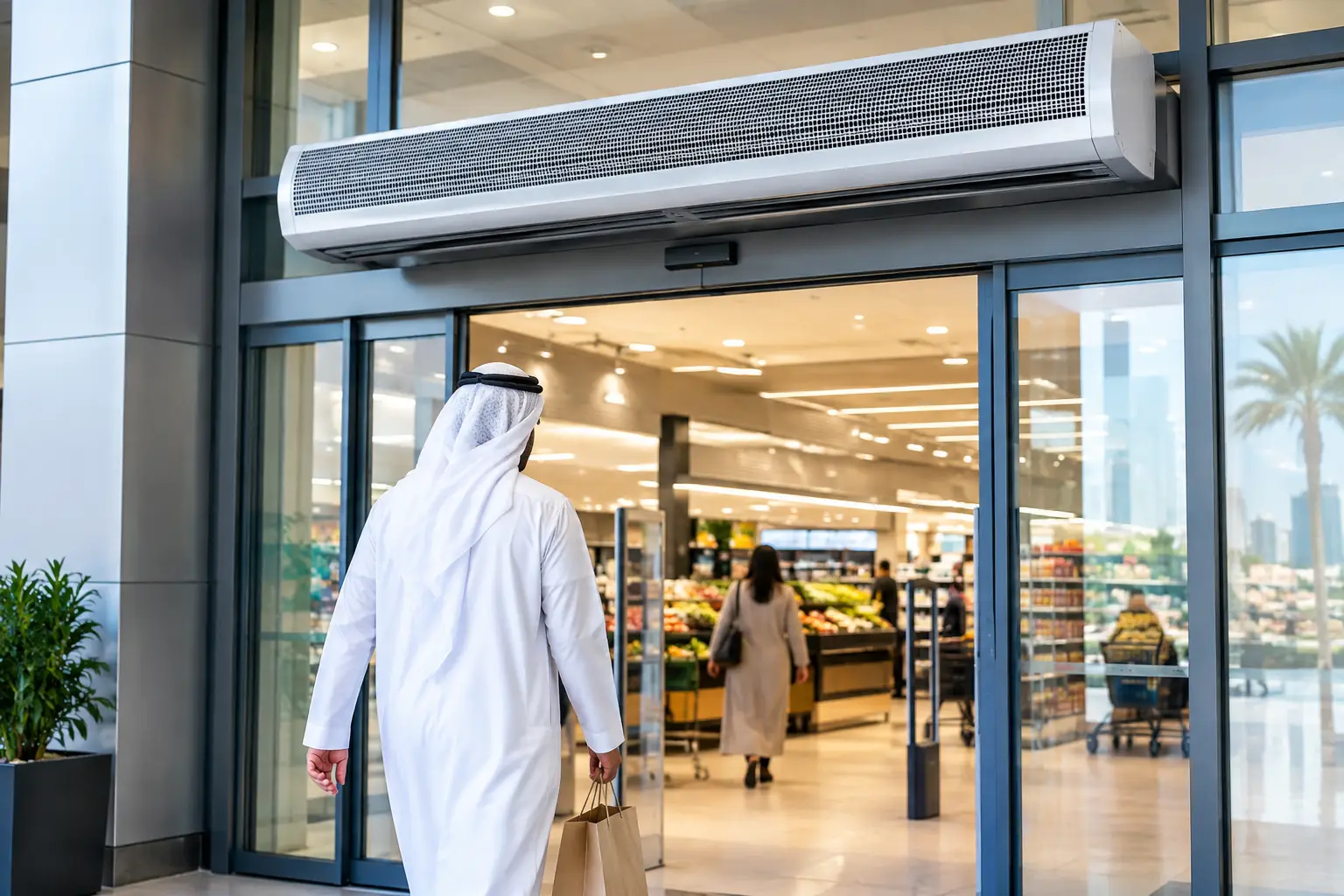
Food, Restaurant, and Supermarket Entrances
Food-facing businesses need to manage insect ingress, dust, odors, and warm humid air without obstructing customer access. An air curtain can support cleaner entrance conditions at storefronts, receiving doors, and back-of-house access points. It should be considered alongside door management practices, regular cleaning, and any required food safety controls.
At receiving bays, the application is often more demanding than at the customer entrance. Door size, delivery schedules, and vehicle movement may call for an industrial-grade system rather than a standard commercial model.
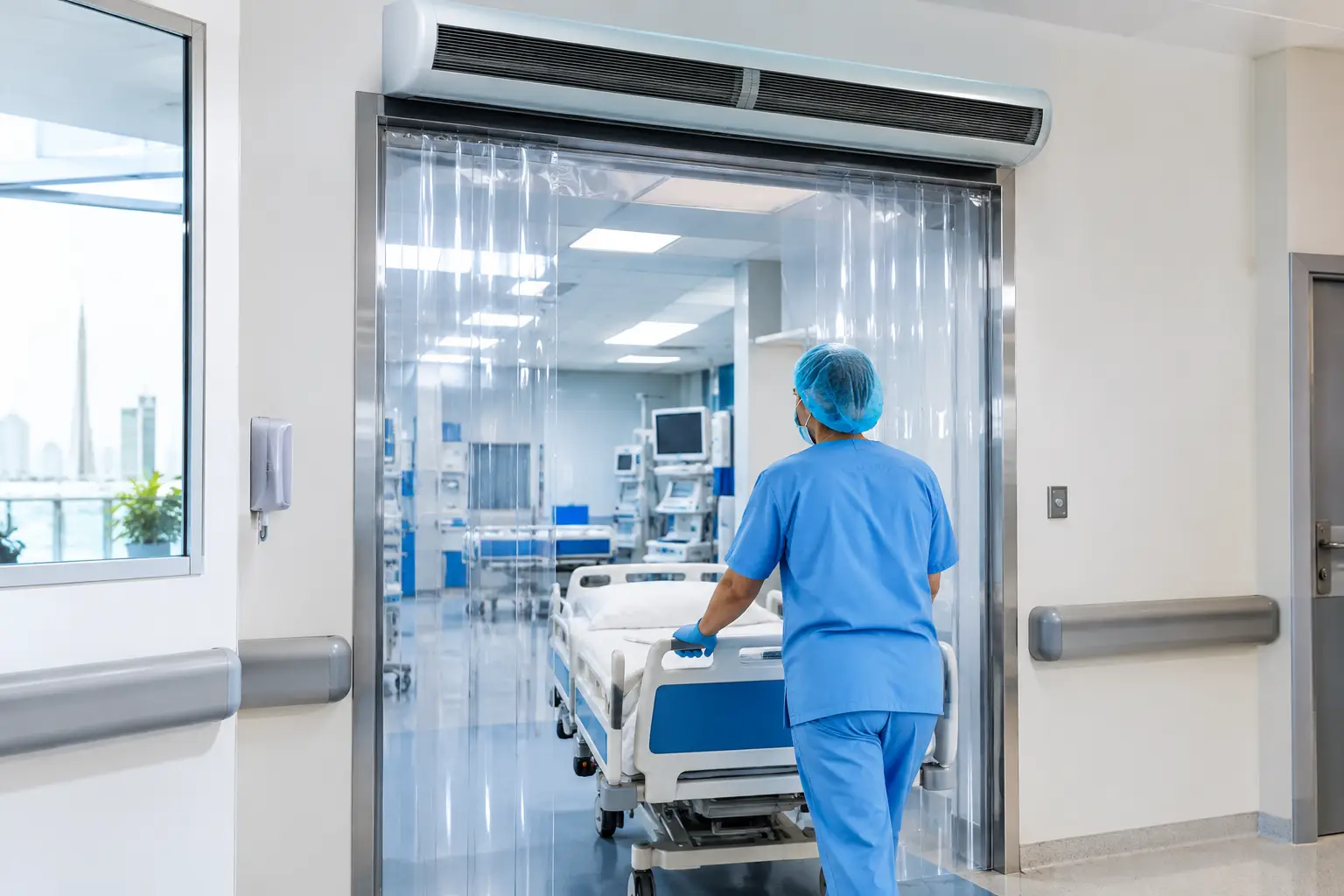
Hospitals, Clinics, and Pharmaceutical Facilities
Air curtains can help reduce the movement of dust and outdoor pollutants into reception areas, service entrances, and non-critical circulation zones. However, they are not a substitute for pressure-controlled rooms, HEPA filtration, or infection-control systems where those are required.
For healthcare and pharmaceutical applications, equipment selection should account for noise, cleanability, access for servicing, and the facility’s required pressure relationships. The air curtain must complement the building’s environmental controls rather than interfere with them.
Warehouses, Factories, and Logistics Centers
Large openings are a major route for dust, exhaust-related pollutants, insects, and heat gain. In industrial operations, air curtains can reduce these effects while allowing workflows to continue more freely than they would with constantly closed doors.
The challenge is matching the unit to the opening. A system must account for shutter dimensions, wind exposure, vehicle traffic, and internal air pressure. Facilities in Dubai, Abu Dhabi, Riyadh, Doha, and Muscat often face a combination of high heat, airborne dust, and demanding operating hours, making proper airflow calculation essential.
What Air Curtains Cannot Do
A realistic hygiene assessment also requires clear limits. Air curtains do not sterilize an entrance, capture every particle, or prevent contamination caused by people, products, or internal processes. They also cannot compensate for poor cleaning procedures, damaged door seals, inadequate ventilation, or a poorly managed loading area.
Performance will fall if the unit is incorrectly sized, the discharge grille is obstructed, fan components are dirty, or strong external winds overpower the airstream. In high-wind locations, a vestibule, revised mounting arrangement, or a more powerful industrial configuration may be necessary.
Maintenance matters as well. Intake screens and accessible components should be kept clean so airflow remains consistent. For facility managers, air curtain inspection belongs within planned maintenance programs, particularly in dusty environments where buildup can affect output and appearance.
How to Specify a Hygienic Air Curtain System
Start with the entrance, not a model number. Measure the clear opening dimensions and identify whether the door is customer-facing, service-only, refrigerated, or used by vehicles. Then assess traffic frequency, local wind conditions, indoor temperature targets, outdoor heat and humidity, and nearby pollutant sources.
A facility with a 3-meter retail entrance has very different needs from a factory with a 5-meter rolling shutter. Likewise, a hotel lobby may prioritize low noise and discreet installation, while a logistics bay requires stronger air throw and industrial construction.
FreezeeX evaluates these operating conditions to recommend air curtain configurations suited to commercial and industrial entrances across hot, humid, and desert climates. This approach helps prevent a common specification mistake: selecting by physical width alone rather than by actual air-separation performance.
The Bottom Line for Facility Hygiene
Air curtains are hygienic when they are used for what they do well: reducing the entry of dust, insects, humidity, heat, and airborne pollutants through busy open doorways. Their value is highest when the equipment is matched to the opening and supported by cleaning, ventilation, and facility hygiene procedures.
For a new project or an underperforming entrance, request a consultation and quotation based on door dimensions, mounting height, traffic pattern, and site climate. The right air curtain can provide powerful air isolation without interrupting the movement that keeps a commercial facility operating.