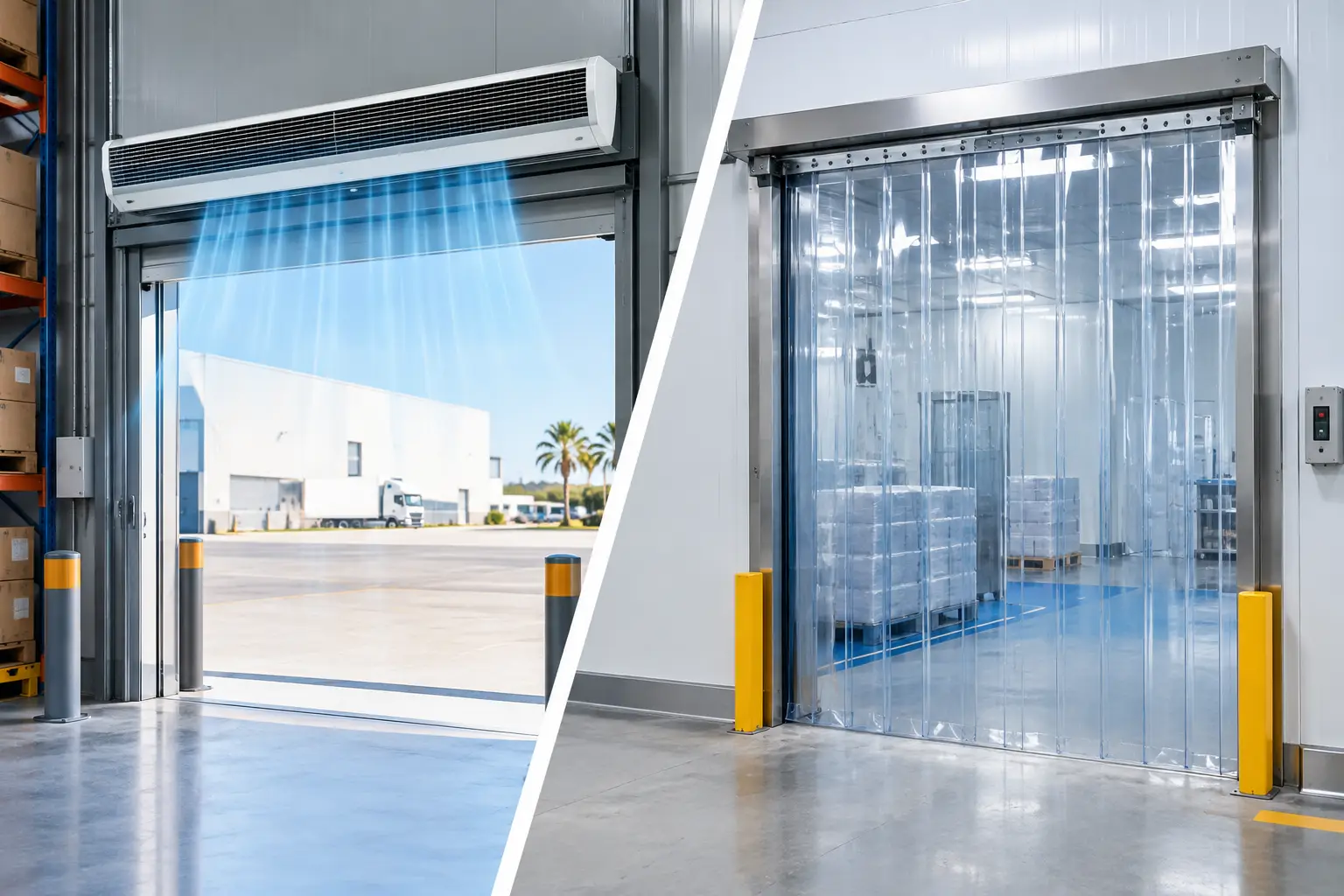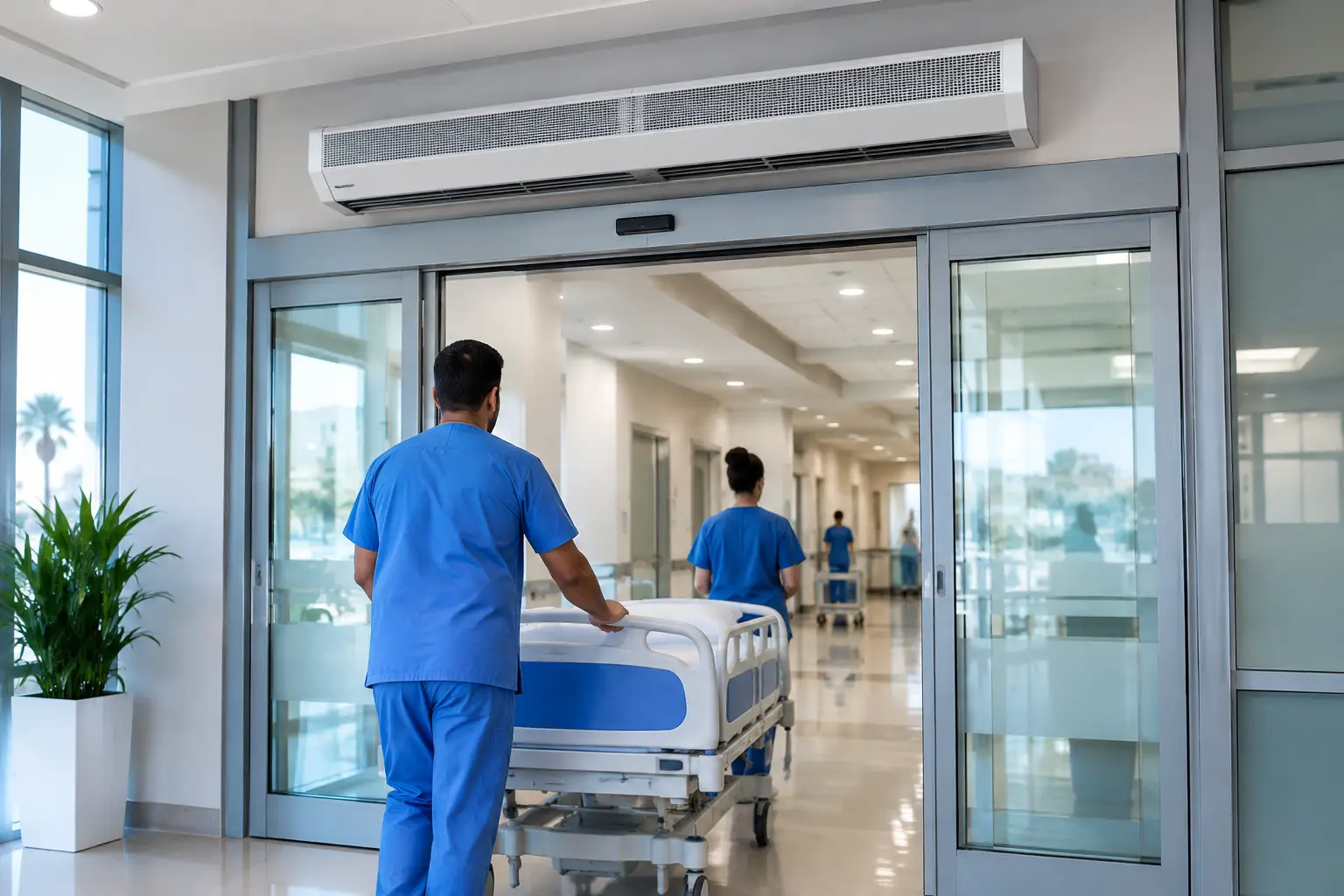
A distribution center climate control example is most useful when it starts at the loading door, not at the thermostat. A conditioned warehouse may have capable HVAC equipment, but repeated dock-door openings can still pull hot, humid, dusty outside air directly into picking, staging, and storage areas. In desert and tropical markets, that intrusion affects comfort, cooling demand, product handling, and the consistency of the indoor environment.
For facility managers and MEP teams, the practical question is not whether a door should stay open. Busy distribution centers need throughput. The question is how to maintain an effective environmental boundary while forklifts, pallet jacks, and personnel move through it.
Distribution Center Climate Control Example: A Loading Dock Scenario
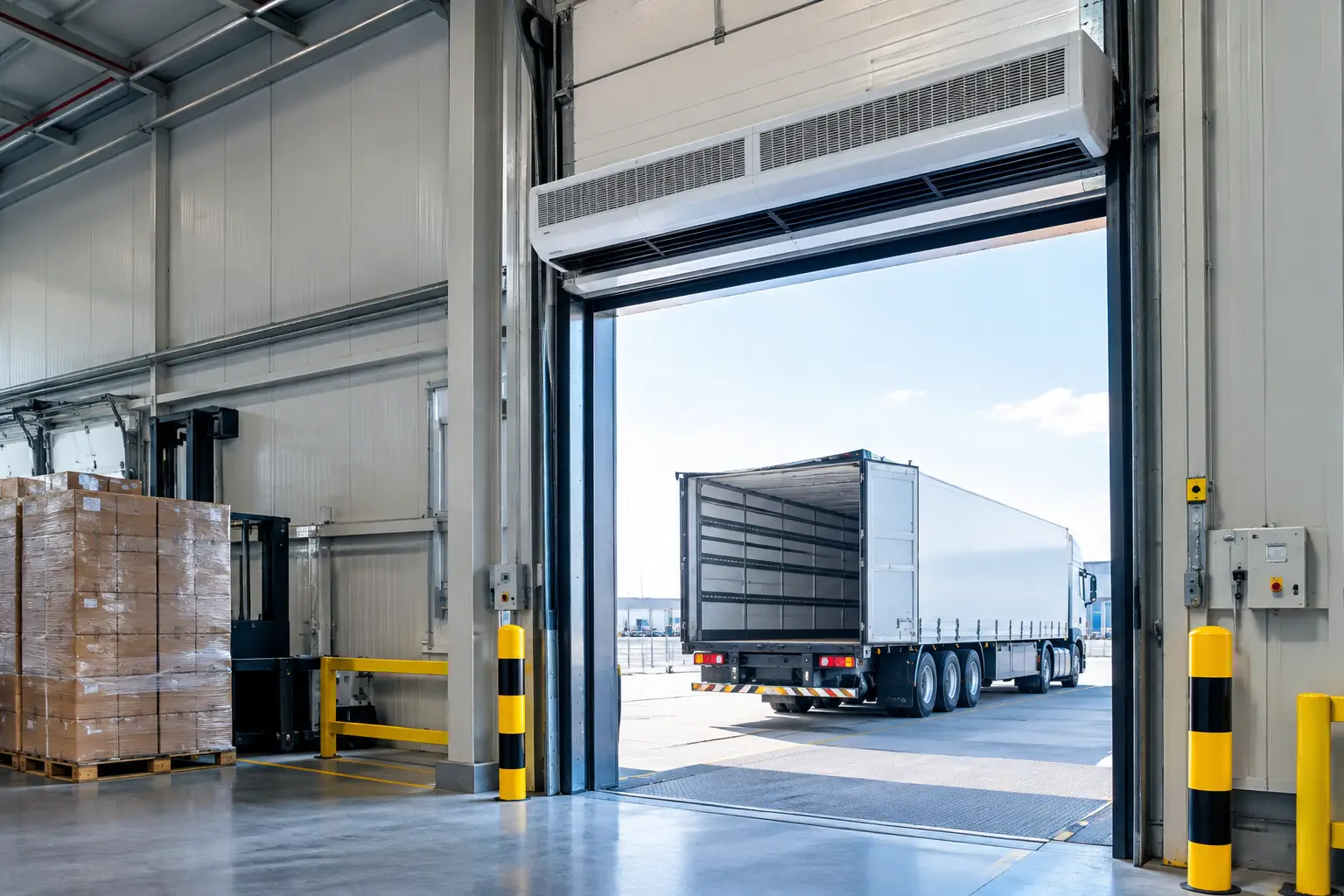
Consider a distribution center in Dubai, Riyadh, Doha, or another hot-climate logistics market. The facility has a temperature-controlled dispatch area connected to loading bays that open many times each day. During peak shipping periods, doors may remain open long enough for a substantial exchange of indoor and outdoor air.
The resulting issue is rarely limited to one symptom. The facility may experience:
- Heat and humidity entering through open dock doors
- Dust and airborne debris reaching racks, cartons, and work areas
- Increased demand on the HVAC system near receiving and dispatch zones
- Uneven indoor temperatures between the dock and deeper storage areas
- Greater exposure to insects and outdoor contaminants
- Reduced comfort for teams working near entrances
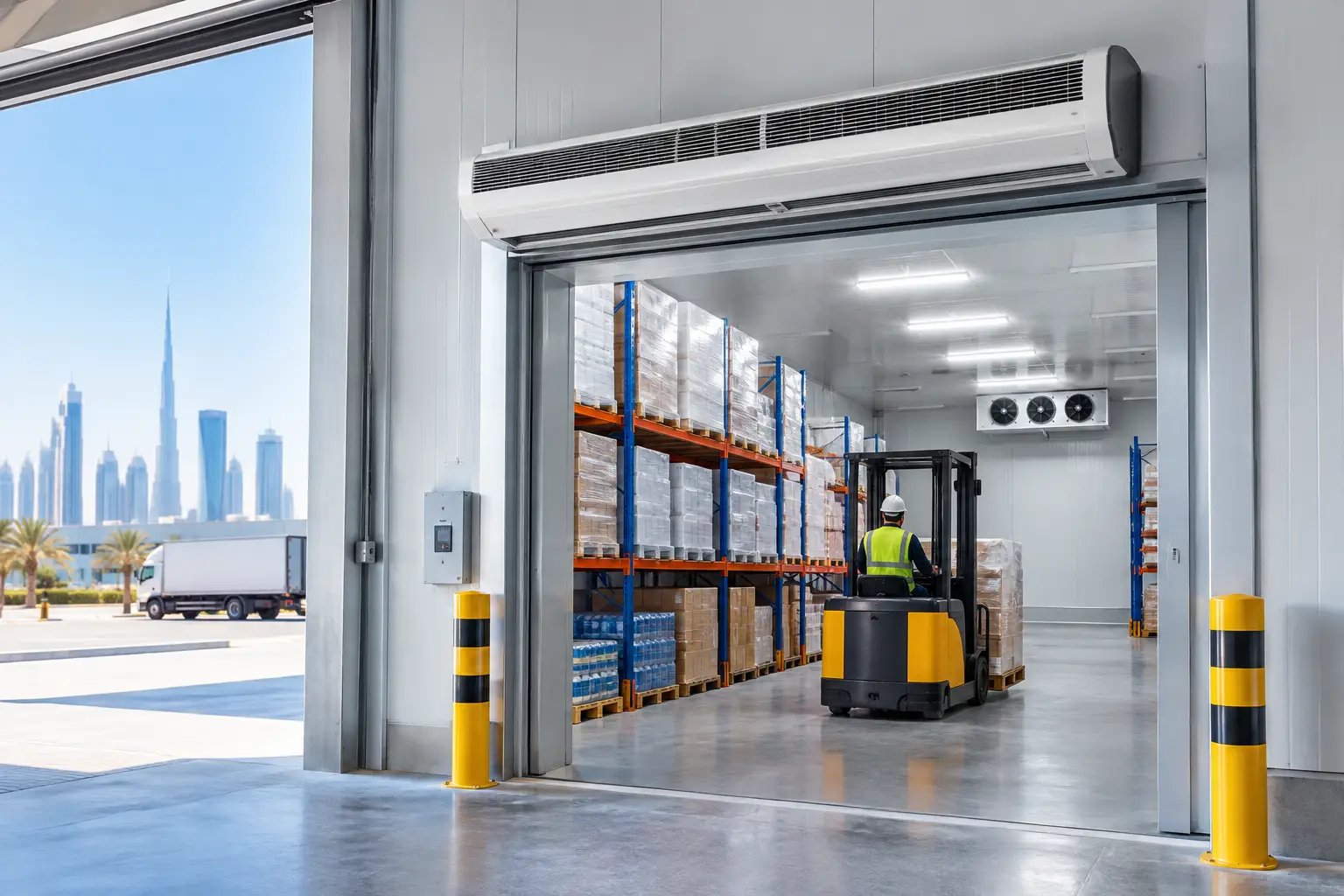
In this example, an industrial air curtain is specified above the doorway to create a directed air barrier across the opening. It does not replace the building’s HVAC system or the dock door itself. Instead, it reduces uncontrolled air exchange while preserving access for daily logistics operations.
The operational objective is simple: keep cooler, conditioned air where it is needed while reducing the volume of hot external air that crosses the threshold.
Why Open Doors Create a Building-Performance Problem
A distribution center entrance is a pressure and traffic-management challenge. Cool indoor air and hot outdoor air naturally seek to mix when a large opening is exposed. Wind conditions, vehicle movement, nearby doors, and the building’s internal pressure balance can make that exchange more severe.
In hot, humid, or dusty environments, the impact can be immediate. Warm air entering at a loading bay may make nearby work zones uncomfortable, while humidity can affect packaging materials and sensitive inventory conditions. Fine dust can also accumulate on stored goods, shelving, and equipment, increasing housekeeping demands.
Closing doors more often can help, but it is not always operationally realistic. A high-volume dispatch schedule depends on fast movement. That is why entrance climate control should be evaluated as part of the facility’s workflow, not as an isolated equipment decision.
How an Air Curtain Fits the Solution
An air curtain uses a controlled stream of air to form a barrier at an open doorway. For a distribution center, the purpose is to oppose the movement of external heat, dust, humidity, insects, and airborne contaminants through the opening without creating a physical obstruction to traffic.
The effectiveness of the installation depends on correct application. Door height, width, mounting location, wind exposure, traffic type, and the temperature difference between indoors and outdoors all influence the required solution. A small personnel entrance and a busy forklift-access opening should not be treated as the same application.
The air barrier must match the opening
A system that is undersized for a tall or wide industrial doorway may not maintain an effective barrier at floor level. Conversely, selecting solely for maximum output without reviewing the mounting position and operational environment can create unnecessary noise or poor air direction.
For heavy-use logistics doors, decision-makers should look at industrial-duty equipment designed for demanding commercial environments. FreezeeX air curtain selection is consultation-led because the entrance conditions determine the appropriate configuration more reliably than a one-size-fits-all approach.
What Should Be Assessed Before Specification?
A good specification process starts with site conditions and operational requirements. The following table shows the information that matters most when planning entrance climate control for a distribution facility.
| Assessment area | Why it matters | Typical implication | |—|—|—| | Door width and height | Determines the coverage area and air-throw requirement | Larger openings may require industrial configurations or multiple units | | Mounting position | Affects whether the air stream reaches the threshold effectively | Surface or recessed mounting must be coordinated with the doorway structure | | Traffic volume | Indicates how often the environmental barrier will be needed | High-traffic bays benefit from durable, continuous-duty solutions | | Outdoor exposure | Wind, dust, humidity, and heat affect barrier performance | Desert-facing or exposed bays may need a more carefully engineered approach | | Indoor use | Storage conditions vary by goods, people, and processes | Food, pharmaceutical, and controlled storage zones require closer review | | HVAC arrangement | Shows where cooling loss is occurring and how the entrance affects it | The air curtain should support, not conflict with, HVAC airflow patterns |
This assessment is especially important where loading doors face prevailing winds or where several openings operate at once. A facility may have a perfectly appropriate unit at one sheltered entrance and need a different approach at an exposed dock door only a few meters away.
Selecting for Different Distribution Center Zones
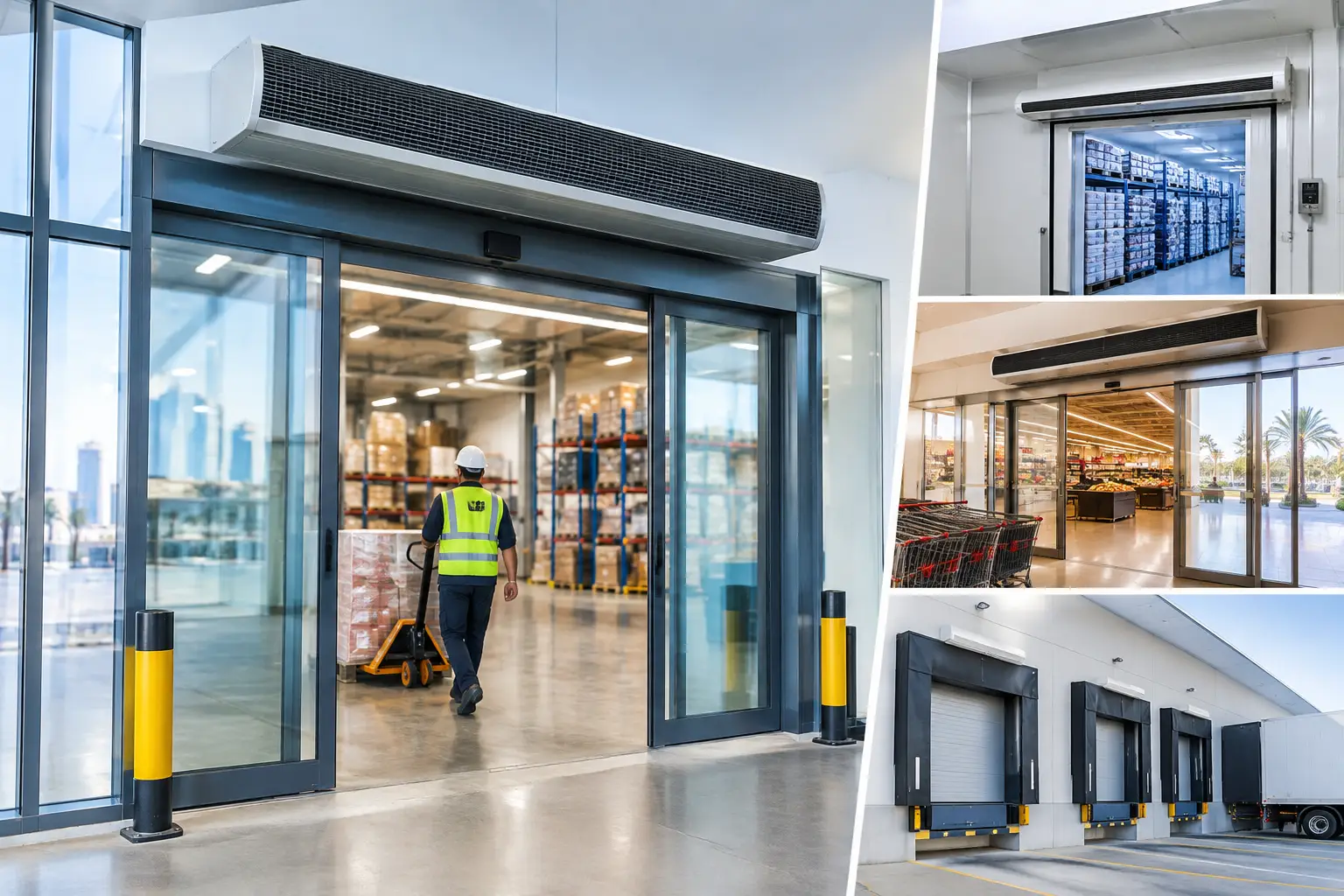
Distribution centers rarely have only one kind of entrance. The selection should reflect the duty of each zone rather than applying one product category across the entire building.
Personnel doors and office-to-warehouse transitions
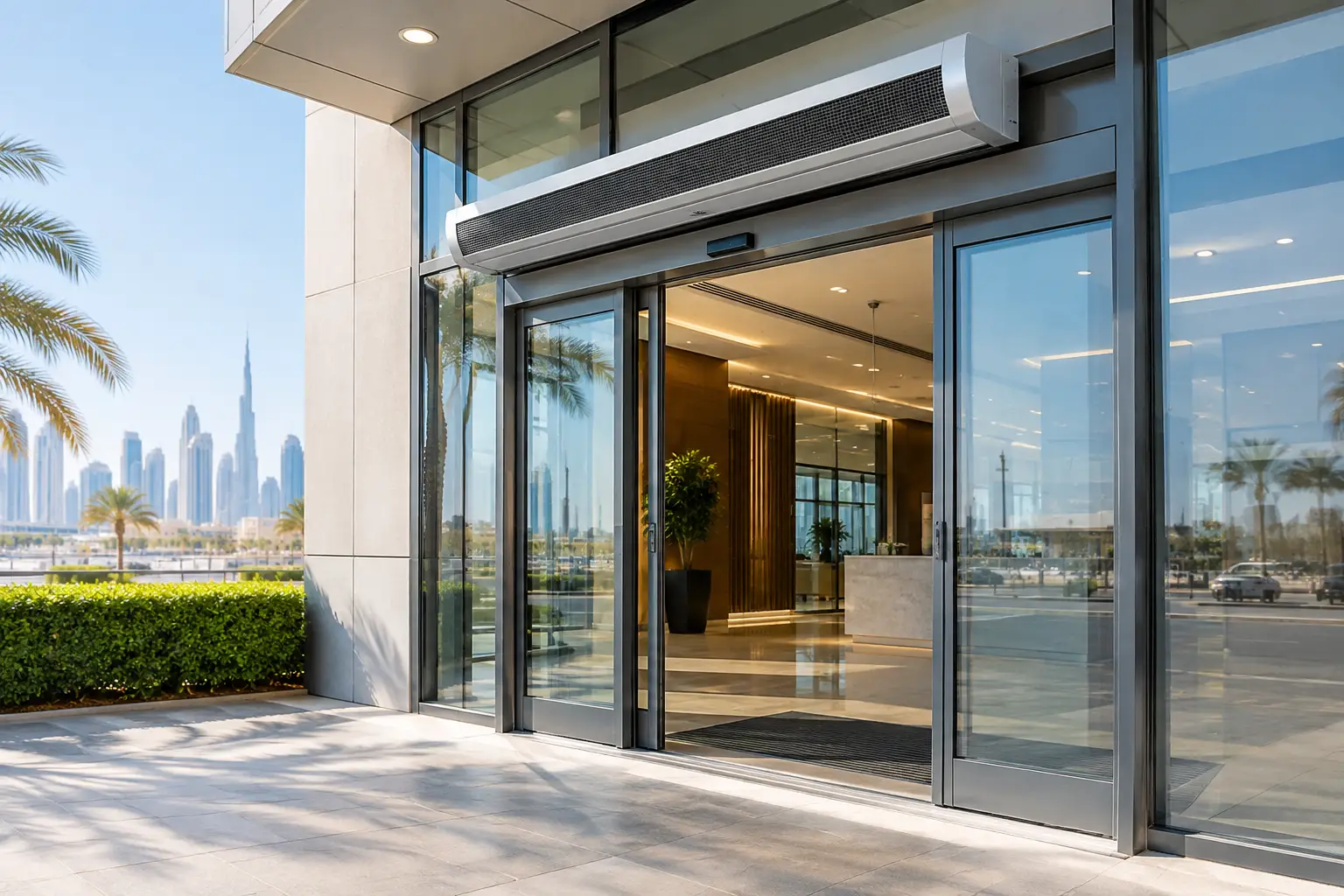
These openings are usually narrower and have lower traffic volume. The priority may be maintaining comfort, reducing dust migration, and supporting conditioned spaces adjacent to warehouse operations. Commercial air curtain systems can be appropriate where door dimensions and site conditions allow.
Receiving and dispatch doors
These doors experience regular movement of goods and equipment. The main concerns are heat gain, dust ingress, humidity, and maintaining workable conditions near the loading area. Industrial air curtains are generally more suitable where entrances are larger, traffic is heavier, and operating conditions are more demanding.
Controlled handling zones
Food processing, pharmaceutical distribution, and cold-storage-related areas require additional attention. The objective may include reducing the movement of contaminants and helping protect a more stable indoor environment. The air curtain selection should be coordinated with hygiene procedures, door operation, and the facility’s wider environmental-control strategy.
The Trade-Off: Energy Control Versus Operational Access
Air curtains are not a substitute for disciplined door management. If doors are held open unnecessarily, the facility still exposes its conditioned space to the outside environment. However, a well-selected air curtain provides a practical advantage when openings must remain accessible for legitimate traffic.
There are also trade-offs in selection. More challenging entrances may require greater air coverage, but the specified solution must remain suitable for the available mounting space, electrical coordination, acoustic expectations, and maintenance access. A warehouse with high ceilings or irregular dock geometry may need design review before equipment is approved.
The most effective approach combines an air barrier with sensible operating practices: limit idle-open time where possible, maintain door seals and closures, coordinate dock traffic, and review HVAC performance near active loading areas. Each measure supports the others.
A Practical Evaluation Process for Project Teams
For new developments, the air curtain should be considered during MEP and architectural coordination rather than after the loading area is complete. For existing sites, a focused survey can identify the entrances creating the greatest cooling and contamination burden.
- Identify every opening that connects conditioned space to external conditions.
- Rank entrances by door size, opening duration, traffic volume, and exposure to heat, humidity, or dust.
- Review the mounting structure, clearances, and likely airflow path at each priority doorway.
- Match the application to commercial or industrial equipment based on actual operating duty.
- Coordinate the final recommendation with HVAC, electrical, and facility operations teams.
- Confirm that access for routine inspection and cleaning is retained after installation.
This process helps avoid a common procurement mistake: selecting equipment only from doorway dimensions. Dimensions matter, but operating conditions determine whether the barrier will perform as intended.
Where the Business Case Is Strongest
The case for entrance climate control is strongest where open doors are frequent, outdoor conditions are severe, and indoor environmental stability matters. That includes regional logistics hubs, e-commerce fulfillment facilities, food distribution operations, temperature-managed storage areas, and warehouses supporting retail or manufacturing supply chains.
For facilities in the GCC, MENA, and African markets, climate is not a secondary consideration. High ambient heat, airborne dust, and seasonal humidity can make loading bays a persistent weak point in the conditioned envelope. An air curtain specified for tropical and desert conditions can help reduce that exposure while allowing the site to maintain the pace required by modern distribution operations.
A project-specific review is the right next step. Share the entrance dimensions, mounting details, traffic pattern, operating environment, and HVAC objectives with FreezeeX to receive a consultation and quotation for a distribution-center air curtain solution that supports both throughput and indoor control.