A loading-bay door left open for forklift traffic can become one of the largest sources of heat gain in a conditioned facility. In Dubai, Riyadh, Doha, and similarly demanding tropical or desert locations, industrial doorway curtains help manage that exposed opening without slowing the movement of people, pallets, or goods. The right solution does more than make the doorway feel cooler. It protects HVAC capacity, limits airborne contamination, and helps maintain more stable conditions where operations need them.
The term can describe two different entrance barriers: flexible PVC strip curtains and air curtains. Both have a role in industrial buildings, but they solve the problem in different ways. Specifying the wrong type can lead to poor access, inadequate environmental separation, or disappointing energy performance.
What industrial doorway curtains are designed to control
Every open industrial doorway creates pressure-driven air exchange. Hot outdoor air moves inward, while conditioned air escapes. In humid environments, the incoming air also carries moisture that increases the latent cooling load. In dusty areas, it can carry sand, particulates, insects, odors, and vehicle-related contaminants into the facility.
Industrial doorway curtains establish a barrier at this weak point in the building envelope. A PVC strip curtain creates a physical overlap barrier that personnel and equipment pass through. An air curtain projects a controlled, high-velocity air stream across the opening. When correctly selected and installed, that stream reduces the mixing of indoor and outdoor air while leaving the opening physically clear.
This distinction matters in high-traffic operations. A warehouse door that opens occasionally may accept the contact and clearance requirements of PVC strips. A supermarket receiving area, logistics dock, manufacturing entrance, or frequently used personnel doorway may benefit more from an air barrier that does not obstruct movement.
PVC strips and air curtains: choosing the right barrier
PVC strip curtains are often suitable where the opening needs a simple physical separation and traffic speed is moderate. They can be used at internal warehouse divisions, controlled production zones, or certain cold-room entrances. However, strips can be pushed aside and left parted after traffic passes. They may also collect dust, reduce visibility, and create resistance for forklifts or trolleys.
An industrial air curtain is generally better suited to busy entrances where uninterrupted access is essential. There are no hanging strips to move through, and the unit can be interlocked with the door so it operates only when needed. This makes air curtains practical at dispatch doors, commercial entrances, food-processing access points, and service corridors with frequent foot traffic.
The trade-off is that air curtains require proper engineering. A unit that is too short, mounted too high, or selected with insufficient throw will not create an effective floor-level seal. A physical strip barrier may still be appropriate for a low-use opening with severe temperature separation. In some facilities, a combined approach works well: a high-performance air curtain at the main traffic entrance and PVC barriers for secondary internal openings.
Why climate changes the specification
In hot and dusty markets, an entrance barrier must contend with more than outdoor temperature. Summer heat, solar exposure, fine dust, high humidity, and strong pressure differences can all affect performance. An air curtain designed for a mild commercial entrance may be inadequate at a large warehouse door exposed to desert winds.
The first requirement is sufficient air volume and discharge velocity for the installed height and opening width. The air stream must reach the floor with enough stability to resist crosswinds and internal pressure conditions. For larger or exposed openings, industrial centrifugal units are commonly preferred because they can deliver the pressure and throw required for demanding applications.
Humidity deserves equal attention in coastal locations such as Dubai, Abu Dhabi, Muscat, Lagos, or Mombasa. When humid air enters a cooled building, condensation risk and moisture load can rise quickly. A properly designed air curtain reduces the volume of humid air reaching the conditioned space, supporting more stable indoor conditions and reducing unnecessary demand on the HVAC system.
Dust protection is another operational concern. No doorway barrier should be described as a cleanroom seal, but an effective air curtain can materially reduce the direct ingress of dust and airborne debris through a busy entrance. In pharmaceutical, food, healthcare, and light-manufacturing environments, that reduction supports housekeeping procedures and environmental-control strategies.
Airflow is more important than the unit’s physical size
A common specification error is choosing an air curtain based only on the width of the opening. Coverage width matters, but airflow performance determines whether the barrier functions in real operating conditions.
For a reliable industrial selection, project teams should assess mounting height, clear opening width, door type, traffic frequency, outdoor exposure, and the indoor-outdoor temperature difference. They should also consider whether the opening is under negative or positive pressure, whether nearby loading doors create turbulence, and whether the air curtain will be installed on the inside or outside face of the building.
A tall sectional door in a logistics center requires a very different solution from a 3-meter personnel entrance in a factory. Similarly, a cold-storage entrance requires careful coordination with temperature-control and hygiene objectives, while a retail back-of-house door may prioritize insect reduction and cooling retention.
The most useful project information includes:
- Clear door width and height, including any obstructions above the opening
- Mounting position and available installation depth
- Door opening frequency, duration, and type of traffic
- Indoor setpoint conditions and outdoor climate exposure
- Site conditions such as wind, dust, humidity, and nearby vehicle movement
- Required controls, including door contacts, speed settings, and building-management integration
This information allows the supplier or MEP consultant to match the unit’s fan technology, throw, controls, and casing configuration to the opening rather than relying on a generic rule of thumb.
Where industrial air curtains deliver operational value
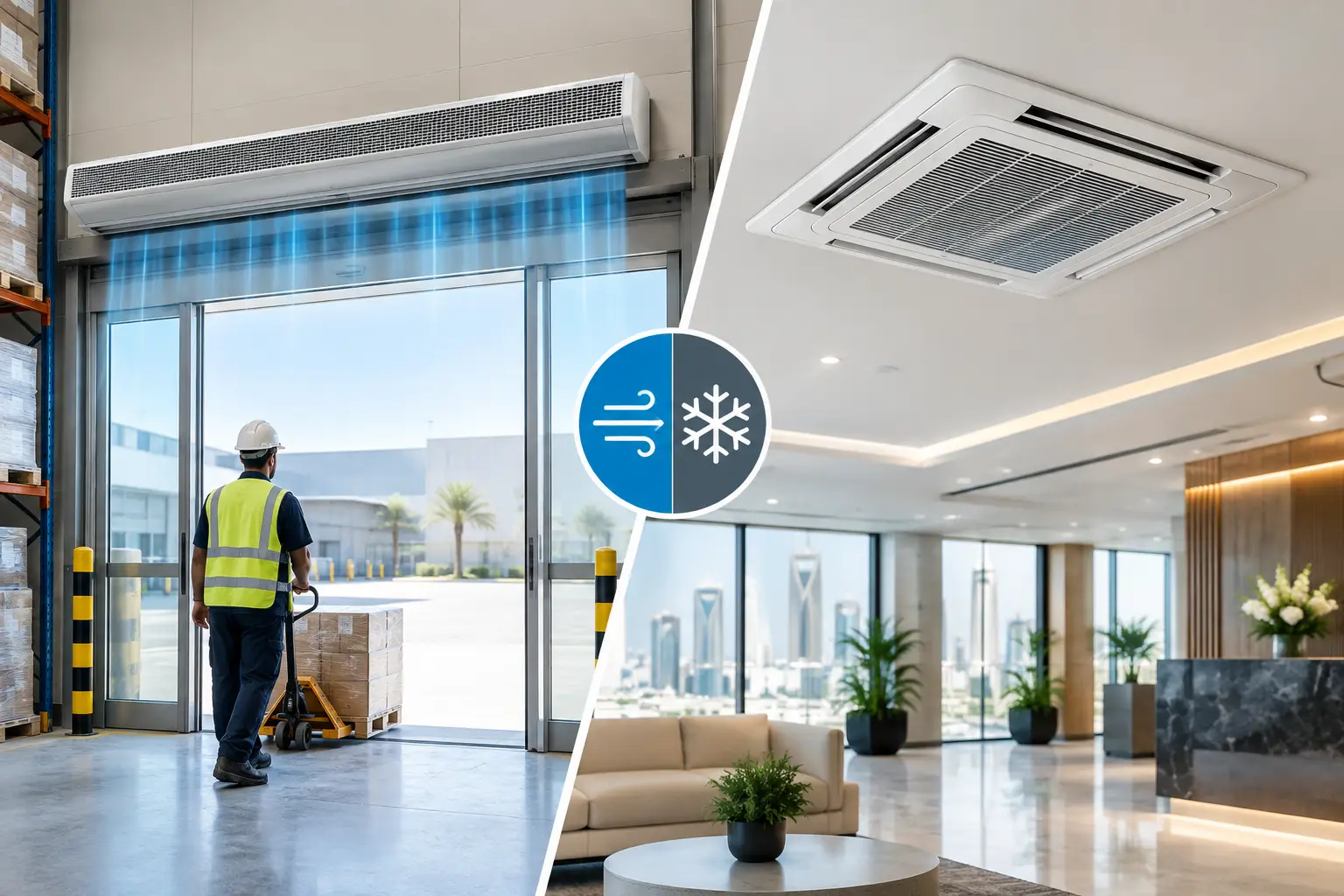
At warehouses and distribution centers, air curtains help reduce conditioned-air loss at loading doors that cycle throughout the day. The benefit is especially relevant where the warehouse is partly cooled, where packaged goods need stable conditions, or where dust entering from yards and loading areas creates a recurring cleaning burden.
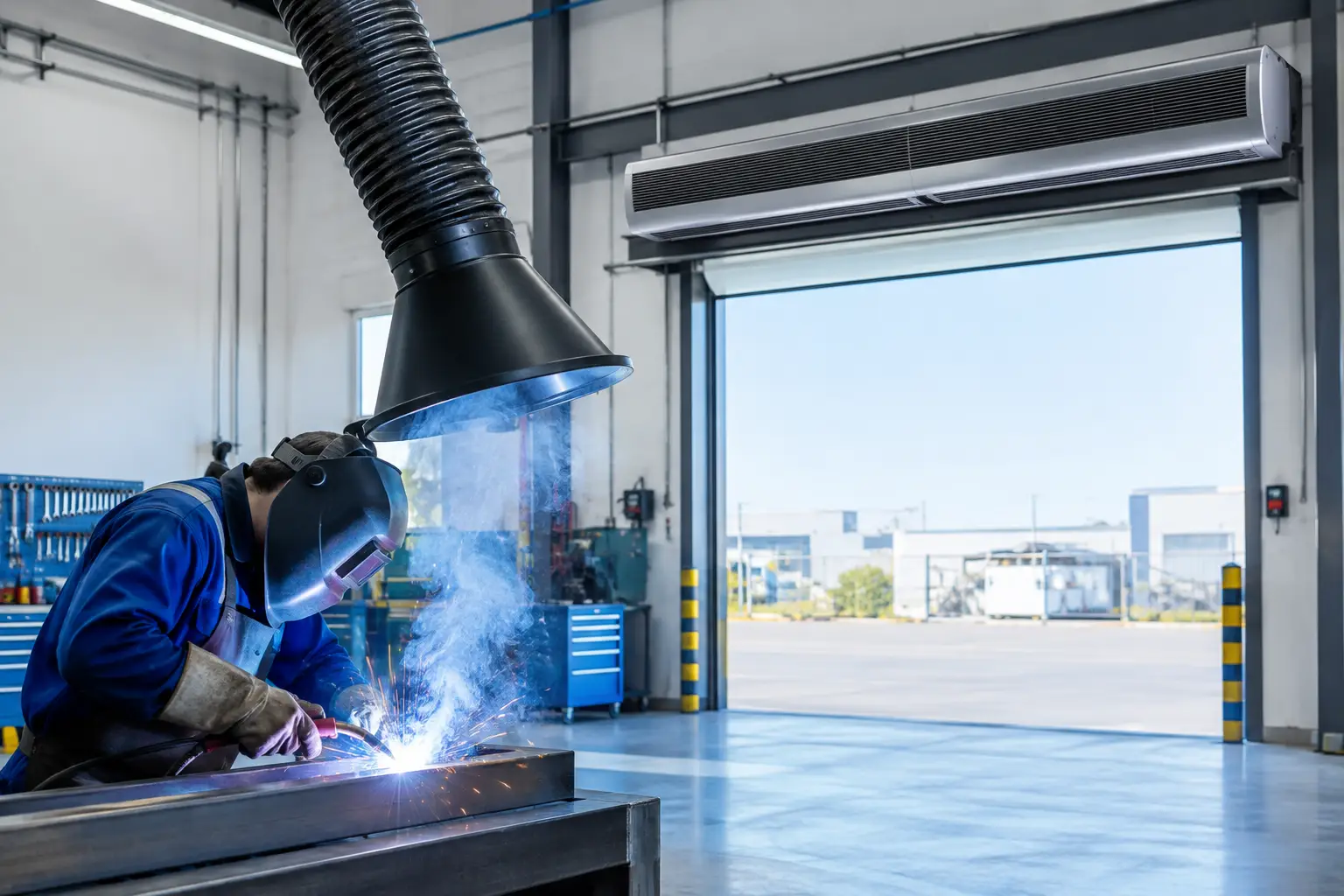
In factories and workshops, the priority may be keeping hot air, fumes, and dust from moving into occupied or controlled zones. The air curtain must be selected around the actual process and airflow pattern. If a door is adjacent to welding, vehicle movement, or extraction systems, pressure interactions should be reviewed during design.
For food processing, cold storage, supermarkets, and commercial kitchens, the focus often shifts to temperature retention, humidity control, and insect deterrence. An air curtain is not a substitute for sanitation controls or a fully sealed cold-room door, but it can reduce air exchange during frequent access events that are otherwise difficult to avoid.
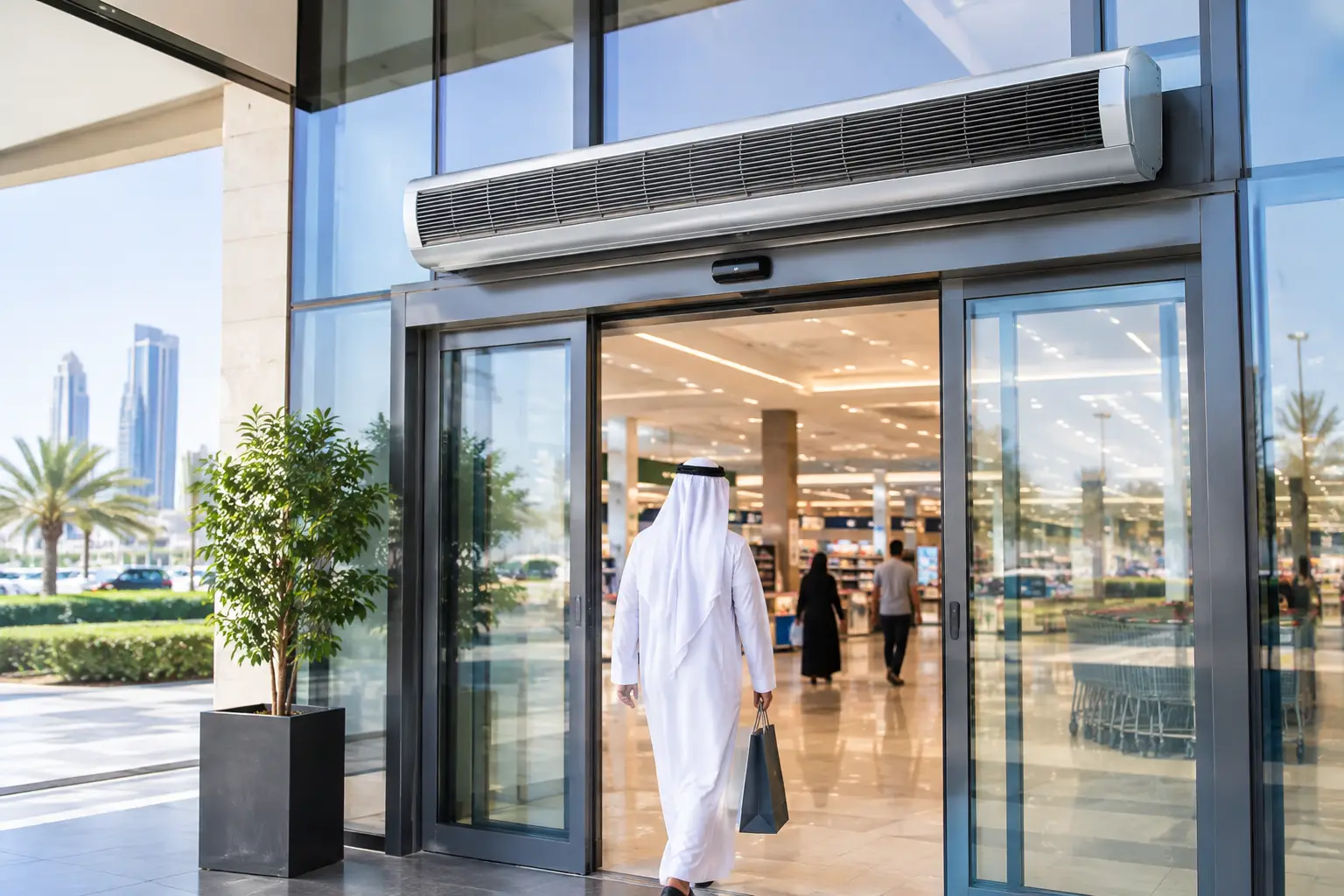
Hospitals, airports, and high-traffic commercial entrances need a balance of environmental separation, acoustic comfort, and appearance. Recessed or lower-noise commercial units may suit these applications, while heavy-duty industrial centrifugal equipment is more appropriate for exposed service and logistics doors.
Installation and controls determine real-world results
Even a correctly sized unit can underperform if installation details are overlooked. The discharge should run continuously across the full doorway width, with no major gaps at the sides. The unit must be level, mounted at the specified height, and oriented so the air stream reaches the threshold rather than dispersing into the room.
Door-activated controls are often the most efficient operating approach for industrial openings. They ensure the air curtain runs when the doorway is open and avoids unnecessary fan operation when it is closed. For entrances with varying conditions, adjustable speed control can help facility teams balance barrier performance, noise, and energy use.
Maintenance planning also belongs in the specification. In dusty environments, filter nets and air inlets require routine inspection so airflow is not restricted. Access for cleaning, safe service clearance, and coordination with door tracks, lighting, sprinklers, and structural elements should be resolved before installation.
Specify for the opening, not the catalog page
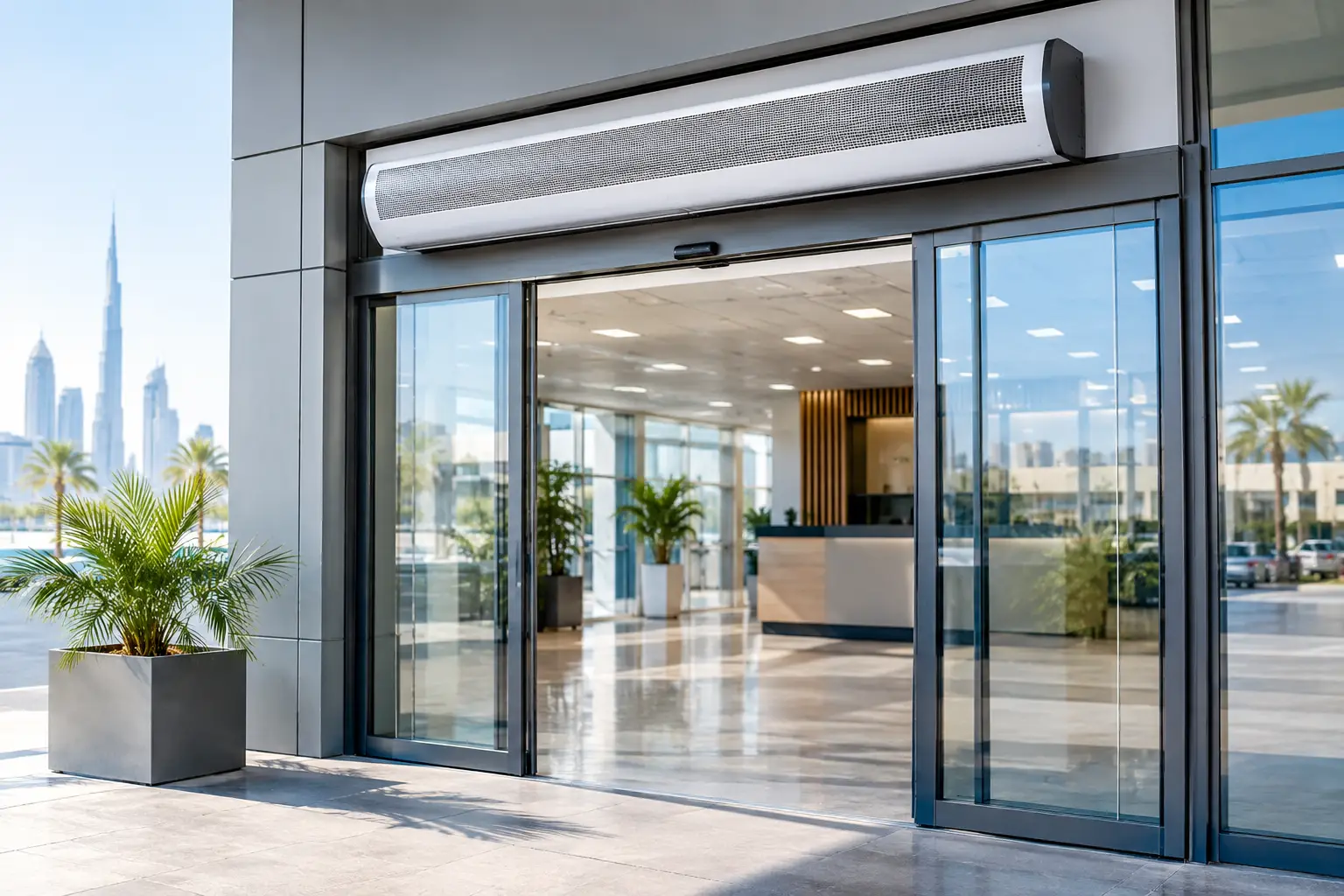
An air curtain is a performance component at the building envelope, not simply a fan mounted above a door. The right equipment depends on the door’s geometry, the traffic pattern, the HVAC design, and the local environment. For exposed warehouses, factories, cold storage, and logistics facilities, industrial centrifugal systems are often the appropriate starting point. For public-facing commercial entrances, a commercial or recessed configuration may provide the required performance with a more integrated finish.
FreezeeX Air Curtains Ltd. can assess the opening dimensions, mounting constraints, traffic profile, and climate exposure to recommend a specification-ready solution for GCC, MENA, and African projects. Request a consultation or quotation with your door schedule and operating conditions, then select the barrier that protects comfort and operational flow when the door is open most often.