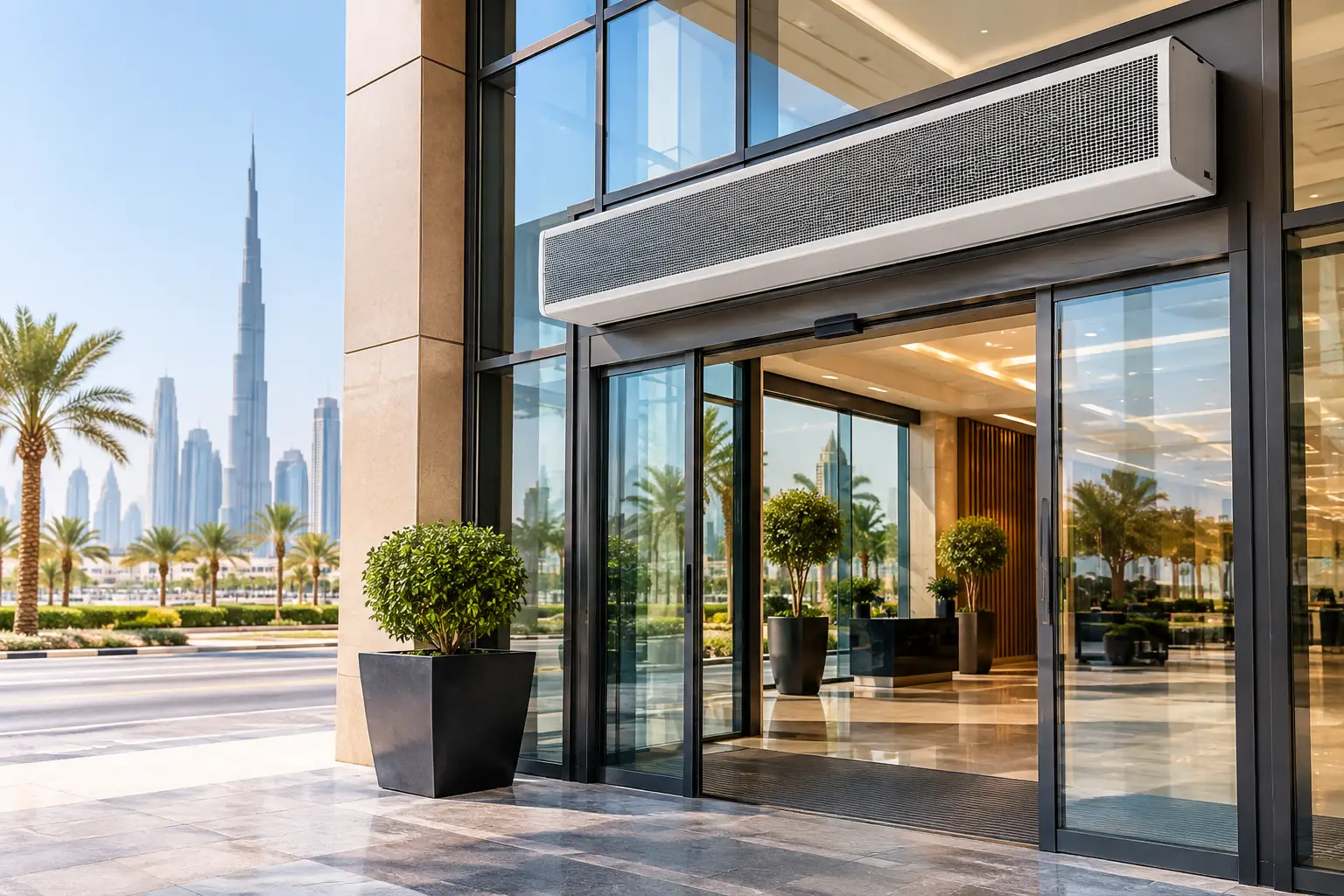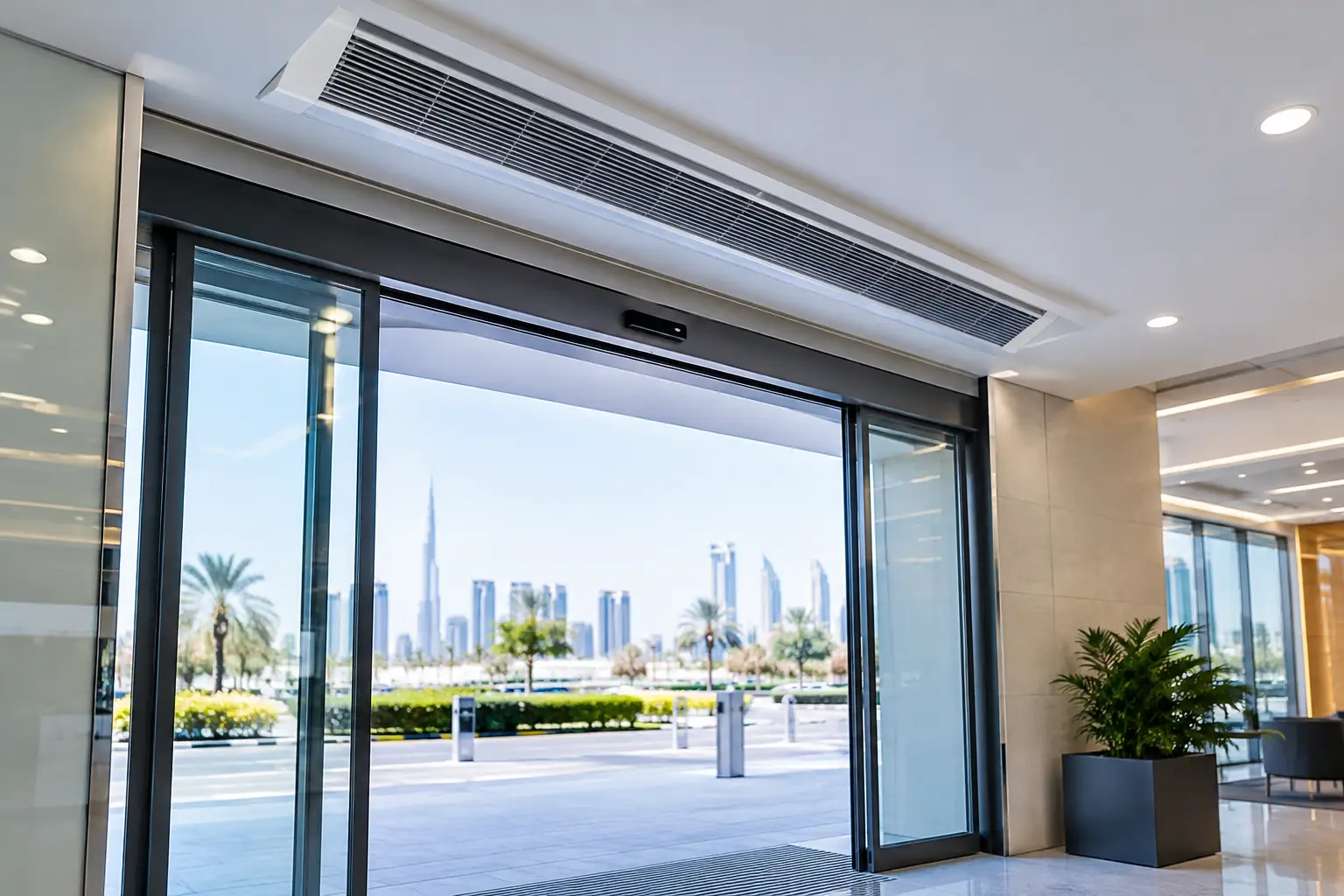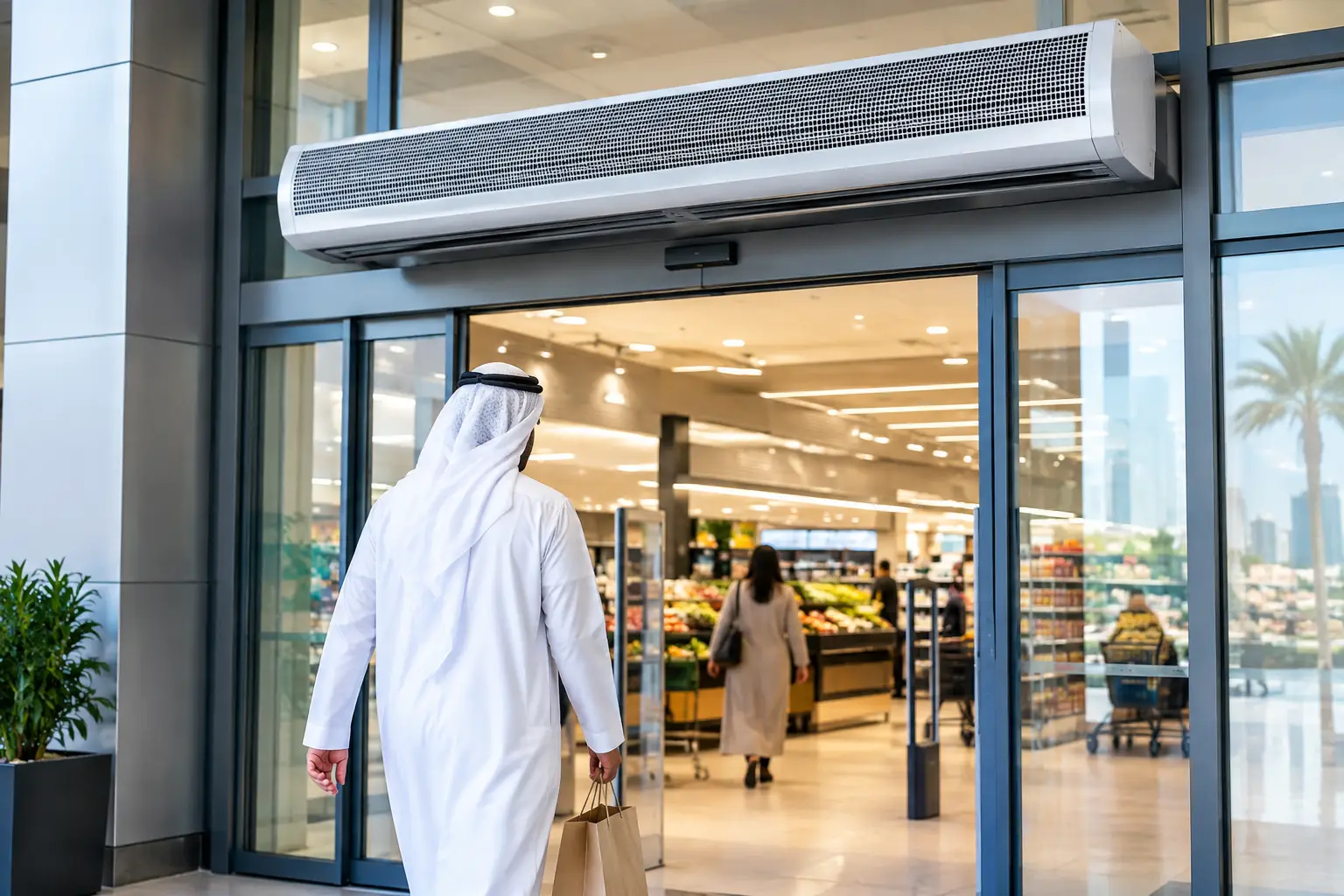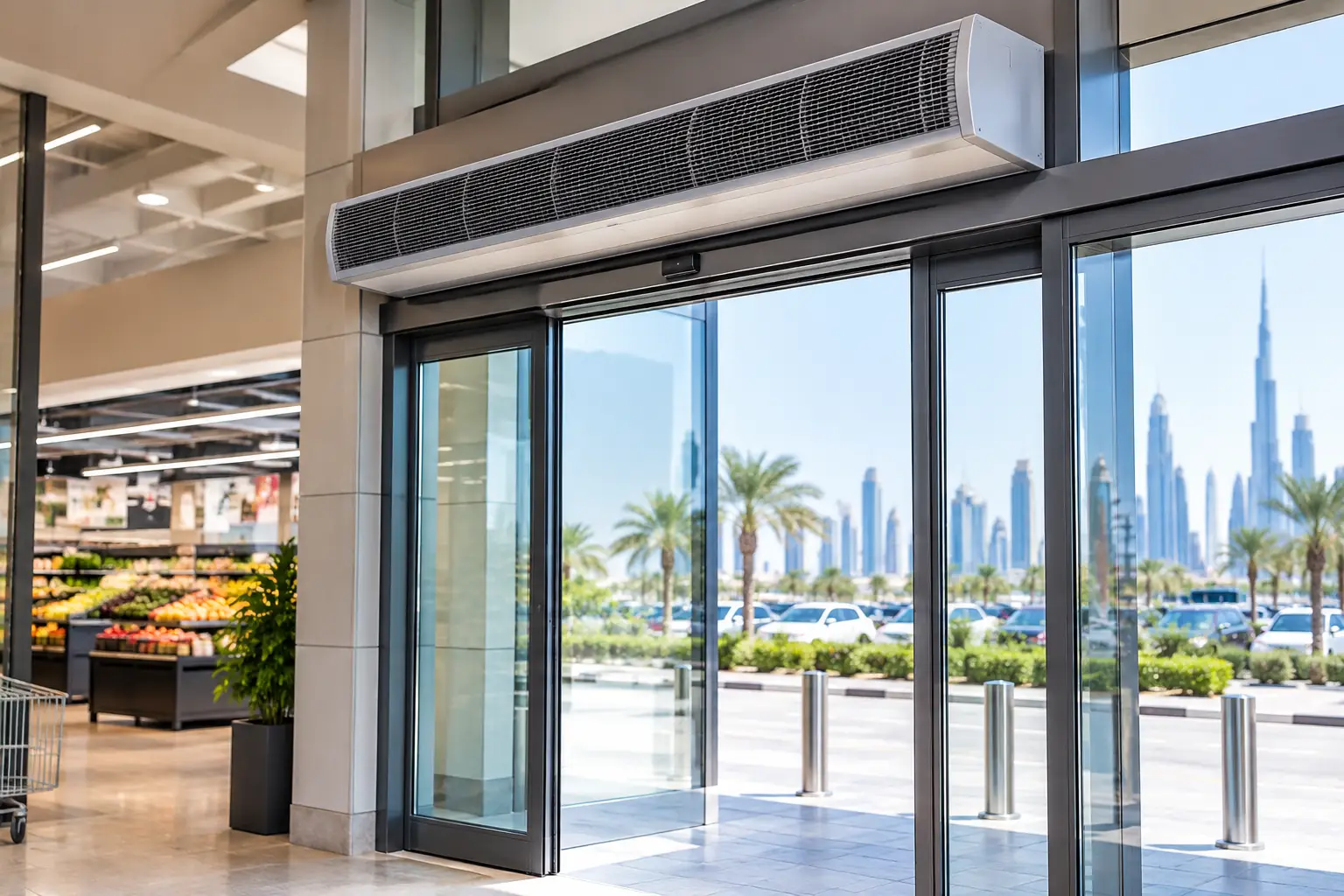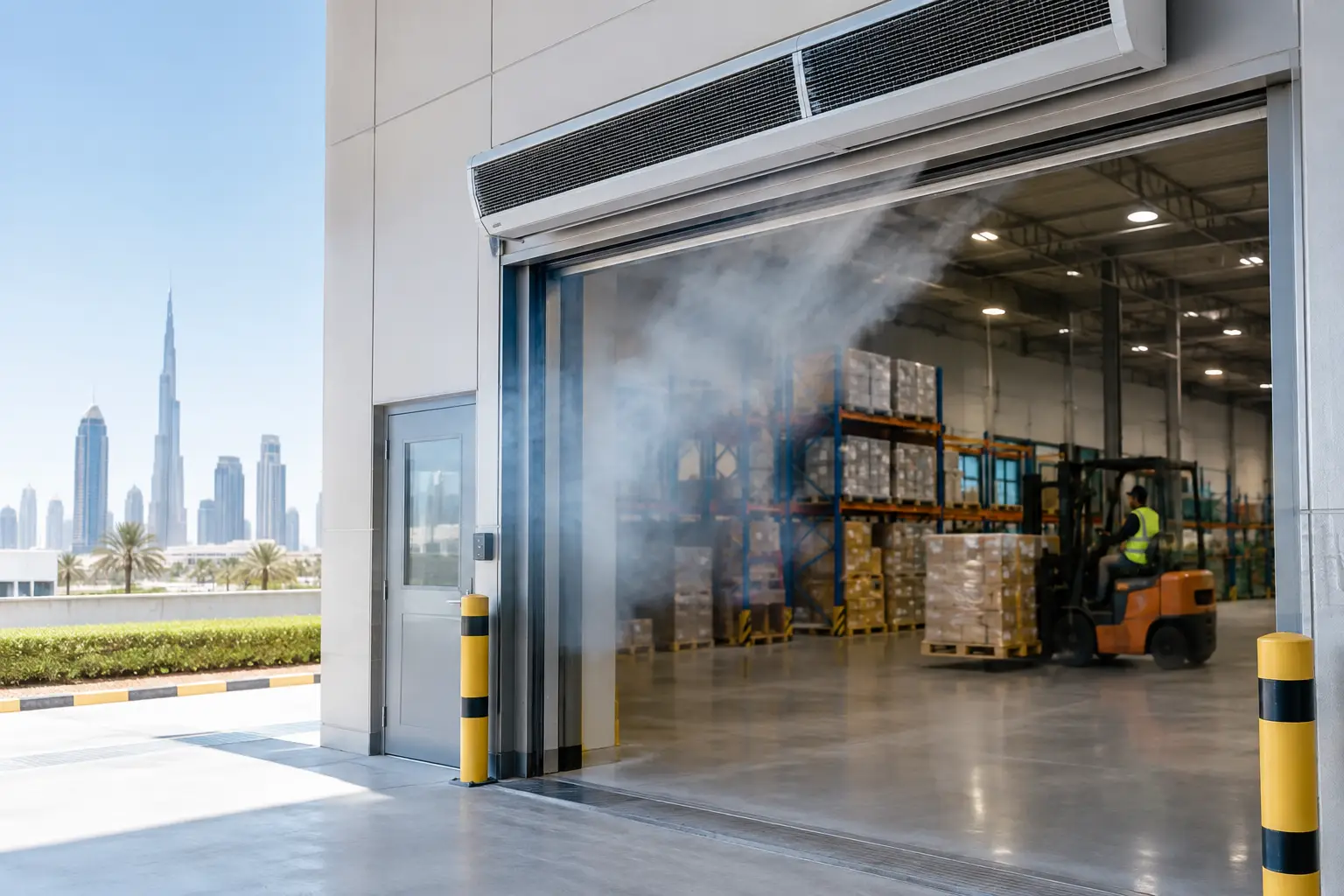
A supermarket entrance in Lagos, a food processing facility in Nairobi, and a cold room loading area in Casablanca do not have the same traffic pattern. But they often share the same failure point – open doorways that let in heat, dust, humidity, and insects while conditioned air escapes. That is why air curtains for Africa projects need to be specified as climate-control equipment, not treated as an afterthought.
In African commercial and industrial developments, the entrance is part of the HVAC strategy. If that entrance serves a busy retail floor, warehouse, hotel, plant, or cold storage operation, every door cycle affects temperature stability, cleanliness, energy use, and occupant comfort. In tropical and desert-facing environments, those losses add up quickly.
Why air curtains for Africa projects need a different approach
A generic air curtain spec may work on paper, but project performance depends on local operating conditions. Across markets such as Nigeria, Kenya, Egypt, Ghana, Morocco, Algeria, and South Africa, engineers and facility teams deal with high ambient heat, airborne dust, variable humidity, and long operating hours. Many sites also have frequent door openings and inconsistent discipline around keeping doors closed.
That changes the selection criteria. The right unit is not simply the one that fits the door width. It must generate an effective air barrier at the actual mounting height, withstand the site environment, and support the cooling strategy already in place. If the air stream is too weak, too narrow, or poorly aligned, the barrier breaks down and the entrance becomes a constant leakage point.
This is where project teams often lose money without seeing it immediately. The HVAC system works harder, indoor comfort becomes harder to maintain, and contamination risk rises near access points. In facilities where hygiene and product protection matter, that is not a minor issue.
What buyers are really solving at the entrance
Most B2B buyers are not searching for an air curtain because they want another piece of equipment on the BOQ. They are solving an operational problem. In a hypermarket, that problem may be excessive cooling loss from automatic sliding doors. In a plant or workshop, it may be dust infiltration. In hospitality, it may be guest comfort at the lobby entrance. In cold storage, it is often about reducing warm air transfer and stabilizing internal conditions during movement cycles.
The strongest business case usually combines four factors: lower cooling loss, cleaner indoor air, better insect control, and reduced HVAC strain. These benefits are linked. Once uncontrolled outside air is reduced at the opening, the building envelope performs better, the indoor environment becomes more stable, and operations become easier to manage.
That said, performance is application-specific. A front-of-house commercial entrance has different priorities from a logistics opening or a processing zone. Noise expectations, aesthetics, mounting constraints, and required throw length all vary. This is why consultation-led specification matters more than catalog shopping.
Where air curtains make the biggest impact in African projects
The best applications are facilities with high door activity and a clear cost of air exchange. Retail entrances are a common example because automatic doors open constantly and cooling loss is immediate. Hotels and office towers benefit when lobby comfort matters and dust control supports the guest or tenant experience.
Industrial sites often see an even stronger return because the external environment is harsher. Manufacturing plants, service workshops, dispatch bays, and warehouse access points face stronger temperature gradients and more airborne particles. In these spaces, an effective air curtain is not just about comfort. It supports process stability, hygiene, and equipment protection.
Cold storage and food-related operations deserve special attention. Every second of uncontrolled warm air entering a chilled area increases load on refrigeration systems and can affect product handling conditions. Air curtains help reduce infiltration during active operations, although the exact benefit depends on door size, traffic intensity, and whether the system is paired correctly with the room conditions.
The specification details that decide results
Air curtain performance is shaped by several technical choices, and this is where projects are won or lost. Mounting height is one of the first variables. A unit selected for a low commercial doorway will not deliver the same air barrier on a taller industrial opening. The airflow must reach the floor line or target zone with enough velocity to resist external air movement.
Blower type also matters. Centrifugal designs are often preferred in demanding commercial and industrial settings because they can deliver stable, directed airflow across wider or more challenging openings. In projects where visual integration matters, recessed ceiling models may be the right fit, but only if the design still meets the airflow requirement. A hidden unit that underperforms is not a design success.
The climate itself has to be considered. In hot and humid coastal locations, moisture control and comfort consistency become more important. In dry and dusty regions, barrier strength and equipment durability take priority. Across both conditions, energy efficiency remains central because entrance leakage drives cooling demand.
Noise is another factor that should not be ignored. In a retail entrance or hotel lobby, excessive sound can create a poor user experience. In industrial spaces, buyers may accept higher operating noise in exchange for stronger output. There is no universal best option. It depends on the application, the door condition, and the performance target.
Common mistakes in air curtains for Africa projects
One common mistake is undersizing the unit to reduce upfront cost. This often leads to weak air separation, continued cooling loss, and complaints that the equipment does not work. The issue is usually not the concept of the air curtain. It is poor selection.
Another mistake is specifying on appearance alone. Slimline or recessed models may suit the architecture, but the entrance still needs real barrier performance. If traffic is heavy and ambient conditions are aggressive, the equipment has to be engineered for the job.
Installation planning is equally important. Positioning, alignment, and integration with the door condition all affect results. Even a high-quality unit can underperform if mounted incorrectly or paired with the wrong opening type. Project teams should also consider maintenance access, especially in commercial buildings where downtime or ceiling access can become a practical issue later.
There is also the issue of treating all African markets as identical. They are not. A project in Cairo, Nairobi, and Lagos may all require heat and infiltration control, but door usage, ambient humidity, dust load, and building standards can differ. Good specification respects those differences instead of flattening them into one generic solution.
Choosing a project-ready system
For consultants, contractors, and procurement teams, the right process starts with the opening, not the product brochure. Door height, width, mounting location, traffic volume, indoor temperature target, and external climate exposure should guide the selection. Then the product category can be matched to the site – recessed commercial units for clean architectural applications, centrifugal commercial systems for stronger front-of-house performance, or industrial series for taller and heavier-duty entrances.
Specification-ready support is especially valuable on multi-site rollouts and mixed-use projects. One building may need quiet commercial units in public areas and more powerful industrial models at service entrances. Treating every opening the same usually creates either overspend or underperformance.
This is where suppliers with experience in tropical and desert climates bring practical value. They can help determine whether the project needs a commercial aesthetic, a higher-pressure air stream, or an industrial-duty solution built for harsher use cycles. The goal is not to sell the biggest unit. It is to deliver the right barrier for the real operating environment.
For buyers across Africa, that distinction matters. Equipment at the entrance has a direct effect on operating cost and environmental control. When the specification is right, the result is measurable – less cooling loss, better comfort, cleaner interiors, and more stable performance at one of the building’s weakest points.
If you are planning air curtains for Africa projects in retail, hospitality, cold storage, or industrial facilities, the best next step is a technical review of the opening conditions and performance targets. FreezeeX Air Curtains Ltd. supports consultants, contractors, and facility teams with quote-based product recommendations built for tropical and desert climate performance. Request a consultation and specify the entrance correctly before the losses become part of daily operations.