Best Air Curtain for Restaurant Entrance
The lunch rush exposes every weakness at a restaurant entrance. Doors open nonstop, cooled air escapes, hot air pushes in, and the result shows up fast – uncomfortable guests, overworked HVAC, more dust, and a higher risk of flying insects entering the dining area. Choosing the best air curtain for restaurant entrance performance is not about buying the largest unit on the market. It is about matching airflow, mounting height, door activity, and climate conditions to the real operating demands of the site.
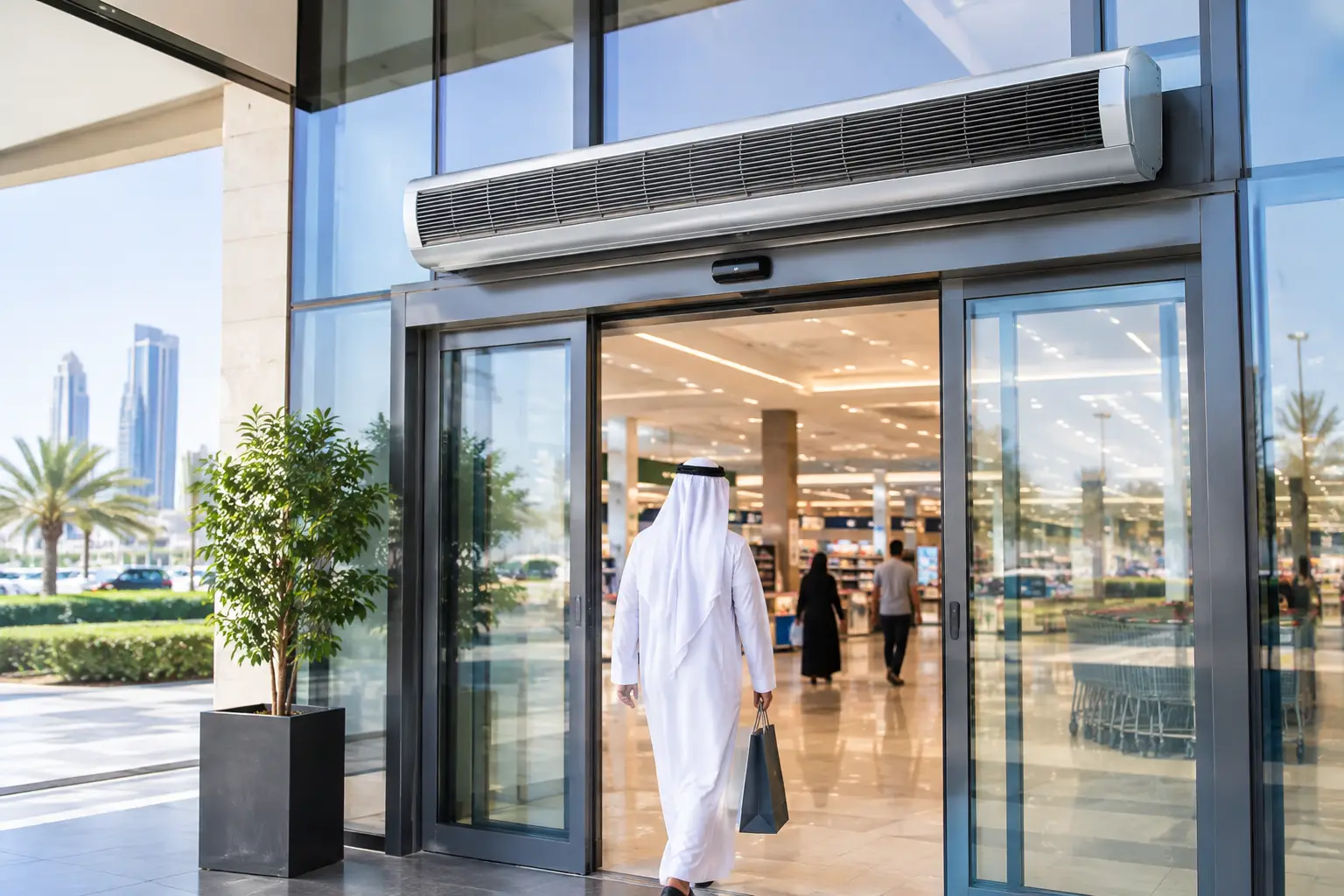
For restaurants in Dubai, Riyadh, Doha, Cairo, Lagos, or Nairobi, that decision matters even more. Extreme heat, humidity, and heavy foot traffic create a tougher entrance-control problem than a standard commercial doorway in a mild climate. A restaurant air curtain has to do more than look neat above the door. It has to hold a stable air barrier in harsh conditions without creating excessive noise or disrupting the customer experience.
What makes the best air curtain for restaurant entrance use?
In restaurant applications, the best-performing unit is the one that protects indoor comfort while supporting smooth operations. That means strong enough discharge velocity to reach the floor, but not so aggressive that guests feel blasted as they walk in. It means reliable insect control, better containment of conditioned air, and consistent performance during peak opening cycles.
This is why restaurant entrances usually need commercial-grade equipment rather than light-duty units. A high-traffic food service entrance deals with repeat opening events, frequent delivery movement, and stricter hygiene expectations than many other commercial spaces. If the air curtain loses effectiveness every time exterior heat rises, it stops being an energy device and becomes decorative hardware.
For many restaurant projects, a Commercial Centrifugal Flow Series air curtain offers the airflow stability and coverage needed for busy customer entrances and service access points.
The right choice also depends on the entrance type. A small cafe with a single swing door has very different needs from a quick-service restaurant with a wide main entrance and near-constant customer flow. A hotel restaurant opening to a lobby or external driveway may also need a quieter unit with a cleaner visual profile. In each case, application fit matters more than generic product rankings.
The key specifications that actually matter
Air velocity is the first thing serious buyers should check. Many restaurant operators focus on airflow volume alone, but the more important question is whether the unit can project a stable stream of air from mounting height to finished floor level. If the throw is weak, outside heat, dust, and insects will pass through the opening.
Mounting height comes next. An air curtain should be selected for the actual installed height, not the nominal door size alone. A unit that performs well at a lower doorway may fail at a taller storefront entrance. This is a common specification error on hospitality projects, especially when aesthetics lead the decision before performance is reviewed.
Blower type also affects suitability. Commercial centrifugal designs are often preferred in restaurant settings because they deliver stable airflow and more controlled discharge characteristics. For higher-end dining environments, noise level can become just as important as raw performance. A powerful unit that creates an intrusive sound signature near the host stand can hurt the guest experience.
Then there is climate resistance. In tropical and desert markets, the best air curtain for restaurant entrance use must maintain barrier performance against intense temperature difference, dusty conditions, and in some locations, seasonal humidity. Equipment designed for mild environments may not hold up under these conditions, even if the listed dimensions look correct on paper.
Why restaurant hygiene changes the buying decision
Restaurants are not just trying to reduce cooling loss. They are also protecting food environments from airborne contaminants and insect entry. This makes the entrance barrier part of operational hygiene, not just energy management.
Insects are a serious concern anywhere doors open repeatedly, especially in warm climates. A properly selected air curtain helps reduce insect ingress without interfering with customer movement. That matters for front-of-house comfort, but it matters even more for compliance and sanitation standards around food service operations. Facilities dealing with pest pressure may also benefit from understanding how an Air Curtain for Insect Control at Entrances supports hygiene and environmental separation.
Dust control is another factor that gets underestimated. In many urban and roadside restaurant locations, especially in hotter and drier regions, dust infiltration increases cleaning load and affects indoor comfort quickly. A well-matched air curtain helps keep the indoor environment cleaner and more consistent. Related considerations are discussed in our guide to Air Curtain for Dust Control.
Best air curtain for restaurant entrance layouts
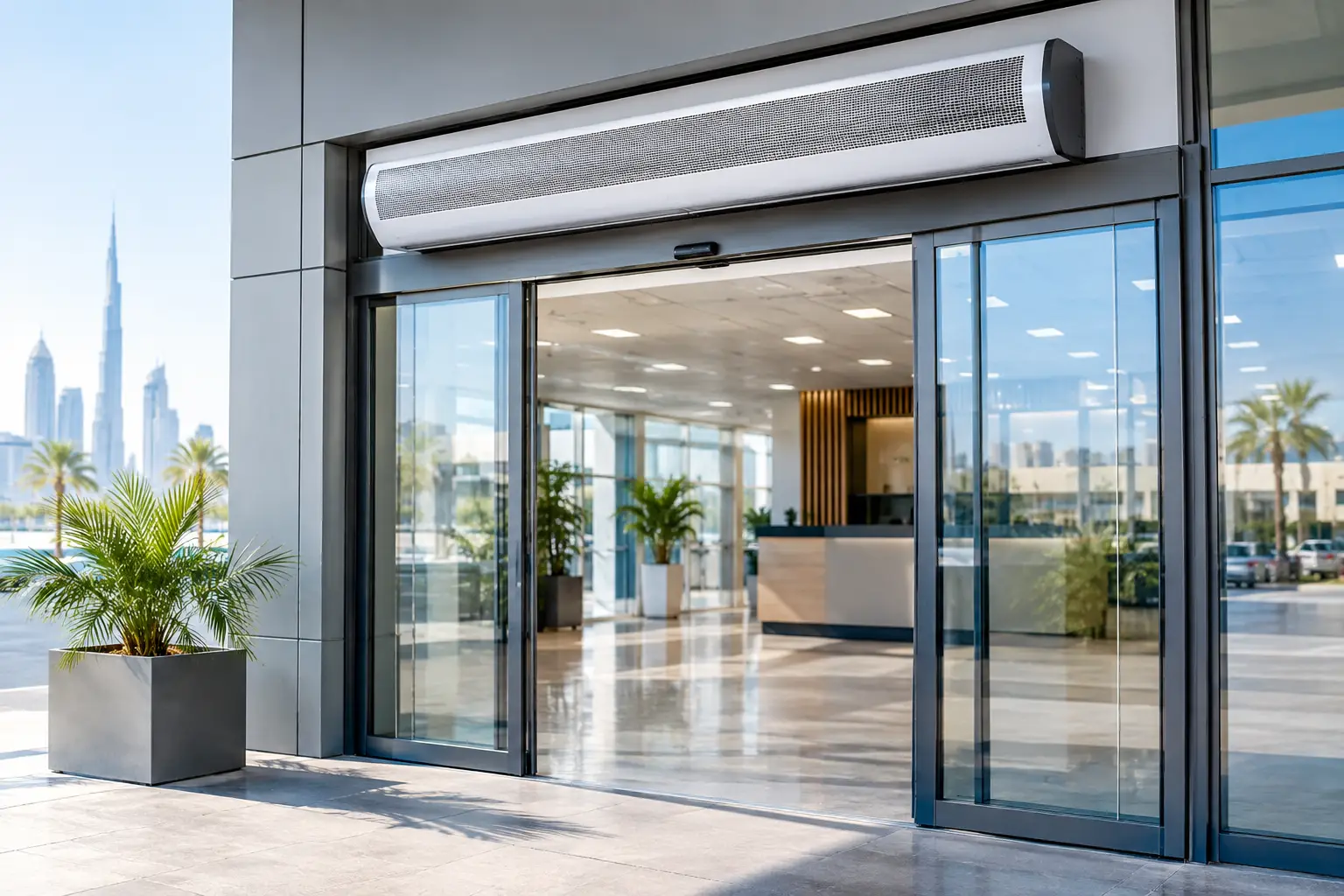
There is no single best model for every restaurant, but there is a best category for each entrance condition. For a standard customer entrance with moderate to high foot traffic, a Commercial Centrifugal Flow Series unit is usually the most practical choice. It offers strong, dependable air separation and suits daily operating intensity.
For restaurants where aesthetics matter – such as hotel dining venues, branded retail food chains, or premium hospitality sites – Recessed Ceiling Series models can make sense if the building layout supports them. These keep the entrance visually clean while still delivering an effective barrier. The trade-off is that planning and installation coordination need to happen earlier in the project.
For larger openings or busier sites, higher-capacity commercial systems are often necessary. This is especially true when the entrance faces direct outdoor exposure, parking areas, or street-level heat load. A unit sized too conservatively may reduce some air exchange, but it will not create the level of entrance protection the site actually requires.
Where climate severity is high, performance margin matters. A restaurant in Dubai or Abu Dhabi facing intense summer heat has a different operating profile from a shaded entrance in a lower-stress environment. The same applies in humid coastal locations or dusty urban corridors in MENA and African markets. Climate-adapted selection is not an upgrade. It is the baseline for reliable results.
Recommended FreezeeX Air Curtains for Restaurants
Different restaurant environments require different air curtain solutions. Selecting the right system depends on entrance dimensions, traffic levels, climate exposure, and the overall customer experience you want to maintain.
For standard restaurant entrances, cafes, food courts, and quick-service restaurants, the Commercial Centrifugal Flow Series provides dependable airflow performance and effective separation between indoor and outdoor environments.
For premium hospitality venues, hotel restaurants, and architecturally sensitive projects, the Recessed Ceiling Series offers strong entrance protection while maintaining a clean and discreet appearance.
For larger entrances with heavier customer traffic, the Commercial HiFi Plus Series delivers enhanced airflow performance and reliable environmental control during peak operating periods.
Choosing the correct restaurant air curtain ensures better comfort, improved hygiene, reduced cooling loss, and more stable indoor conditions throughout the year.
Common mistakes when specifying an air curtain for restaurants
The first mistake is choosing by price instead of duty. A lower-cost unit can look acceptable in a quote comparison, but if it cannot maintain air separation during peak service, the savings disappear into higher cooling demand and weaker entrance control.
The second mistake is ignoring entrance usage patterns. Restaurants do not operate like offices. Door cycles are faster, traffic is less predictable, and service windows can create intense bursts of opening activity. A unit should be selected for peak conditions, not quiet periods.
Another frequent issue is poor integration with the doorway. Width coverage has to be correct. If the air stream does not fully protect the opening, the barrier will break at the edges. Mounting position, discharge angle, and installation height all influence actual field performance.
Noise is another trade-off that deserves honest attention. More power is not automatically better if the entrance is compact and the dining area begins immediately inside the door. In those cases, the best solution balances airflow strength with acceptable acoustic performance.
Frequently Asked Questions
What is the best air curtain for a restaurant entrance?
The best air curtain for restaurant entrance applications depends on doorway dimensions, mounting height, traffic levels, climate conditions, and hygiene requirements. Commercial centrifugal air curtains are commonly preferred because they provide stable airflow and effective environmental separation.
Do restaurants need air curtains?
Restaurants with frequent door openings can benefit significantly from air curtains. They help reduce insect entry, limit dust infiltration, improve customer comfort, and reduce cooling loss in hot climates.
Can air curtains improve restaurant hygiene?
Yes. Air curtains help reduce the entry of insects, airborne dust, and contaminants, supporting cleaner food-service environments and better operational hygiene.
Do air curtains reduce restaurant cooling costs?
Air curtains help reduce unwanted air exchange between indoor and outdoor environments. This can lower HVAC workload and improve energy efficiency, particularly in high-traffic restaurants located in hot climates.
Choosing the Best Air Curtain for Restaurant Entrance Performance
Choosing the best air curtain for restaurant entrance performance requires more than comparing specifications. The right solution depends on traffic levels, climate conditions, hygiene requirements, acoustic expectations, and installation constraints.
FreezeeX Air Curtains Ltd. supports restaurant operators, hospitality groups, food-service businesses, and commercial property owners across the GCC, MENA, and African markets with climate-adapted air curtain solutions designed for demanding environments.
To explore available solutions, visit the FreezeeX Home Page, browse the complete FreezeeX Product Range, or review our commercial and hospitality air curtain options.
If you are planning a new restaurant fit-out or upgrading an existing entrance, visit our Contact Us page to request a consultation based on your opening dimensions, traffic profile, climate conditions, and operational requirements.