
A spotless lobby means very little if every door opening pulls in dust, humid air, flying insects, and street contaminants. For facility managers and project teams, how to improve entrance hygiene is not a housekeeping question first. It is an entrance-control question.
In high-traffic buildings across hot, dusty, and humid markets, the entrance is where hygiene performance is won or lost. Hypermarkets, hotels, cold rooms, workshops, hospitals, loading areas, and office towers all face the same operational problem. The moment doors open, outside air brings contamination inside. That affects cleanliness, comfort, HVAC load, and in some facilities, product quality.
The practical fix is not one product or one cleaning routine. It is a combination of airflow control, traffic planning, and equipment selection that matches the site. If the entrance is exposed to desert dust in Riyadh, humid air in Dubai, or insect pressure in Lagos and Nairobi, the strategy has to reflect those conditions.
Why entrance hygiene breaks down so quickly
Most commercial buildings clean after contamination enters. That approach is expensive and often never fully catches up. Floors get mopped, but dust keeps returning. Pest control is scheduled, but insects still enter during peak hours. Cooling systems work harder, yet indoor conditions still feel unstable near the door.
The reason is simple. An active entrance behaves like a transfer point between two environments. Every opening allows pressure shifts, temperature exchange, airborne particles, fumes, and moisture to move inward. In a retail or hospitality setting, that degrades the customer environment. In industrial and cold storage settings, it can create a direct operational risk.
This is why entrance hygiene should be treated as a building-performance issue, not only a janitorial one. Once contaminants cross the threshold, the building is already reacting instead of preventing.
How to improve entrance hygiene in commercial facilities
The first step is to identify what is actually entering through the opening. In some sites, the main issue is fine dust. In others, it is hot air infiltration that causes condensation, odor movement, or comfort complaints. Food-adjacent operations may be more concerned with insects, while logistics facilities may struggle with smoke, vehicle fumes, or debris from loading traffic.
That distinction matters because not every entrance hygiene strategy solves the same problem equally well. A deeper mat well may help with tracked dirt, but it does little against airborne dust. Faster door closers may reduce exposure time, but they can create access issues in busy commercial settings. Plastic strip curtains can suit certain back-of-house applications, but they are often unsuitable for customer-facing entrances or high-throughput commercial doors.
The strongest results usually come from combining passive controls with active air management. That means using floor-level dirt capture, consistent cleaning protocols, and most importantly, an air barrier that limits infiltration while the opening remains usable.
Start with the opening itself
Before selecting any equipment, assess the physical entrance. Measure door height and width, note whether the opening is recessed or exposed, and observe traffic patterns by hour. A hotel entrance with frequent guest movement has different demands than a warehouse dispatch door or a supermarket service entry.
You also need to evaluate nearby pressure influences. Revolving doors, sliding doors, exhaust systems, and adjacent loading bays can all affect how outside air moves toward the opening. In hot-weather regions, solar gain on the facade can intensify temperature differences and increase inward air movement.
If the opening is oversized, constantly open, or exposed to crosswinds, hygiene control becomes much harder. That does not mean the problem cannot be solved. It means the air barrier and airflow design have to be specified correctly rather than treated as a generic accessory.
Use air curtains as a frontline hygiene control
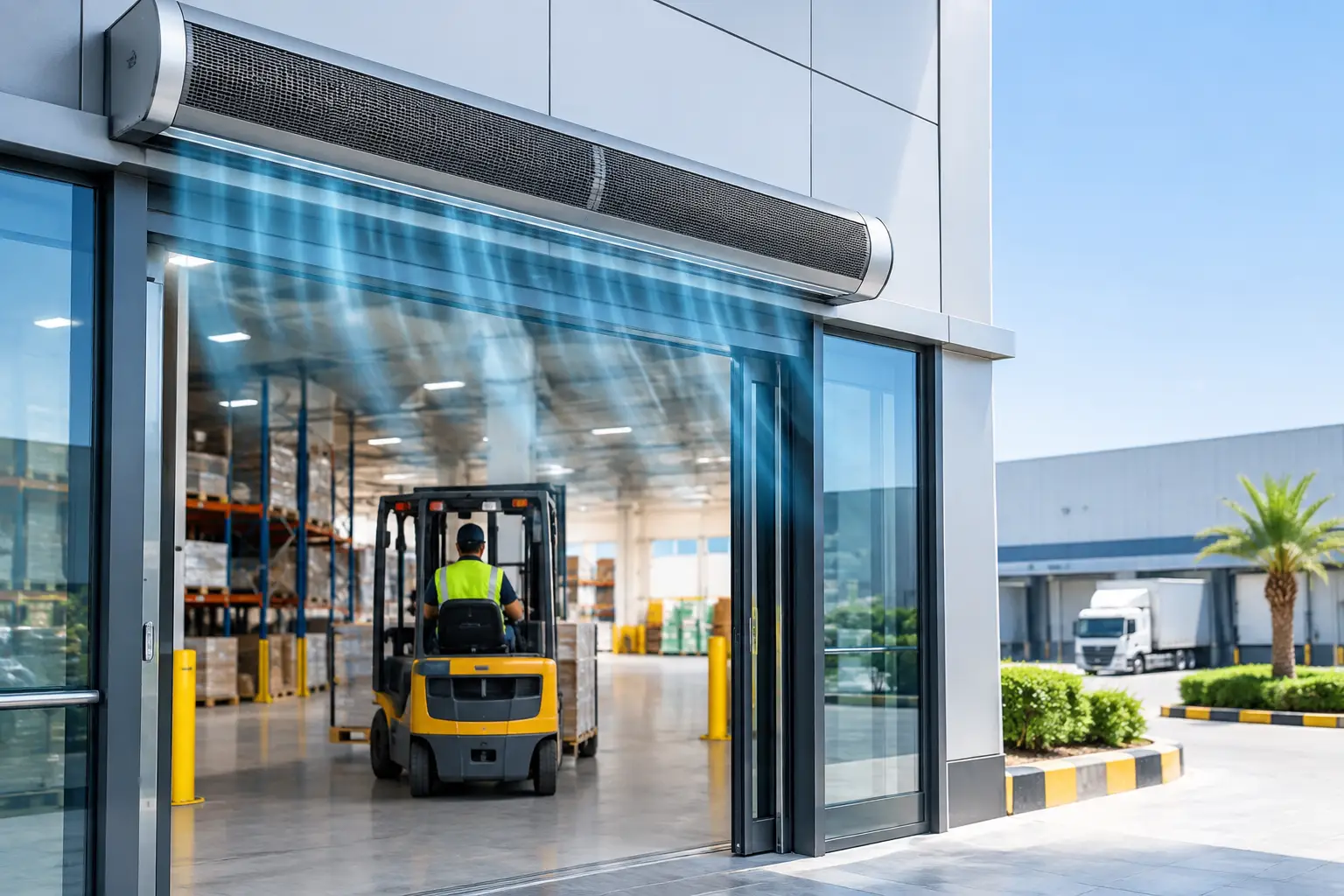
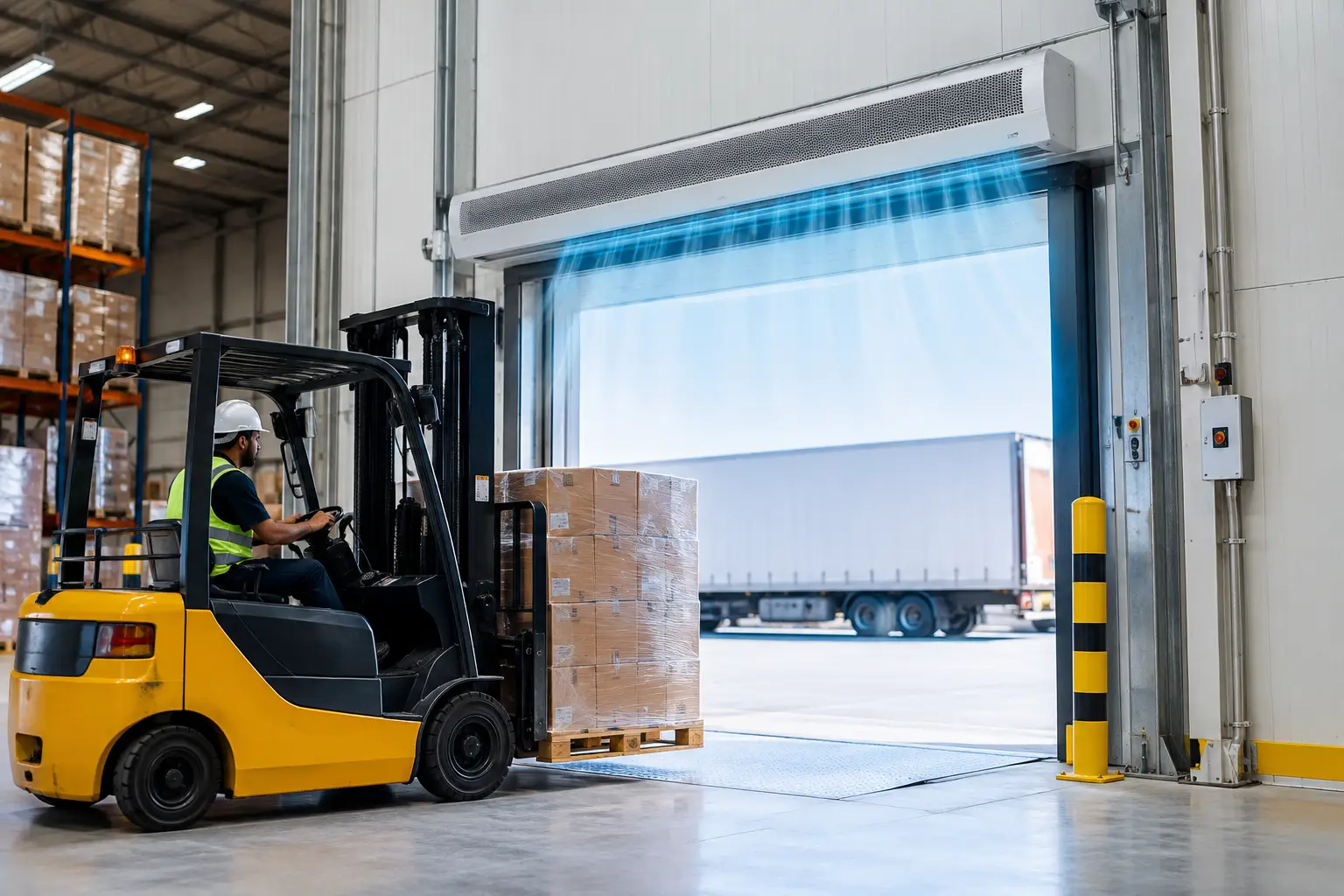
For many commercial and industrial entrances, the most effective answer to how to improve entrance hygiene is to stop airborne contamination at the door line. Air curtains do this by creating a high-velocity stream across the opening, reducing the entry of dust, insects, humidity, and hot outside air.
This is where specification matters. A light-duty unit may be adequate for a small, sheltered entrance, but it will underperform at a wide, wind-exposed, or high-traffic opening. In tropical and desert climates, the air curtain must maintain a stable barrier despite heat, suspended dust, and repeated door cycles.
A properly selected commercial or industrial air curtain supports hygiene in several ways at once. It helps keep dust out of conditioned spaces, reduces flying insect ingress, limits moisture transfer, and supports cleaner floor conditions by reducing the amount of airborne material settling near the entrance. It also cuts the burden on HVAC systems that would otherwise compensate for every door opening.
There is a trade-off, though. Performance depends on the correct mounting height, discharge angle, airflow strength, and door geometry. An undersized unit may give the appearance of protection without delivering real separation. That is why specifiers should treat air curtains as engineered entrance equipment, not decorative add-ons.
Entrance hygiene is different in hot-climate operations
In the GCC, MENA, and many African markets, entrance hygiene is closely tied to climate. Heat and humidity do not only affect comfort. They amplify contamination problems.
When humid air enters a cooler interior, surfaces near the entrance can become damp or slippery. That increases cleaning demands and can create a poor first impression in hospitality, retail, and office environments. In cold storage or food logistics, uncontrolled air exchange can also interfere with temperature stability and create condensation concerns around access points.
Dust is equally serious. Fine airborne particles in desert and construction-heavy environments settle quickly on merchandise, shelving, counters, and mechanical equipment. They also move deeper into the building than many teams expect, especially when entrances are large or traffic is constant.
This is why climate-adapted air curtains matter. Systems selected for tropical and desert conditions need the blower performance, casing durability, and airflow consistency to operate under harsher environmental loads. In cities such as Dubai, Doha, Cairo, Lagos, or Nairobi, that difference shows up quickly in both hygiene performance and energy use.
Match the solution to the application
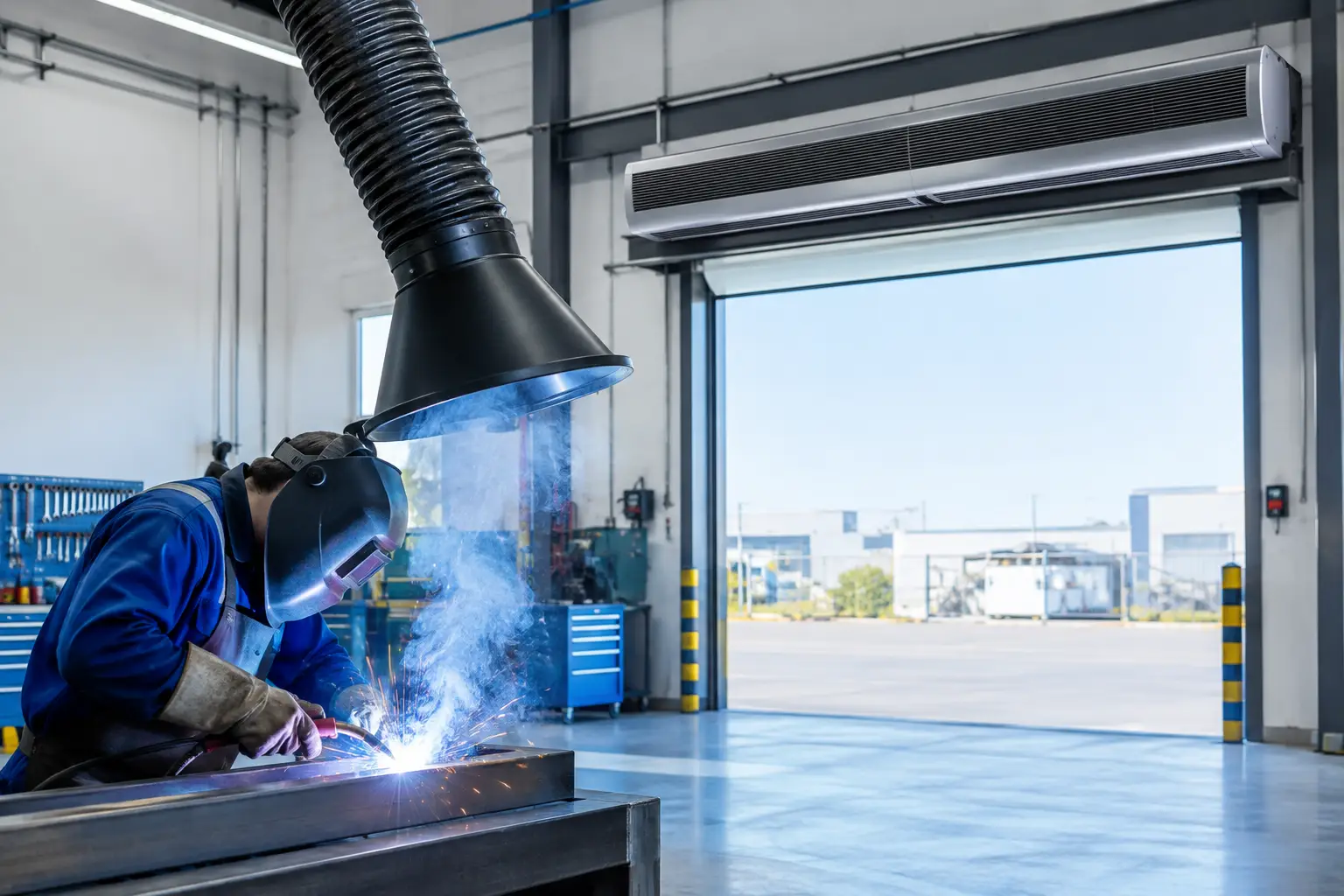
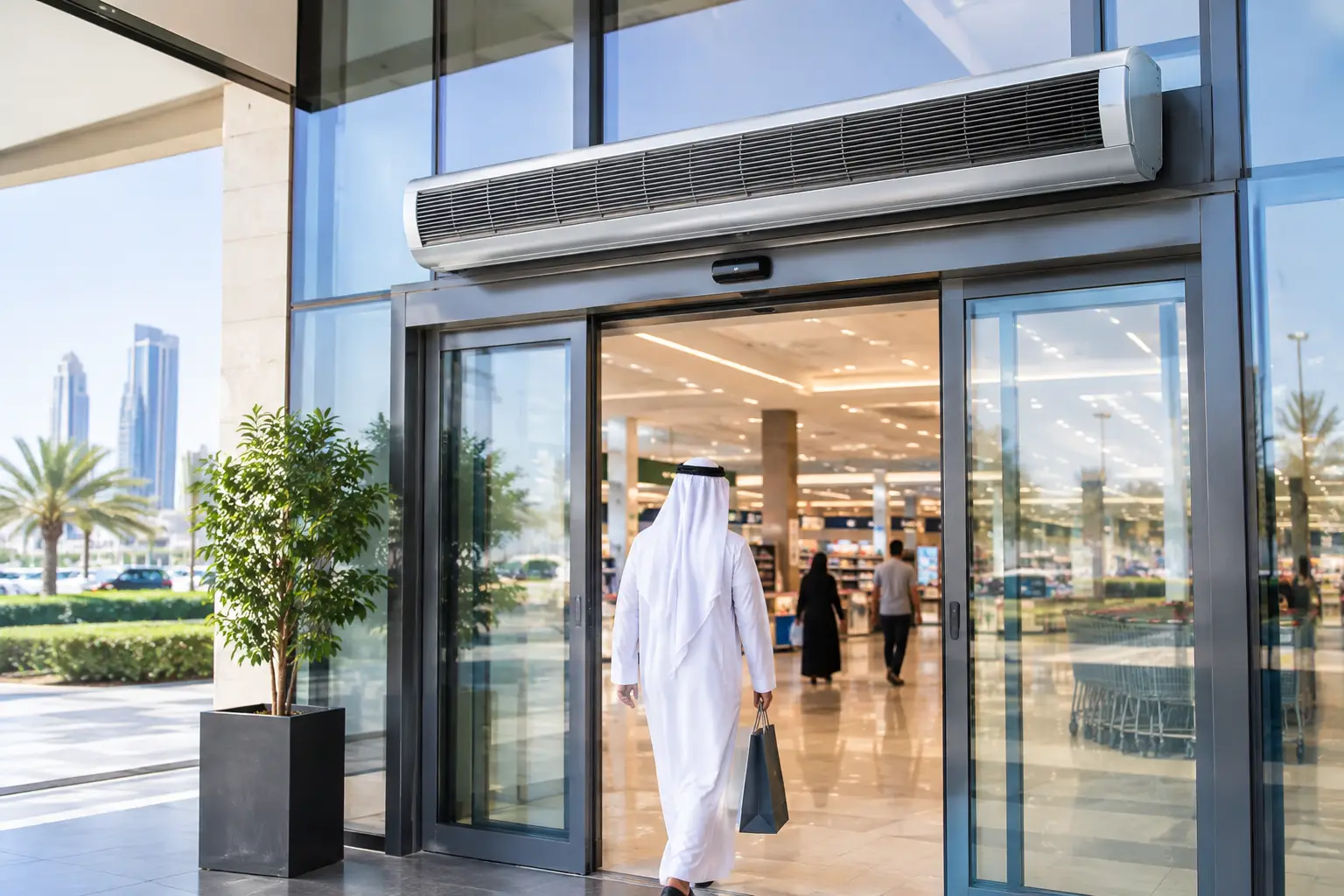
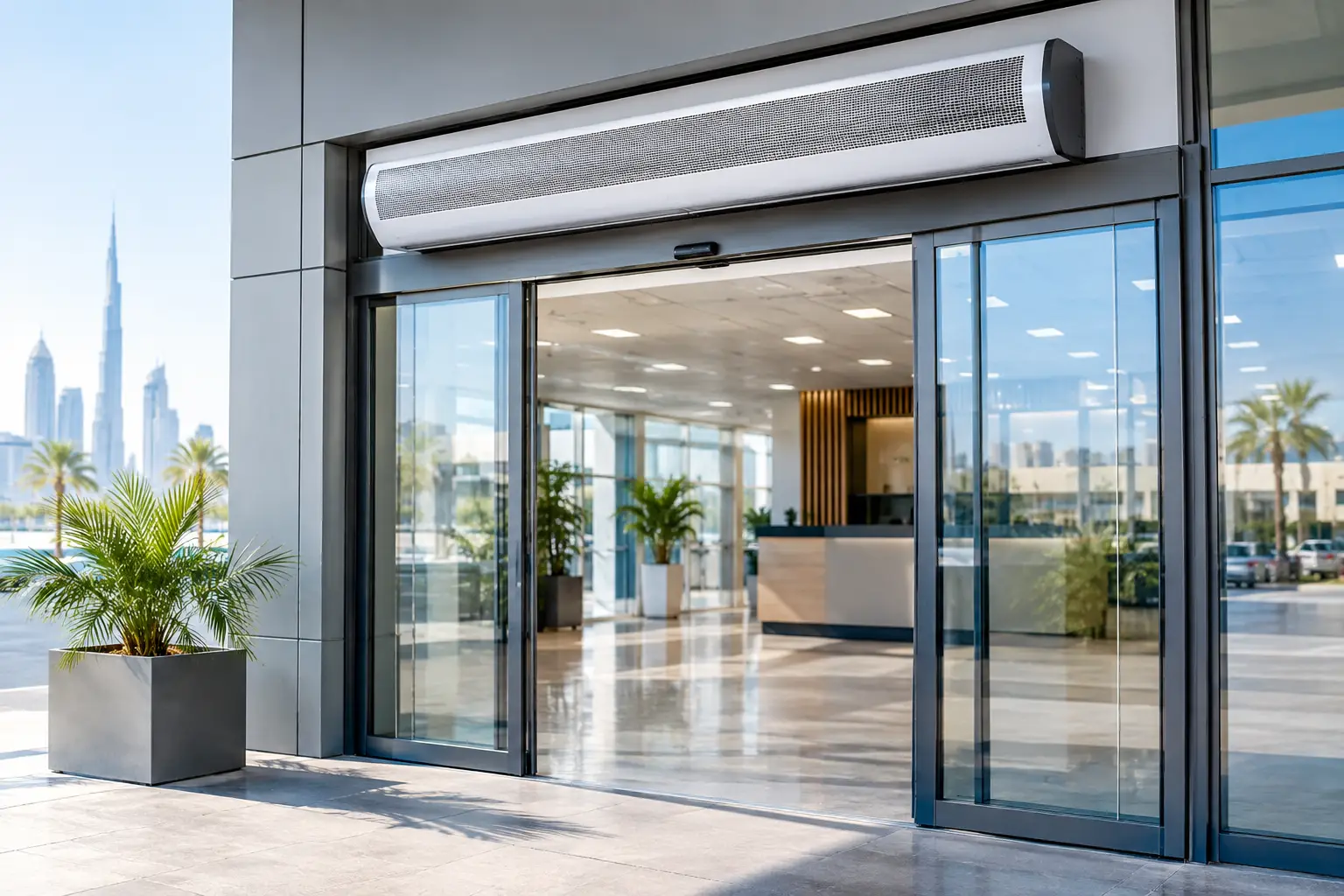
Customer-facing entrances usually require a quieter, visually integrated solution with strong day-long performance. Recessed or architectural commercial models often fit that need when ceiling design and access allow. Back-of-house doors, loading areas, and industrial openings usually need more aggressive centrifugal performance built for tougher operating conditions.
There is no single best format for every site. A premium hotel lobby may prioritize appearance and noise control. A hypermarket entrance may prioritize continuous operation across long opening hours. A plant or workshop may need rugged equipment that can handle heavier contamination pressure and more demanding service conditions.
The right choice depends on opening size, surrounding conditions, and operational priorities. That is why entrance hygiene planning works best when facilities teams, MEP contractors, and equipment specialists review the application together.
Cleaning still matters, but prevention matters more
No air barrier replaces cleaning discipline. Entrance mats, routine floor care, pest-control coordination, and door maintenance still have a role. But these are downstream controls. They deal with what has already entered.
The biggest operational improvement comes from reducing infiltration first. Once less dust, hot air, and insect activity cross the opening, cleaning cycles become more effective and indoor conditions become easier to maintain. Staff notice it. Customers notice it. HVAC systems notice it too.
This prevention-first approach usually produces a better return than simply increasing cleaning frequency. More labor can remove dirt after the fact, but it will not stabilize the entrance environment. Better entrance control can do both.
What decision-makers should look for
If entrance hygiene is now affecting energy use, customer comfort, product protection, or cleaning costs, the next move should be a site-specific review. Look at opening dimensions, mounting constraints, climate exposure, traffic volume, and the real hygiene problem at that entrance. Dust control and insect blocking may demand a different specification than temperature retention alone.
For project consultants and procurement teams, this is also where lifecycle thinking matters. Lower-cost equipment can be attractive on paper, but poor barrier performance, weak durability, or the wrong blower design often leads to missed hygiene targets and higher operating costs later.
FreezeeX Air Curtains works with contractors, consultants, and facility teams that need climate-adapted entrance control for demanding commercial and industrial environments. If you are assessing how to improve entrance hygiene in a hotel, hypermarket, plant, cold storage site, or large commercial building, request a consultation or quote based on your opening size, traffic conditions, and local climate. The right air barrier does more than protect the doorway. It protects the performance of the whole facility.

One Response