A hotel lobby tells guests what to expect before a single word is spoken. If warm outside air rolls in every time the doors open, if dust settles near reception, or if humidity fogs the first few steps inside, that first impression slips fast. The right air curtain for hotel lobby entrances helps protect cooling, comfort, and presentation at the exact point where traffic is highest.
For hotels in Dubai, Riyadh, Doha, Cairo, Lagos, or Nairobi, this is not a small detail. Lobby entrances stay active for long hours, often with revolving staff movement, guest arrivals, luggage handling, valet traffic, and frequent door cycles. In tropical and desert climates, the outside air pressure on the entrance is constant. That means the entrance is either controlled by design or left to work against the HVAC system all day.
Why hotel lobbies lose performance at the entrance
Most hotel operators first notice the symptom, not the cause. The lobby feels warmer near the door. The AC runs harder. Housekeeping deals with more dust. Guests waiting at reception stand in a draft of hot air every time the entrance opens.
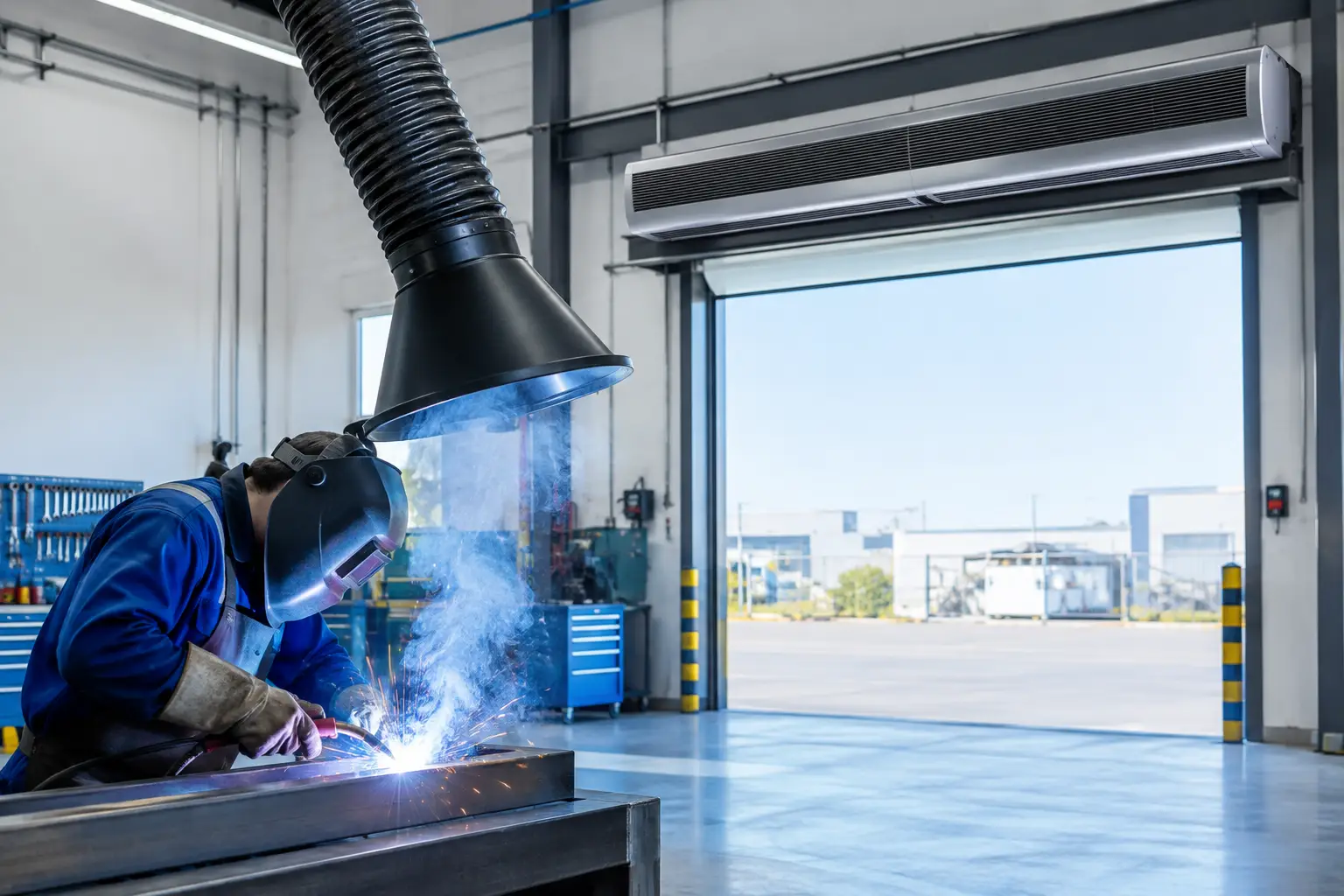
What is happening is simple. The door opening becomes a transfer point for heat, humidity, dust, fumes, and insects. In high-traffic hospitality settings, even a well-sized cooling system can struggle if the entrance keeps pulling untreated outdoor air into the conditioned zone. The larger and taller the opening, the more visible the problem becomes.
This is why entrance protection matters in hospitality more than many other commercial settings. A hotel lobby is not just another indoor zone. It is a brand-facing space, a comfort zone, and often a highly cooled volume with polished finishes, soft furnishings, and continuous pedestrian movement.
What an air curtain for hotel lobby entrances actually does
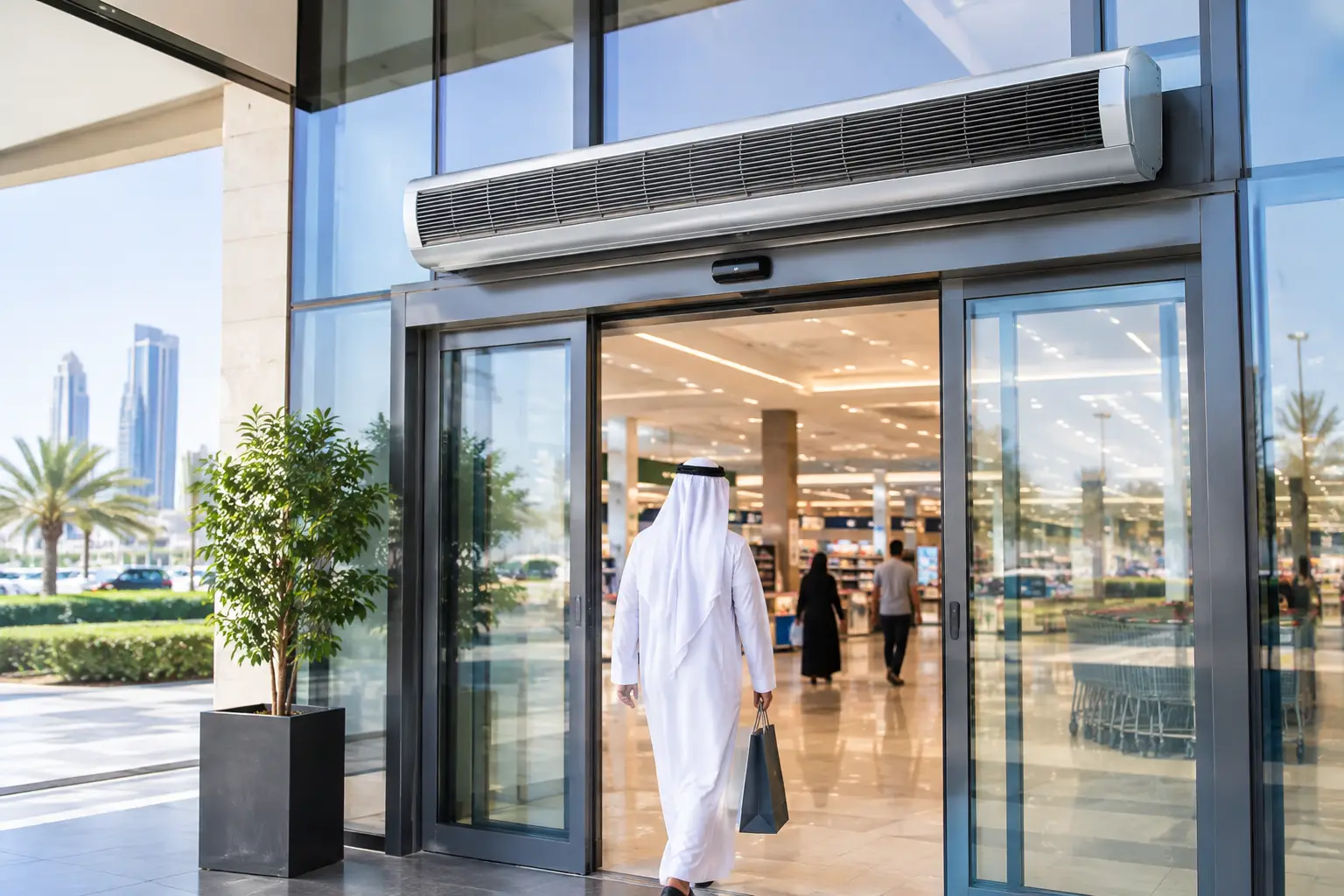
An air curtain creates a high-velocity air barrier across the doorway. When selected correctly for the opening size and mounting condition, it helps reduce the exchange between outdoor and indoor air without blocking access. Guests move through the entrance normally, but the air barrier works to resist infiltration.
For a hotel, that translates into several practical benefits. Cooling loss is reduced, so the HVAC system does not have to recover as aggressively after every door cycle. Dust and flying insects are less likely to enter. Humid outside air has less effect on the immediate lobby area. Staff at reception and concierge positions experience a more stable environment.
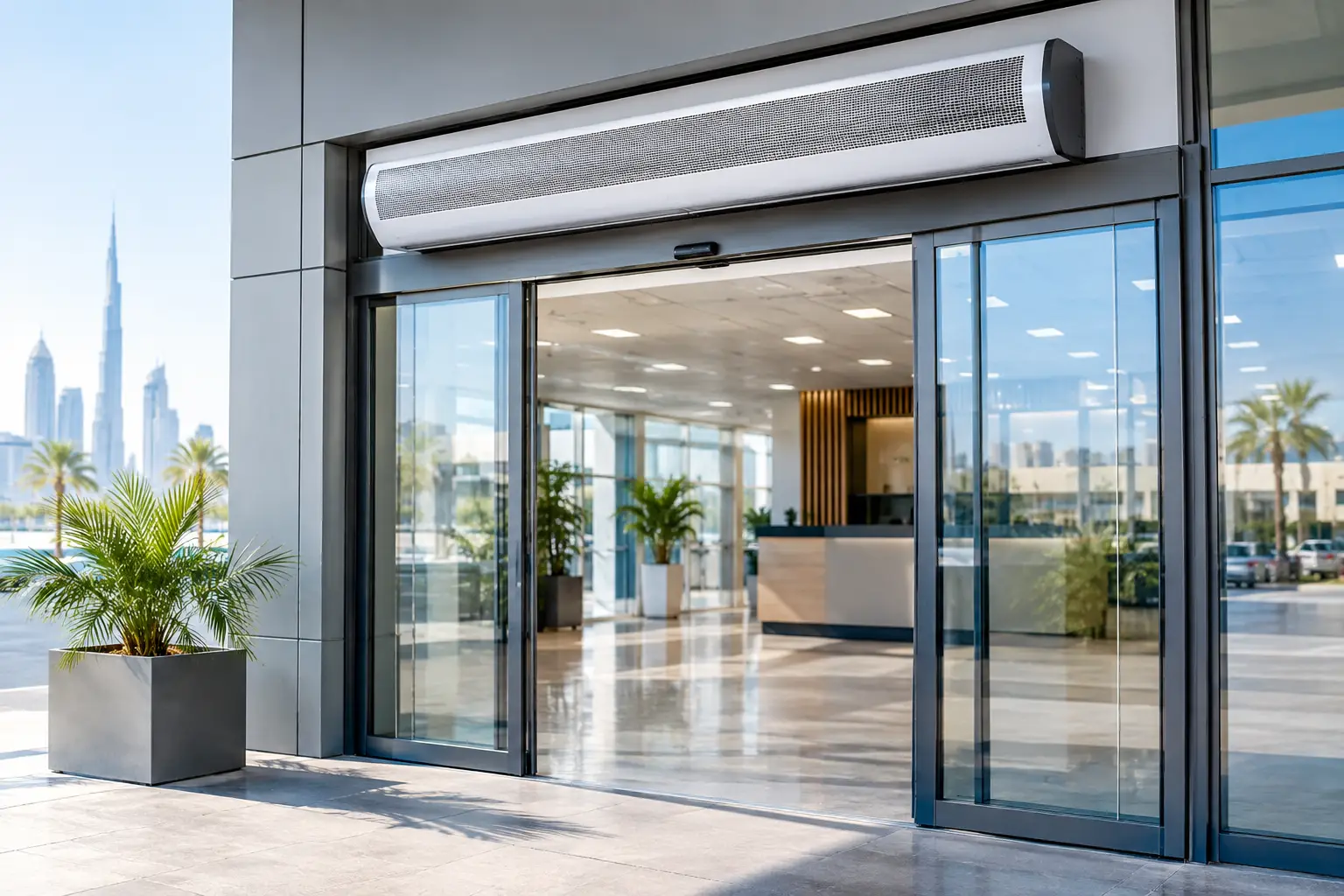
That said, performance depends on engineering, not on the idea alone. An undersized unit or the wrong blower configuration will not deliver consistent protection across the full opening height. In some projects, a recessed ceiling model makes sense for appearance. In others, a surface-mounted commercial centrifugal unit gives stronger throw and better performance. It depends on the entrance geometry, traffic pattern, ceiling details, and climate pressure at the site.
Air curtain for hotel lobby design – where buyers get it right or wrong
The first mistake is choosing by door width alone. Width matters, but so do mounting height, air velocity, lobby pressure conditions, and whether the entrance has a vestibule, sliding doors, or manually operated swing doors. A hotel with decorative entry architecture may also have higher ceilings or wider portals than a standard retail entrance.
The second mistake is treating noise as the only hospitality concern. Noise level does matter in front-of-house spaces, especially near reception or lounge seating, but low noise without enough air separation is not a win. The balance has to be right. A well-engineered system should support the lobby experience without sacrificing barrier performance.
The third mistake is ignoring climate severity. In hot, humid, or sandy environments, the air curtain is working against real infiltration pressure. A product that performs acceptably in mild conditions may not hold the line in Gulf or African hospitality projects where temperatures, dust load, and door traffic are much more demanding.
The specifications that matter most
For consultants, MEP contractors, and procurement teams, the best starting point is not brand category but application fit. A hotel entrance needs a unit matched to the opening and operating conditions.
Airflow pattern is critical. Commercial centrifugal designs are often preferred where stable, focused discharge is required across a lobby entrance. They can provide stronger air coverage and better consistency, particularly when dealing with taller doorways or stronger pressure differences.
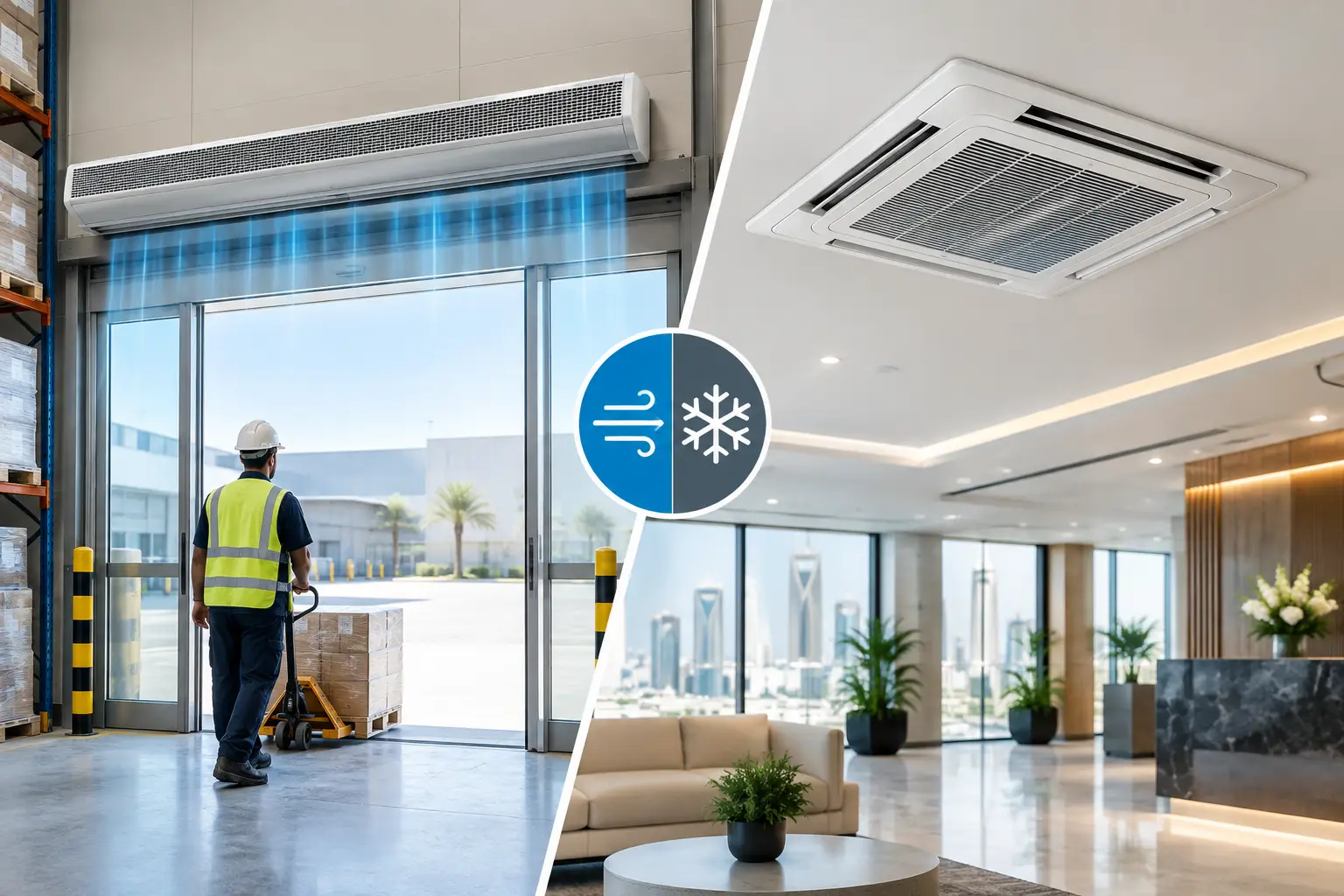
Mounting style also shapes the decision. Recessed ceiling air curtains are often selected for upscale hospitality interiors because they preserve the visual line of the entrance. They work well when ceiling void conditions allow proper installation and service access. Surface-mounted units may be the better choice when project timelines, retrofit constraints, or structural realities make recessed installation impractical.
Motor reliability and internal component quality should not be treated as back-page details. Hotel entrances run for long hours, often daily, and downtime affects both comfort and operations. Buyers should look for systems built for continuous commercial duty, not light intermittent use.
Control strategy matters as well. An air curtain should work with door operation and occupancy flow, not rely on manual switching that staff may forget during peak periods. In hotels, automatic coordination with entrance activity usually delivers better consistency and lower energy waste.
Guest comfort, energy savings, and image all connect
In hospitality, energy performance is often discussed separately from guest experience, but at the lobby entrance they are the same issue. If the entrance is uncontrolled, the building loses conditioned air, the cooling plant works harder, and guests feel the effect immediately.
A properly selected air curtain can help reduce that waste while improving comfort in the occupied zone nearest the entrance. That means less temperature swing around reception, fewer complaints about warm drafts, and better control over airborne dust. For properties with high-end finishes, that also supports housekeeping efficiency and keeps the arrival space looking cleaner throughout the day.
There is a trade-off to manage. Some hotels want the least visible equipment possible, while others prioritize maximum performance for a demanding entrance. The strongest choice is usually the one that balances appearance, noise expectation, and air barrier strength based on actual site conditions rather than design preference alone.
When hotel projects in hot climates need a stronger solution
Not every lobby needs the same level of equipment. A boutique property with a modest entrance and limited door opening frequency has different needs than a large business hotel with event traffic, luggage trolleys, and near-constant access movement.
Projects in desert and tropical regions often require more attention to throw distance, dust resistance, and operational durability. In cities such as Dubai, Abu Dhabi, Riyadh, Muscat, or Casablanca, the entrance may face intense ambient heat and dust exposure. In humid locations, moisture infiltration becomes a bigger concern. In both cases, the air curtain should be specified as part of the building performance strategy, not treated as a cosmetic accessory.
This is where consultation-based selection adds value. Product line, blower type, discharge strength, mounting method, and opening dimensions all need to align. FreezeeX focuses on climate-adapted commercial air curtain systems for exactly these operating conditions, where standard assumptions often fail under real heat load and traffic volume.
What hotel decision-makers should ask before specifying
A useful conversation starts with the opening height and width, but it should not stop there. Ask how often the door opens during peak periods. Ask whether the entrance faces direct wind or dust exposure. Ask how visible the equipment can be, what ceiling space is available, and how close reception seating or concierge desks are to the door line.
It is also worth asking what problem matters most. If the priority is preserving cooling, the specification may lean toward stronger barrier performance. If the concern is front-of-house appearance, recessed options may move higher on the list. If the site runs in an especially harsh climate, durability and continuous-duty operation should carry more weight.
The right answer is rarely generic. Hotel lobbies vary widely, and entrance conditions decide performance. That is why serious B2B buyers usually get better outcomes from application-based recommendations than from simple catalog comparisons.
A hotel lobby has one job at the door: welcome guests without letting the outside climate take over the space. If you are planning a new hospitality project or correcting an underperforming entrance, request a consultation and quote based on your opening size, traffic pattern, and climate conditions. A properly specified air curtain can protect comfort, reduce cooling loss, and keep the lobby performing the way it should.