
Air Curtain for Insect Control at Entrances
A loading bay that stays open for deliveries, a hypermarket entrance with nonstop foot traffic, a hotel service door near waste handling – these are the places where flying insects get in fast and create expensive problems. An air curtain for insect control is not a cosmetic add-on in these environments. It is a working barrier that helps protect hygiene, reduce pest entry, and limit the cooling loss that comes with open doors in hot, high-traffic facilities.
For facility managers and project teams operating in Dubai, Riyadh, Doha, Lagos, Nairobi, or Cairo, the challenge is rarely just insects. It is insects plus heat, dust, humidity, and constant door movement. That matters because the right air curtain has to do more than blow air. It has to hold a stable barrier under real operating conditions, not just in a product brochure.
Why Insect Control at Entrances Is an Airflow Problem
Most insect intrusion starts with pressure, temperature difference, light attraction, odor, and open access. A doorway gives pests a direct path into food handling areas, retail spaces, warehouses, kitchens, and cold chain facilities. Traditional pest control measures still matter, but they do not solve the core issue of an open entrance.
That is where an air curtain changes the equation. By projecting a controlled, high-velocity stream across the opening, it creates an invisible barrier that disrupts the flight path of insects trying to enter. Properly selected units can significantly reduce penetration from flying pests while allowing people, carts, and goods to move through the doorway without the delays of a physical door.
This is especially valuable in tropical and desert climates, where doors are often opened frequently and the outdoor environment is already working against indoor hygiene. If warm outside air is pulling inward, insects tend to follow that movement. A strong air barrier helps interrupt both.
How an Air Curtain for Insect Control Actually Works
An air curtain for insect control works by forcing air downward or across the doorway at enough velocity and coverage to create separation between indoor and outdoor conditions. The goal is not random air movement. The goal is uniform discharge, full-width coverage, and enough throw to reach the floor or opposing side of the opening.
When the barrier is well designed, insects encounter a fast-moving air stream that makes entry difficult or unstable. Smaller flying insects are affected quickly. Larger insects may still challenge weak systems, which is why performance depends heavily on unit type, mounting height, blower design, and site conditions.
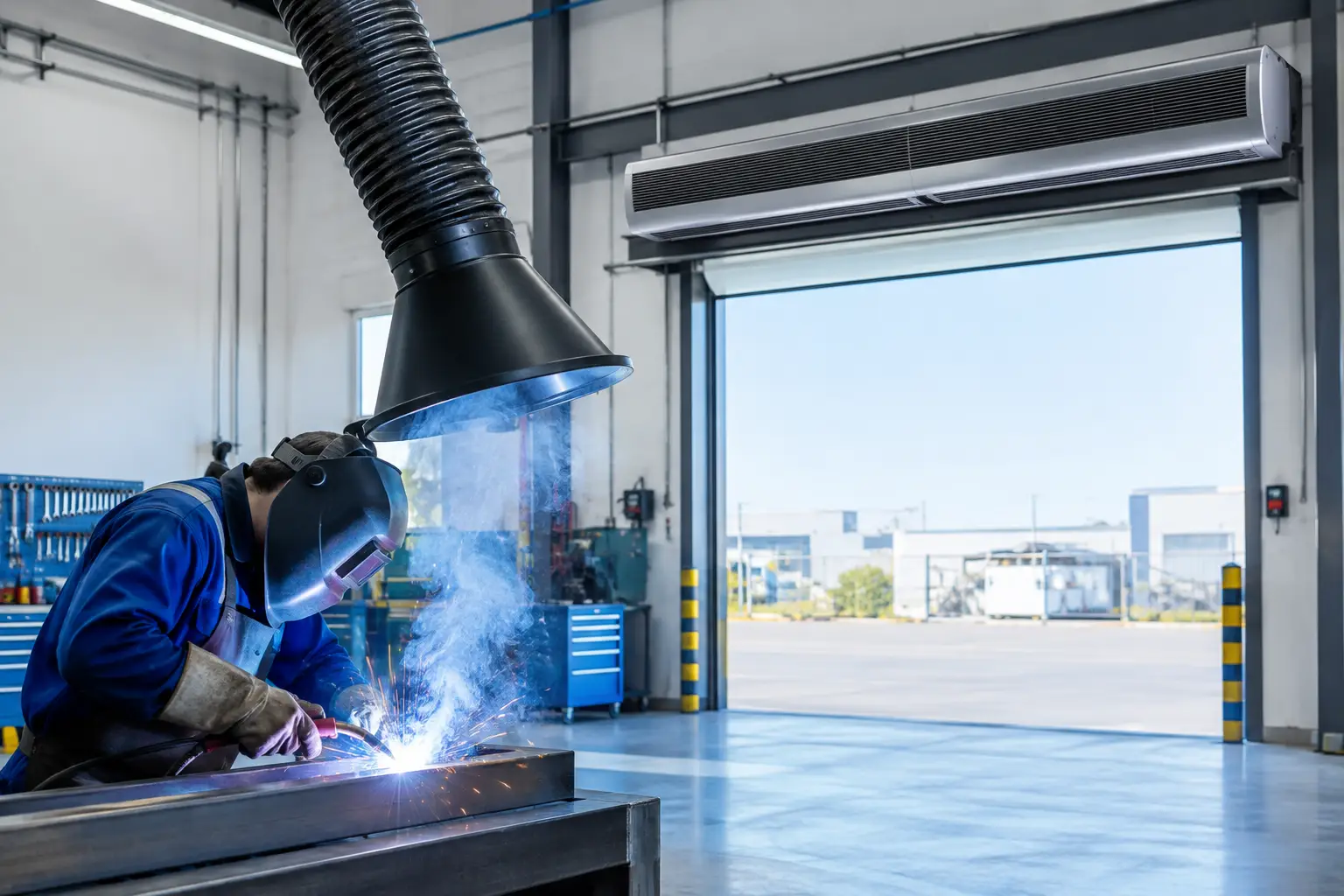
In commercial and industrial settings, the Industrial Centrifugal Series is often preferred for stronger, more stable airflow. It tends to perform better where doors are taller, wind conditions are harsher, or the building experiences repeated traffic cycles. For specifiers, this is the real distinction – insect control performance comes from engineered air delivery, not from the label alone.
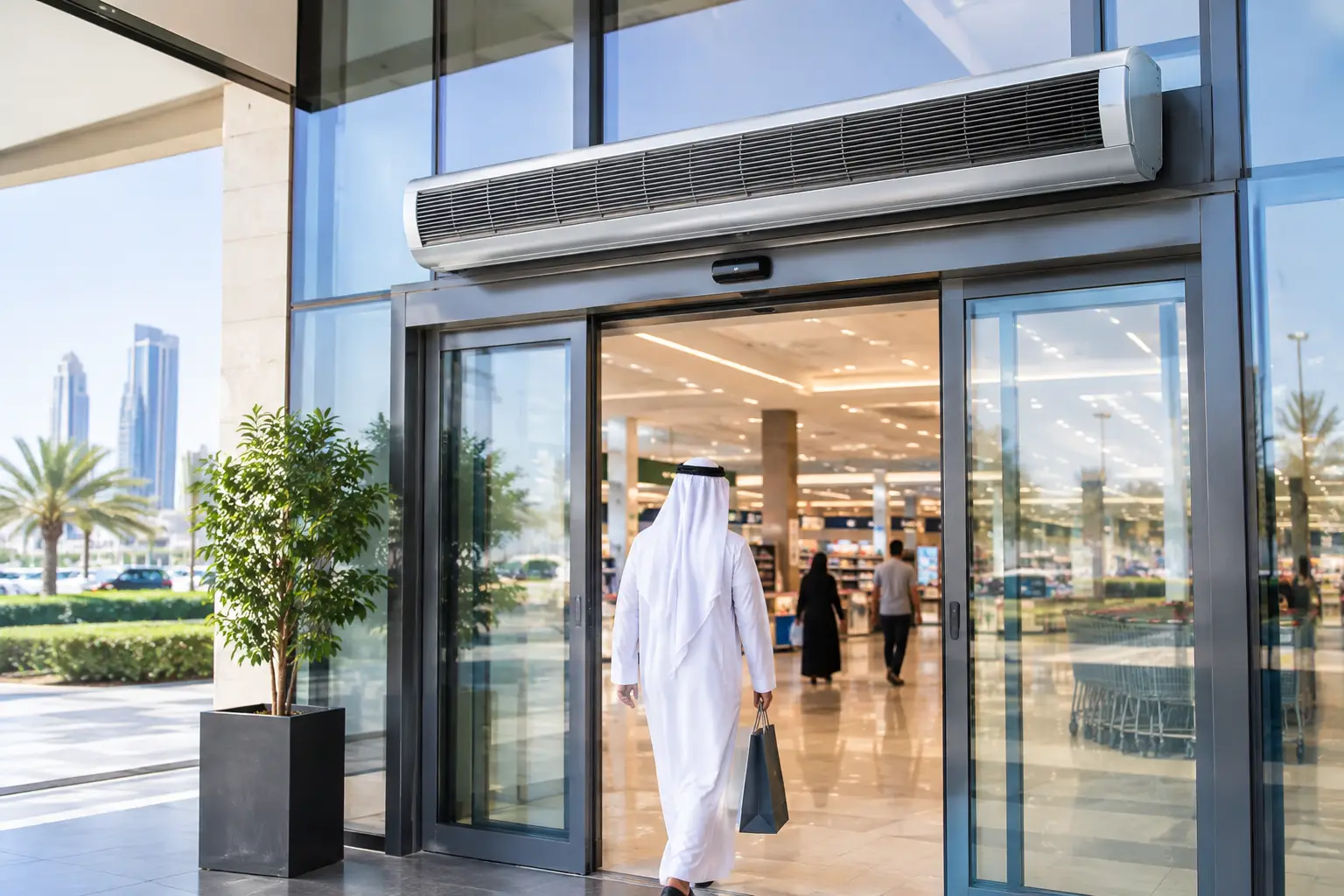
Facilities such as supermarkets, shopping malls, and commercial buildings often benefit from the Commercial HiFi Plus Series or the Commercial Centrifugal Flow Series where customer comfort and climate separation are priorities.
Where Insect-Control Air Curtains Make the Most Impact
The strongest use cases are facilities where hygiene, customer experience, or temperature control can be affected by entrance exposure. Hypermarkets and food retail sites use them to reduce flying insect entry at customer entrances, receiving doors, and back-of-house access points. Hotels and restaurants use them near service corridors, loading areas, and kitchen-linked entrances where pest pressure rises quickly.
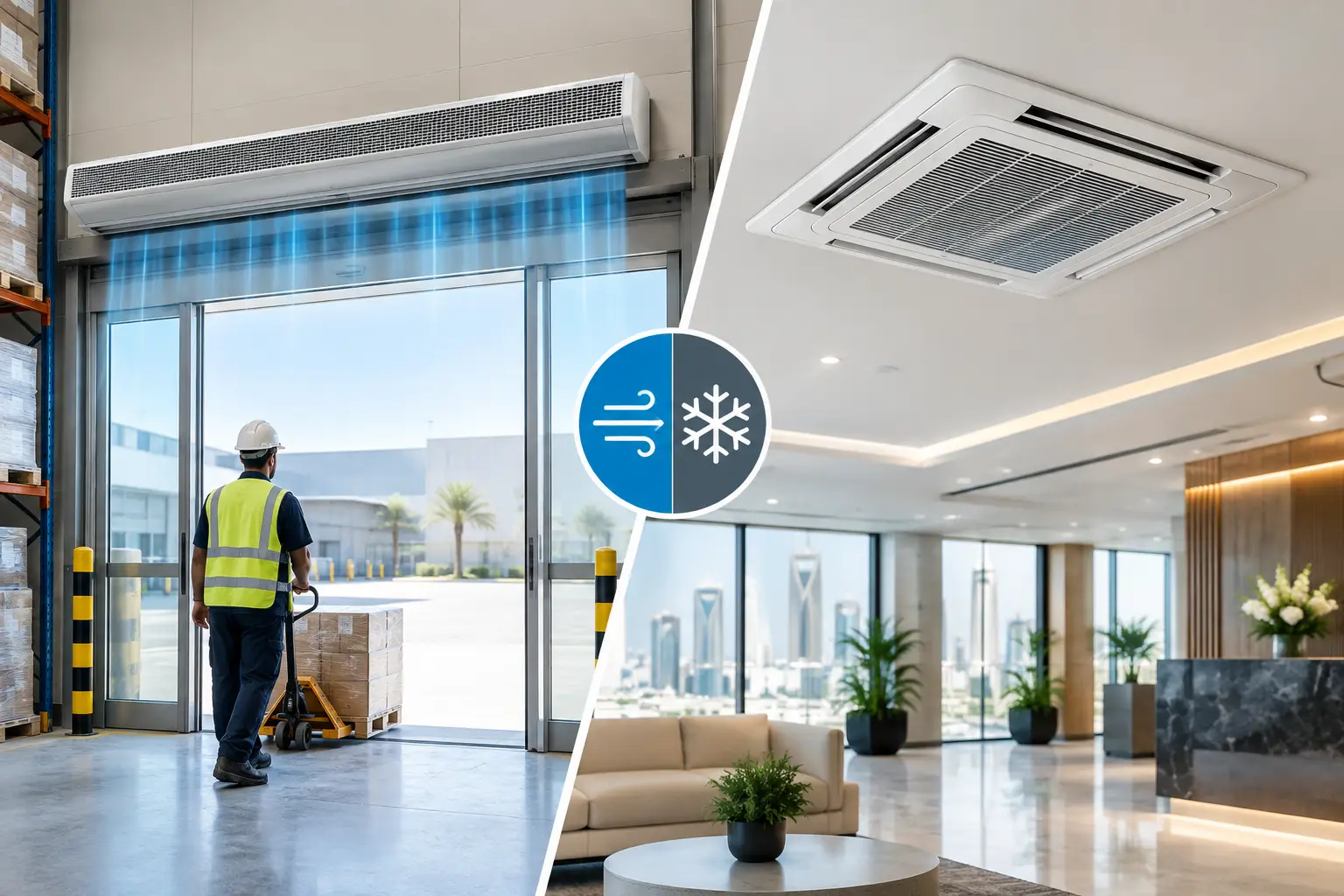
Cold storage operators face a different but related issue. Every door opening invites warm air, moisture, and contaminants toward temperature-controlled zones. Insects become part of a wider contamination and efficiency problem. In these cases, the air curtain supports both entrance hygiene and lower cooling loss.
Industrial plants, workshops, and logistics facilities also benefit, especially in regions where dust and heat already compromise indoor conditions. If a site in Muscat or Kuwait City is dealing with long operating hours and frequent shutter-door movement, a properly selected industrial air curtain can improve environmental control without slowing operations.
Choosing the Right Air Curtain for Insect Control
Selection is where many projects go right or wrong. A small commercial unit installed above a large, wind-exposed opening may move air, but it may not create an effective barrier. That gap between visible airflow and actual performance is what leads to complaints.
Door height is the first decision point. The unit has to match the opening dimensions and deliver enough air volume and velocity for that height. A standard entrance in a retail site has very different needs from an industrial dispatch bay or warehouse access point.
The second factor is the surrounding environment. In desert and tropical markets, outside temperatures are high, and some locations also deal with heavy humidity or airborne dust. These conditions increase the burden on entrance control equipment. A system should be selected for climate-adapted performance, not generic indoor use.
The third factor is traffic pattern. If the opening is used continuously, airflow consistency matters more than theoretical peak output. If trolleys, pallets, or staff movement never stop, the barrier has to recover quickly after each interruption.
Noise also matters, but it should be judged in context. A hotel lobby may require a quieter commercial unit. A warehouse or plant may accept a more powerful industrial system if barrier strength is the priority. There is always a trade-off between acoustic comfort, mounting conditions, and air performance.
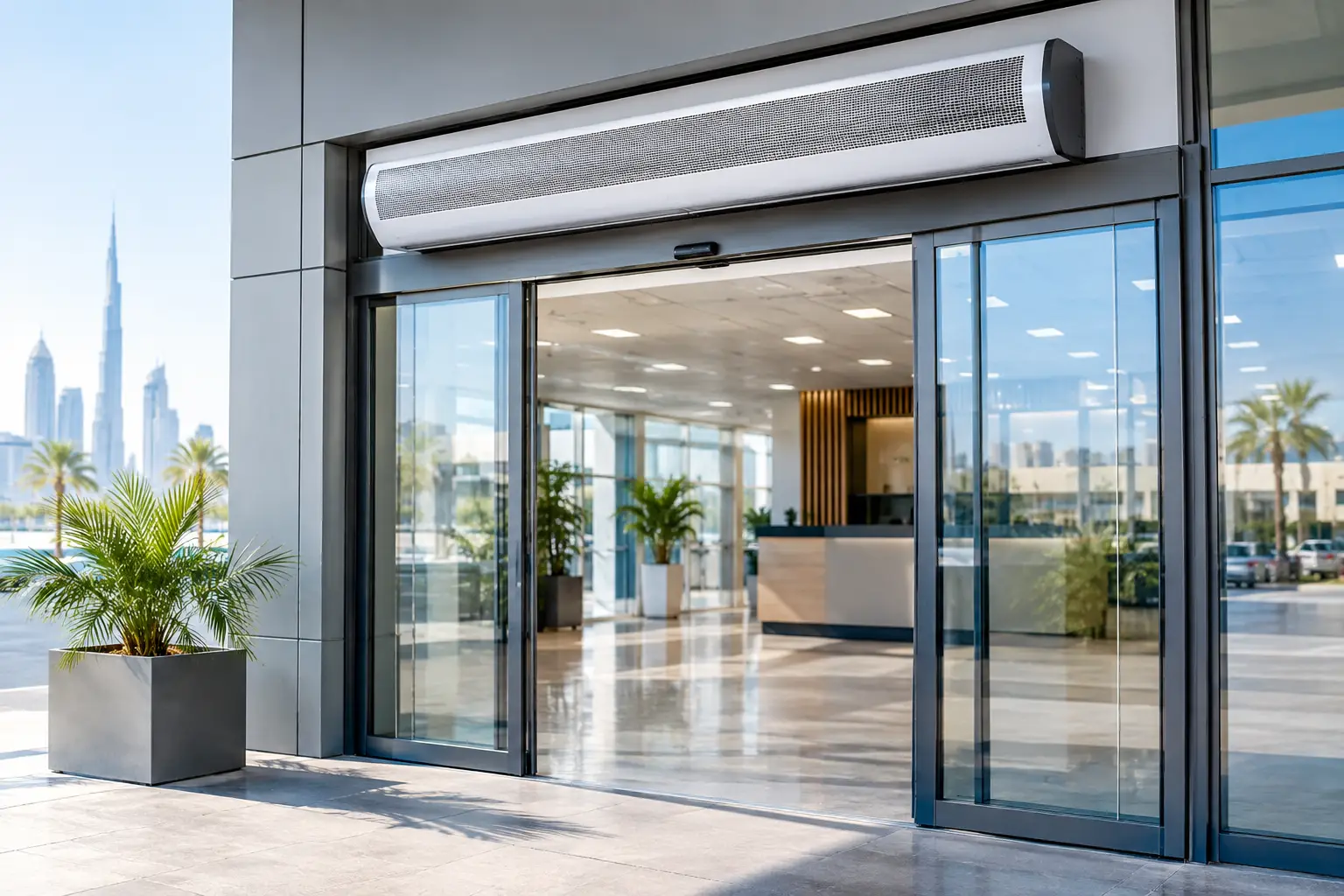
Projects where aesthetics and concealed installation are important frequently use the Recessed Ceiling Series to maintain entrance protection while preserving architectural design.
Air Curtain for Insect Control and Energy Savings
Buyers often start with insect control and then realize the larger operational return is energy performance. When a doorway stays open in hot climates, cooled indoor air escapes and warm outdoor air enters immediately. The HVAC system then works harder to maintain setpoint conditions.
An air curtain helps reduce that exchange. The same barrier that makes insect entry harder also limits heat infiltration and, in many applications, helps stabilize indoor comfort near entrances. That can reduce overuse of cooling equipment and improve consistency in occupied spaces.
This is one reason air curtains make commercial sense in the GCC, MENA, and African markets FreezeeX serves. In high-temperature cities such as Abu Dhabi, Riyadh, Doha, or Casablanca, entrance losses are not minor. Over time, they show up in utility costs, customer comfort complaints, condensation issues, and increased strain on cooling systems.
Installation Quality Matters as Much as Product Quality
Even a strong product can underperform if it is installed poorly. Mounting height, alignment, discharge angle, side coverage, and integration with door operation all affect results. Gaps at the edges of the opening reduce the barrier. Incorrect height can weaken floor-level protection, which is exactly where insects often pass through.
This is why consultation-based selection is more effective than off-the-shelf buying. Contractors and facility teams need model recommendations based on opening size, traffic intensity, and site exposure. In many projects, recessed units suit premium commercial interiors, while exposed industrial models are better for utility areas, service doors, and heavy-use access points.
Controls should also fit the application. Some sites benefit from automatic operation linked to door cycles. Others require continuous operation during business hours because foot traffic is too frequent for stop-start control to be effective.
Recommended Air Curtain Solutions for Insect Control
Different facilities face different insect-control challenges.
For supermarkets, retail stores, shopping malls, and customer-facing commercial environments, the Commercial HiFi Plus Series and Commercial Centrifugal Flow Series help reduce flying insect entry while maintaining indoor comfort.
For warehouses, factories, logistics facilities, and industrial operations, the Industrial Centrifugal Series provides stronger airflow and reliable environmental separation for larger openings.
Where architectural appearance and concealed installation are priorities, the Recessed Ceiling Series offers effective insect-control performance with a clean integrated appearance.
Selecting the correct solution depends on opening dimensions, traffic frequency, environmental exposure, and hygiene requirements.
What Buyers Should Expect from a Serious Supplier
For B2B projects, the conversation should go beyond asking for an air curtain price. A serious supplier should ask about door dimensions, mounting conditions, usage frequency, indoor temperature goals, outdoor exposure, and whether the main problem is insects, heat gain, dust, or all three.
That matters because insect control is rarely a standalone specification. In a retail store, the same unit may need to protect customer comfort and reduce cooling loss. In a cold room lobby, it may need to support hygiene and moisture control. In a plant, durability and heavy-duty airflow may matter more than aesthetics.
The best result comes from matching the unit to the entrance rather than forcing one product across every opening. FreezeeX focuses on this project-led approach because performance depends on application fit, especially in hot-weather markets where air barriers have to work harder.
Frequently Asked Questions
Do Air Curtains Keep Insects Out?
Air curtains help reduce insect entry by creating a high-velocity air barrier across the doorway. Effectiveness depends on proper sizing, installation, and operating conditions.
Are Air Curtains Suitable for Restaurants and Food Facilities?
Yes. Air curtains are commonly used at entrances, service doors, and receiving areas to support hygiene and reduce pest intrusion.
Do Air Curtains Help Reduce Cooling Loss?
Yes. The same air barrier that discourages insect entry also helps reduce unwanted air exchange and cooling loss.
Which Air Curtain Is Best for Industrial Facilities?
Industrial facilities typically require higher-performance systems capable of maintaining barrier strength across larger openings and demanding operating conditions.
A Better Entrance Barrier Starts with the Right Specification
If insects are entering through open doors, the fix is not guesswork and it is not a light-duty unit chosen only by width. The right air curtain creates a measurable barrier against pest entry while also protecting cooling efficiency, indoor comfort, and hygiene standards.
For commercial and industrial sites in desert and tropical climates, specification matters. If you are planning a new project or upgrading an existing entrance, request a consultation and quote based on your actual opening size, traffic conditions, and environmental exposure.
Explore the FreezeeX Product Range or visit our Contact Us page to discuss your project requirements with our team.


5 Responses
That’s a critical specification point that is often overlooked. Even a high-performance air curtain can underdeliver if the unit does not provide full-width coverage across the opening. Proper sizing helps maintain a continuous barrier against heat, dust, humidity, and insects while ensuring the entrance performs as intended.
Exactly. In facilities where doors remain open for long periods or experience constant traffic, reducing unwanted air exchange can have a significant impact on cooling efficiency. A properly specified air curtain helps maintain indoor conditions while supporting smoother operations and lower HVAC strain.