
Air Curtain for Dust Control at Busy Entrances
Dust at a main entrance is rarely just a housekeeping problem. In a hypermarket loading zone, hotel service corridor, cold storage access point, or factory door, airborne dust travels straight into conditioned space, settles on stock and equipment, and forces HVAC systems to work harder than they should. An air curtain for dust control addresses that pressure point directly by creating a high-velocity air barrier at the opening, reducing infiltration without slowing traffic.
For commercial and industrial sites in desert and tropical climates, that matters more than it does in milder regions. In cities such as Dubai, Riyadh, Doha, Cairo, Lagos, and Nairobi, entrances face constant exposure to hot outdoor air, suspended dust, and frequent door cycles. If the opening stays active all day, the problem compounds fast. The right air curtain does not eliminate every particle, but it can significantly reduce dust transfer while protecting indoor temperature stability and operational cleanliness.
Why Dust Control at Entrances Becomes an Operating Cost
When dust enters through an unmanaged doorway, the impact spreads beyond the floor near the threshold. Filters load faster. Evaporator coils and indoor units face more contamination. Cleaning frequency increases. In retail and hospitality settings, presentation suffers. In industrial facilities, dust can affect process areas, packaging zones, or finished goods handling.
There is also the cooling penalty. Every time hot outdoor air and suspended particles move inside, the HVAC system has to compensate. In hot-weather markets, that means more energy use, more strain on equipment, and less stable indoor comfort near the entrance. Facility teams often notice the symptom first – warmer air, dirty floors, more complaints – before they connect it to uncontrolled infiltration.
A properly selected air curtain changes that equation. It creates a directed stream across the opening that separates indoor and outdoor air masses. If the airflow is correctly matched to mounting height, door width, and site conditions, it becomes a practical control measure for dust, heat, insects, and humidity at the same time.
How an Air Curtain for Dust Control Actually Works
An air curtain is not a physical door, and it is not a filter system installed at the entrance. Its job is air isolation. The unit discharges a controlled sheet of air downward or across the opening, depending on the application, to interrupt the path that dust would normally take.
For dust control, velocity and consistency matter more than marketing claims. If the airflow is too weak, dust passes through with outside air. If it is too turbulent or badly aimed, the barrier breaks down before it reaches floor level. That is why entrance height, wind exposure, door type, and traffic pattern all matter during product selection.
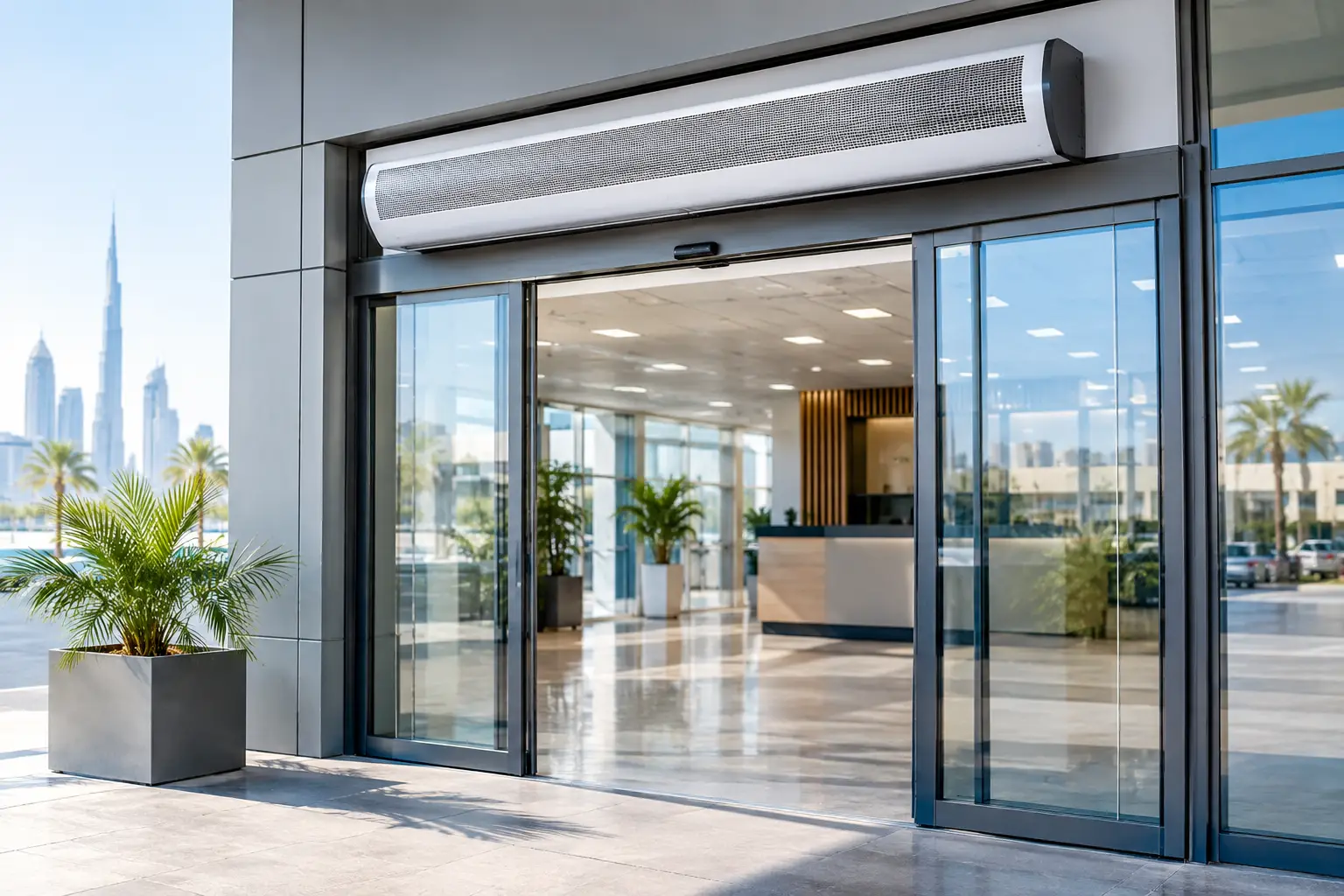
In a recessed commercial entrance, a clean architectural finish may be important, but appearance cannot come at the expense of throw and coverage. Projects that prioritize ceiling integration often benefit from the Recessed Ceiling Series, which combines discreet installation with effective entrance protection.
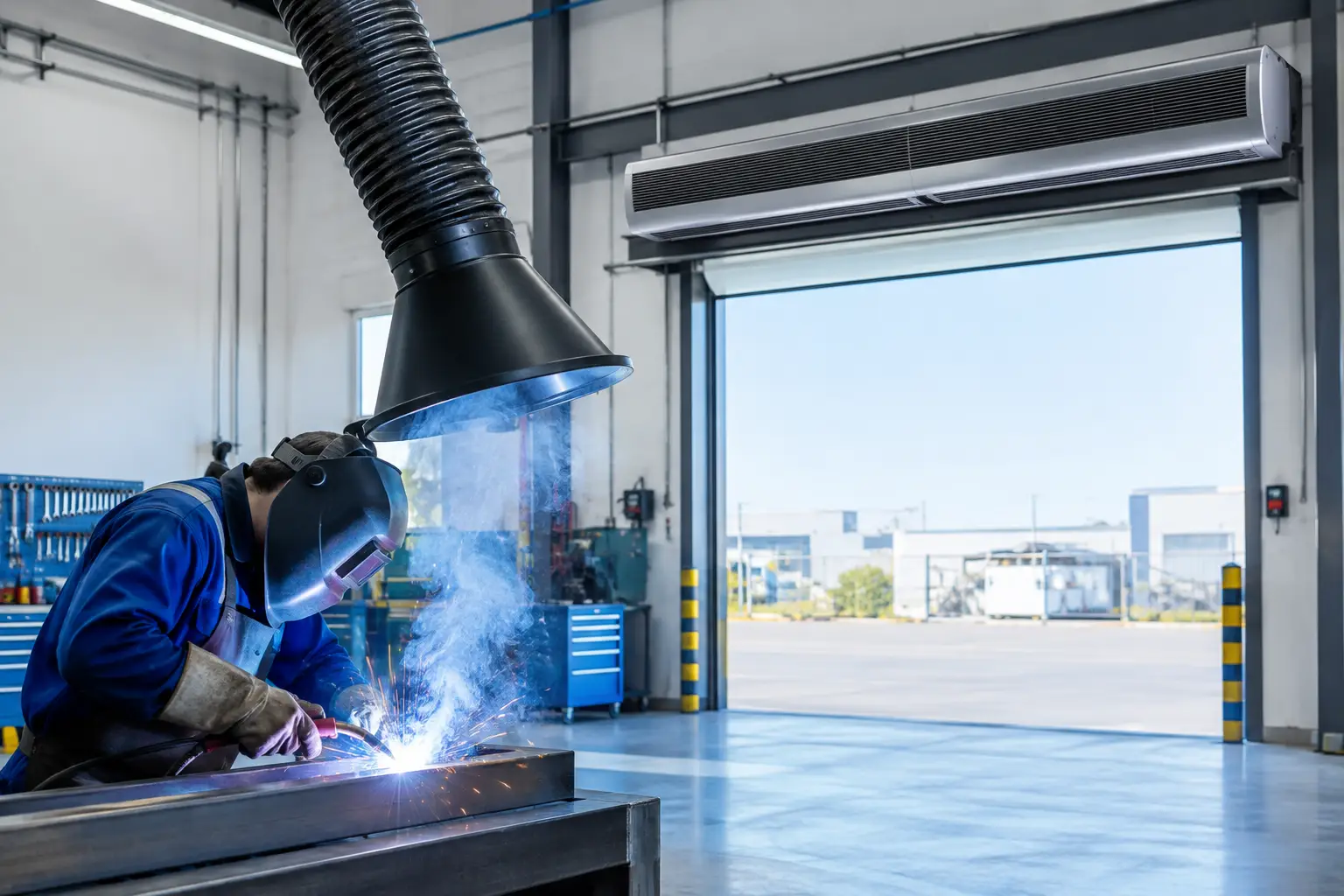
In an industrial opening, centrifugal performance and heavy-duty construction may take priority over aesthetics. The specification should follow the environment, not the other way around.
Dust Control Is Strongest When the Unit Is Matched to the Doorway
A small retail entrance and a warehouse dispatch opening do not need the same air curtain. Wider or taller doors need stronger airflow and a blower configuration that can maintain barrier integrity across the full opening. In dusty, high-heat environments, under-specifying the unit is one of the most common reasons performance falls short.
This is especially relevant in the GCC, MENA, and African markets where external air conditions are more aggressive. Fine dust, heat load, and long operating hours place higher demands on the equipment than many standard commercial assumptions account for.
Where Air Curtains Deliver the Most Dust-Control Value
The best results usually come from entrances that are open often enough to create a constant infiltration problem but critical enough that operators cannot simply keep the door closed.
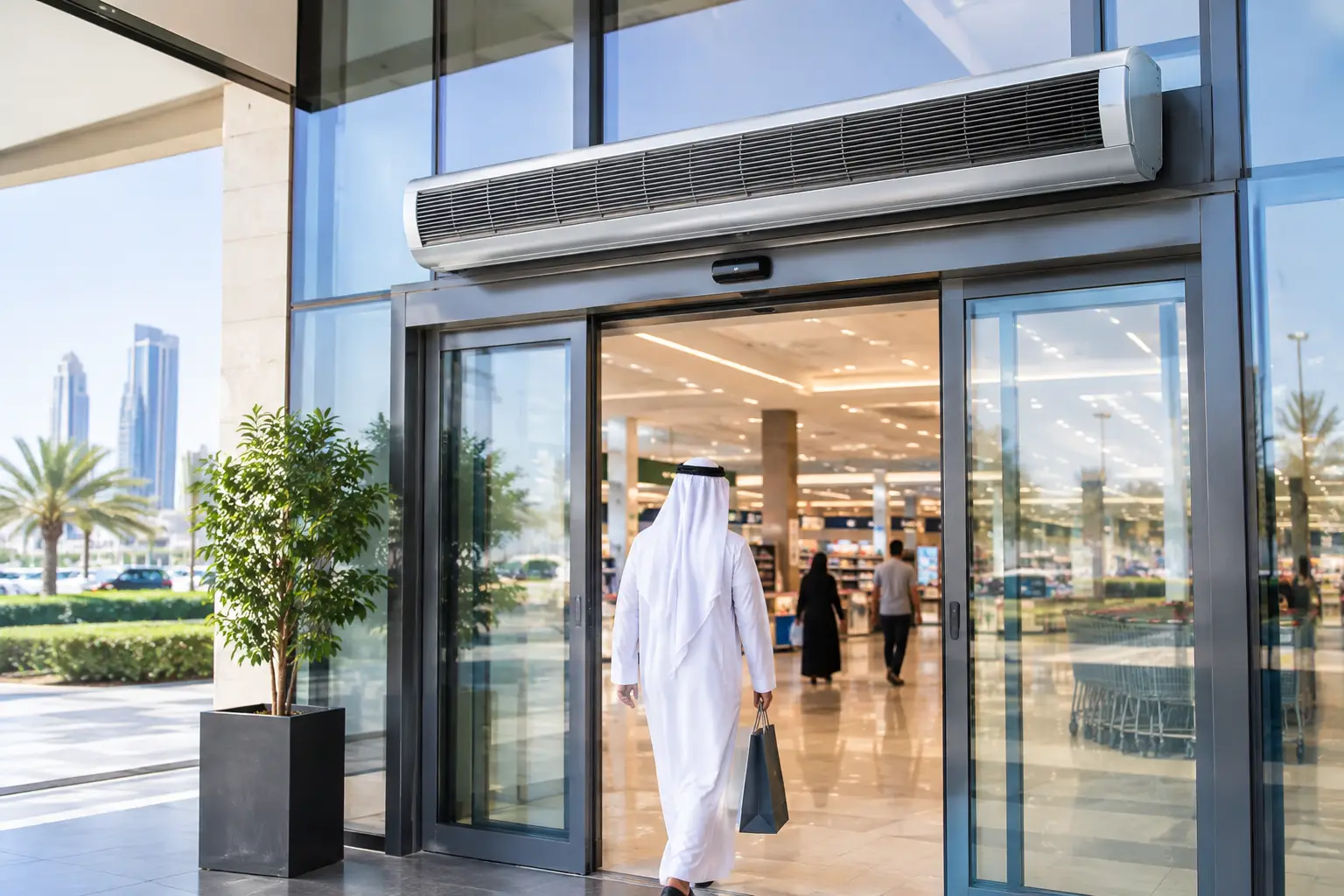
In hypermarkets and retail distribution environments, entrance dust affects product presentation, shopper comfort, and cleaning workload. In hospitality properties, service doors and receiving areas often bring dust and hot air into back-of-house zones that connect to food handling or guest support operations. In cold storage and temperature-controlled logistics, dust control is tied directly to hygiene and cooling retention. In workshops, plants, and manufacturing facilities, the concern is often a combination of equipment cleanliness, worker comfort, and indoor air management.
An air curtain is not always the only answer. If the building has severe negative pressure, poorly managed door sequencing, or strong crosswinds, those conditions should be addressed as part of the solution. But in many facilities, the entrance itself is the main leak point, and that is where an air curtain delivers immediate operational value.
Choosing an Air Curtain for Dust Control in Harsh Climates
Hot, dusty environments demand more than basic airflow. The unit has to maintain stable performance through long operating hours, frequent use, and challenging ambient conditions. Buyers should look at motor quality, blower type, casing durability, and suitability for commercial or industrial duty cycles.
Centrifugal designs are often preferred where stronger, more stable air delivery is required. For high-traffic commercial sites, that can mean better barrier consistency and more dependable performance across wider openings. Facilities such as supermarkets, shopping malls, and retail stores often use the Commercial HiFi Plus Series or the Commercial Centrifugal Flow Series where customer comfort and climate control are priorities.
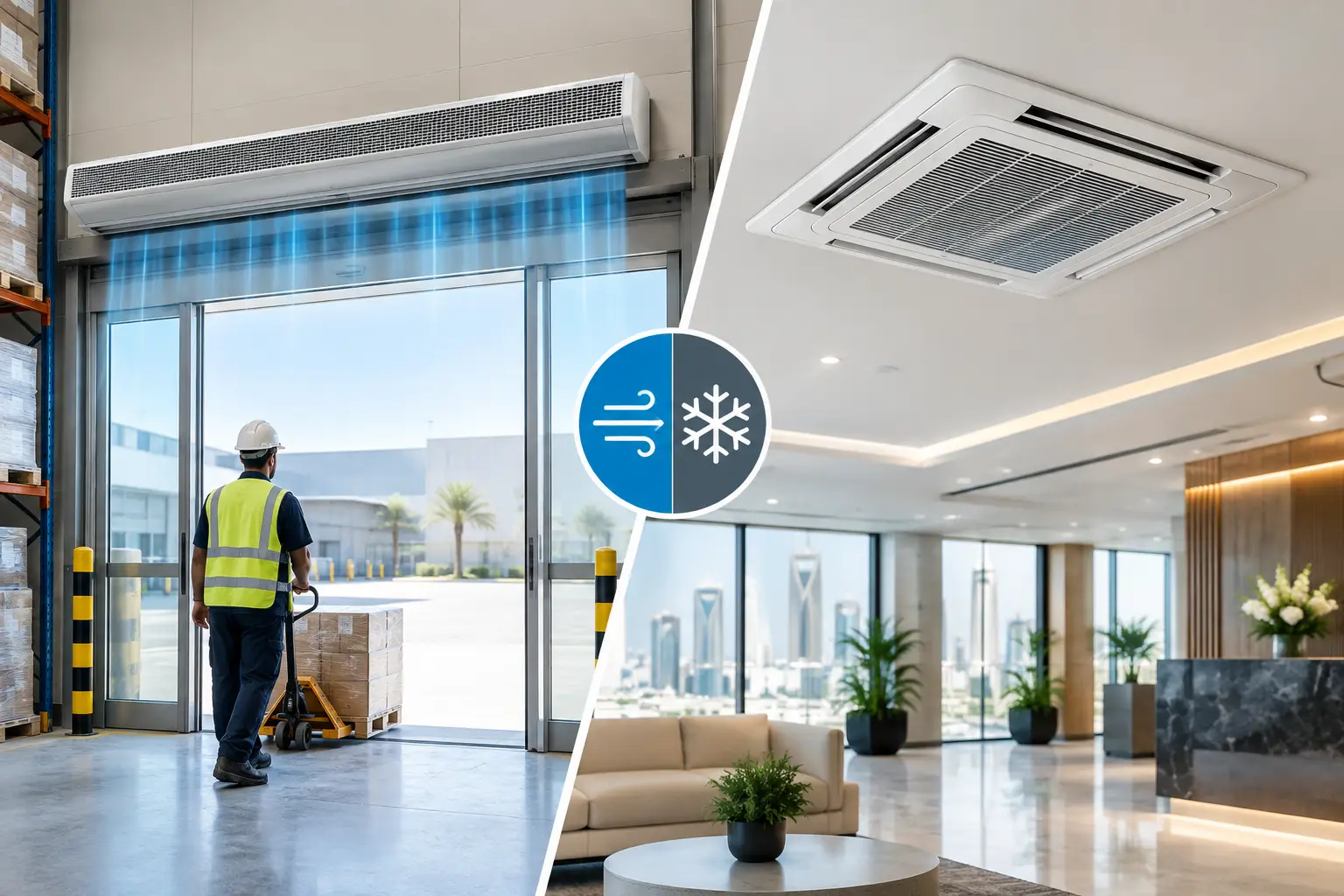
Recessed models suit projects where ceiling integration matters, while exposed heavy-duty units make sense where access, serviceability, and industrial output are the priority. Warehouses, factories, and logistics facilities frequently require the stronger airflow provided by the Industrial Centrifugal Series.
Noise also matters, but it depends on the site. In a luxury hotel or office lobby, lower sound levels will carry more weight in the selection process. In a warehouse, plant, or receiving bay, performance and durability may rank higher. The right answer is not one-size-fits-all. It depends on the opening, the pressure conditions, and what the operation can tolerate.
Specification Questions That Change Performance
Before selecting a unit, decision-makers should confirm mounting height, door width, whether the door is usually open or cycling, and how exposed the opening is to outdoor wind and dust. They should also consider whether the main objective is dust reduction only or a broader barrier against heat, insects, and humidity.
Those details affect model choice. A commercial entrance in Abu Dhabi or Muscat may need a different setup than an industrial facility in Lagos or a cold-chain site in Nairobi. The climate challenge is similar, but the doorway physics and operational demands are not.
Recommended Air Curtain Solutions for Dust Control
Different entrances require different air curtain configurations.
For supermarkets, retail stores, shopping malls, and customer-facing commercial environments, the Commercial HiFi Plus Series and Commercial Centrifugal Flow Series provide effective protection against dust, heat, and uncontrolled air infiltration.
For warehouses, factories, logistics facilities, and industrial operations, the Industrial Centrifugal Series is engineered for demanding environments with larger openings and heavier traffic.
Where architectural appearance and concealed installation are priorities, the Recessed Ceiling Series offers effective entrance protection while maintaining a clean visual design.
Selecting the correct solution depends on doorway dimensions, operating conditions, traffic frequency, and environmental exposure.
Common Mistakes That Weaken Dust Control
The first mistake is buying on size label alone. A unit described as commercial or industrial still has to be matched to real site conditions. The second is assuming any air curtain will stop dust effectively if installed above a large or exposed opening. Barrier strength depends on discharge performance at the actual doorway, not just fan presence.
The third mistake is treating the air curtain as a standalone fix for every entrance issue. If doors are misaligned, pressure imbalance is severe, or maintenance is ignored, results will suffer. Dirty intake sections, worn components, or incorrect discharge angle can all reduce effectiveness over time.
Another common issue is prioritizing lowest initial cost over lifecycle value. In high-traffic facilities, a poorly suited unit can cost more through cleaning labor, cooling loss, and early replacement than a properly specified system ever would.
The Business Case Is Broader Than Cleaner Floors
Dust reduction is the visible benefit, but the commercial case is stronger than that. A good air curtain helps preserve conditioned air, supports indoor comfort near entrances, reduces contamination pressure on interior zones, and lowers the burden on HVAC equipment. For facilities operating in extreme heat, that combination has real budget impact.
It also supports better control where hygiene and product quality matter. Food retail, hospitality receiving areas, pharmaceutical support spaces, and clean packaging environments all benefit from reducing direct dust entry at the door. Even when the site has additional filtration or air treatment indoors, stopping contaminants at the opening is usually more efficient than managing them after they spread.
For consultants, contractors, and procurement teams, the key is to specify by application. Doorway dimensions, environmental exposure, and operating pattern should drive the recommendation. That is where the difference between a commodity unit and a performance-led entrance solution becomes clear.
Frequently Asked Questions
Can Air Curtains Stop Dust Completely?
No. Air curtains reduce dust infiltration by creating an air barrier, but they do not eliminate every airborne particle.
Are Air Curtains Effective in Desert Climates?
Yes. Properly specified air curtains can help reduce the amount of dust, heat, and outside air entering a facility in hot and dusty environments.
Which Air Curtain Is Best for Warehouses?
Large industrial entrances generally require stronger airflow and industrial-duty solutions designed for high traffic and larger openings.
Do Air Curtains Help Reduce HVAC Costs?
By reducing unwanted air exchange, air curtains can help lower cooling losses and reduce HVAC workload.
Conclusion
If your facility is dealing with dust infiltration, cooling loss, or unstable entrance conditions, the next step is not guessing the model from a catalog. It is reviewing the opening, the traffic level, and the climate load, then matching the system accordingly.
FreezeeX Air Curtains Ltd. supports project teams with specification-ready recommendations for commercial and industrial sites across hot, dusty markets. Explore the FreezeeX Product Range or visit our Contact Us page to request a consultation or quotation for your project.


5 Responses
Dust control is often overlooked until it starts affecting customer comfort, cleanliness, and HVAC efficiency. In busy restaurant environments, especially in hot and dusty regions, a properly specified air curtain can help reduce airborne dust infiltration while supporting a cleaner and more comfortable indoor environment.
That’s a key benefit in busy commercial and industrial environments. By helping reduce dust infiltration at frequently used entrances, a properly specified air curtain supports cleaner indoor conditions, improves HVAC efficiency, and contributes to a more comfortable environment for both occupants and operations.